Cáceres Old Town: What to See Inside the Walls
Plan a walk through Cáceres old town: the Plaza Mayor, Arco de la Estrella, Plaza de Santa María, Plaza de San Jorge and the Judería Vieja, square by square.
On this page
Cáceres old town is best walked as a loop of squares, entered from the Plaza Mayor and finished in the whitewashed lanes of the Judería Vieja. Allow half a day for the main squares and the wall, and a full day if you want to go inside the concatedral, climb a tower and see a museum. This guide follows the walk in order rather than by tick-list, so each stop leads naturally to the next and you know which gate to aim for.
Nearly a hundred historic buildings are marked on the tourist office plan, but little more than a dozen of the most important are open to visitors, so two or three days gives a stay real breathing room. On a short break, the walled town alone fills a satisfying day. For the wider picture, the Cáceres Attractions: 6 Visitor Guides hub covers individual sights and the square-by-square detail below stays focused on the walk.
How the old town is arranged: two parts, one wall
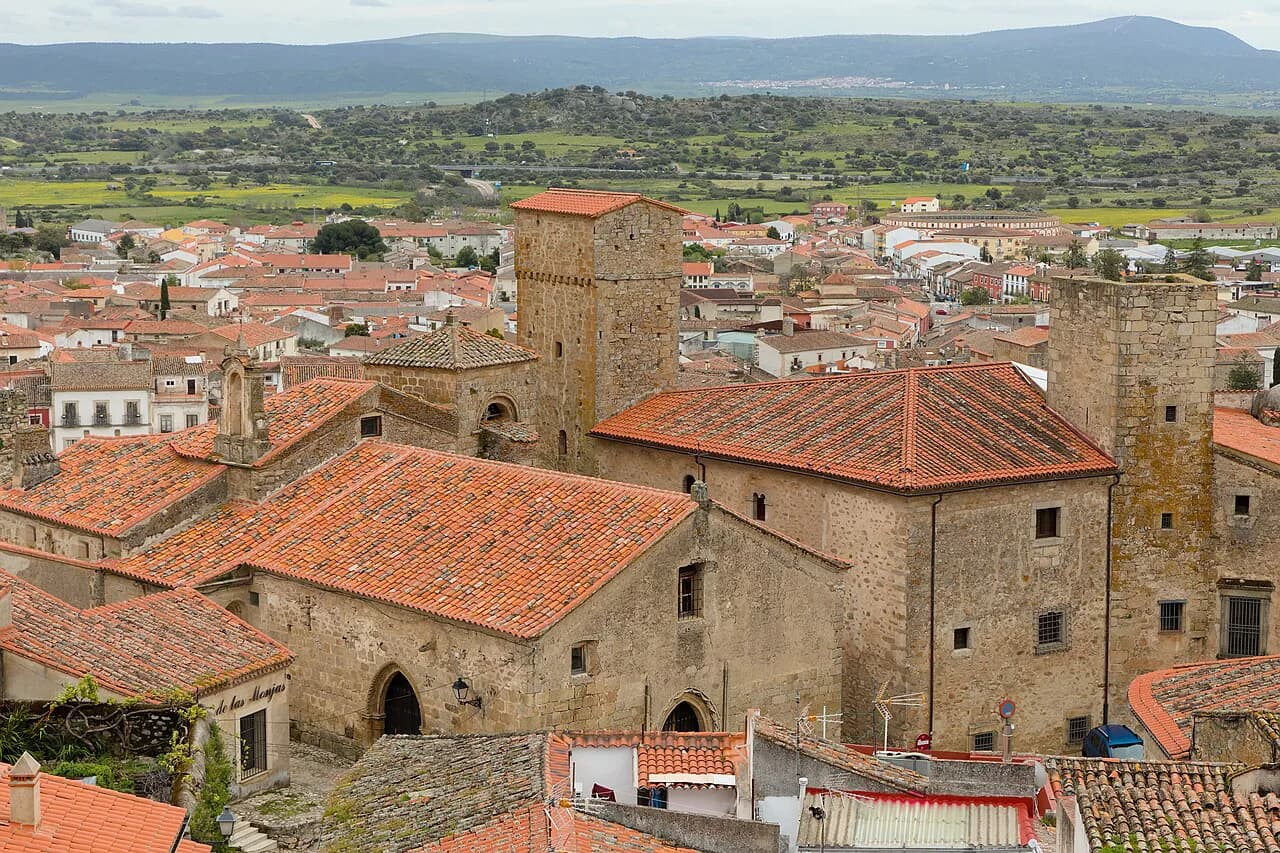
The historic centre divides into two zones separated by the old Almohad wall: the walled Ciudad Monumental and the extramuros streets around it. Inside the walls sit the palaces, Gothic churches and stone lanes of the medieval town; outside stretches the Plaza Mayor, the market square that has always been the city's meeting point. Traffic inside the walls is restricted to authorised vehicles, so the whole quarter is a walking zone.
Cáceres is a UNESCO World Heritage site, and its old town is often described as one of the best-preserved medieval ensembles in Europe, behind only Prague and Tallin in extent and richness. What that means on foot is a compact maze of cobbled alleys, arches and towers with almost no modern signage or street lighting inside the walls, which is why period dramas film here without needing to hide anything.
Where to start: the Plaza Mayor, the Torre de Bujaco and the Arco de la Estrella
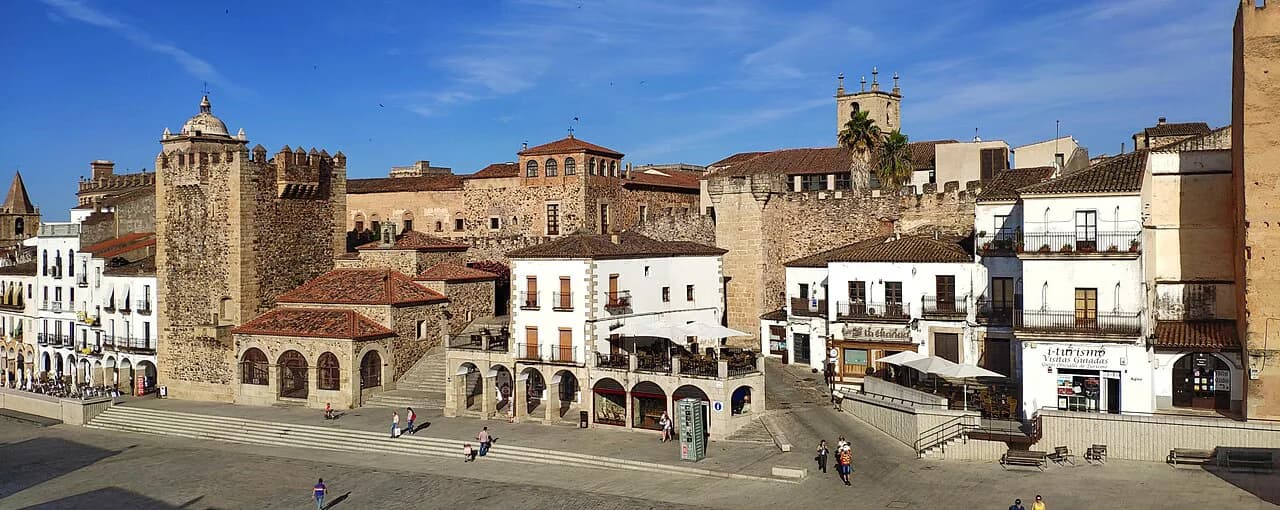
Begin on the Plaza Mayor, the arcaded square outside the walls, where the Ayuntamiento, the Torre de la Hierba and the Torre de los Púlpitos line up along the edge of the old town. The Torre de Bujaco, an Almohad tower of about 25 metres built on Roman stonework, is the obvious first stop and doubles as one of the best viewpoints over the monumental quarter. Its interpretation centre sets out the Roman, Arab and medieval layers of the city in a few rooms.
Since 2020 the tower visit has also included the Roman remains in the courtyard of the Palacio del Mayoralgo, reached from the wall along a small bridge over the adarve. From the Plaza Mayor, the Arco de la Estrella is the way into the walled town: a stone gate that leads straight into the upper end of the Plaza de Santa María. Aiming for this arch rather than a random gap in the wall saves a climb later.
Plaza de Santa María: the concatedral and the noble palaces
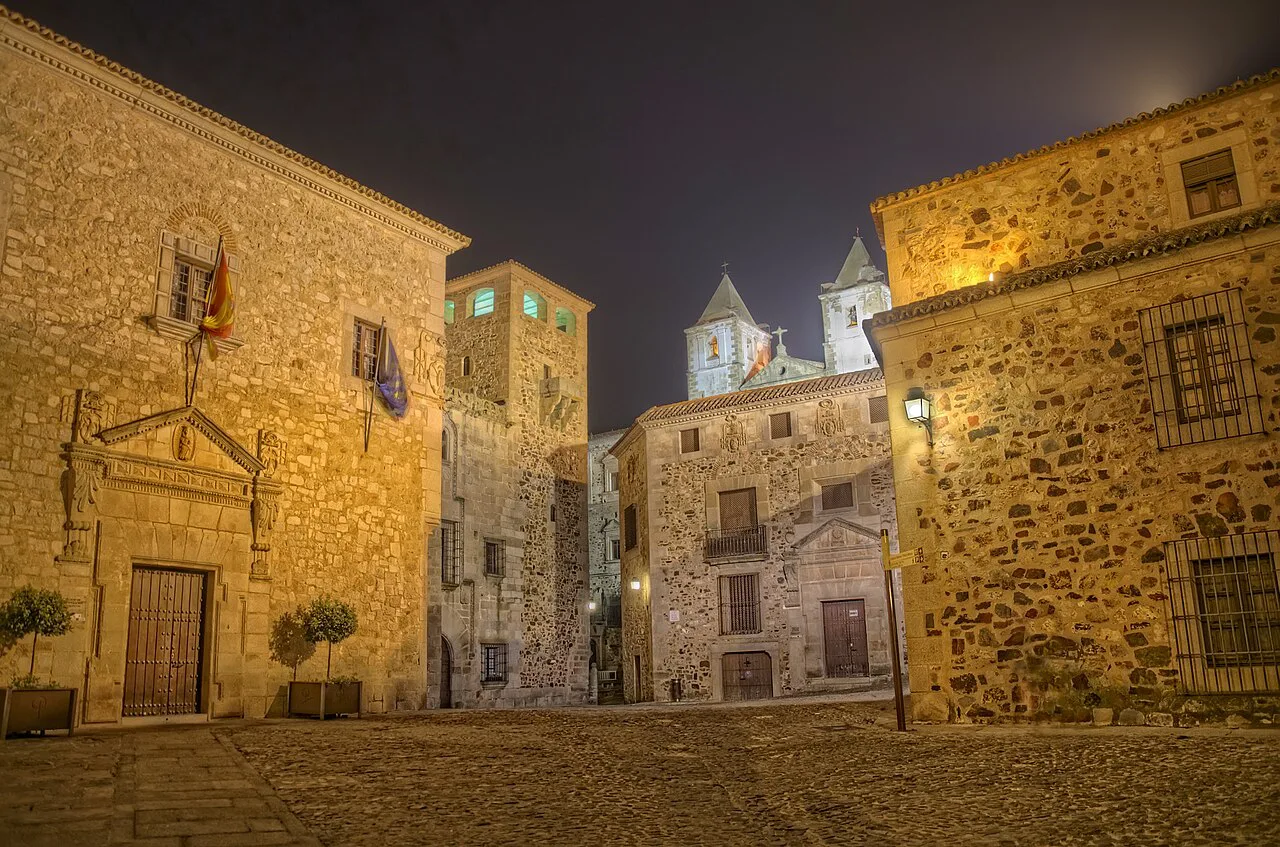
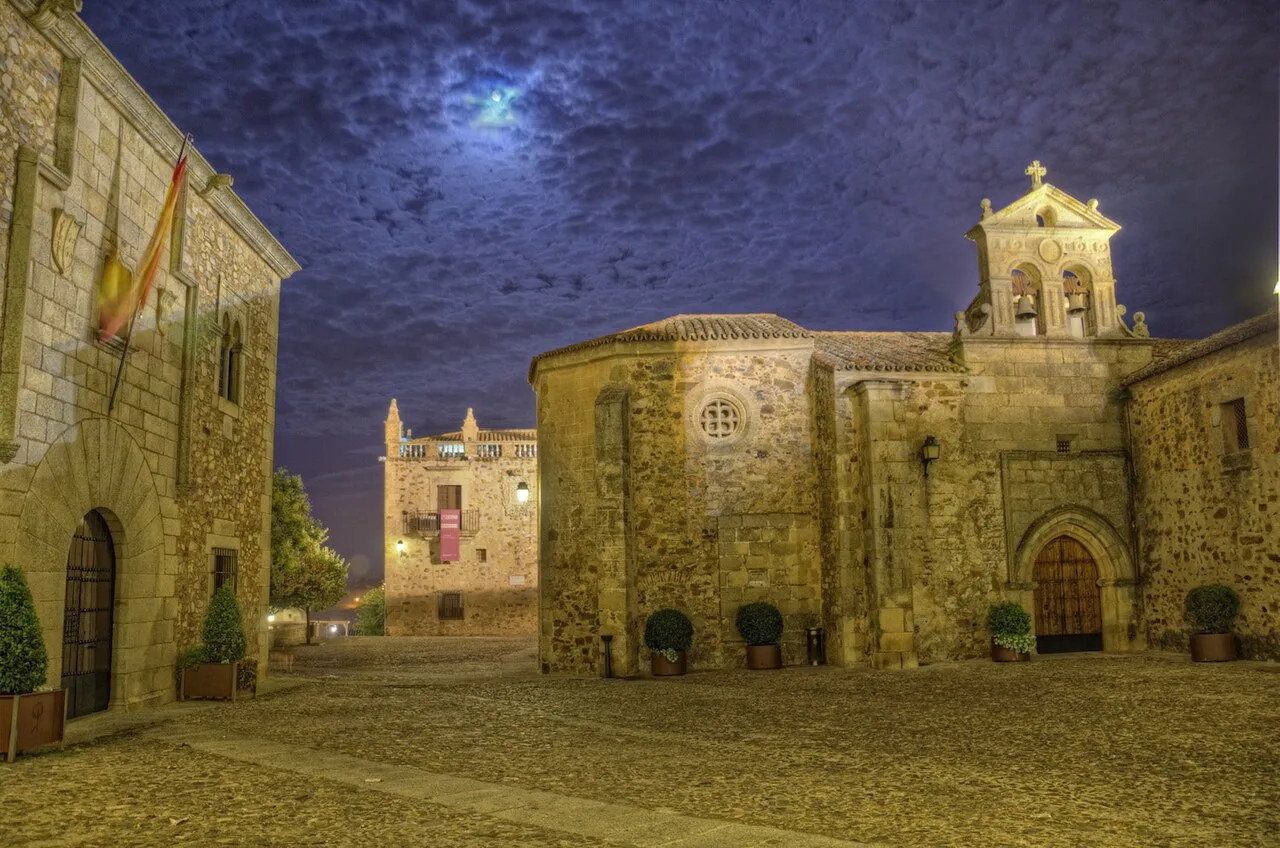
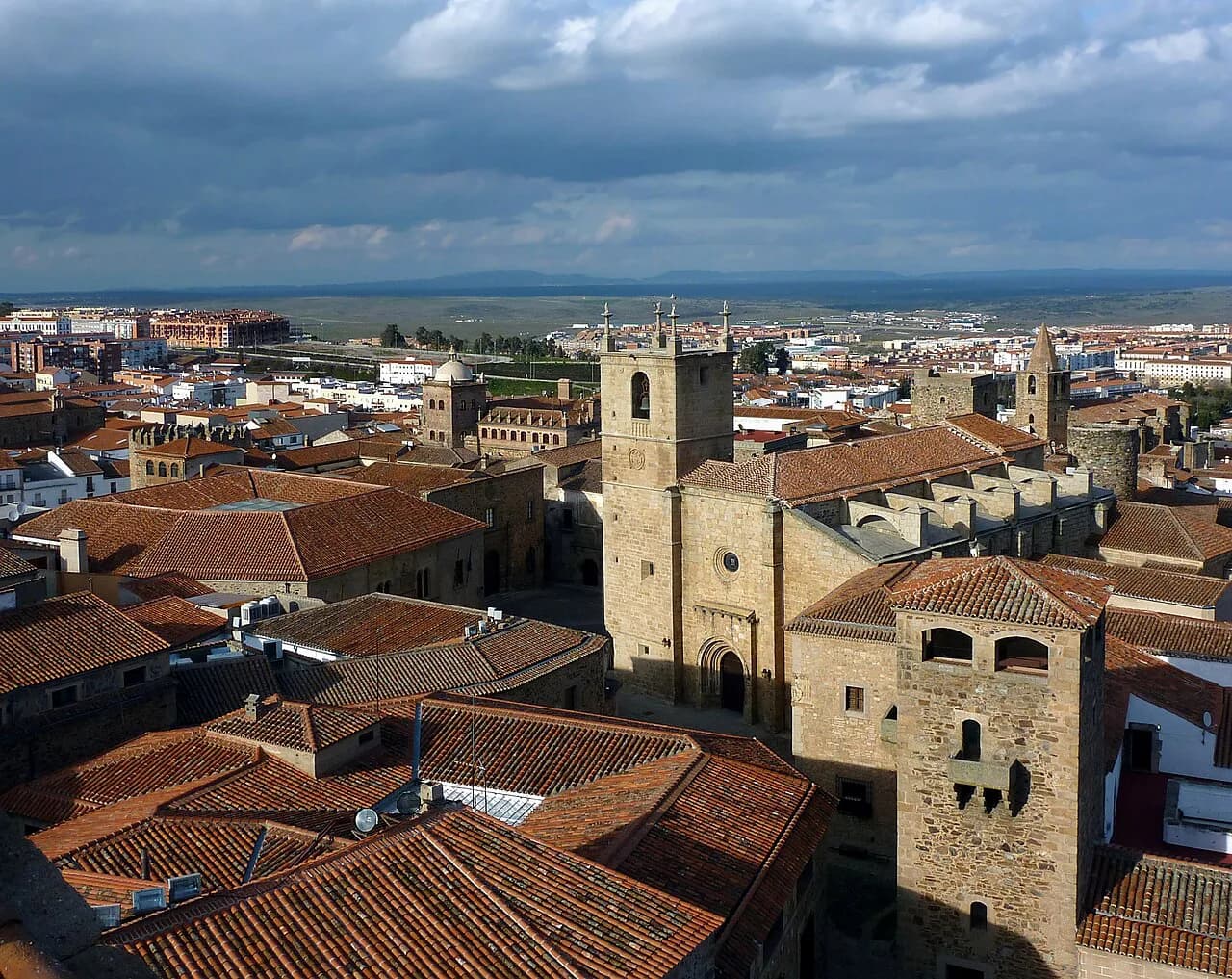
Crossing the Arco de la Estrella brings you into the Plaza de Santa María, the founding square of the lower walled town. The concatedral de Santa María, built between the 15th and 18th centuries, mixes Romanesque, Gothic and Renaissance elements and is the most important church in Cáceres. Around it stand palaces and noble houses that are monuments in their own right, and the square is small enough to take in from one corner.
The Palacio de los Golfines de Abajo dominates the square; its former owners hosted the Catholic Monarchs here on two occasions, and the family crests on the façades of the palaces of Ovando and Mayoralgo still mark out who lived where. The Palacio de Carvajal, a 15th-century noble house, now serves as the tourism office of the provincial council, which makes it a sensible place to pick up a plan. Note the shaved towers: in 1477 the queen ordered most of the noble towers cut down after the nobility backed her rival, which is why they look blunt rather than battlemented.
Plaza de San Jorge and the church of San Francisco Javier
A little further on, the Plaza de San Jorge sits at the geometric centre of the walled town, with the baroque church of San Francisco Javier as its main feature. The Jesuits built it in the 18th century shortly before their expulsion from Spain, and its interior now holds the interpretation centre for Cáceres Holy Week as well as an old cistern in the basement. This square is a natural pause between the lower town and the climb that follows.
Climbing the towers of San Francisco Javier gives you one of the great rooftop views: a sea of tiled roofs and bare stone towers with nothing modern intruding. The Palacio de los Golfines de Abajo also has an old armoury hall worth seeing if you are working through the interiors. Plan the square as your halfway point rather than a quick photo stop, because the steps up to the upper town start just beyond it.
The upper end: San Mateo, San Pablo and the Plaza de las Veletas
From the lower squares, the Cuesta de la Compañía is the short, steep climb to the upper town; it is a genuine alley, so pace yourself and expect to arrive out of breath. The Plaza de San Mateo, San Pablo and the Plaza de las Veletas form a cluster up here. San Mateo has a plateresque façade built in the early 16th century over the remains of the old Almohad Alcázar, and San Pablo is a small Gothic church whose enclosed nuns still make sweets.
The Museo de Cáceres occupies the Palacio de las Veletas, and its highlight is the Andalusian cistern, an aljibe that survives from the Islamic city beneath the later palace. Beside it stands the Palacio de las Cigüeñas, whose tower was spared in 1477 because its family supported the queen, and it remains the tallest of the surviving towers at around 25 metres. The museum is the place to come to grips with the Moorish layer of the town without leaving the plaza.
The Judería Vieja and the Barrio de San Antonio
Drop down from the upper squares into the Barrio de San Antonio, the old Jewish quarter inside the walls, where the lanes narrow and the houses are whitewashed. The Ermita de San Antonio is built over the site of the old synagogue, which makes it a low-key, quiet stop after the grandeur of the cathedrals and palaces. There was a second Jewish neighbourhood outside the walls beside the Plaza Mayor, so the quarter you walk here is specifically the Judería Vieja.
This is the part of the old town worth lingering in rather than ticking off: less monumental, but a clearer sense of how different communities lived together between the 13th and 15th centuries. Give it half an hour at an easy pace and let it be the end of the walled-town loop before you head back out.
The wall and its towers: the adarve and the viewpoints
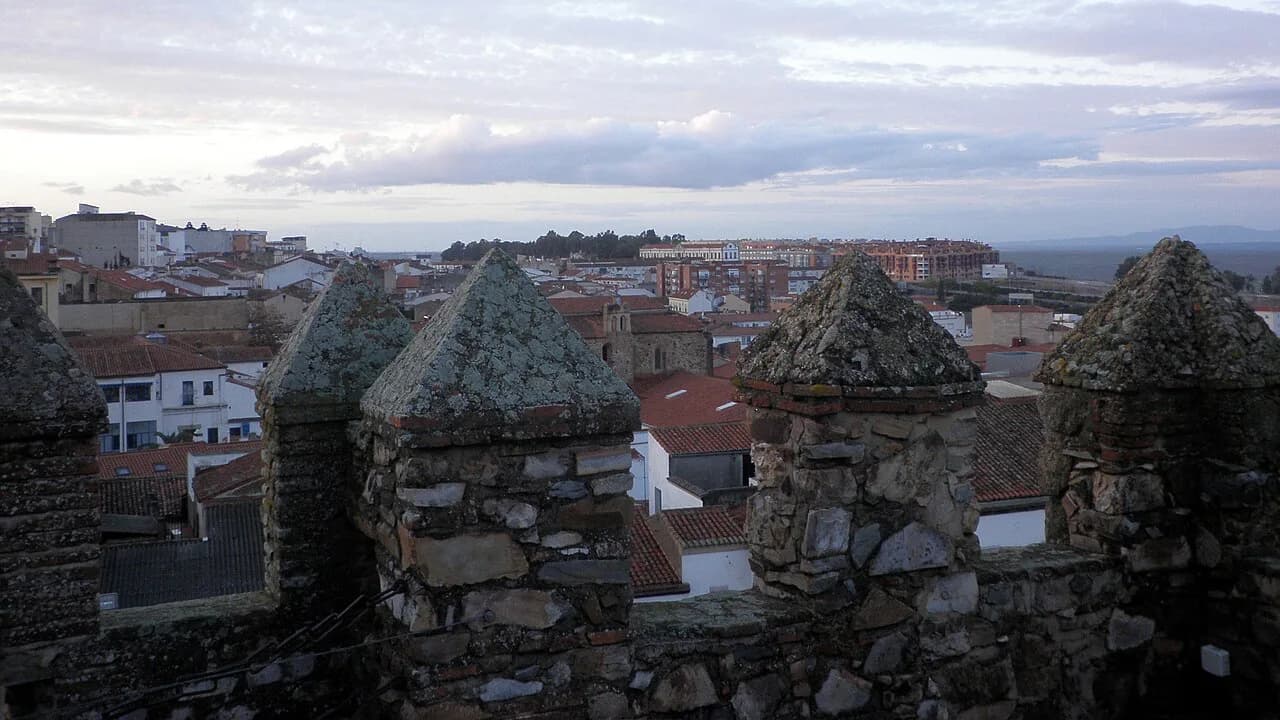
Much of the surviving wall belongs to the Almohad period, and the towers along it give a different reading of the town's shape from the squares below. The Torre de Bujaco, the Torre de la Hierba and the Torre de los Púlpitos line up along the Plaza Mayor side; the adarve, the walkway inside the circuit, connects the towers and is how you cross over to the Mayoralgo courtyard. Walking the wall first puts the squares into context, because you see the height you will be climbing later.
The Cáceres map page lays out the squares and gates in relation to each other, which makes it easier to plan the order you visit the towers and the wall. If you only have time for one climb, make it the Torre de Bujaco: it gives the widest view for the least effort.
Museo Helga de Alvear and the other museums
The Museo Helga de Alvear is the modern counterweight to a day of medieval stonework, and the source describes it as visitable with a guided tour. The Museo de Cáceres with its aljibe is the other museum most visitors fit in, and there are further museums round the squares if you have a full day. Choose one museum, not both, unless you have two days in the city.
Beyond the walls, the Parque del Príncipe, the sanctuary of the Virgen de la Montaña and the cave of Maltravieso round out the city's sights. Those sit outside the old town and are better saved for a second visit or a longer stay.
How long the old town needs and how to pace a half day or a full day
For a half day, do the Plaza Mayor, the Torre de Bujaco, the Arco de la Estrella and the squares of Santa María and San Jorge, then finish in the Judería Vieja. That is the compact core with the best views and no steep climb beyond the final descent. For a full day, add the upper squares at San Mateo and the Veletas, the cistern at the Museo de Cáceres and one tower interior.
The rhythm matters more than the list: the old town is a sequence of short hops between squares, and the climb from Santa María to San Mateo is the one sustained effort. Take the squares in order, sit down in each, and the walking never feels rushed.
Hills, cobbles and heat: the practical shape of the walk
The old town is built on a hill, so the walk involves real gradients as well as cobbles; the Cuesta de la Compañía and the lanes around the Judería Vieja are the steepest stretches. Wear shoes with grip, not smooth soles, and take the climb to the upper squares early in the day when the stone is cooler. Summer heat in Cáceres is inland Extremadura heat, so plan the open Plaza Mayor and the tower for the morning and the shaded lanes for the afternoon.
Churches and museums keep hours that suit the Spanish day rather than a British one, and the monasteries and smaller sights can close over lunch, so check the tourist office plan for the day's openings before setting off. Traffic inside the walls is restricted to residents and deliveries, so park outside and walk the whole quarter.
Filming locations in the old town
Cáceres has served as a set for period productions without any post-production work, because the plazas and streets need no alteration. Spanish series such as Isabel and La Peste have filmed here, as have Game of Thrones and its follow-up House of the Dragon. If you want to see the town as a film set, walk the squares slowly and look at the Cornish-style stonework rather than hunting specific scene markers.
Should you enter through the Arco de la Estrella?
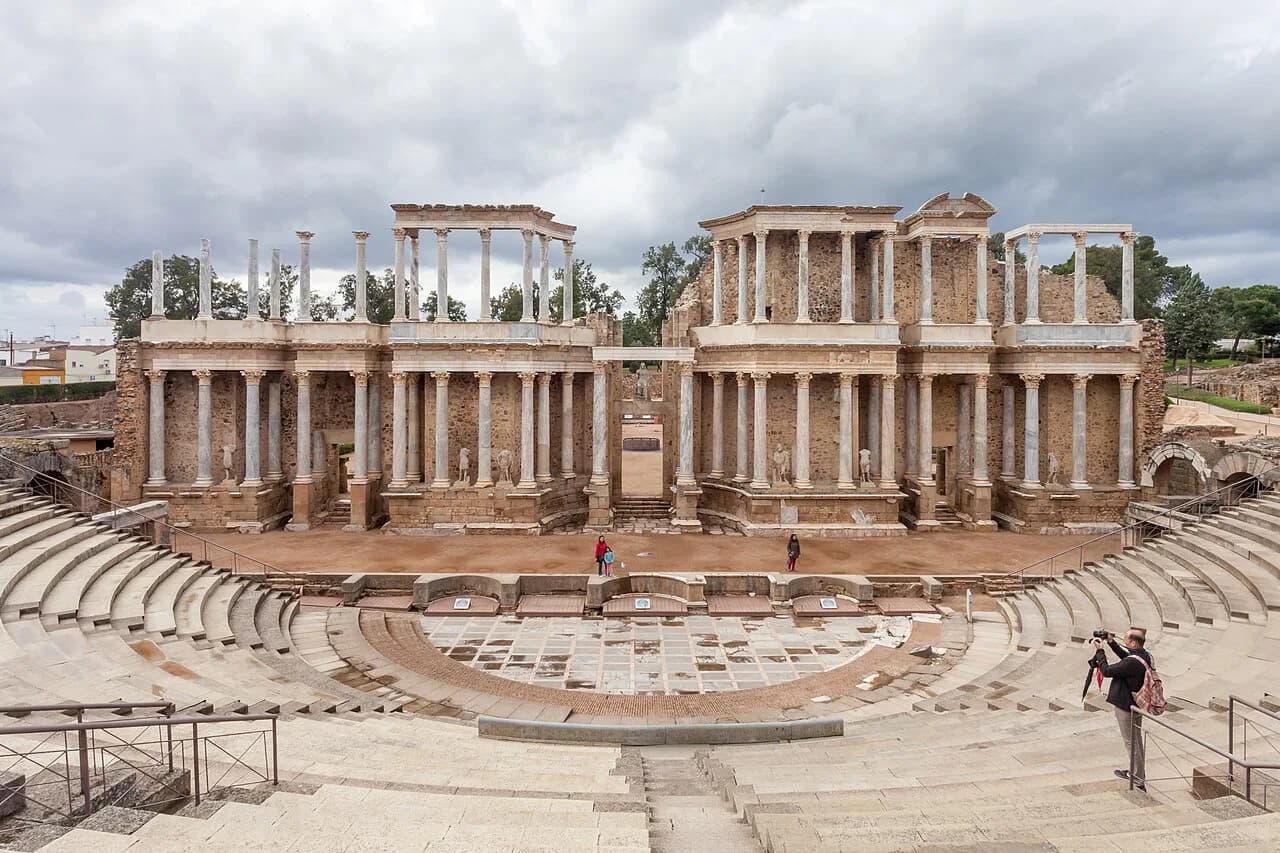
Yes — entering through the Arco de la Estrella puts you directly in the Plaza de Santa María and starts the walk at the lower end of the town. From there the loop runs naturally through San Jorge, up to San Mateo and the Veletas, and down into the Judería Vieja, with the Plaza Mayor and the Torre de Bujaco saved for the end or the beginning. If you are coming from further afield, Mérida is the obvious Roman complement and Trujillo the nearest medieval hill town, and both fit neatly round a Cáceres stay.
Frequently Asked Questions
Do I need a ticket to walk around Cáceres old town?
No ticket is needed for the streets and squares of the walled town or the Plaza Mayor; it is a working historic quarter, not a gated attraction. Individual sights such as the Torre de Bujaco, the Museo de Cáceres and church interiors are separate visits, and the sources do not give current prices, so check the tourist office plan for the day's openings before setting off.
Where should I start a walk through Cáceres old town?
Start on the Plaza Mayor, the arcaded square outside the walls. The Torre de Bujaco is the obvious first climb and viewpoint, then the Arco de la Estrella is the gate into the walled town, leading straight into the Plaza de Santa María. From there the squares follow in order: San Jorge, then the climb to San Mateo and the Veletas, then down into the Judería Vieja.
How long does it take to see Cáceres old town?
Half a day covers the Plaza Mayor, the Torre de Bujaco, the Arco de la Estrella, the squares of Santa María and San Jorge and the Judería Vieja. A full day adds the upper squares at San Mateo and the Veletas, the cistern at the Museo de Cáceres and one tower interior; two or three days gives a stay real breathing room.
Which part of Cáceres old town is the old Jewish quarter?
The Judería Vieja is the old Jewish quarter inside the walls, now the Barrio de San Antonio, with narrow whitewashed lanes and the Ermita de San Antonio built over the site of the old synagogue. A second Jewish neighbourhood, the Judería Nueva, lay outside the walls beside the Plaza Mayor.
What has been filmed in Cáceres old town?
Spanish series such as Isabel and La Peste have filmed here, as have Game of Thrones and its follow-up House of the Dragon. The plazas and streets need no alteration for period productions, which is why they are used as sets.
Sources
Notes for your next Spanish town break
Optional updates to our guides.
You might also like
Continue reading
More guides you'll find useful