Ciutadella Boat Trips: North Coast, South Coast or the Calas
Boat trips from Ciutadella cover three routes: the wild north coast, the south's turquoise calas and the Ciutadella calas themselves. Here is how to choose.
On this page
Pick a Ciutadella boat trip by route, not by brochure: the south-west calas around Son Saura, Cala Turqueta and Macarella are the postcard option, while the north coast out of Maó (Mahón) is wilder and quieter. Operated routes divide into three: the north coast and the south coast, both run from the Port de Maó, and the south-west calas associated with Ciutadella, often run from Es Canutells. Some Ciutadella-based operators run skippered excursions that head either north or south according to wind and sea state, settling the direction on the day. This guide sets out the three main routes, the named coves on each, how half-day and full-day timings differ, and the choice between a private charter and a seat on a shared boat.
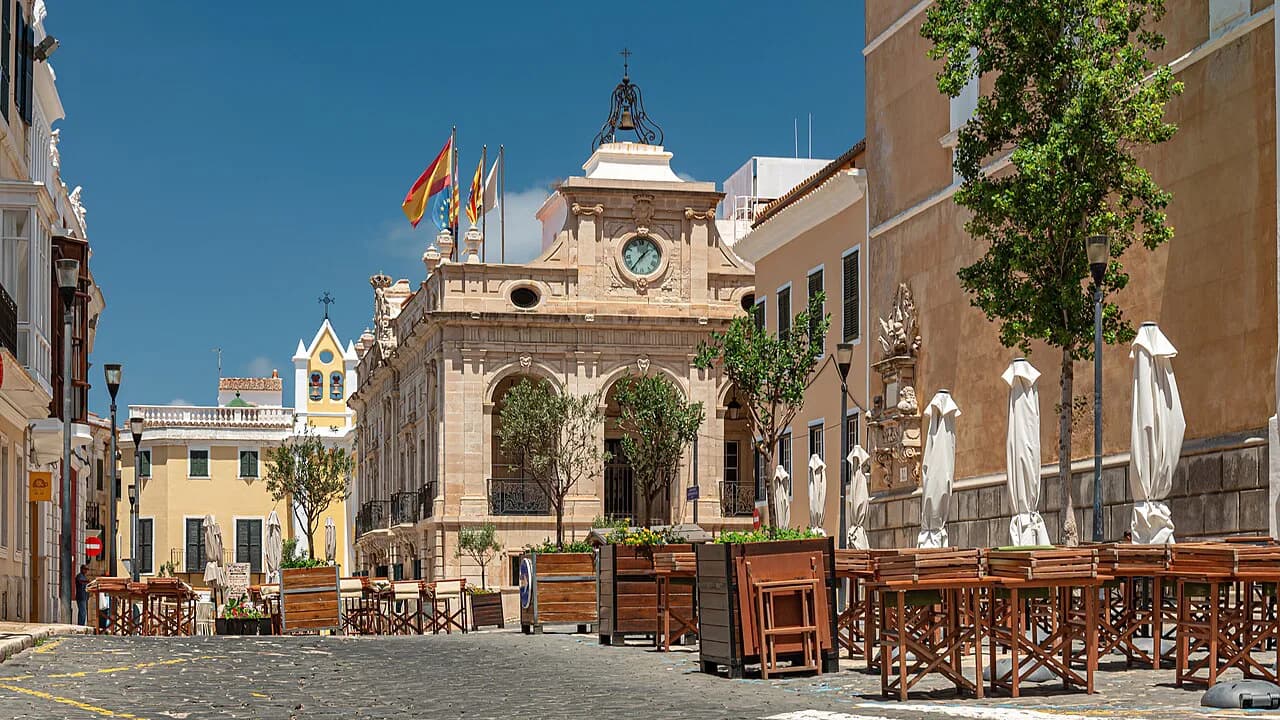
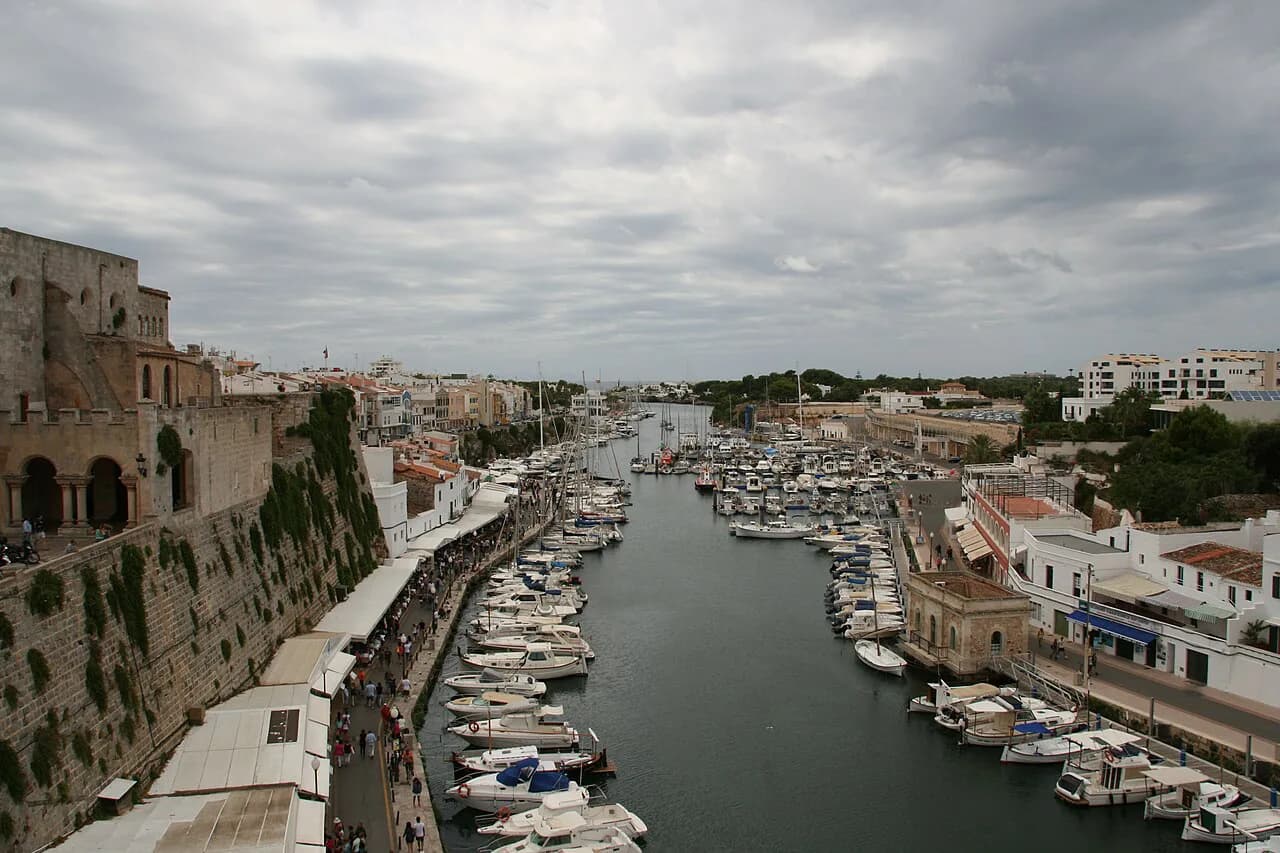
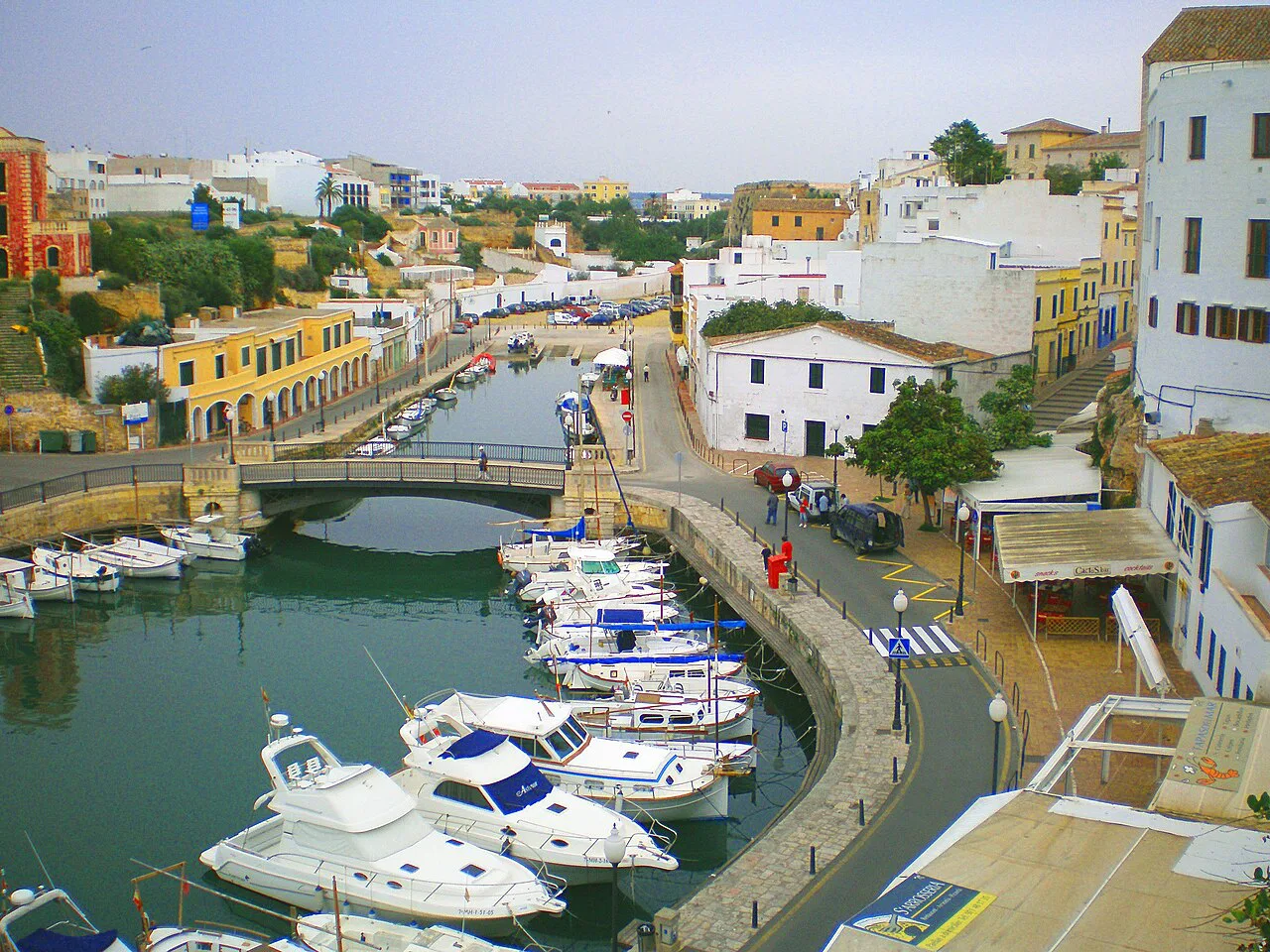
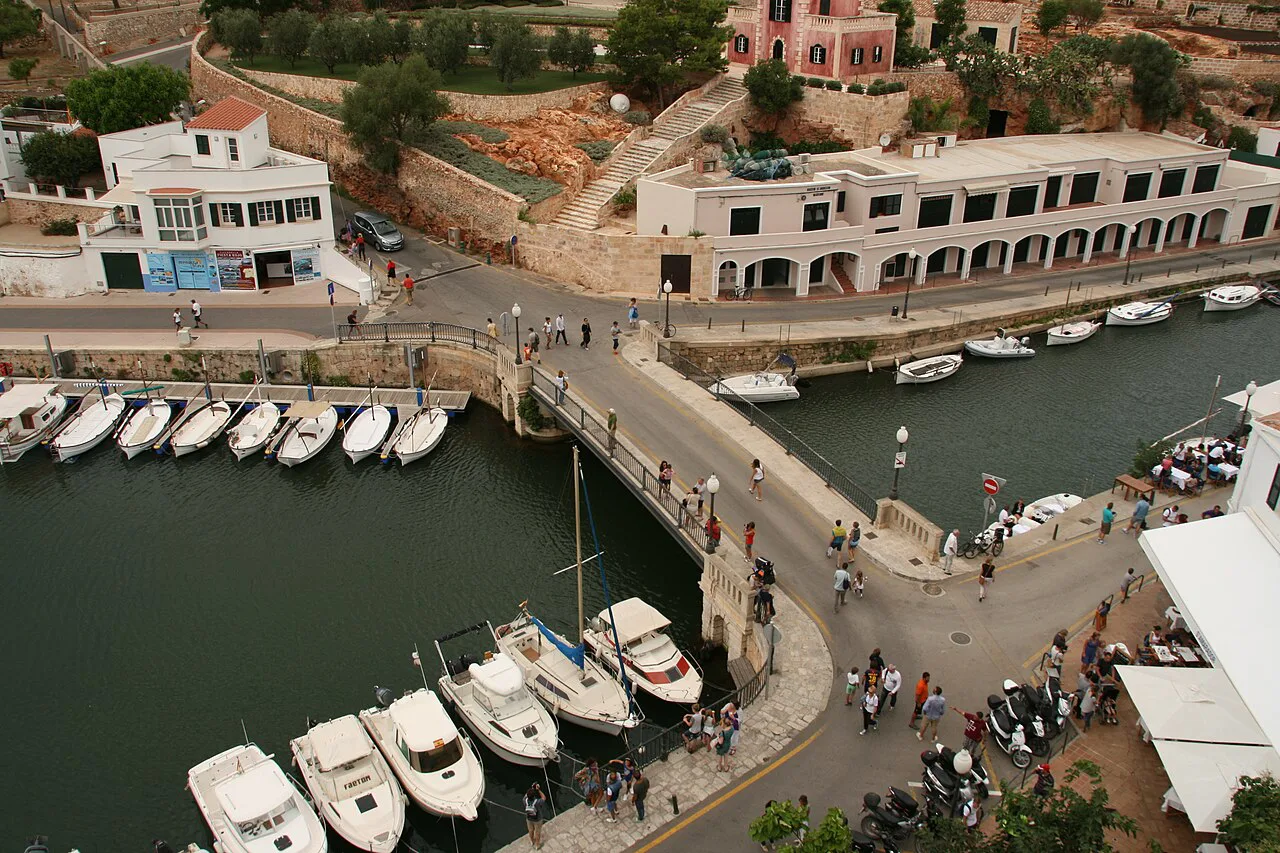
A boat is the practical way to see the coves that sit beyond the end of the road, and it reframes the town itself: you leave from the harbour below the old town and see the cliffs from the water. Use the trip as one half of a day and keep the rest of it for the streets and squares in the Ciutadella old town, which reward a slow walk more than a rushed one.
What a boat trip from Ciutadella actually covers
Trips are coastal cruising with swim stops rather than point-to-point crossings. You motor along the coast, anchor in calas for a swim, and return to the harbour you left. The appeal is the water itself: coves and cliffs that look different from sea level.
Operators are explicit that the itinerary is decided on the day. Routes and stops are adjusted for wind, swell and how busy a Cala is, so a fixed list of coves is a menu of possibilities rather than a promise. That flexibility is a feature: a good skipper moves you to the sheltered side of the island instead of pressing on into a chop.
The three routes: north coast, south coast and the calas of Ciutadella
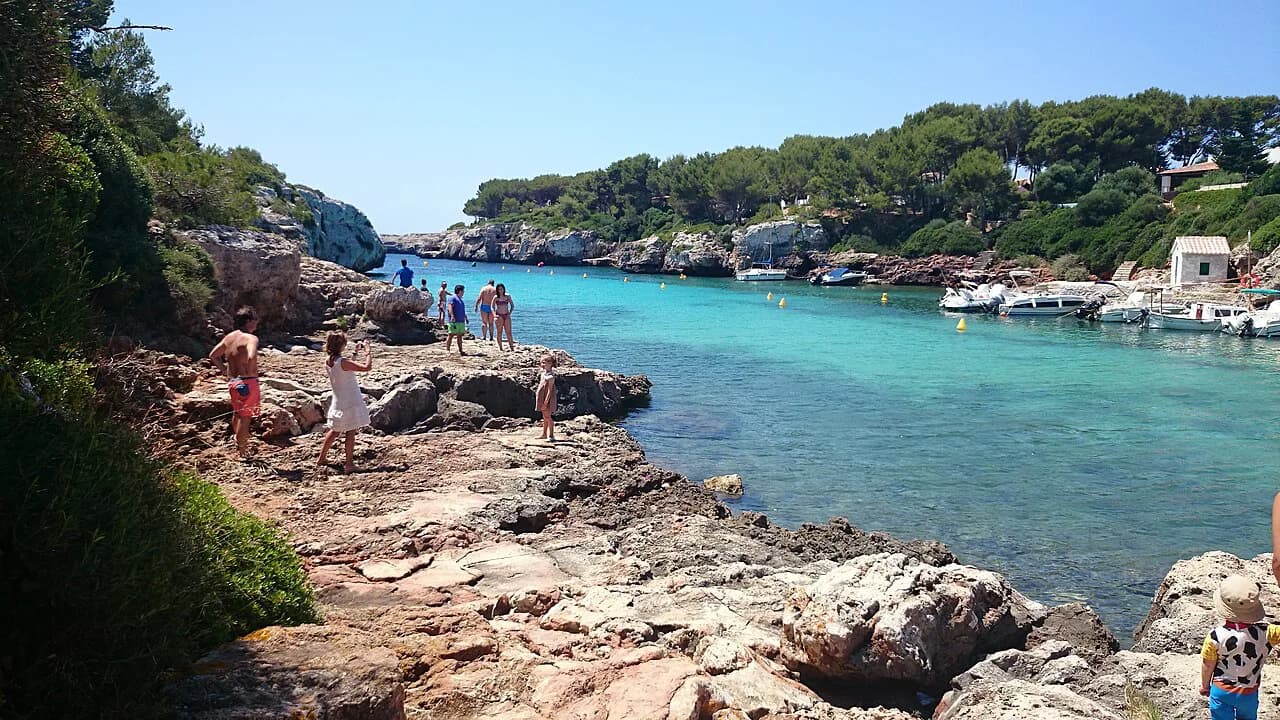
Menorca has two very different coastlines, and boat operators group their trips into three families: the north coast, the south coast and the south-west calas usually associated with Ciutadella. The north is rocky, pine-backed and less crowded; the south is the classic white sand and turquoise water; the south-west holds the famous coves.
The distinction matters because the two coasts behave differently in weather. The south is often the kinder option when the north is blowing, which is why a Ciutadella base is useful for the operators there: skippered excursions from Ciutadella choose between north and south on the day rather than committing in advance.
North coast from Maó: Illa Colom, Cala Tortuga and the Favàritx lighthouse
North coast trips typically leave from the Port de Maó and run for four, six or eight hours depending on the group's plan. The scenery is the draw: Illa Colom, Cala Rambla, Cala Tortuga, Cala Presili, the shoreline around the Faro de Favàritx and the beaches near Montgofre. Expect a more adventurous feel, fewer boats and anchorages chosen for shelter rather than for a photograph.
If you are based in Maó (Mahón) rather than Ciutadella, this route is the natural pick, and the town's harbour makes an easy start and finish. The trade-off is distance from Ciutadella: reaching the Port de Maó takes a drive across the island, so pair the trip with time in Maó (Mahón) rather than treating it as a quick add-on.
South coast from Maó: Cala Rafalet, Illa de l'Aire and Binibeca
The southern route is the island at its most photogenic: shallow water, pale sand and easy swimming. Boats from Maó work along Cala Rafalet, the Illa de l'Aire, Cala Biniparratx, Binibeca, the Cueva de Canutells, Cales Coves, Calan Porter and Binigaus. It is the route to choose for calm water and snorkelling, and the usual fallback when the north is too rough.
Binibeca's whitewashed village is one of the landmarks travellers recognise, and the coves near Es Canutells make a natural turning point before the run back. If the village itself is on your list, it fits neatly with a morning on the boat, and the wider set of Menorca towns is worth a look when you plan the rest of the island.
The Ciutadella calas route: Son Saura, Cala Turqueta and Macarella
The south-west route is the one most people mean by a Ciutadella boat trip, and it is usually run as a full day because the coves sit at the far south-west corner of the island. Boats work through Son Saura, Es Talaier, Cala Turqueta, Cala Macarella, Cala Mitjana, Cala Trebalúger and Cala Escorxada as wind and time allow. Stops are chosen to catch each Cala in good light and to avoid the crowded moments where possible.
One smaller operator, Liber Mare, offers seat-by-seat trips along this coast on a traditional Menorcan llaut, with a morning excursion from 10.00 to 13.30 and an afternoon one from 14.30 to 18.00, and two swim stops among coves such as Cala Escorxada, Cala Fustam, Trebalúger, Macarella, Macarelleta and Cala Turqueta. The boat leaves from Cala Galdana, not Ciutadella harbour, so the meeting point is a short drive down the coast rather than a walk from town.
The meeting point is mooring number 73, opposite the bar Alaska, on the small river on the right-hand side of Cala Galdana, and passengers are asked to arrive fifteen minutes before departure. That detail matters if you are staying in Ciutadella: build in the drive and the walk to the quay rather than cutting it fine on the day.
Which route suits which day, and why the wind decides
Choose the south-west calas for postcard scenery and easy swimming, the north for a wilder, less crowded coastline, and the south coast when you want shallow, calm water and snorkelling. The north coast is the more exposed of the two in a breeze, so the wind often makes the call.
The practical consequence is to hold your plans loosely. Book a route you actually want, but accept that the coves may be swapped for sheltered alternatives; a skipper who insists on a fixed list in a fresh breeze is not doing you a favour.
Half-day or full-day: 4, 6 or 8 hours on the water
Timings vary by operator and by route. Private charters from Maó can be shaped around four, six or eight hours, while south-west Cala trips are commonly run as a full day of about eight hours so the boat can reach the far coves and stop more than once. One Ciutadella-based operator advertises a four-hour private trip with skipper, fuel and activities included.
Half a day suits a first visit or a mixed group; a full day suits anyone who wants several swims and a slower rhythm. Ask how much of the time is actually at anchor, since a longer cruise with one stop can feel thinner than a shorter trip with two.
Private charter versus booking by the seat
Whole-boat charter buys you the itinerary and the company: your group, your pace, and a say in where the boat goes within the day's plan. Seat-by-seat trips cost less per person and are simpler to book for one or two travellers, but you share the calas and the schedule with other passengers.
Charters split between bareboat rental for licensed sailors and skippered trips for everyone else. Boats are equipped with GPS, plotter and depth sounder, and fuel is charged according to actual consumption, so the headline rate is not the final bill.
Where trips leave from and how to reach the departure point
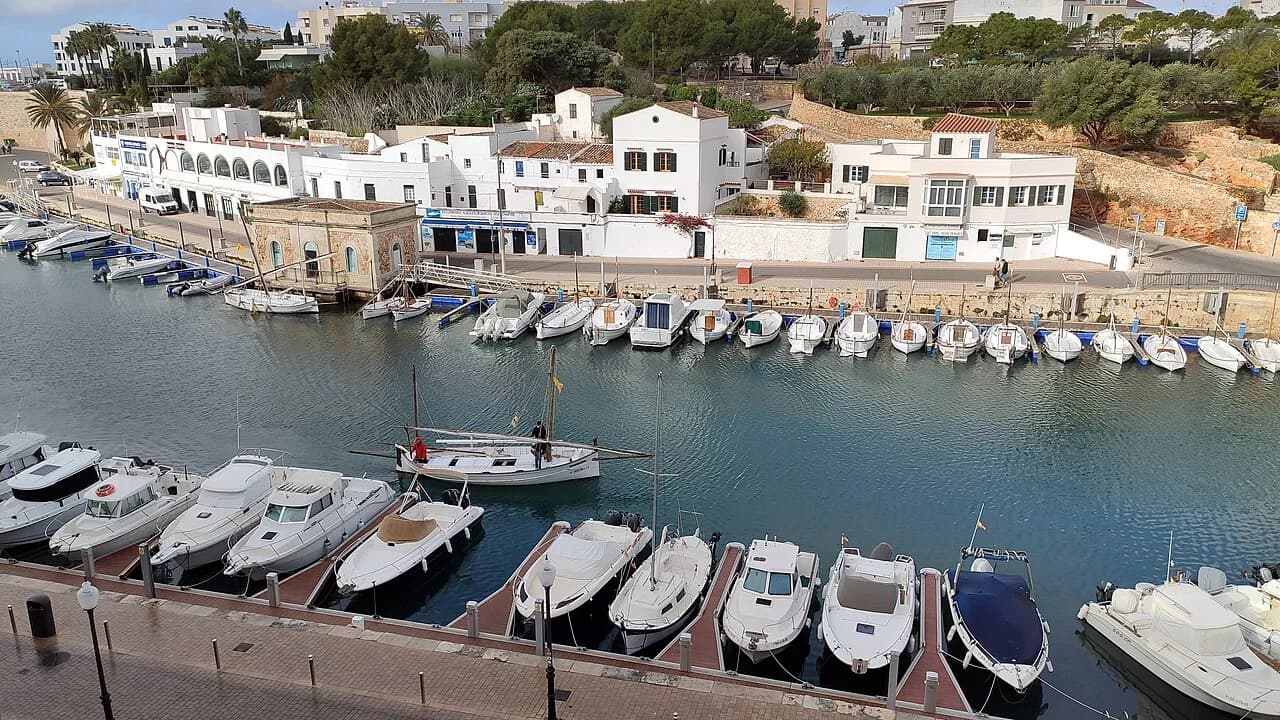
Departure points depend on the operator: Ciutadella's harbour for charters and Cala trips on that side of the island, Es Canutells for some south-west departures, the Port de Maó for north and south routes, Fornells for traditional llaut trips, and Cala Galdana for the seat-by-seat run. Check which quay your booking names before you arrange transport.
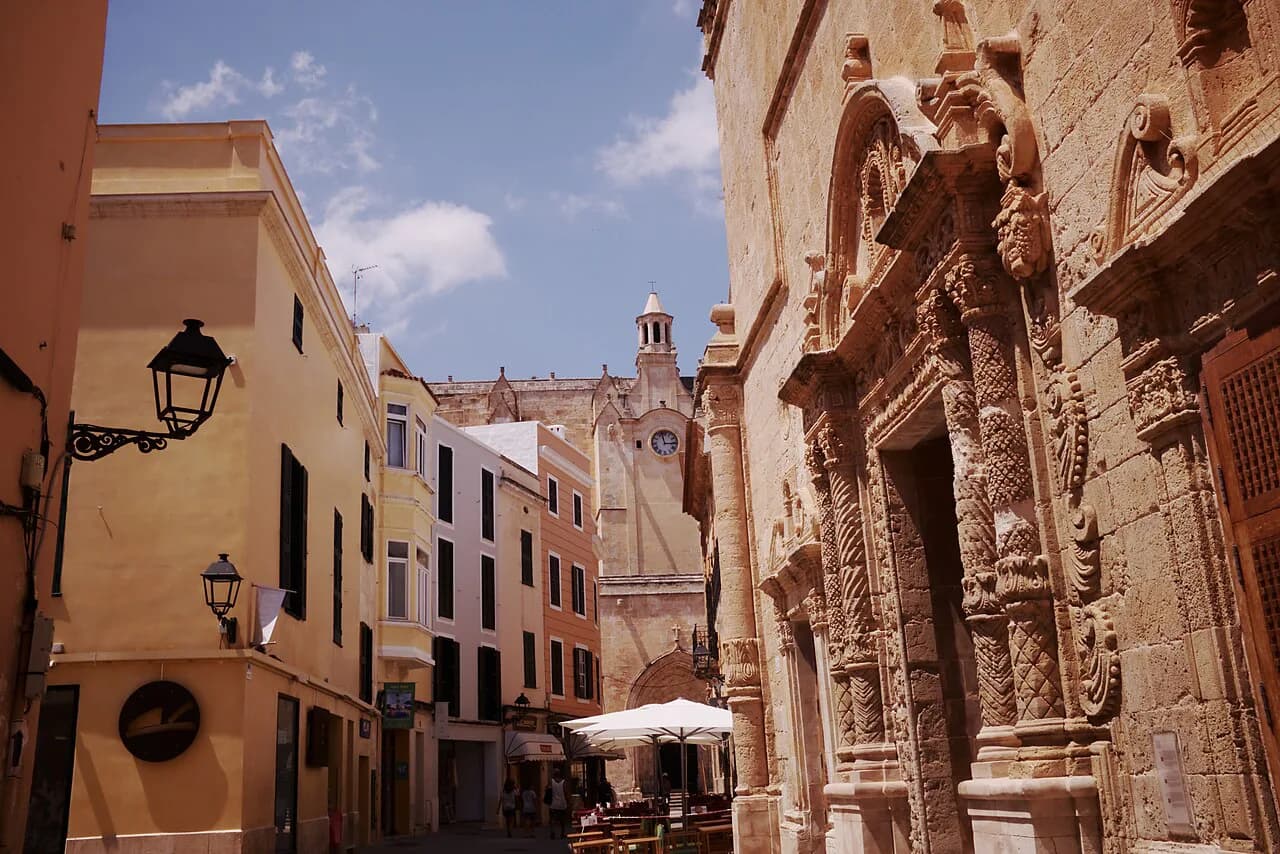
Departure points depend on the operator: Ciutadella's harbour for charters and Cala trips on that side of the island, Es Canutells for some south-west departures, the Port de Maó for north and south routes, Fornells for traditional llaut trips, and Cala Galdana for the seat-by-seat run. Check which quay your booking names before you arrange transport. In Ciutadella itself, the old town sits above the water, so a morning trip slots easily between the cathedral, the lanes and the Plaça des Born. If you are working out walking distances and where the harbour sits relative to the centre, a Ciutadella map is the quickest way to fix your bearings before the day.
What to bring and what to expect on board
Bring swimwear already on, a towel, sun protection, water and footwear that grips a wet deck. Many boats carry snorkelling gear, paddleboards or a small tender, but ask what is included rather than assuming. Seasickness is worth planning for on the north coast, where the water is more exposed.
Shade is limited on open boats, and the sun off the water is strong even on a breezy day. A light long-sleeved layer does double duty against wind on the crossing and sun at anchor.
Booking and what to confirm before you pay
Confirm four things before paying: the departure quay and check-in time, the planned duration, what is included in the price, and the cancellation policy if the sea turns. Also ask whether the price covers fuel, skipper and any extras, since those items are not always bundled.
Groups can be split across boats or moved to another coast on the day, and small operators fill up in high season. Book ahead for the south-west calas in summer and keep a flexible day in reserve so a weather call does not wreck the plan.
Which Ciutadella boat trip to book
Book the south-west calas route if you want the famous coves, a Maó departure if you want the wilder north, and a skippered private charter if your group wants the boat to itself. Whatever you choose, expect the skipper to fine-tune the route for wind and sea on the morning.
Leave the rest of the day for the harbour, the old town and a slow loop past the Plaça des Born, and the boat becomes part of a proper Ciutadella day rather than a separate outing. Start with Things to do in Ciutadella for the rest of the plan.
Explore more Ciutadella guides
Frequently Asked Questions
Can you walk to a beach from Ciutadella?
The town's own waterfront is harbour rather than sand, and the coves on the boat routes lie along the coast to the south and south-west, so most travellers reach them by boat, car or bus.
Is a boat trip from Ciutadella better than one from Maó?
It depends on which coast you want. Ciutadella-based boats are well placed for the south-west calas around Turqueta and Macarella, while Maó departures serve the north coast and the southern coves nearer that end of the island.
Do boat trips run outside summer?
The operators' booking pages are the place to check which dates are open for a specific trip, as schedules and seasonal availability vary between companies.
Are the Cala stops guaranteed?
No. Operators adjust routes and swim stops for wind, swell and how busy a cove is, so treat a published list of calas as the likely menu rather than a fixed timetable.
Sources
Notes for your next Spanish town break
Optional updates to our guides.
You might also like
Continue reading
More guides you'll find useful