Ciutadella Old Town: Streets, Squares and Walking Route
Walk Ciutadella's old town from Plaça des Born to the port: Ses Voltes, the cathedral quarter, quiet lanes and the climb back, with times per stop.
On this page
Ciutadella's old town is small enough to cover on foot in half a day, and generous enough to fill a full one once you add the cathedral and the old port. It was the island's capital for centuries, and the historic centre keeps the aristocratic palaces, arcaded shopping streets and cliffside port of that period. This guide gives a walking order rather than a checklist: what follows what, how long each square deserves, and where the climb back up from the harbour bites.
The whole quarter is declared a cultural asset, so the pleasure is in the streets as much as the monuments. Walk it early and the arcades and the main square belong to residents rather than tour groups. For the wider list of sights around town, see our guide to things to do in Ciutadella.
What the old town is and where it starts
Ciutadella sits on the western side of Menorca, 45 km from Maó along the ME-1, a drive of roughly three quarters of an hour. The airport is next to Maó rather than Ciutadella, so arrivals by plane reach town by shuttle into Maó and then a connecting bus; ferries from Alcúdia and Barcelona come into Ciutadella's own harbour. Treat the old town as one compact, pedestrian unit and you will not need a car or a bus inside it.
Start at the top, at Plaça des Born, and work downhill. The centre is a knot of lanes between the main square and the water, with the cathedral quarter in the middle and the port in the gap below. Our Ciutadella map shows how the squares and streets stack up, which helps you decide where to begin if you arrive from the port rather than the bus stop.
Plaça des Born and the Mirador del Port
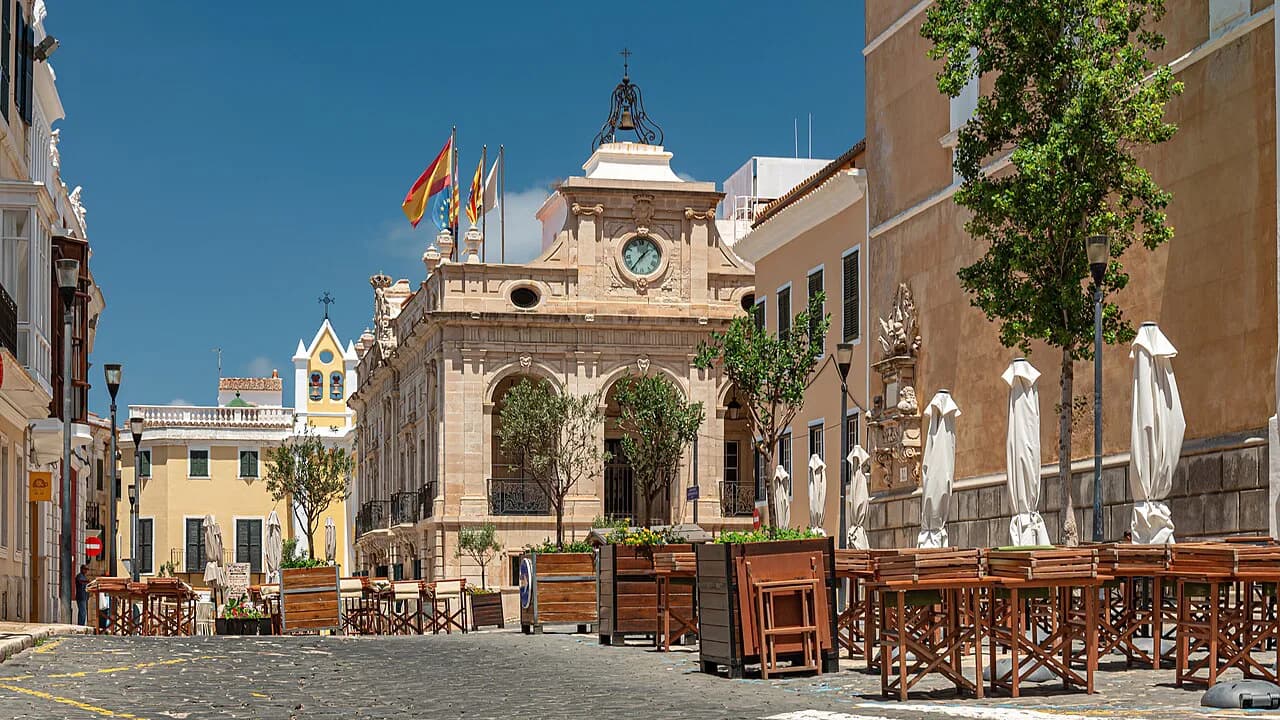
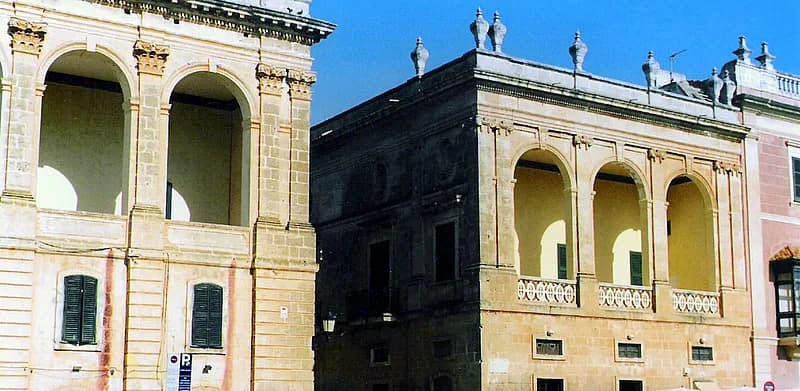
Plaça des Born was the old parade ground and remains the nerve centre of town. In the middle stands the obelisk commemorating the city's defence against the Turkish attack of 1558, and around the edges are the Ajuntament de Ciutadella, the Palau Salort of the early 1800s and the neoclassical Palau de Torre Saura. The square is also where the Sant Joan festivities of 24 June are held; give it 20 to 30 minutes.
Behind the town hall, the Mirador del Port looks straight down onto the harbour and out over the cliffs. It costs nothing and takes a few minutes, and it is a natural first stop before you drop into the lanes. Check timings before you set out, since some monuments around the square open on their own schedules.
Catedral de Santa Maria (Catedral de Menorca)
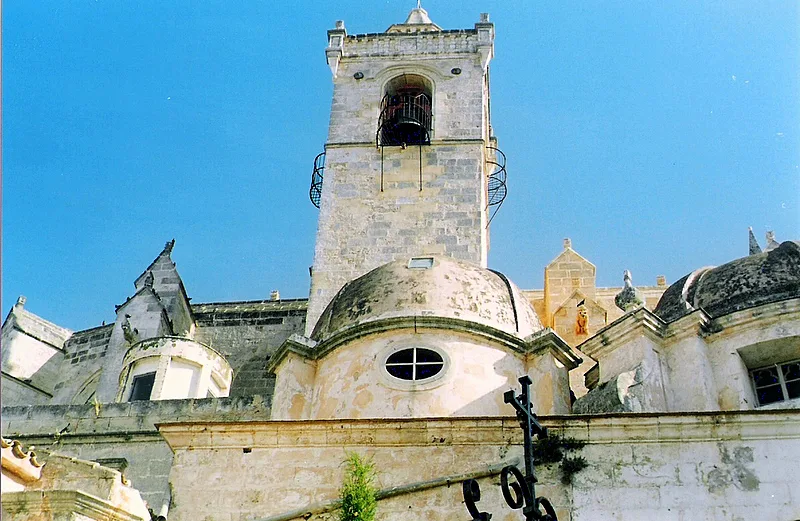
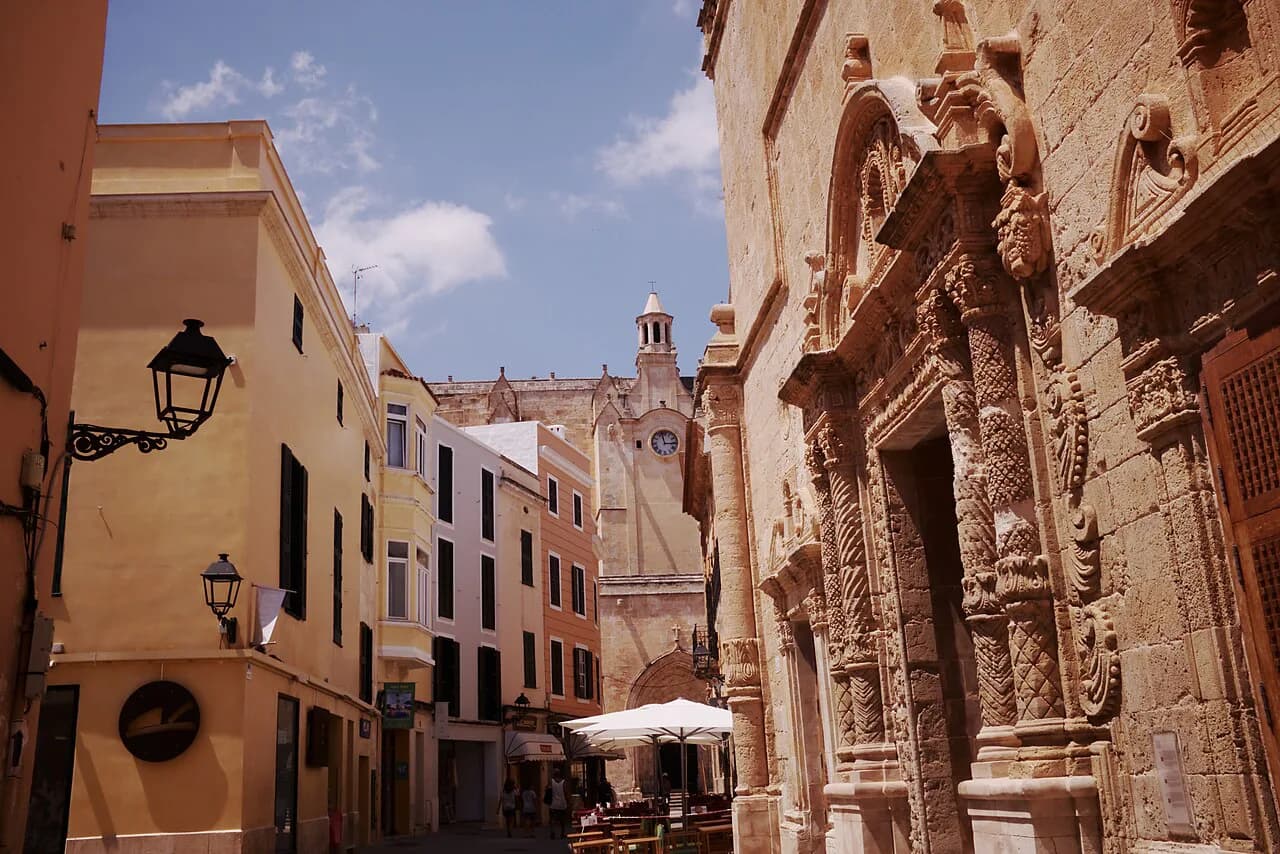
The cathedral, in Catalan Gothic style and still the island's episcopal seat, stands over the site of the former main mosque, and the base of its bell tower reuses the old minaret. It is the one major paid interior in the old town, and 30 to 45 minutes covers it comfortably at the start of the day, before groups build up.
Entry is charged and the price and opening times vary by season, so check the cathedral's own notice or the tourist office before you commit an hour to it. Visitors are expected to keep quiet if a service is under way. If you are short of time, the exterior and the square in front are free to look at, and the rest of the walk does not depend on going inside.
Ses Voltes and Carrer Josep Maria Cuadrado
Ses Voltes is the arcaded street that runs off the main square, and with Carrer Josep Maria Cuadrado it forms the town's principal shopping artery. The covered walkways give shade in the middle of the day, and the shops behind them sell shoes, leather and local goods rather than airport souvenirs. Allow about 45 minutes to an hour to walk the arcades and the surrounding lanes without rushing.
If you want to shop deliberately rather than browse, our guide to shopping in Ciutadella picks out where the arcaded streets lead and what they hold. The arcades are at their quietest early in the morning, when the shutters are still coming up and the bakers' doors are open. Later in the day they fill with visitors, which is pleasant but slower going.
Plaça de la Llibertat, also called Plaça des Peix
Plaça de la Llibertat, known locally as Plaça des Peix, is the fish-market square. It is a natural pause about two thirds of the way through the old town, useful for a drink or a coffee at the point when the walking starts to add up. Give it 30 to 45 minutes if you sit down, or ten minutes if you only look.
The square is free to wander and sits comfortably between the cathedral quarter and the lanes, so it makes a sensible hinge in your route. It is also close to the restaurants around the port, if you are timing the walk to end with lunch.
The quieter lanes: Sant Cristòfol, Santa Clara and Carrer del Silenci
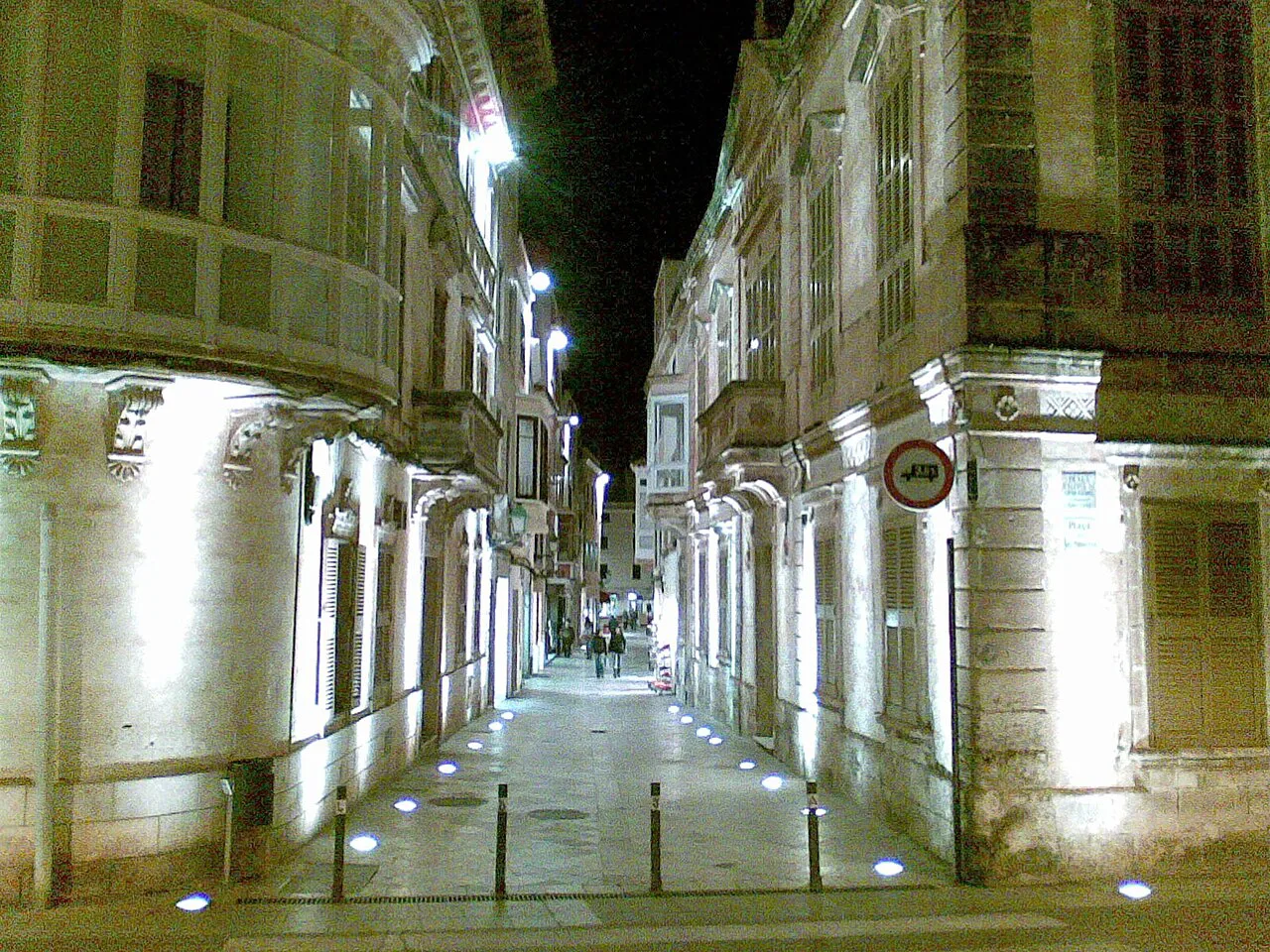
The small streets off the main axis, Sant Cristòfol, Santa Clara and Carrer del Silenci, are where the old town feels like itself. There are aristocratic palaces, small churches, courtyards and shuttered houses, and in the middle of the day there is often no one else in them. Wander without a target for 45 minutes to an hour; this is the part of the walk that rewards aimlessness.
These lanes also explain the town's older history as the island's political centre, with remnants of its period as capital still visible in the palaces and facades. If you want the single sights named and opened out, our Ciutadella Attractions: 6 Visitor Guides covers the monuments one by one so this walk can stay about streets and sequence.
Palau Salort and the Claustre del Seminari if you have extra time
Two interiors are worth adding if you have more than half a day: the Palau Salort on the main square, which takes 30 to 45 minutes, and the Claustre del Seminari, home to the Museu Diocesà, which needs a similar allowance. Both charge for entry, and neither is essential to a first walk because the streets around them already give the flavour.
Choose between them rather than trying both if time is tight. Palau Salort suits anyone interested in the aristocratic town houses, while the cloister and diocesan museum suit anyone chasing the religious and architectural side. Both sit naturally between the main square and the lanes, so slotting one in does not disturb the walking order.
The old port: down the slope and back up again
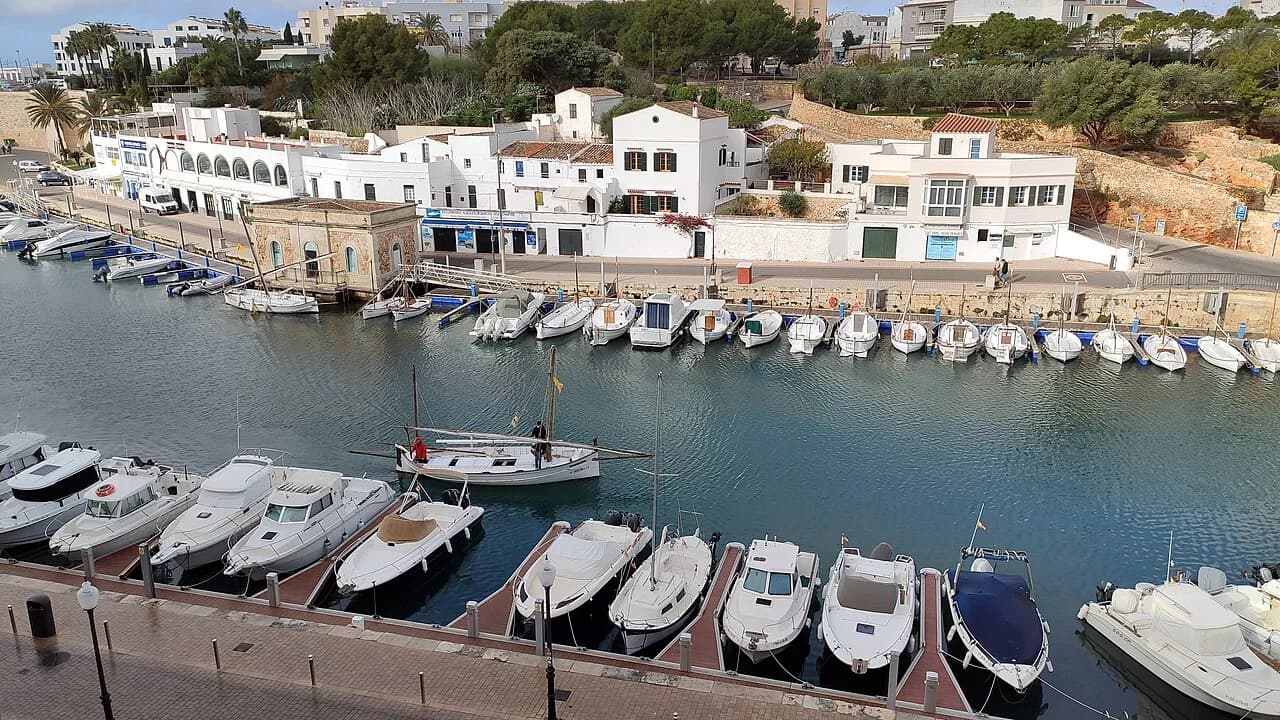
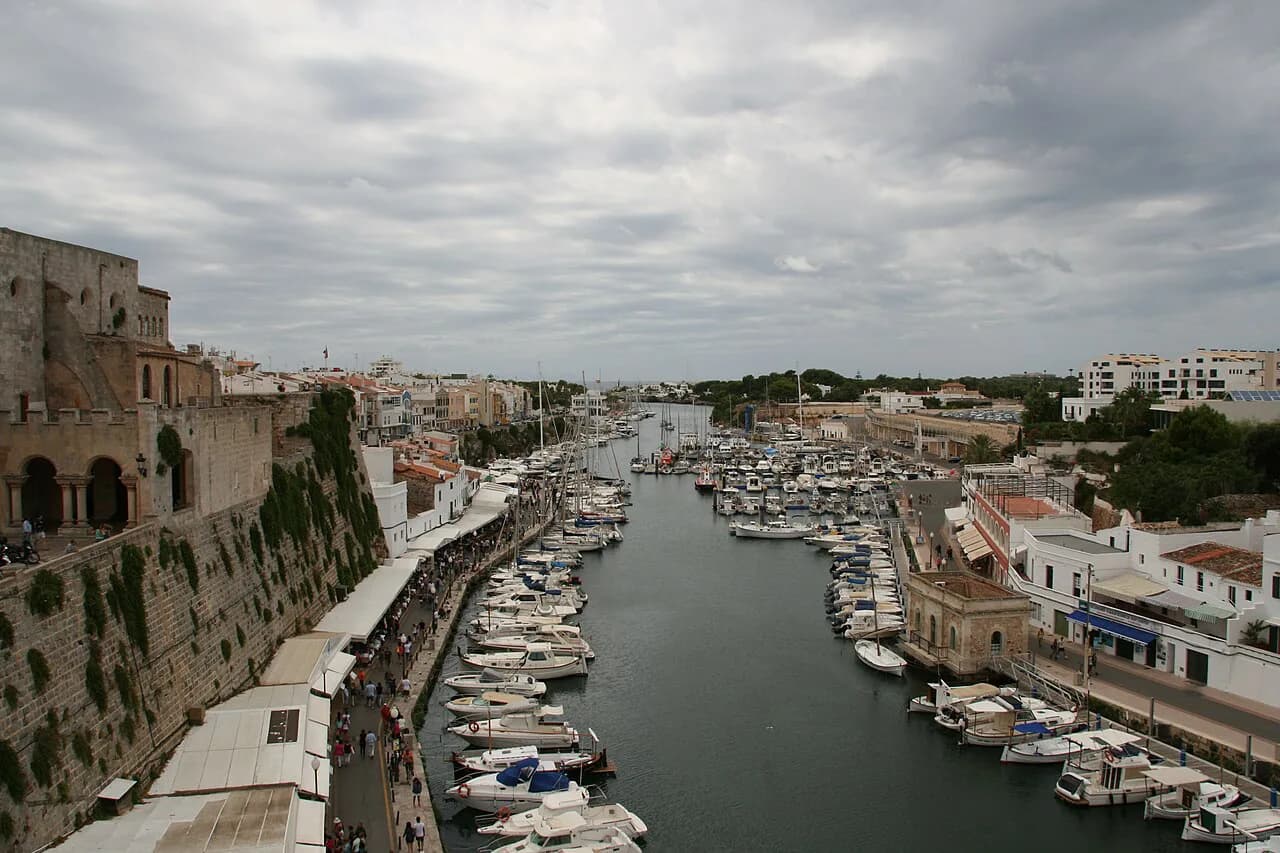
The old port is smaller than Maó's great natural harbour but more dramatically set, wedged between cliffs and reached by a slope that is easy on the way down and noticeable on the way back. Walk the quays, look back up at the town and allow 45 minutes to an hour for the descent, the waterfront and the climb. The harbour is the town's eating and social heart, so the lower end is busier than the lanes above.
A Ciutadella boat trip from the harbour is the obvious way to see the coast if you want a change from walking, though you should book on the day or in advance rather than expecting a fixed timetable. If you would rather stay dry, the paseo marítimo and the bastion side give you the harbour without the climb.
Castell de Sant Nicolau at the end of the paseo
At the far end of the seafront promenade stands the Castell de Sant Nicolau, a small coastal tower guarding the entrance to the harbour. The exterior is free to see and takes about 30 minutes from the quays, and it is best saved for late afternoon, when the light drops and the stone of the town warms up. On very clear days the coast of Mallorca can be made out on the horizon.
The walk out and back is flat, which makes it a good way to end a day that has already involved the climb from the port. Do not plan on going inside unless you have checked access in advance.
A half-day and full-day route in walking order
For half a day, start at Plaça des Born, look down from the Mirador del Port, then walk Ses Voltes and Carrer Josep Maria Cuadrado, cut through the cathedral quarter, pause at Plaça de la Llibertat and finish in the lanes around Sant Cristòfol, Santa Clara and Carrer del Silenci. That is the essential old town without the port, and it is all on foot.
For a full day, take the same morning, add the cathedral first thing if you want to go inside, walk down to the old port for the middle of the day, and save the late afternoon for the paseo marítimo and Castell de Sant Nicolau. Add Palau Salort or the Claustre del Seminari on the way through if you have energy left. The order matters more than the clock: downhill in the morning, harbour at midday, promenade at sunset.
Beyond the walls: Naveta des Tudons, Lithica and the calas
Two sights just outside town are easy add-ons if you have a car. The Naveta des Tudons is a prehistoric funerary monument about 10 minutes' drive away and takes 30 to 45 minutes, while Lithica, the old sandstone quarries at Pedreres de s'Hostal, is 2 km out and needs an hour to an hour and a half. Both charge for entry, so check the current admission on arrival.
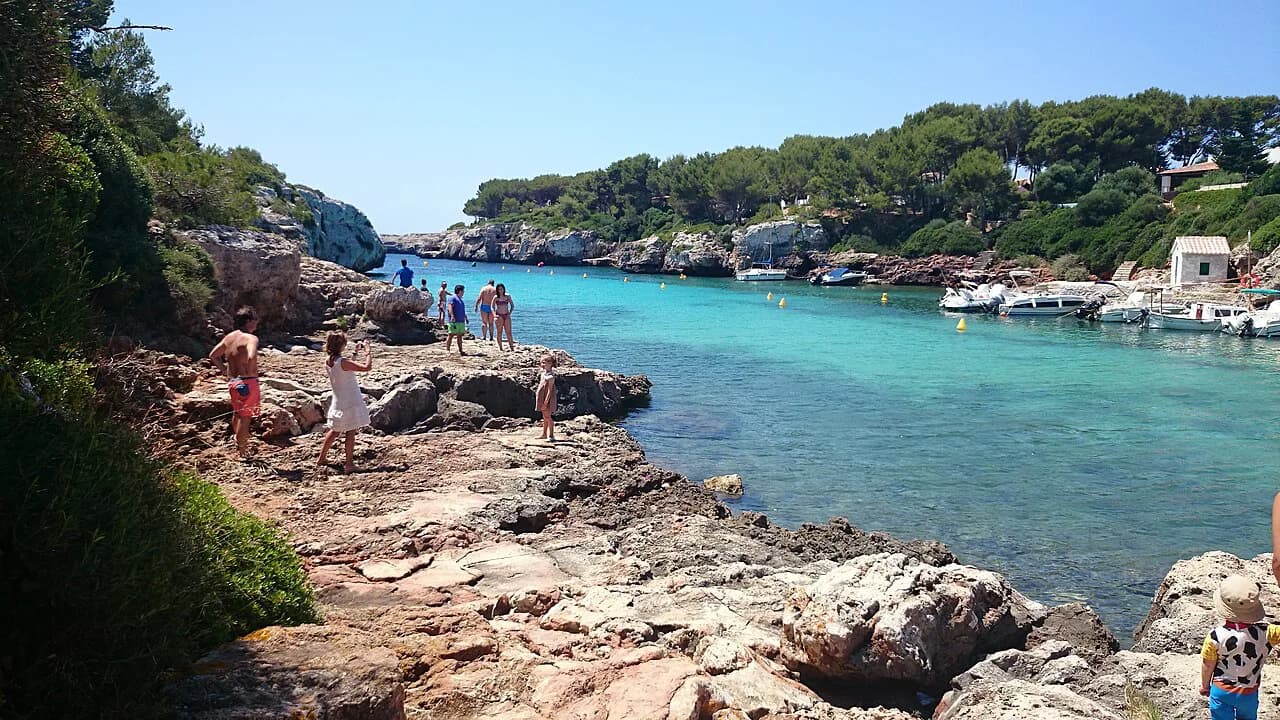
The nearby calas, such as Algaiarens (La Vall) and Cala Turqueta, are around 20 minutes away by car; treat them as a separate outing rather than part of the old town walk. If you want more Menorca towns after Ciutadella, Maó (Mahón) with its huge harbour is the obvious next stop along the ME-1, and Binibeca Vell and Es Castell sit on the same eastern side of the island.
Heat, shade, quiet hours and getting there
Menorca's summer sun is strong, and although the old town has more shade than an inland Andalusian town, the arcades and the narrow lanes are your shelter in the middle of the day. Walk early or late, keep the harbour climb for the cooler hours, and use Plaça des Born or the cathedral as a rest stop when the sun is high. The streets are at their quietest first thing in the morning and again after the day-trippers leave.
By public transport, the connection runs through Maó: shuttle from the airport to the city, then the bus to Ciutadella, with the ME-1 taking about 45 minutes by car if you drive. Check the current bus and ferry times before you travel, as these change by season.
Which half of Ciutadella should you walk first?
Walk the top first. Plaça des Born, Ses Voltes, the cathedral quarter and the lanes are the essential old town and give you the town's character in half a day, while the port and the Castell de Sant Nicolau are the add-on that makes a full day. Doing the downhill stretch early means the climb back happens before the heat and the crowds.
If you only have a morning, skip the interiors, walk the squares and lanes, and finish at Plaça de la Llibertat. If you have a full day, add the cathedral and the harbour, and save the promenade for the evening.
Explore more Ciutadella guides
Frequently Asked Questions
Is Ciutadella old town walkable?
Yes. The historic centre is compact and pedestrian, and the main squares, cathedral quarter and arcaded shopping streets all sit within a short walk of each other. The only real climb is between the town and the old port, which is steep on the way back up.
Can you reach Ciutadella without a car?
Yes, by sea. Ferries from Alcúdia and Barcelona come directly into Ciutadella's harbour, and by air you take the shuttle from Menorca's airport to Maó and then a connecting bus to Ciutadella. Inside the old town you will not need a car or a bus, since the historic centre is compact and pedestrian.
Can you drink tap water in Menorca?
Tap water on Menorca is treated and generally safe to drink, though it can taste hard or salty in places, so many visitors buy bottled water instead. Ask at your accommodation if you are unsure about the supply where you are staying.
How long does the old town take to walk?
Half a day covers Plaça des Born, Ses Voltes, the cathedral quarter and the quieter lanes on foot. A full day adds the old port, the paseo marítimo and the Castell de Sant Nicolau, plus one paid interior such as Palau Salort or the Claustre del Seminari.
Sources
Notes for your next Spanish town break
Optional updates to our guides.
You might also like
Continue reading
More guides you'll find useful