Menorca Towns: Ciutadella, Maó, Fornells and the Villages to Plan Around
Menorca's towns each suit a different kind of break: Ciutadella for old streets and a port, Maó for harbour life, Fornells for a quiet northern base.
On this page
Plan a Menorca break around two towns rather than ten: Ciutadella for a compact old quarter and harbour, and Maó (Mahón) for the island's biggest natural harbour and its markets. Everything else is a morning, a lunch stop or an inland base you choose for what sits nearby. This guide gives each town a job in the trip and explains how the pieces fit together.
The island's two-capital split is the single most useful planning fact. Ciutadella was the old capital and Maó is the working one, so picking a side shapes your days more than any hotel choice. Distances in this guide are approximate.
Which Menorca towns are worth building a break around
Six places do most of the work: Ciutadella, Maó, Binibeca Vell, Fornells, Es Castell and Es Grau, with Es Mercadal, Ferreries and Alaior as inland bases. Each has a clear reason to go and a clear time of day when it makes sense.
A sensible shape is a morning town, a lunch town, a sunset town and, if you have a car, an inland base for the days in between. Binibeca Vell and Es Grau work best early, Es Castell and Cales Fonts late, and Ciutadella at any hour because the centre is small enough to walk.
The island's towns divide by coast as well as by size: Fornells and Es Mercadal serve the north and Monte Toro, while Ferreries and Alaior sit close to southern access points and the talayotic sites. That geography, more than any ranking, decides which base saves you driving.
Ciutadella: Plaça des Born, the cathedral, Ses Voltes and the port, all within a kilometre on foot
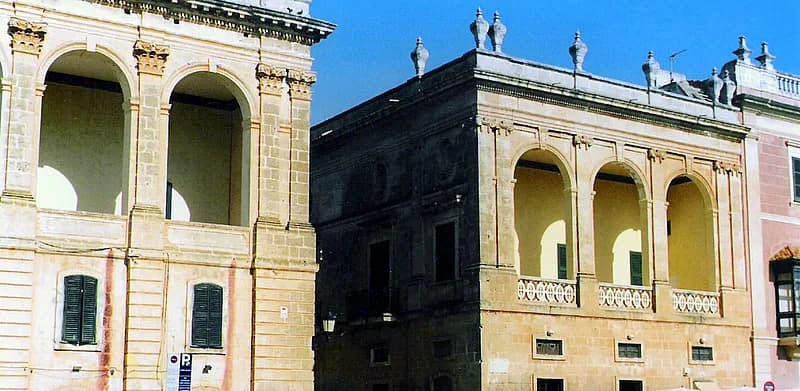
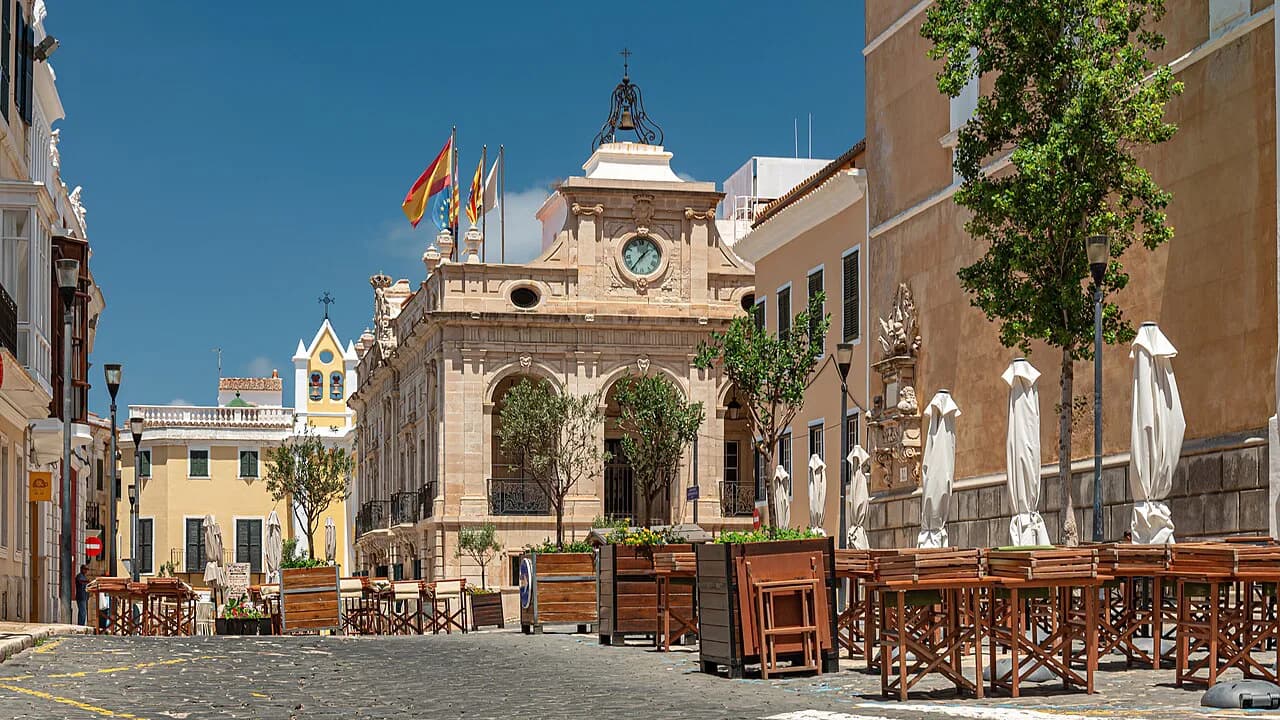
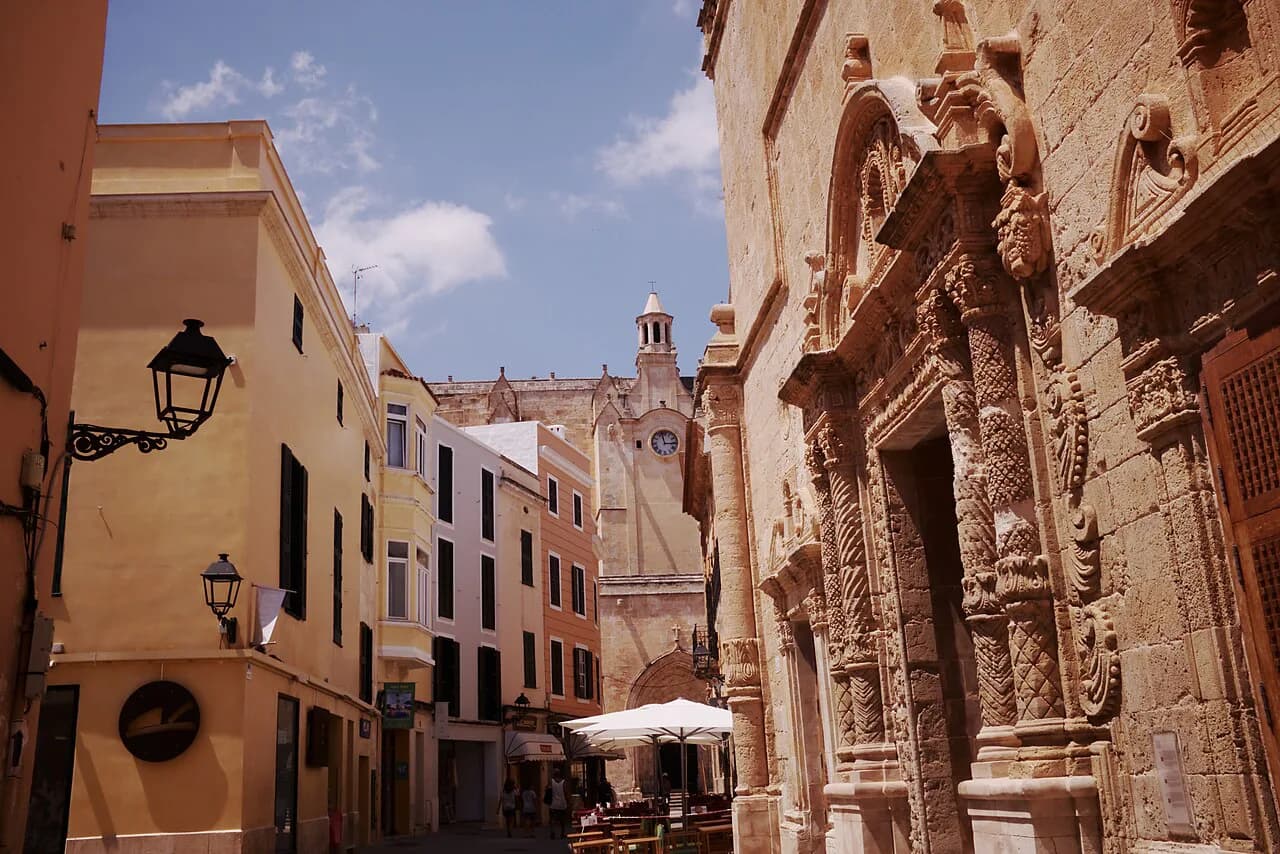
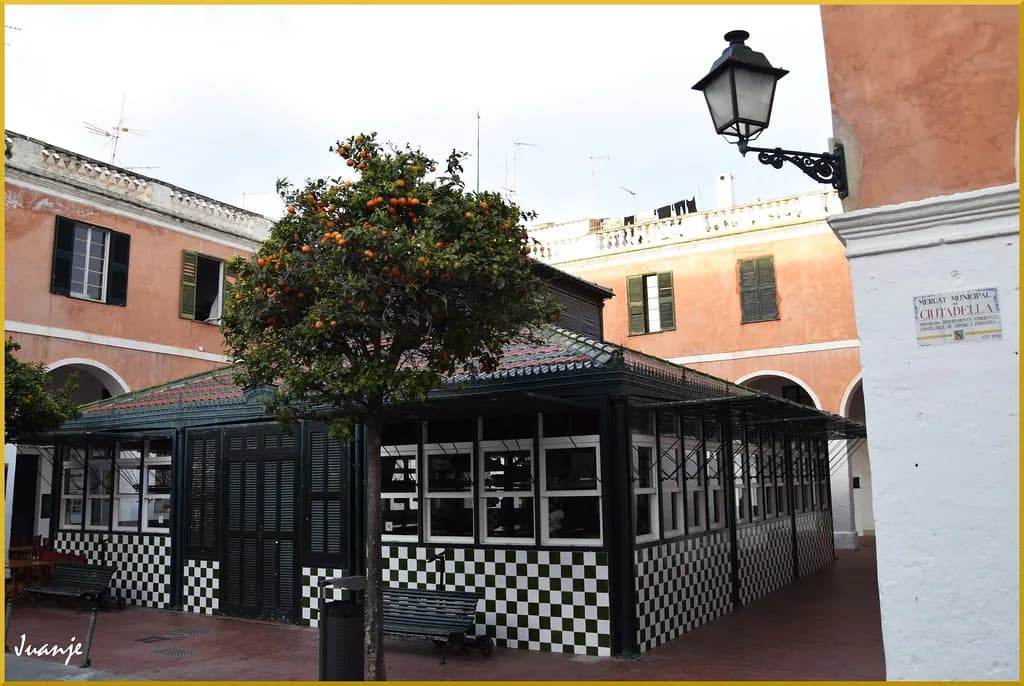
Ciutadella was the island's old capital, and its centre packs palaces, a cathedral, the Plaça des Born and the porched arcades of Ses Voltes into less than a kilometre. You can cover the core on foot without planning transport at all.
Give the old town a half day and keep the harbour for later, when the terraces fill and the light softens. The tight street plan means a map earns its place: lanes bend and names change, and the Born is the natural place to reset your bearings.
For a wider view of what is inside the old quarter and what sits just outside it, work through the individual attraction guides before you go. It is the difference between wandering pleasantly and actually finding the cathedral and the palaces you came for.
Maó (Mahón): the natural harbour, the fish market and the Museu de Menorca
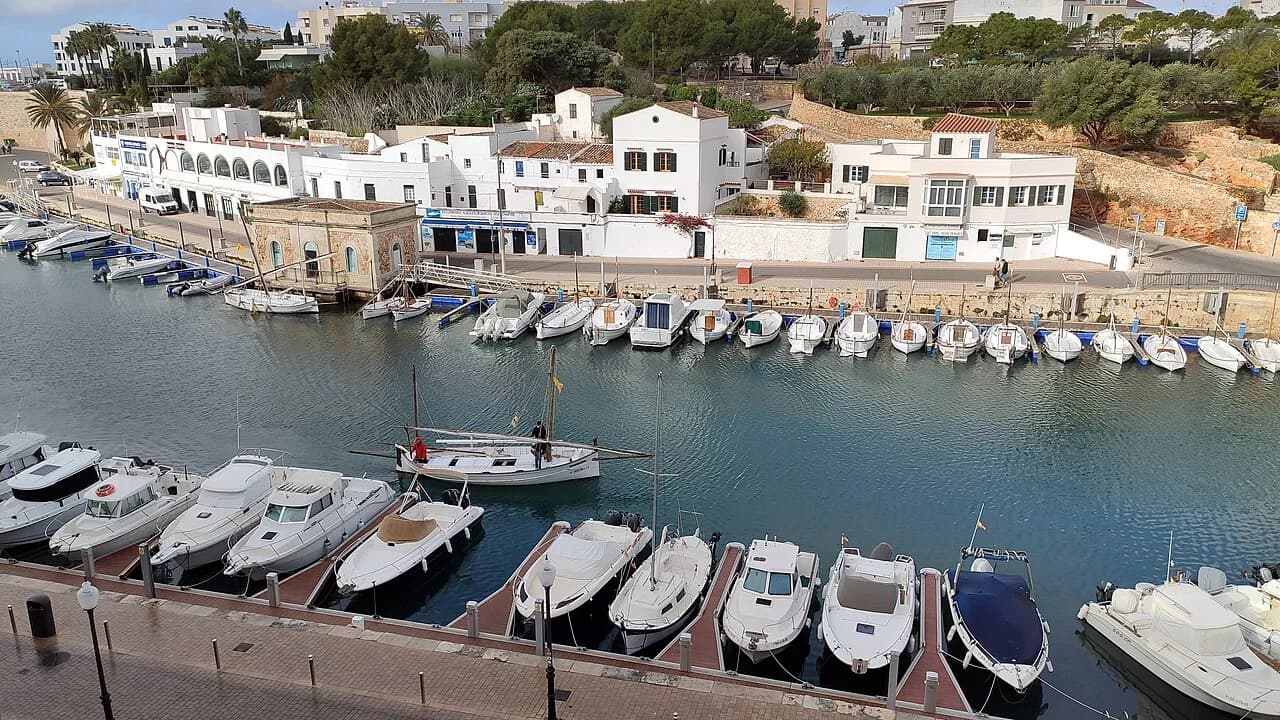
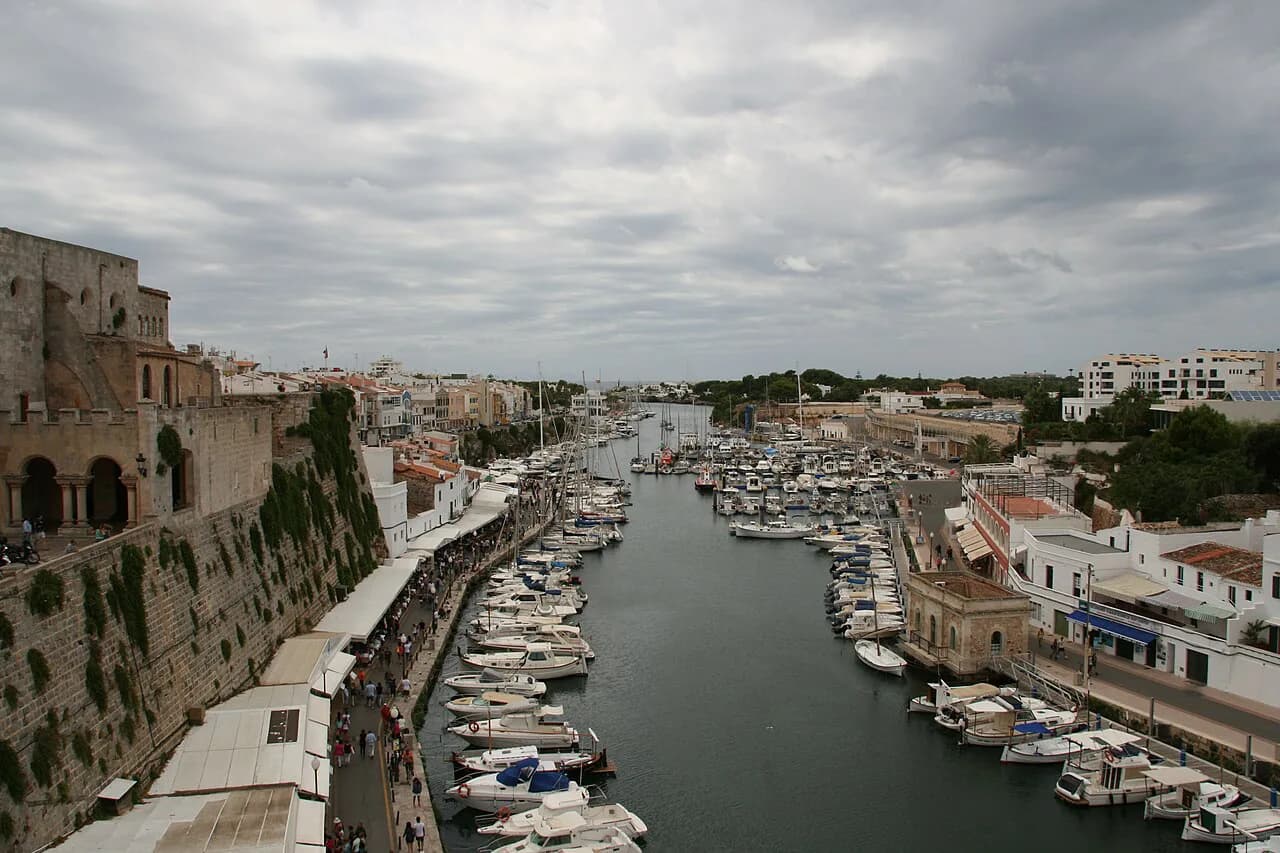
Maó sits above one of the Mediterranean's biggest natural harbours, and the town's best moments are vertical: houses stacked over the water and gaps between buildings that work as improvised viewpoints. The fish market and the market in the Claustre del Carme are both built over the port and anchor a harbour-side walk.
The town combines British-era layers with Menorcan everyday life, which is why it reads differently from Ciutadella. The Museu de Menorca and the Teatre Principal give the centre substance beyond the waterfront.
Maó rewards a slow half day rather than a rushed one: harbour first, then the old centre, then the markets. If you only have one full day on this side of the island, spend it here rather than squeezing in a third town.
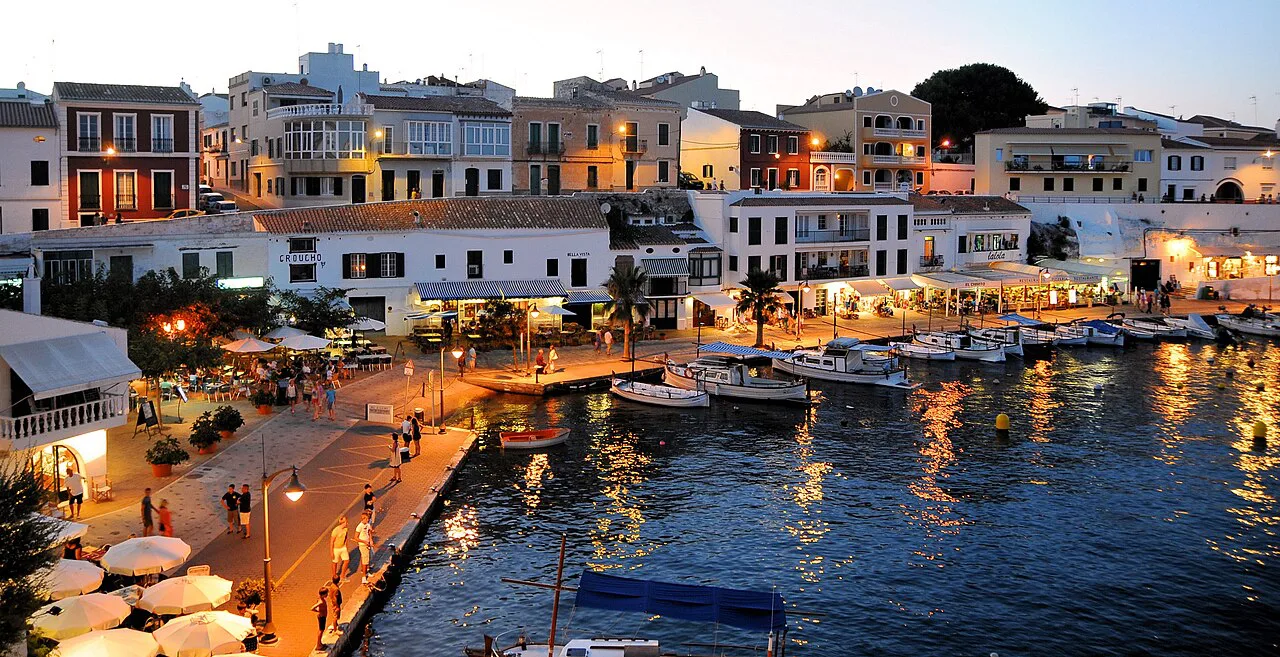
Binibeca Vell: the whitewashed 1964 fishing-village-style settlement and its visiting hours
Binibeca Vell looks like an old fishing village but was designed in 1964, and it is a lived-in residential estate rather than a museum set. The owners' community sets visiting hours of 10:00 to 22:00, asks guests to keep the lanes quiet, and the local advice is to arrive before 11:00.
The settlement sits roughly 8 km south of Maó, and the beach at Binibèquer is about a five-minute walk away. Treat it as a one-hour morning stop with a camera, not a destination for the whole day.
Because people live there, the trade-off is behaviour: no trespassing on private terraces, no noise, and no assumption that every doorway is a photo set. That constraint is what keeps the place worth seeing.
Fornells: the northern bay, the late-18th-century defence tower and free parking at the entrance
Fornells is a fishing village at the back of a large, sheltered northern bay, and it is famous for caldereta de langosta, its signature lobster stew. A British defence tower from the late 18th century stands above the village as the main built sight, and parking at the entrance to the village is free.
Es Mercadal is about 9 km away if you want a market town in the same outing. Fornells works well as a lunch stop on a northern driving day rather than a base in itself unless you want a quiet evening.
Es Castell and Cales Fonts: the plaza de armas, Georgian-style houses and the old fishermen's caves
Es Castell, about 3 km from Maó, keeps a plaza de armas and houses in a Georgian style from the island's British period. Its small harbour, Cales Fonts, is where former fishermen's caves now face the water.
This is a sunset town: arrive in the late afternoon, walk the plaza and drop down to the harbour as the light goes. In summer, park up the hill and walk down rather than trying to drive to the water's edge.
Es Grau: white houses, calm water and the gateway to s'Albufera des Grau
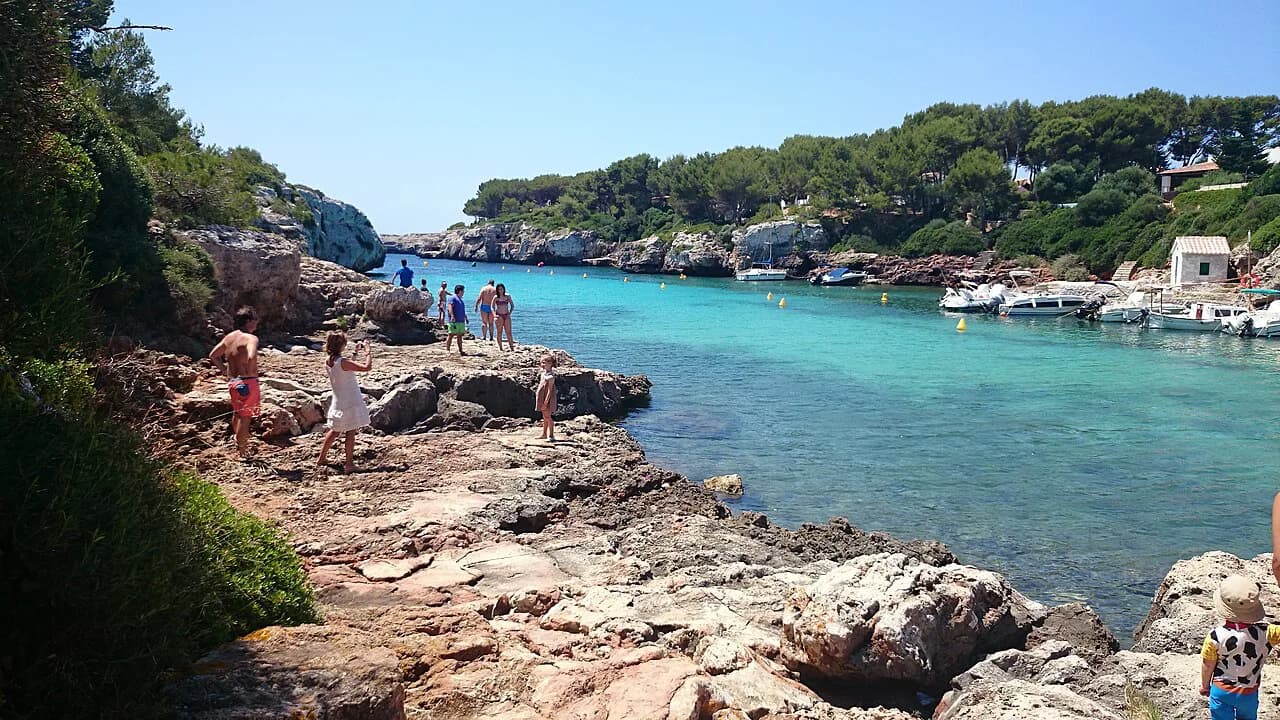
Es Grau is a tiny village of white houses and boats at the entrance to the s'Albufera des Grau nature park, with calm water and terraces facing it. It is about 15 minutes from Maó, and the L23 bus runs there all year, which makes it the one town on this side you can comfortably visit without a car.
Go early for a short walk and a coffee, and treat the nature park as the reason you came rather than an afterthought. The village itself needs under an hour.
Inland towns: Es Mercadal, Ferreries and Alaior as bases for Monte Toro, Cala Galdana and Torre d'en Galmés
Es Mercadal sits about 3 km from Monte Toro, the island's high point, and 9 km from Fornells, making it the natural inland base for the north. Ferreries is roughly 9 km from Cala Galdana on the south coast, and Alaior about 5 km from the talayotic settlement of Torre d'en Galmés.
All three sit within about half an hour's drive of both Maó and Ciutadella, so a car turns them into a genuine alternative to the coastal towns for a night or two. Without a car, they are awkward, and the coast is a better bet.
How the towns sit relative to each other and to Maó and Ciutadella
Maó anchors the east and Ciutadella the west, with roughly half an hour of driving between them via the inland towns. Binibeca Vell and Es Castell cluster near Maó, Fornells and Es Mercadal serve the north, and Ferreries and Alaior push towards the south and its talayotic sites.
Group your days by side of the island instead of zig-zagging. One Maó-side day can take in Binibeca Vell in the morning and Es Castell at sunset; a Ciutadella day can absorb the old town, the port and a boat trip along the coast.
Which town suits a short break, and the trade-offs of each
For a short break, Ciutadella is the strongest single base: everything worth seeing sits within a kilometre, so no day is lost to logistics. Choose Maó instead if harbour life and the market culture appeal more than an old quarter, and accept that you will drive further to reach the west coast.
A northern stay around Fornells or Es Mercadal suits a quieter trip with a car and easy access to Monte Toro and the north coast. Binibeca Vell is a morning, not a base, and Es Grau rewards a half day rather than a night.
The honest trade-off is breadth against depth. Two towns done properly beat five towns seen through a windscreen, particularly in summer when midday heat pushes you indoors and the middle of the day vanishes.
Getting between the towns without a car
The L23 bus connects Maó and Es Grau all year, and it is the clearest no-car option among the towns here. For everything else, bus coverage thins and the timetable is the deciding factor, so check it against your dates before committing to a base away from the two capitals.
With a car, the approximate distances in this guide turn into short hops: Binibeca about 8 km from Maó, Es Castell about 3 km, Fornells about 9 km from Es Mercadal. Without one, plan around Ciutadella or Maó and take day trips from there.
Pick a side of the island, then a town
Start with the question of which capital suits you, Ciutadella or Maó, and let the towns fall into place around it. Ciutadella gives you a dense old quarter and a harbour you can walk to; Maó gives you the bigger harbour and a working town's energy.
Then slot in Binibeca Vell before 11:00, Es Castell for sunset, Fornells for a northern lunch and Es Grau with the L23 if you are car-free. Check the current village visiting hours and bus times against your dates before booking.
Explore more Ciutadella guides
Sources
Notes for your next Spanish town break
Optional updates to our guides.
You might also like
Continue reading
More guides you'll find useful