Things to Do in Ciutadella, Menorca: Old Town, Port and Cathedral
Plan a short break in Ciutadella with the old town, Plaça des Born, the cathedral and the port, plus how the town fits together and when to go.
On this page
Everything worth seeing in Ciutadella's core sits inside a compact historic centre, so you can cover it on foot; the prehistoric sites outside town need transport. The centre is bounded by a ring road, the Ronda, and the old port lies a short walk downhill from the main square. This guide groups the sights by area — the Borne, the cathedral lanes and the port — so you can plan without backtracking, and it flags the weekly rhythm of market day, shop closures and siesta hours.
What to do in Ciutadella in a day: the short answer
Spend the morning on Plaça des Born and in the lanes around the cathedral, walk down to the old port in the afternoon, and leave the Naveta des Tudons and Cala Morell for a second day or a car. Ciutadella has no city tour bus, which is no loss: the interesting part is a maze of small pedestrian streets and squares made for walking. Plan your loop before you arrive so you are not doubling back through the same alleys.
Ciutadella was the island's old capital, with the seat of government later moved to Maó (Mahón), which the secondary account attributes to the British and to that harbour's advantages as an entry point. That history shows in the aristocratic tone of the centre: stone palaces, baroque mansions and medieval churches packed into a few hundred metres. Treat the morning as a heritage walk and the afternoon as a slower wander towards the water.
How Ciutadella is laid out: the historic centre, the Ronda and the old port
The historic centre is small and enclosed by a ring road that separates it from the modern town, so once you are inside you can forget traffic. The old port sits at the end of a narrow inlet below the centre, reached on foot down a slope rather than by bus. This shape matters when you plan: almost everything in the old town is within a few minutes of everything else, but the climb back up from the port is the one bit of effort in the day.
A shuttle bus connects the centre with the main bus station, which is useful if you arrive from Maó or another island town and do not fancy the walk with a bag. There is no hop-on hop-off sightseeing service, so build the day around your own two feet. Paved, mostly level streets inside the Ronda make the old town easy going, with the port descent the main exception.
Start at Plaça des Born and the Ayuntamiento
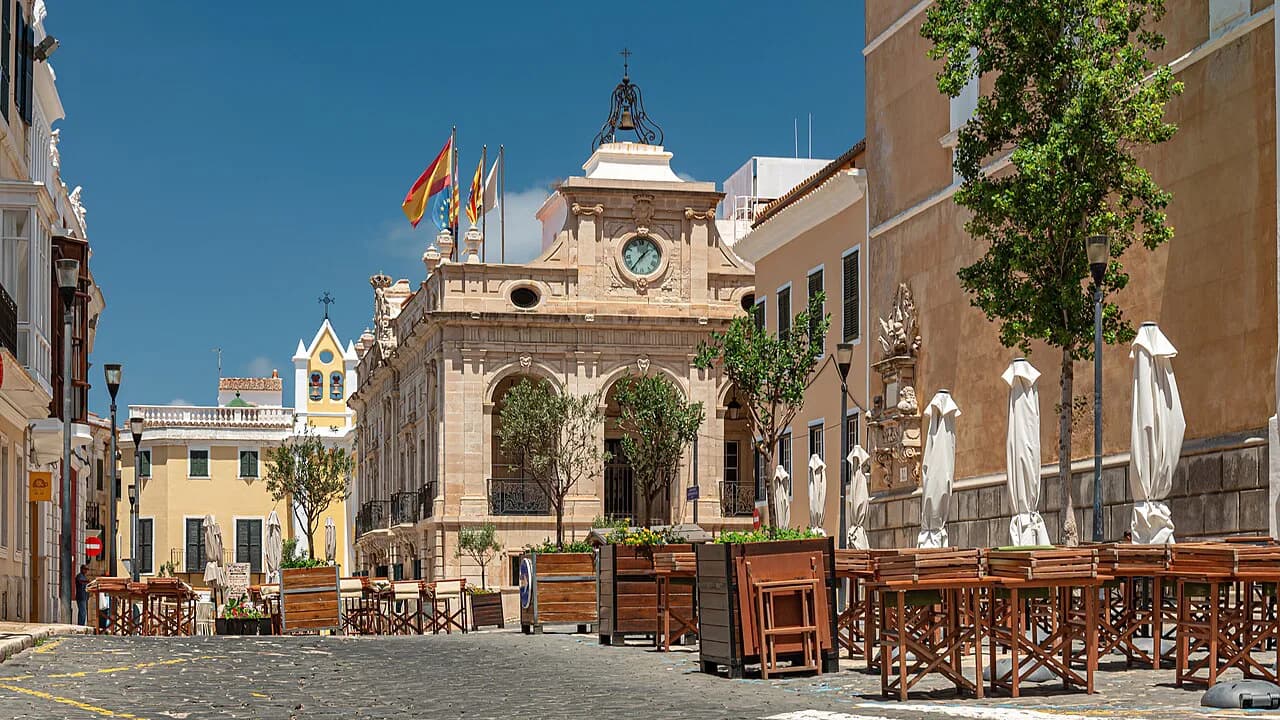
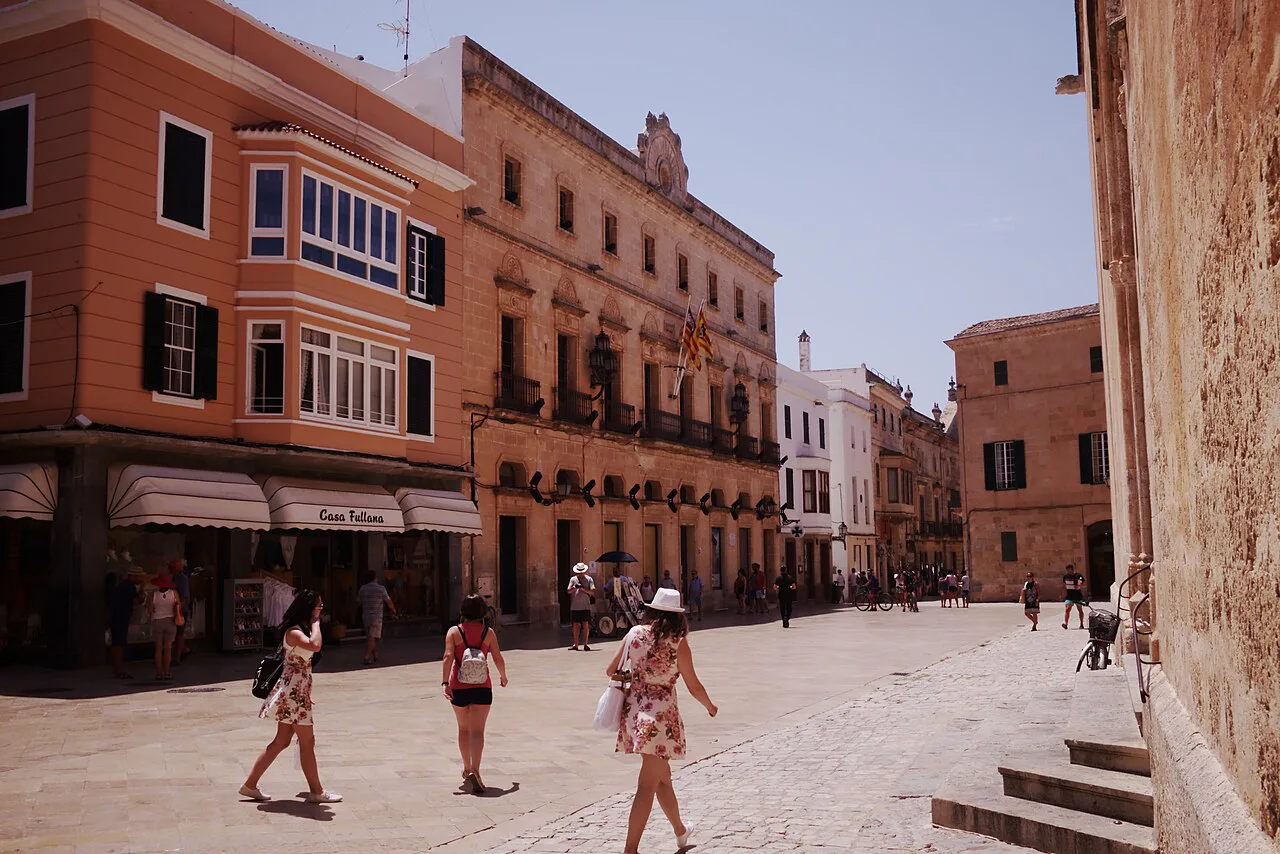
Plaça des Born is the natural starting point: a long, elegant square that was once the parade ground, with the Ayuntamiento on one side in a building that nods to Moorish architecture. Late-afternoon sun on the palace facades is the square's best light, so it also works as an end-of-day stop rather than a start. Either way, use it as your orientation point, because most lanes radiate from it.
The square opens onto the surrounding lanes of the old town, with the shopping streets running off towards the cathedral. Saturday is market day and the busiest day of the week, especially in summer, so expect the Borne and the surrounding lanes to be at their fullest then. On Sundays most shops shut, though bars and restaurants generally stay open. Use the Ciutadella Map to fix the layout before you set off.
The cathedral: Santa Maria on the old mosque site
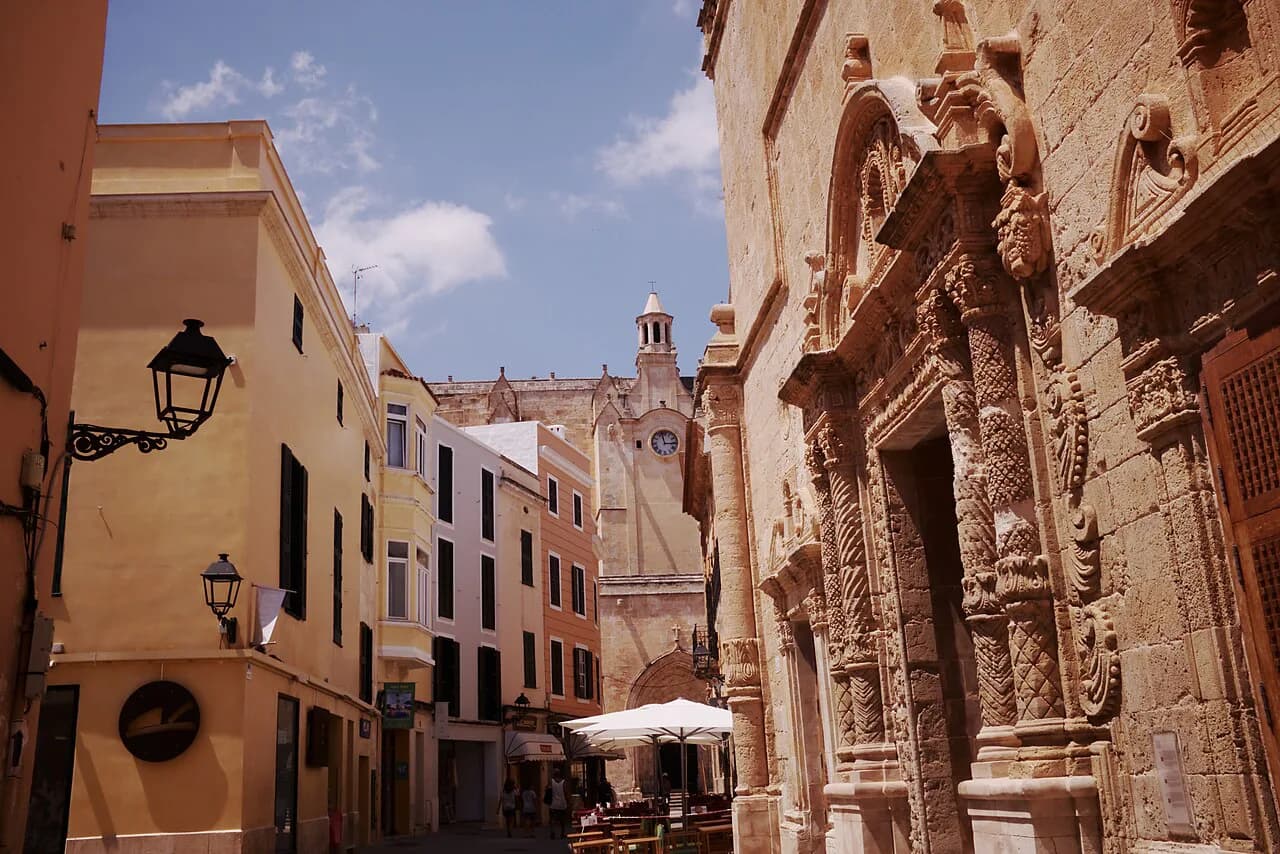
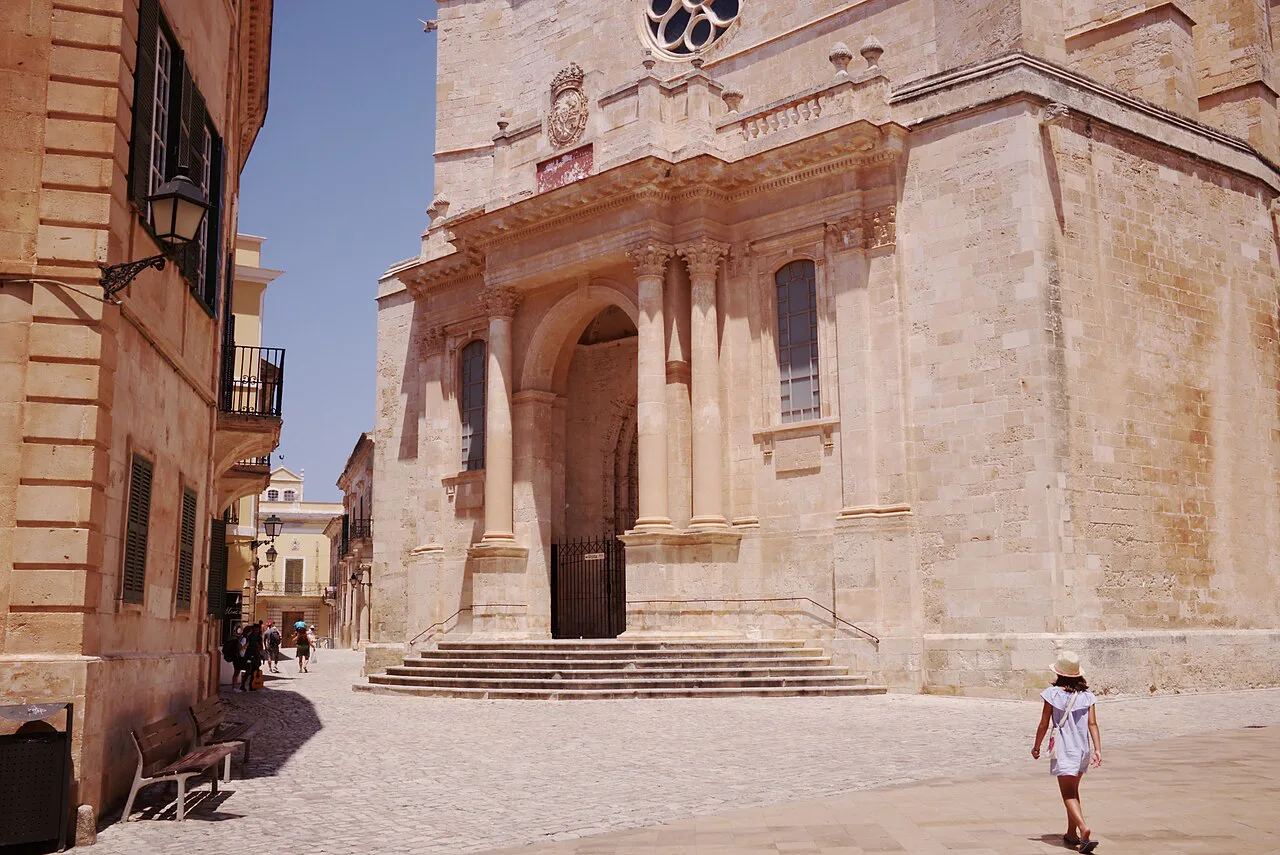
The Catedral de Menorca, Santa Maria, stands at the highest point of the historic centre, built on the site of the town's former mosque and reached through the lanes from the Borne. Its Gothic austerity is the draw rather than elaborate decoration, and the Plaça de la Catedral in front is a natural pause in the walk. Treat it as the centrepiece of the morning rather than a quick photo stop.
The island's tourism board lists the cathedral among the town's cultural venues and advertises visits from April to October, so check what is open on your day before building the morning around it. Many attractions in Ciutadella take a rest day, so if the cathedral is your priority, do not leave it to the quietest day of the week.
The maze of lanes: palaces, baroque mansions and the Plaça de la Catedral
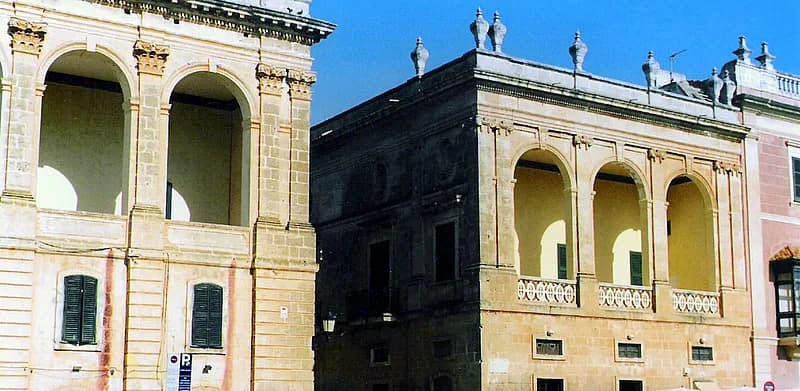
The real pleasure of Ciutadella is getting lost between the Borne and the cathedral, where narrow, winding streets open onto aristocratic mansions, baroque palaces and medieval churches. The Palau Torresaura rewards a look on the way through, and the tangle of lanes is short enough that a wrong turn costs you two minutes. Walk it without a fixed route and use the cathedral square as your anchor.
The main shopping and café street is the liveliest stretch in the centre, picturesque rather than grand, and it is where the town feels most lived-in during the day. Ciutadella's boutique shops are part of the appeal of the old town, so allow time to browse rather than treating the lanes as a corridor between monuments. If fashion and leather are your interest, plan the browsing for a weekday when shops are open.
The old port, from morning to sunset
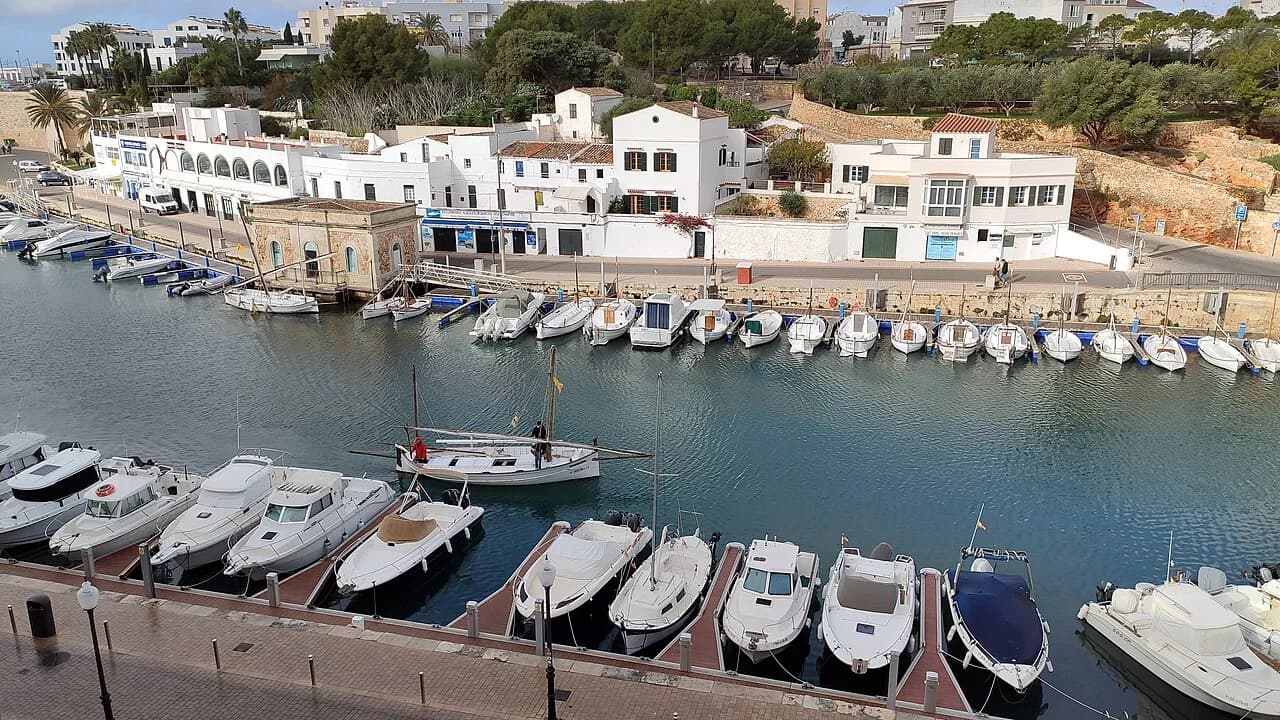
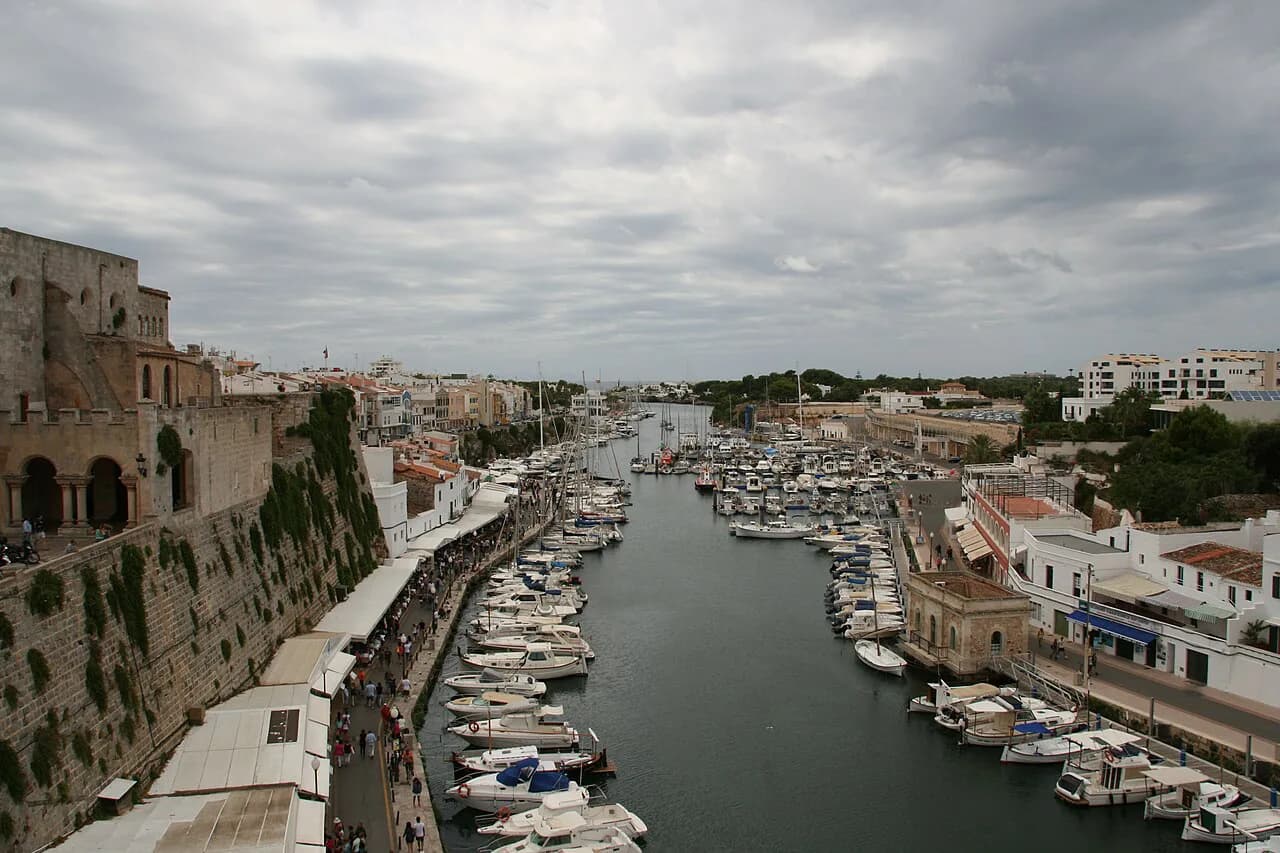
The old port is wedged into a narrow bay below the centre, lined with moored boats and best seen twice: quiet in the morning, lively after sunset when the waterfront fills up. It is a working fishing harbour as well as a visitor draw, which is why the town's identity still turns towards the sea. Walk down in the late afternoon and let the light do the work.
Boat excursions are sold from Ciutadella's harbour, and a short outing is a good way to see the coastline without committing a whole day to it. If a boat trip is on your list, book it for a day when the rest of the plan is flexible, since time on the water eats into walking time. Otherwise the port itself is the free-to-wander part of the day.
Museums and monuments worth your time: Can Saura, El Socors and the Naveta des Tudons
Can Saura, the municipal museum, covers the town's local history and is the obvious indoor stop if the weather turns or you want context. A few steps from the cathedral, the convent of Sant Agustí, known as El Socors, is one of the most interesting monumental complexes in Menorca and pairs neatly with a cathedral visit. Both appear on the island tourism board's list of the town's cultural venues, though it gives no opening hours.
The Naveta des Tudons is the prehistoric site to see if you see only one, a megalithic burial monument on the road out of town that requires transport. These sites sit outside the walkable centre, so slot them into a separate half-day.
Cala Morell necropolis and the prehistoric sites beyond the centre
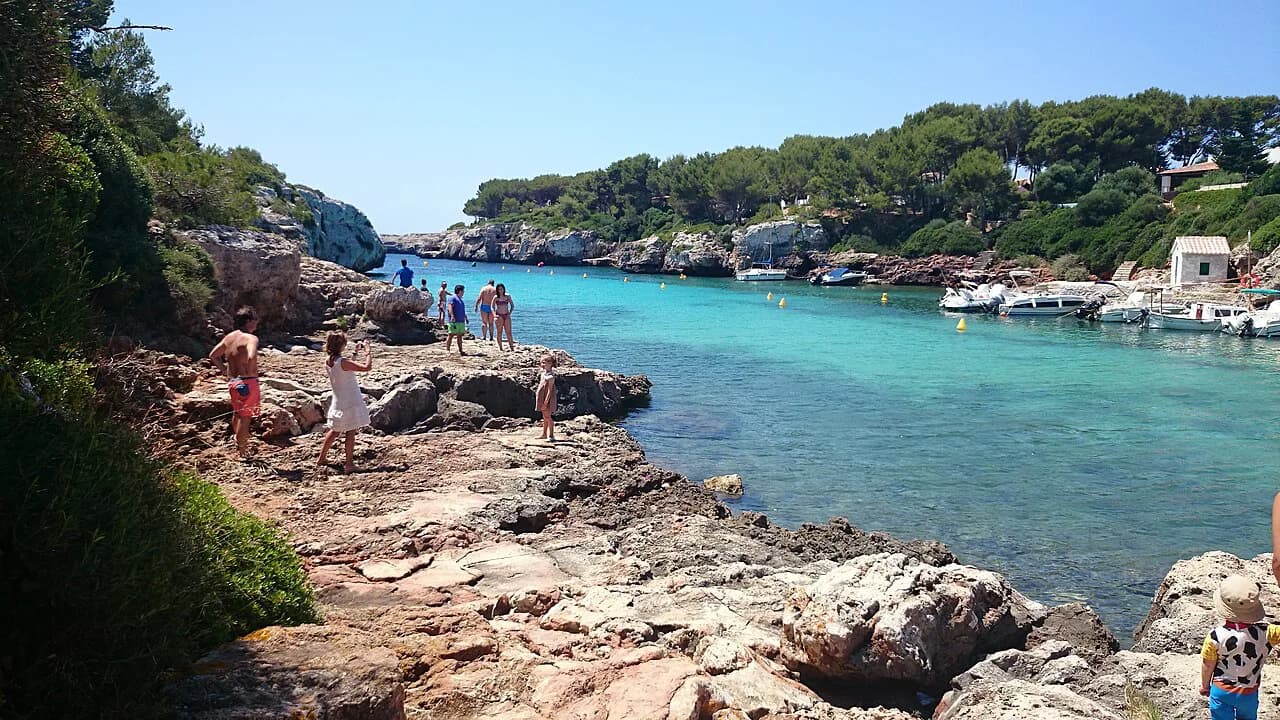
The Necròpolis de Cala Morell is a set of rock-cut tombs on the north coast near Ciutadella, another site that needs a car or an organised transfer rather than a walk from the old town. Together with the Naveta des Tudons it makes a prehistoric half-day that balances the town's medieval and baroque sights.
If you are touring the island rather than staying put, Ciutadella works as a base for the west and north coasts, and Menorca's other towns are small enough to combine, though two in one day is plenty.
Travellers who like comparing old quarters across Spain will find Ciutadella's lanes reward slow walking over tick-box sightseeing; the winding streets and small squares are the point. The same holds for the things to do in a Coruña, where the old town and waterfront reward the same unhurried approach.
When to go: Saturday market, Sunday shop closures and Monday closures
Saturday is market day and the most animated day of the week, especially in summer, when the Borne and the surrounding streets fill up. Sundays are quieter because most shops close, though bars and restaurants usually open. Many attractions take Monday as their rest day, so the start of the week is the weakest time for museums and monuments.
Time your visit around those patterns rather than against them: market day for atmosphere, a weekday for shopping and museums, and a Sunday only if you want a slow walk and a long lunch.
Siesta hours and how they shape a day
Siesta runs roughly from 13:30 or 14:00 to 16:30, and it affects shop opening hours more than it affects the streets themselves. Plan the middle of the day for a long lunch, the port or a museum, and save the lanes and boutiques for the morning or late afternoon. Churches may also shut to visitors around services, which is a further reason to keep the middle of the day flexible.
In high summer the old town's stone streets hold the heat, so an early start and a shaded afternoon beat a midday march between monuments.
Getting around: on foot, by bike and the shuttle to the bus station
Walking is the practical way round the centre, and a bicycle only helps if you plan to reach the coast or the outskirts. A shuttle bus links the centre to the main bus station, which is the useful connection if you arrive by bus from Maó or elsewhere on the island. There are no tourist buses inside the town, so do not budget for one.
For the prehistoric sites and the north-coast necropolis you need wheels or a booked transfer, and parking in Ciutadella is best arranged before you arrive rather than improvised in the old town. The town's tourism office publishes practical information including parking and maps.
Sample itinerary for a short break
Day one: start at Plaça des Born, wander the lanes to the cathedral and the Palau Torresaura, take a long lunch through siesta, then walk down to the port for the late afternoon and sunset. Day two: drive or book a transfer to the Naveta des Tudons and the Necròpolis de Cala Morell in the morning, then return for the museums and El Socors in the afternoon. That covers the town and its prehistoric hinterland without rushing either.
If you have only one day, drop the out-of-town sites and give the old town and the port the full day, since the walkable centre is where Ciutadella's character lies. Menorca's prettiest corners reward a slow pace, and the town is small enough that a rushed visit would be a waste.
Should you base yourself in Ciutadella?
Ciutadella suits travellers who want a walkable old town with real architecture and a harbour at the bottom of the hill, rather than a beach base or a big-city break. It is compact enough for a short break and gives easy access to the island's western prehistoric sites if you have a car. Book around Saturday's market and avoid relying on Monday for museums.
Menorca is served by flights from the UK, with Maó the island's airport and bus connections onward to Ciutadella. Pair the town with Maó for the contrast between the old capital and the harbour city that replaced it.
Explore more Ciutadella guides
Frequently Asked Questions
Is Ciutadella walkable?
Yes. The historic centre is compact, enclosed by a ring road, and made up of pedestrian lanes and squares. The old port is a short walk downhill from the centre, with the climb back up the main effort of the day. There is no city tour bus, so walking is the practical way round.
What does Ciutadella mean in English?
The name is used in its Catalan form, Ciutadella, and locals pronounce it roughly as thwi-te-della. English-language guides usually keep the Catalan spelling rather than translating it.
When is the best day to visit Ciutadella?
Saturday is market day and the busiest, liveliest day of the week, especially in summer. Sundays are quieter because most shops close, though bars and restaurants usually open, and many attractions take a rest day on Monday.
What are the siesta hours in Ciutadella?
Siesta runs roughly from 13:30 or 14:00 to 16:30 and mainly affects shop opening hours. Plan a long lunch, the port or a museum for the middle of the day and leave the lanes and boutiques for the morning or late afternoon.
Sources
Notes for your next Spanish town break
Optional updates to our guides.
You might also like
Continue reading
More guides you'll find useful