
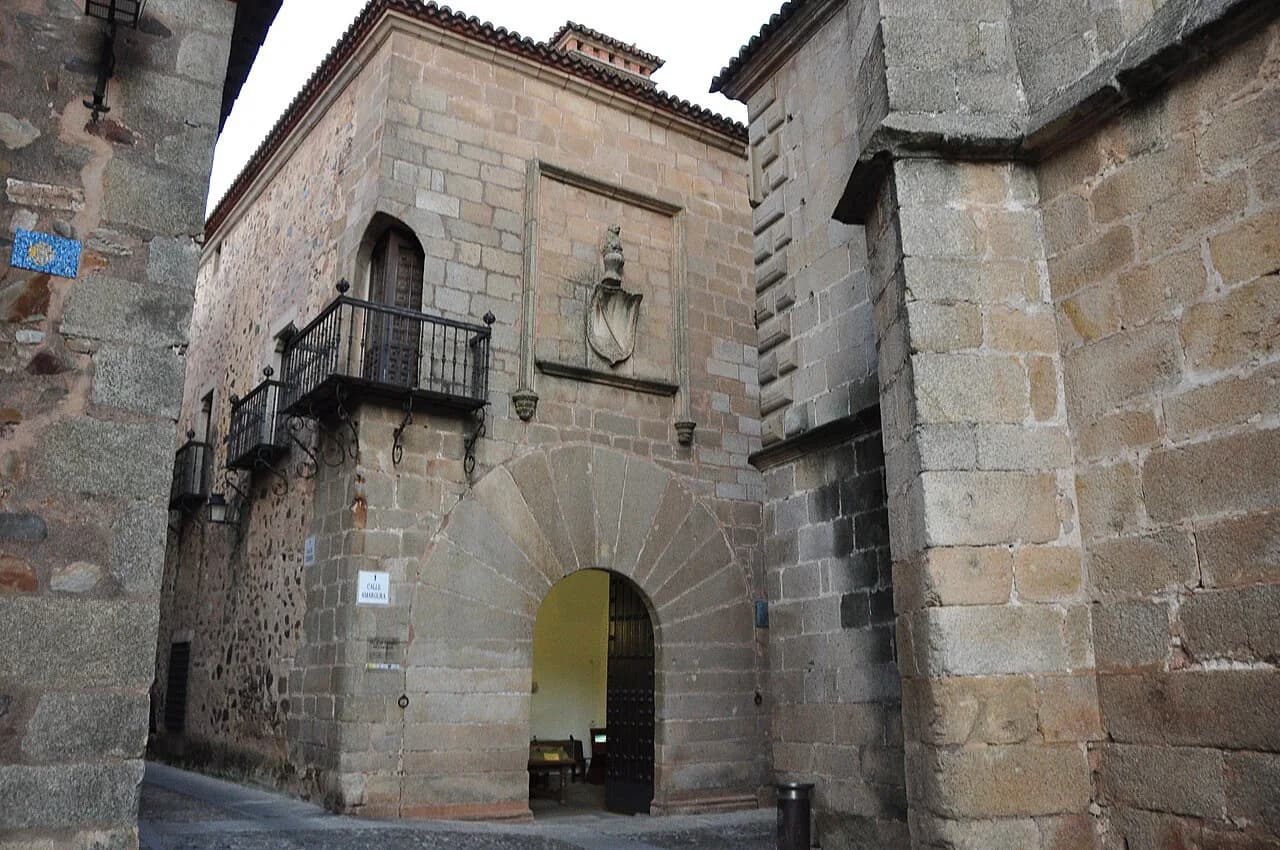
Palacio de Carvajal: A Gothic and Renaissance Palace on Calle Amargura in Cáceres

The Palacio de Carvajal is worth ten to twenty minutes of a walk through the Ciudad Monumental in Cáceres, mainly for its courtyard and garden rather than for furnished rooms. It is a 15th- and 16th-century palace with Gothic and Renaissance elements on Calle Amargura, and it now works as the provincial tourist office and an interpretation centre for the province's comarcas. This guide covers what the building is, where it sits, what you can actually see and how to fit it into an old-town walk.
What the Palacio de Carvajal is and why it is worth a stop
This is a working building, not a museum of period interiors. The palace was built between the 15th and 16th centuries and combines Gothic and Renaissance features, and today it holds the Oficina de Turismo Provincial and the Centro de Interpretación de las Comarcas de la provincia de Cáceres. Go in expecting stonework, a patio and a garden, and treat the tourist-office function as part of the visit rather than an inconvenience.
The honest trade-off is that a palace shared with offices offers less to look at than Cáceres's grander houses. What it gives you instead is a calm pause in the middle of the old town, a quick orientation on the province, and no pressure to work through a long sequence of rooms. If you want a longer, more formal palace visit, plan it elsewhere in the Ciudad Monumental and keep this one as a short interlude.

Where it sits: Calle Amargura in the Ciudad Monumental
The address is Calle Amargura, inside the walled Ciudad Monumental of Cáceres. That puts it on the same compact grid of lanes as the cathedral and the main palaces, so you reach it on foot through the old town rather than by car.
Calle Amargura is short and narrow, and the palace front sits close to the street line, so it is easy to pass without noticing. Look for the stone doorway rather than a large sign, and use the street name itself as your marker. From the Plaza Mayor de Cáceres side, you climb into the old town along its lanes.
Architecture to look for: Gothic and Renaissance elements
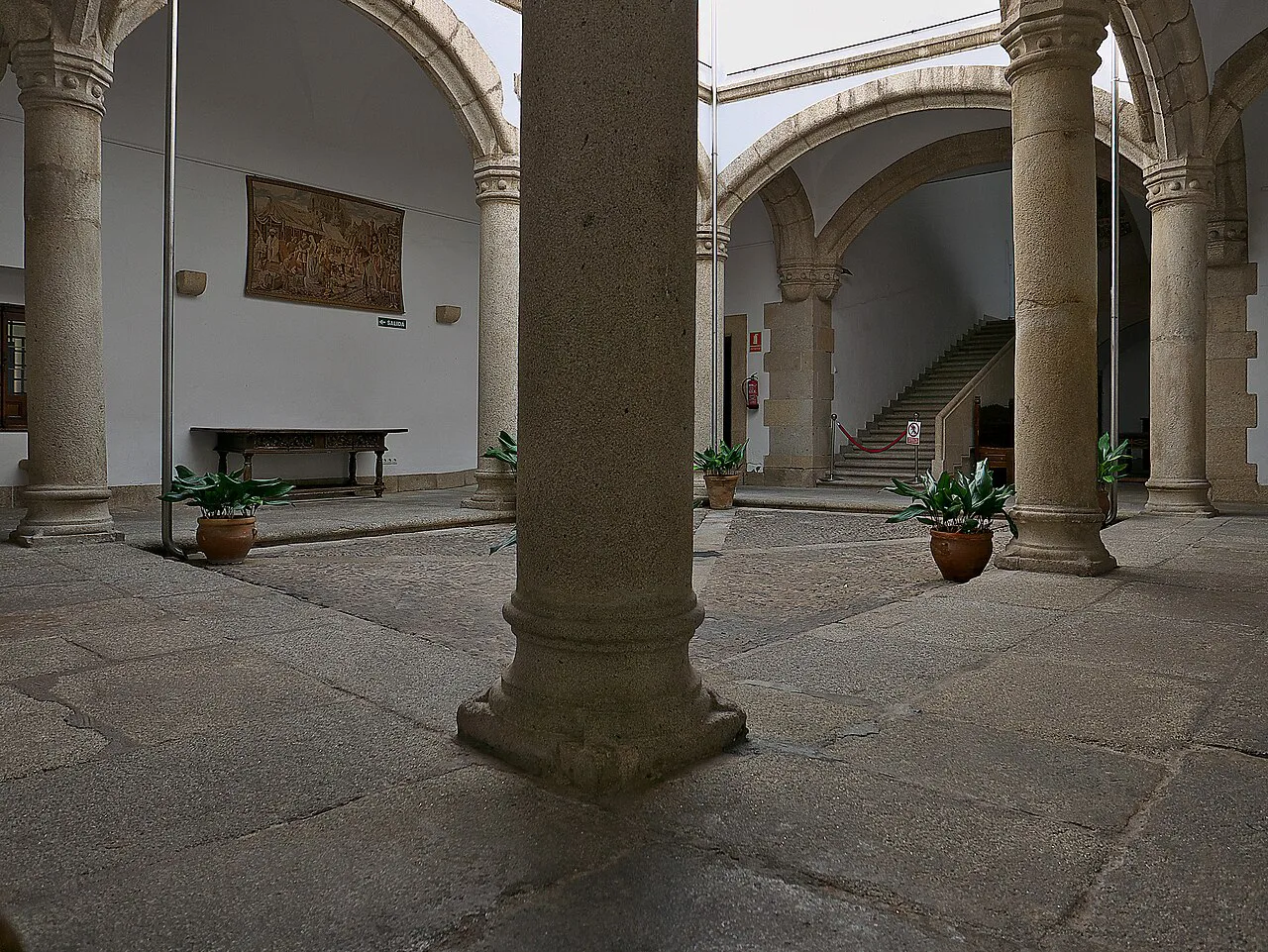
The building's interest is in its fabric: a Gothic shell with Renaissance additions layered across the 15th and 16th centuries. Read the doorway and the stonework facing the street first, then look at how the courtyard elevations differ from the exterior, which is where a palace of this date usually shows its later remodelling.
Cáceres is full of palaces from the same centuries, and comparing their doorways is one of the pleasures of walking the old town. The Palacio de Carvajal is a modest example, but its position on a narrow lane makes the facade read clearly in low light. Give it a few minutes of looking rather than a full architectural study.

Inside today: the provincial tourist office and interpretation centre
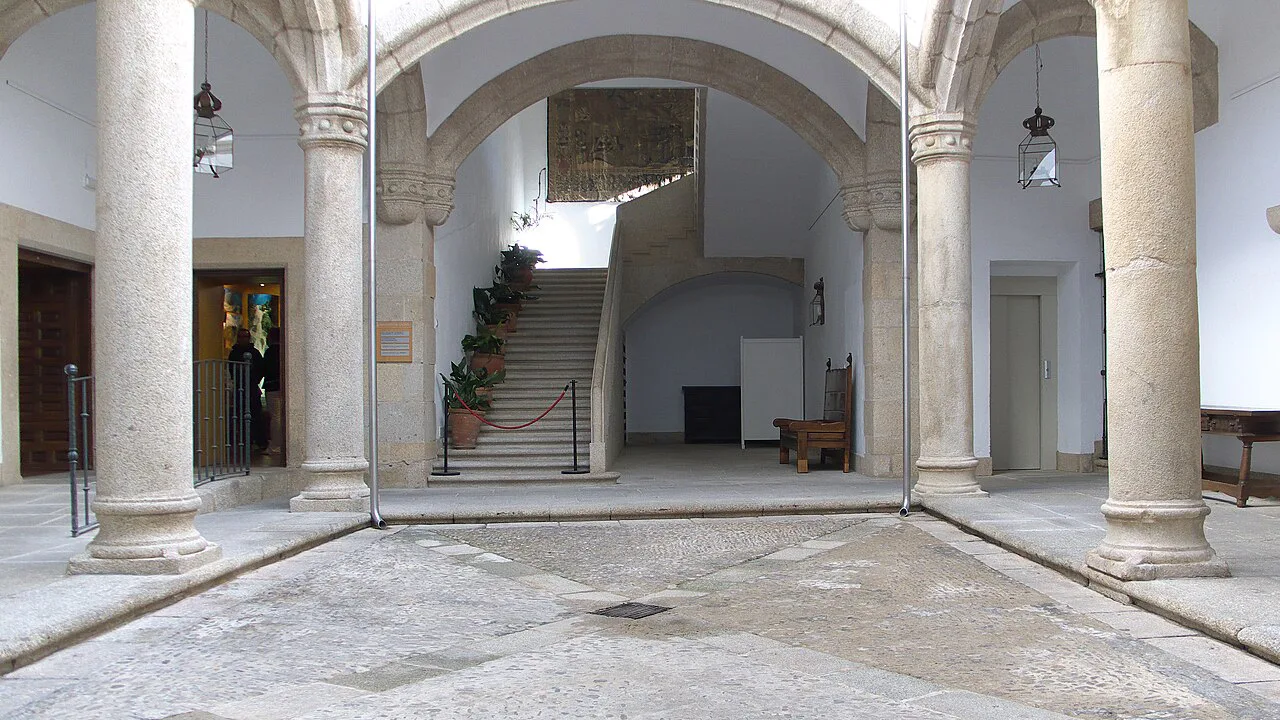
Inside, the palace houses the Oficina de Turismo Provincial alongside the Centro de Interpretación de las Comarcas de la provincia de Cáceres. That means you can pick up information on the province, including towns and countryside beyond the city, in the same stop as your look at the building. Use it to orient a longer trip through Extremadura, or simply to confirm what is open during your stay.
Because the tourist office is the main occupant, the atmosphere is administrative rather than domestic. Some rooms and areas may be in use for office work, so follow whatever route the staff indicate on the day. Do not expect a chapel, furnished salons or a guided tour of the palace itself.
What you can see: the interior, the courtyard and the garden fig tree
The reliable things to look for are the interior as far as it is open, the courtyard and the garden. The garden holds a fig tree described as 300 to 400 years old, which is the one specific sight that justifies the detour.
Visitors report that entry is free, which makes the palace an easy addition to a walk rather than a calculated purchase. Treat that as reported rather than guaranteed and confirm the current position on the official tourist portal when you plan your visit.
How long to allow and how it fits a walk through the old town
Budget ten to twenty minutes for the palace, or a little more if you use the tourist office properly. It works best as a pause between larger sights rather than a destination in its own right, so slot it in when you are already crossing the old town.
A sensible sequence from the Plaza Mayor takes you up through the lanes towards the cathedral, on to Calle Amargura and the palace, then deeper into the Ciudad Monumental. Keep the palace for the middle of the walk, when a pause suits you rather than another climb.
Opening times and practicalities: where to check them
Opening hours and any closing days are set by the tourist office rather than fixed in guidebooks, so check the official tourist portal before you set out. This matters most if your dates fall on a public holiday, when small heritage buildings in Cáceres can keep shorter hours than the streets around them.
If you arrive and find the door shut, the rest of the Ciudad Monumental is within a couple of minutes on foot, so the detour is short. Since opening hours can change, confirm them on the official tourist portal before relying on any timetable.
Nearby: other palaces and plazas on the same stretch of the old town
The cathedral is a few minutes away and is the natural next stop after Calle Amargura, with its own visitor arrangements to check on the day. The Iglesia San Mateo Cáceres sits further into the old town and gives you another reason to keep walking uphill rather than turning back.
For a change of register after the stone lanes, the Museo Helga de Alvear Cáceres holds contemporary art and makes a good counterweight to the palaces. Back towards the walls, the Torre de Bujaco, Cáceres anchors the Plaza Mayor side of the old town and is easy to add on the way out.
Should the Palacio de Carvajal be on your Cáceres walk?
Yes, if you are already inside the Ciudad Monumental and want a short pause with a courtyard and garden, with entry reported to be free. No, if you are choosing between palaces and want furnished rooms or a formal tour: this one is an office and an interpretation centre first.
Build it into a route that also takes in the cathedral and the Plaza Mayor, and check the official tourist portal for the hours that apply on your dates. That way the palace is a pleasant ten minutes rather than a wasted detour.
Frequently Asked Questions
¿Qué no te puedes perder en Cáceres?
In the old town, the cathedral, the Plaza Mayor and the main palaces and towers are the core sights. The Palacio de Carvajal is a short addition on Calle Amargura rather than a headline stop, useful for its courtyard, garden and old fig tree.
¿Qué es la Ciudad medieval de Cáceres?
It is the walled Ciudad Monumental, the old core of Cáceres with its churches, palaces and stone lanes. The Palacio de Carvajal sits inside it on Calle Amargura, which makes it an easy stop while walking between the cathedral and the Plaza Mayor.
What can you see at the Palacio de Carvajal?
The palace's interior as far as it is open, its courtyard and its garden, which holds a fig tree described as 300 to 400 years old. It also houses the provincial tourist office and an interpretation centre for the province's comarcas, so you can pick up information on the wider province in the same stop.