
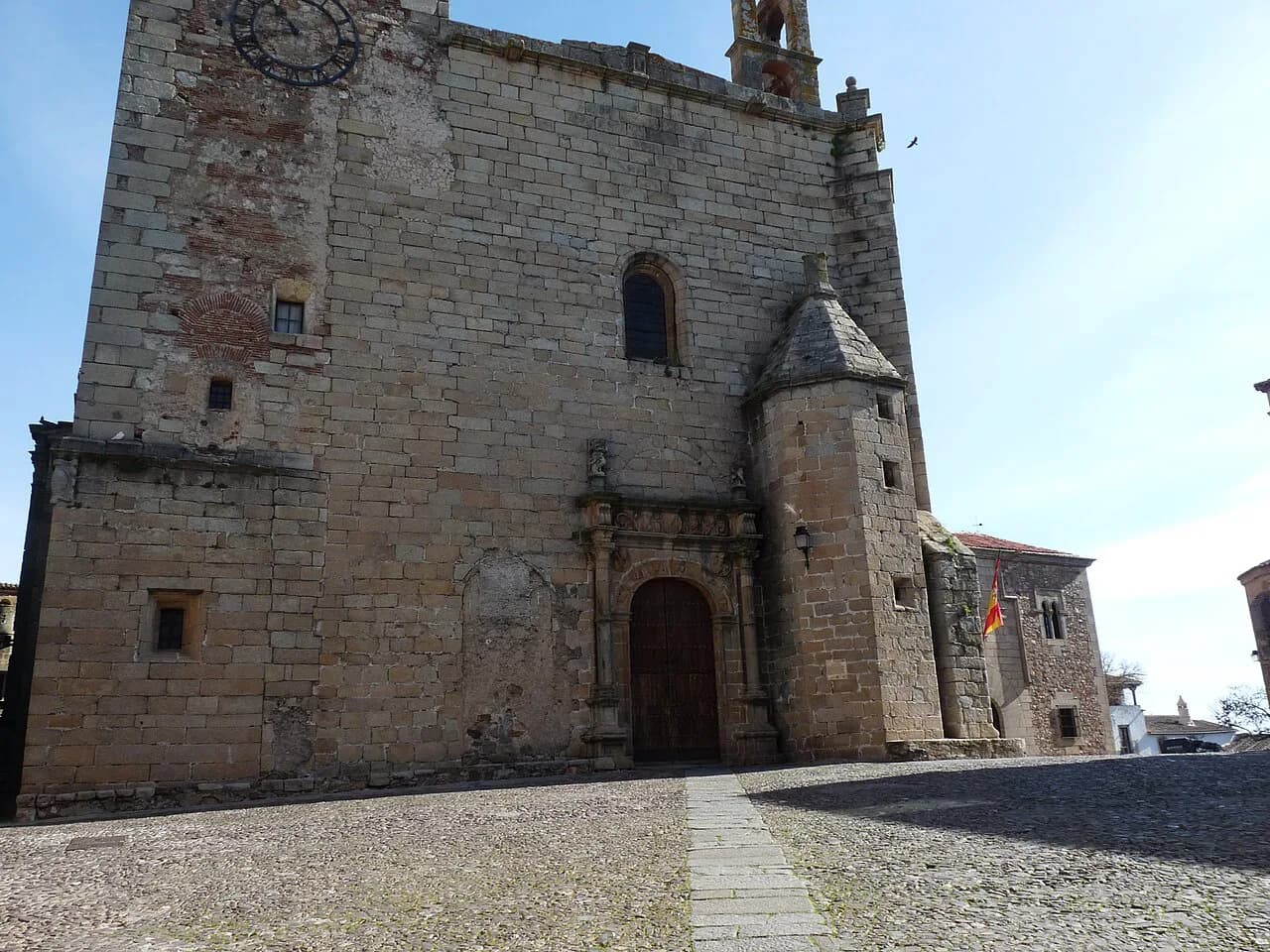
Iglesia de San Mateo, Cáceres: A Visitor's Guide to the Old-Town Church

The Iglesia de San Mateo is worth half an hour of your old-town walk, not a morning: you come for one carved doorway, one altarpiece, one vault and a wall of noble tombs. The church stands on Plaza San Mateo inside the Ciudad Monumental of Cáceres, and it is visited as part of a combined church ticket rather than on its own. This guide covers what to look for, how the ticket works and what sits within a few minutes' walk.
Treat it as a parish church that happens to be a monument. Services take priority, opening days are limited, and the visit time is agreed when you buy, so plan the church around the rest of your old-town wandering rather than the other way round.
What the Iglesia de San Mateo is, and where it stands
San Mateo is a sixteenth-century parish church whose construction ran over more than three centuries, and it probably rose on the site of an earlier mosque. In the Middle Ages it was one of the religious and social centres around which the leading noble families of Cáceres settled, which explains the tombs inside.
The address is Plaza San Mateo, 2, in the Ciudad Monumental, the walled old town at the heart of Cáceres. Arriving on foot from the Plaza Mayor, you cross into the walled streets and follow signs for San Mateo; the plaza opens up suddenly between granite facades, with the church filling one side.
The Ciudad Monumental is compact and pedestrian, so the main square, the cathedral and the Torre de Bujaco all sit within easy walking distance of the church door.
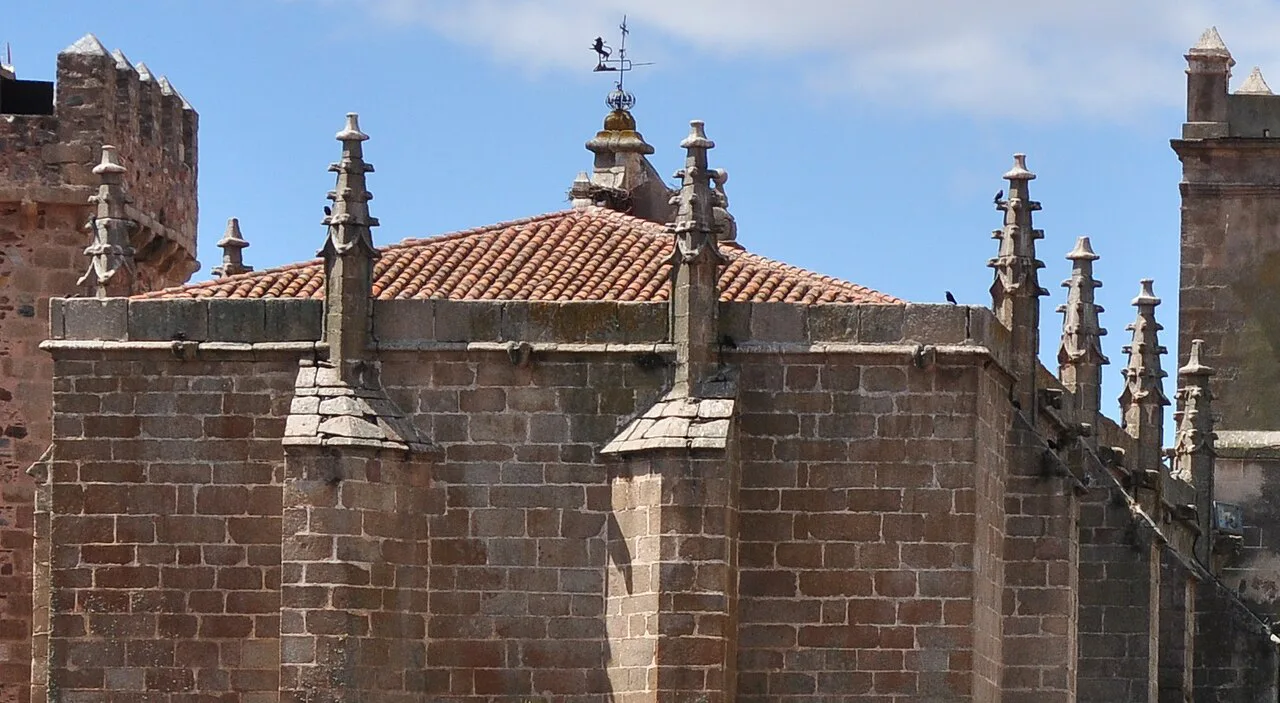

The plateresque doorway and its three medallions
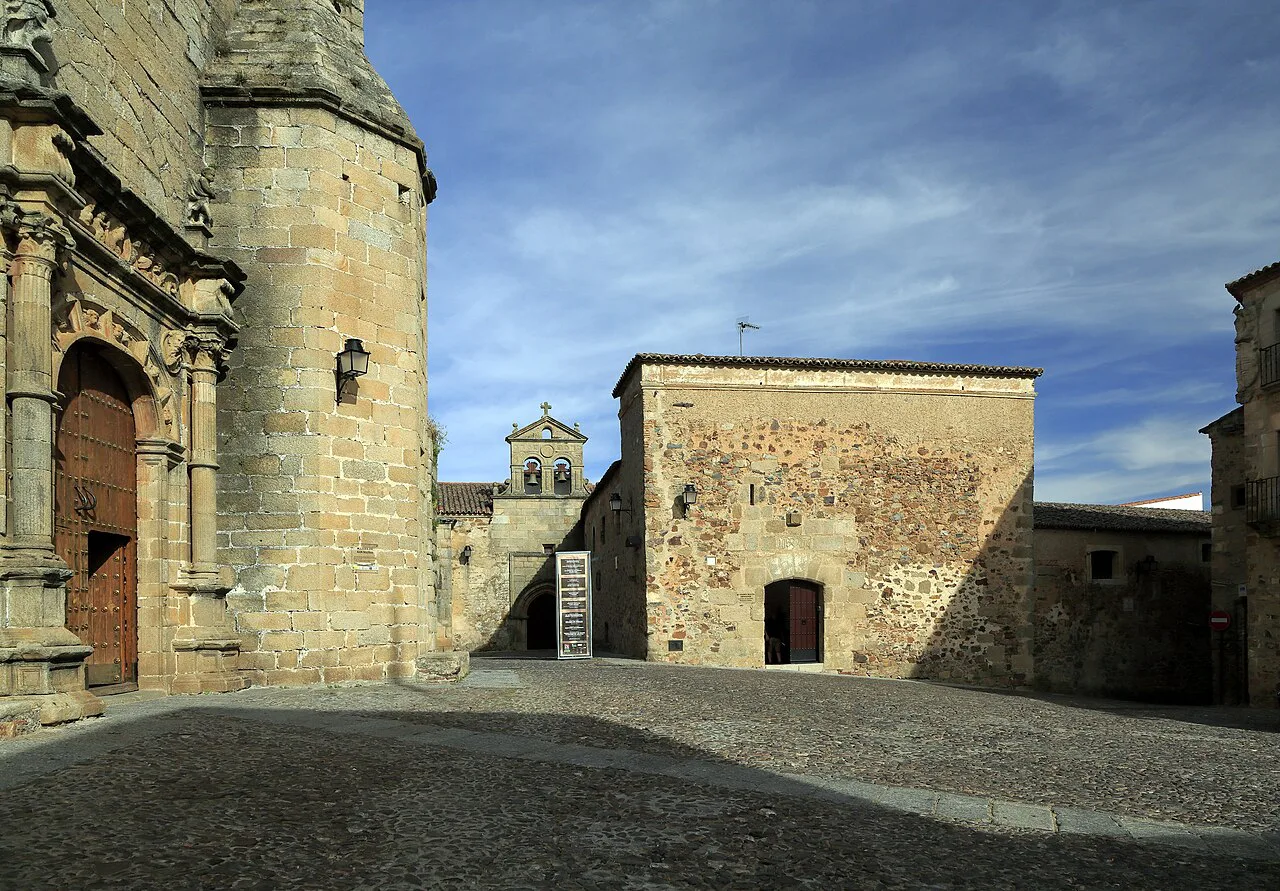
The church's most photographed feature is its plateresque portal, carved with medallions of Saint Peter, Saint Paul and Saint Matthew. The sculptor named in the account of the church is Guillén Ferrant, and the doorway is the reason to slow down before you go in rather than walk straight past.
Plateresque means the fine, silverwork-like stone carving that spreads across late Gothic and early Renaissance facades in this part of Spain, and San Mateo's is a good small example. Stand back across the plaza to read the whole composition, then come close for the medallions; the granite is coarse enough that details soften in flat midday light.

Inside: Barbadillo's altarpiece and the Sande chapel vault
The high altarpiece was made by Vicente Barbadillo in 1766, a rococo piece that is the interior's main set piece. The chapel of the Sande family, now used as the sacristy, keeps a star-ribbed vault of the kind that rewards a look upwards.
An earlier description of the parish gives the altarpiece as an eighteenth-century rococo work by Barbadillo and singles out a Renaissance chapel alongside the plateresque door. The two accounts agree on the essentials: carved stone outside, gilded wood and ribbed vaulting within, and a lot of granite in between.
The granite tombs of the noble lineages
The walls carry tombs of the families who shaped the old town, among them the Ovando, Golfines, Paredes and Saavedra lineages. These are not decorative filler: they are the record of why a parish church in a small Extremaduran city carries this much stonework.
Look for the granite sepulchres set into the walls as you move round the nave, and read the names against the palaces you will pass later in the old town. Many of the same surnames label the facades and towers a few streets away, which makes the church a useful primer before you walk the Ciudad Monumental.
The tower and the city's oldest clock
The tower holds the oldest clock in the city, moved here from the Torre de Bujaco so that its sound would carry across Cáceres. That makes the bell tower part of the civic history as much as the religious one, and it ties San Mateo directly to the square below.
Ask at the ticket desk what the day's route covers before you count on climbing the tower or seeing the clock mechanism at close range.
Tickets: the combined church circuit
San Mateo is sold as part of a combined church ticket covering three sites: the church itself, the Ermita de la Paz and the Convento de las Jerónimas, for a joint price of 5 euros. Tickets are bought at the Ermita de la Paz on the Plaza Mayor or at the Preciosa Sangre on Plaza de San Jorge, so you pay before you reach the church door.
The circuit is run as a pilot by the Diócesis de Coria-Cáceres to open religious heritage to visitors, and staff accompany the route with explanations rather than leaving you to wander unaccompanied. The convent on the same ticket is a seventeenth-century baroque monastery still lived in by Jeronymite nuns, known for the sweets they make and sell through the traditional turning wheel.
The Cáceres cathedral runs its own separate visitor arrangement, so do not expect one ticket to cover the other.
When it opens: Thursday to Sunday, times fixed at purchase
Visits run Thursday, Friday, Saturday and Sunday, with the time agreed when you buy, because access depends on the availability of the spaces and respect for liturgical celebrations. There is no fixed public timetable to plan around in advance: you book a slot and fit the rest of the day to it.
Mass takes precedence, so a service can close the church to visitors even on a visiting day. Ask about the day's slots at the ticket desks on the Plaza Mayor or Plaza de San Jorge before building your old-town route around San Mateo.
How long to allow, and what is minutes away
Twenty to thirty minutes inside is enough for the altarpiece, the Sande chapel and the tombs, plus a few minutes at the doorway. The combined ticket stretches the visit to a half day if you walk the whole circuit, since the Ermita de la Paz and the convent sit elsewhere in the old town.
Plaza de San Jorge, with the Preciosa Sangre church, is one ticket desk and a short walk away, while the Plaza Mayor and the Torre de Bujaco are just beyond the walled streets. The cathedral, the Concatedral de Santa María, sits within the same compact quarter and is the obvious next stop on foot.
If you want a change of register after all that granite, the Palacio de Carvajal and the Museo Helga de Alvear give you a fifteenth-century palace and a contemporary collection within the same city.
Timing your visit in an inland Extremaduran old town
Cáceres bakes in summer, and the old town is granite and shade-poor at midday, so an early or late slot suits both the light and the walking. Choose your day first and let the ticket desk give you the time, since slot times shift with the liturgical calendar.
Because the church is a working parish, a visit can be cut short by a service or a funeral. Keep San Mateo flexible in your plan and put the fixed-ticket stops at either end of the day rather than in the middle.
Is San Mateo worth the ticket?
Yes, if you are already walking the Ciudad Monumental and want the noble tombs, the Ferrant doorway and the old clock in one short stop. No, if you have a single hour in Cáceres: spend it on the plaza and the walls and leave the church circuit for a return.
Buy at the Ermita de la Paz or the Preciosa Sangre, take the slot you are offered, and pair San Mateo with the cathedral and the Torre de Bujaco on foot. That is the most efficient half day the old town offers.
Explore more Cáceres guides
Frequently Asked Questions
Do I need to book the Iglesia de San Mateo in advance?
Tickets are sold at the Ermita de la Paz on the Plaza Mayor and at the Preciosa Sangre on Plaza de San Jorge, with the visit time agreed at the point of purchase. The circuit runs Thursday to Sunday and access depends on the spaces being free and on liturgical celebrations, so arrange the slot before you plan the rest of your day.
Is the tower clock at San Mateo the oldest in Cáceres?
The city's account of the church describes the tower clock as the oldest in Cáceres, moved here from the Torre de Bujaco so its sound would carry across the city. Whether the tower forms part of a given visit depends on the route offered that day, so ask at the ticket desk.
Can I visit San Mateo on its own?
San Mateo is offered as part of a combined three-site circuit with the Ermita de la Paz and the Convento de las Jerónimas, run as a pilot by the Diócesis de Coria-Cáceres. The circuit includes staff explanations along the route, and the convent's sweets sold through the turning wheel are part of the appeal for many visitors.
What should I look for if I only have a few minutes inside?
Head for the 1766 rococo altarpiece by Vicente Barbadillo, the star-ribbed vault of the Sande chapel, and the granite tombs of the Ovando, Golfines, Paredes and Saavedra families along the walls. Outside, the plateresque portal with its medallions of Saint Peter, Saint Paul and Saint Matthew is the piece to study before you go in.