Things to Do in Zaragoza: Roman Ruins, Mudéjar and the Pilar
Plan a Zaragoza break with the Pilar, La Seo, the Aljafería and the Roman theatre, grouped by area with entry details and walking routes between them.
On this page
Zaragoza's best-known sight is the Basílica del Pilar, but the city's real appeal is the density of what surrounds it: a Roman theatre, a mudéjar cathedral, stretches of Roman wall and a Moorish palace, all within a flat centre that rewards walking. Two days covers the core comfortably, and one very full day gets you the Pilar, La Seo and the river.
This guide arranges the sights in the order you meet them walking out from the Plaza del Pilar, then deals with the Aljafería, which sits apart from the old town and needs its own slot. It also covers the Roman remains, the museums, the classic river view, where to base yourself and how the city's Monday and first-Sunday patterns affect planning.
What Zaragoza is known for
Zaragoza is the capital of Aragón, set on the Río Ebro, and it grew from the Roman city of Caesaraugusta. That layering — Roman, Muslim, Christian — is what makes the centre worth more than a single monument stop.
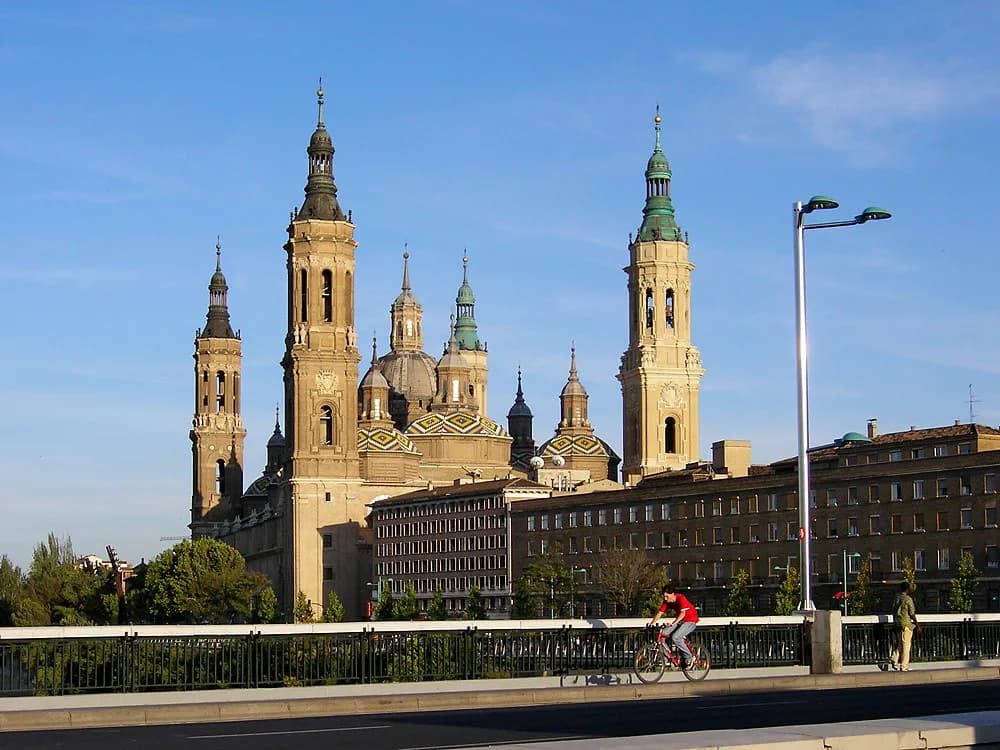
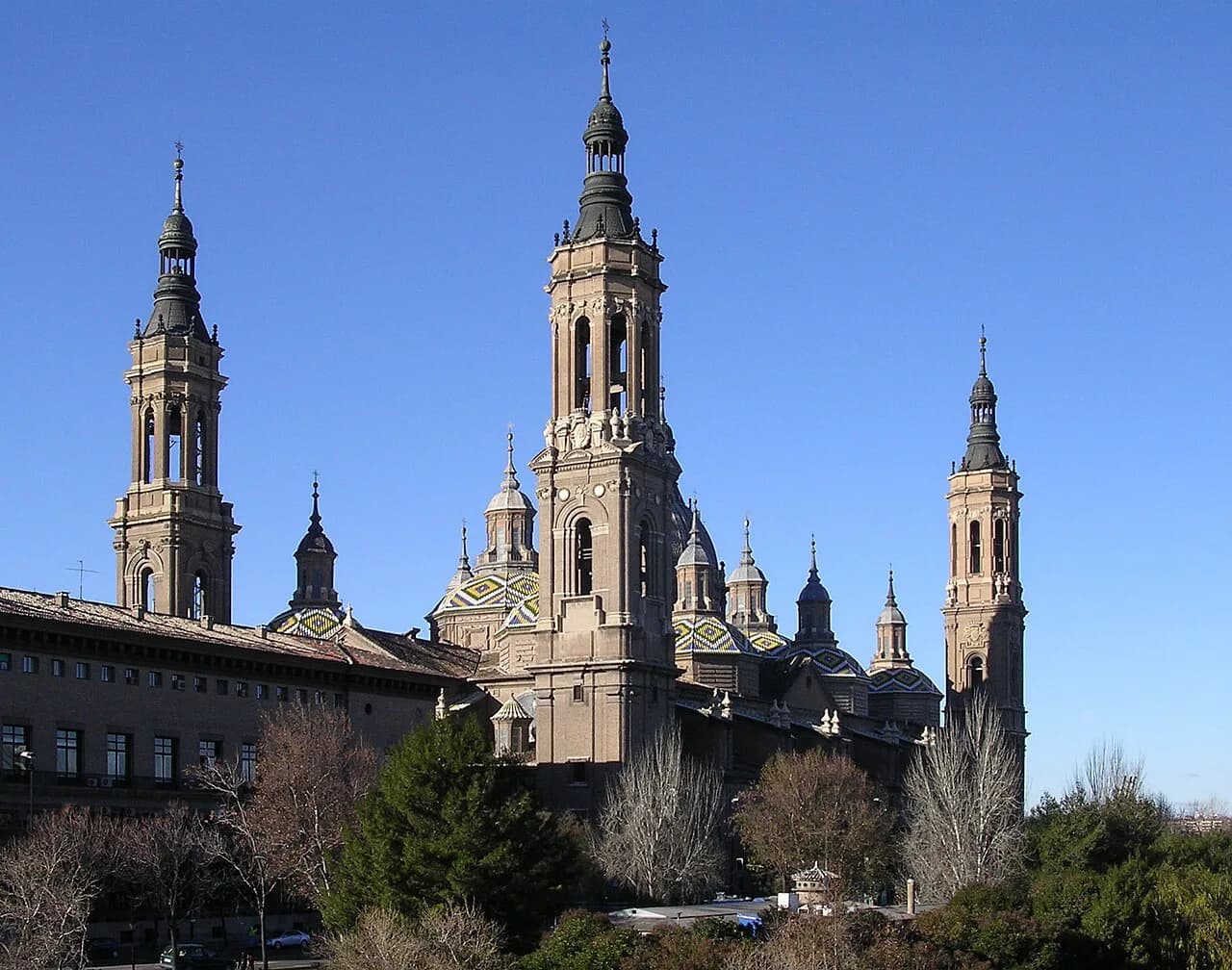
The Basílica del Pilar dominates the skyline with its domes and towers, and it holds the title of cathedral as well as basilica; its full name is Catedral Basílica de Nuestra Señora del Pilar. Inside you will find work by Goya, more than ten chapels and a sixteenth-century alabaster retablo, and two Civil War bombs that fell on the building without exploding are still displayed.
Alongside the Pilar, the mudéjar brickwork of La Seo and the Iglesia de San Pablo explains why the city's brick architecture is a UNESCO World Heritage listing. The Iglesia de San Pablo's tower is the example most often cited, and it is a short walk from the main square rather than a separate excursion.
The old town on foot: Plaza del Pilar, La Seo and the Roman remains
Start in the Plaza del Pilar, where the basilica shares space with La Lonja, the Ayuntamiento, the Fuente de la Hispanidad, the Catedral del Salvador (La Seo) and a monument to Goya. Treat the square as a junction rather than a single sight: everything else in the historic centre radiates from it.
Walking order matters here. From the square, head a few steps to La Seo, then south towards the river for the Roman walls and the Torreón de la Zuda, and continue into the streets of the Casco Histórico for the theatre and the market. Our guide to the Zaragoza old town sets the streets and squares out block by block if you want a fixed route.
The Torreón de la Zuda is a mudéjar tower that once formed part of the palace of the Muslim governors, built onto the Roman wall. Its top floor holds the tourist office, and the panoramic windows there give you a free view over the rooftops towards the river — the cheapest way to understand the city's layout before you pay for anything.
Basílica del Pilar: the Santa Capilla, Goya's domes and the tower
The Pilar repays more than a quick look at the high altar. The Santa Capilla holds the small statue of the Virgen del Pilar, and above you the ceilings carry frescoes painted by Goya, which are easy to miss if you keep your eyes at floor level.
For the view, the Torre de San Francisco de Borja can be climbed for a panorama over the Ebro and the old town. It is the one paid extra at the basilica worth budgeting for, and it makes most sense before you have already seen the city from the Torreón de la Zuda, so you can compare the two.
The basilica is an active place of worship, so visitors should expect parts of it to be reserved at service times, and dress and behaviour should follow that. Check the basilica's own published notice for the day you plan to visit rather than assuming the tourist route is open all day.
La Seo (Catedral del Salvador): the Parroquieta wall and the tapestry museum
La Seo is the sight most often skipped in favour of the Pilar, and that is a mistake. The building was raised over the Roman forum and the former main mosque, which is why its styles stack up so confusingly; the Catedral del Salvador is the same building under its Castilian name.
The detail worth the detour is the exterior wall of the Parroquieta, a mudéjar panel where brick and glazed ceramic form geometric patterns. Walk round the outside before you go in, because from the square you see only a fraction of it.
Inside, the cathedral's tapestry museum holds Flemish pieces that are among the finest of their kind. Allow time for it as a separate stop within the visit rather than tacking it onto the end, and confirm current entry terms and any combined ticket at the cathedral's own ticket desk or website.
Roman Zaragoza: the theatre, the walls and the Torreón
The Teatro de Caesaraugusta is the surprise of the old town. The auditorium held around 6,000 spectators, making it one of the largest in Roman Hispania, and it stayed buried under later housing until building work in 1972 brought it back into the open.
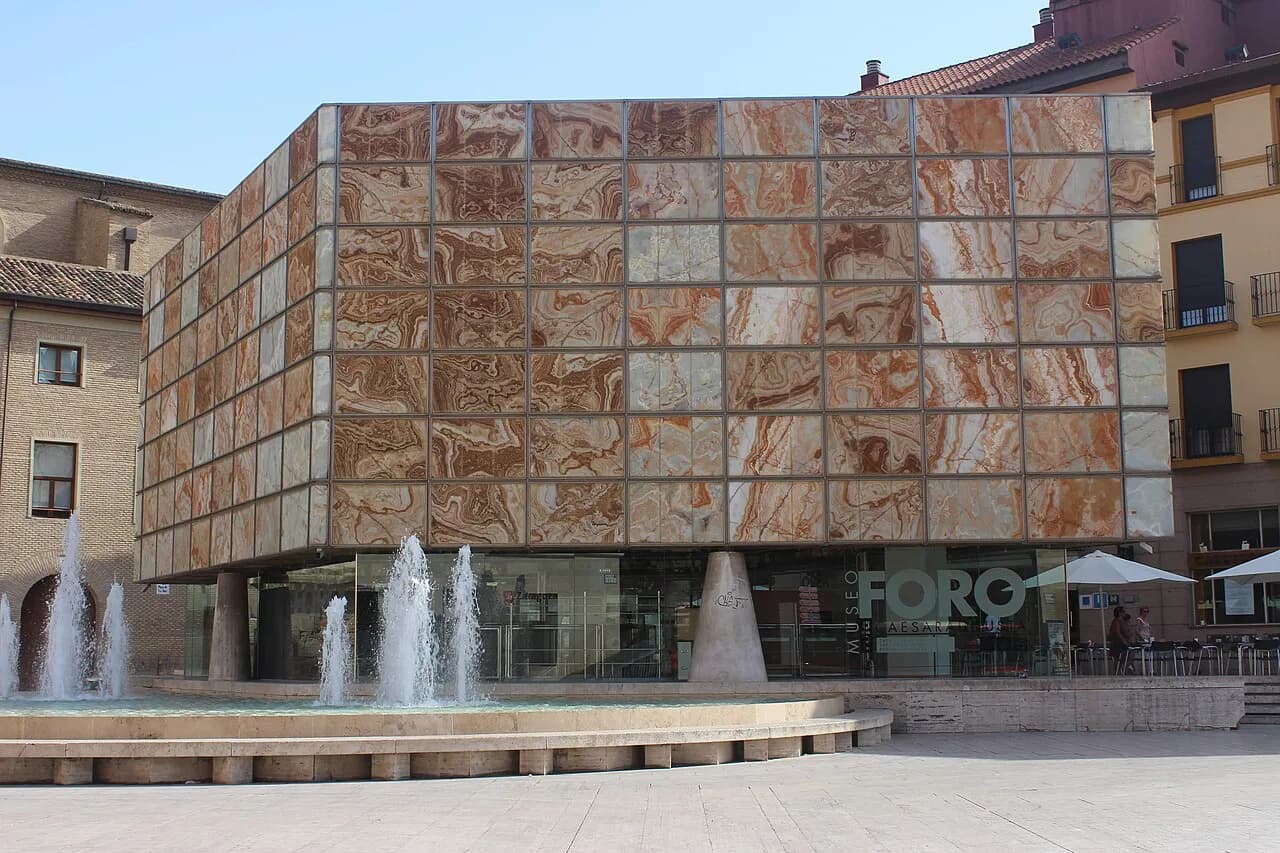
Today a walkway and museum let you look down into the seating and the stage area, which is why a seemingly ordinary square suddenly opens at your feet. Pair it with the surviving stretches of the Roman murallas nearby, and see the museums in Zaragoza for how the city's Roman sites are grouped into visitable collections.
Several of these sites are run as city museums with their own ticket arrangements, and the Museo del Teatro de Caesaraugusta is the one to look up first if you plan to visit more than one. Prices and opening days vary between them, so confirm at the ticket office or the city's museum pages before you set out.
Palacio de la Aljafería: price, free slots and why it needs its own slot
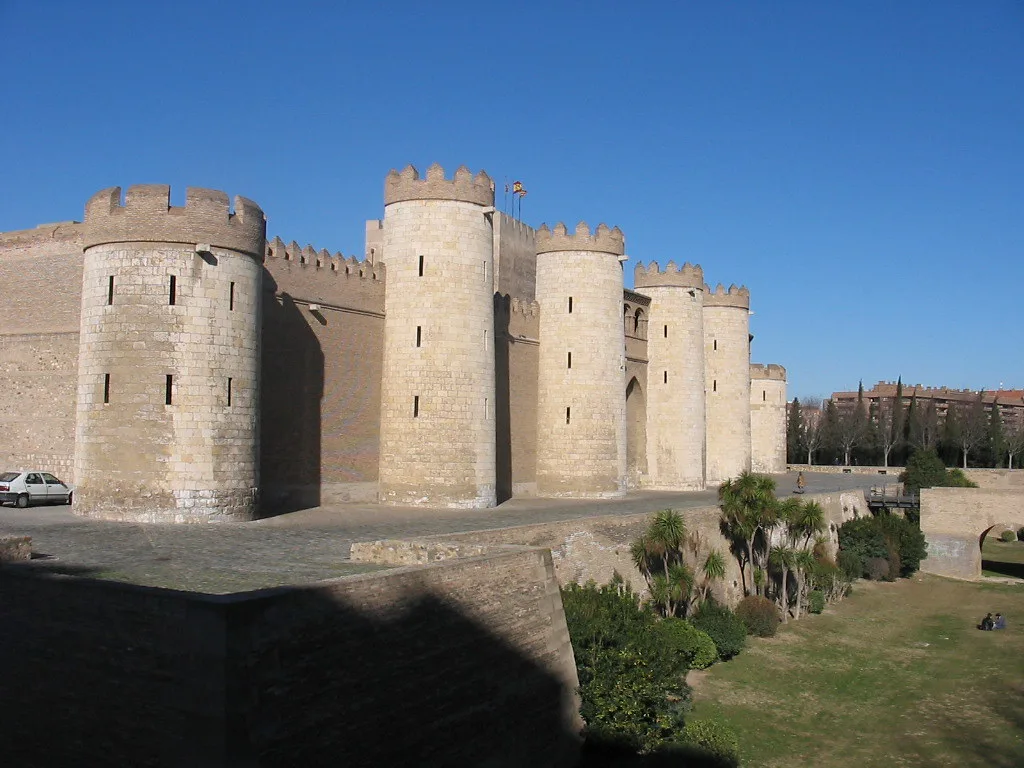
The Aljafería was built in the second half of the eleventh century as the residence of the Muslim kings of Zaragoza, and it is the finest Islamic building in the city. Entry costs 5 EUR, with free admission all day on the first Sunday of each month and on the first Monday afternoon.
The catch is location. The palace sits well outside the old town, so it does not slot into a walk between the Pilar and the market; give it its own half-day slot, or use the free first-Sunday and first-Monday windows to justify the trip out. Check the palace's own visitor information for current opening arrangements before travelling across the city.
If your dates are fixed and neither free slot lands on them, the standard ticket is still cheap for what is one of Spain's best-preserved taifa palaces. Go early in the day if you are visiting in summer, when the interior courtyards are the only relief from the heat.
Museo Goya and the city's art collections
The Museo Goya is dedicated to the Aragonese painter Francisco de Goya and holds a collection of his work alongside pieces by contemporary artists. It is the natural stop for anyone who noticed the frescoes in the Pilar and wants the wider picture.
Beyond Goya, Zaragoza's collections are spread across the cathedral, the Roman museums and the city's own galleries rather than gathered in one quarter. Read our guide to museums in Zaragoza to decide which ones justify your time, then anchor the rest of the day around them.
Museum opening hours in Spain commonly include a weekly closing day, and many public museums run free or reduced slots at specific times. Confirm the current pattern on each museum's own page for your dates, since the day you assume is open may be the day it shuts.
Crossing the Puente de Piedra and the Balcón de San Lázaro
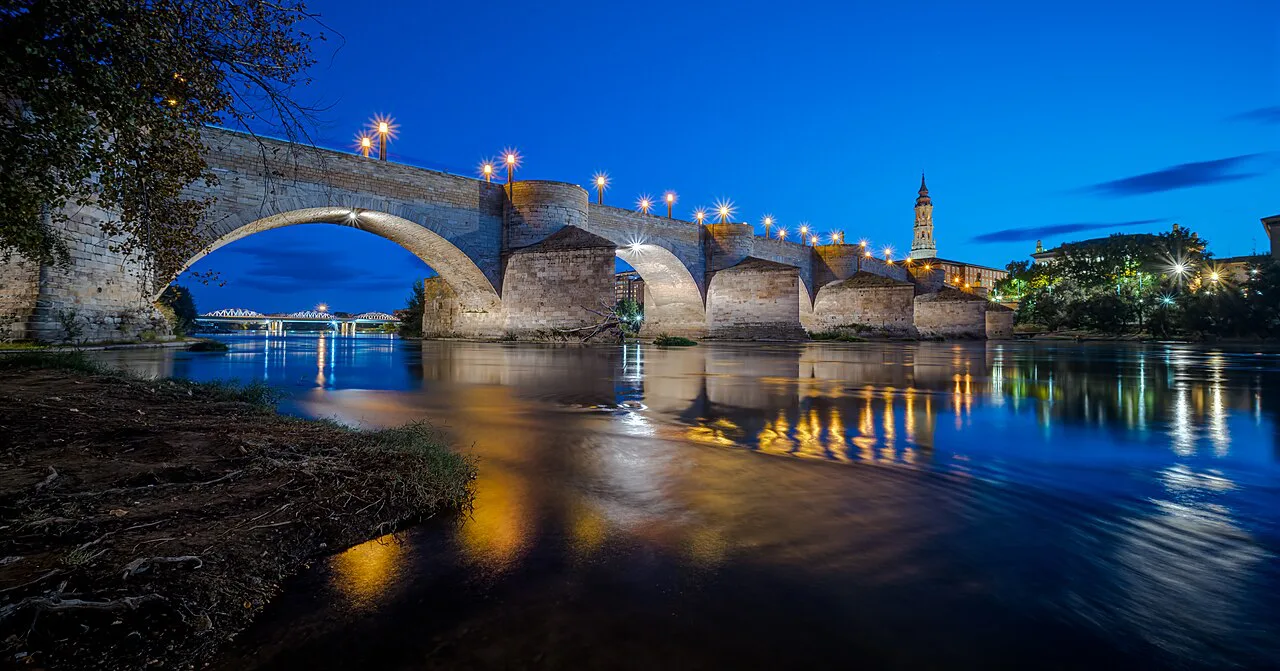
The Puente de Piedra is the medieval stone bridge over the Ebro, guarded by four bronze lions, and it gives the classic view back to the Pilar and the historic centre. Cross it late in the day if you want the light behind the towers rather than in front of them.
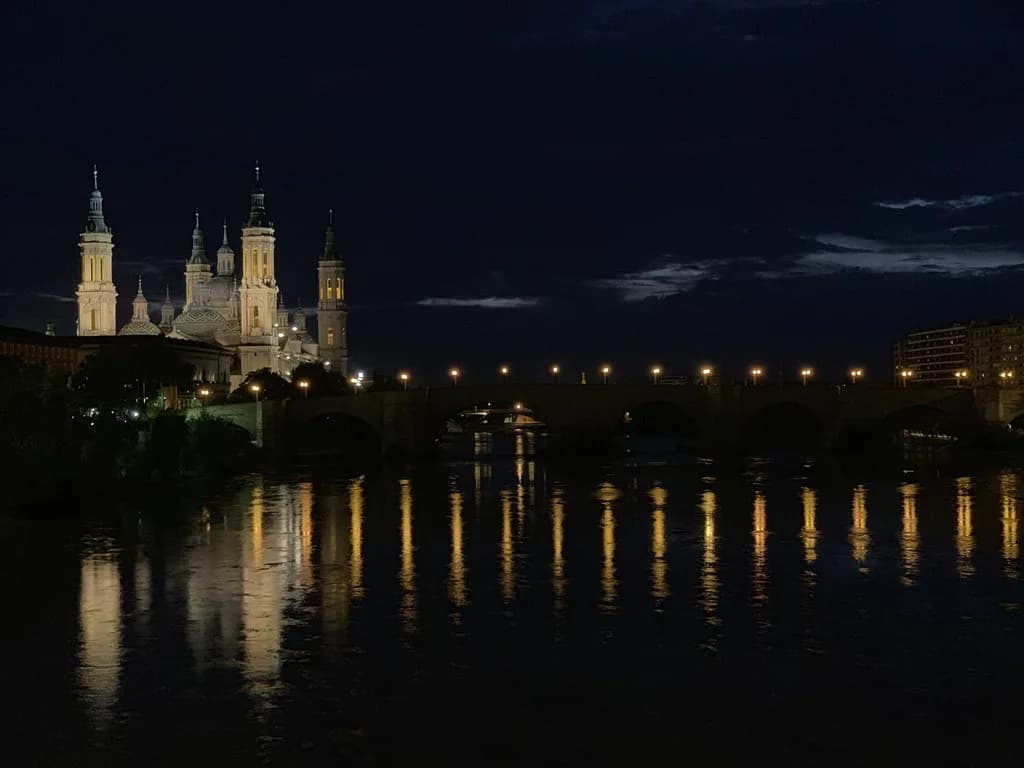
On the far bank, the Balcón de San Lázaro is the spot for the postcard panorama of the basilica reflected in the water. It costs nothing and takes minutes, so it belongs at the end of a walking day rather than as a destination in its own right.
Calle Alfonso I and the Mercado Central
Calle Alfonso I is the city's most elegant shopping street, lined with late nineteenth-century buildings and aimed straight at the Pilar's domes. Walk it towards the square rather than away from it, and you get the postcard perspective for free.
The Mercado Central, a few steps from the Roman walls, is a modernista iron-and-glass hall modelled on the Paris markets but decorated with references to Aragonese agriculture. It is a working market, so it is liveliest in the morning and quietens later; go for the building and the produce displays rather than as a lunch stop.
Together these two make a short, flat walk between the Plaza del Pilar and the river, and they are the easiest stretch to do when you are waiting for a museum to open. Our Zaragoza map lays the square, the basilica and the surrounding streets out on one page if you want to see how tightly it all packs together.
A sample day: what fits before and after the midday pause
Begin at the Plaza del Pilar when the square is quiet, do the basilica and the tower first, then move to La Seo and its tapestry museum before the middle of the day. That sequence keeps you indoors or in shade during the hottest hours and puts the two biggest interiors back to back while you still have energy.
After the midday lull, take the Roman theatre, the murallas and the Torreón de la Zuda, then walk Calle Alfonso I down to the Mercado Central and finish on the Puente de Piedra for the river view. Save the Aljafería for the second morning rather than squeezing it in, because the walk out and back eats an hour before you have seen anything.
If you have only one day, drop the Aljafería and the Museo Goya and concentrate on the square, the two cathedrals and the river. The Roman theatre is the one small sight not to skip, since it takes little time and explains the city's ground plan better than any panel.
Where to base yourself for two days of sightseeing
Base yourself within walking distance of the Plaza del Pilar and you will not need transport for the core sights, which are flat and close together. The Az Hotel San Valero, a few steps from the square, is a straightforward example of a central base, while the Eurostars Zaragoza suits arrivals by train because it sits beside Zaragoza-Delicias station.
The trade-off is simple: a station hotel makes arrival and departure easy but puts the Aljafería and the old town on the far side of a walk, while a central base shortens every sightseeing leg. If your break is two nights, choose the centre and accept a taxi or bus with your luggage on arrival.
Getting in and around: station, airport and the flat centre
Zaragoza sits roughly between Madrid and Barcelona, and the station, Zaragoza-Delicias, is the arrival point for rail travellers and has hotels immediately beside it. The city centre itself is flat and compact, which makes walking the default way to move between the Pilar, La Seo and the river.
For flights, check Zaragoza's own airport against the larger options before booking, because route networks change seasonally and the city's air links are thinner than those of the big coastal airports. Rail timetables between Zaragoza and Madrid or Barcelona should be taken from the operator's own site on the day you book.
Within the centre, expect to walk everywhere between the square, the market, the Roman sites and the bridge. The Aljafería is the one sight that justifies a bus or taxi, and the Torreón de la Zuda is a useful orientation stop early on. For the broader regional picture, see our Zaragoza history page.
Practical constraints: Monday, first-Sunday patterns and summer heat
The Aljafería's free slots — the first Sunday all day and the first Monday afternoon — are the clearest fixed pattern the sources give for the city's sightseeing calendar, and they are worth building a trip around if your dates are flexible. For everything else, Spanish museums and churches commonly close one weekday and reserve others for free entry, so check each site individually.
Churches are working buildings, so the Pilar and La Seo can restrict tourist access around mass; plan cathedral visits for the morning and treat any mid-afternoon arrival as a gamble. Shops and smaller sites also tend to pull down shutters in the middle of the day, which is why the sample day above puts walking and outdoor sights after the pause.
In summer, inland Aragón gets genuinely hot at midday, and the Plaza del Pilar offers little shade. Book the Aljafería courtyards and the cathedral interiors for the middle hours, and save the bridge, the walls and Calle Alfonso I for the cooler ends of the day.
Book the Aljafería slot before the Pilar tower
Decide the Aljafería first. It is the only core sight that sits away from the old town, and the only one with a sourced entry price of 5 EUR and free slots on the first Sunday and first Monday afternoon, so fixing that half-day determines how the rest of your two days fall.
Then build the centre around the Plaza del Pilar: basilica and tower in the morning, La Seo and its tapestries next, Roman theatre and walls after the pause, and the Puente de Piedra at the end. If you are extending the trip afterwards, our things to do in A Coruña and things to do in Alcúdia guides follow the same town-by-town approach.
Explore more Zaragoza guides
Frequently Asked Questions
How many days do you need in Zaragoza?
Two full days covers the Plaza del Pilar, the basilica and its tower, La Seo and its tapestry museum, the Roman theatre and walls, the river bridges and the Aljafería without rushing. One long day is enough for the Pilar, La Seo and the river view if you drop the Aljafería and the Museo Goya.
What is the closest airport to Zaragoza?
Zaragoza has its own airport, and it is the nearest to the city; larger Spanish hubs are far away by road. Route networks change with the season, so compare the airline's own timetable for your dates before committing to a flight.
Is Zaragoza a day trip from Barcelona?
Zaragoza sits between Madrid and Barcelona and is reachable by rail, but a day trip leaves little time for La Seo and the Aljafería on top of the Pilar. Treat it as a one- or two-night stop and take timings from the train operator when you book.
What is the Aljafería's free entry?
Free admission applies all day on the first Sunday of each month and on the first Monday afternoon, and there is a modest charge at other times. The palace's own visitor information carries the current price list and opening arrangements, so check before travelling out.
Sources
Notes for your next Spanish town break
Optional updates to our guides.
You might also like
Continue reading
More guides you'll find useful