
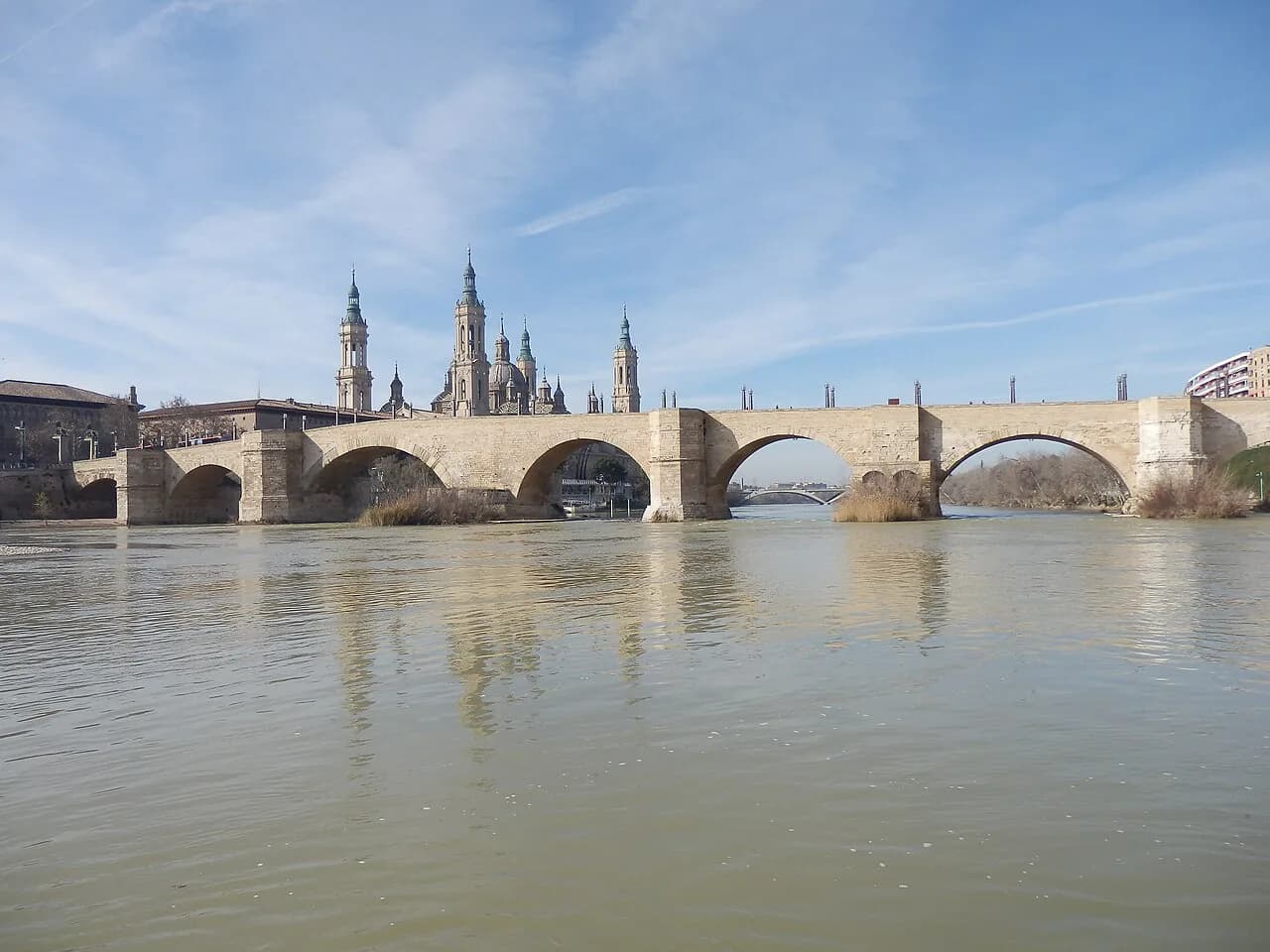
Puente de Piedra, Zaragoza: the Stone Bridge over the Ebro

The Puente de Piedra is Zaragoza's stone bridge over the Ebro, and it is not a ticketed sight: you cross it on foot in a couple of minutes and pay nothing. It works as both a working link between the Arrabal district and the city centre and a viewpoint over the river, with the Basílica del Pilar rising close by on the right bank. This guide covers where the bridge sits, how to reach it, what you see from it and how it fits the rest of a Zaragoza visit.
What the Puente de Piedra is and where it crosses the Ebro
The bridge carries pedestrians and buses across the Ebro between the Arrabal neighbourhood on the left bank and the historic centre on the right. Its name means simply Stone Bridge, and it is the crossing most visitors use without noticing, because it puts you within a few minutes' walk of the Pilar and the old town lanes. Treat it as infrastructure and a viewpoint rather than a monument with an entrance, a queue or a ticket desk.
Because it is a public road bridge, no opening hours or admission prices apply, which makes it easy to slot into a walk during daylight. The practical constraint is traffic: it is a main pedestrian and bus route for the Arrabal side, so it is busiest at commuting times and quieter early in the morning.

How to reach the bridge on foot, by tram or by bus
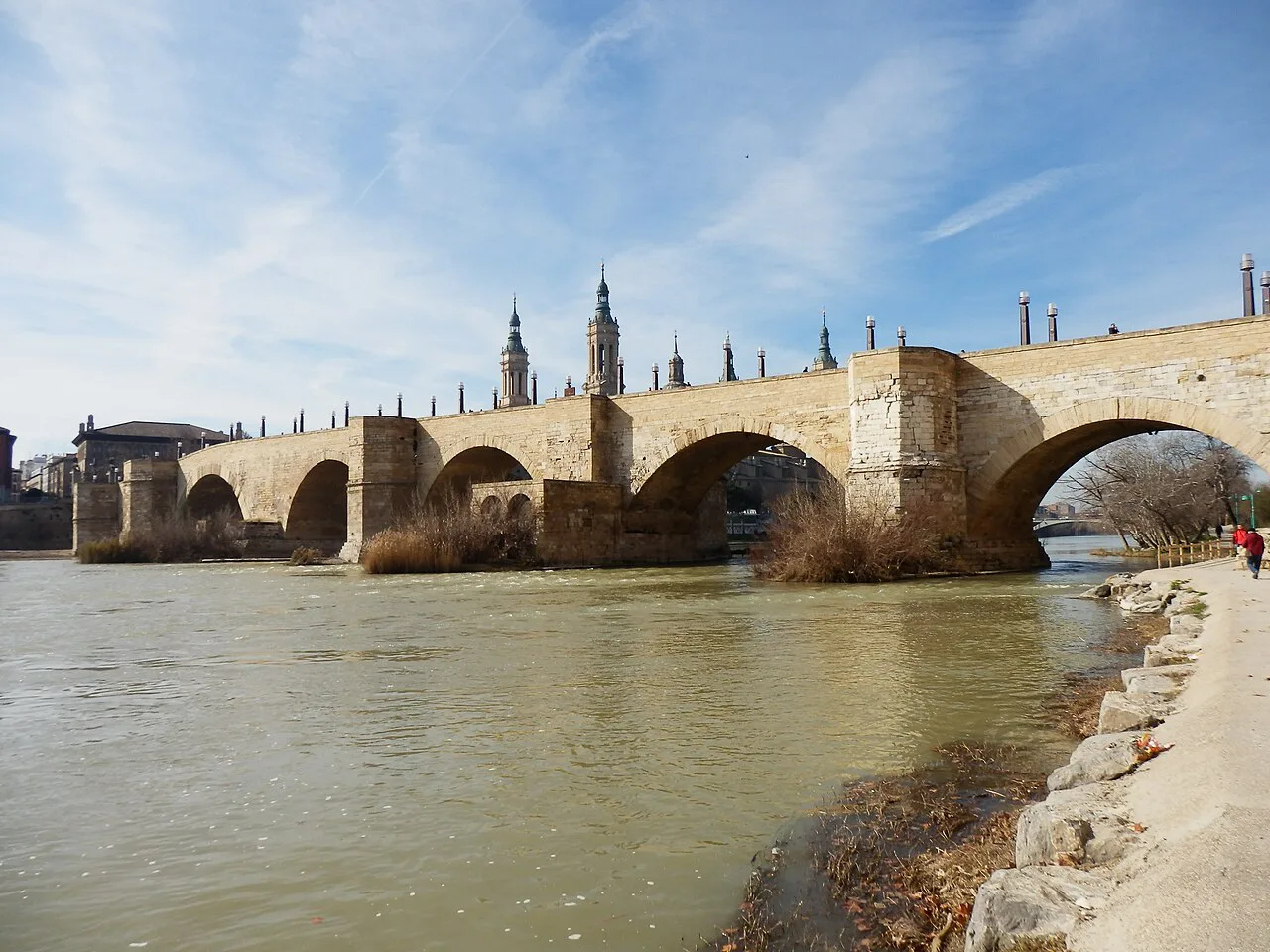
From the old town, walk to the river along Calle de Don Jaime I or through the streets south of the Pilar; the bridge head appears where the built-up centre gives way to the Ebro. On the Arrabal side, the approaches come down Calle de Sobrarbe and Avenida de Cataluña, the two axes that feed the crossing. Any riverside walk in the centre will bring you to it without a map.
Buses use the bridge, and when there are roadworks, events or closures they are rerouted over the Puente de Santiago and the Puente de Hierro instead, so check your route if a diversion is in force.
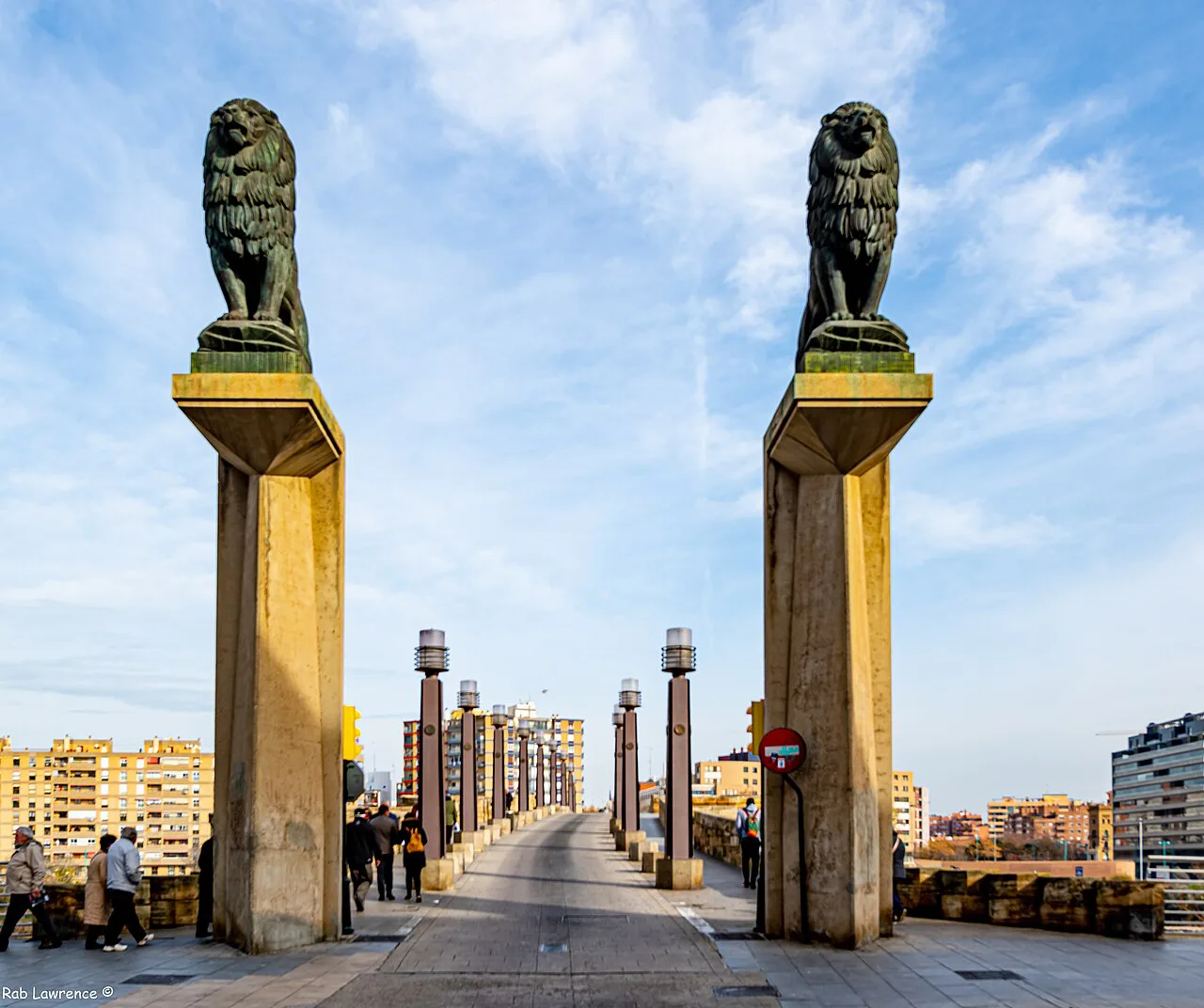

What you see on and from the bridge
Looking one way you get the broad sweep of the Ebro and the green line of the Paseo de la Ribera; looking the other, the stonework leads your eye towards the towers and domes of the Pilar. The Arrabal bank has a rougher, more residential edge, with the riverside path running beneath the bridge. The crossing is short, so the pleasure is in pausing at the parapet rather than in a long traverse.
The geometry is what makes it worth a stop: river and left bank on one side, old town on the other, and the bridge itself as the frame. Photographers tend to work from the riverbanks rather than from the deck, because the banks give you the bridge's arches in profile.
How long to allow and the best time of day
Allow ten to twenty minutes to cross and linger, or forty-five minutes if you walk a stretch of the Paseo de la Ribera on either side. It pairs naturally with a visit to the Basílica del Pilar, which stands a short walk from the right-bank bridge head. Early morning and the hour before dusk give the softest light and the thinnest crowds.
At midday in summer the stone and the open deck offer no shade, so cross early or late and save the riverside path for the cooler ends of the day. Zaragoza's heat is a practical reason to treat the bridge as a short pass-through in July and August rather than a place to stand and read.
Looking at the bridge rather than crossing it
The best way to see the structure is from the riverside paths on either bank, where the arches, cutwaters and stone courses read clearly against the water. The left bank near the Arrabal gives a fuller profile, while the right bank puts the bridge in the same view as the old town skyline. Walk down to the Paseo de la Ribera and pick a spot upstream or downstream of the deck.
Keep to the marked paths along the river and stay off the banks themselves, which are not designed for scrambling. The riverside is a public promenade.
Nearby sights within a few minutes' walk
On the right bank, the Basílica del Pilar and the cathedral known as la Seo sit within the old town, a short walk from the bridge head. The Museo Goya and the Museo de Zaragoza fill out a culture-heavy half-day if you want to stay in the centre. The Aljafería Palace is further out but still reachable on foot or by bus from the same area.
With limited time, make the Basílica del Pilar the anchor and treat the bridge as the walk between the river and the old town. Anyone heading to the Aljafería Palace should budget a separate block, because the palace sits away from the riverbank and rewards more than a glance.
Access, cobbles and crossing with luggage
The deck is paved and level enough for wheels, but the approaches on the Arrabal side involve kerbs and busy junctions, so allow extra time with a suitcase or a pushchair. There is no lift or staircase to negotiate on the bridge itself. If you are staying on the left bank, the crossing is your simplest route into the centre on foot.
Crossing with luggage is straightforward but tedious at peak times, when buses and pedestrians share the space. Plan to cross outside the morning and evening rush if you are wheeling a case.
Fiestas del Pilar and temporary closures
The bridge is periodically closed to vehicles for city events. During one such closure, it was shut for the 'Hola Primavera' event while an installation called Ring de Luxe was mounted on the structure. During that closure, buses including lines 28, 35, 36, 39 and the night routes N1, N2 and N7 were diverted over the Puente de Hierro and the Puente de Santiago. Pedestrian access was also interrupted at times for safety.
Those dates and diversions belong to a particular event, not a standing arrangement, so travellers should check the city's own notices before relying on a bus route across the bridge during a festival or event.
Is the Puente de Piedra worth a detour?
Yes, but as a crossing with a view rather than a destination in its own right. Build it into a walk between the Arrabal and the Basílica del Pilar, add a stretch of the Paseo de la Ribera for the profile view, and you have used twenty to forty-five minutes well.