Zaragoza Map: Old Town Sights, Plazas and How They Fit Together
A Zaragoza map guide to the old town: the Basílica del Pilar, La Seo, the Roman forum museum, the Aljafería and Roman walls, and how they connect on foot.
On this page
A Zaragoza tourist map needs only three anchors: the Basílica de Nuestra Señora del Pilar and La Seo on the south bank of the Ebro, the Roman remains of Caesaraugusta beneath the old streets around them, and the Palacio de la Aljafería standing apart to the west. Get those three fixed and the rest of the centre, from the Puente de Piedra to the Parque Grande José Antonio Labordeta, falls into place as a sequence of short strolls rather than a checklist. This guide lays out the city by cluster, so you can plan a route on paper before you arrive.
The tourist map of Zaragoza marks the Basílica de Nuestra Señora del Pilar, the Catedral del Salvador, the Museo del Foro de Caesaraugusta, the Puente de Piedra, the Palacio de la Aljafería, the Parque Grande José Antonio Labordeta and the Murallas Romanas de Zaragoza, which is enough to sketch a two-part route: the riverside core in one loop and the Aljafería as a separate leg.
What a Zaragoza map shows you: a compact old town on the south bank of the Ebro
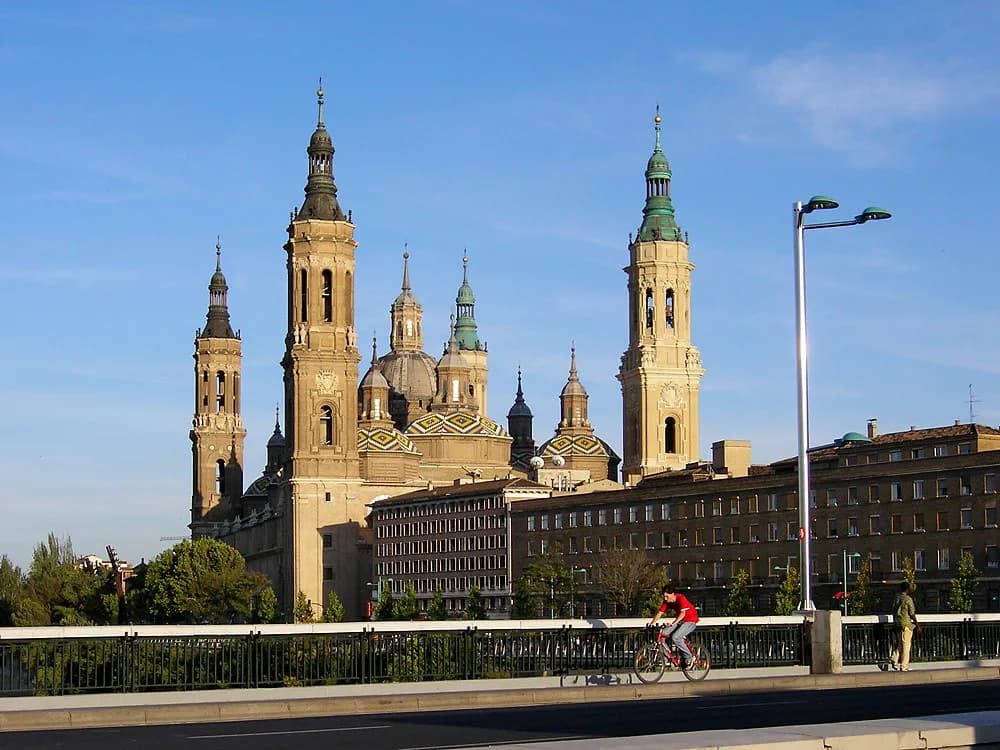
The historic centre sits on the south bank of the Ebro, with the Basílica del Pilar and the cathedral close to the water and the streets of the Casco Histórico behind them. Because the river forms a hard edge, a map quickly tells you which way you are facing: the water marks one side of the centre, the Aljafería stands apart to the west, and the Parque Grande José Antonio Labordeta lies beyond the old streets.
Treat the map as three zones rather than one blob. Zone one is the Pilar and La Seo cluster around the Plaza de las Catedrales; zone two is the Caesaraugusta layer of Roman remains and the museums that sit among the old streets; zone three is the Aljafería and the western approach. A route that hops between zones wastes the day, so group each zone's sights together.
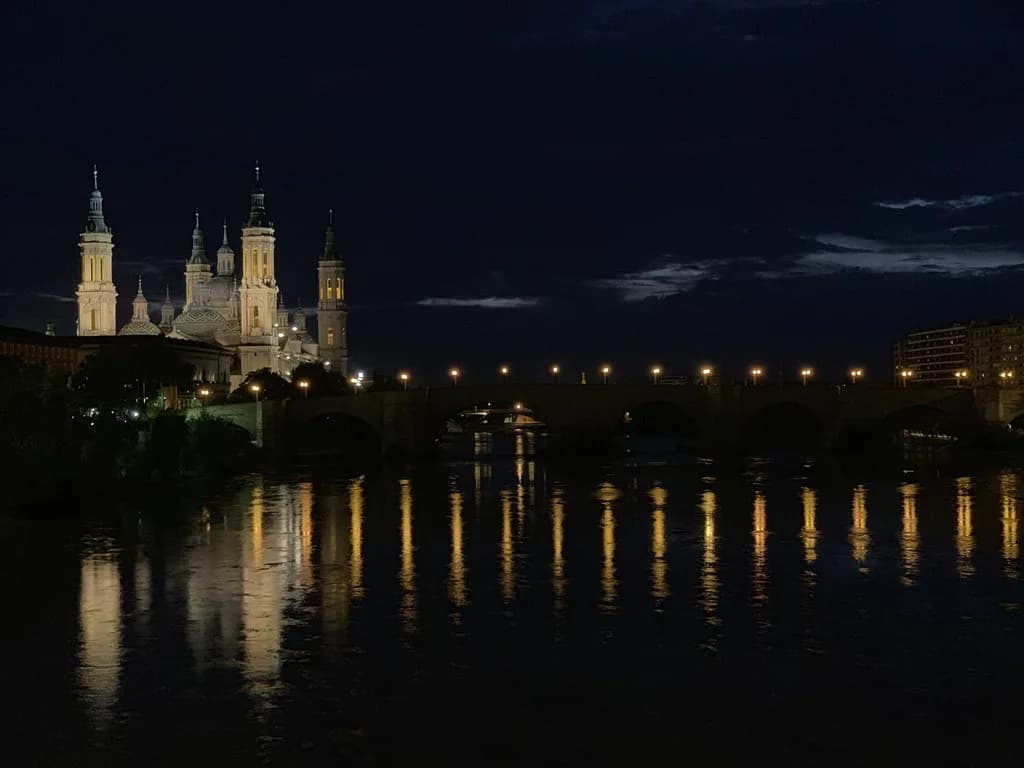
Orientation on the ground is helped by the basilica's domes and towers, which show above much of the centre. If you lose your bearings, head for the river and the Puente de Piedra, then reset from there; the bridge and the basilica together give you a reliable fixed line through the old town.
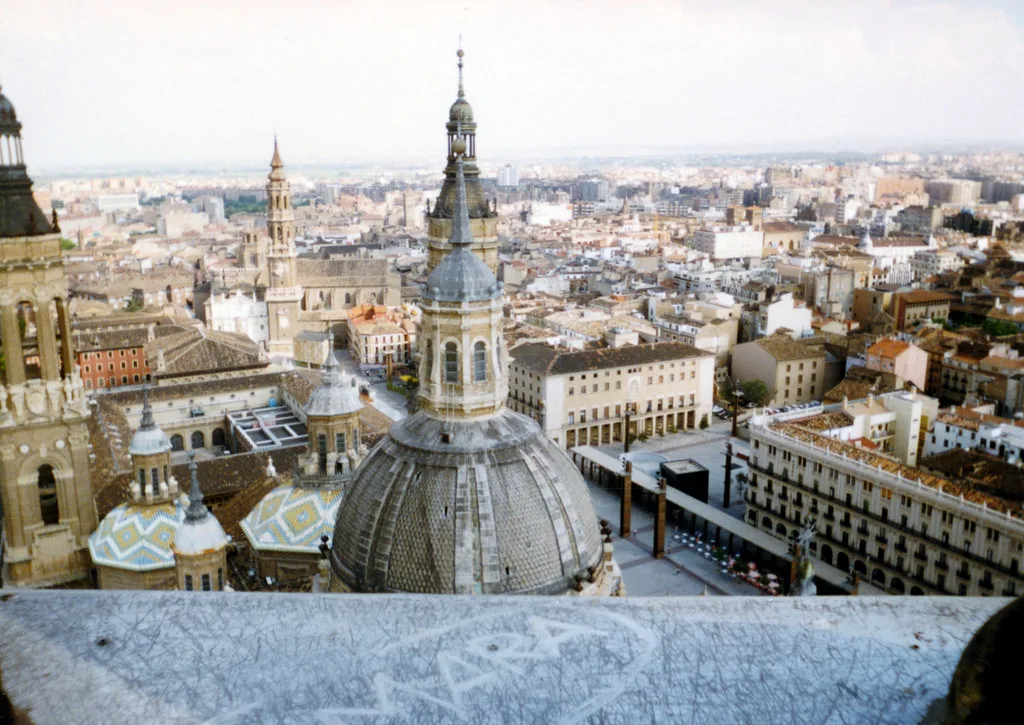
The Pilar–La Seo cluster: Basílica de Nuestra Señora del Pilar, Plaza de las Catedrales and the Catedral del Salvador
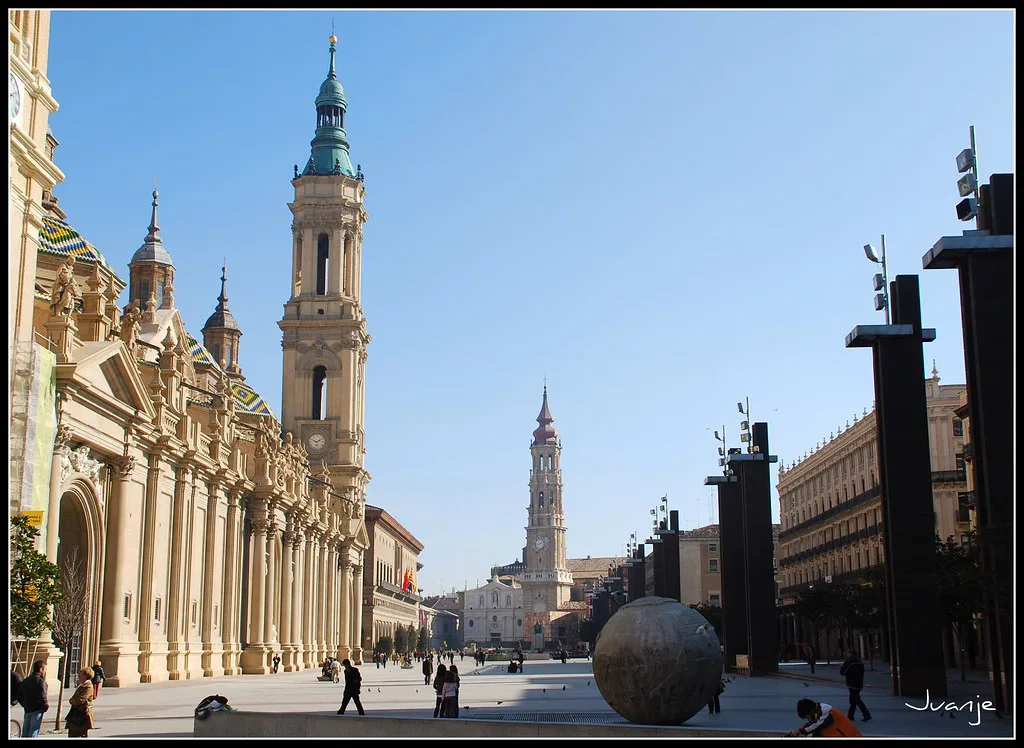
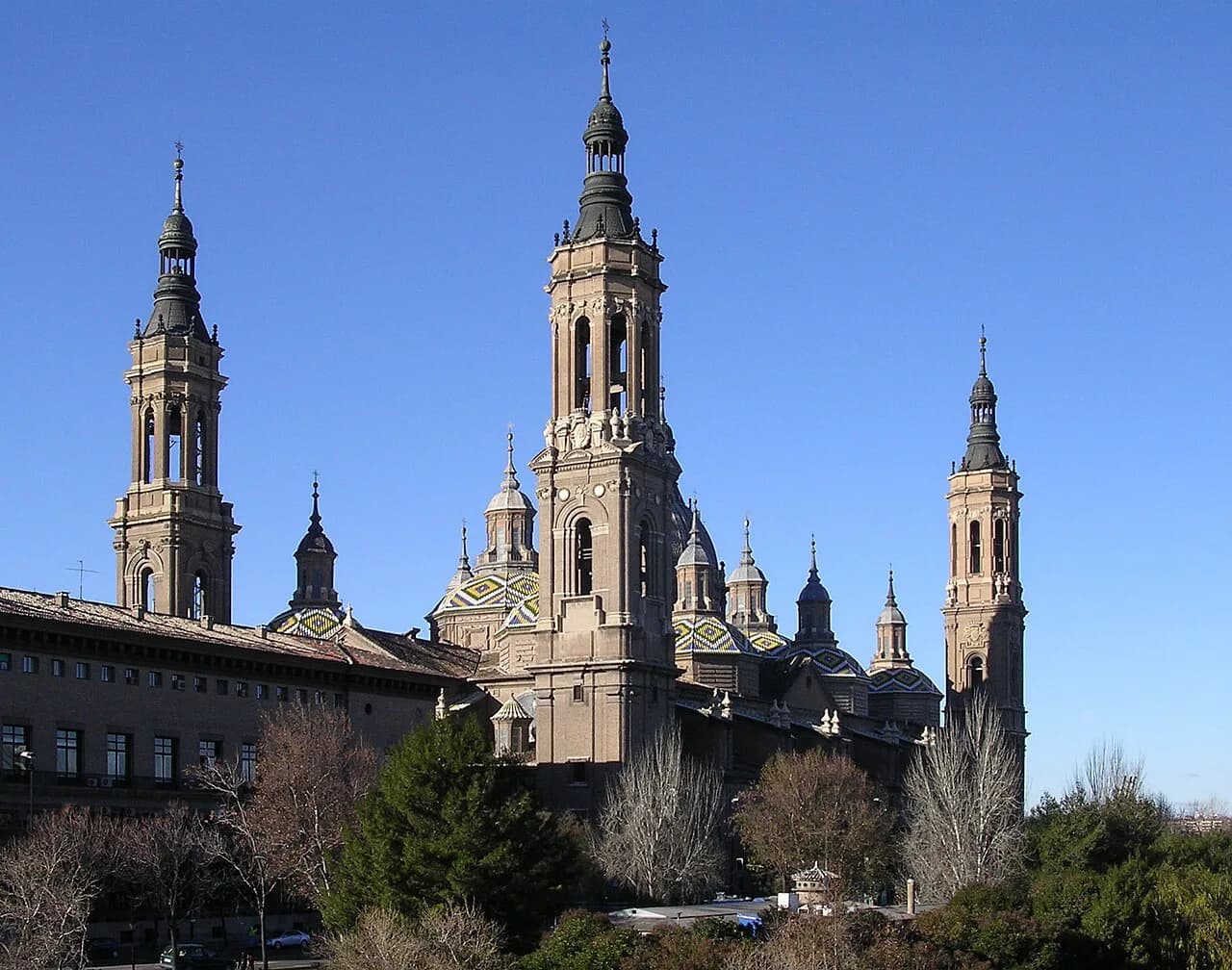
The Basílica de Nuestra Señora del Pilar and the Catedral del Salvador, known as La Seo, stand almost back to back, separated by the Plaza de las Catedrales. This is the densest part of any Zaragoza map and the natural place to start, because you can see two of the city's principal monuments without crossing a single road.
Both buildings appear on the standard tourist map alongside the river and the bridge, so use the Plaza de las Catedrales as a pin in your own itinerary. Plan the cluster as one stop rather than two separate outings, then decide whether you want to go inside each building or simply read the exteriors and move on to the Roman layer behind them.
The pairing matters for planning because the two cathedrals on either side of the plaza represent different architectural worlds: the basilica's baroque domes and the cathedral's own layered fabric. Photographers should note that the Plaza de las Catedrales opens up views of both at once.
Caesaraugusta underground: the Museo del Foro and the Roman remains mapped under the streets
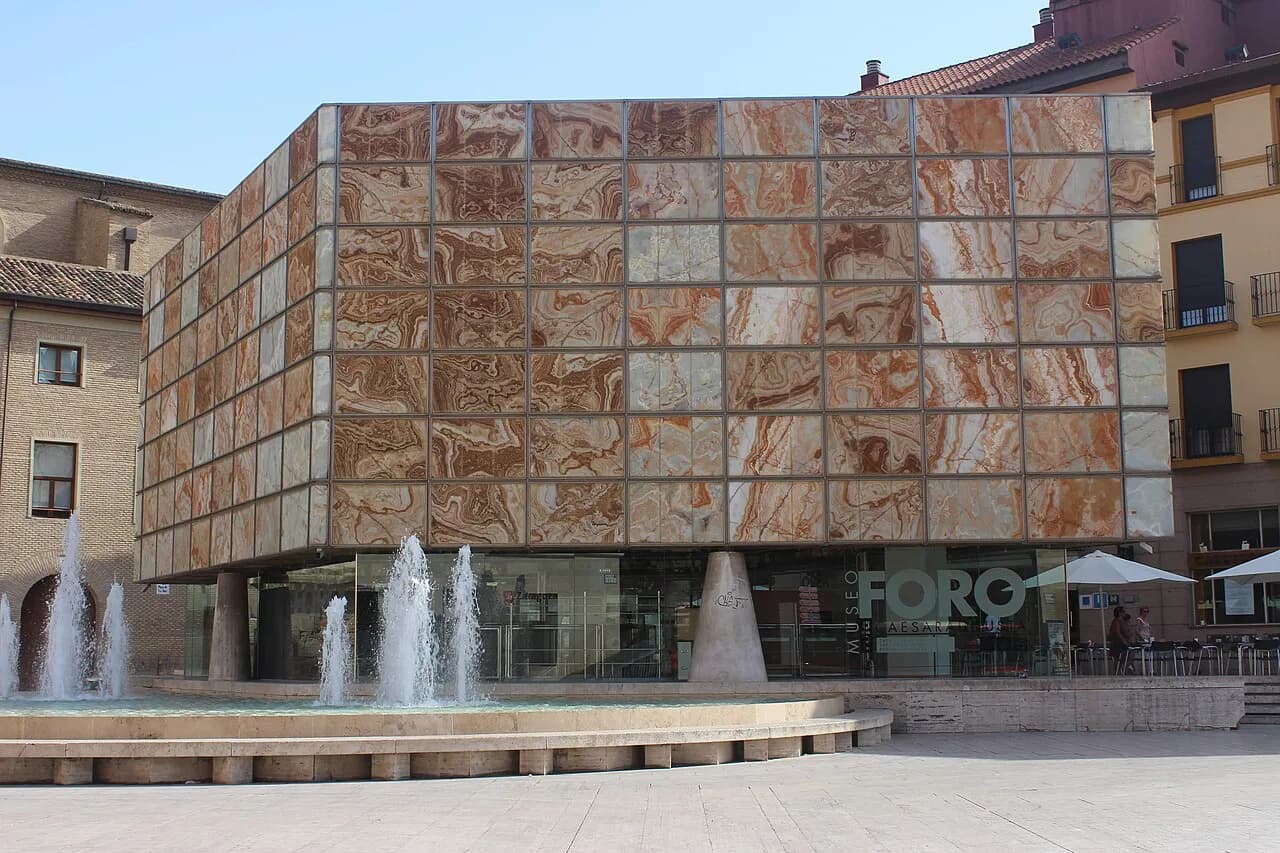
The Museo del Foro de Caesaraugusta appears on the tourist map close to the cathedral cluster, and it is the clearest reminder that Roman Zaragoza lies beneath the modern street pattern. Because the remains are excavated below ground level, a flat map gives little sense of depth; expect to go down rather than across when you reach this stop.
Group the Roman sights with the cathedral cluster rather than treating them as a separate district, since they sit among the same streets. The city's Roman origins run through the museums as well as the excavations, and readers who want the background can follow the story of César Augusto and the founding of Caesaraugusta before arriving, which makes the underground rooms far easier to interpret.
If you are choosing between Roman sites on a short break, pick the one that fits the zone you are already walking through rather than doubling back later. The museums in Zaragoza that cover this period are spread across the centre, so a map that shows them as a scatter is more honest than one that suggests a single Roman quarter.
West of the centre: the Palacio de la Aljafería and how to place it on the map
The Palacio de la Aljafería appears on the tourist map well to the west of the Pilar and La Seo, outside the tight knot of old streets. This is the one major sight that does not fold into a riverside wander, so give it its own leg of the route and allow for the walk or a short bus ride in each direction rather than tacking it onto the cathedral loop.
The Aljafería is also the sight most often bundled into organised visits. A city panoramic guided tour typically covers the Basílica del Pilar, the Plaza de las Catedrales, La Seo and the Palacio de la Aljafería, although the itinerary can be adjusted to a group's interests and can take in museums such as the Museo Pablo Gargallo, the Museo de Zaragoza or the Museo Camón Aznar.
One planning point that catches people out: the guide fee for that panoramic visit does not include admission to monuments such as La Seo or the Palacio de la Aljafería, so budget for entry tickets on top of the tour. The same operator records a 2013 tariff of 125 euros per group and gives a duration of around three hours, with a maximum of 55 people per group, but check the current rate with the tourist office rather than assuming that figure still applies.
The Roman walls and the Puente de Piedra as orientation points
The Murallas Romanas de Zaragoza and the Puente de Piedra both appear on the tourist map and together make good fixed points for reading the city's shape. The bridge crosses the Ebro at the northern edge of the centre, while the Roman walls trace the old perimeter, so the two features frame the historic core between river and wall.
Use them as checkpoints rather than destinations in their own right. If your route has drifted, walking to the bridge or picking up the line of the walls will put you back on the map within minutes, which matters in a centre where streets bend and names change without warning.
For a short break, the walls are also a useful marker of how far the old town extends: anything inside their line is walkable from the cathedral cluster, while sights beyond them deserve a deliberate plan. That distinction is more useful on the ground than a scale bar.
Green space and the edge of the centre: Parque Grande José Antonio Labordeta
The Parque Grande José Antonio Labordeta is the large green space on the tourist map, sitting away from the cathedral cluster and best reached on its own leg of the route. Guided panoramic tours that include a bus can run a scenic circuit through the city as far as this park, which gives you a sense of how the centre opens out.
On foot, treat the park as an add-on rather than a core sight: it sits at the edge of the centre rather than between the monuments, so it suits a slower afternoon rather than a tight morning of cathedral and Roman stops. Placing it correctly on your mental map prevents the common mistake of assuming it is a short stroll from the cathedral cluster when it is not.
Museums to pin on the map: Museo de Zaragoza, Museo Pablo Gargallo and Museo Camón Aznar
The city's own guided-visit information lists the Museo de Zaragoza, the Museo Pablo Gargallo and the Museo Camón Aznar as possible museum stops on a customised route. Pin them individually rather than as a museum district, because they are scattered through the centre and each fits a different part of a walking day.
For planning, choose one museum per zone: one near the cathedral cluster, one on the Aljafería leg, and so on. Guided visits can be arranged with explanations in Spanish, English, French, Italian or German, which is worth knowing if your group wants context without reading panels all day.
Readers who want a broader shortlist before committing can compare the museums in Zaragoza by collection and location, then mark only the ones that sit on their chosen route.
Reading the map for a walking route: what sits within a short stroll and what needs a bus or taxi
The practical split on a Zaragoza map is simple: the Pilar, La Seo, the Plaza de las Catedrales, the Museo del Foro de Caesaraugusta, the Puente de Piedra and the Roman walls sit close enough to combine in one continuous walk, while the Aljafería and the Parque Grande José Antonio Labordeta belong to separate legs. Build the riverside cluster first, then decide how much of the west and parks you want to add.
A sensible order is to start at the Plaza de las Catedrales, work through the Roman remains and the bridge, then break before heading west to the Aljafería. If you would rather not navigate at all, a panoramic guided visit covers exactly this: it typically takes in the Pilar, Plaza de las Catedrales, La Seo and the Aljafería in around three hours, with groups capped at 55 people, and payment is made in advance once the guided visits department confirms the booking.
The wider region gives Zaragoza its context, and the city rewards a little background reading before you arrive; the deeper history of the city repays an hour of preparation, especially if the Caesaraugusta rooms are on your list.
Guided options when you would rather not navigate yourself
Guided panoramic visits can be requested online, by phone or via the Oficina Municipal de Turismo at the Torreón de la Zuda on Glorieta Pío XII. Groups can specify the day, time, starting point, finishing point and language, and if the group has its own bus the route can include a panoramic circuit across the city as far as the Parque Grande José Antonio Labordeta.
The trade-off is cost and flexibility: the panoramic format works well for a group that wants a single coordinated route, but the recorded 2013 tariff is charged per group rather than per person, and monument admissions are extra. Smaller parties and solo travellers will often do better building their own route from the map and paying individual entries.
Where maps and leaflets are useful before you arrive
A paper or downloaded tourist map is most useful before you arrive, when you can mark the clusters and decide which sights you actually want to enter. Start with a map showing the Pilar, La Seo, the Caesaraugusta forum museum, the bridge, the Aljafería, the Roman walls and the Parque Grande, which covers every anchor you need for a two-day plan.
A second version of the Zaragoza tourist plan is available as a downloadable PDF, useful if you want a clean copy to print or keep on a phone without loading a document viewer. Comparing the two is a quick way to check names and spellings of the monuments before you rely on them.
Once you have your shortlist, read each monument up in its own right before deciding where to spend your time, and browse the Things to Do in Zaragoza guide for the wider set of sights around the centre.
Which Zaragoza route works for your short break
For a first visit, build the route around the cathedral cluster and the Caesaraugusta remains, add the Puente de Piedra and the Roman walls as orientation points, then give the Aljafería a separate leg. That structure respects the city's actual shape, keeps you from zigzagging across the centre, and leaves the Parque Grande José Antonio Labordeta for a slower slot.
Before you travel, confirm opening times and admission prices for the Basílica del Pilar, La Seo and the Aljafería directly with each monument, and check the current cost of any guided visit, since the recorded panoramic tour tariff dates from 2013 and monument entry sits outside the guide fee. With the map annotated and those details confirmed, the city becomes a straightforward set of walks rather than an overwhelming list.
Explore more Zaragoza guides
Sources
Notes for your next Spanish town break
Optional updates to our guides.
You might also like
Continue reading
More guides you'll find useful