Zaragoza History: Roman, Moorish and Christian Sights
Zaragoza history made visible: Roman ruins, the Moorish Aljafería, two cathedrals and Goya, all tied to plazas and streets you can still walk.
On this page
Zaragoza's history gives you one compact centre where Roman foundations, an Islamic palace-tower and two cathedrals stand within a few minutes of each other, so a single walk covers two millennia. The sequence below runs roughly chronologically, from the Roman wall by the Torreón de la Zuda to the Plaza del Pilar and the Caesaraugusta museums; the Zaragoza Old Town guide maps the same streets, so each stop explains the next.
Expect to spend the bulk of your time in the old town, with the Aljafería treated as a separate leg because it sits away from the cathedral circuit. Dates appear only where the record is firm: a Roman foundation around 14 BC, Muslim rule from the eighth to the twelfth centuries, an eleventh-century palace, a twelfth-century Christian conquest and a nineteenth-century siege.
Roman Caesaraugusta: the city founded around 14 BC
Zaragoza began as a Roman foundation around 14 BC, named Caesar Augusta after the emperor, and stayed Roman until the Visigothic conquest in the fifth century. That origin is not just a plaque: three archaeological museums in the centre preserve the infrastructure of the Roman city, and the riverside setting explains why it grew where it did.
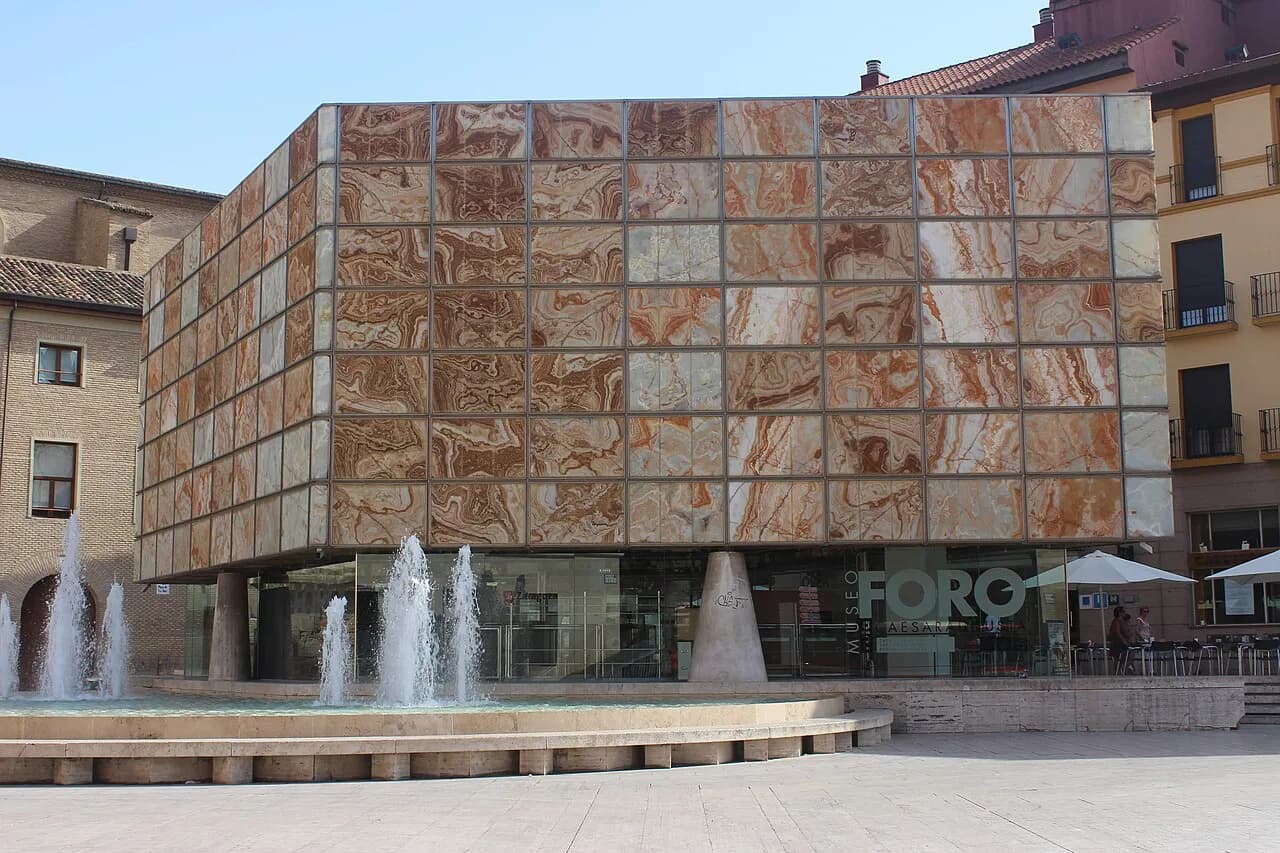
The Museo del Puerto Fluvial de Caesaraugusta covers the river port, the Museo de las Termas Públicas de Caesaraugusta on the Calle de San Juan y San Pedro covers the baths, and the Museo del Teatro de Caesaraugusta holds the theatre remains. The port and theatre museums sit close together near the cathedral quarter, so pair them rather than criss-crossing the centre.
Roman masonry also survives above ground: a stretch of the old city wall stands next to the Torreón de la Zuda, and a modern statue of César Augusto marks the spot nearby. Start here rather than at the basilica, because the wall gives you the physical edge of the Roman town before the Christian buildings take over.
The Torreón de la Zuda and the Islamic centuries
Zaragoza belonged to the Muslim world from the eighth to the twelfth centuries, and the Torreón de la Zuda is the surviving tower of the Alcázar that governed the city in that period. It now houses the tourist office, which makes it a practical first stop as well as a historical one.
Beside the tower you can see the church of San Juan de los Panetes, the Roman wall and the César Augusto monument in one sweep. From there, the Plaza del Pilar is about 300 metres away, which makes the Zuda a sensible anchor for the start of a walking day rather than a detour.
The Aljafería: the 11th-century Moorish palace
The Palacio de la Aljafería was built by the Muslim rulers of Zaragoza in the eleventh century, when the city was a cultural reference point well beyond Aragón. Its Salón Dorado, courtyards, fountains and orange trees are the reason it is named alongside the Mezquita de Córdoba and the Alhambra as one of the great Islamic buildings in Spain.
After the Christian conquest in the twelfth century the palace passed to the kings of Aragón, who kept it and extended it, adding the throne hall of the Catholic Monarchs with its symbolic decoration. Treat the Aljafería as a separate excursion from the cathedral circuit: it sits outside the compact old centre, so plan it as its own leg of the day rather than squeezing it between the Pilar and La Seo.
Plaza del Pilar and the Basílica del Pilar
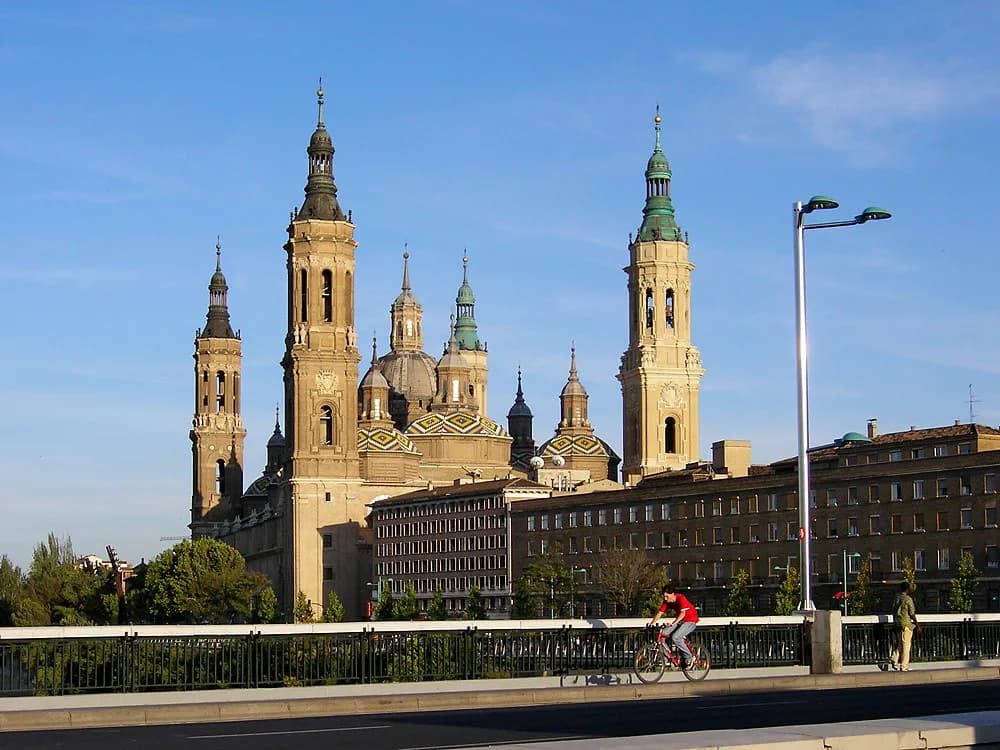
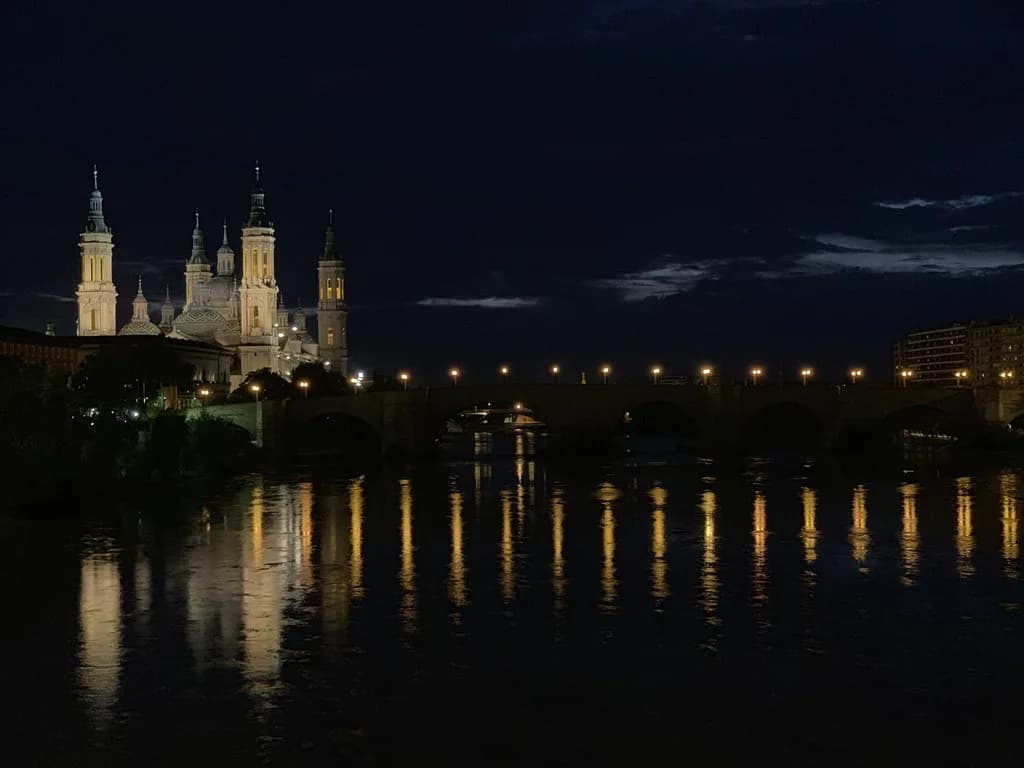
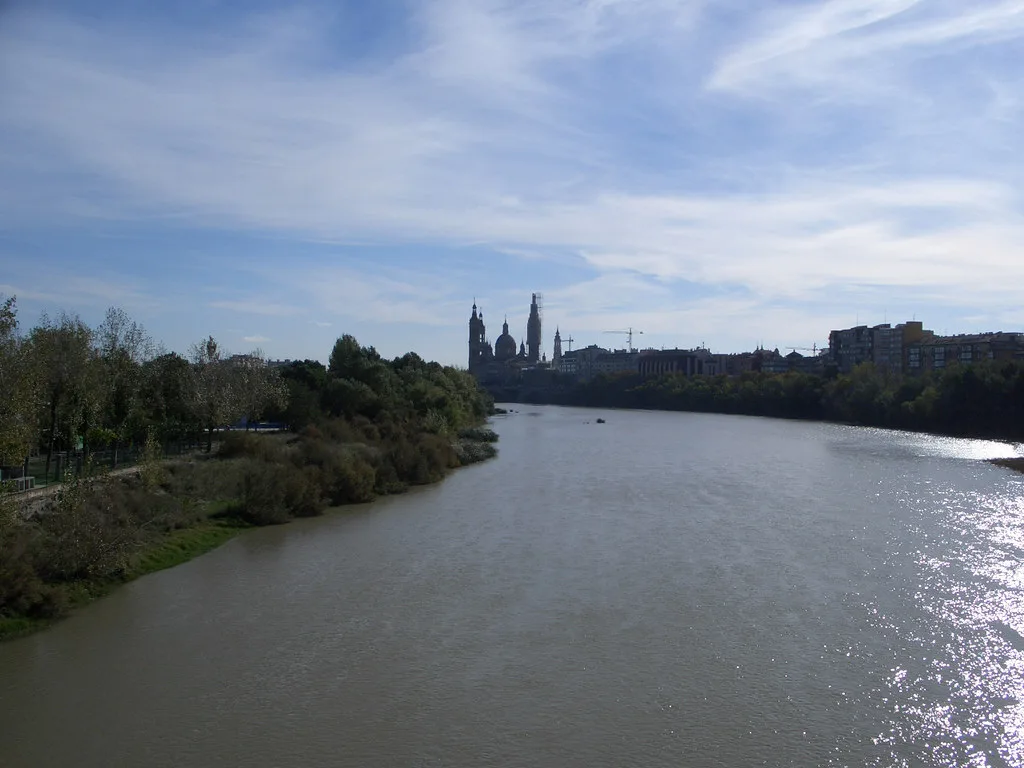
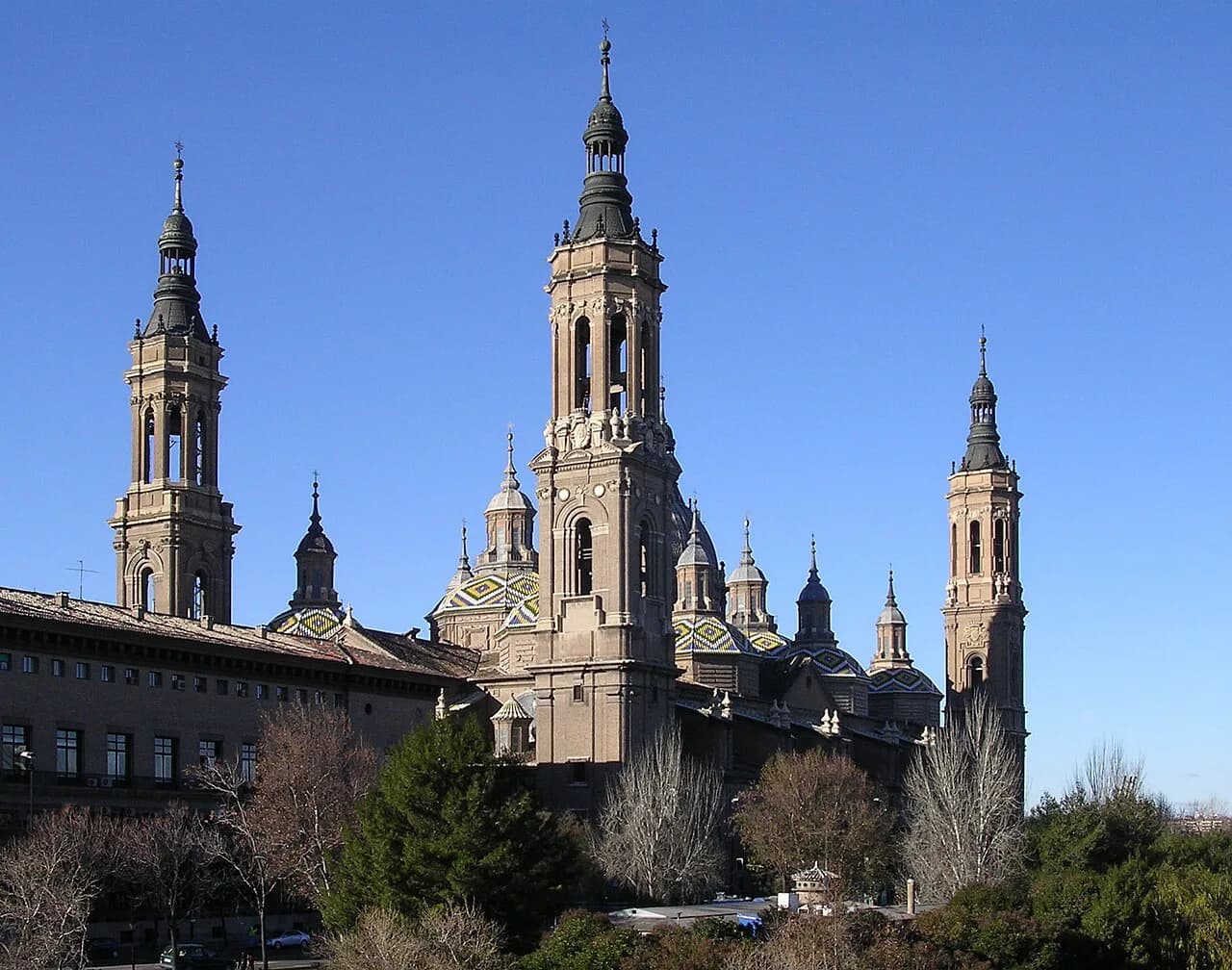
The Basílica de Nuestra Señora del Pilar is Zaragoza's defining monument and one of Spain's most important churches, with baroque domes and towers rising on the bank of the Ebro. Inside, look for the image of the Virgin del Pilar, the Pilarica, and the silver-clad jasper pillar associated with the tradition of the Virgin's appearance to Saint James, which makes this the first Marian church in Christendom in that account.
Several of the basilica's domes carry frescoes by Francisco de Goya, so the building doubles as a Goya stop before you reach any museum. The Pilar Museum and the climb up the Torre de San Francisco de Borja add interior and rooftop views; check the basilica's own published times for both, since worship takes priority in the main church.
La Seo and its neighbours
The Catedral del Salvador, known as La Seo, stands on the same plaza as the Pilar and holds a celebrated collection of tapestries and historic objects in its former chapter rooms. Its main altarpiece is a major piece of religious art, giving La Seo a different character from the basilica rather than a smaller version of it.
Next door, the old archbishop's palace holds the Museo Diocesano, also called the Alma Mater Museum, and the Renaissance Palacio Montemuzo sits nearby, about 350 metres from La Seo, so the two cathedrals and their museums fill a half-day without any transport.
Why there are two cathedrals
Pilar and La Seo are separate buildings sharing one plaza, not one cathedral with two names: the basilica serves the Marian devotion centred on the Pilarica, while La Seo is the cathedral of El Salvador with its tapestries and altarpiece. The practical consequence is that you should not cross one off after seeing the other, because the interiors and collections are different.
Give each building its own slot and go into the attached museums rather than circling the exteriors twice. The streets of the old town around the plaza connect easily to the Caesaraugusta museums and the river.
Goya and fine art at the Museo de Historia de Zaragoza
The Museo de Historia de Zaragoza, beside the Plaza de los Sitios, holds sections on antiquity from prehistory to the Middle Ages and on fine arts from the Gothic through the baroque to the nineteenth and twentieth centuries. Entry is free, which makes it the obvious place to see the Goya collection without committing to a paid ticket.
Place it at the end of the walk: the Plaza de los Sitios is a pleasant finish, and the collections reward a slower visit than a quick pass. Anyone planning more than one museum in town should check the museums' published opening days before fixing a day.
Siege and resistance: the Puerta del Carmen and the Iglesia del Portillo
Zaragoza's role in the Peninsular War of the early nineteenth century left marks you can still read on the buildings. The Puerta del Carmen, once one of the city gates, still shows damage from French cannon fire, and the Iglesia del Portillo nearby keeps similar scars.
The Iglesia del Portillo is also the place to find the memory of Agustina de Aragón, who fired on the French troops closing in on the city and became a symbol of Spanish resistance. Both stops are quick, so fold them into a walk between the old centre and the station end of town rather than making a special trip.
Plaza de España, the Palacio de Sástago and the Centro de Historias
The Centro de Historias de Zaragoza occupies the old convent of San Agustín and hosts exhibitions and cultural events, with an origami school-museum on its upper floor. It is about 15 minutes on foot from the Plaza de España, so it links naturally with the Renaissance palace quarter rather than with the cathedral plaza.
The Palacio de Sástago on Plaza de España shows a Renaissance library and throne room, and its guided visits are free but need booking in advance. That booking is the one piece of forward planning this walk demands, so secure it before you set out rather than turning up on the day.
A walking order that follows the history
Start at the Torreón de la Zuda for the Roman wall and the Islamic Alcázar, then walk about 300 metres to the Plaza del Pilar for the basilica and La Seo with their museums. From there the Caesaraugusta museums are minutes away, and the Centro de Historias and Plaza de España follow about 15 minutes beyond, with the Museo de Historia de Zaragoza at the Plaza de los Sitios to finish.
Slot the Aljafería into a separate block either before or after this circuit, since it is not on the same stretch of streets as the cathedral plaza. Use the city map to see how the circuit meets the river and plan the Aljafería leg from there.
Should you start at the Zuda or the Pilar?
Start at the Torreón de la Zuda if you want the walk to make sense chronologically, because the Roman wall and the Islamic tower explain the city the cathedrals were built on. Start at the Plaza del Pilar if you have limited time and want the single most important sight first, accepting that the earlier layers become a footnote.
Either way, book the Palacio de Sástago guided visit before you go, and put the Aljafería in its own time block. For the rest of the city beyond the historical circuit, the guide to things to do in Zaragoza covers what sits around it, and the Río Ebro front is the natural place to pick the walk back up.
Explore more Zaragoza guides
Frequently Asked Questions
Why is Zaragoza famous?
Zaragoza is known for the Basílica del Pilar, one of Spain's most important churches, and for the Palacio de la Aljafería, an eleventh-century Islamic palace later used by the kings of Aragón. Around them, the centre preserves Roman remains and two separate cathedrals that share one plaza.
Do you need to book the Aljafería in advance?
Check the palace's own published ticket arrangements before you travel, since entry systems and timed slots change. The one booking this walk definitely requires is the free guided visit to the Palacio de Sástago on Plaza de España, which needs reserving ahead.
Sources
Notes for your next Spanish town break
Optional updates to our guides.
You might also like
Continue reading
More guides you'll find useful