Toledo Walking Tour: A Self-Guided Route Through the Old Town
A self-guided Toledo walking tour in order: Puerta de Bisagra, Zocodover, the cathedral, the Judería and the Paseo del Valle, with the river as the finish.
On this page
A full Toledo walking tour is best run as a loop rather than a list of monuments: start at the Puerta de Bisagra, climb to Zocodover, work through the cathedral and the Judería, then head down to the Tajo for the Paseo del Valle before re-entering over the Puente de San Martín. Allow a full day for that shape, because the old town stacks against a gorge and every sight sits above or below the last. This route orders the stops so that the river views come late in the day rather than as an overture.
The walk below names the gates, plazas and bridges that anchor each leg, and sets out what to look at when you get there. It also covers the guided and self-guided options in Toledo, what the published operator rates are, and where the route can be cut if you only have half a day. For the wider set of sights beyond this line, our Things to Do in Toledo guide carries the fuller catalogue.
Toledo on foot: what the route covers and how long it takes
The loop covers about five clusters: the western gate, the central plaza, the cathedral block, the Jewish quarter with its synagogues and monastery, and the riverbank. Between them you are never more than a short walk from the next stop, but the changes in level are constant, so the total time owes more to stairs and cobbles than to distance. Treat the cathedral and the Judería as your two long pauses and everything else as a passing look.
Toledo has been a crossroads for Celtiberian, Roman, Visigothic, Muslim and Jewish populations, and its walled old town still sits on its elevated site above the Tajo, which explains why the streets are dense with layered buildings rather than spread out. That density is the reason a single walking route works so well: almost every stop sits within the walled centre, and the Paseo del Valle hands you the whole skyline from outside it at the end.
Wear shoes with grip. The old town is paved in stone and slopes steadily, and the river walk adds a stretch of uneven path, so trainers with tread are a better choice than anything flat-soled. Carry water for the climb to Zocodover and refill before the river section, where the shade is intermittent.
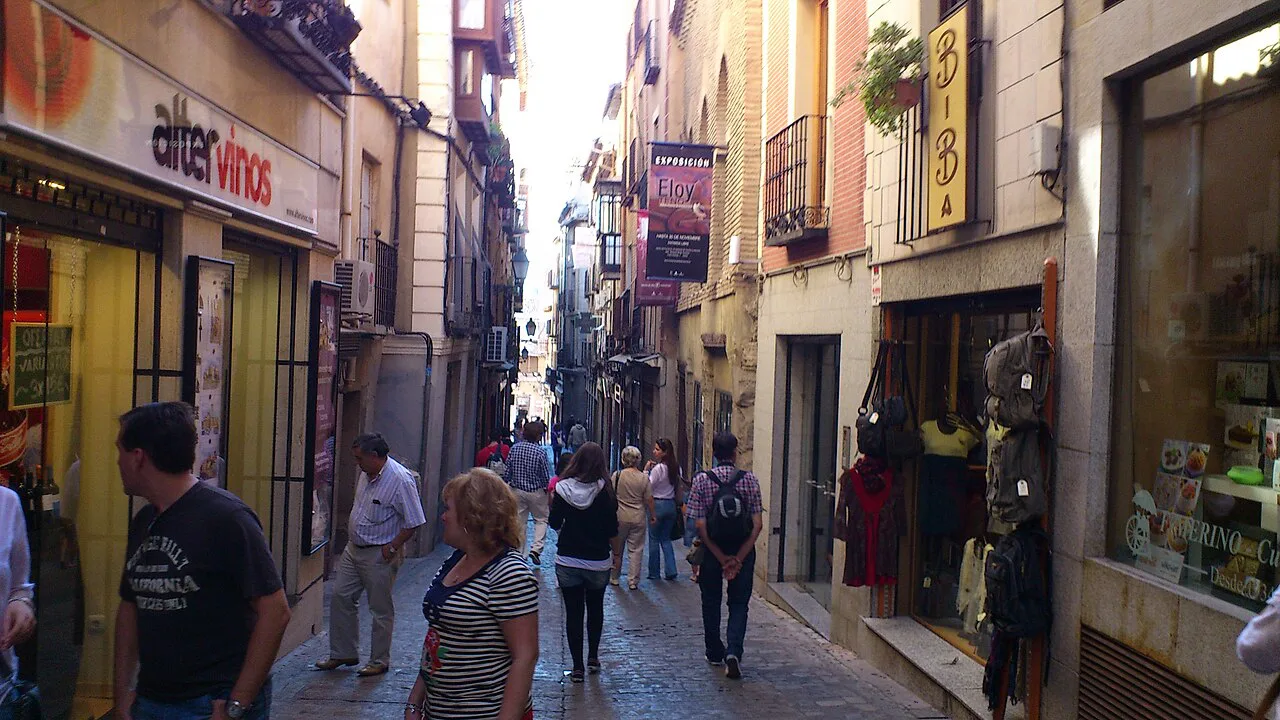
Where the walk starts: the Puerta de Bisagra
Begin at the Puerta de Bisagra, the old entrance into the walled city and the natural first frame for what follows. Pass through it and the street begins to climb towards the centre, which sets the pattern for the morning: gate, climb, plaza, climb again. If you arrive by train, the station sits below the old town and the walk up to the gate is the first leg in itself.
From the gate, keep heading uphill rather than turning aside for the first church you pass. Zocodover is the natural place to take stock, and reaching it early means you can decide the day's order while the streets are still quiet. This is the point where a self-guided walk pays off: you can drift into the Judería on a whim instead of sticking to a group's pace.
Plaza de Zocodover: the city's social heart and natural midpoint
Zocodover is the social centre of Toledo and the obvious mid-route reset, a broad square that works as a meeting point, a map stop and a place to sit before the cathedral. Use it as your pivot: everything west of it is approach, everything east and south is the visit proper. The square also makes a sensible bail-out point if the weather turns, since you can retreat into the surrounding arcades.
From Zocodover the cathedral is a short walk and the Judería a little further into the tangle. Rather than queueing every sight on the way, pick the cathedral as your first full stop and let the smaller churches wait; the loop below brings you past several of them again on the return from the river.
The full list of sights, with the monuments grouped by area rather than strung along one street, is set out in our guide to Things to Do in Toledo. It is worth reading before you set the order of the day.
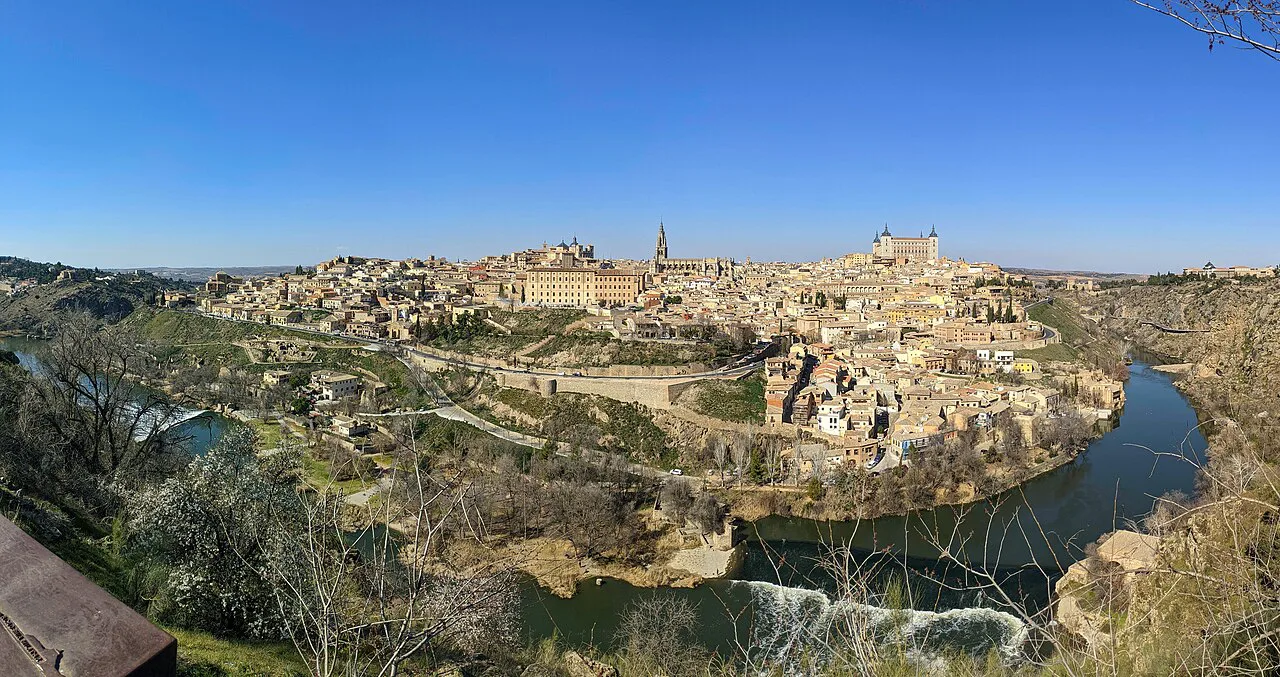
The Catedral Primada: what to see inside and how it fits the route
The Catedral Primada is the great Gothic set piece of the city and the one interior that justifies a proper stop rather than a glance. It sits close to Zocodover, so slotting it in early keeps the rest of the loop free and means you finish at the river rather than doubling back at dusk. Build in time for the cloister and the chapels, not just the nave.
Entrance is not free and the cathedral keeps its own visitor arrangements, so check the current ticket price and visiting slot before you travel rather than budgeting from memory. The same applies to the other ticketed interiors in the Judería; because those change, we have not set out a price table here. Opening hours also vary around religious services, and tourists are normally kept out of the building during mass, so confirm the day's timetable when you buy.
If you want one guided introduction to the cathedral's fabric and chapels, Toledo 3 Culturas publishes a cathedral route of about 1.5 hours at a stated per-person rate, alongside longer thematic walks. A guide earns its fee here if you care about the Gothic detail, and costs nothing extra if you would rather read the plaques at your own pace.
The Judería: the synagogues, the Museo Sefardí and San Juan de los Reyes
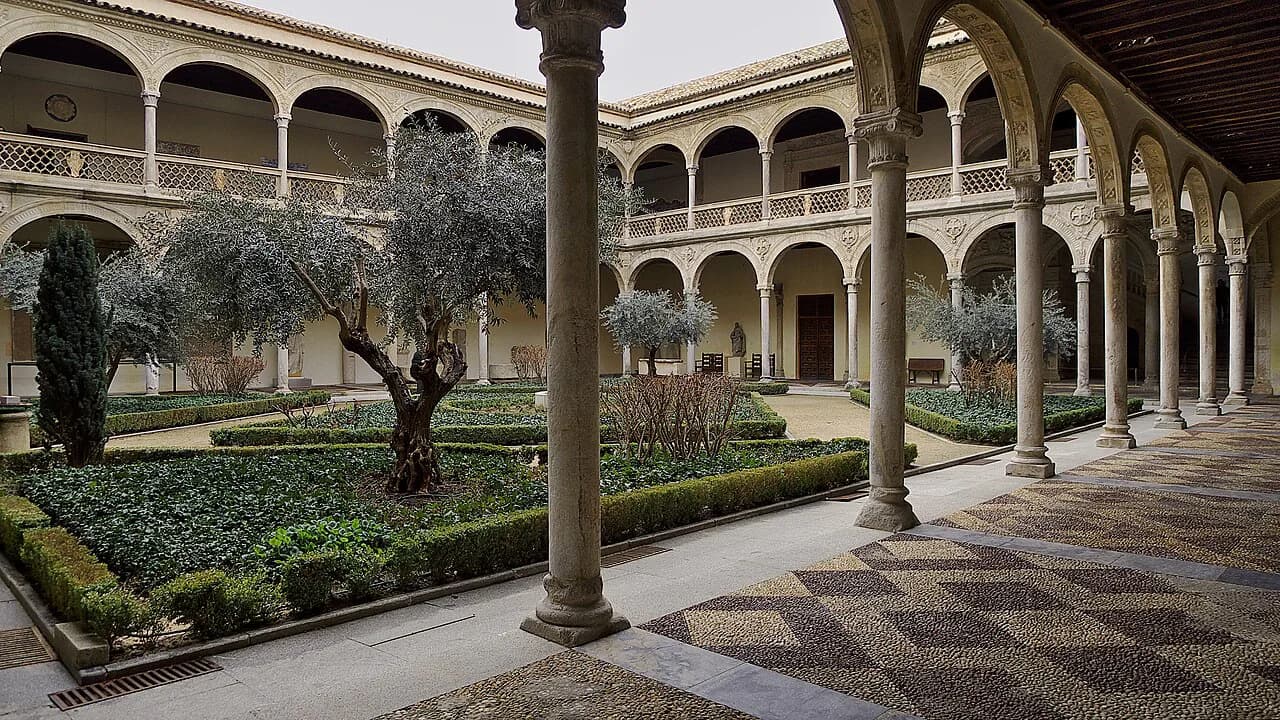
Group the Jewish quarter stops together because they sit close: the Sinagoga de Santa María la Blanca, the Sinagoga del Tránsito with the Museo Sefardí inside it, and the Monasterio de San Juan de los Reyes. Doing them as one stretch saves you from crossing the old town three times. Santa María la Blanca is the calm, arcaded one; the Tránsito carries the museum's collection of Sephardic material culture, so it takes longer; and San Juan de los Reyes is the decorative counterpoint, hung with chains and rich in carved detail.
Decide in advance how many interiors you will actually enter, because three ticketed buildings in a row is a lot of reading and standing. One sensible compromise is to take the Museo Sefardí properly and view the other two from the street and the doorway. Ticket prices, free-entry windows and closing days are set by each building, so check the current position for the day you are there before you rely on it.
The same quarter also holds the Iglesia de Santo Tomé, home to El Greco's best-known painting and worth tacking onto the Judería leg if you are moving slowly. Add it here rather than later, since the river stretch is better done in one push. For a wider sweep of the city's galleries and collections, our museums in Toledo guide is the place to check.
A guided walk that specialises in the Judería is priced per person by Toledo 3 Culturas, with a separate El Greco route also listed on the same page; both are given as fixed prices for a set duration. If you take one, you can drop those stops from the self-guided loop and use the saved time for the Alcázar or the river.
The Alcázar and the Museo del Ejército stop
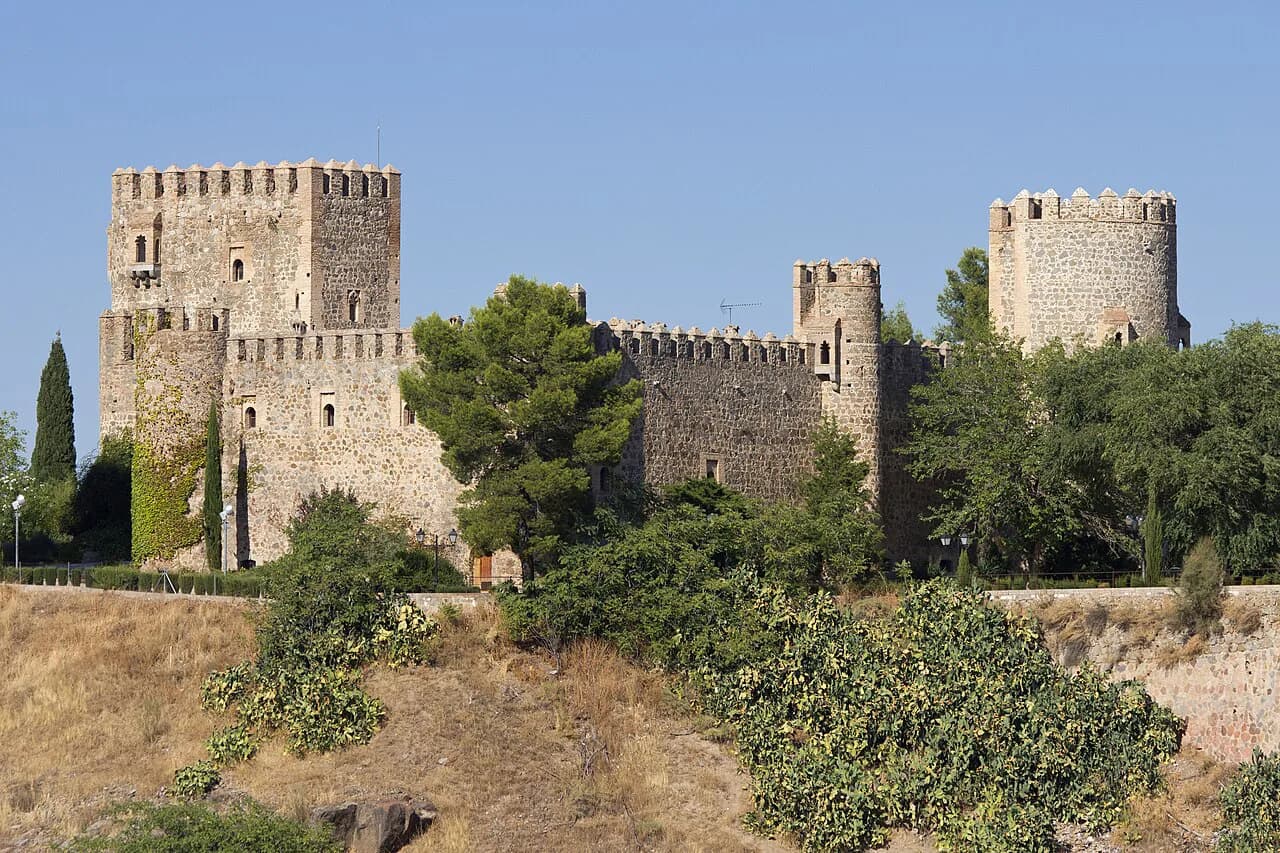
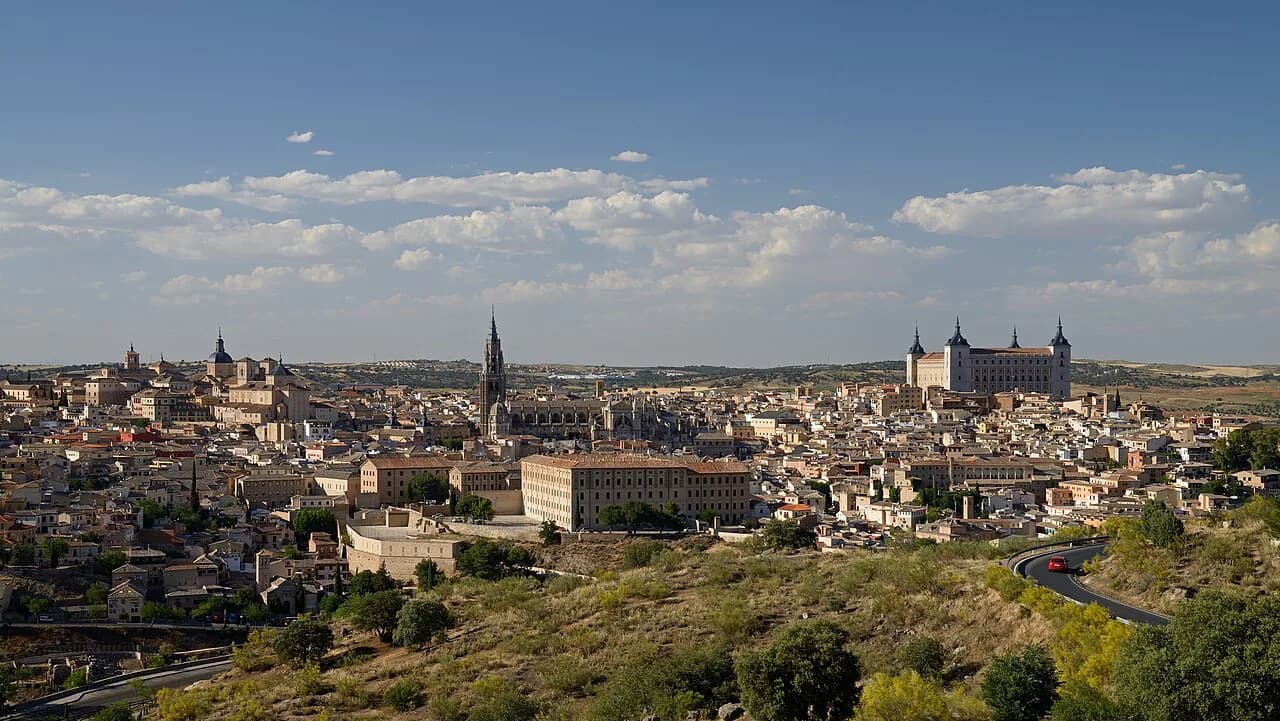
The Alcázar is the fortress that dominates the skyline from almost everywhere, and the Museo del Ejército inside it is the practical reason to go in rather than photograph the facade. Take it after the Judería, when you are heading south towards the river anyway, so the descent works in your favour. The scale of the building is best appreciated from below later in the day, when you see it above the Tajo.
If you would rather have the military collections explained, Toledo 3 Culturas runs an official visit to the army museum in the Alcázar, quoted at a fixed per-person rate for about ninety minutes. That is a straightforward add-on if you are already deep in the Judería, since the two are close together. Skip the interior if you are protecting time for the riverbank instead.
For the longer story behind the fortress, from Roman foundations to the siege that scarred it, our Toledo history page fills in the background.
Down to the river: Puente de Alcántara, the Paseo del Valle and the Mirador del Valle
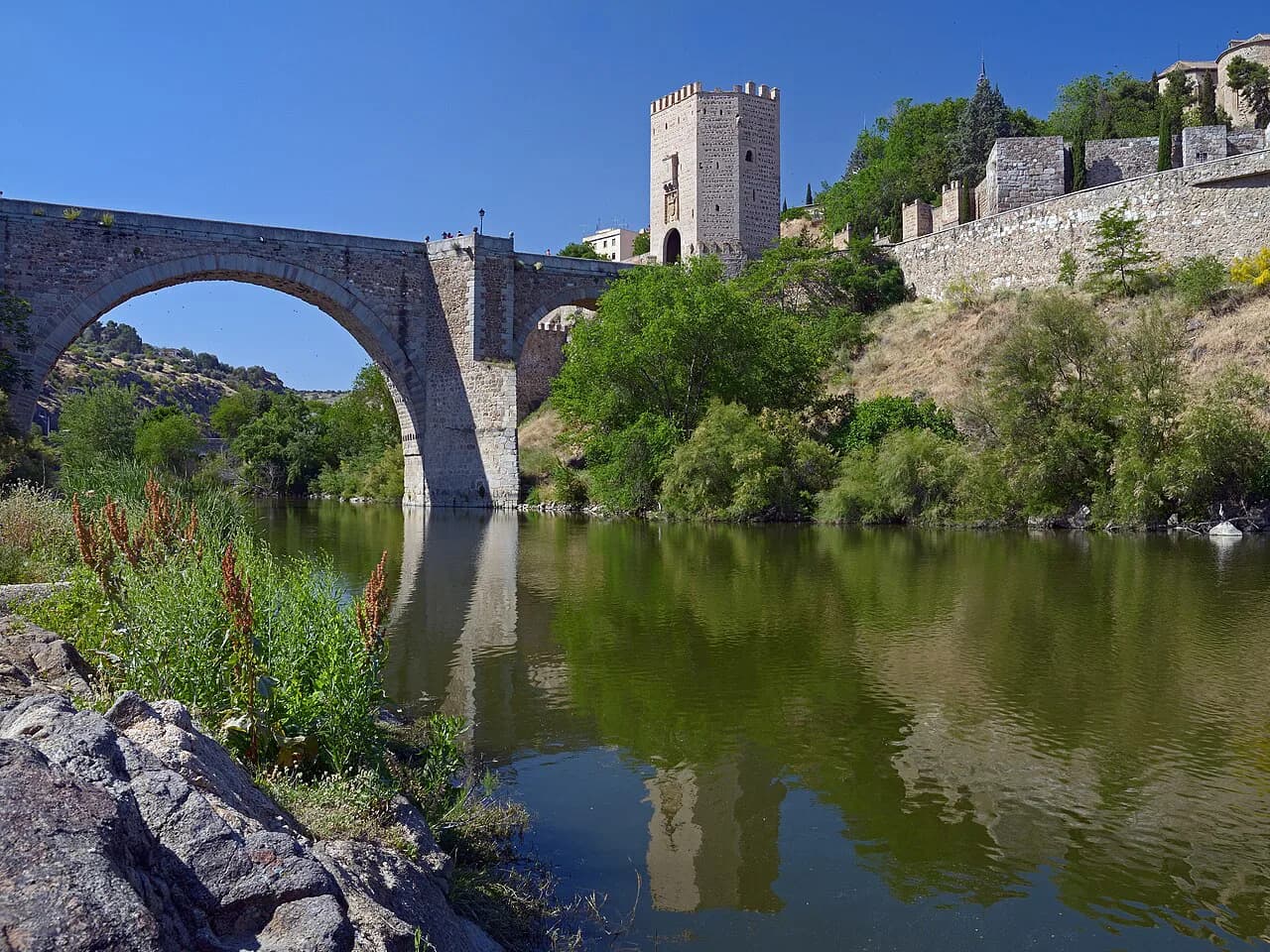
Leave the centre by the Puente de Alcántara, whose name comes from the Arabic word for bridge and which rests on Roman origins behind its later rebuilds. It is the eastern anchor of the river section and the first place the city reveals itself in full. Cross it, then turn onto the Paseo del Valle on the far bank, which runs between the Puente de Alcántara and the Puente de San Martín opposite the old town.
The Paseo del Valle alternates between riverside path and pavement along the valley road, with viewpoints the whole way, and it delivers the payoff of the entire route: the Mirador del Valle, next to the Ermita del Valle, with the panorama of the city climbing above the gorge. Walk it in this direction so the best view arrives as a surprise rather than a warm-up. Along the way you pass traces of old mills, small hydroelectric works and the site of Juanelo's sixteenth-century machine, which lifted river water roughly a hundred metres up into the city.
Allow time for this stretch; the valley walk is the point of the day and worth protecting. Carry water on this leg; the shade is patchy and the road is exposed in the middle of the day.
Back in over the Puente de San Martín and the Mezquita del Cristo de la Luz
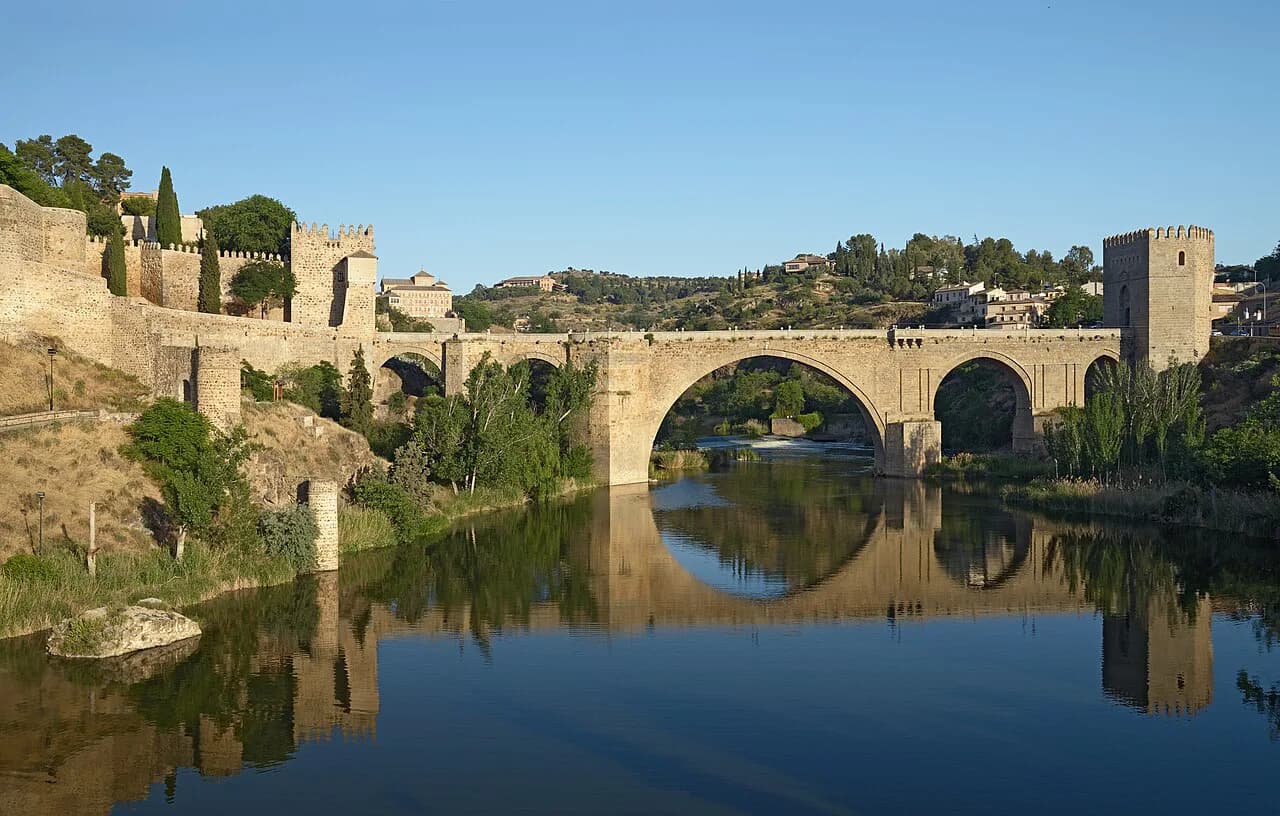
Finish the river loop by crossing the medieval Puente de San Martín, which has carried arrivals into the walled city since the thirteenth century. Walk up from the bridge into the streets and take the Mezquita del Cristo de la Luz on the way in, a small former mosque whose odd proportions and surviving arches reward a short stop more than a long one. It closes the circle nicely before you rejoin the commercial streets.
From there, wander back through the lanes towards Zocodover at whatever pace you have left. The old town is at its best when you let the return leg be unstructured, with no fixed next stop. That said, keep an eye on the light: the Mirador del Valle and the bridges are best in late afternoon, so arrange the day to reach the river by then if you can.
How to shorten or split the route if you have half a day
With half a day, cut the river section and run the gate, Zocodover, the cathedral and the Judería as a single loop back to the centre. That covers the essentials and keeps you on the plateau rather than descending and climbing again. If the weather is poor, drop the valley and stay inside the cathedral and the Museo Sefardí instead.
With a full day but limited stamina, take the Alcázar out and give the extra time to the Judería and the cathedral rather than rushing the river. If you want to see the old town in more detail on arrival, our Toledo Old Town guide covers the street layout before you go.
Either way, start early and reserve the afternoon for the river. Toledo's streets fill up around the central sights by mid-morning, so the gate and the cathedral are calmer in the first hour.
Walking tour operators and guided options in Toledo, and what they cost
Guided options are straightforward and priced per person. Toledo 3 Culturas publishes the broadest menu, from the Toledo 3 Culturas route and its cathedral route, through themed walks on the mudéjar and the viewpoints, to an official visit at the Museo del Ejército in the Alcázar. The prices shown on its routes page are that operator's own published rates, so treat them as an indicative range rather than a market benchmark.
Its routes generally run two hours, with the cathedral walk shorter at around 1.5 hours and the army museum visit similar, which tells you how much ground the operators think a group can handle. Book direct rather than through a reseller if you want to ask about the language of the tour; group details are set by the operator.
If the city's layout matters more than any single monument, our wider Things to Do in Toledo guide, including the cathedral among its entries, makes a sensible next read.
Practical points: heat, midday closures and comfortable shoes
Castilian inland towns are punishing at midday in summer, and Toledo is no exception: the old town retains heat and the riverbank has little shade. Start early, plan the cathedral and museums for the hottest hours, and put the valley walk at either end of the day. Carry more water than feels necessary for a walk of this length.
Church and monastery interiors often close for a siesta period, and cathedrals suspend tourist visits during mass, so check the day's opening times before setting out. Shoulders covered and quiet clothing make the door easier at most religious buildings.
Shoes with grip and a little structure are the real practical equipment here. Cobbles, stairs and the valley's uneven path will punish thin soles, and you will walk more than the distance suggests because the city is arranged in layers.
Self-guided or with a guide?
Walk the loop yourself if you want the flexibility to linger in the Judería and stop when the light is right at the Mirador del Valle; self-guiding means you pay only any entrance fees you choose and keep the whole day on your own clock. Book a guide if the cathedral's detail, the Sephardic history or the Alcázar's layers are the reason you came, since those are the stops where a commentary earns its keep. Toledo 3 Culturas publishes per-person rates for each route, so compare one of its two-hour options against your own must-see list before booking.
Explore more Toledo guides
Frequently Asked Questions
Is a day trip to Toledo from Madrid worth it?
If you are travelling from Madrid, Toledo works as a day trip but rewards an early start: trains from Atocha reach the city in around half an hour, which leaves plenty of the day for the walk above. The trade-off is that a day trip only fits the gates, Zocodover, the cathedral and either the Judería or the river view. To do both, stay overnight.
What is a walking tour?
A walking tour is a guided or self-guided on-foot route through a defined area with commentary at named stops, usually lasting about two hours for a commercial version. In Toledo, self-guided means following your own order between the gates, plazas and monuments, while a guide adds interpretation at each stop and usually a fixed group pace.
What is the best tour to Toledo from Madrid?
That depends on whether you want transport included or a tour on arrival. The published Toledo operator routes are city walks meeting in Toledo, typically for two hours, and you make your own way from Madrid. Check the operator's own listing and the rail timetable for the day before booking a connection.
Sources
Notes for your next Spanish town break
Optional updates to our guides.
You might also like
Continue reading
More guides you'll find useful