Toledo History: A Visitor's Timeline from Toletum to the Ciudad Imperial
Toledo's history through the buildings you can still see: Roman Toletum, the Visigothic court, Tulaytulah, Alfonso VI's 1085 conquest and the imperial capital.
On this page
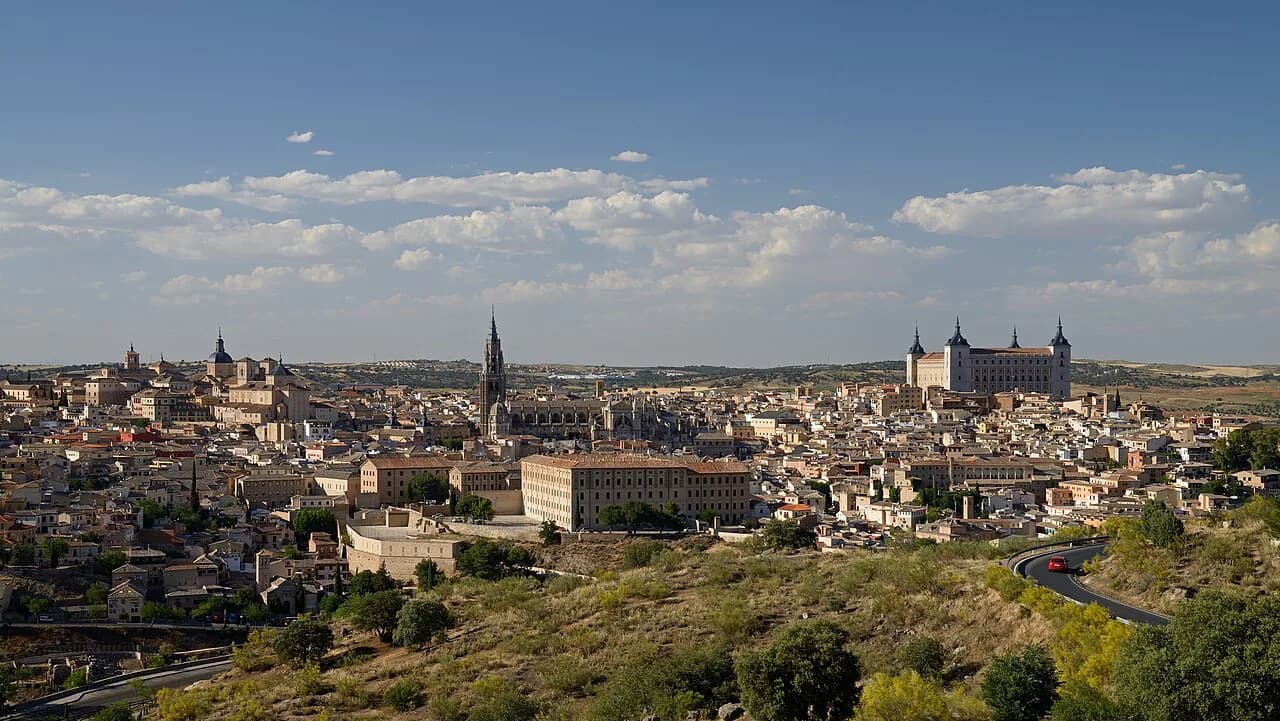
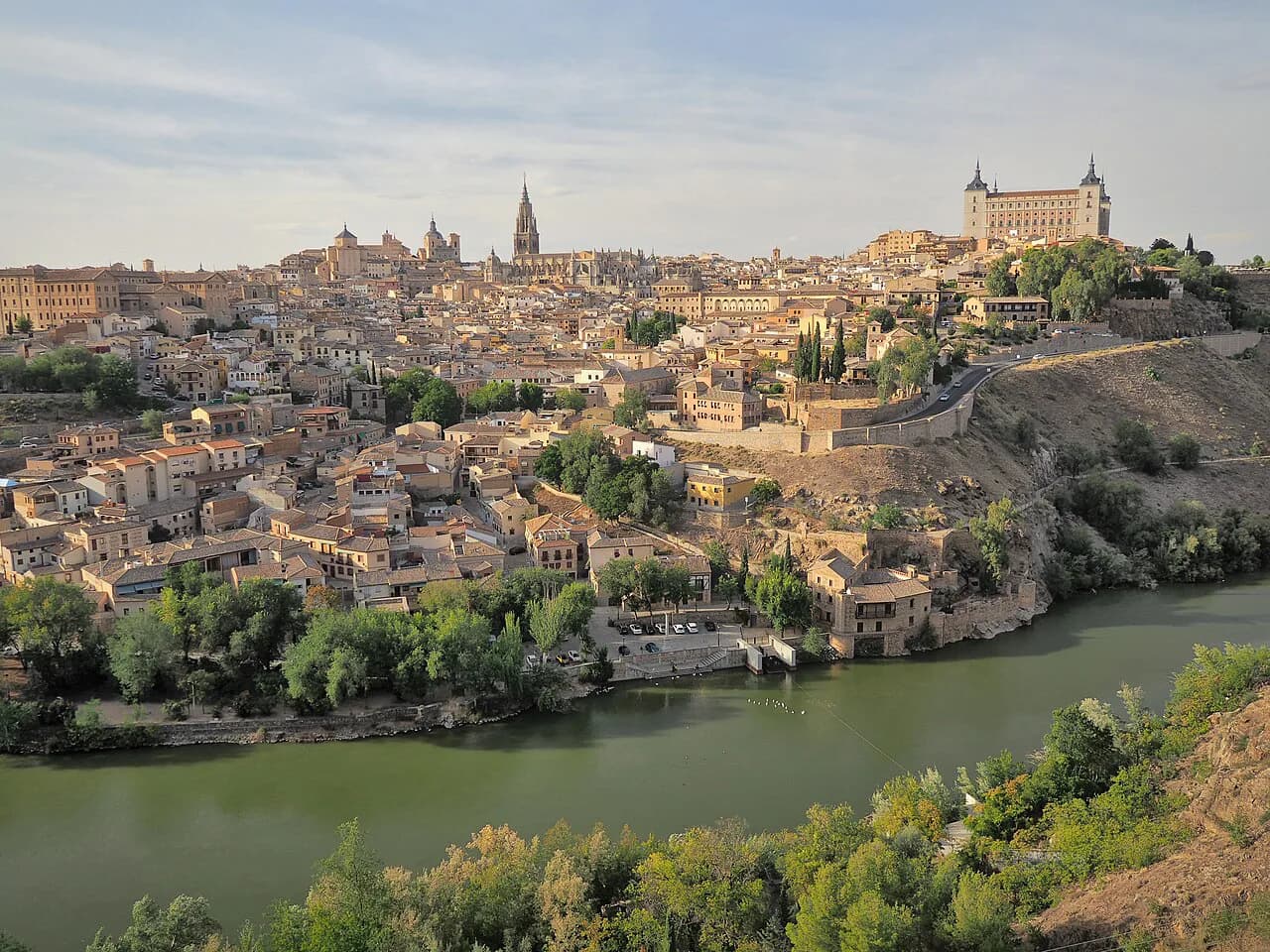
Toledo's history matters to a visitor because four periods left buildings you can still walk past: the Roman hill town, the Visigothic capital, the Islamic city and the medieval Christian city that became an imperial court. The old town sits on a hill about a hundred metres above a deep meander of the Tajo, so the natural walking order runs from the river bridges and gates up into the labyrinth. This guide ties each date to a named place rather than a list of dynasties, and it points you to the pages covering things to do in Toledo in more detail.
The useful starting fact is scale. Toledo lies roughly 71 kilometres from Madrid and is linked to it by a high-speed train that takes about 33 minutes, which makes a short break based here realistic rather than rushed. Once inside the walls, almost everything described below lies within a compact area on the same hill.
Three cultures, three sets of buildings
Toledo is nicknamed the city of the three cultures because Christians, Jews and Muslims lived here alongside each other for centuries, and the surviving fabric shows it. You can see synagogues, mosques later converted into churches, and palaces within a few minutes of one another in the old town. The practical consequence is that a single afternoon covers architecture of very different traditions, which is why the old town rewards slow walking rather than a checklist.
For a visitor the split is easy to hold in mind: religious buildings in the former Jewish quarter, the fortress on the highest point, the cathedral at the heart of the medieval city, and the river crossings below. The old town's maze of narrow paved streets is itself part of the experience, and getting mildly lost between monuments is normal rather than a problem.
Roman Toletum: conquest in 193 BC and what survives on the hill
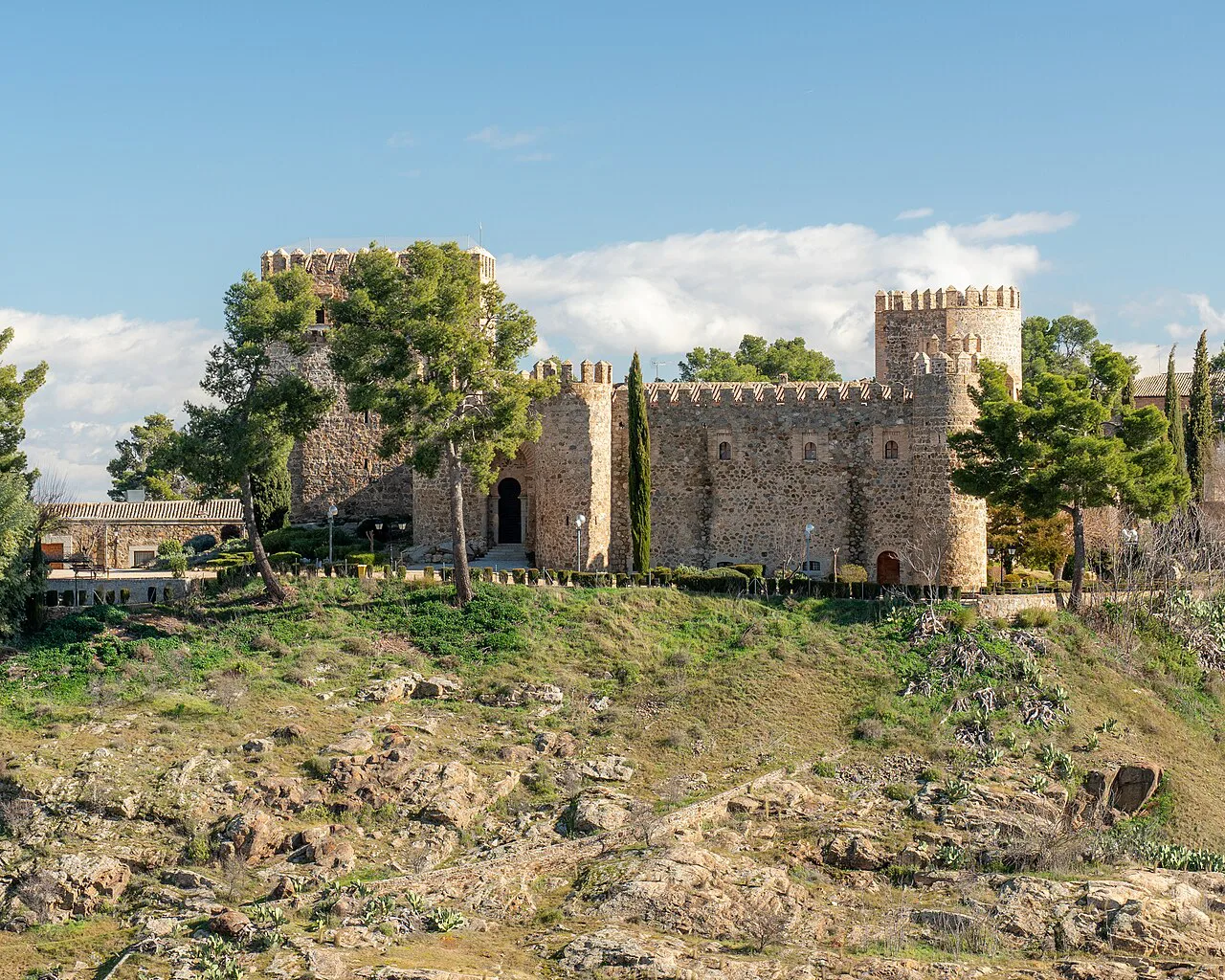
Toledo was a significant centre for the Carpetani before the Romans took it in 193 BC, and the name Toletum is Latin. The hilltop position inside the Tajo meander gave the settlement a defensible site with water below, which explains why every later period built on the same spot. Visitors should expect buried rather than monumental Roman remains; the visible walls, gates and bridges you see today belong to later centuries.
Visigothic capital: why the court sat at Toledo before 711
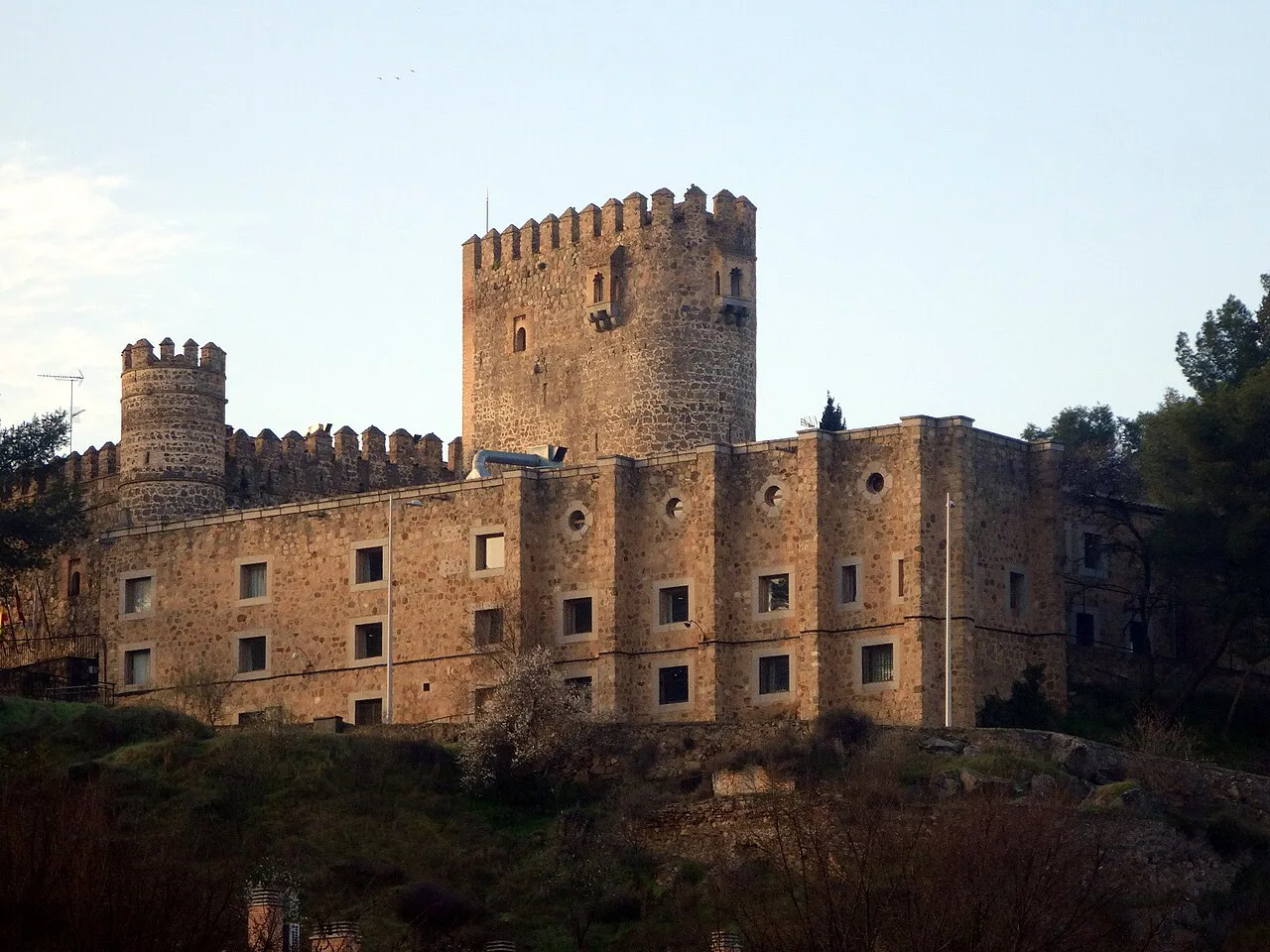
After the Roman period Toledo became the capital of the Visigothic kingdom, which is the reason the city carries weight in early Spanish history rather than being merely a pretty hill town. In 711 it passed into Muslim hands, ending that phase. Very little Visigothic building survives above ground for a casual visitor to point at, so treat this period as context you carry into the cathedral and the later churches rather than as a standalone sight.
Tulaytulah: the Islamic city and the Arabic name
Under Muslim rule the city was known as Tulaytulah, and the Arabic name survives in the story of Toledo as a centre of learning and craft. The main square, the Plaza de Zocodover, takes its name from the Arabic word for a livestock market, a reminder that the street plan you walk today was shaped in this period. The best way to read the Islamic layer is to look at the street pattern and the square rather than hunt for a single monument.
1085 and Alfonso VI: the Reconquista and the three cultures
King Alfonso VI took Toledo in 1085, and the city then developed as a Christian capital with substantial Jewish and Muslim populations still living inside it. That coexistence over the following centuries is what the three-cultures label actually describes. For the visitor, this is the point where the cathedral, the synagogues and the parish churches all belong to the same story rather than to separate eras.
The Ciudad Imperial: Carlos I, the court and the 1561 move to Madrid
Toledo is called the Ciudad Imperial because it was the main seat of the court of Carlos I, the period when the city was at its political height. In 1561 the court moved to Madrid, and Toledo's importance declined from that point. This is the single most useful date for understanding the city's appearance: because grand rebuilding stopped, the medieval street plan and much of the older fabric survived intact rather than being swept away.
Walk the old town with that in mind and the density makes sense; you are seeing a capital that stopped growing. If you want a structured route rather than improvising, a walking tour helps link the imperial sites in sequence.
The Jewish quarter and the synagogues you can still enter
Toledo's Jewish quarter preserves two synagogues that later became churches, which is why they survived: Santa María la Blanca, described as the oldest synagogue still standing in Europe, and the older Transito. Santa María la Blanca's horseshoe arches and calm interior are the clearest physical trace of the medieval Jewish presence in the city. Both sit within the compact old town, so they fit into a single morning without transport.
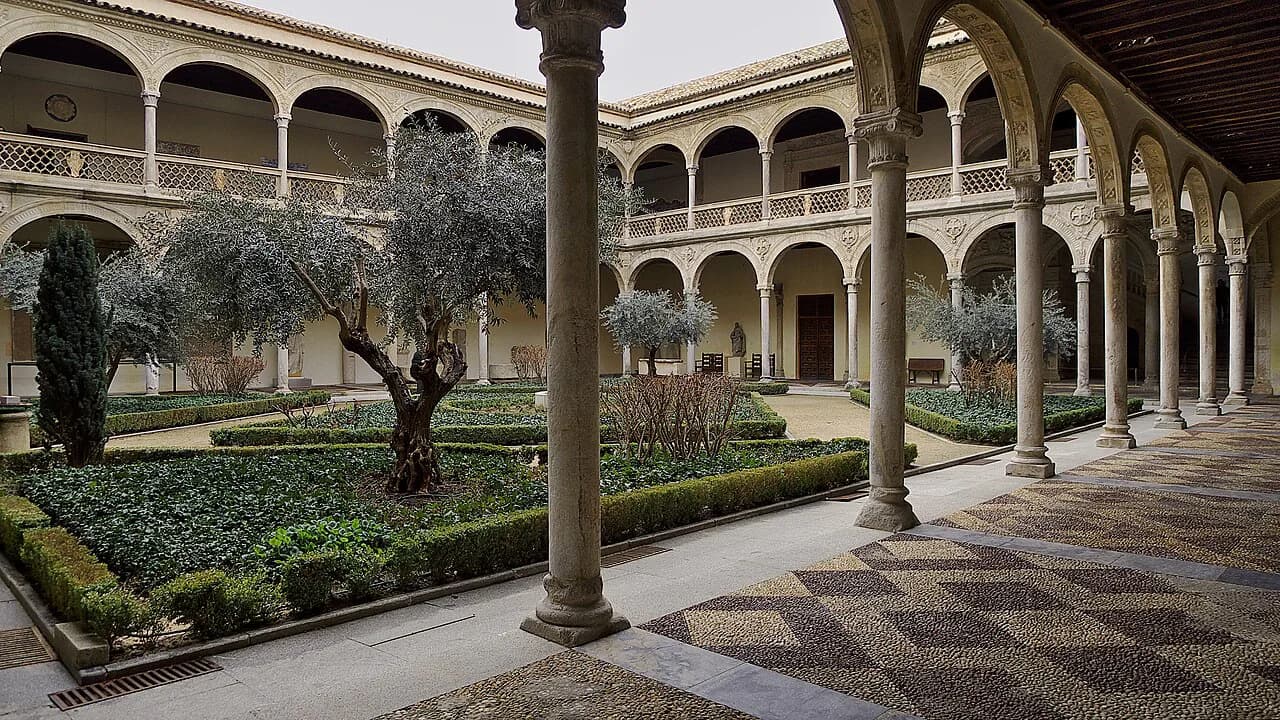
The Monastery of San Juan de los Reyes, a Gothic foundation, is worth pairing with the synagogues for the contrast between Christian and Jewish building traditions. Allow time for the sequence rather than treating the Jewish quarter as a single stop; the streets between the buildings are part of the experience.
The Alcázar across the centuries, from fortress to military museum
The Alcázar occupies the highest point of the city and has served as a fortress through successive periods, including later use as a military museum. For a history-minded visitor it is the building that shows how the same site was repeatedly refortified rather than replaced. Treat it as the anchor at the top of your route and work downhill from there.
The Cathedral and the Gothic city of the medieval bishops
The Cathedral of Toledo is the great Gothic statement of the medieval city, praised for its stained glass, high vaults and intricate stonework. It sits at the centre of the Christian city that grew after 1085, and its scale reflects the wealth of the archbishopric rather than the size of the modern town. It is the one interior in Toledo where you should plan to spend real time rather than pass through.
The painter El Greco worked in Toledo and found his subjects in its streets and landscapes, and the Museo del Greco is the obvious place to connect the art to the city. Pairing the cathedral with that museum gives you both the medieval building and its most famous later interpreter. The museums in Toledo page covers how the collections fit together.
Walls, gates and bridges: the defensive shell you still walk through
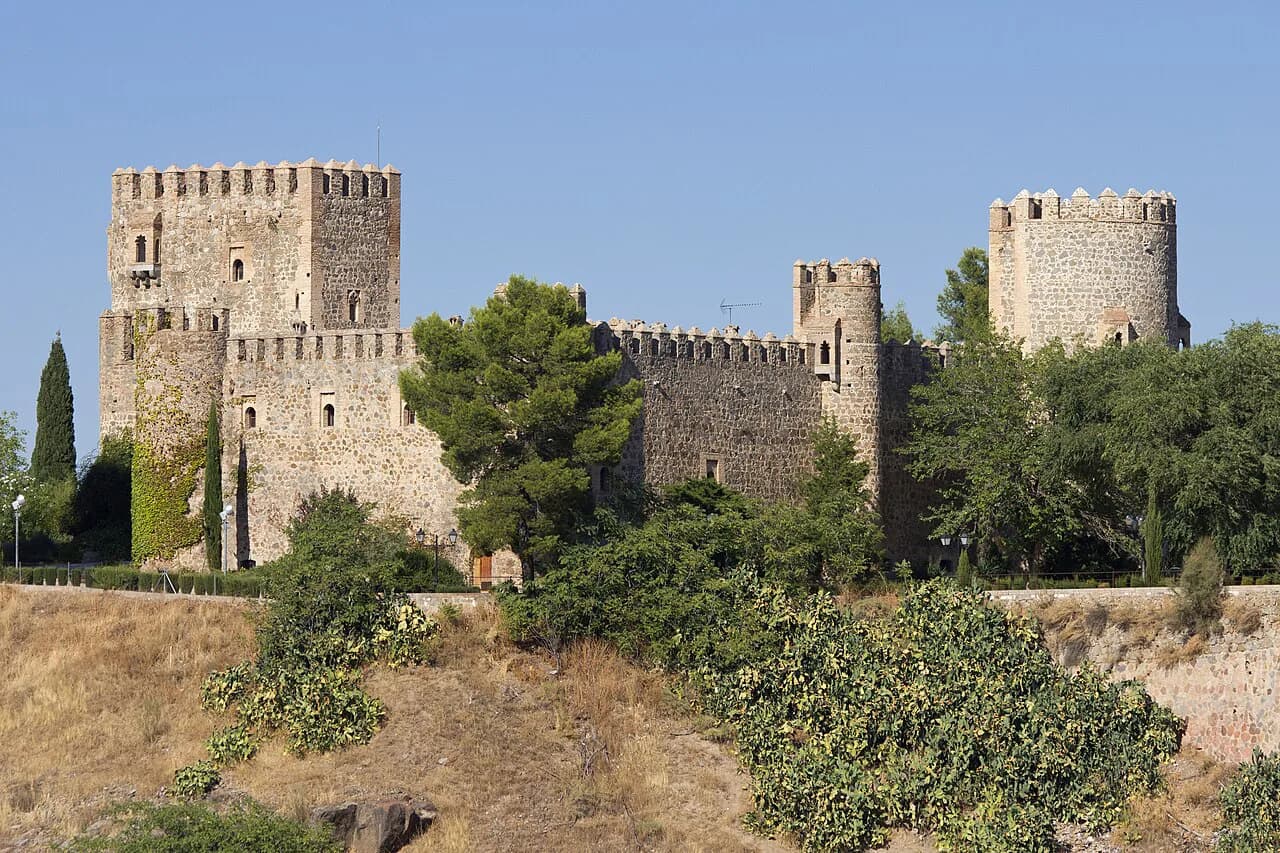
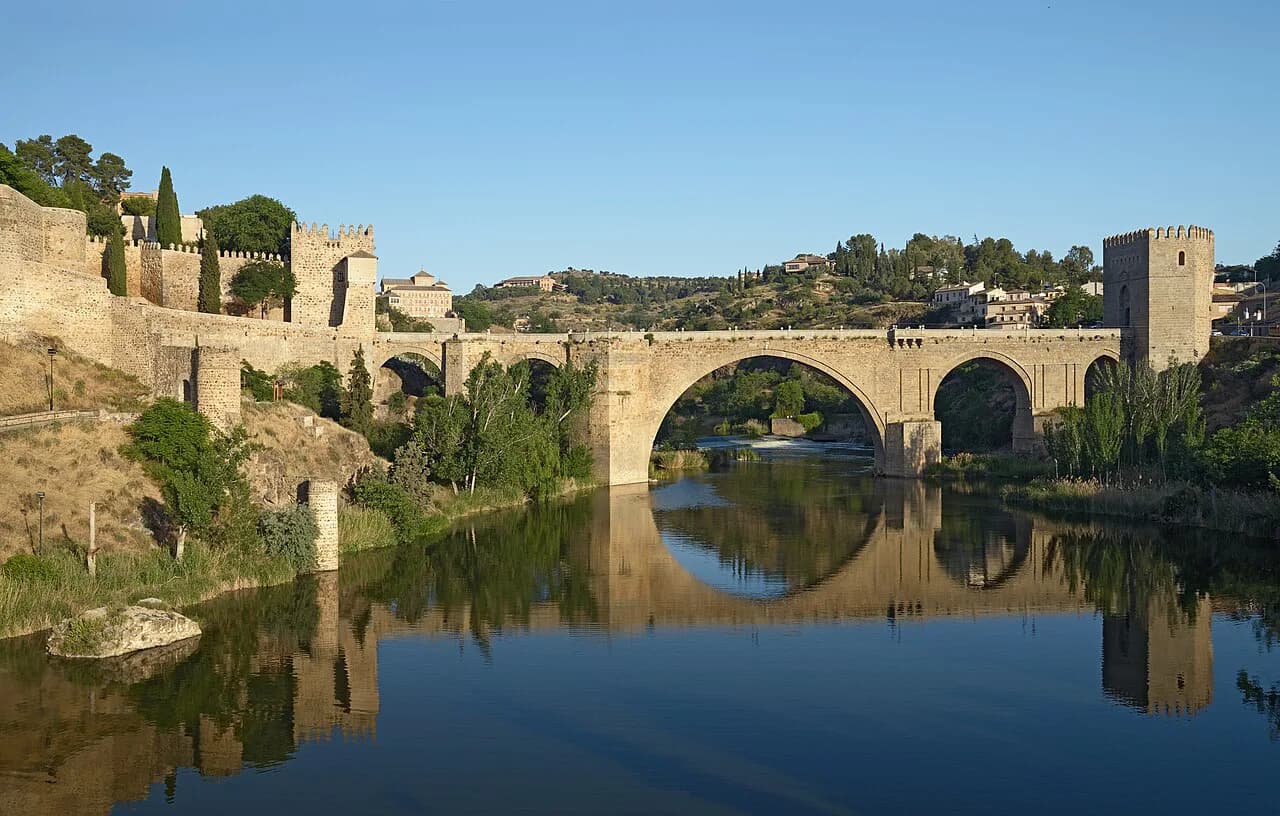
The Puerta Nueva de Bisagra is the monumental gate on the approach into the old town, and it is the natural place to start a historical walk because it marks the boundary between the modern city outside and the walled one within. The Puente de San Martín crosses the Tajo to the west of the historic centre, and its central arch, with a span of 40 metres, was for a long time among the longest of its kind. Crossing it gives you the view of the city on its hill that most visitors remember.
The Mirador del Valle, on the far bank, is the classic panorama point and the best place to understand the meander that shaped the whole settlement. Go there before or after the old town rather than in the middle of the day, when the light flattens the view.
Where to see the timeline on the ground: a walking order
A sensible historical order starts at the Puerta Nueva de Bisagra, climbs to the Plaza de Zocodover and the Alcázar, drops into the cathedral and the former Jewish quarter, and finishes at the river crossings with the Mirador del Valle as a separate trip. That route moves from the gate and fortress layer down through the medieval core, which matches the chronology instead of fighting it.
Because the old town is compact, the constraint is stamina and heat rather than distance on a map. Inland Castilian summers make midday walking uncomfortable, so an early start and a longer pause in the middle of the day works better than pushing through. Guided options exist if you would rather have the chronology narrated in sequence.
Toledo's modern chapter: Castilla-La Mancha's capital and the 1986 UNESCO listing
Toledo became the seat of the regional government and parliament of Castilla-La Mancha in 1983, and its historic centre was declared a UNESCO World Heritage Site in 1986. Those two dates explain why the old town is both carefully preserved and still a working administrative city rather than a museum piece. The modern city spreads outside the walls, around the station and across the river plain, while the hill remains essentially the historic core.
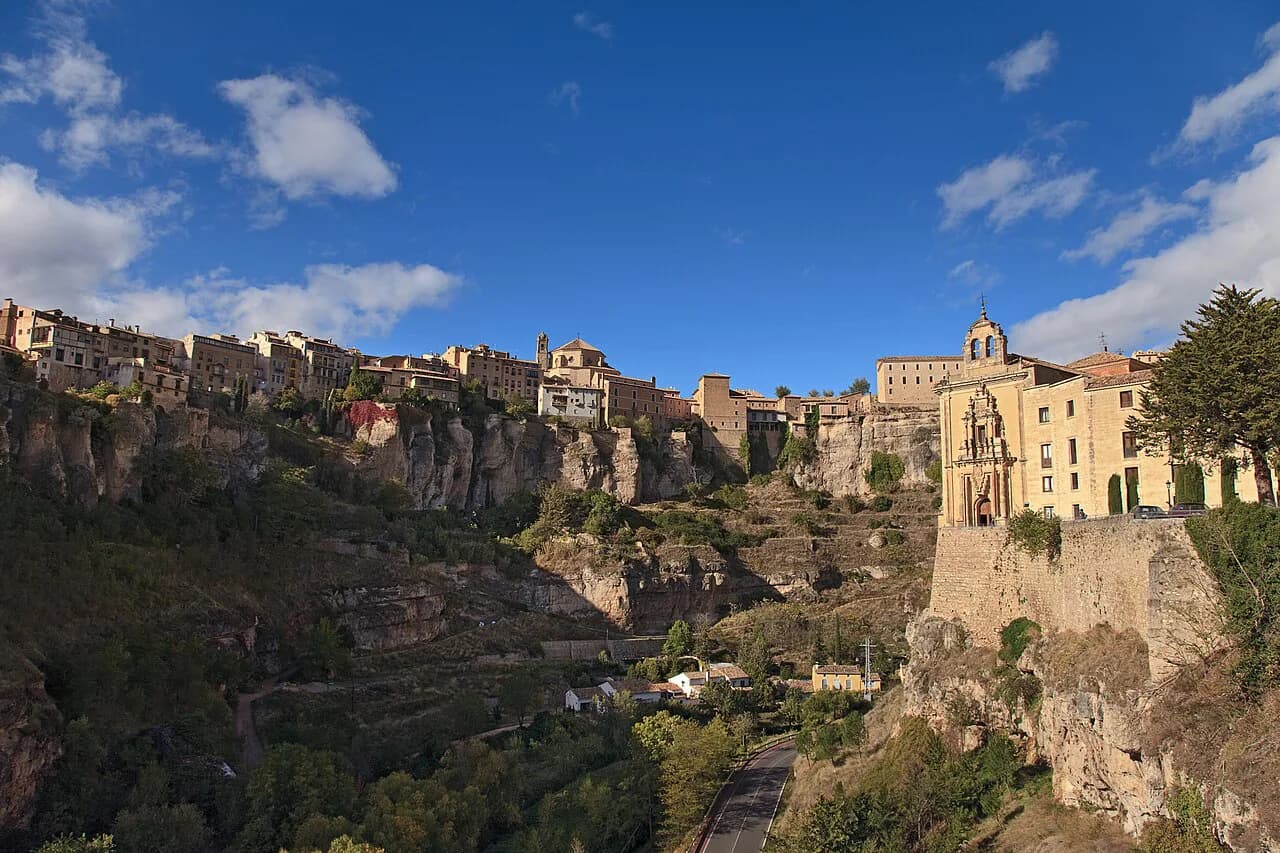
For a short-break traveller, that means you can stay in the centre and treat the walled town as your daily base. If Toledo's history leaves you wanting another Castilian hill town, Cuenca makes a natural comparison with its own hanging houses and medieval streets.
Which part of Toledo's history should you chase first?
If you only have one day, start with the cathedral and the former Jewish quarter, then finish at the Mirador del Valle for the view that explains the hill. If you have two, add the Alcázar and a slow circuit of the gates and bridges on the second. The six visitor guides in Toledo Attractions cover each of these in more depth than a timeline can.
Opening hours and admission prices for the cathedral, the Alcázar, the synagogues and the museums vary by season and by day, and mass times affect tourist access in the cathedral. Check each monument's own published information before you build a fixed itinerary around it. For the religious buildings specifically, the churches page sets out what to expect.
Frequently Asked Questions
Is Toledo one of the oldest cities in Spain?
Toledo has a long continuous history: it was a significant Carpetani centre before the Romans took it in 193 BC, and it later became the Visigothic capital. That makes it one of the country's older urban sites, though the buildings you see today are mostly medieval and later.
Why was Toledo so important in Spanish history?
Toledo was the Visigothic capital, then a major Islamic city called Tulaytulah, then the Christian capital after Alfonso VI took it in 1085. It was the main seat of Carlos I's court until the court moved to Madrid in 1561, which is why the old town retains its dense medieval layout.
Can you see Roman remains in Toledo?
The Roman layer is largely buried, so there is no Roman monument to visit in the way there is in Mérida. The visible historic fabric is medieval and later: walls, gates, bridges, synagogues, the cathedral and the Alcázar. Read the Roman period as the origin of the hilltop site rather than as a sight.
Sources
Notes for your next Spanish town break
Optional updates to our guides.
You might also like
Continue reading
More guides you'll find useful