Tarragona Old Town: Roman Walls, Squares and a Walking Route
Walk Tarragona's old town from the Roman walls and Puerta del Roser to Plaça de la Font and the cathedral, with a sensible order for a half day.
On this page
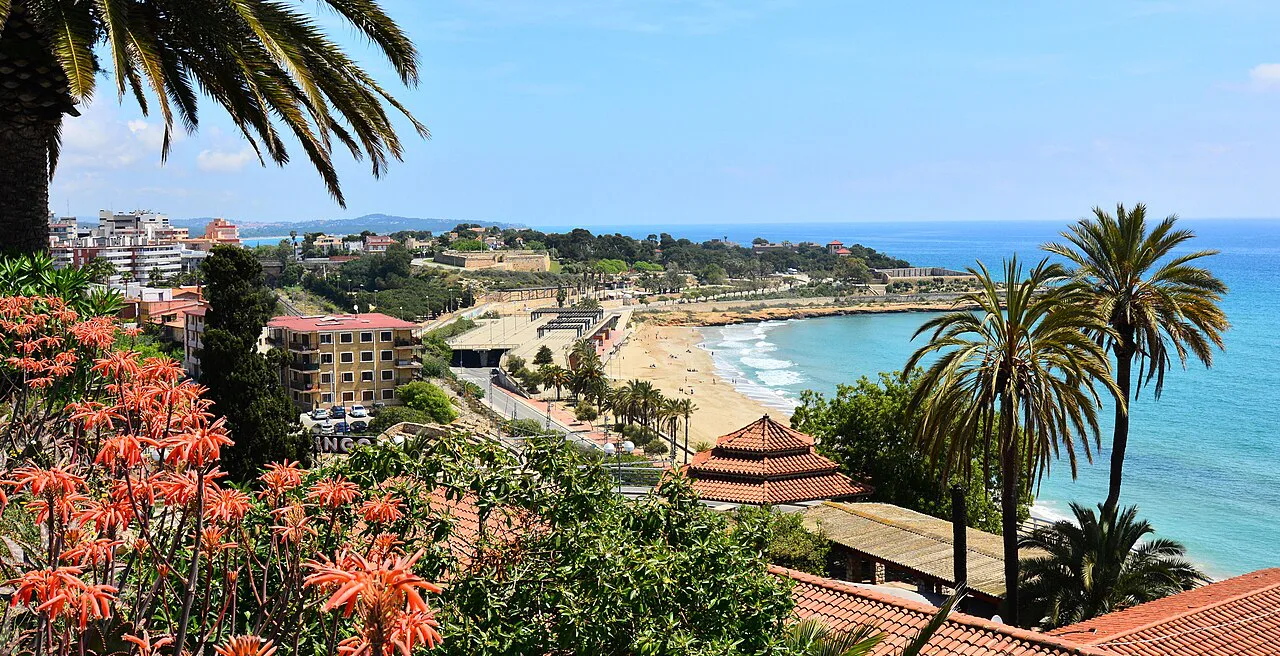
Tarragona's old town is a compact historic quarter on a hill above the port, and half a day is enough to walk its core if you start at the right end. Begin at the Paseo Arqueológico by the Puerta del Roser and climb through the Roman walls, the circus and Plaça de la Font to the cathedral, then come back down to the sea.
The appeal is the layering: a medieval gate cut through a Roman wall, later houses resting on circus arches, a busy square sitting over the ruins of a Roman stadium. This guide gives a walking order, explains what each stop is like and flags the practical constraints, from Monday closures to the steep lanes.
What the old town is and where it sits above the port
Tarraco was one of the great cities of the Roman empire and capital of Hispania Citerior, with more than 40,000 inhabitants in its best years. That Roman city underlies everything you walk over today, and the historic quarter is built directly on its remains.
The geography matters for planning. The cathedral sits at the highest point of the old town, the amphitheatre and the Balcón del Mediterráneo are down by the sea, and the lanes between them climb steadily. Walking down from the top is easier than walking up, so save the descent for the end.
If you only have time for the old town itself, keep the wider sights for another visit and use the things to do in Tarragona guide to decide what else fits around it.
Start at the Paseo Arqueológico: the Roman walls and the Puerta del Roser
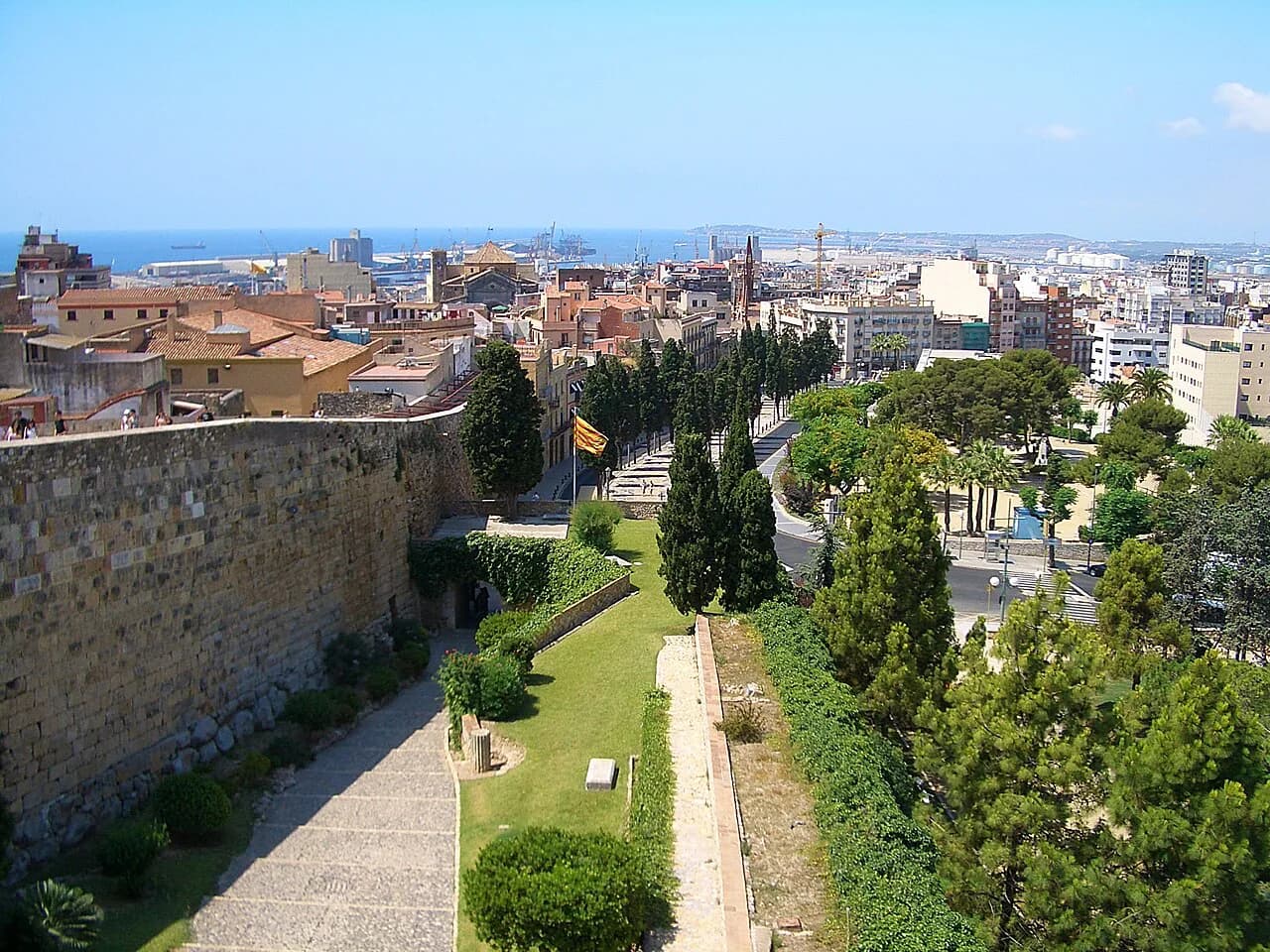
The Roman walls date from the third century BC and originally ran for four kilometres, reaching heights of up to twelve metres; roughly a quarter survives. More than 1,100 metres can be seen from the Paseo Arqueológico, an attractive garden walk between the Roman enclosure and an eighteenth-century outer wall, with a replica of the statue of Augustus along the way.
Enter through the Puerta del Roser, a small opening made in the Roman masonry during the Middle Ages. Just inside, a monolith marks the declaration of the monumental ensemble as UNESCO World Heritage, which gives you a sense of the scale of what follows in only a couple of hundred metres.
The walls are among the oldest and best-preserved Roman defensive structures in Spain, built without mortar from huge blocks, with three towers and several of the cyclopean gates still standing. For the full sequence of Roman monuments beyond the walls, see the Tarragona Attractions: 5 Visitor Guides hub.
Plaça del Pallol and the scale model of Tarraco
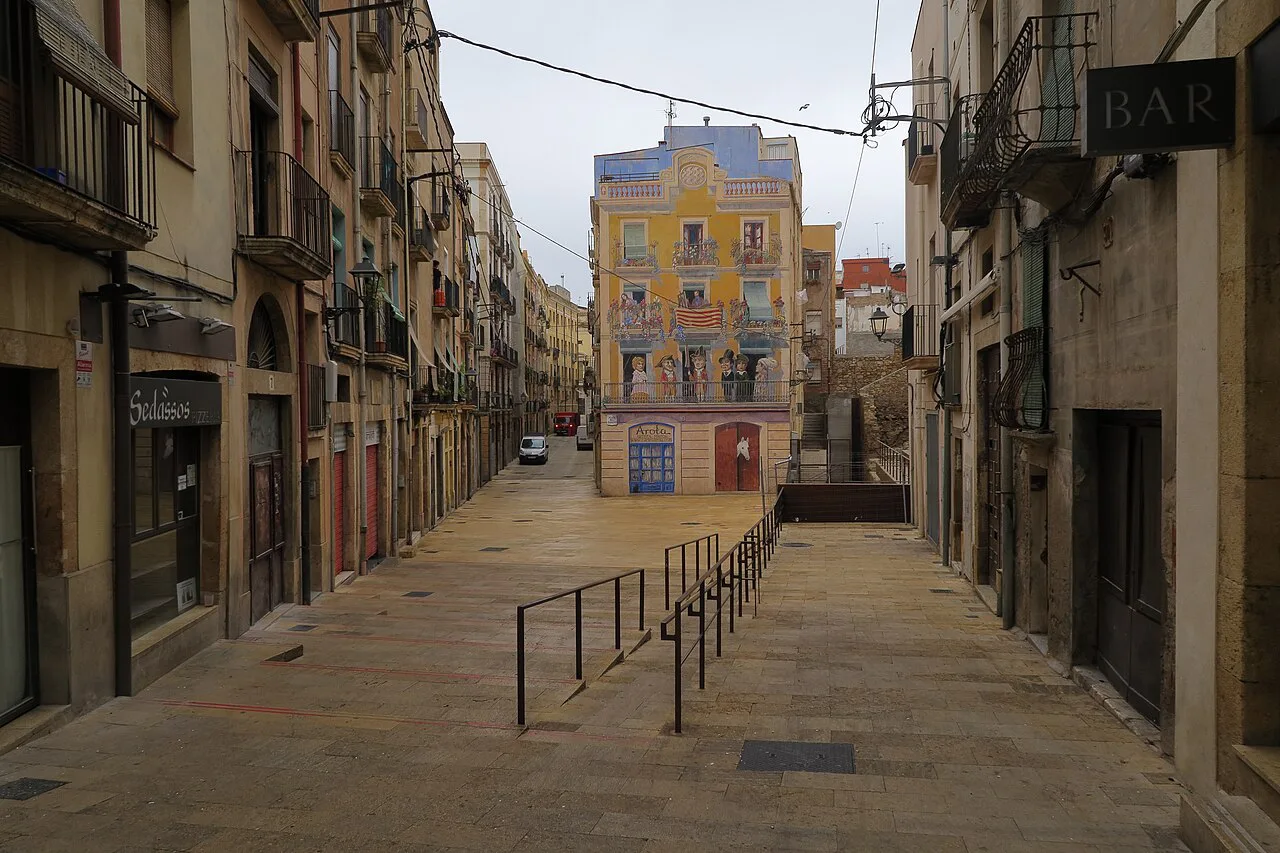
The Plaça del Pallol welcomes you inside the walls. Beside the gate you can see remains of the Roman defensive system and the provincial forum; on one side stands a medieval palace, and on the other a scale model of Tarraco that makes sense of the jumble of fragments around you. The model sits at Plaça del Pallol, 3.
Walking a short stretch of these streets you pass from the first century to the nineteenth, which is the whole story of this quarter in miniature. Looking at the model first explains why the medieval city shrank back into the Roman shell and reused its buildings as foundations and quarries.
This overview of the city's layers is worth a few minutes even on a short visit; the Tarragona history page sets out the Roman and medieval phases in more detail.
The Roman circus and the Torre del Pretorio, and how later houses were built into it
The Roman circus was the venue for horse and chariot races: an elongated rectangle of over 300 metres, with seating along three sides and the fourth used for the entry and exit of the quadrigas. Sixty semicircular arches separated by pilasters divided the structure.
What makes it unusual is what happened afterwards. When the circus fell into ruin, its solid arches were adopted as the master pillars of houses raised over the centuries, and the destruction of the building gave the city the ground on which Plaça de la Font now sits.
The Torre del Pretorio, a Roman tower later used as a medieval palace, stands within the circus galleries. The archaeology of the city is covered in depth in the museums in Tarragona guide, including the national archaeological museum.
Plaça de la Font as the old town's main square
Plaça de la Font is the old town's principal square, ringed by historic buildings and today lined with bars and restaurants. It is the natural place to pause halfway up, sitting as it does over the footprint of the Roman circus.
From here the lanes climb towards the cathedral in a tangle of small streets and stairways; the Tarragona map helps you keep your bearings as the grid breaks down.
The cathedral of Santa Tecla at the highest point
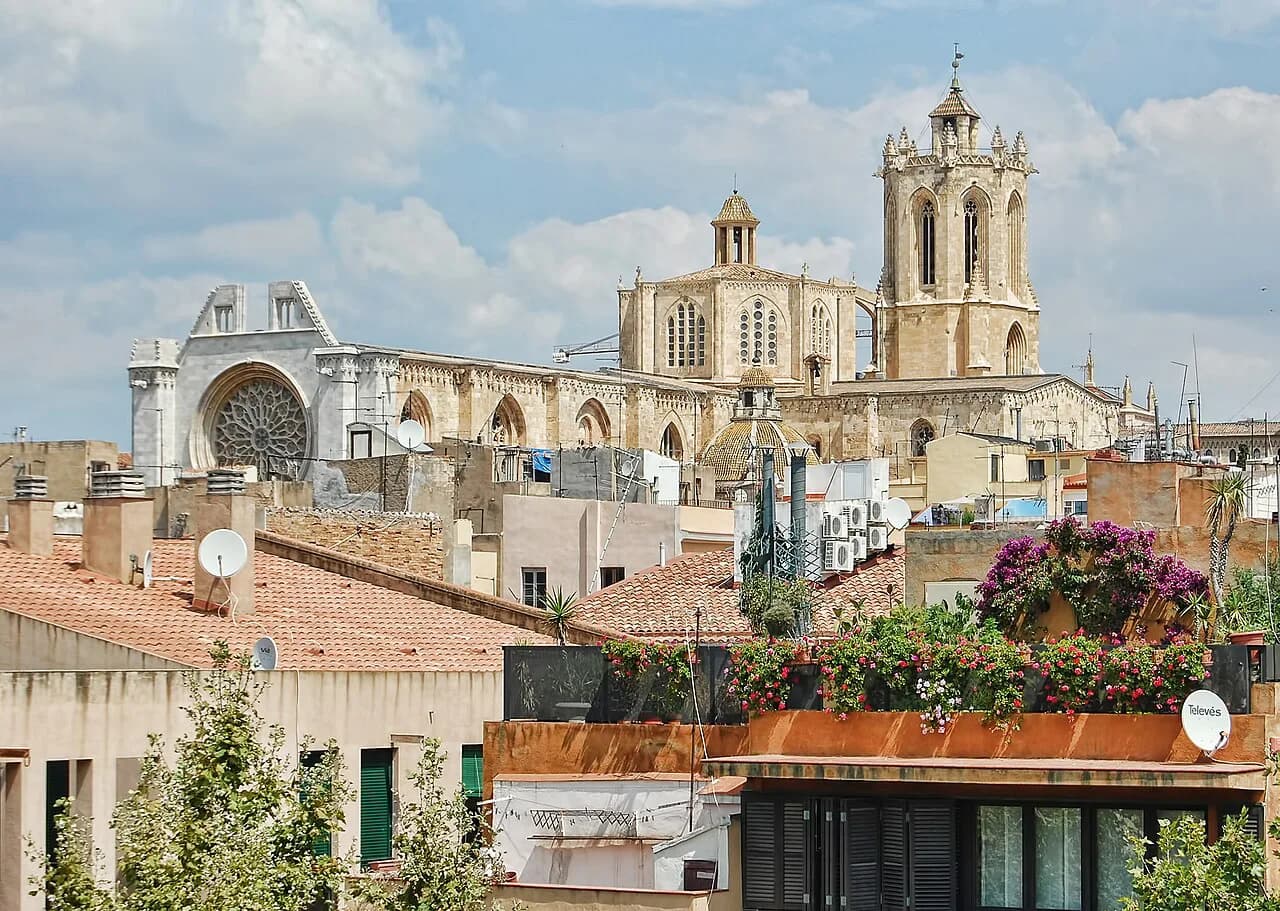
The Cathedral of Santa Tecla occupies the highest point of the old town, a mix of Romanesque and Gothic building begun in the twelfth century. Inside are a richly carved main altarpiece and a tranquil cloister that offers a genuine pause from the streets.
Treat it as the top of the walk rather than a quick stop. The climb is repaid by the cool interior and the quiet of the cloister, and the surrounding lanes are the oldest part of the quarter.
El Serrallo and the Balcón del Mediterráneo below the old town
Below the walls, El Serrallo is the fishermen's neighbourhood beside the port, a grid of low streets with the fish market and urban art referring to the trade. It sits at the bottom of the hill, so visit it on the way down rather than detouring back up.
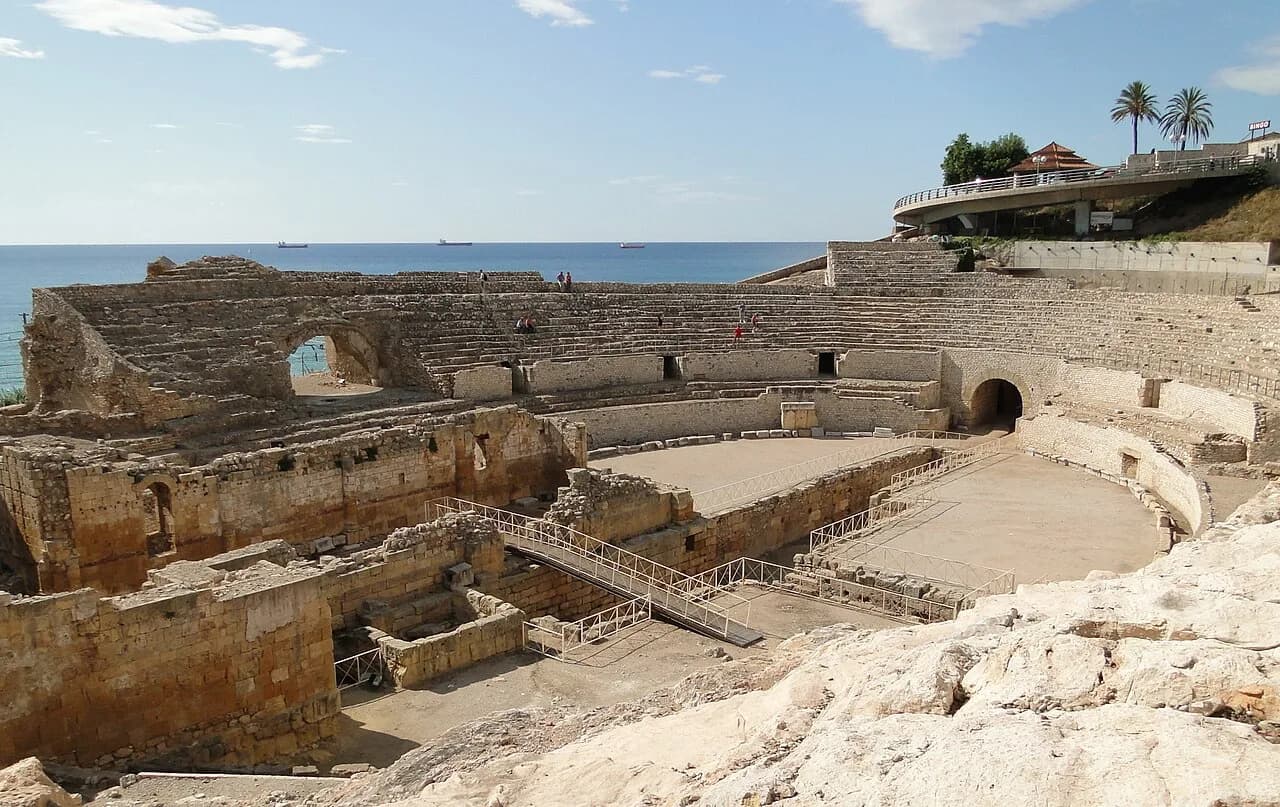
The amphitheatre, an elliptical building over a hundred metres long where gladiator fights and public executions took place, occupies the slope between the old town and the sea. Next to it, the Balcón del Mediterráneo gives a panoramic view taking in the beach and point of the Miracle, the amphitheatre, the station and the port.
The Anfiteatro de Tarraco is best seen from the elevated walkway above the remains of the Visigothic basilica built inside it in the sixth century, on the site of the martyrdom of Bishop Fructuosus in 259. The Amfiteatre de Tarragona page gives the monument its own treatment.
The medieval lanes and noble houses: Carrer dels Cavallers and the Casa Museo Castellarnau
The lanes of the quarter hold medieval and later townhouses, and Carrer dels Cavallers is the clearest stretch to walk for them. The Casa Museo Castellarnau at number 14 is a noble house of medieval origin showing the luxurious life of the local nobility in the eighteenth and nineteenth centuries.
Allow time to wander rather than marching between sights. The pleasure of this part is the sudden archways, courtyards and fragments of Roman stone in later walls, which reward a slow pace over a checklist.
How long the old town needs and a sensible order for a half day
Half a day covers the core comfortably: the Paseo Arqueológico and the Puerta del Roser, the model at Plaça del Pallol, the circus and Torre del Pretorio, Plaça de la Font and the cathedral. Add El Serrallo and the Balcón del Mediterráneo on the descent if you walk briskly.
The order matters. Starting at the walls avoids dropping into the middle of the lanes with no orientation, and ending at the sea means the climb happens once, early, when you are fresh.
Shopping is concentrated lower down around Rambla Nova rather than in the old town itself, so keep the browsing for the walk back into the modern city; the shopping in Tarragona guide covers it.
Practical points: Monday closures, midday heat and the climb
The Museu del Mar, near El Serrallo, is closed on Mondays, so a Monday visit means leaving it out and spending longer in the old town lanes.
The quarter is steep and much of it is in full sun at midday, which matters more in summer than the modest distances suggest. Walk early or late, carry water and plan the cathedral and museums as your shaded breaks.
The city has a mild Mediterranean climate, but the climb through the lanes is still best done at a comfortable hour rather than in the heat of the afternoon.
Which half day suits you?
Choose a morning if you want the climb done in cooler air and the cathedral and cloister as a midday refuge. Choose a late afternoon if you would rather finish with the Balcón del Mediterráneo and the light over the port.
Either way, the old town rewards starting at the walls and finishing at the sea, with Plaça de la Font as the natural halfway point.
Frequently Asked Questions
Is Tarragona a nice town?
It has one of the densest concentrations of Roman remains in Spain, crowned by UNESCO World Heritage status, plus a medieval quarter and a seafront with the amphitheatre and the Balcón del Mediterráneo. For travellers interested in old towns and monuments, it offers far more than its size suggests.
Is Tarragona close to Barcelona?
Tarragona lies down the coast from Barcelona in southern Catalonia and is easily reached by road or rail, making it a straightforward stop on a Catalonia trip. Check current timetables with the train operator before you book.
Can you walk the old town in a few hours?
Yes. The core route from the Paseo Arqueológico through the circus, Plaça de la Font and the cathedral fits into half a day at an unhurried pace, with the descent to El Serrallo and the Balcón del Mediterráneo added if you keep moving.
Where should you start a walk through the old town?
Start at the Paseo Arqueológico by the Puerta del Roser. Beginning at the Roman walls gives you the orientation and the model at Plaça del Pallol before you climb into the lanes, and it puts the steepest section at the start.
Sources
Notes for your next Spanish town break
Optional updates to our guides.
You might also like
Continue reading
More guides you'll find useful