Things to Do in Tarragona: Roman Sights, Old Town and Views
What to do in Tarragona: the Roman amphitheatre, circus and walls, the cathedral and old town, plus viewpoints, ticket prices and how the city fits together.
On this page
Tarragona's essential sights sit within a short walk of each other: the Roman amphitheatre above the sea, the circus and Torre de Pilatos, the walls and Passeig Arqueològic, the cathedral and the Balcó del Mediterrani. Plan the day uphill from the coast to the old town, and you cover the Roman core and the medieval streets without doubling back. This guide groups what to see by area, states ticket prices and free-entry slots, and explains how the Aqueduct of les Ferreres fits in as a separate trip outside the centre.
The city is on the Costa Dorada south of Barcelona and is easily reached by train, which makes it a realistic stop for travellers based on the coast. Its Roman remains were declared UNESCO World Heritage in 2000, and the modern city is built directly over the ancient one, so parts of the circus disappear beneath later buildings. Knowing that in advance shapes what you pay to enter and what you simply view from above.
What to see in Tarragona in a nutshell
Tarragona is a hill town with a Roman skeleton. The amphitheatre sits at the foot of the hill facing the Mediterranean, the circus and Torre de Pilatos cut across the middle, and the cathedral, Plaça del Fórum and the medieval streets fill the summit inside the line of the Roman walls. That stacked layout is why a single loop works better than a checklist of separate visits.
Start at the sea side, work up through the circus, then finish on the Balcó del Mediterrani and in the old town. Allow a full day for the Roman monuments, the cathedral and the museums, or a tight half-day if you take the free viewpoint instead of paying into the amphitheatre. The Balcó gives you the postcard view over the arena and the water at no cost.
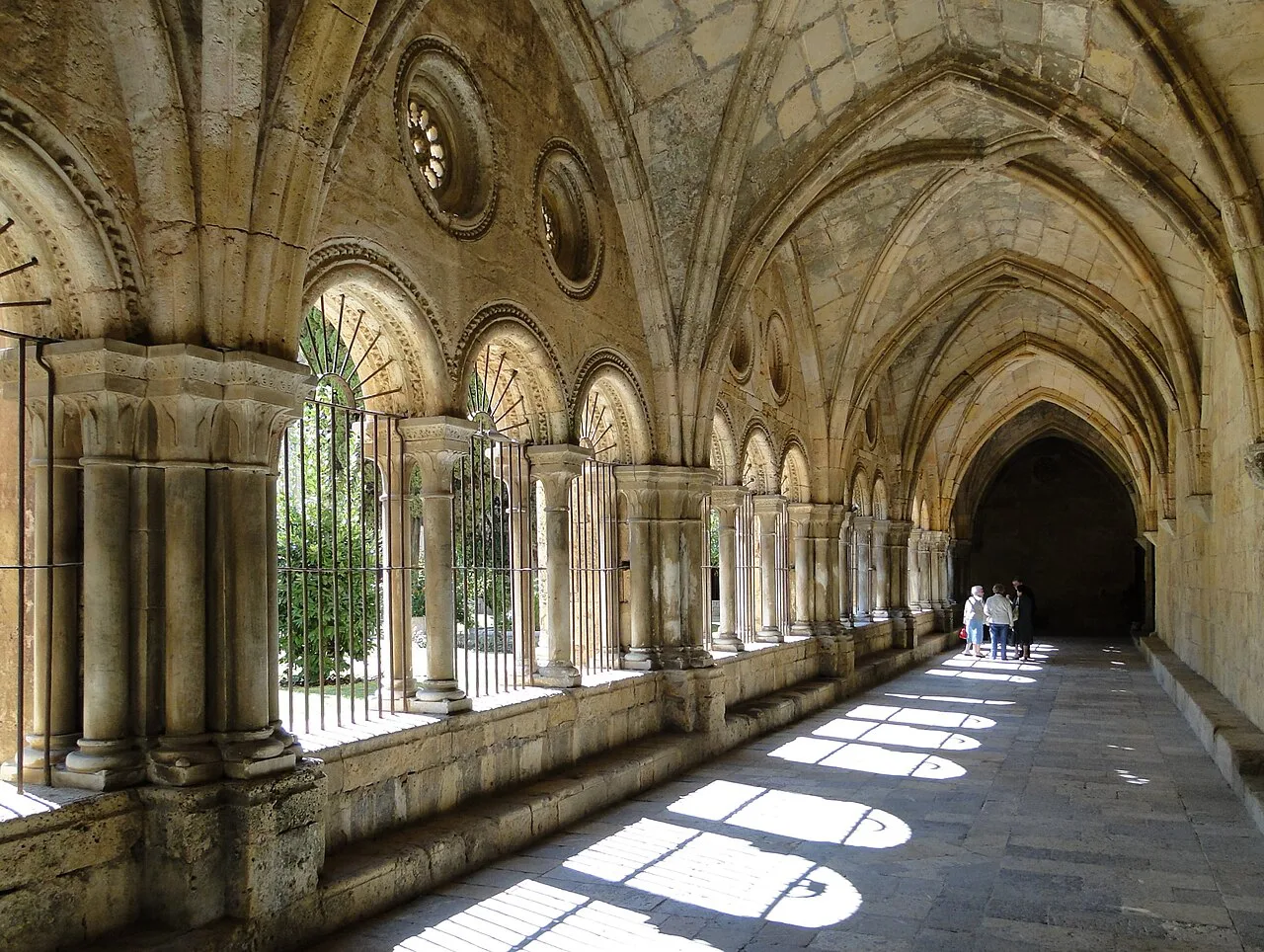
Roman Tarraco: the amphitheatre by the sea
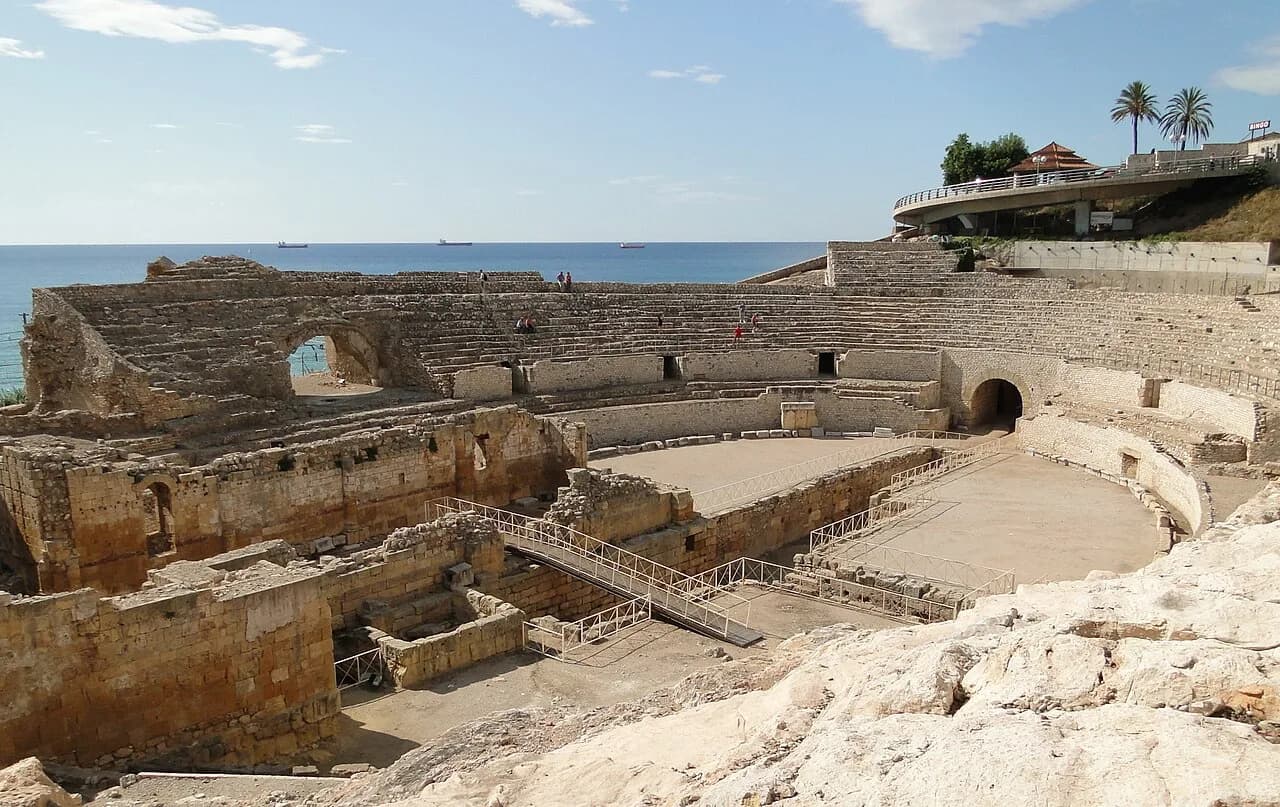
The Amfiteatre de Tarraco was built in the second century AD and once held more than 15,000 spectators for gladiator fights and similar spectacles. What makes it unusual is the setting: it stands directly above the Mediterranean, so the ruins and the sea read as one view. Adult entry is €3.30, and it opens Tuesday to Sunday.
Entry is free on the last Tuesday of each month from January to May and from October to December, which is worth timing a break around if you are paying for several Roman sites. If you would rather not pay at all, the amphitheatre can be viewed from the Balcó del Mediterrani above it, though touring the grounds gets you closer to the arena floor. Choose the free balcony for a quick look and the ticket when you want the full circuit.
The Roman circus and the Torre de Pilatos
The Circ Roma was built at the end of the first century AD for chariot racing, and much of it now lies under the modern city, so what you see are sections rather than a whole track. Set your expectations accordingly: the visible stretches show the scale, and the Torre de Pilatos, the Roman tower attached to the complex, gives a 360-degree view over the rooftops. Adult entry is €3.30, opening Tuesday to Sunday, with the same last-Tuesday free slot as the amphitheatre.
This is the stop that rewards a little imagination. Walk it after the amphitheatre and before the cathedral, because the tower view helps you read the city's levels before you climb into the old town.
The Roman walls and the Passeig Arqueològic
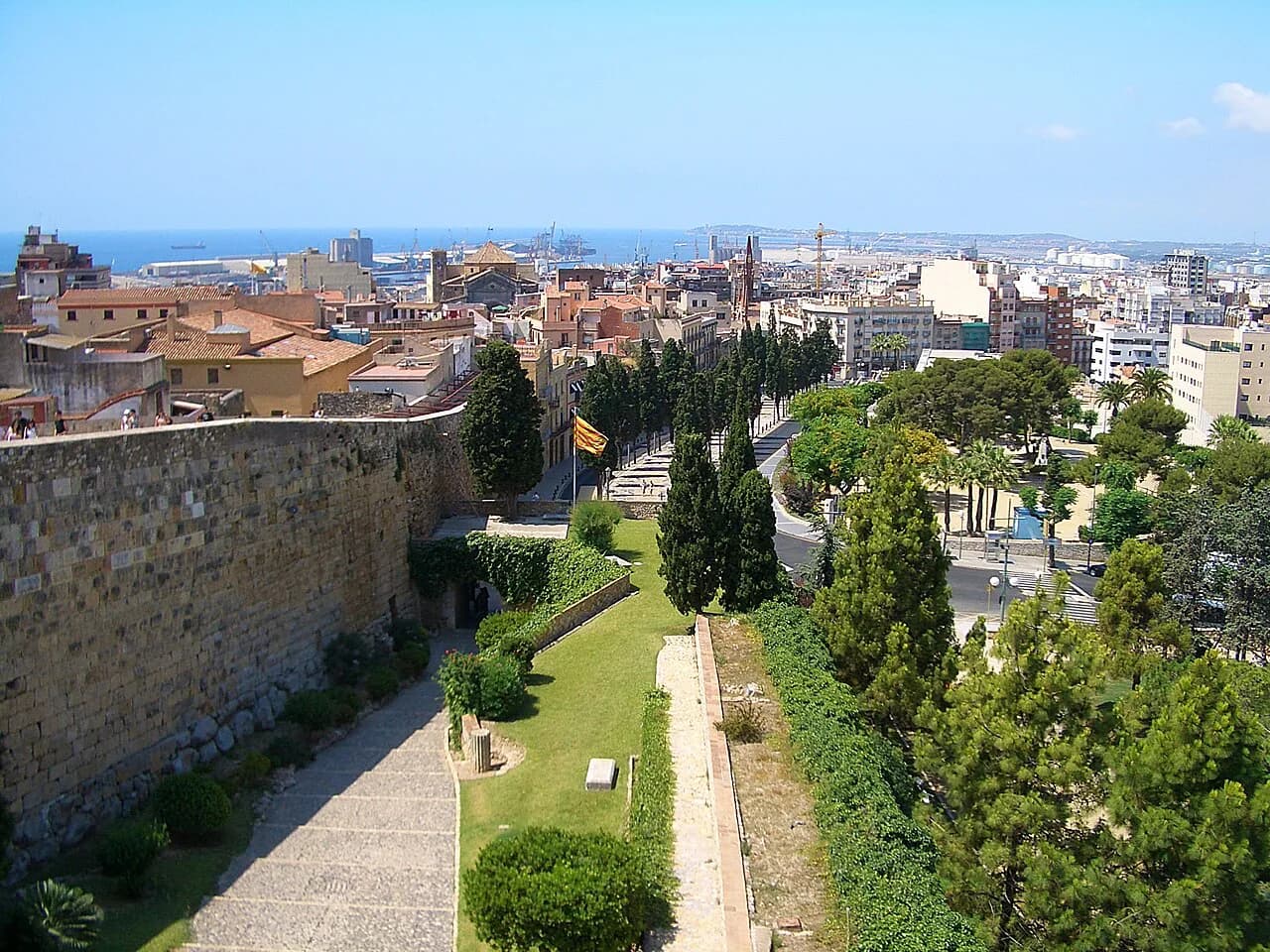
The Muralles de Tarragona date from the third century BC and are the oldest Roman structures in the city. A walk along them, the Passeig Arqueològic, follows part of the wall circuit and gives wide views from several points. It is the best introduction to how the Roman town was defended and how the later city grew inside that line.
Renfe describes the walls as the oldest Roman construction outside Italy, which is the claim to hold on to when you are deciding what to prioritise. Pair the walk with the old town streets just inside it, and the geography of Tarragona stops feeling like a maze.
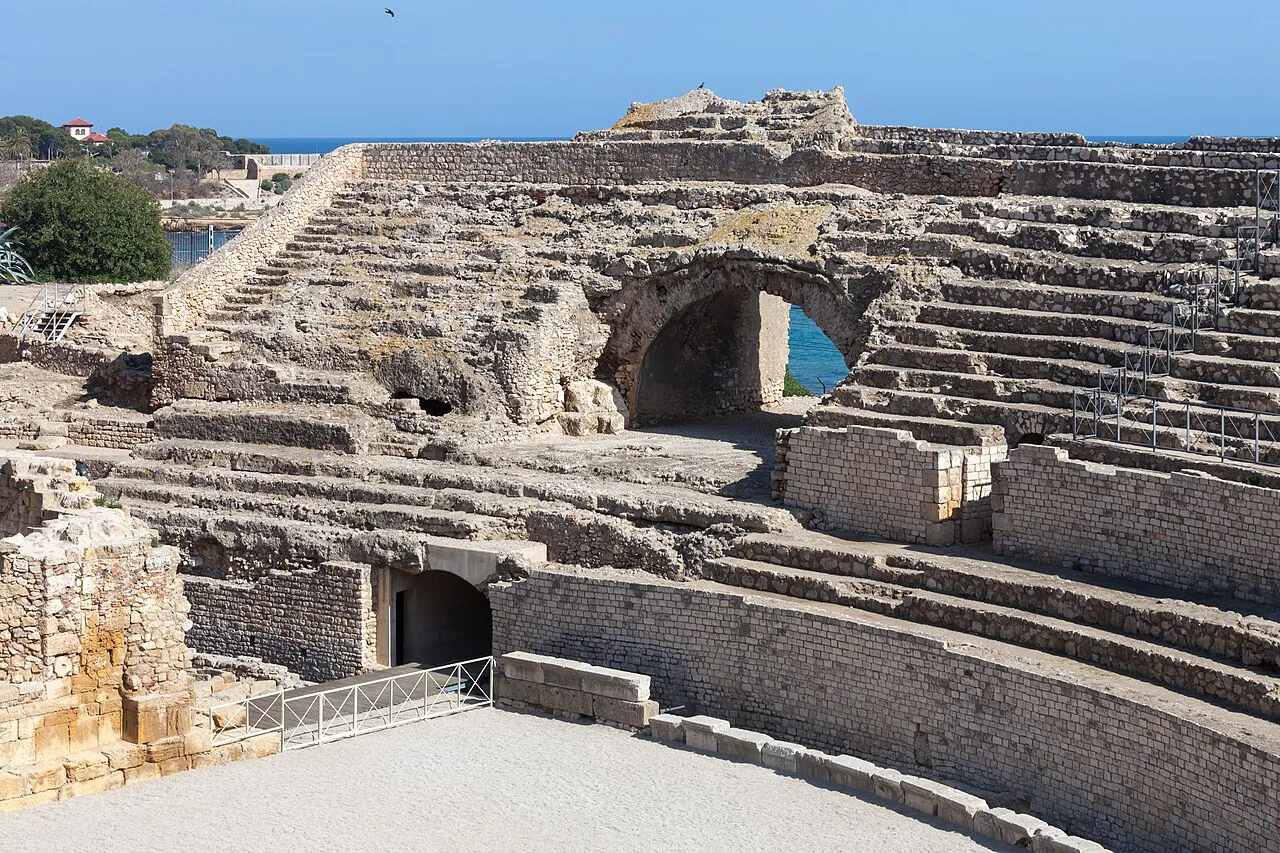
The cathedral: cloister, art and views
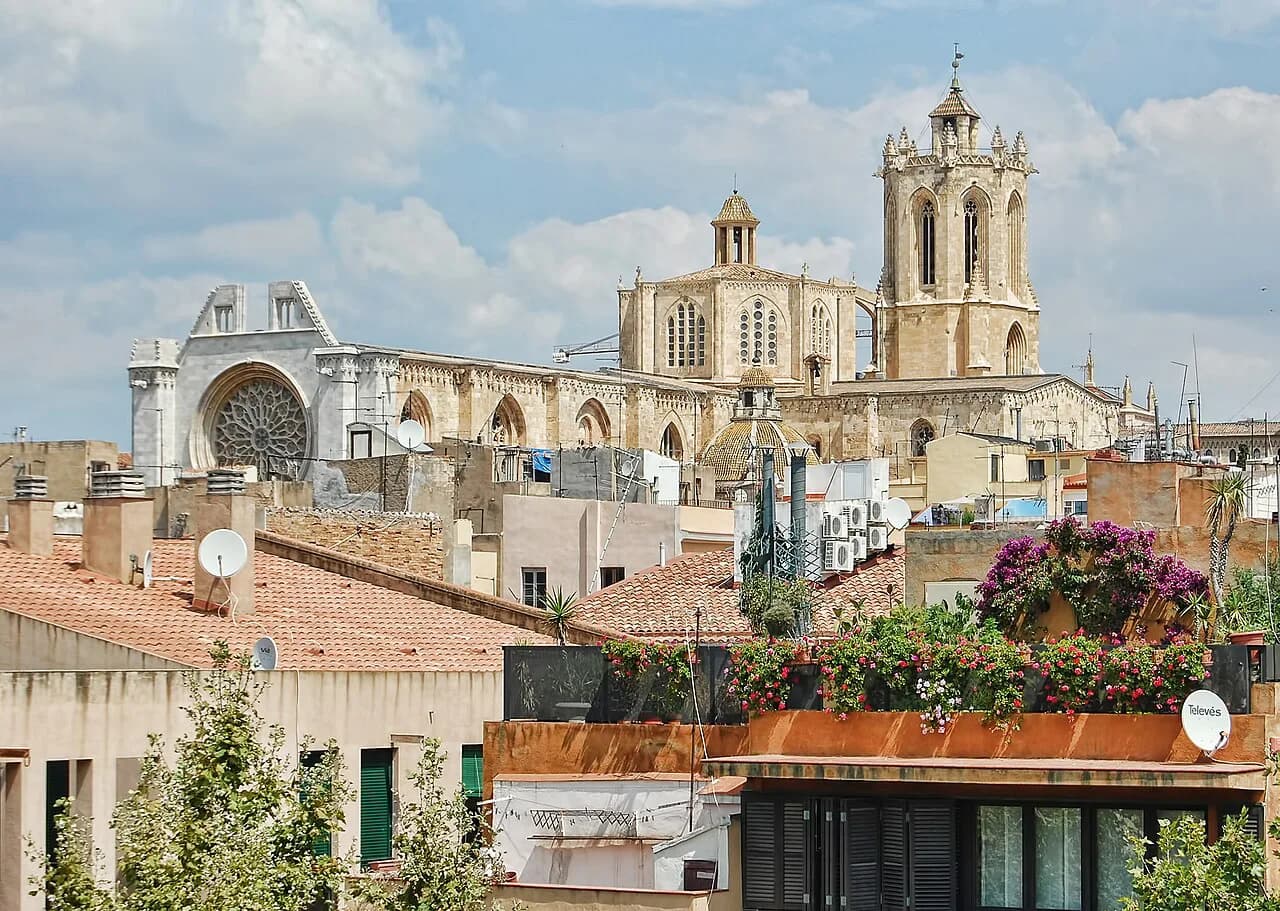
The Catedral de Tarragona was begun in the twelfth century and mixes Romanesque, Gothic and Renaissance work, with the main altar dedicated to Santa Tecla, the city's patron saint. A visit covers more than the nave: there are chapels, religious art, a cloister and a courtyard, and the cloister is the calmest part of the visit. Adult entry is €5, and the cathedral publishes its opening calendar rather than keeping to a fixed weekly pattern.
Because the cathedral does not follow the Tuesday-to-Sunday rhythm of the Roman sites, check its calendar before you build the day around it. If it is closed, the walls, forum square and museums fill the time without a wasted trip.
Plaça del Fórum and the streets inside the walls
Plaça del Fórum was the political and social centre of Roman Tarraco, and today it combines exposed archaeological remains with a square ringed by terraces. It is the natural pause in the middle of the old town walk, and the surrounding streets are where the medieval and Roman layers meet. Wander without a fixed route and let the wall line guide you back.
Museums: MNAT and Casa de Castellarnau
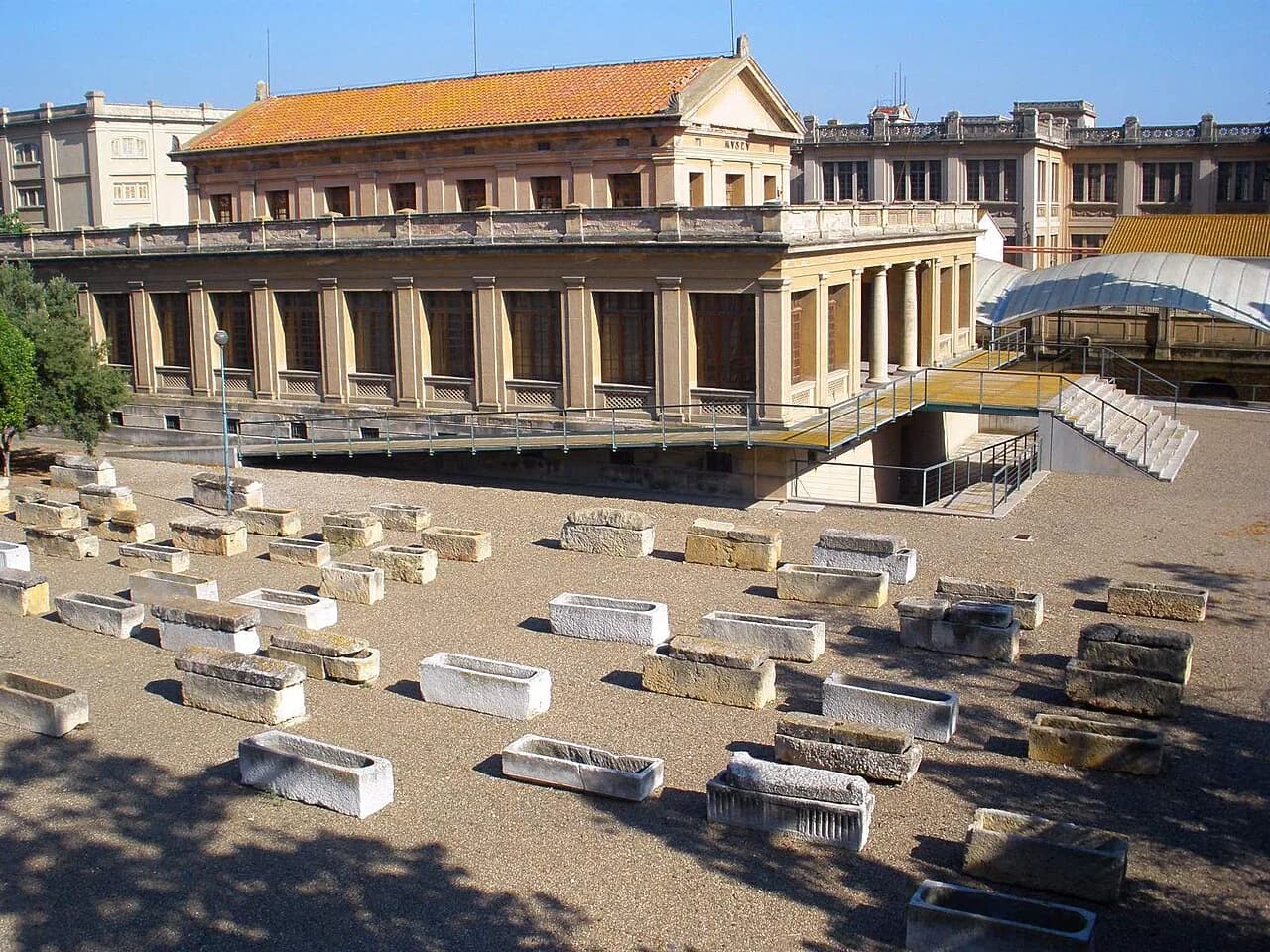
The Museu Nacional Arqueològic de Tarragona holds mosaics, inscriptions and objects that explain Roman Tarraco, and the building itself is part of the visit. Casa de Castellarnau, a fifteenth-century noble house, survives as a museum of furnishings and decoration from the city's later elite. Between them they cover the two halves of Tarragona's story, Roman and medieval, that the outdoor ruins only sketch.
Use the museum when you want the detail behind the stones, particularly if the weather turns or you need a break from the midday heat. The Roman sites are outdoor work, so an indoor hour in the middle of the day is a sensible trade, and the TARRACO/MNAT exhibition makes the inscriptions on the walls easier to read afterwards.
La Rambla Nova and the Balcó del Mediterrani
La Rambla Nova is the main street running through the modern city, lined with shops and cafés and ending at the Balcó del Mediterrani. The balcony is where you get the best free view in Tarragona: the amphitheatre below, the sea beyond and the coast stretching away. Come here first if you are short of time, and last if you want to end the day looking back over everything you have walked.
El Serrallo: the fishing neighbourhood below the city
El Serrallo is the maritime quarter on the shore, historically tied to the port and its fishing fleet. Its streets carry the feel of a working neighbourhood rather than a monument, and the church of San Pedro is the local landmark to look out for. Walk down after the old town for the contrast between the Roman hill and the modern waterfront.
The Aqueduct of les Ferreres outside the centre
The Acueducto de les Ferreres, also called the Pont del Diable, was built in the first century and is one of the finest pieces of Roman engineering in the region, carrying the water supply into Tarraco across a valley. It sits outside the centre, so treat it as a separate outing rather than a stop on the old town loop. Go for the structure itself and the open views across the surrounding countryside.
If you enjoy the walls and viewpoints of a Spanish city, our things to do in A Coruña guide covers a very different Atlantic destination, useful if you are planning more than one stop on the same trip.
How Tarragona is laid out on foot
Treat the city as three tiers. The shore has the amphitheatre and El Serrallo; the middle band has the circus, the Torre de Pilatos and the museum; the top has the cathedral, Plaça del Fórum, the walls and the old town lanes. Walking uphill once and working your way back down saves the steepest climbs for when you are fresh.
Allow a full day for the Roman circuit plus the cathedral and one museum, and a half-day if you take the free balcony view and skip paid interiors. The old town rewards slow wandering, so leave slack at the top rather than scheduling every hour. In summer, the inland heat makes midday a poor time for the exposed walls and amphitheatre, so put those in the morning.
Ticket prices and free-entry slots
The Roman amphitheatre and the circus each cost €3.30 per adult, and both open Tuesday to Sunday. Both are free on the last Tuesday of each month from January to May and from October to December. The cathedral costs €5 per adult, with its own calendar rather than the same weekly pattern.
Plan the free slot carefully: it applies to the Roman sites, not the cathedral, and only in the months listed. If your dates do not line up, paying for both the amphitheatre and the circus still works out modestly, and the cathedral sits on its own ticket. Keep small notes and coins for entry desks in case card machines are unavailable.
Getting to Tarragona by train
Renfe runs trains to Tarragona from Barcelona, Madrid, Valencia, Zaragoza, Málaga and other Spanish cities, and the station sits within reach of the centre. Barcelona is the nearest large city, roughly an hour by train on the slower services, though some trains reach Camp de Tarragona in about thirty minutes, and that station is around thirteen kilometres outside the city, so make sure your ticket is for Tarragona itself. Fares vary by service and date, so check the current price when booking.
From the station, the Roman core is a walk or a short local trip away, and the whole centre is manageable on foot once you are there. If you are combining Tarragona with a Mallorca break, our things to do in Alcúdia guide shows how another walled historic town works on the island.
Should you pay into the amphitheatre or take the free view?
Pay for the amphitheatre and circus if you want to stand inside the arena and climb the Torre de Pilatos; the €3.30 tickets are small and the last-Tuesday free slot covers both in the listed months. Take the Balcó del Mediterrani instead if you want the photograph without the queue. Either way, the walls, Plaça del Fórum and the old town lanes cost nothing.
Build the day from the sea upward, keep the cathedral's calendar in mind, and add the aqueduct only if you have a separate half-day. That order gives you Roman Tarragona first and the medieval city second, which is how the place actually stacks up.
Explore more Tarragona guides
Sources
Notes for your next Spanish town break
Optional updates to our guides.
You might also like
Continue reading
More guides you'll find useful