Things to Do in Sóller, Mallorca: Plazas, Modernisme and the Port
What to see in Sóller, Mallorca: Plaça de la Constitució, Sant Bartomeu, Ca'n Prunera, the wooden train and tram, and the walk to Biniaraix.
On this page
Sóller needs half a day for the town centre and a full day if you add the port. The essential circuit is short: start at Plaça de la Constitució, see the parish church of Sant Bartomeu and the modernista façades around the centre, then decide whether to ride the tram down to Port de Sóller or walk out to Biniaraix. This guide orders those sights by walking route, covers the wooden train from Palma and the tram as practical transport, and shows how the town, the port and the valley split across a short break.
What to see in Sóller in a few hours: the short answer
A few hours in Sóller covers the main square, the church of Sant Bartomeu, the modernista buildings near the centre and a stroll through the old streets between them. The town's tourism office picks out the emblematic square, the historic wooden train, the modernista buildings and the small local shops as what defines a visit, framed by the Serra de Tramuntana mountains around the valley.
The monuments cluster tightly enough that you can see them in walking order, without doubling back. Spain's official tourism portal names the 14th-century parish church of Sant Bartomeu, the modernista Banco Central Hispano building, the Ca'n Prunera mansion, the Alquería de Comte, the Ses Tres Creus monument and the Sa Capelleta monastery on the road towards Lluc as the town's historic and artistic landmarks.
How Sóller is laid out: the square, the old streets and the modernista quarter
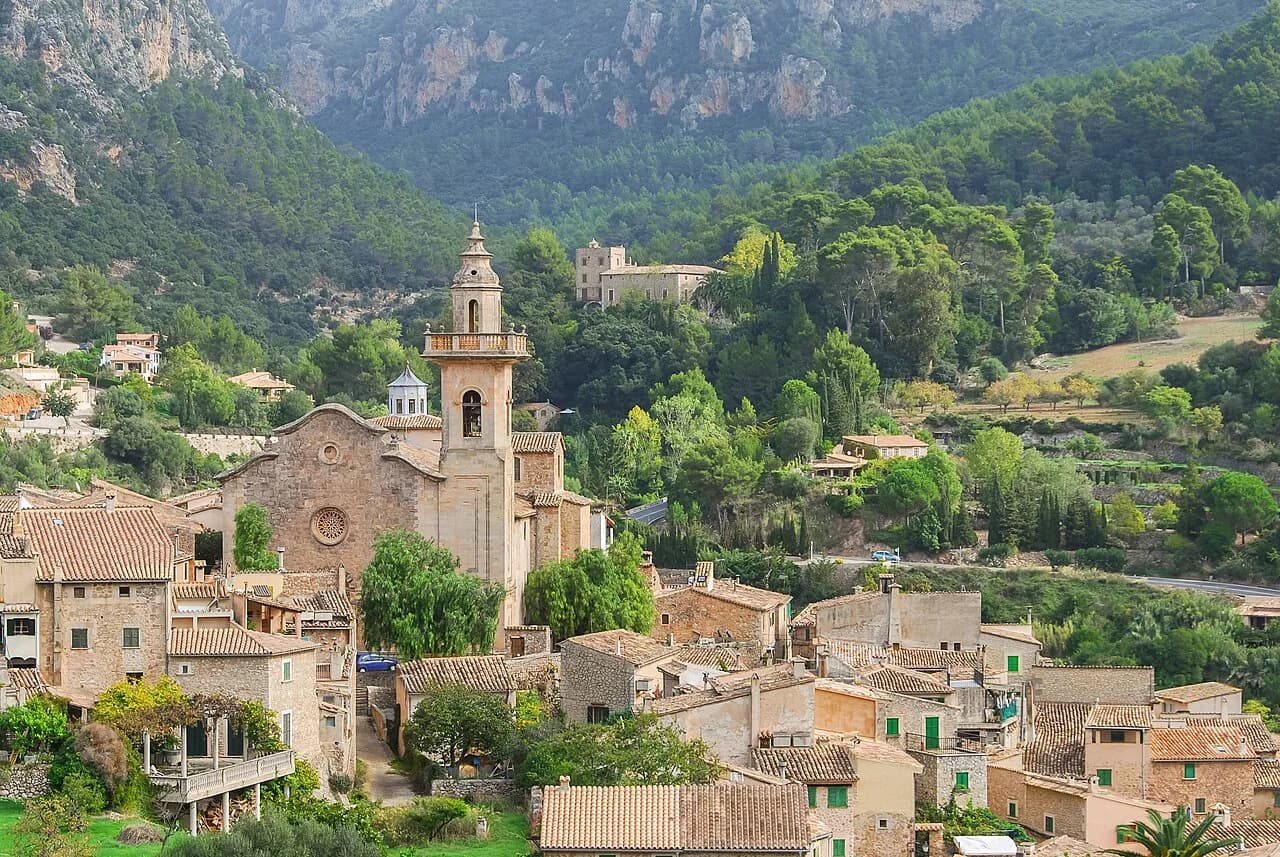
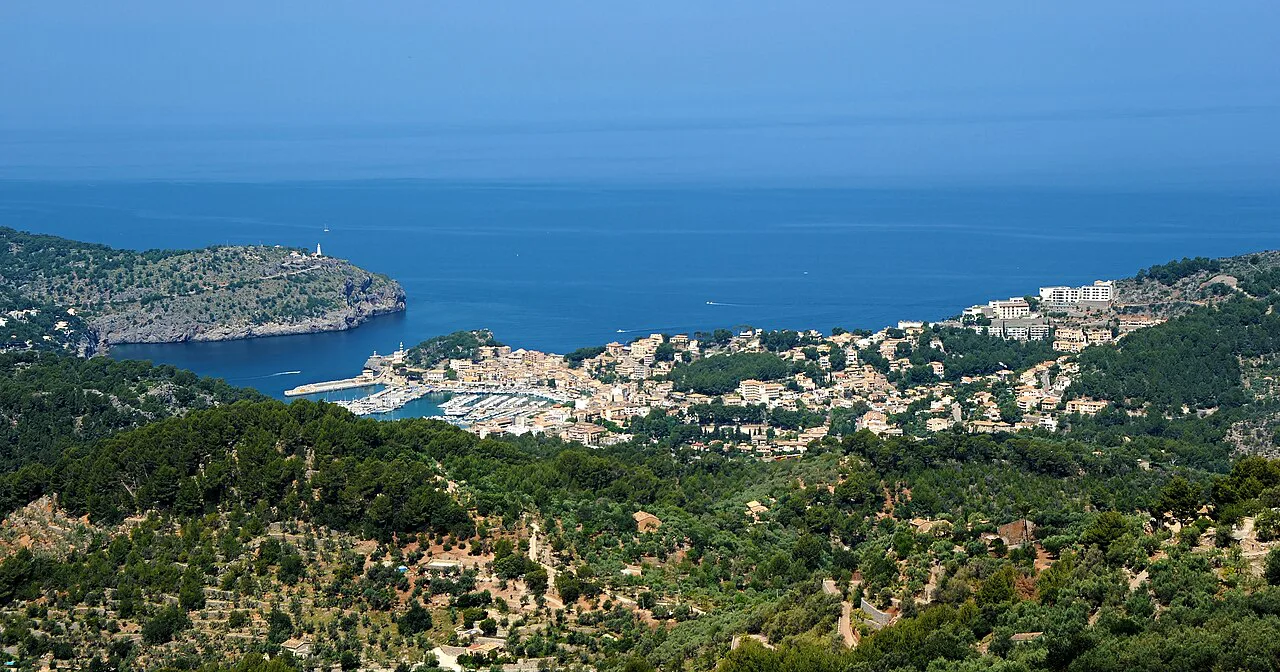
Sóller sits in a valley in the Serra de Tramuntana and stayed isolated until the early 19th century, when trade in citrus, olives and textiles made it a commercial point. The town's tourism office describes that geography as the frame for the visit: mountains on all sides, the historic wooden train arriving from Palma, and the port about four kilometres away. Use the Sóller Map to fix the square, the church and the port road before you set out, because the centre is compact enough to cover on foot once you know the order.
The old town is compact, with the church close to the modernista houses on the surrounding streets. Biniaraix, a hamlet of cobbled lanes with views into the Tramuntana, is about a 20-minute walk from the square. Sóller Old Town rewards slow walking rather than a checklist, so leave time between the named monuments for the streets themselves.
Plaça de la Constitució: the square everything starts from
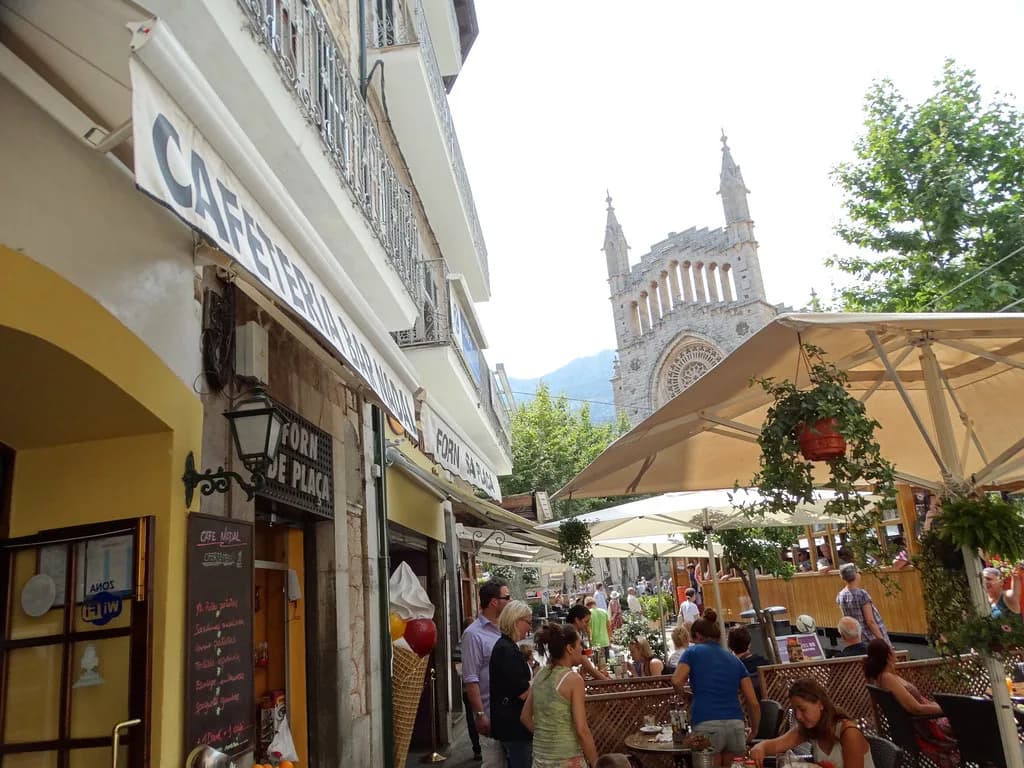
The main square is the natural start and the place to return to between sights. The town's tourism office treats the emblematic square as the first stop, alongside the historic wooden train and the modernista buildings, and it sits within a short walk of the church, the shops and the streets leading towards the port road. Arrive here first, orient yourself, then work outwards.
Sant Bartomeu parish church and the surrounding old town
The parish church of Sant Bartomeu is a 14th-century building and the town's main religious building, standing in the heart of the old centre. Spain's official tourism portal lists it among Sóller's monuments and historic buildings, alongside the modernista houses and the outlying monuments. Treat it as a working church rather than a museum: when services are on, visitors should keep to the back or come back later.
Modernista Sóller: Ca'n Prunera and the Banco Central Hispano building
Modernisme is what sets Sóller apart from other Tramuntana villages. Ca'n Prunera is a modernista mansion, and the Banco Central Hispano building is the other modernista landmark named by Spain's official tourism portal. Both sit within the central streets, so they fit into the same walk as the church rather than needing a separate trip.
Other monuments: the Alquería de Comte, Ses Tres Creus and Sa Capelleta
Three further monuments sit outside the tightest central loop: the Alquería de Comte, the Ses Tres Creus monument to the Sacred Heart of Jesus, and the Sa Capelleta monastery near the road to Lluc. Spain's official tourism portal lists all three among the town's historic and artistic buildings. Sa Capelleta lies on the Lluc road, so it works best if you have a car or are heading that way anyway, while Ses Tres Creus and the Alquería de Comte fit a longer walk from the centre.
The Museo Balear de Ciencias Naturales y Jardín Botánico
The Museo Balear de Ciencias Naturales y Jardín Botánico is the town's museum pairing of natural history and a botanical garden, and Spain's official tourism portal lists it among the points of interest in Sóller. It suits a slower afternoon if you want a break from churches and façades.
The wooden train from Palma and the tram down to the port
The wooden train from Palma is both a practical way into Sóller and the arrival most visitors remember, crossing the Tramuntana landscape of citrus groves and olive terraces. The town's tourism office publishes the train's destinations, timetables and prices, and the same page covers the tram that links the town with the port. Decide before you travel whether you are using the train as transport or as an experience: it is slower than the road, but it lands you in the centre rather than at a car park on the edge.
The tram runs between Sóller and Port de Sóller, which makes the port an easy add-on without moving the car. The town's tourism office also covers how to arrive by bus and taxi. If you want the bay from the water rather than the tram window, a Sóller boat trip from the port is the other way to see the coast.
Walking to Biniaraix from the square
Biniaraix is about a 20-minute walk from Plaça de la Constitució, according to the town's tourism office, which describes it as a hamlet of cobbled streets and silence with imposing views towards the Serra de Tramuntana. That makes it the best short walk from the centre if you have already spent the morning in town and do not want to commit to the port as well. The lane climbs, so allow more than 20 minutes back and carry water in summer.
Port de Sóller: the bay, the promenade and the walk to the Far des Cap Gros and Muleta
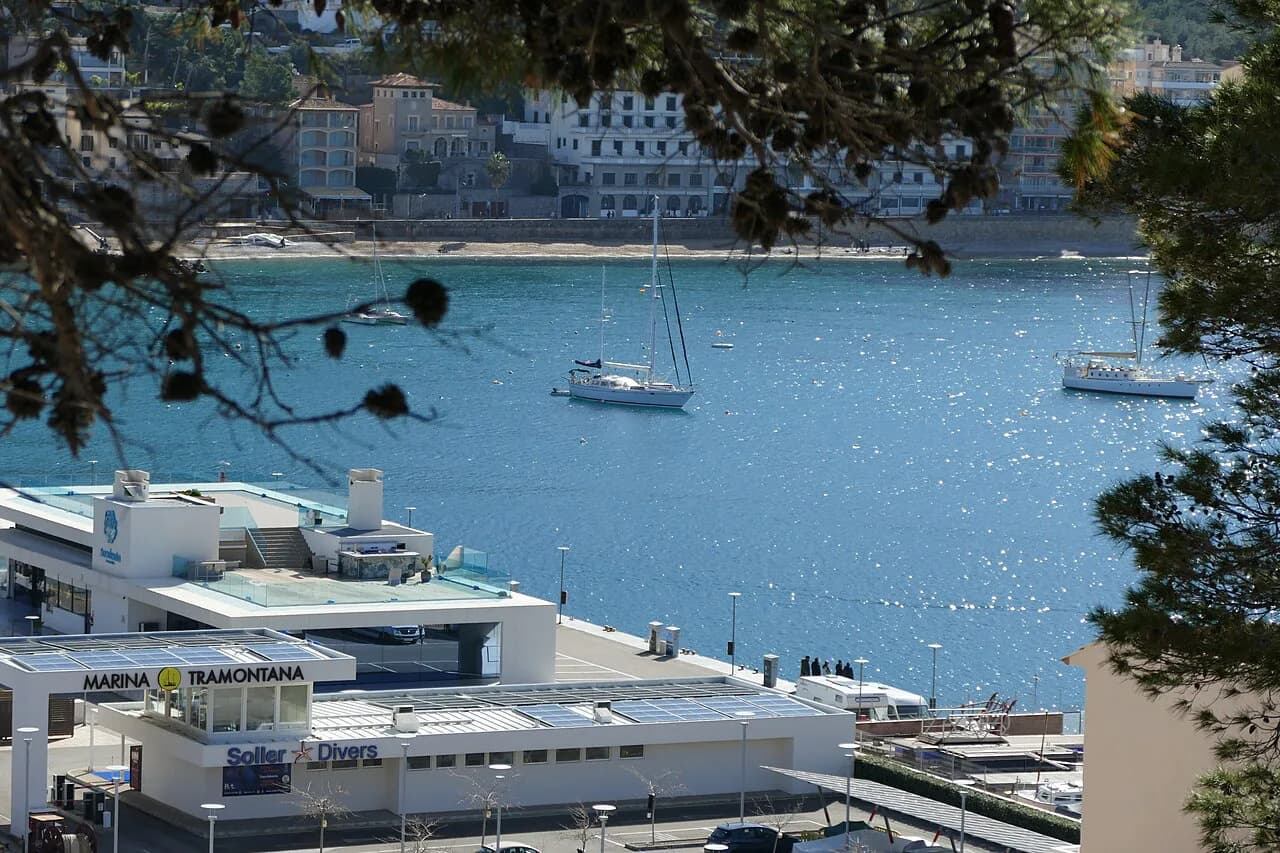
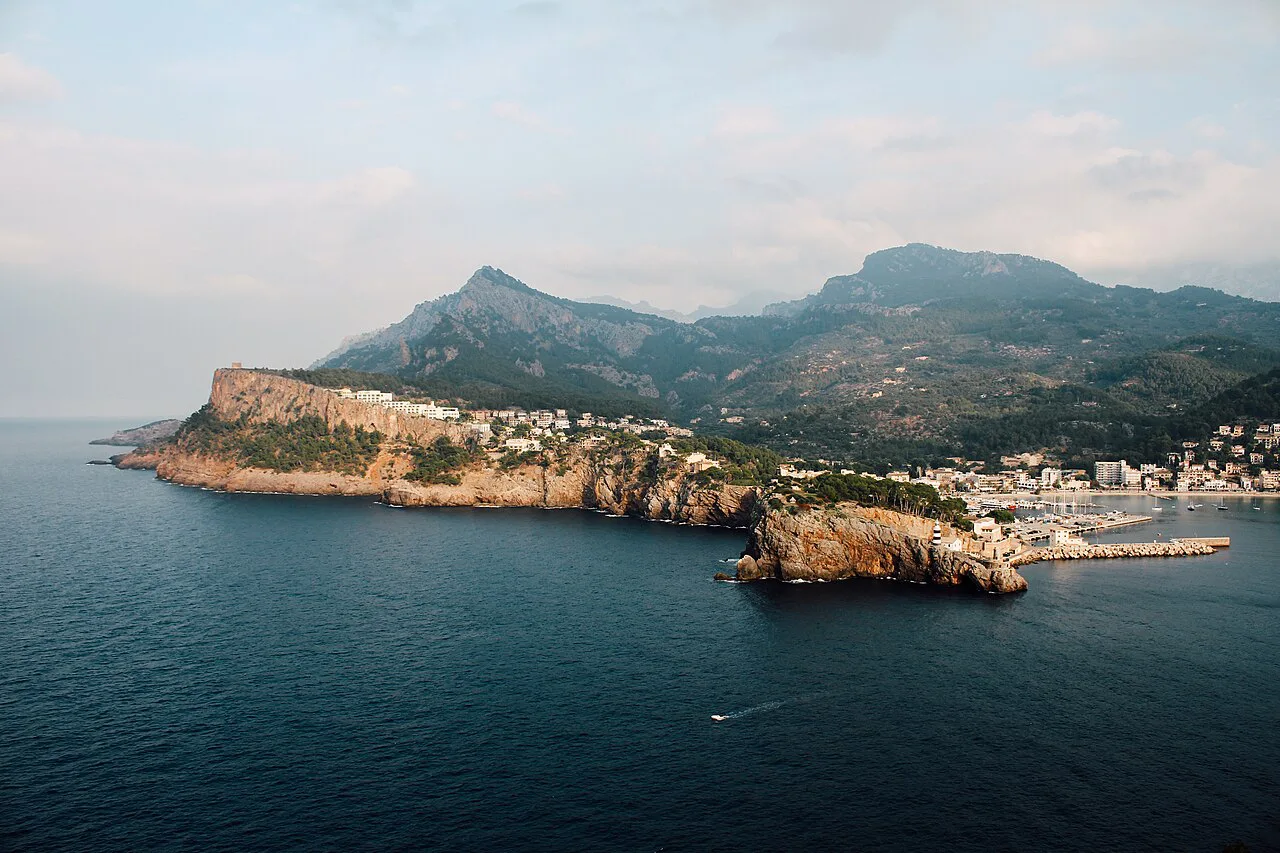
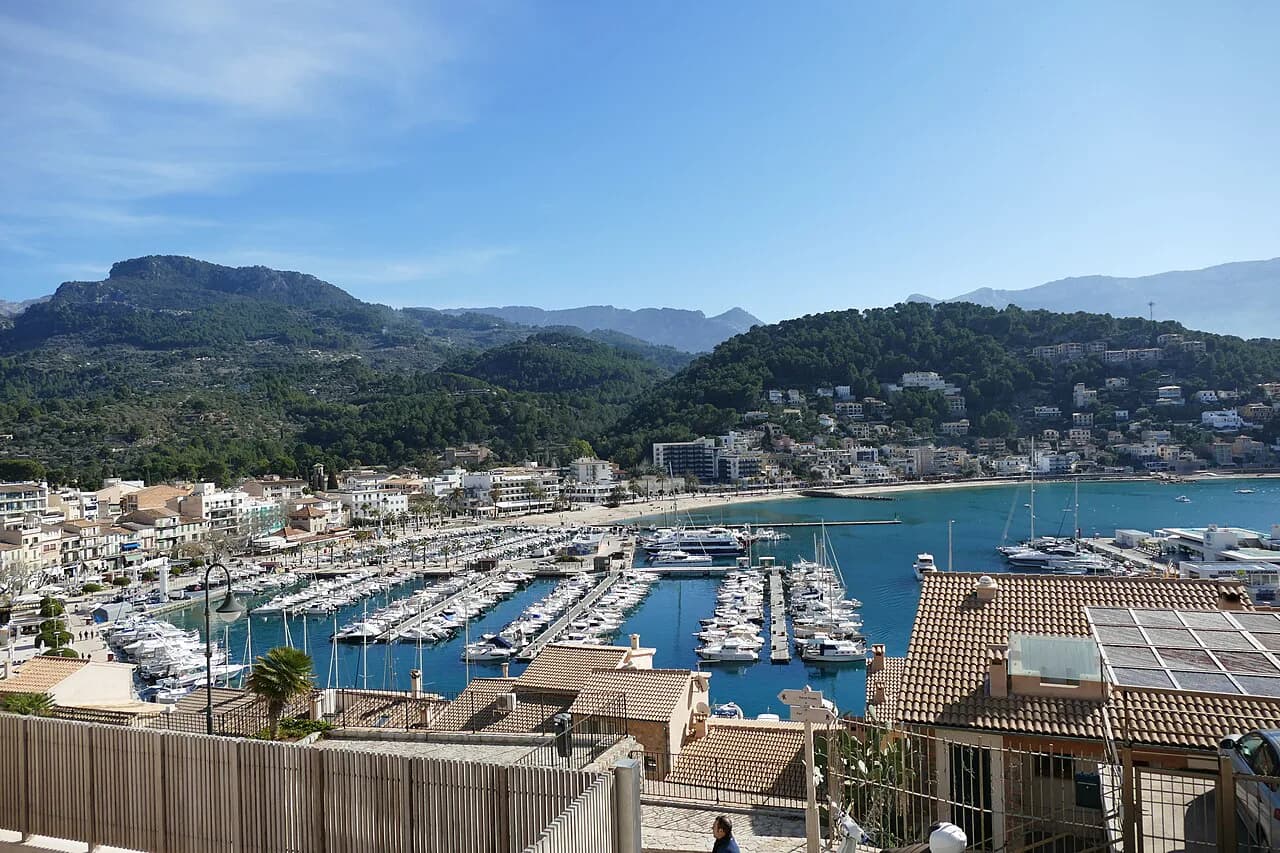
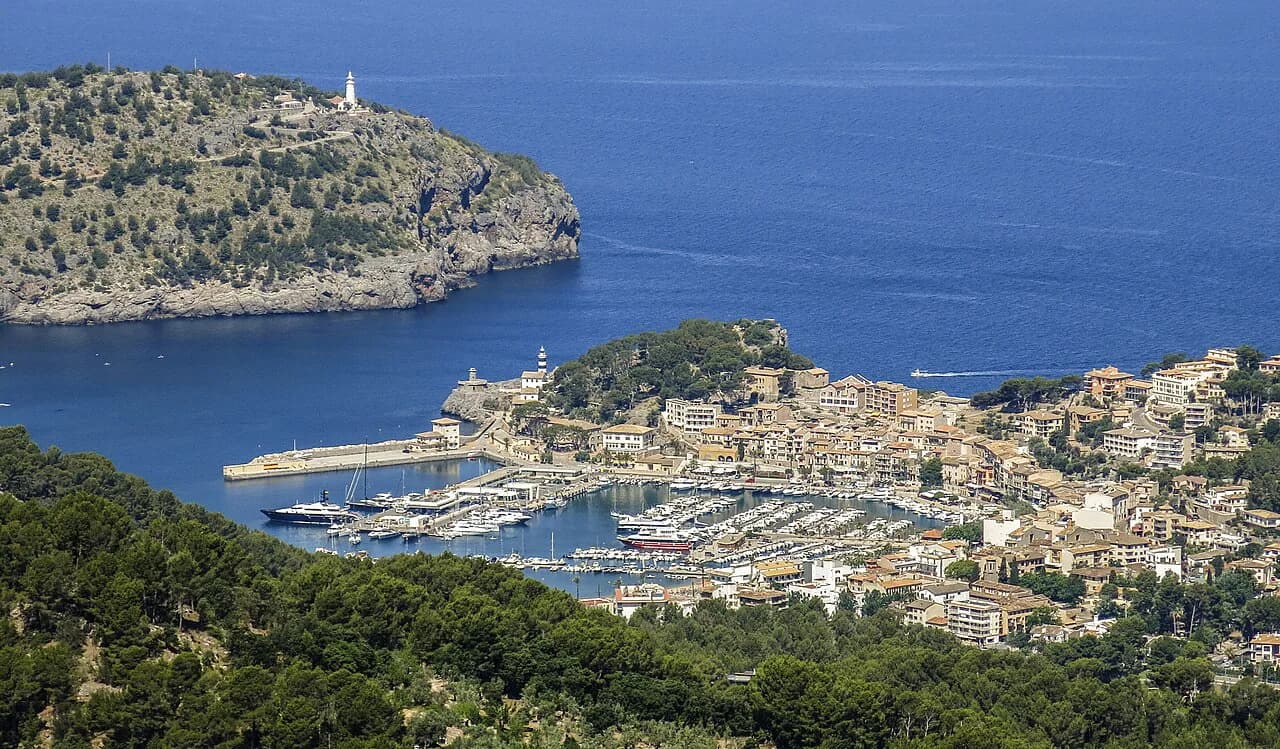
Port de Sóller sits about four kilometres from the town and is the only natural refuge for sailors and fishermen on the whole north coast of the island, a working harbour that has kept its fishing identity. The bay curves around a promenade, with the beach and restaurants close together, so it works as a place to walk rather than as a beach guide. Ride the tram down, spend an hour on the front and take the tram back, or stay for the evening and eat by the water.
For a view back over the bay, walk or drive up towards the Far des Cap Gros and Muleta, roughly a 15-minute walk from the front, where the Refugi Muleta serves cold drinks and the wall makes a perch for sunset. The bay's horseshoe shape is what makes the view, and the walk up is the most rewarding short excursion from the port. Bring a layer for the wind once the sun drops.
How long Sóller needs: a half-day in the town, a full day with the port
Plan half a day for the town: the main square, Sant Bartomeu, the modernista buildings and a wander through the old streets, with the Biniaraix walk if you have an extra hour. A full day adds the tram to Port de Sóller, the promenade and the climb towards Muleta. If you arrive on the wooden train from Palma, the return timetable effectively sets your day length, so check it before you commit to both the port and Biniaraix.
The Vall de Sóller holds the town, the port and Biniaraix within a few kilometres of each other, which is why the day splits so cleanly. The Sóller Old Town guide goes deeper on the central streets, and the Sóller Map helps you fix the route between them.
Getting around without a car: train, tram, bus and parking
Without a car, the wooden train from Palma, the tram to the port and the bus network cover the main movements, and the town's tourism office covers how to arrive by train, tram, bus and taxi. With a car, Sóller has marked car parks shown on a town map. The train is slower than driving but lands you in the middle of town, which saves the parking hunt.
What things cost in euros: train, tram and museum tickets
Train, tram and museum prices change and are set by the operators, so check the current fares on the town's tourism office page before you travel rather than relying on older figures. Spain's official tourism portal lists the Museo Balear de Ciencias Naturales y Jardín Botánico among the town's points of interest.
When to go: summer heat, market day and quieter months
Walking the town and the lane to Biniaraix is more comfortable outside the height of summer, and midsummer heat makes the climb to Muleta and the Biniaraix path better done early or late. The town's tourism office lists fairs and markets among what happens in Sóller, so check the calendar there for dates rather than assuming a fixed day. The port is busiest in high summer, when the promenade and the tram fill up.
Sóller with Deià and Valldemossa as nearby stops
Deià and Valldemossa are the other Tramuntana villages that pair naturally with Sóller. Treat them as separate half-days rather than tacking them onto a Sóller day that already includes the port, so that each gets the time it needs.
If you are island-hopping, the same approach works elsewhere in Mallorca: things to do in Alcúdia covers the north of the island. Further afield, things to do in A Coruña offers a mainland comparison for a city break built around a waterfront.
Town, port or valley: how to split your day
The choice is simple. With half a day, stay in the town: the square, Sant Bartomeu, the modernista houses and, if time allows, the 20-minute walk to Biniaraix. With a full day, take the tram to Port de Sóller, walk the promenade, climb towards Muleta for the sunset and ride back to the centre in the evening. Fix the train and tram times from Palma first, because they set the shape of everything else.
Explore more Sóller guides
Frequently Asked Questions
Is Port de Sóller worth visiting?
Yes, if you want the bay and the promenade alongside the town. Port de Sóller is about four kilometres from Sóller and is the only natural refuge for sailors and fishermen on the island's north coast, and the tram links the two directly. Allow an afternoon, and add the short climb towards the Far des Cap Gros and Muleta if you stay for sunset.
How do you get to Sóller from Palma?
The historic wooden train runs from Palma into Sóller, and the town's tourism office covers its destinations, timetables and prices. Buses and taxis are the alternatives, also covered there. The train is slower than the road but arrives in the centre of town.
Can you walk from Sóller to Biniaraix?
Yes. Biniaraix is about a 20-minute walk from the square, according to the town's tourism office, along cobbled lanes with views into the Serra de Tramuntana. The path climbs, so allow longer for the return and carry water in summer.
Sources
Notes for your next Spanish town break
Optional updates to our guides.
You might also like
Continue reading
More guides you'll find useful