Things to Do in Sitges: Old Town, Museums and Viewpoints
Plan a short break in Sitges with the old town lanes, the baroque church above the sea, the Cau Ferrat and Maricel museums and the long seafront promenade.
On this page
Sitges works best as a walking town: the historic centre sits between the sea and the station, and you can cover the old town lanes, the church rock and the two Maricel-side museums in a single unhurried day. This guide groups things to do by area rather than as a checklist, so you plan a route and not a series of detours.
The town is often sold purely as a beach escape from Barcelona, about 35 kilometres down the coast, but that undersells it. A morning in the lanes and the museums, followed by the promenade in the afternoon, gives you both sides of Sitges without rushing either. If you are weighing a coastal break against a historic city instead, see these things to do in a Coruña for a very different seaside day.
What there is to do in Sitges, in brief
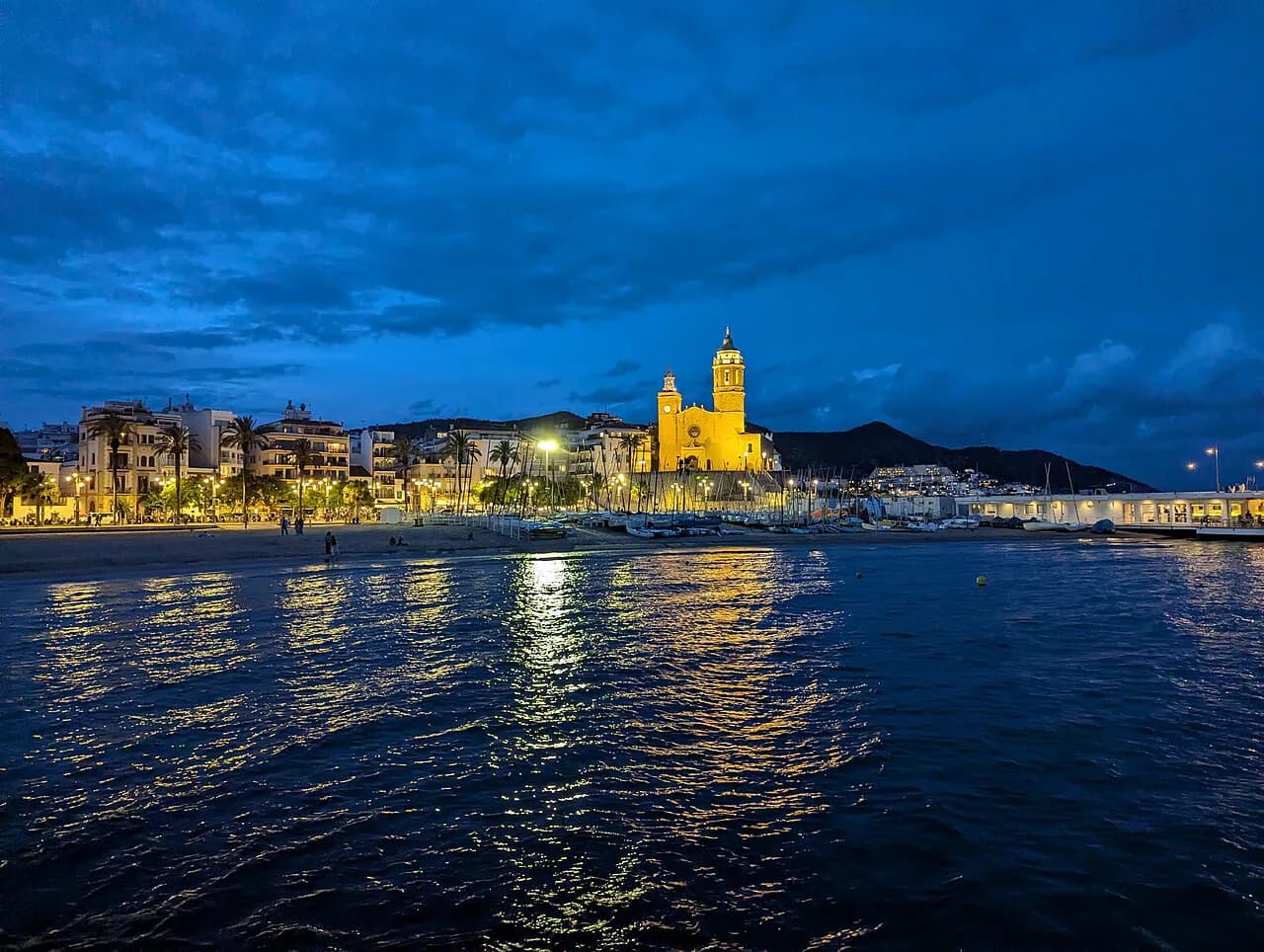
Sitges gives you four things in one compact centre: lanes of whitewashed houses with dark blue trim, the baroque church of Sant Bartomeu i Santa Tecla crowning a rock above the water, the linked Cau Ferrat and Maricel museums beside it, and a long promenade with urban beaches. Behind the seafront, the modernista streets around the station show the waterfront town of the late nineteenth century.
The bulk of it is free to wander: alleys, plazas, the staircase by the church and the promenade cost nothing. The paid part is the museums, and the trade-off is how much of the seafront you give up for them. In summer, aim for museum time in the heat of the middle of the day and save the promenade for the cooler ends.
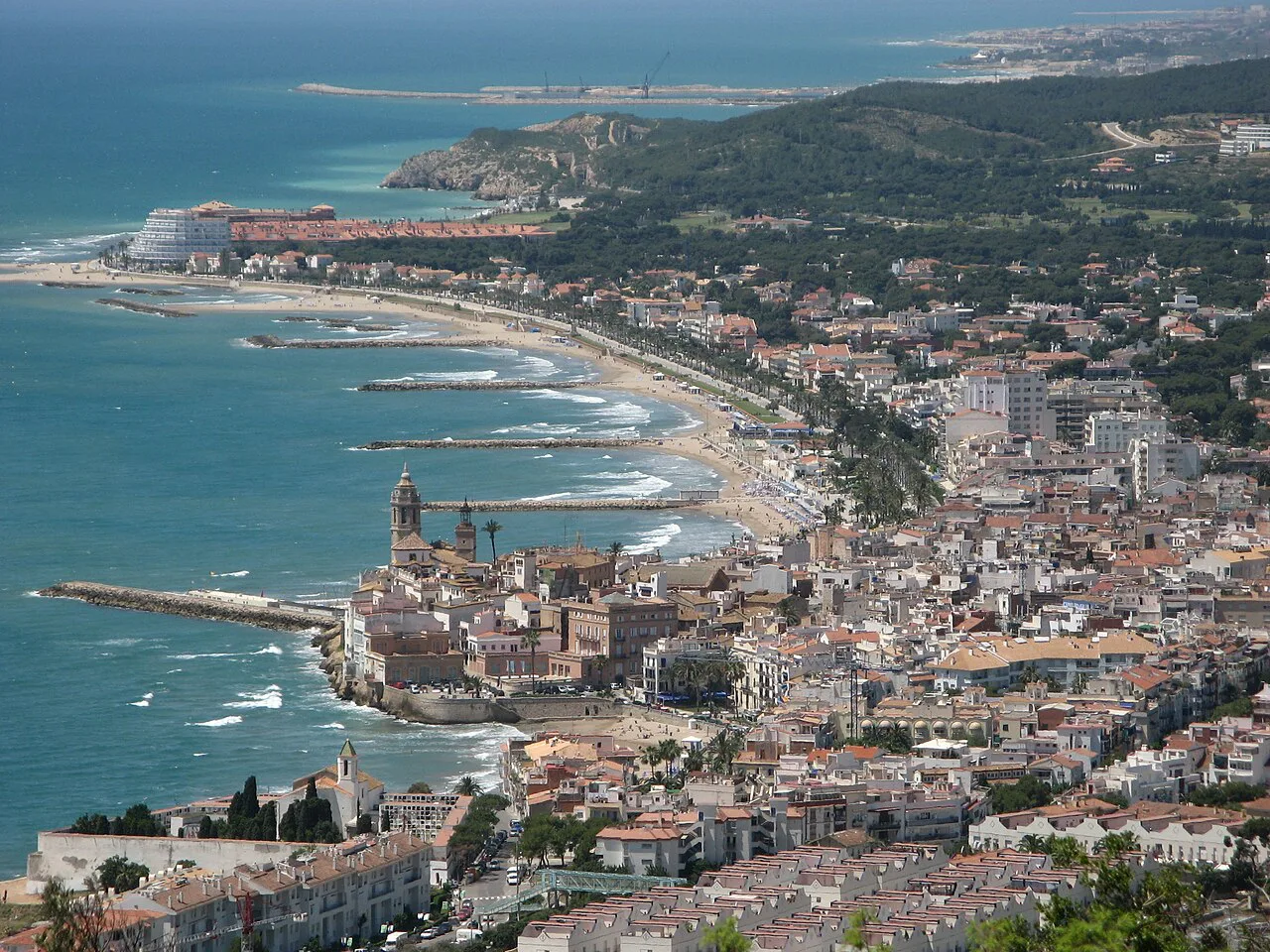
How Sitges is laid out
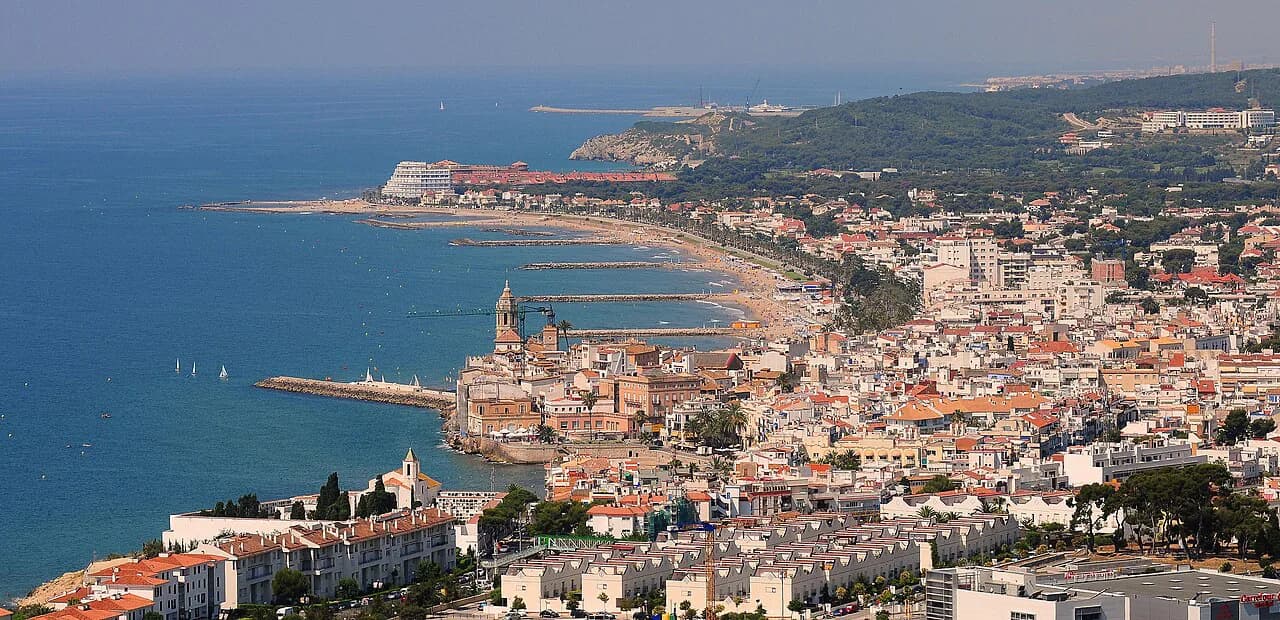
Think of Sitges as three bands. The sea and the Passeig de la Ribera sit at the bottom; above them the old town climbs in narrow lanes to the church rock; and further back is the newer town around the station. Because the centre is compact, walking is the practical way to move between all three, and you rarely need anything else.
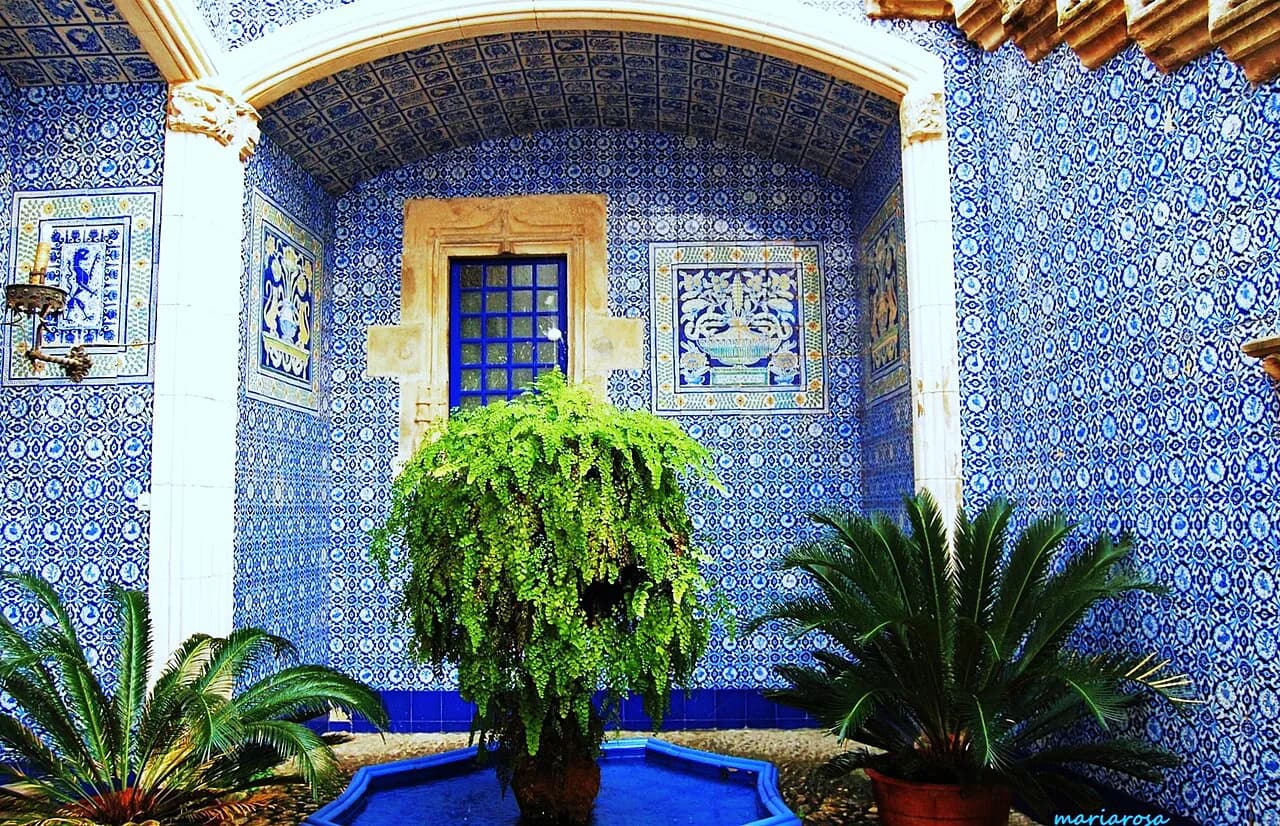
The lanes between the church and the shopping streets are where the town feels most itself: Carrer Parellades runs inland as a commercial spine, Carrer d'en Bosch and Carrer Davallada link it to the waterfront, and the Pati Blau is a small blue courtyard tucked among the houses. The Calle del Pecado, properly Carrer Primer de Maig, is the liveliest of the streets running down to the sea, busiest at night.
The old town on foot: plazas, lanes and courtyards
Start at the Plaça de la Vila, the town's main meeting point where several shopping streets meet. The square is anchored by the Casa Bartomeu Carbonell, known as the Casa del Reloj, a modernista building put up between 1913 and 1915 with a clock tower finished in trencadís mosaic.
From there, follow Carrer Parellades towards the sea and drop down one of the cross lanes when the mood takes you. Carrer d'en Bosch and Carrer Davallada both lead into the tangle of streets below the church, where the whitewashed facades and blue details give the centre its marine character. The Pati Blau, a blue-painted courtyard, is the kind of small find that rewards wandering without a fixed plan.
If you want orientation before exploring, a guided walk of the centre is an efficient way to learn how the lanes connect. It also puts the church, the ramparts and the old fishermen's quarter into context before you start climbing between them.
Sant Bartomeu i Santa Tecla: the church on the rock
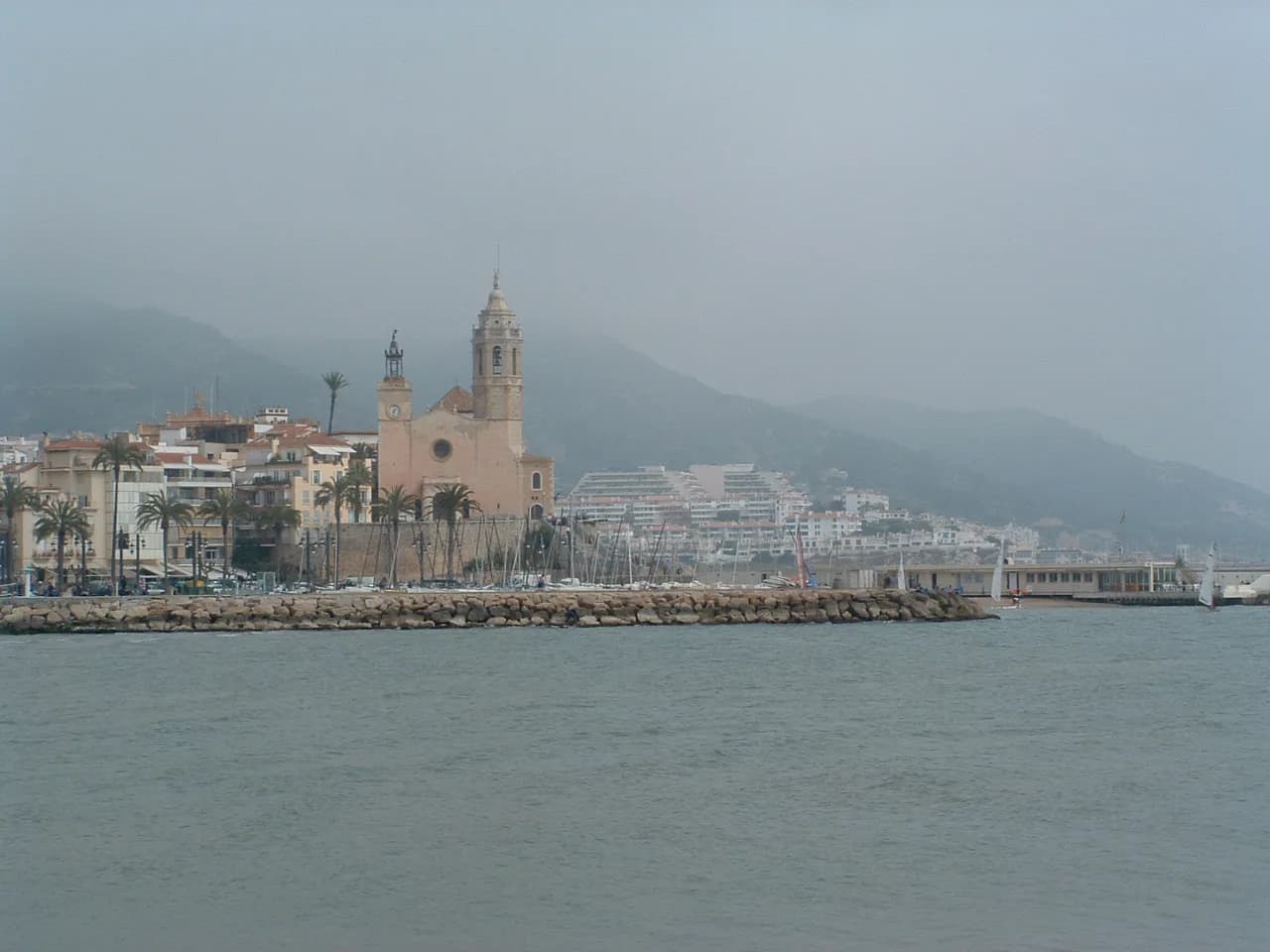
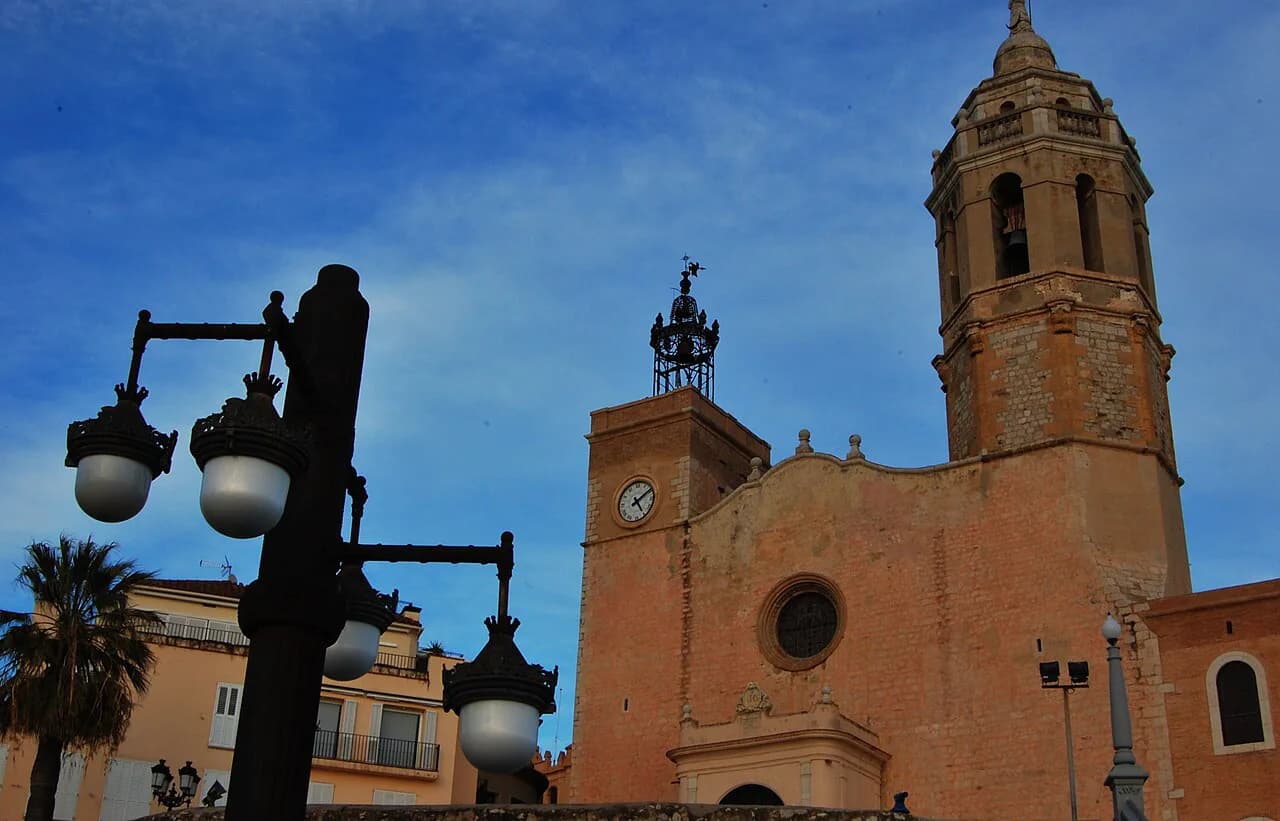
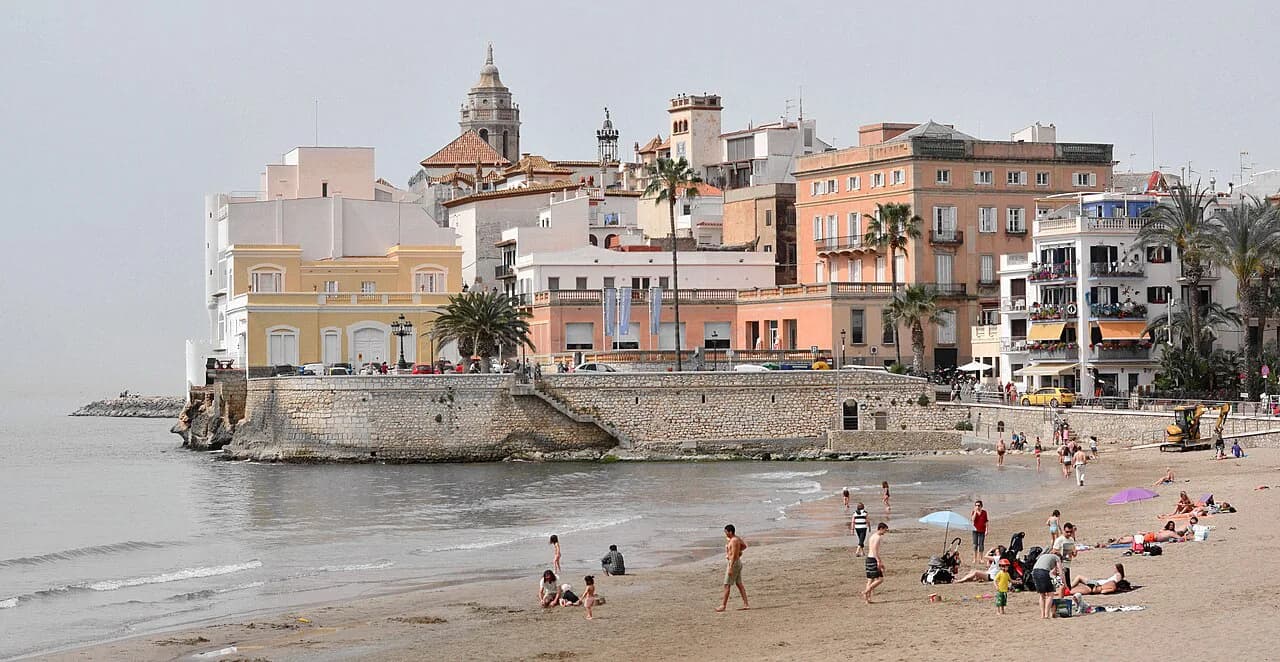
The parish church of Sant Bartomeu i Santa Tecla is the silhouette on every Sitges postcard, set on an asymmetric hill with the sea directly behind it. The present baroque building dates from the seventeenth and eighteenth centuries, and it replaced earlier churches on the same spot.
The climb up the staircase, flanked by lamp posts and old cannons on the Baluard, is short but steep, and the reward is the view back over the promenade and the rooftops. This is a working parish rather than a sightseeing attraction, so treat the steps and the terrace as the main visit and let any look inside fit around services. The old cannon on the Baluard beside the church is part of the town's defensive history and makes a natural pause on the way up.
The Cau Ferrat: Rusiñol's house-studio
The Museu del Cau Ferrat was the home and studio of Santiago Rusiñol, the painter and writer at the centre of Catalan modernisme, and it keeps more than 3,000 pieces largely where he left them. Visiting feels like stepping into a collector's private rooms rather than a conventional gallery, with paintings, ironwork, glass and ceramics crowded together against the sea.
It is the more personal of the two museums and the better pick if you only have time for one. Check the current opening days and ticket prices with the museum before you go, since these change with the season and with renovation work.
The Maricel: palace and museum next door
Next to the Cau Ferrat, the Maricel complex splits into two parts that suit different moods. The Museu Maricel holds collections spanning roughly ten centuries of art, from Romanesque pieces through to modernisme, while the Palau Maricel was the residence of the collector Charles Deering, with the Saló d'Or and a cloister facing the sea.
The museum is the straightforward visit; the Palau opens only on certain dates, so check before you build a day around it. If you have a full afternoon, pairing the Cau Ferrat with the Museu Maricel gives you the artist's world and the collector's world side by side.
Modernista Sitges: the indiano streets near the station
Much of Sitges' modernista architecture was financed by indianos, locals who made fortunes in the Americas, particularly Cuba, and came home to build grand houses. Carrer d'Isla de Cuba, Carrer de Sant Bartomeu and Carrer de Francesc Gumà, all close to the station, are lined with examples, which means you can see them on the walk in from the train rather than saving them for a detour.
The Casa Bartomeu Carbonell, or Casa del Reloj, stands on the Plaça del Cap de la Vila with its clock tower and trencadís detail, and the indiano legacy behind such houses is one of the best-known strands of the town's history. Facundo Bacardí, founder of the rum brand, was born in Sitges before emigrating to Cuba. Look up as you walk: the decorative detail sits on upper floors and towers, not at street level.
The seafront: the Passeig de la Ribera and the urban beaches
The Passeig de la Ribera runs for roughly 2.5 kilometres from one end of town to the other, with urban beaches such as la Ribera, la Fragata and Sant Sebastià along it. It is flat, open and easy, and the modernista facades on the sea side give the walk more interest than a plain promenade.
Use the promenade as the connector between the old town and the beaches rather than a separate outing: walk it in the late afternoon, when the light softens and the day's heat drops. Quieter coves such as Balmins and Aiguadolç lie beyond the main stretch if you want to trade convenience for calm.
Green breathing space: the Hort de Can Falç
At the beginning of Carrer Parellades, on the left, a doorway leads into the Hort de Can Falç, a quiet garden that most visitors walk straight past. It is a useful pause between the lanes and the shops, and in summer it hosts occasional concerts and events.
Treat it as a ten-minute breather rather than a destination, and pair it with a slow pass along the shopping streets of the centre. The boutiques and craft shops in the old town reward browsing if you want a break from monuments.
The Malvasia centre in the old hospital
Sitges has its own sweet wine, malvasia, brought from Greece in antiquity and aged here for years in limited quantities. The Centre d'Interpretació de la Malvasia, set in an old hospital bodega, explains how it is made; go for the local history and craft rather than a vineyard tour.
It suits a wet hour or a slow afternoon when the lanes are crowded, and it is close enough to the old town to slot in without a detour. Check the current visiting arrangements at the door or through the town's tourist information before relying on it.
A sample day that doesn't double back
Arrive from Barcelona in the morning and walk in from the station through the modernista streets, which sets the indiano context before you reach the old town. Drop into the Plaça de la Vila, then follow Carrer Parellades to the lanes below the church, climbing to Sant Bartomeu i Santa Tecla for the view while it is still cool.
Spend the middle of the day in the Cau Ferrat and, if it is open on your dates, the Museu Maricel, then come out onto the Passeig de la Ribera as the heat eases. Finish with the Hort de Can Falç if time allows, and walk back to the station through the lanes rather than retracing the promenade.
How much time Sitges needs
A single full day covers the old town, the church and one or both museums comfortably; add a second if you want unhurried time on the promenade and a look at the modernista streets. The town is small enough that you can cross it on foot between sights, which keeps the day flexible.
If the weather turns or the lanes are choked with day-trippers, the museums absorb an hour or two each, and the seafront gives you somewhere open to walk. Build in slack rather than booking every hour, because the pleasure here is in wandering the streets slowly.
Getting there and getting around
Trains from Barcelona Sants and Passeig de Gràcia reach Sitges in roughly 40 minutes, and the station sits close to the modernista streets and a short walk from the old town. By car you arrive along the C-32 motorway, but the centre itself is compact and best explored on foot.
For the beaches at the edge of town or the Parc Natural del Garraf beyond it, a bicycle or local bus makes more sense than walking in the heat, and a boat trip gives you a different view of the church and the promenade from the water.
Deciding where to start in Sitges
Begin where the town begins: the Plaça de la Vila and the lanes below the church, then the museums and the promenade in the cooler hours. That order gives you the historic centre first and the seafront last, which is the version of Sitges most visitors remember.
If you are arriving from Barcelona, walk in from the station through the modernista streets rather than heading straight for the beach; if you are staying longer, give the park and the quieter coves their own half-day.
Explore more Sitges guides
Sources
Notes for your next Spanish town break
Optional updates to our guides.
You might also like
Continue reading
More guides you'll find useful