Sitges Old Town: A Walking Guide to the Historic Centre
Walk Sitges old town past the town hall, walls and Sant Bartomeu i Santa Tecla, with the Racó de la Calma and Maricel museums on the way.
On this page
Sitges old town fits into roughly half a day, and a full day if you go into two or three of its museums. It sits on a low headland above the seafront in the Garraf comarca, with the parish church on the tip and the town hall and old walls at the inland edge. This guide gives a walking order through it, says which corners deserve your time and how the Indiano mansions around it extend the loop.
Treat the historic centre as a single walk rather than a list of stops. Its streets are short, the gradients mild and the main sights clustered within a few minutes of each other, so you can start at the town hall, drift through the lanes and finish at La Punta without retracing much ground. That shape is what makes Sitges work on a short break.
Where the old town begins and ends
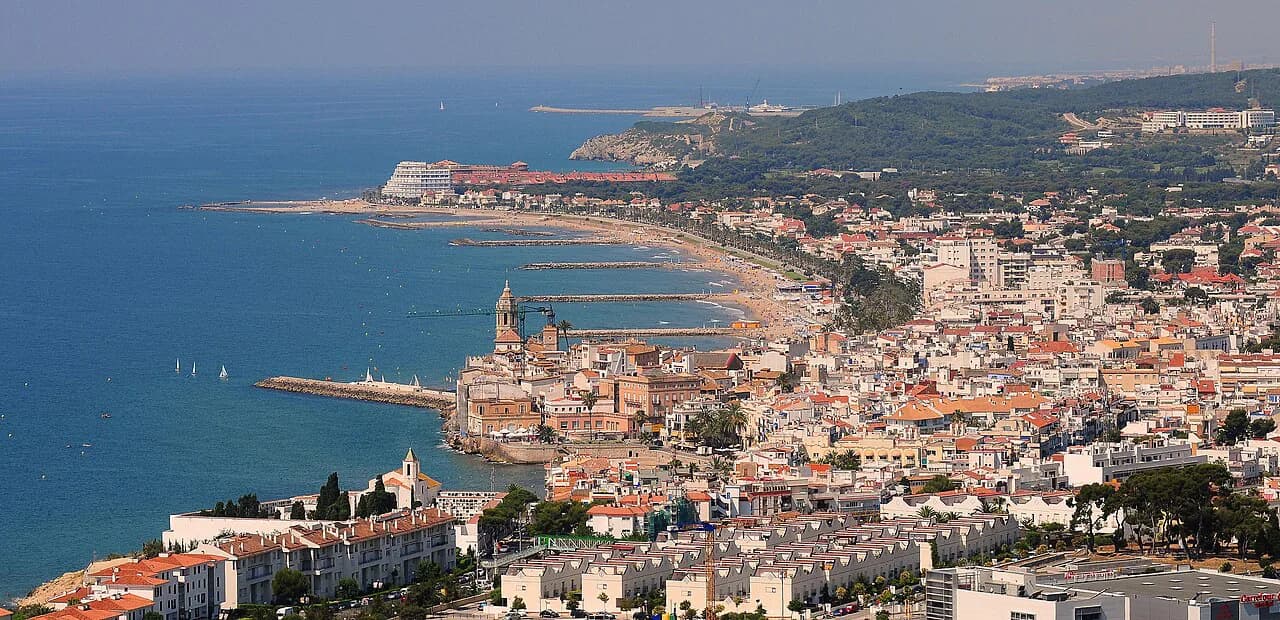
The historic centre occupies the headland between the seafront promenade and the inland edge of the old quarter, in the Garraf comarca south of Barcelona. It is small: you can walk from one side to the other in well under half an hour at an unhurried pace. That compactness is the point, because it lets you cover the core on foot in a morning and spend the afternoon on the museums or on the streets beyond the walls.
Think of the town hall and the old walls as the boundary rather than as a separate sight to tick off. Inside that line you get the lanes, the small squares and the church; outside it, the town spreads towards the station, the beaches and the mansion streets of the Indiano route. Knowing which side of the line you are on makes the walk much easier to follow.
The shape of the historic centre
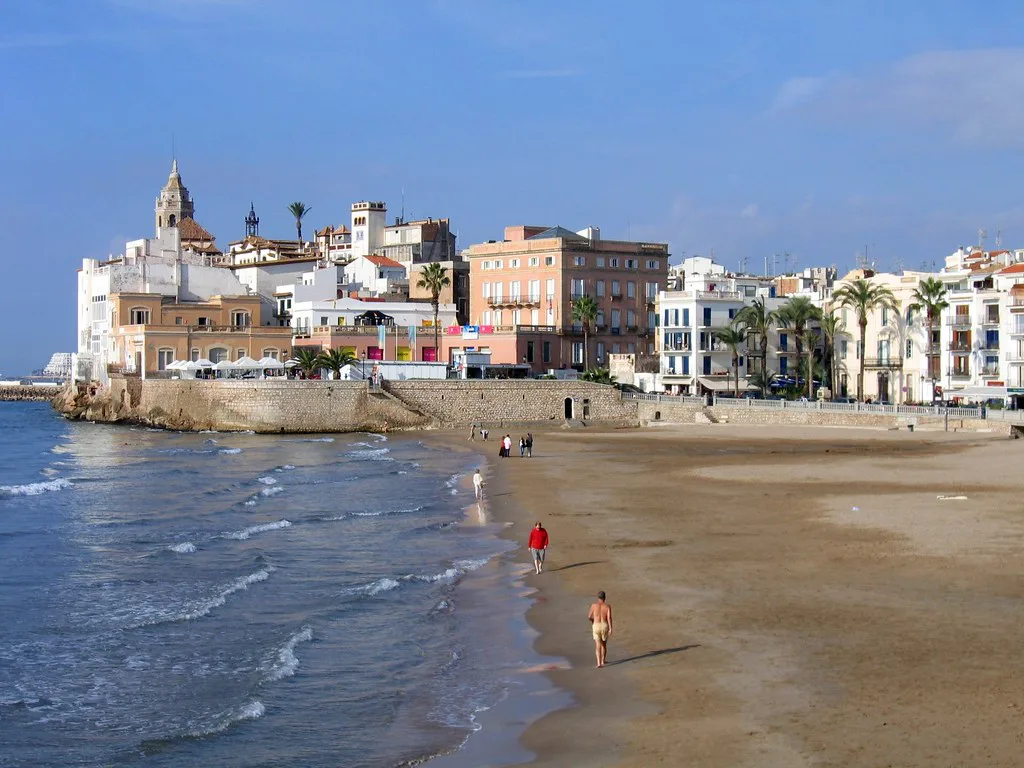
The centre is a web of narrow pedestrian lanes rather than a grid, and getting mildly lost is part of the experience. Aim for the church tower as your landmark: it rises above the rooftops on the seaward point, so any lane heading downhill towards the water will eventually bring you out near it.
Two open spaces break up the lanes and are worth seeking out by name. Plaça de la Vila, in front of the town hall, is the civic heart; the smaller squares closer to the church catch the light in the late afternoon. Carry a Sitges map on your phone, because street signs are small and not every lane is signed at both ends.
If you want to browse rather than just walk, the centre has a dense run of small craft and clothes shops in the lanes behind the seafront, which is the local equivalent of a high street.
Ajuntament and the muralles: the edge of the quarter
The Ajuntament de Sitges, the town hall, is the natural place to start because it anchors the inland side of the old town and sits among the surviving stretches of the muralles, the old walls. What remains is fragmentary but legible: you can see how the walled town once closed itself off from the landward side, with the sea guarding the other three. Walk the line of the wall first, then step inside it.
Do not expect a continuous circuit of intact ramparts; this is a town that has grown over its defences rather than preserved them as a monument. The reward is in reading the street pattern, not in a viewpoint. Give the walls fifteen minutes and move on into the lanes.
Església de Sant Bartomeu i Santa Tecla on La Punta
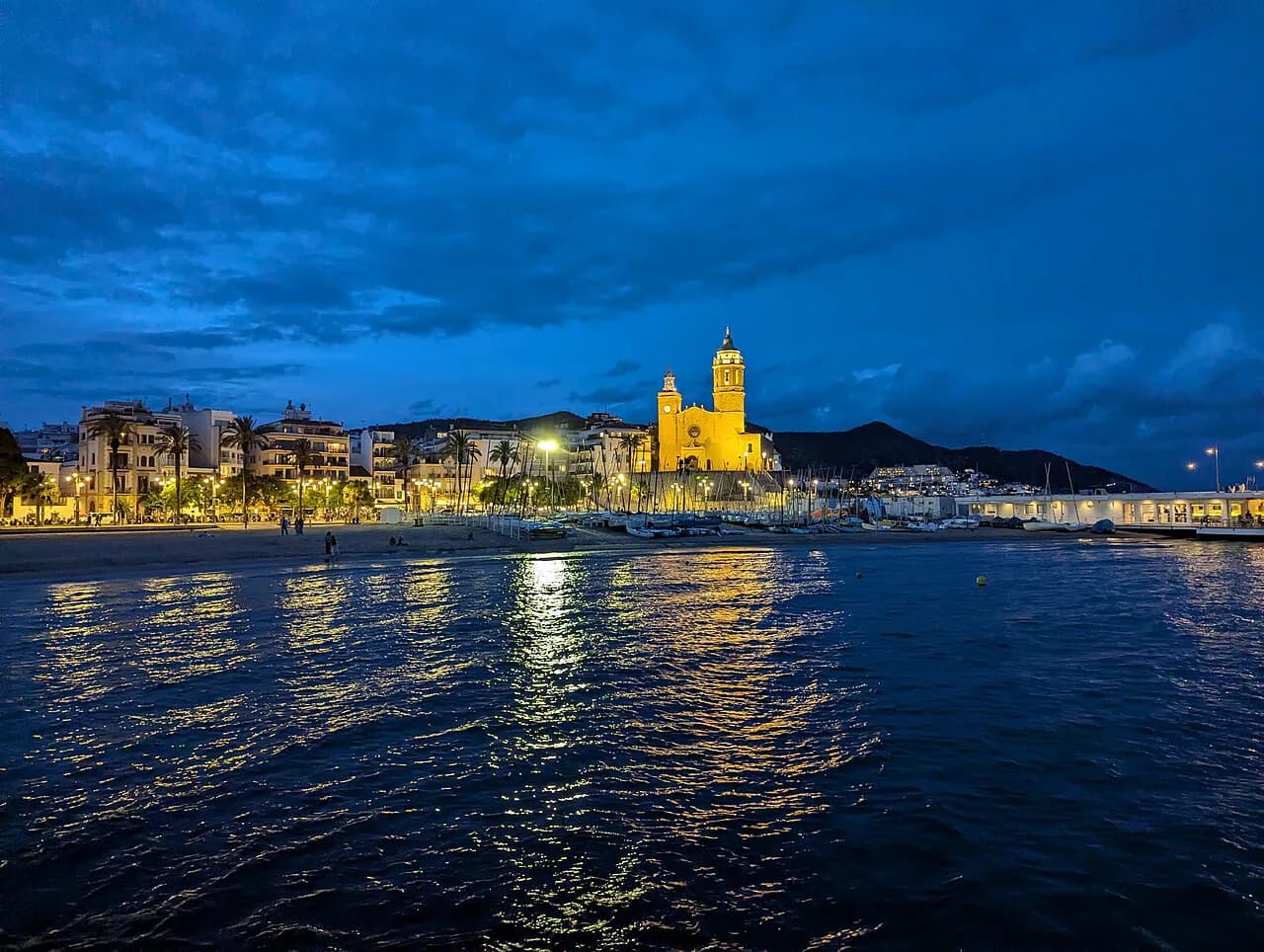
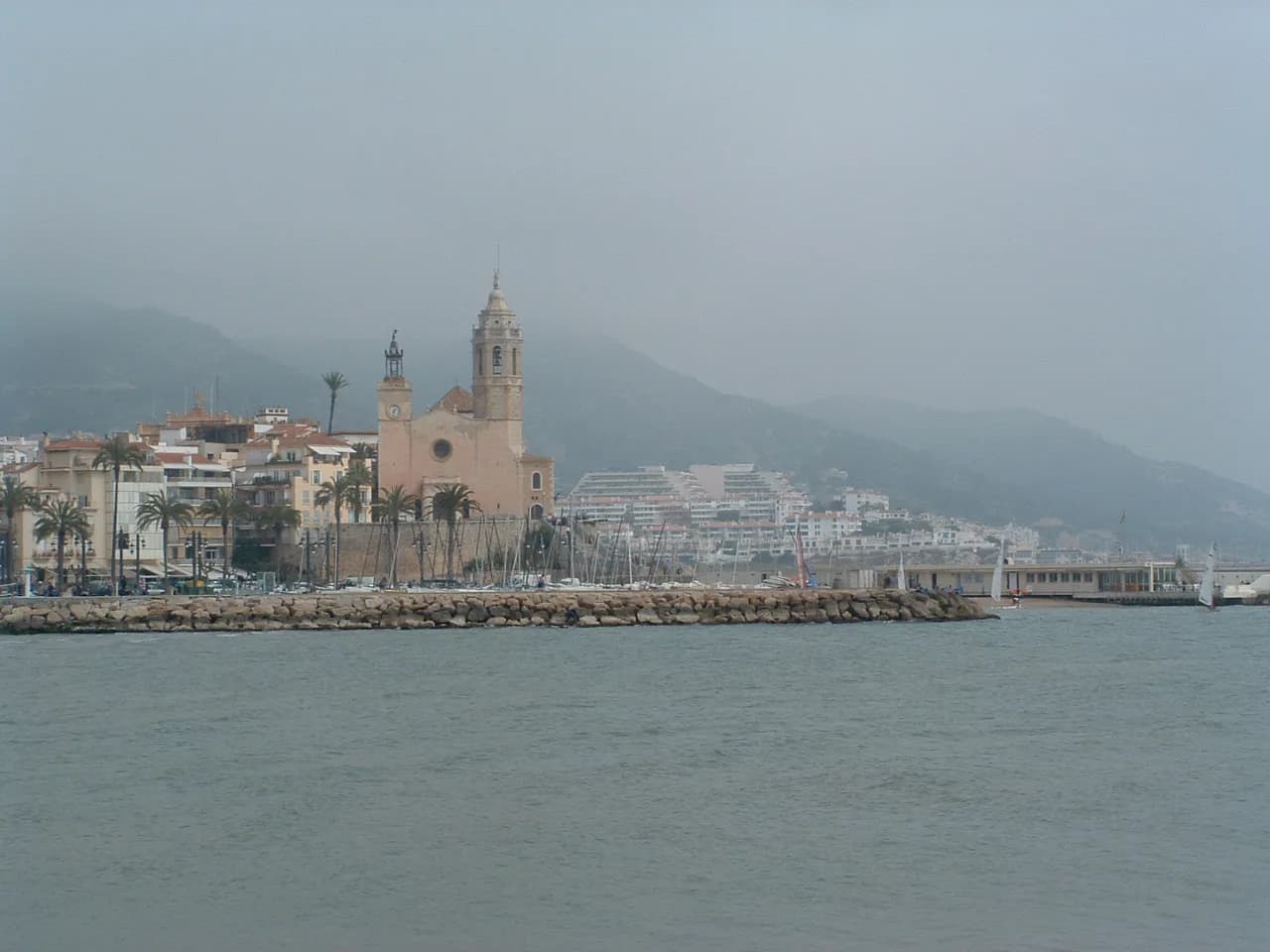
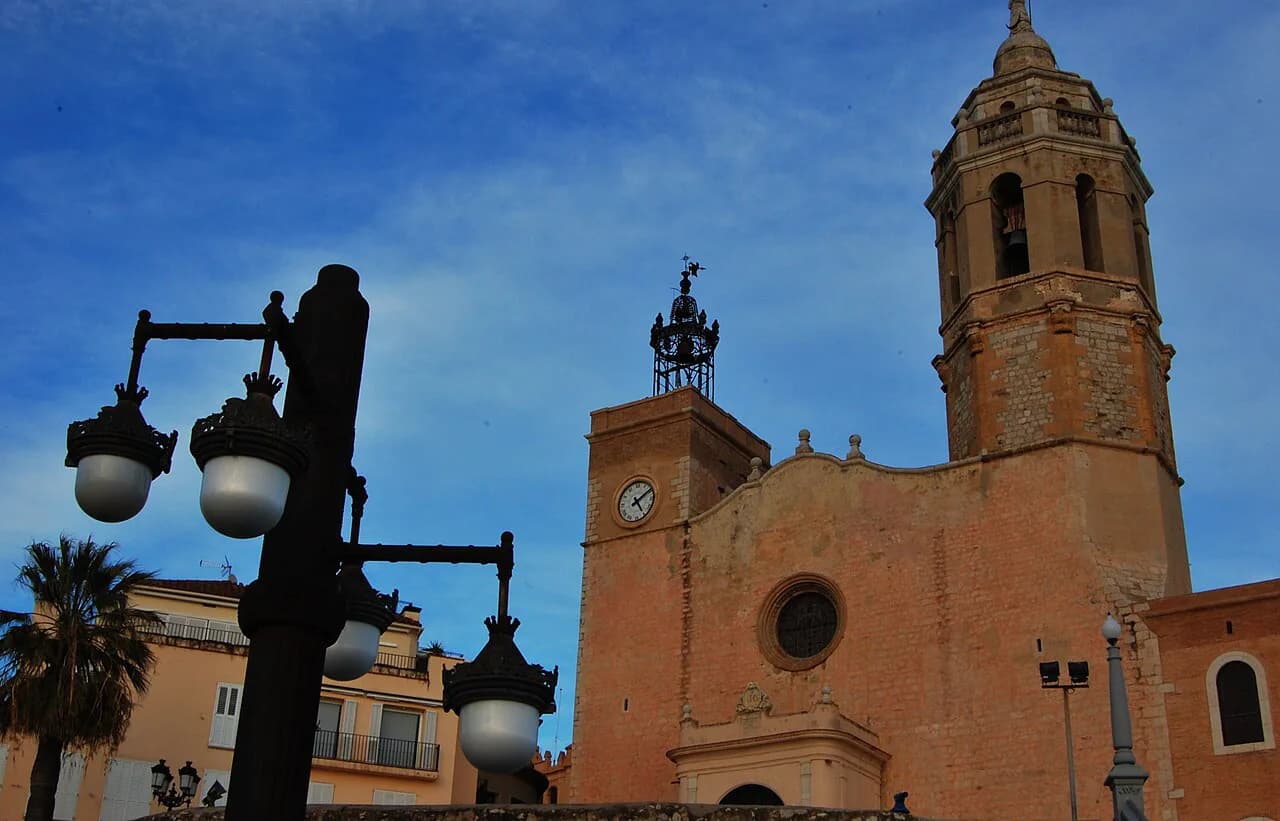
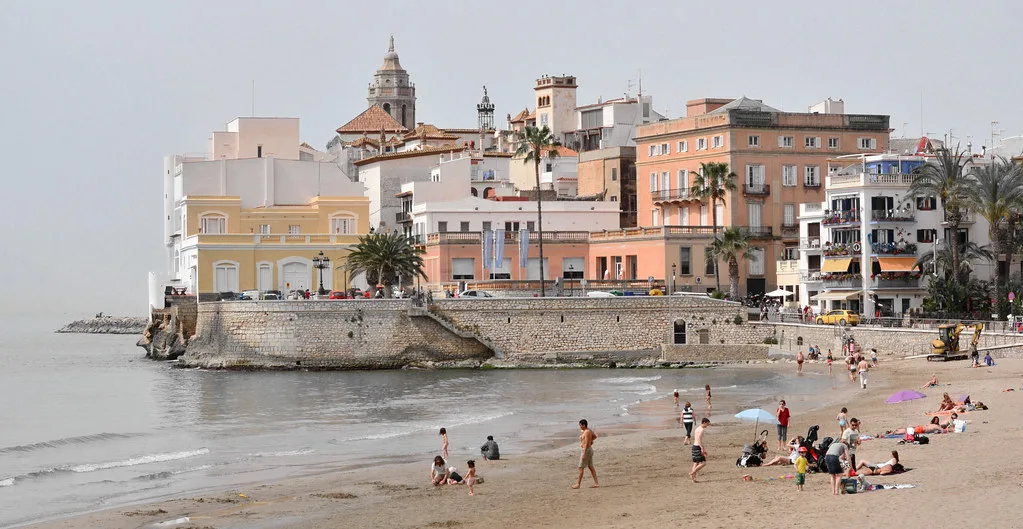
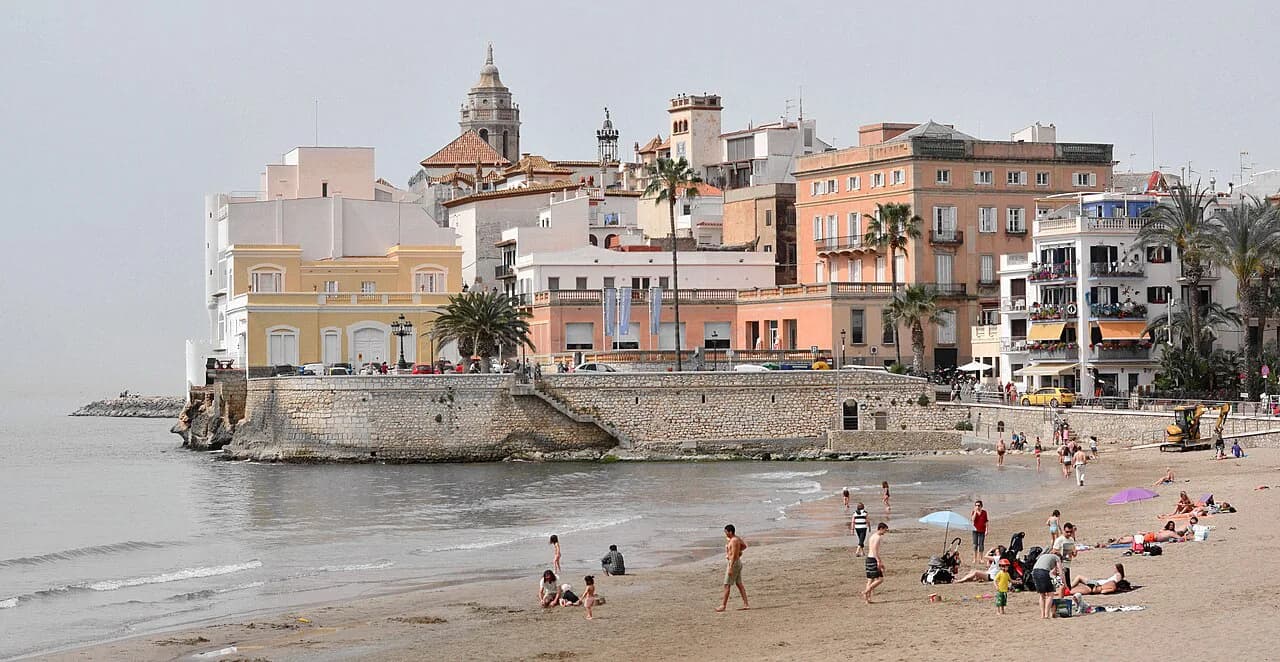
The parish church of Sant Bartomeu i Santa Tecla stands on La Punta, the rocky point at the end of the headland, and it is the image most people carry away from Sitges. Its position above the water gives you the best free viewpoint in the old town, and the surrounding terrace is where the lanes open out. Come here near the end of your walk rather than the start.
Below the point, on the rocks at the foot of La Punta, sits the small Sirena de Sitges, a sculpture tied to a local legend about a mermaid. It is a two-minute detour from the church terrace and easy to miss if you keep your eyes on the horizon. Look down rather than out.
El Racó de la Calma and the Pati Blau
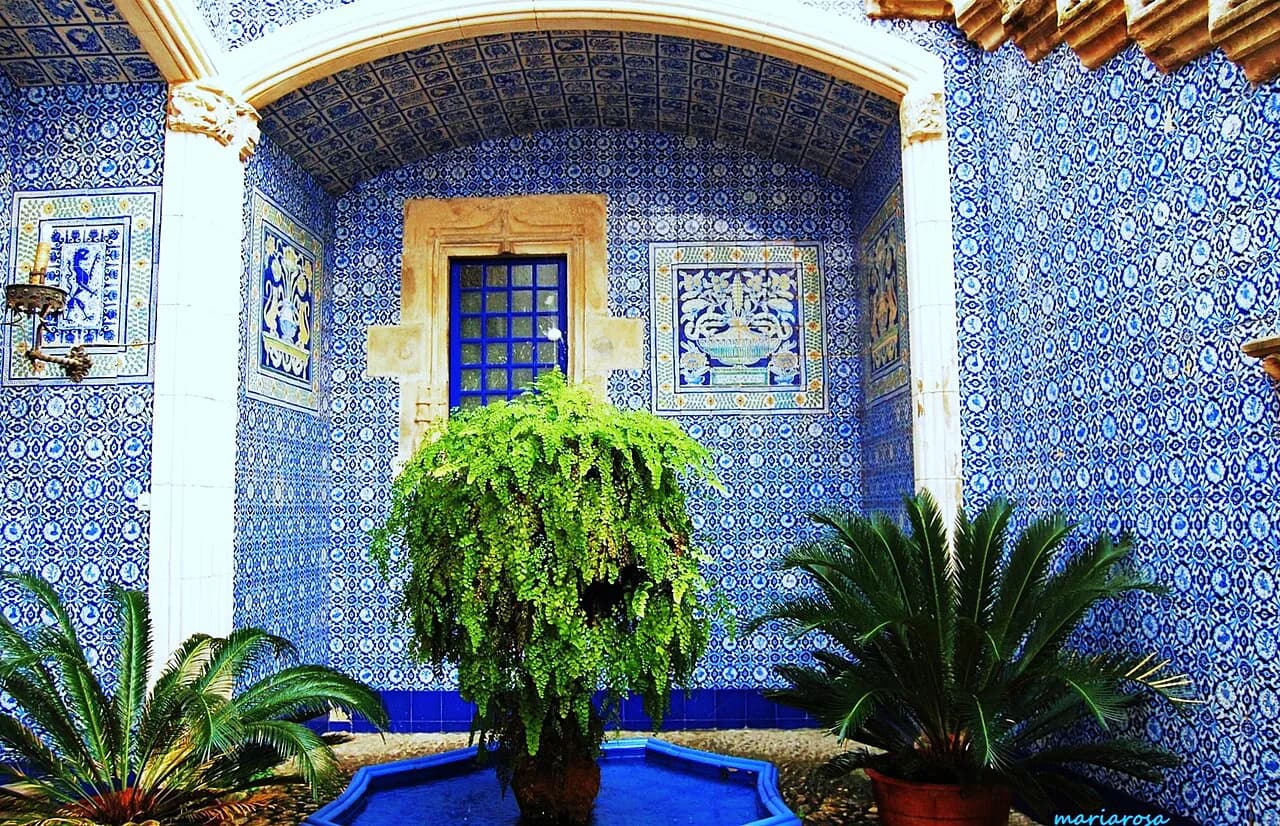
El Racó de la Calma is a small, sheltered corner of the old town that lives up to its name, and the Pati Blau, the blue courtyard, is the colour-soaked space associated with it. These are the kind of corners that photograph well and take five minutes each; the mistake is to treat them as destinations rather than as pauses on the way to the Maricel museums. They sit close enough to the Maricel corner that you can fold them into that stretch of the walk.
Arrive early or late in the day if you want the corners to yourself, because these narrow spots absorb crowds badly.
Cau Ferrat, Museu Maricel and Palau de Maricel: three stops in one corner
The Maricel corner packs three separate visits into a few metres: the Museu del Cau Ferrat, the Museu Maricel and the Palau de Maricel. Cau Ferrat was the home and studio of Santiago Rusiñol, the painter and collector who made Sitges a centre of Catalan Modernisme, and it holds his collections of ironwork, glass and art. The Museu Maricel next door covers Sitges art across a wider span, while the Palau de Maricel is the grander architectural piece of the group.
If time is short, pick one. Cau Ferrat is the most distinctive because the building and the collector's personality are part of the visit; the Maricel museum suits anyone who wants a broader art collection, and the Palau is mainly an architectural stop. All three sit within a couple of minutes of the church, so you can decide on the spot once you see the queues. Timed guided visits to the Palau de Maricel appear on the town's tourism agenda, which is where to confirm days and times.
The wider museum offer in Sitges covers Modernisme, Romanticism and contemporary art, so the Maricel trio is only part of the picture if you have a rainy day to fill. See our guide to the museums in Sitges for the rest.
Fundació Stämpfli and Museu Romàntic Can Llopis
When the Maricel corner is busy, the Fundació Stämpfli and the Museu Romàntic Can Llopis give you art and period interiors away from the main flow. The Stämpfli foundation is the contemporary counterweight to all the Modernisme, while Can Llopis is a Romantic-era house museum that shows how a well-off Sitges family lived. Both are quieter stops and worth slotting in if you have a second day.
Check opening days before you build a day around either one, because small museums in a town this size often keep shorter hours than the big Maricel sites.
La Ruta dels Americans: the Indiano mansions
The Ruta dels Americans, the route of the Indianos, traces the mansions built by Sitges families who made their fortunes in the Americas and came home to build. The houses, from the Torre del Reloj to Villa Remei, are private or institutional buildings rather than open museums, so the route is a walk past facades and gardens, not a series of interiors. That makes it a good alternative loop when the old centre is crowded.
The Indiano story also connects to the Bacardí rum empire, which has Sitges roots, and the mansions are the physical trace of that wealth.
Ermita de Sant Sebastià and Santuari del Vinyet
Two religious sites extend the old-town walk beyond the centre. The Ermita de Sant Sebastià sits on the hill above the town and works as a viewpoint as much as a chapel; the Santuari del Vinyet lies further out and is associated with offerings from seafarers. Both are short add-ons rather than half-day trips.
The Ermita de Sant Sebastià also appears as a concert venue on the town's event programme, so an evening visit may coincide with music.
A walking order for the old town
A sensible order runs inland to seaward: start at the Ajuntament and the line of the muralles, walk the lanes through Plaça de la Vila, pause at the Racó de la Calma and the Pati Blau, take in the Maricel corner, and finish at Sant Bartomeu i Santa Tecla on La Punta with the Sirena below. That gives you the museums when you are fresh and the viewpoints when you want to slow down. Allow three to four hours without museum interiors, and most of a day with two of them.
If the centre is heaving, reverse it: go straight to La Punta early, then work back through the Maricel corner while the crowds are still inland, and leave the town hall and walls for last.
To see the old town from the water, a Sitges boat trip leaves from the beaches below the headland and gives you the church on La Punta from the angle the postcards use. It is a different way to read the town's shape, and it fits neatly at the end of a walking day.
Practicalities: parking, closures and midday heat
Do not drive into the centre. Park outside it, on the edge of town near the Jardines de Terramar or Mestre Manuel Torrents areas, and walk in; the streets inside are narrow, pedestrianised in places and a liability in a car. The same applies to the Indiano route, which is residential.
Catalan churches commonly close to tourists during Mass, and the parish church on La Punta is a working church rather than a monument. Plan around services rather than assuming you can walk in at any hour.
In summer, the inland streets of Sitges bake at midday even with the sea nearby, so walk the old town in the morning or late afternoon and use the middle of the day for the museums.
The town's tourism website lists what is on month by month, including guided visits and open-house events, which is useful for timing a trip but not a substitute for checking individual museum days.
Which corner of Sitges old town to start with
Start at the town hall and the walls, end at La Punta, and put one Maricel museum in the middle. That order uses the old town's shape instead of fighting it, and it leaves the Indiano mansion route as a second loop when the centre fills up.
Confirm museum opening days and any church service closures before you set out, since those are the details most likely to change your plan on the day.
Explore more Sitges guides
Frequently Asked Questions
Do you need a ticket to walk around Sitges old town?
No. The streets, squares, walls and the church terrace on La Punta are public space and free to walk. You pay only if you go into the museums, and each charges separately, so decide which one you want before you arrive.
How long does the old town take to walk?
Three to four hours covers the main streets, the town hall and walls, the Racó de la Calma and the church without going into museums. Add two to three hours if you visit one of the Maricel museums properly.
Is Sitges old town hilly?
Mildly. The lanes rise towards the church on La Punta and the ground is uneven in places, but there are no long climbs. The steepest section is the approach to the church terrace and the hill up to the Ermita de Sant Sebastià.
Sources
Notes for your next Spanish town break
Optional updates to our guides.
You might also like
Continue reading
More guides you'll find useful