
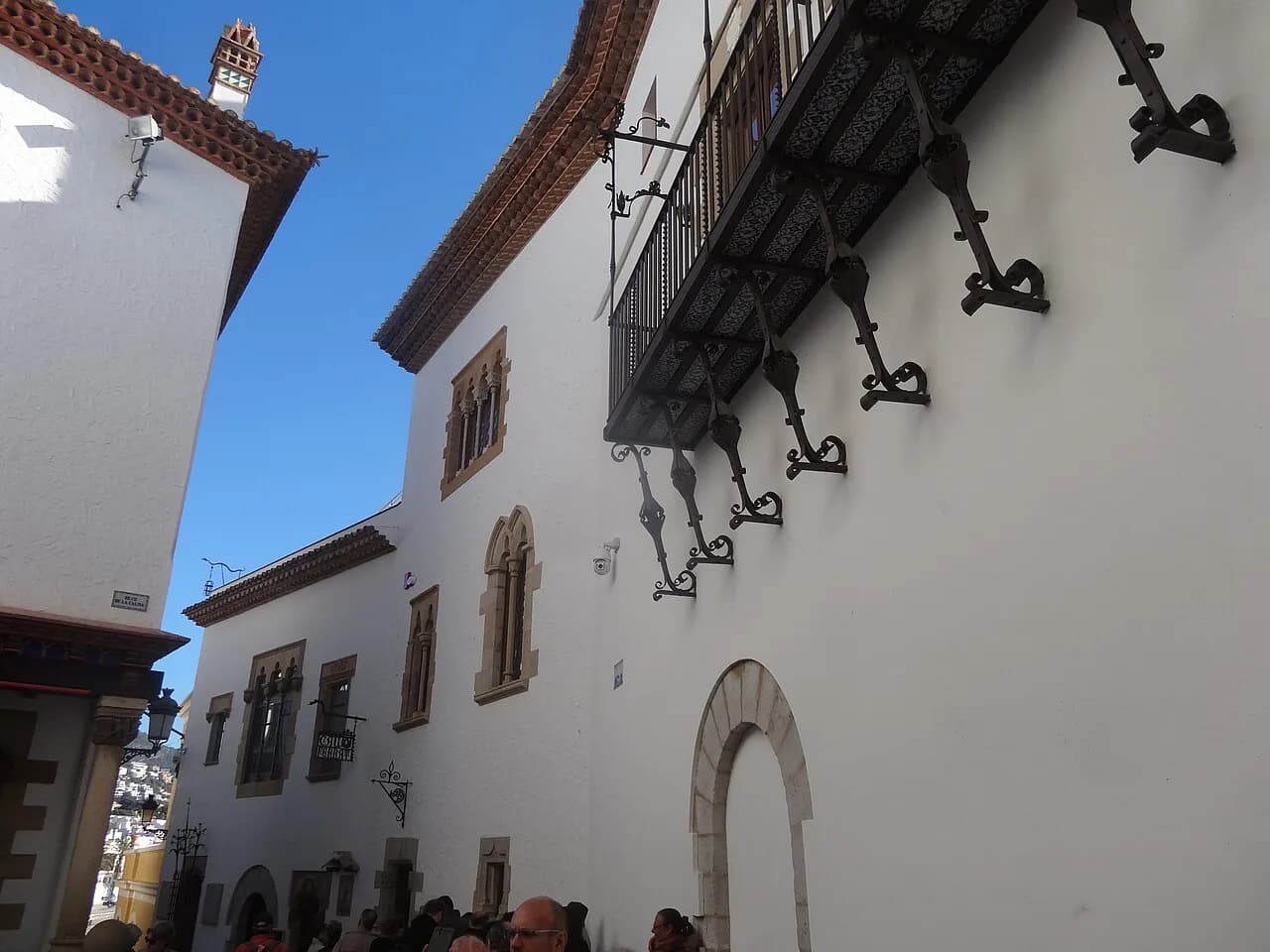
Maricel Museum (Museu de Maricel), Sitges: What to See and How Long It Takes

Allow roughly an hour for the Maricel Museum in Sitges and pair it with the Cau Ferrat next door, which sits in the same seafront complex on the Passeig de la Ribera. The two are separate museums under the Museus de Sitges umbrella, and the Maricel Museum keeps its art in the building known as Maricel de Mar so as not to be confused with the Palau de Maricel, or Maricel de Terra. This guide covers what is inside, how the rooms relate to the Cau Ferrat, and how to slot both into a short break.
Maricel de Mar and Maricel de Terra: two different tickets
The names cause most of the confusion. Maricel de Mar is the museum housed in the seaward part of the complex, while Maricel de Terra is the Palau de Maricel, the noucentista palace inland of it. They are run by the Consorci del Patrimoni de Sitges as distinct spaces, so check which one your ticket covers before you queue.
The Palau de Maricel publishes its own arrangements: entry without a guided tour, from 10:00 to 14:00, at 12 EUR. That is the palace, not the museum, and the short morning window is the practical reason to put the Palau early in the day rather than leaving it for late afternoon.

Where the complex sits in Sitges
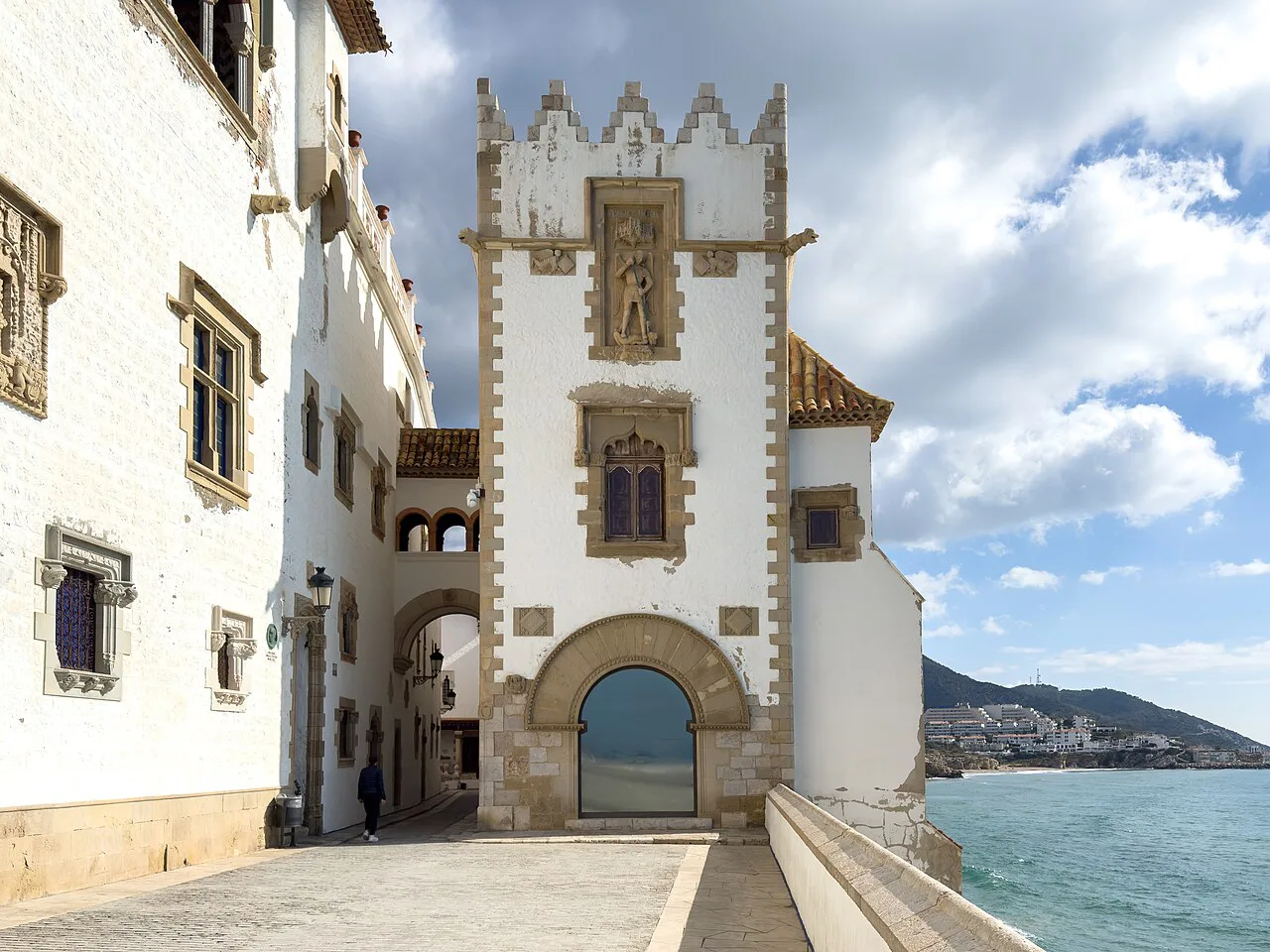
The Maricel complex occupies the seafront strip between the old town and the church headland, on the Passeig de la Ribera. From Sitges station the walk is downhill and flat once you reach the centre, passing through the narrow streets of the old town before the sea opens up.
Because the museums, the Racó de la Calma and the church sit within a few minutes of each other, one morning covers the whole cluster without any transport. Wear shoes that cope with cobbles and steps, since the lanes between the museum and the church rise and fall.
What is inside the Maricel Museum
Expect a collection built around Sitges' own art history rather than a national gallery sweep: paintings, drawings and sculpture tied to the town's late nineteenth and early twentieth-century artistic circles. The Maricel complex was assembled as an artistic and monumental ensemble, and the museum functions as the indoor counterpart to the terraces and cloister outside.
Read the room labels rather than rushing through; the interest lies in how Sitges artists worked and who collected them, which the displays set out collection by collection. Photography rules and any temporary exhibition charge are posted at reception.

How the museum relates to the Cau Ferrat
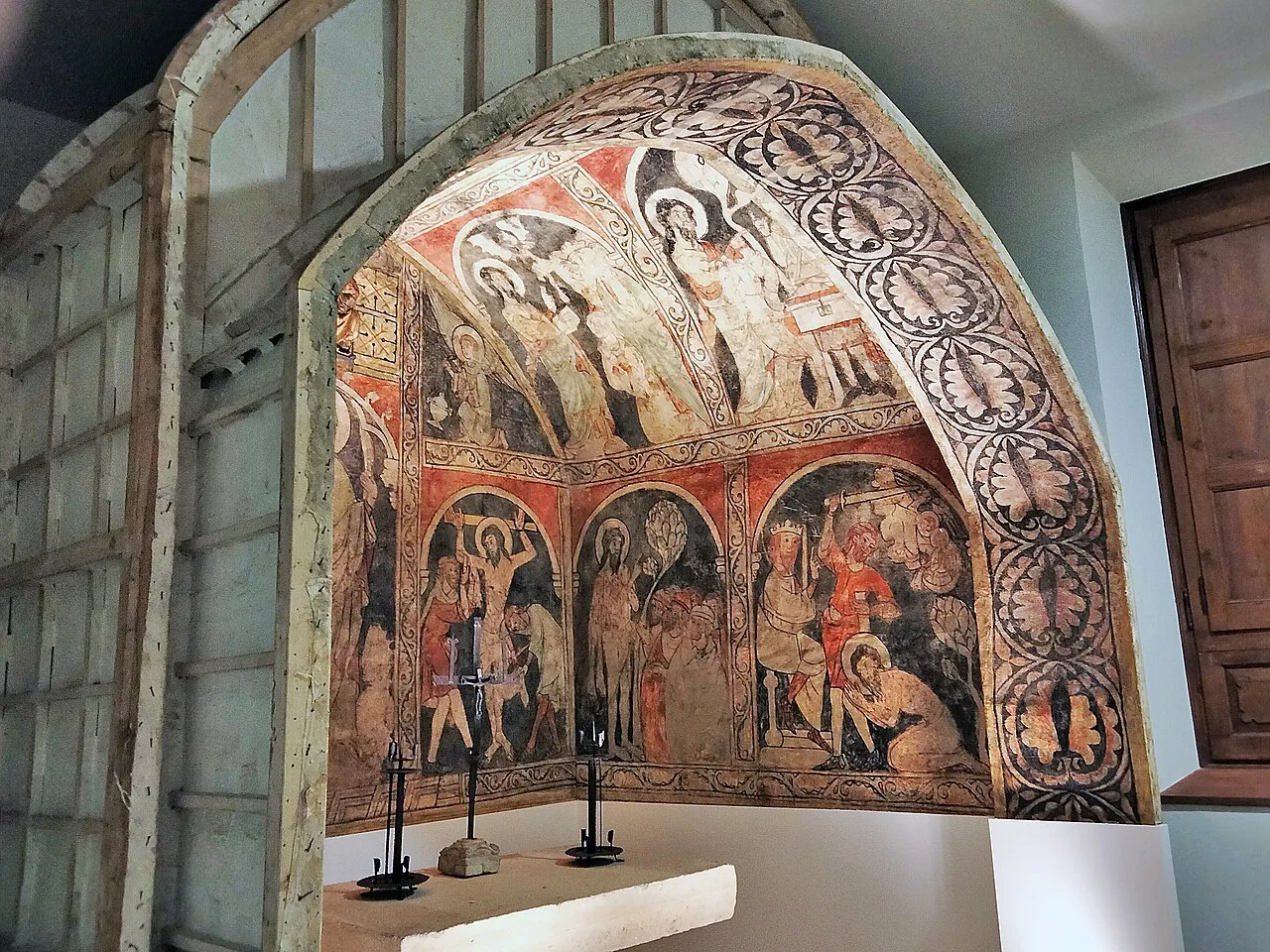
The Cau Ferrat was founded in 1893 by Santiago Rusiñol as a house and studio and opened as a public museum in 1933, keeping the founder's artistic spirit. Its collections mix the antiques Rusiñol gathered, including painting, forged iron, ceramics, glass, archaeology, sculpture and furniture, with modern painting, drawing and sculpture by Rusiñol, Casas, Picasso, Pichot, Zuloaga, Regoyos, Clarasó, Hugué and Gargallo among others.
The museum's own material calls the Cau Ferrat the first and essential visit among the Sitges museums, which is a fair guide if you only have time for one. The building was reformed between 2010 and 2014, restoring its structure and original heritage elements, so the setting is as much the attraction as the objects.
Which to do first on a short visit
Do the Cau Ferrat first if you want the house-museum atmosphere and Rusiñol's own story, then move into the Maricel Museum for the broader collection. Reverse the order if you prefer context before personality, since the museum frames the town's art scene that the Cau Ferrat then embodies in one man's rooms.
Either way, leave the Palau for its morning slot, because the palace closes at 14:00 while the two museums can be taken later. That sequencing avoids finding yourself at the Palau door after it has shut.
Inside the Palau de Maricel
The Palau is valued for its interiors: the Saló d'Or, the Saló Blau, the Sala Capella, the Sala Vaixells, the terraces and the cloister, whose panorama looks straight out over the Mediterranean. The style is markedly noucentista, and each room carries its own decoration rather than a uniform scheme.
Entry is without a guided tour during the published 10:00 to 14:00 window, so you move through at your own pace and the visit is short. Budget around forty-five minutes and treat the cloister terrace as the finish.
Tickets, opening hours and what to verify
The Maricel Museum's admission prices, opening hours, closing days and any free-entry periods are published by Museus de Sitges with its ticketing pages, and combined tickets covering the Cau Ferrat and Maricel are sold there too. Check the day you plan to go, since the two museums do not necessarily share the Palau's timetable.
If you are planning around the Palau, the published 10:00 to 14:00 window and 12 EUR entry are the figures to work from, with entry without a guided tour included. Confirm the day's arrangements at reception when you arrive in the complex.
Summer night visits to the Cau Ferrat and Maricel
Museus de Sitges has run guided evening visits to the Cau Ferrat and the Maricel Museum in summer, under the Noches azules de verano banner. In 2017 these ran every Wednesday between 12 July and 22 August, from 22:00 to 24:00, in Catalan, Spanish and English, with groups capped at twenty people and tickets at 12 EUR.
Treat that as a past programme format rather than a fixture: the 2017 dates and price are history, and the current summer calendar, languages and capacity come from the museum's own listings. Evening visits end with a glass of cava at the Racó de la Calma, which is the small terrace corner beside the complex.
Nearby after the museum
The Racó de la Calma sits immediately beside the Maricel complex and makes a natural stop between the museum and the church. From there the parish church of Sant Bartomeu i Santa Tecla crowns the headland, and the seafront promenade runs back along the town's beaches.
If you want a quieter hour afterwards, the Terramar Gardens lie behind the town's eastern seafront and suit a slow walk rather than a sightseeing stop. The Museu Romàntic Can Llopis, inland in the old town, is the other collection worth knowing about if the Maricel leaves you wanting more period interiors.
Maricel de Mar or Maricel de Terra: which do you book?
Book the Maricel Museum if you want the art collection and the Cau Ferrat pairing; book the Palau if you want decorated noucentista rooms and the cloister terrace in a short morning window. Doing both is realistic in a day if you start at the Palau before 14:00 and take the museums afterwards.
Frequently Asked Questions
Is the Maricel Museum the same as the Palau de Maricel?
No. The Maricel Museum, or Maricel de Mar, is the art museum in the seaward part of the complex. The Palau de Maricel, or Maricel de Terra, is the separate noucentista palace with its Saló d'Or, Saló Blau and cloister terrace, and it has its own ticket and opening window.
How long should I allow for the Maricel Museum?
Plan around an hour for the museum itself and add the Cau Ferrat next door if you want both. The Palau needs roughly forty-five minutes and only opens in the morning, so it fits best as the first stop of the day.
Can I visit the Maricel Museum in the evening?
Museus de Sitges has run summer guided night visits to the Cau Ferrat and the Maricel Museum, with the 2017 edition on Wednesdays from 22:00 to 24:00. Whether evening visits run in a given summer, and on which days, is set out in the museum's own seasonal programme.