
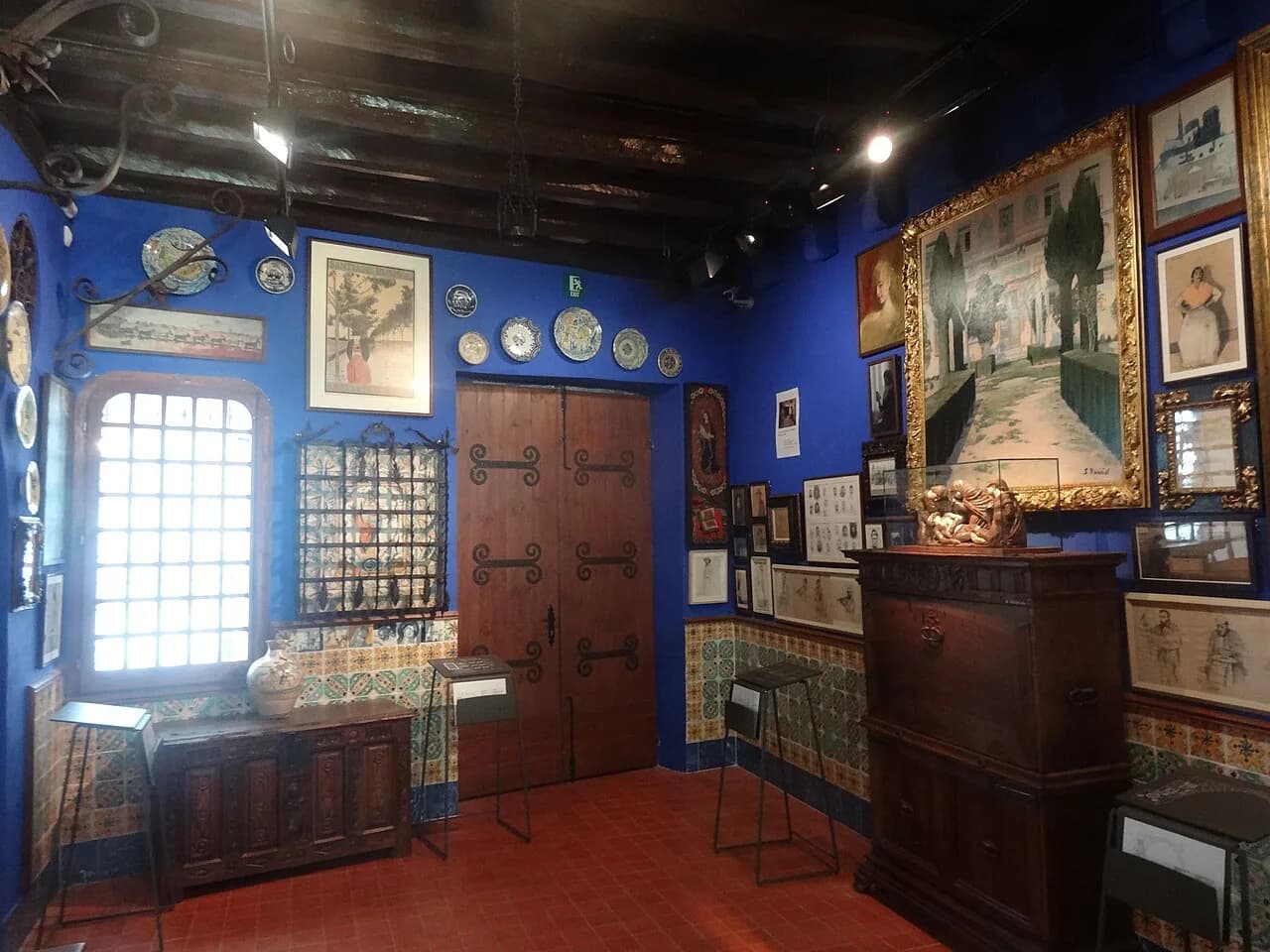
Cau Ferrat Museum in Sitges: Rusiñol's House and Studio

Cau Ferrat is the Sitges seafront house and studio where the painter Santiago Rusiñol lived and worked, now run as a house-museum of his own art and the objects he collected. The visit is compact and personal rather than encyclopaedic: you are reading one artist's taste, room by room, in the building he shaped for it. This guide covers where the museum sits, how to reach it, what the main collections hold and how to pair it with the Maricel complex next door.
Anyone building a short break around Sitges can treat Cau Ferrat as the anchor of a seafront morning and use the wider Sitges Attractions: 5 Visitor Guides to line up the rest of the town. The museum rewards an hour of unhurried looking rather than a rushed circuit.
What Cau Ferrat is
Cau Ferrat was the home and studio of Santiago Rusiñol, a leading figure of Catalan Modernism who made Sitges his base and gave the house its name. Rusiñol assembled the collection himself, choosing paintings, drawings, ironwork, ceramics and glass that reflected his own enthusiasms rather than forming a survey of Catalan art. That personal logic is the reason to come: the rooms read as a collector's house, not a neutral gallery.
The museum is part of the Museus de Sitges group, which runs the Cau Ferrat Museum, the Maricel Museum, the Romantic Museum, the Palau de Maricel and the Fundació Stämpfli. Buy your ticket through the Museus de Sitges page, where the current options and any combined admission are set out.
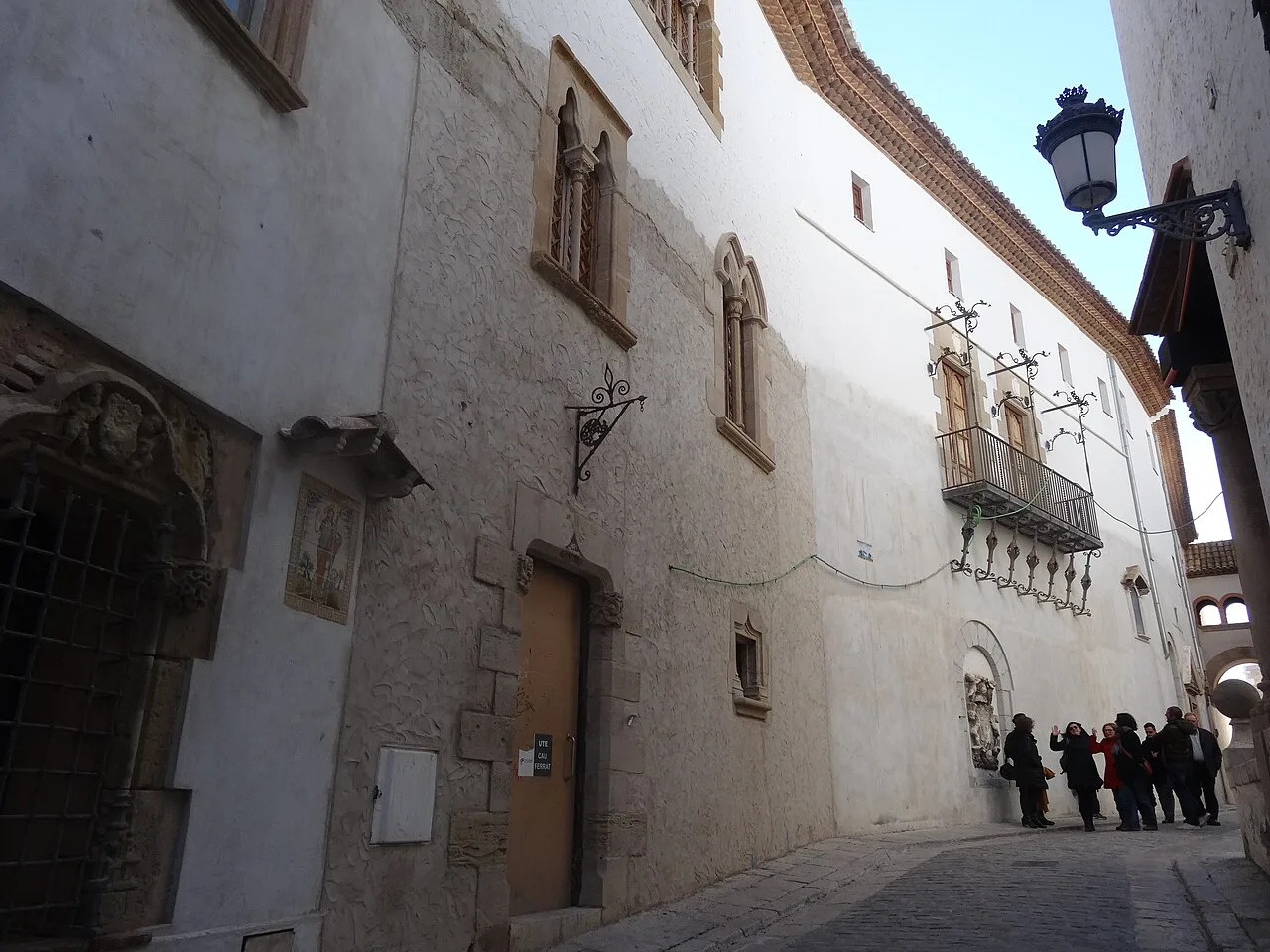

Where Cau Ferrat sits in Sitges
The house stands on the seafront by Sant Sebastià beach, one of Sitges' most popular stretches of sand, a short walk from the parish church. Arriving along the promenade, you see the museum and the church tower in the same view, which makes the seafront the natural approach.
Sitges itself is a compact coastal town in Catalonia, south-west of Barcelona along the coast. The old town, the seafront and the station all sit within a small area, so Cau Ferrat fits easily into a morning or afternoon without a bus or taxi.

How to reach Cau Ferrat
Sitges is connected to Barcelona by rail, a straightforward run down the coast that makes the town practical as a day out or a short break base. From the station, the seafront and the museum are a walk through the old town rather than a journey, so most visitors arrive on foot. Check current train times with the operator before you set out, as the timetable is the one thing worth confirming in advance.
If you are already in Sitges, aim for the seafront by Sant Sebastià beach and follow the promenade until you reach the museum and the parish church. The church tower is a reliable landmark for finding your way along this stretch of coast.
What to see inside: Rusiñol's own work
The core of the collection is Rusiñol's own painting and drawing, shown in the rooms he lived and worked in. Much of what hangs here was made by the artist himself, which gives the house its coherence: you are seeing the work in the setting it was chosen for. Allow time to read the labels, because the interest lies in how the pictures sit alongside the objects he collected.
Other Catalan artists of the period also appear in the collection, including Ramon Casas and Pablo Picasso, alongside pieces Rusiñol acquired by artists he admired. Treat these as part of a personal hang rather than a greatest-hits display, and the rooms make more sense.
The ironwork, ceramics and glass collections
Rusiñol's collecting taste runs through the house: ironwork, furniture, sculpture and ceramics are spread across the rooms, with much of the ceramic material concentrated on the ground floor. Some of the finest pieces are easy to walk past because they read as furnishing rather than exhibits, so slow down in the ground-floor rooms.
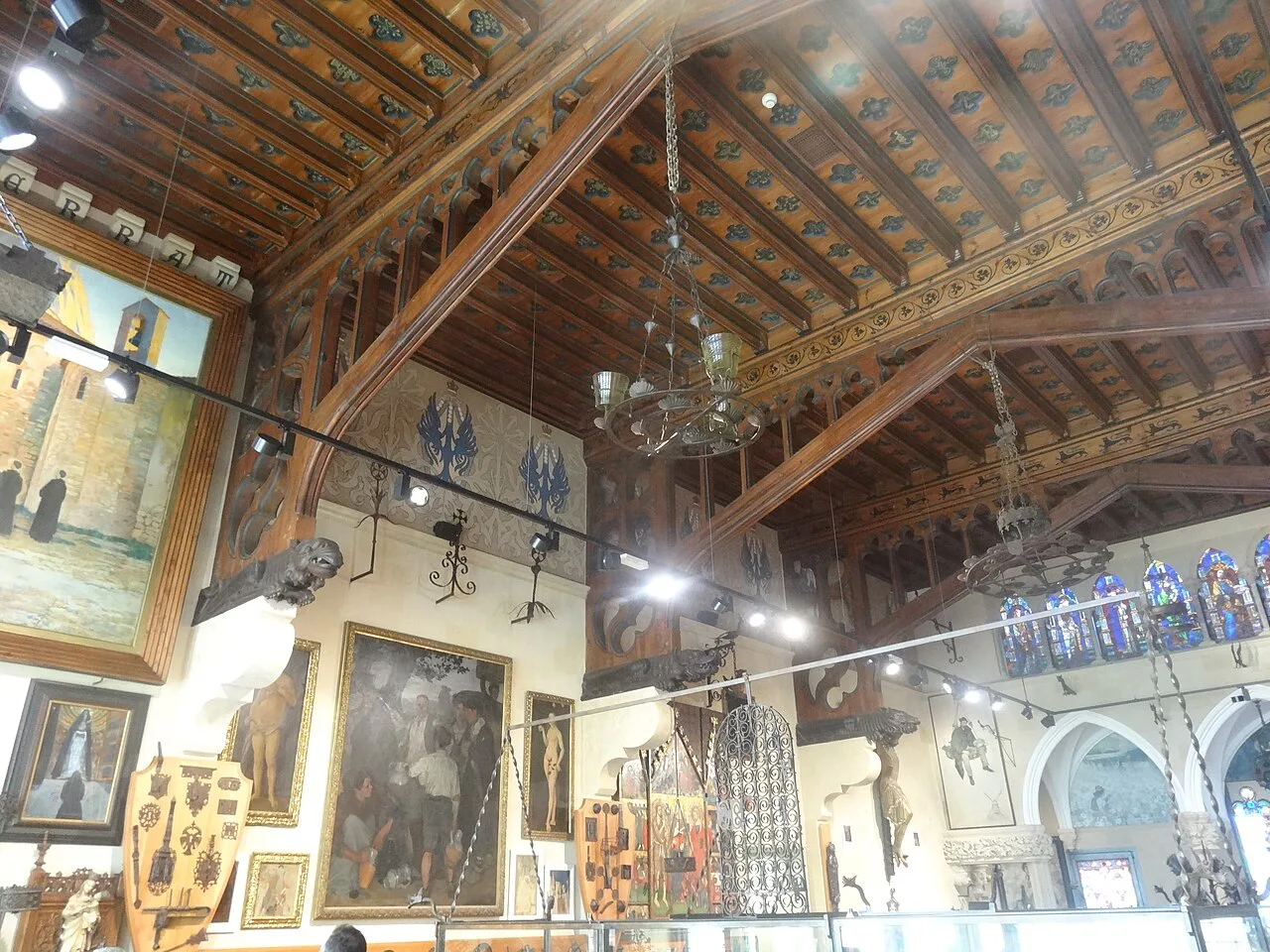
The glassware is the largest single group, with more than 400 pieces gathered by Rusiñol and divided between antique glass and modern glassware. If you have limited time, this is the collection to prioritise after the paintings, since it is the clearest expression of his collecting instincts.
The building and how Rusiñol shaped it
Rusiñol reshaped the house in the 1890s, buying the adjoining property in 1894 and incorporating it so the building took its present form. He used the house to stage the Festa Modernista, the Modernist festival he built around his own collection and circle, including a celebration tied to two El Greco paintings he had acquired in France. That history explains why the rooms feel staged as a statement about art, not simply as a home.
The result is a building where the architecture, the hang and the collection are hard to separate, which is exactly the point of a visit. Look at the way rooms frame the sea and the light, because the setting is part of what Rusiñol was assembling.
How long to allow and how to pair it with Maricel
Give Cau Ferrat about an hour, or ninety minutes if you read the labels and spend time with the glass. It is a house-museum rather than a large gallery, so the risk is rushing, not running out of things to see. A sensible pattern is Cau Ferrat first, then the Maricel Museum nearby, which lets you compare Rusiñol's own collection with the wider Maricel holdings.
The Maricel Museum and the Palau de Maricel are both part of the Museus de Sitges group, so a visit can combine naturally with Cau Ferrat. Whether one ticket covers more than one site depends on the current Museus de Sitges offer, which is set out on the booking page rather than assumed here.
Opening hours and closures
Cau Ferrat keeps seasonal hours and closes on Mondays, with shorter winter days and longer summer opening. The published pattern runs Tuesday to Sunday from 10am to 5pm in January, February, March, November and December, with Monday closed. Treat those times as the published schedule and confirm them for your dates before travelling.
Because the museum is part of a group with several sites, closures and seasonal changes can affect one building rather than all of them. Check the day's opening for Cau Ferrat specifically rather than assuming the other Sitges museums follow the same pattern.
Tickets and booking
Tickets are sold through the Museus de Sitges booking page, which lists the current admission options for Cau Ferrat and the other museums in the group. Prices and any reduced or combined rates are shown there, so that is the place to check before you travel rather than relying on older figures.
Check the Museus de Sitges booking page for the current ticket options before you travel, since prices and any reduced or combined rates are shown there. If you plan to see the Maricel Museum as well, look at the combined options in the same place.
Nearby after your visit
The parish church of Sant Bartomeu i Santa Tecla stands on the same seafront stretch, a landmark visible from the promenade and an easy next stop after the museum. The old town streets behind it reward a slow wander once you have finished inside.
Further along the coast, the Terramar Gardens give a quieter change of scene if you want a second stop away from the seafront bustle. The Museu Romàntic Can Llopis offers another house-museum in town if Rusiñol's collecting has left you wanting more of the same period.
Practical points for the seafront
Sitges is a coastal town, and the seafront is hottest and busiest around midday in summer, so an earlier museum slot leaves the promenade for the cooler hours.
The museum visit itself is indoors, which makes it a sensible choice when the sun is at its strongest. Keep the seafront walk for the start or end of the day and use the middle hours for the collection.
Should Cau Ferrat be your first stop in Sitges?
Yes, if you want one Sitges visit that explains the town's artistic identity in a single building. Cau Ferrat is compact, personal and tied to the seafront, and it pairs naturally with the Maricel Museum in the same block. Build the rest of your Sitges itinerary from the Sitges Attractions: 5 Visitor Guides once the museum is booked.
Frequently Asked Questions
Do I need to book Cau Ferrat in advance?
The Museus de Sitges ticket page is the place to check current admission options and any combined tickets for the other Sitges museums; prices and opening hours are set out there, so confirm them before you travel.
How long does a visit to Cau Ferrat take?
Most visitors need about an hour, or ninety minutes if they read the labels and spend time with the glass collection. It is a house-museum, so the visit is short but dense rather than spread over several floors of galleries.
Is Cau Ferrat suitable for the hottest part of the day?
It is an indoor museum, so it works well when the seafront is at its hottest around midday in summer. Pair it with an early or late promenade walk and keep the middle hours for the collection.