Zaragoza Old Town: What to See in the Casco Histórico
Zaragoza's old town packs the Basílica del Pilar, La Seo, the Aljafería and Roman walls into a walkable core. Here is how the Casco Histórico is laid out.
On this page
Zaragoza's old town, the Casco Histórico, fits its headline sights into one compact core: the Plaza del Pilar with the Basílica del Pilar and La Seo, the Roman walls just beyond, and the Aljafería as a separate cluster beyond the old perimeter. Plan the quarter as a half-day on foot and the palace as its own stop, because it sits apart from the centre. This guide maps the streets and barrios, gives ticket prices and opening hours in euros, and flags the days and hours that trip up most visitors.
What the Casco Histórico covers and how it is laid out
The historic quarter is not one square but five barrios knit together: San Pablo, El Gancho, San Miguel, Tenerías and La Magdalena, the last also known as El Gallo. Around 46,000 people live inside it, so the old town is a working neighbourhood rather than a museum set. Treat it as a district of streets to cross, not a single plaza to tick off.
Local writers describe it as the second-largest historic centre in Spain, which explains why a single stroll does not cover it. The Plaza del Pilar anchors the southern edge, the Mercado Central area sits west of the Roman core, and the Aljafería lies beyond the old perimeter. Grouping stops by barrio saves the backtracking that a single linear route through Zaragoza creates.
Start at the Plaza del Pilar: the Basílica, La Seo and La Lonja
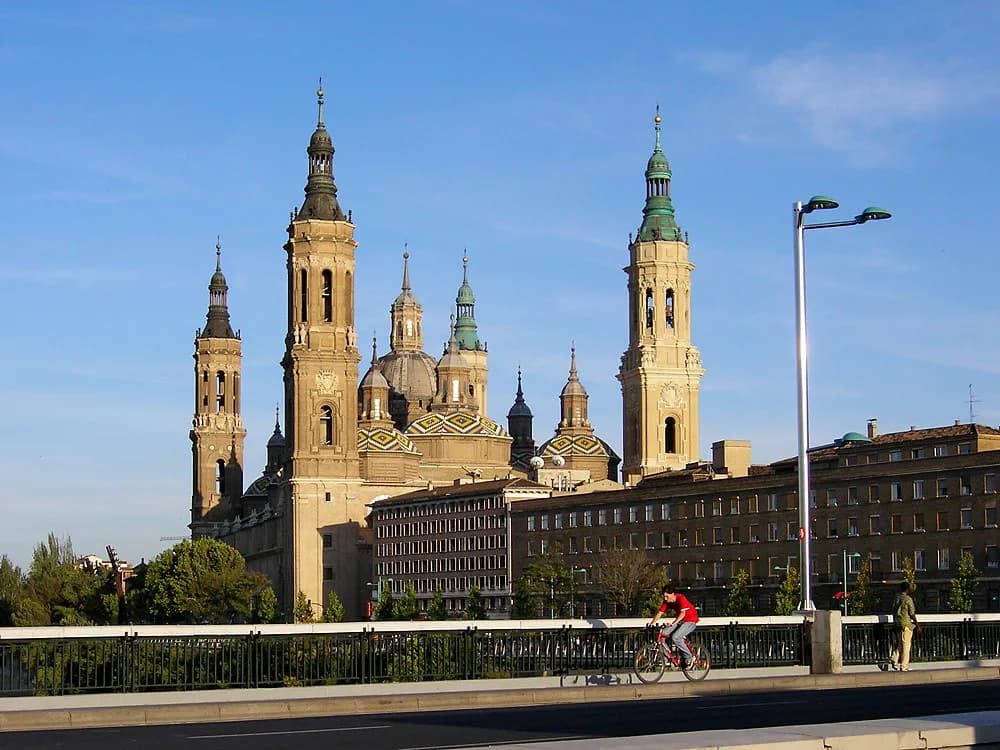
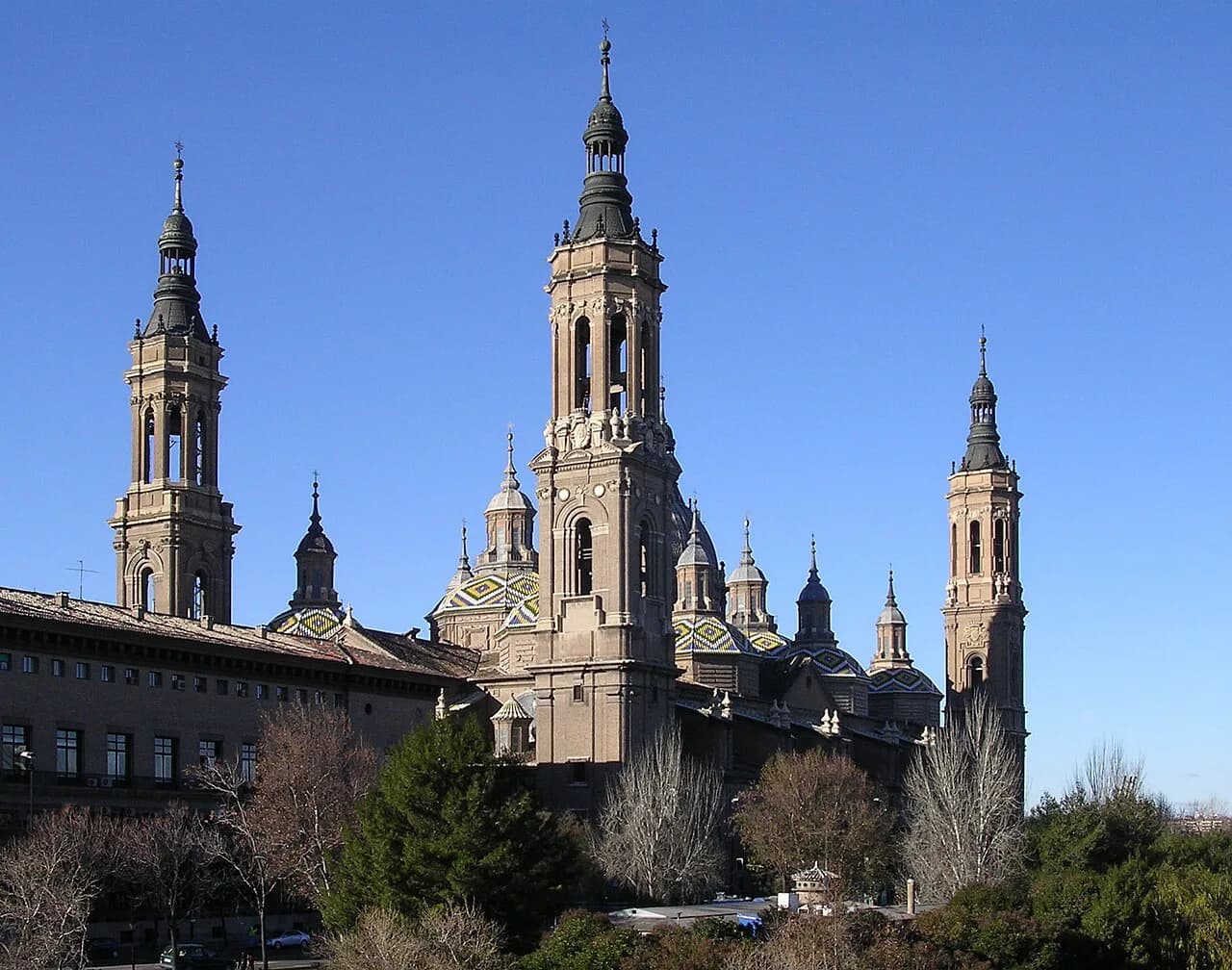
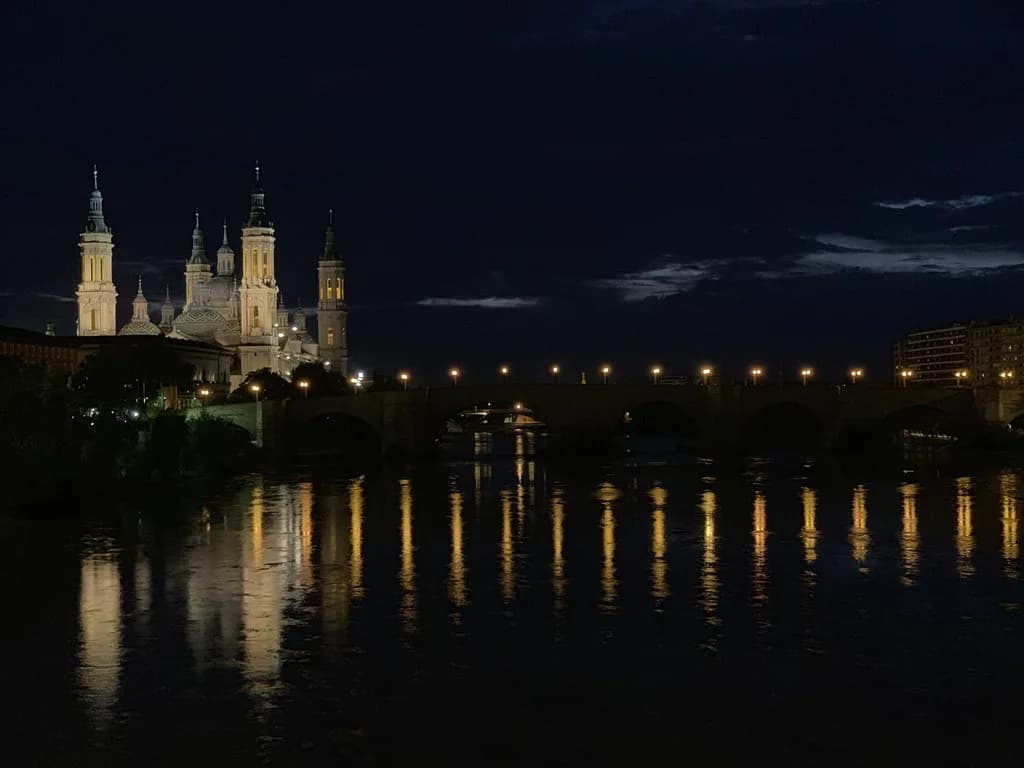
The Plaza del Pilar is one of the largest pedestrian squares in Europe and holds the city's three defining monuments in a single sweep: the Basílica del Pilar, La Seo and La Lonja. Begin here because everything else in the old town radiates from this point and because the square itself is free to walk through at any hour. The Basílica is a Baroque church built around the jasper pillar where tradition places the Virgin's appearance to Saint James in AD 40.
Entry to the main church is free and the basilica opens daily from 6.45 to 20.30. Access to the high altar area is restricted to set windows: weekdays 7.30 to 13.30 and 16.30 to 20.15, Saturdays 7.30 to 11.45 and 16.30 to 20.30, Sundays 7.30 to 13.30 and 16.30 to 21.30, and Sundays that fall on public holidays 7.30 to 13.30 and 16.30 to 21.30. The Museo Pilarista opens daily 10.00 to 13.30 and 16.30 to 20.00, and the tower visits run Friday to Sunday 10.00 to 20.00 at EUR 4. Allow 90 minutes to two hours.
La Seo, formally the Catedral del Salvador, faces the basilica across the square and layers Romanesque foundations, Gothic arches, Mudéjar brick and Baroque decoration in one building. Its Mudéjar exterior is UNESCO-listed, and the interior holds a Gothic retablo, Flemish tapestries and the Museo de Tapices. The cathedral stands over the Roman forum, a Visigothic church and the mosque of Saraqusta, so the visit doubles as a lesson in the city's layers. Set aside about 45 minutes.
Opening hours follow a split timetable: Tuesday to Friday 10.00 to 14.00 and 16.00 to 19.00, Saturday 10.00 to 12.30 and 16.00 to 19.00, Sunday 16.00 to 19.00, closed Monday. Entry is EUR 5 and includes the Museo de Tapices. That Monday closure makes the cathedral a Tuesday-to-Sunday stop, so book the Pilar cluster around it rather than assuming a seven-day visit.
The Roman street grid: Calle Don Jaime I, Manifestación, Espoz y Mina and Mayor
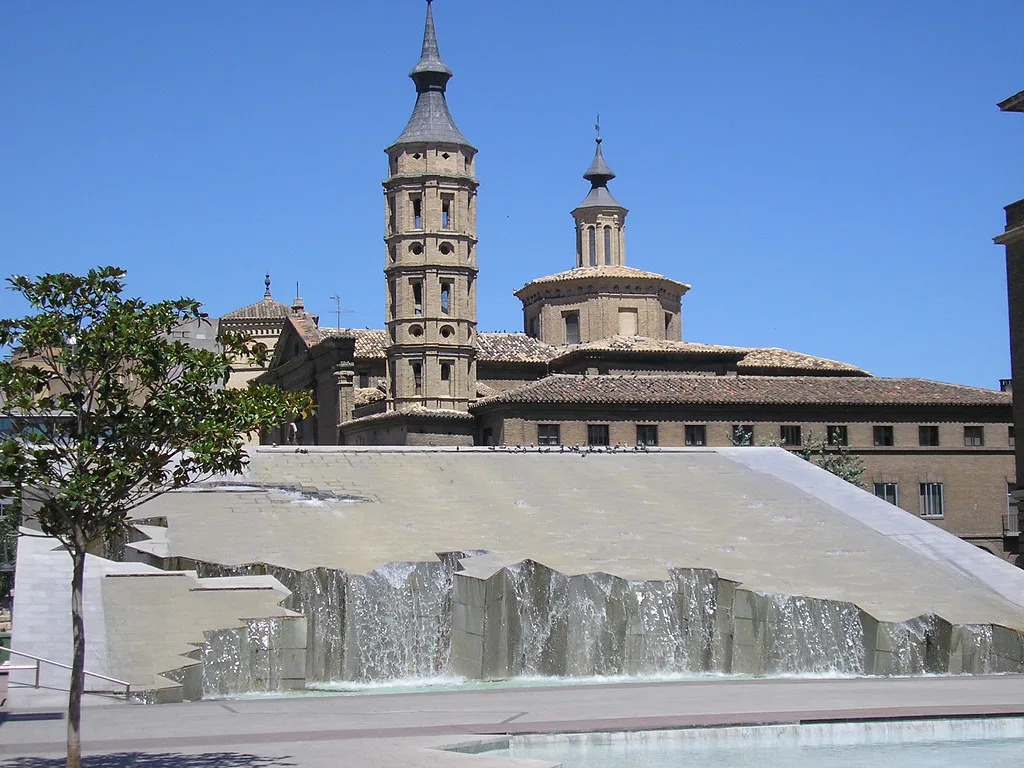
Under the modern streets lies the plan of Caesaraugusta, and it still works as a navigation aid. Calle Don Jaime I was the Roman city's main artery, the cardo, while the perpendicular decumanus streets were Manifestación, Espoz y Mina and Mayor. If you hold that cross in mind, you can find your way through the old town without checking a phone at every corner.
Walking Don Jaime I takes you past shops and church fronts on the line the Romans used; turning onto Manifestación or Mayor puts you on the cross-streets of the ancient grid. Calle Alfonso is a different animal: a nineteenth-century ceremonial approach built to funnel visitors into the Plaza del Pilar. Use it to arrive at the square rather than to judge the age of the quarter. Calle El Coso marked the edge of the walled city, so crossing it means you have left the old perimeter.
The Roman walls and what survives of Caesaraugusta
The murallas romanas date from the third century and served as the city wall until the thirteenth century. Substantial stretches stand within the modern centre, which is why you can meet Roman masonry between ordinary streets rather than in a fenced-off field. Walking the visible sections gives a clear sense of how tight the ancient city was compared with the spread of the modern one.
Pair the walls with the city's underground Roman remains, which explain the forum, baths and theatre that sat inside the perimeter. The museums in Zaragoza cover these sites in more depth than a street walk can, and they are the better stop when the midday heat pushes you indoors. Plan the walls as a short add-on to the Pilar cluster rather than a destination in itself.
The Aljafería: why you cross town for it
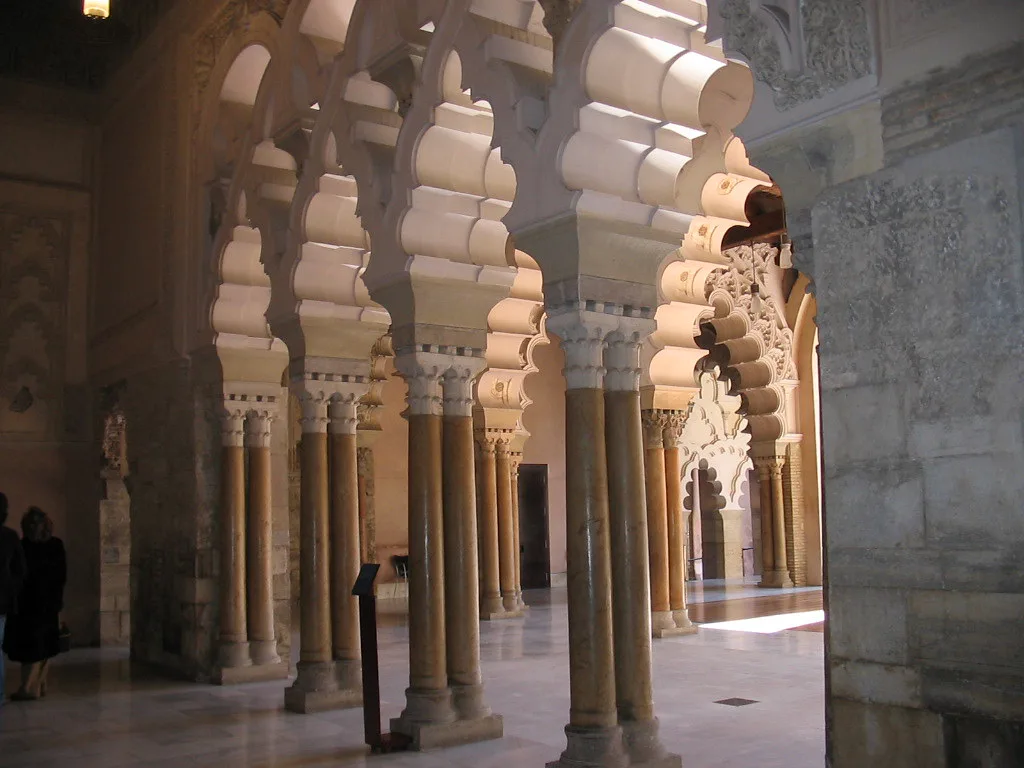
The Palacio de la Aljafería is the finest example of Islamic architecture in Spain outside Andalusia and the reason to leave the Pilar cluster behind. Built in the eleventh century as a pleasure palace for the Banu Hud dynasty, it preserves carved stucco, horseshoe arches and geometric ornament that show the Islamic city of Saraqusta at its height. The fortified shell and the Christian additions layered on top make it a different visit from the cathedral and basilica.
Its position outside the old perimeter means a real walk from the Plaza del Pilar, so treat it as a separate leg of the day rather than a quick detour. Ticket prices and opening hours should be confirmed directly with the palace before you set out. Building the visit around a morning or late-afternoon slot leaves the middle of the day for the covered sights of the old town.
Plaza and street names worth knowing: Calle Alfonso and El Coso
Calle Alfonso runs into the Plaza del Pilar and is the most ceremonial approach to the square, laid out in the nineteenth century for exactly that purpose. El Tubo, the tangle of lanes off the main routes, is where the old town narrows into tight streets; even if you skip the bars, the lanes are worth threading through for the change in scale. Calle El Coso traces the line of the old wall, which makes it a useful boundary marker when you are working out whether you are still in the Casco Histórico.
The Mercado Central area sits west of the Roman core, near the old Puerta del Mercado, which local accounts describe as the main hub of urban life in earlier centuries. Use these names as anchors: Alfonso for the square, El Coso for the old edge, Mercado Central for the western side. With those three fixed, the rest of the quarter reads more easily.
The barrios inside the old town: San Pablo, El Gancho, San Miguel, Tenerías and La Magdalena
Each barrio has its own texture: San Pablo and El Gancho sit towards the western side, San Miguel and Tenerías fill out the southern and eastern edges, and La Magdalena, or El Gallo, holds some of the most tangled lanes. Walking between them is how you see the old town as a lived-in district rather than a monument zone. None of them demands a separate day; each simply changes the mood of a fifteen-minute stretch of the route.
The quarter borders Las Fuentes, La Almozara, La Margen Izquierda and the Zona Centro, which helps if you are orienting yourself from a modern part of the city. Approach from the Zona Centro and you enter through the commercial streets; approach from Las Fuentes and you meet the old town at its quieter edge. Both routes land you inside the Casco Histórico.
Walking times between the main sights
The Basílica del Pilar and La Seo face each other across the Plaza del Pilar, so the gap between them is measured in steps. The Roman walls sit within the same central band, and the streets of El Tubo and the main barrios all fall close to the square. The only genuine leg-stretcher is the Aljafería, beyond the old perimeter.
Because the core is compact, the sensible pattern is to cluster the Pilar sights in one block, walk the Roman grid and walls in a second, and finish with the Aljafería rather than zig-zagging between them. That order also puts the indoor cathedral visit out of the strongest midday sun. Build the day around these two blocks and the old town needs roughly half a day on foot.
What the old town costs: entry prices and free slots in euros
The main church of the Basílica del Pilar is free to enter, which makes the Pilar cluster an inexpensive start even if you skip the paid extras. The tower visit costs EUR 4, and La Seo charges EUR 5 including the tapestry museum. Beyond those, the old town is largely a matter of walking streets and squares at no cost.
Budget the paid stops deliberately: the tower and La Seo together are a modest outlay, but the Aljafería ticket is set separately and should be checked with the palace before you go. Some museum sites have free-entry windows of their own, so look them up in advance if you plan more than one. A short list of which stops you are paying for is more useful than a blanket daily budget.
When things are shut: Mondays, siesta hours and mass times
La Seo closes on Mondays and splits its day into morning and afternoon sessions, so a Monday arrival rules out the cathedral entirely. The Basílica is open daily but restricts high-altar access to set windows, which is why a mid-morning or late-afternoon slot gives you the fullest view. The Museo Pilarista keeps its own hours, separate from the church.
Churches in the old town pause for services, so a visit can meet a closed door with no notice on the street. Inland Aragón also gets genuinely hot at midday in summer. Shifting the outdoor walking to morning and evening, with the cathedral and museums covering the middle, is the practical response.
How the old town fits a short break and which airport you fly into
The Casco Histórico sits at the centre of a city break rather than at its edge, which makes Zaragoza easy to plan around a short flight or a train stop. Two nights give you the Pilar cluster, the walls and the Aljafería without rushing, and a single full day covers the core if the palace is the only thing you cross town for. The quarter rewards a second morning rather than a packed itinerary.
Zaragoza has its own airport, so check direct connections before routing via Madrid or Barcelona, which are the usual long-haul or low-cost entry points for British travellers. Whichever route you take, the old town is the natural base for a first visit because the main monuments, the Roman grid and the barrios all sit within it. Rail timetables and airport transfers should be checked against the operator's own site for your dates.
Which half of the old town should you give the time to?
If you have one day, give the morning to the Plaza del Pilar with the Basílica and, if it is not Monday, La Seo, then walk the Roman grid and walls before heading to the Aljafería. The order keeps you indoors during the hottest hours and puts the longest walk at the end. If you have two days, split the quarter's barrios across the second morning and leave the palace for a fresh start.
Explore more Zaragoza guides
Frequently Asked Questions
What is the closest airport to Zaragoza, Spain?
Zaragoza has its own airport serving the city. British travellers sometimes route through Madrid or Barcelona and continue by train, so compare the direct options for your dates against the rail operators' timetables before booking.
What country is Zaragoza located in?
Zaragoza is in Spain, in the region of Aragón, and it is the region's capital. The old town sits in the centre of the city, close to the river Ebro and the Plaza del Pilar.
Sources
Notes for your next Spanish town break
Optional updates to our guides.
You might also like
Continue reading
More guides you'll find useful