Castles in Spain Worth Visiting: Alcázars, Alcazabas and Medieval Fortresses
Castles in Spain range from Segovia's Alcázar to Palma's Bellver and Málaga's Alcazaba. See what each is like and how it fits a short Spanish city break.
On this page
The castles in Spain most worth your time divide into three types: the royal Alcázar, the Moorish Alcazaba and the medieval Castillo. Knowing which one you are walking into shapes the visit, because a palace interior, a walled citadel and a bare hilltop fortress ask for very different amounts of time and energy. This guide covers the fortresses that slot neatly into a city break, with what each is like and the practical calls that catch people out.
Flight connections do a lot of the choosing for you. Málaga and Palma both put a fortress within walking distance or a short bus ride of the airport transfer point, while Segovia, Olite, Loarre and Peñafiel reward the traveller who books a train or drives inland. Alicante works as a starting point for the eastern coast.
Several of these fortresses sit inside historic centres that carry wider recognition, so a castle visit often doubles as a wander through streets and squares on the same list. If your trip is built around that kind of sightseeing, the wider set of UNESCO sites in Spain is worth planning around before you fix dates, since the walled centres and cathedral cities overlap heavily with the castles below.
Alcázar, Alcazaba, Castillo: what you are actually visiting
An Alcázar is a fortified royal palace, and Segovia's is the model: state rooms, a chapel and towers rather than bare ramparts. An Alcazaba is the Moorish citadel form, a walled military enclosure usually on a ridge above a town, of which Málaga's is the most accessible example on a city break. A Castillo is the catch-all term, covering everything from Loarre's Romanesque stronghold to the castle-palace at Olite.
The distinction matters at the ticket desk and on the ground. Palace interiors mean rooms, staircases and crowds in narrow spaces; citadel walls mean slopes, gates and sun exposure; hilltop castles mean walking and a head for heights. Pick your type first, then pick the town.
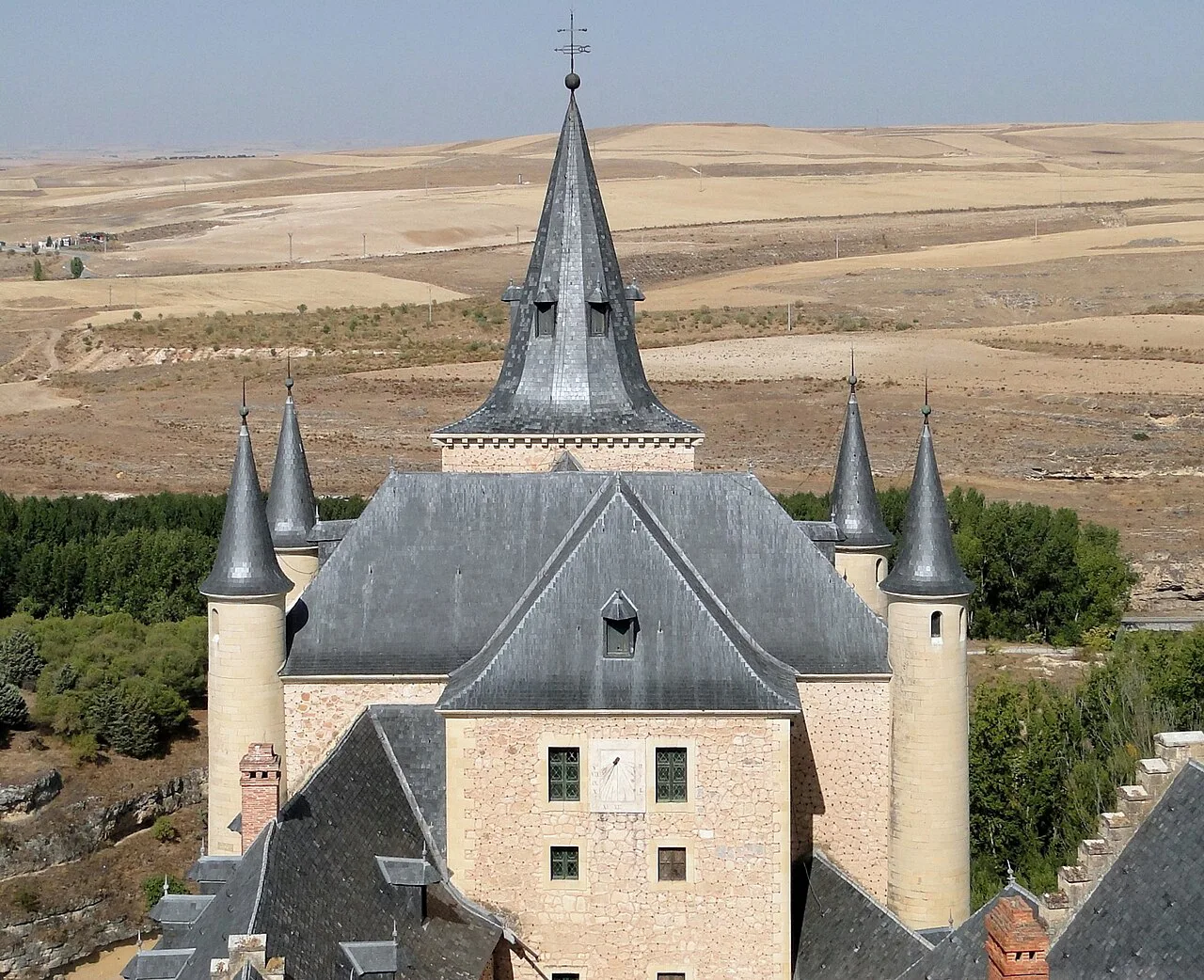
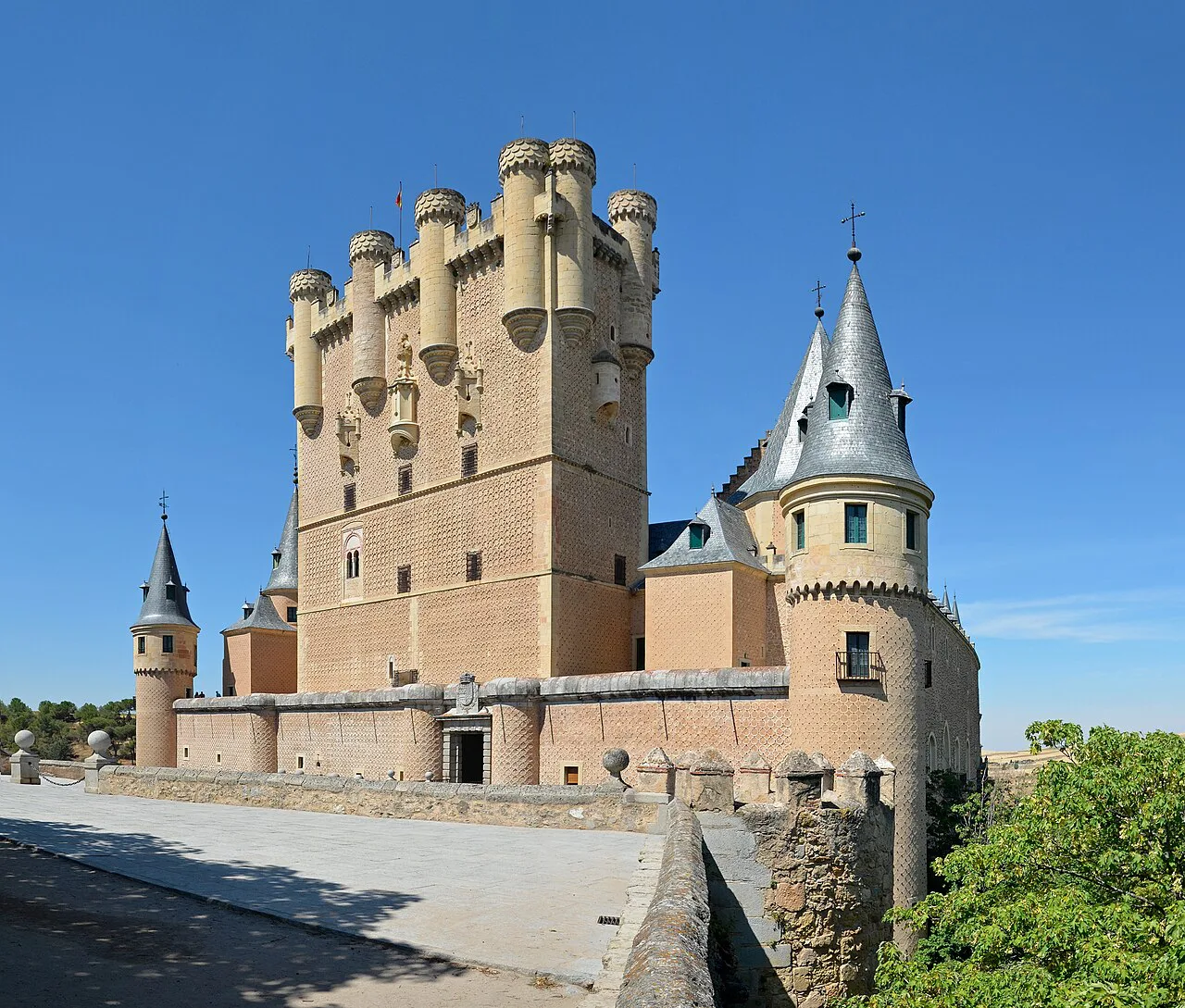
Alcázar of Segovia: the high-city royal palace
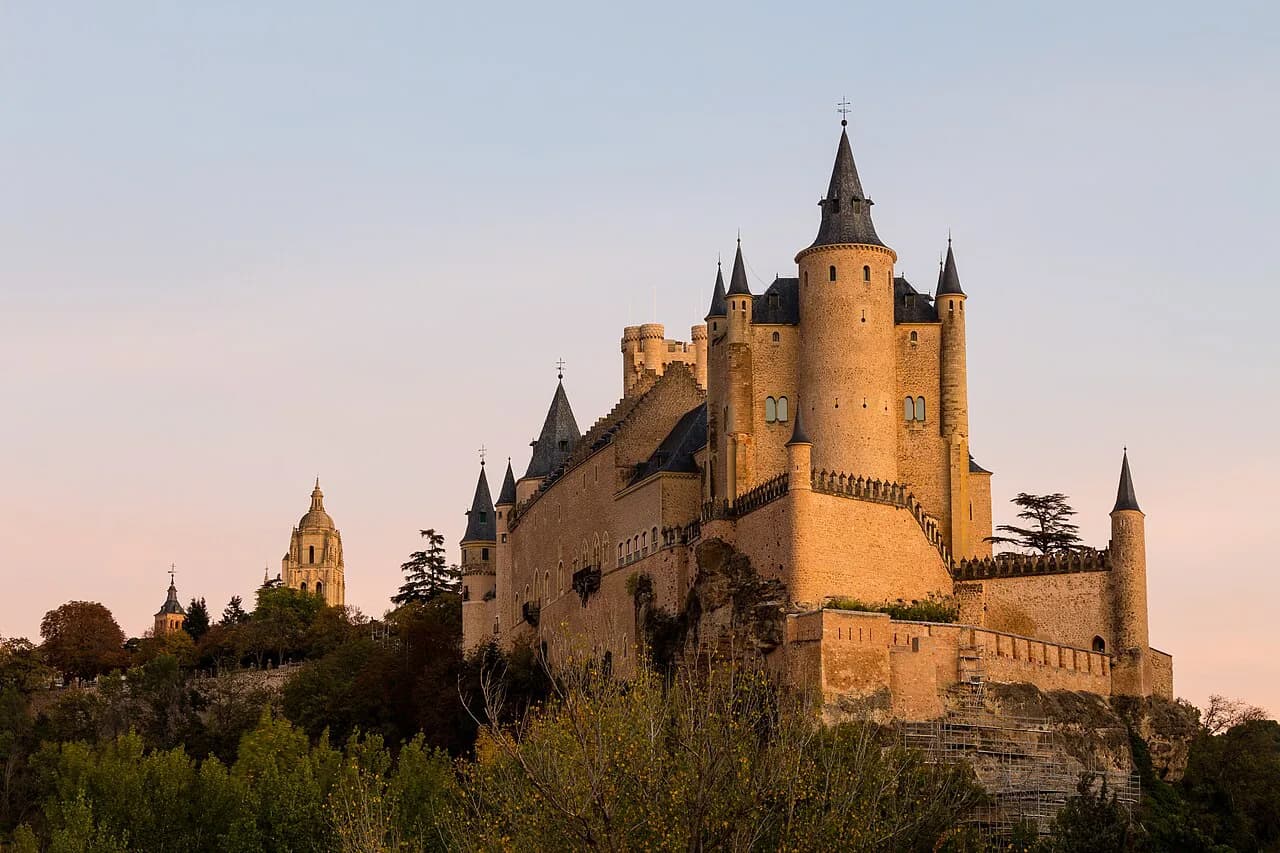
Segovia's Alcázar sits in the upper part of the city, and its walls carry the story of the Crown of Castile: Isabella the Catholic left it to be crowned in the Church of San Miguel, and Philip II and Anna of Austria married in its chapel. Some people say it inspired the castle in Disney's fairy tales, which tells you how the silhouette reads from below.
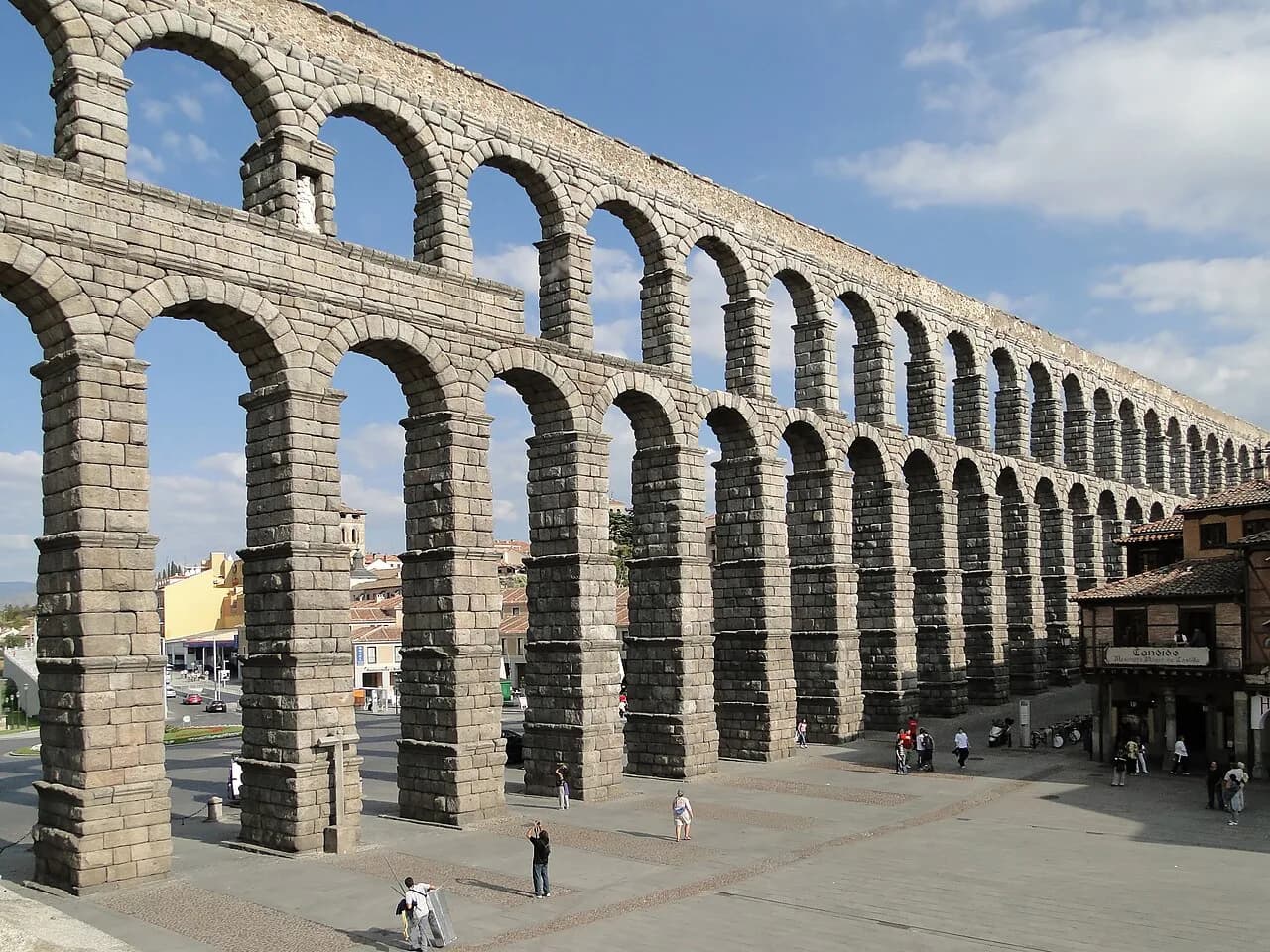
The audio guide is the sensible first move here, because a palace of this density gives up far more with commentary than without. Budget a proper half-day: the Alcázar itself, the climb up through the old town and the aqueduct that most visitors come to Segovia for anyway. Several of these monuments make up the city's UNESCO listing, which is another reason to give Segovia more than a rushed stop.
If you are building a castle itinerary across several towns, note how many of the classic stops are cathedral cities with Roman or medieval layers underneath. Santiago de Compostela and the walled towns of Castile fall into the same planning bracket, and the wider UNESCO sites collection is the place to line them up before booking transport.
Bellver Castle, Palma de Mallorca: the circular royal residence above the bay
Bellver is the odd one out among Spanish castles because it is circular, built as a royal residence on a wooded hill above Palma with the bay spread out below. Three kings of Mallorca lived here: James II, Sancho I and James III. Guided tours run in English and Spanish, which makes it an easy first afternoon after a flight into Palma.
The visit is short by castle standards, so pair it with the old town rather than treating it as a day out. The trade-off is the climb: Bellver sits above the city, and the walk up in summer is the part people underestimate. Bus or taxi up and walk down is the kinder order.
Castle-palace of Olite, Navarra: Gothic windows, the Renaissance door and the watchtower
Olite was one of the most luxurious castles in Europe in its day, with jousts held in its grounds and a zoo of its own. What remains is a castle-palace to wander rather than a furnished interior to file through: Gothic windows, a Renaissance main door and a watchtower you climb for the view.
The town makes the trip worthwhile beyond the walls. Olite holds a Medieval Festival in August and a Classical Theatre Festival, so check the town's own programme before you fix dates, because accommodation in a town this small tightens around event weekends. Javier Castle nearby is the natural second stop if you have a car.
Loarre Castle, Huesca: the Romanesque fortress above the Pre-Pyrenees
Loarre is described as the best-preserved Romanesque fortress in Europe, set more than 1,000 metres above sea level with the Pre-Pyrenees around it. It appeared as a filming location in Ridley Scott's Kingdom of Heaven, which is the reason some visitors turn up at all.
This is a full-day castle rather than a city-break add-on. The altitude means cooler air than the Andalusian interior but changeable weather, and the setting suits pairing a guided tour with cultural routes in the area or walks in the foothills. Reach it by car; public transport to a site this remote is not something to improvise on the day. If filming locations shape your itinerary, there is a broader set of Game of Thrones locations Spain to plan around.
Peñafiel Castle, Valladolid: the wine museum inside a 10th-century build
Construction at Peñafiel began in the 10th century, and the castle now houses a wine museum, with a tasting room and guided tastings of Ribera del Duero wines. The towers give views over three valleys: the Duero, the Duratón and the Arroyo Botijas. It is the least castle-like visit on this list and the most obviously paired with the surrounding countryside.
Treat the tasting as the main event and the walls as the setting, and the trip makes sense. Castle of La Mota at Medina del Campo, in the same province, is the obvious companion stop if you are driving between Valladolid and the Duero vineyards. Allow a full day for the pair.
Santa Catalina Castle, Jaén: a Parador you can sleep in
Santa Catalina is the one castle on this list you can stay in: it operates as a Parador hotel, with medieval rooms inside the walls. Jaén province is said to hold the highest density of castles in Europe, so the setting is not a one-off.
Even if you are not sleeping there, the La Cruz viewpoint is one of the best places to look out over Jaén, and the castle sits above the city in the same landscape. Santa Catalina operates as a Parador hotel, so the walls enclose a working hotel rather than a museum visit. Castle of Almodóvar del Río, west towards Córdoba, pairs with it on a driving route; if you extend towards Córdoba, the fuller Moorish picture across southern Spain is covered in the Moorish Spain guide.
The Alcazaba of Málaga and the Roman Theatre: Moorish walls reached on foot from the centre
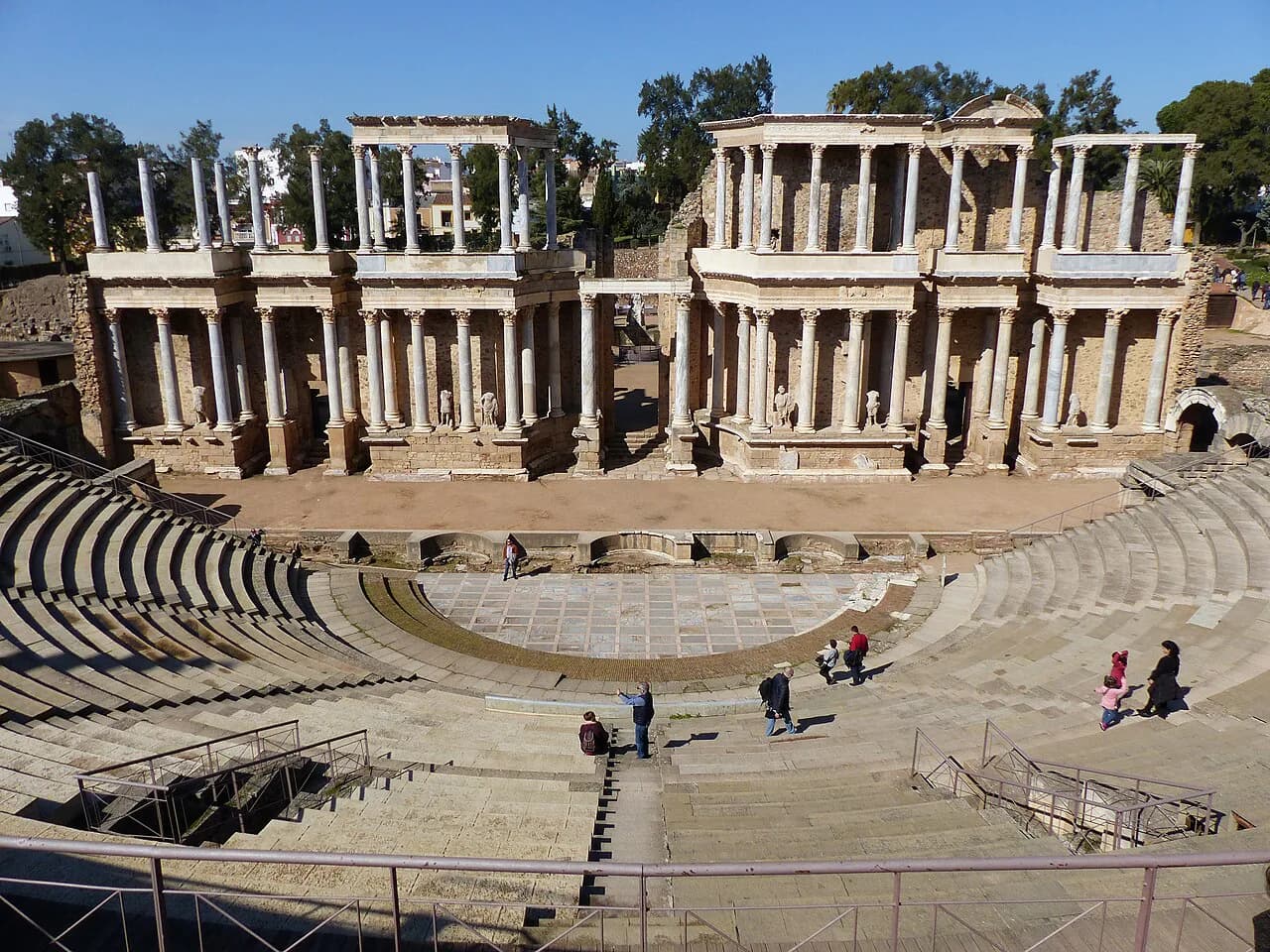
Málaga's Alcazaba is the most convenient Moorish fortress on this list: the old fortifications are reachable on foot from the centre of the city, and a walk around the walls gives you the city below. The Roman Theatre sits at its foot, so the two visits stack into one morning without any transport at all.
This is the Alcazaba to choose if you have a short break and want to understand the form: gates, courtyards and defensive walls rather than furnished rooms. It also plugs into a wider Moorish trail across southern Spain, of which the Alcazaba is a starting point rather than the finale; the Moorish Spain guide covers the fuller picture.
The Roman Theatre beneath the Alcazaba is a reminder that Málaga layers its civilisations on one hillside. If Roman engineering interests you more than Moorish walls, the theatres, bridges and aqueducts gathered in Roman ruins in Spain make a coherent second itinerary, and Augusta Emérita is its centrepiece.
Castell de Sant Salvador d'Artà, Mallorca: the fortified church above the town's alleys
Artà keeps its naturalness, with small alleys that mostly lead upwards to Calvary and the fortified church of San Salvador. This is not a castle in the palace sense at all: it is a sanctuary on a hill, and the appeal is the climb through the town and the position at the top.
Choose Artà over Palma's Bellver if you want the smaller-town version of Mallorca and have a car. The trade-off is that the reward is the setting and the walk rather than interior rooms, and the climb is steady rather than short. It pairs naturally with the coves and villages of the east coast.
Punta de n'Amer: the 17th-century fortified tower on the north-east coast
Castell de sa Punta de n'Amer is a fortified tower rather than a castle, built in the 17th century on a headland that pushes about two kilometres east into the sea, with its high point at 43 metres above sea level. It sits not quite 700 metres from the easternmost point of the peninsula.
This is a coastal walk with a monument at the end, so treat it as a leg-stretch rather than a sightseeing stop. The headland is exposed, which makes it pleasant out of the midday sun and bracing when the wind is up. It suits the north-east coast near Alcúdia rather than a Palma-based day.
Castell d'Alaró, Mallorca: the summit fortress and mountain hut
Castell d'Alaró sits on a summit above fortress ruins, with a former monastery now run as a mountain hut where you can stay in simple bunk beds for a few euros. On a clear day the view runs as far as the Bay of Alcúdia.
The climb is the point, and it is a proper one in the heat. Go early, carry water and treat the hut as a rest stop rather than a hotel. Because this is a walking destination first, pack accordingly; the practical record of Roman roads, bridges and sites in Roman ruins in Spain is a useful reminder of how much of Spain's old infrastructure rewards the same approach, Augusta Emérita included.
Inland fortress or coastal castle: choosing on a short break
Inland castles give you scale and silence: Segovia's Alcázar, Loarre's ridge and Olite's palace all need a train or a car and a full day, and each earns it. Coastal and city castles give you convenience: Bellver, the Málaga Alcazaba and Artà all sit close to where you are already staying. If you have three nights and one fortress in you, take the convenient one and spend the saved hours in the old town.
The honest trade-off is heat and terrain versus interior richness. Inland Castile and Navarra in summer make midday walking unpleasant, so start early and keep the afternoon for shaded rooms or a long lunch. Coastal castles are easier on the body but often thinner on interiors.
How to slot a castle into a city break
A palace castle such as Segovia's or Olite's fills a half-day once you count the approach, the queue and the rooms; a walled citadel such as Málaga's takes two hours; a hilltop ruin such as Alaró or Loarre takes most of a day with travel. Build the day around the castle rather than squeezing it between two other sights, because the walking is always more than the map suggests.
Two rules keep the plan honest. First, put the castle first thing in the morning, before heat and coach parties. Second, leave the afternoon free for the town's squares rather than committing to a second ticketed monument.
What catches people out: heat, closures and services
Inland Andalusia and Castile bake at midday in summer, and fortresses offer little shade on their walls. Churches and religious buildings commonly close for part of the middle of the day, and cathedrals and sanctuaries pause tourist visits for services. Build the day so the castle is early and the indoor visit is mid-afternoon.
Monday is the day to check before you commit: many museums and monuments in Spain close that day, and castle interiors converted into museums follow the same pattern. Rather than assume, check the operator's own page for the specific site the week you travel. The same applies to August in small Navarran towns, where events fill rooms early; the most beautiful towns in Spain are small enough for one festival to change everything.
Tickets are where published information is thinnest. Spanish castles vary from free municipal sites to timed-entry palaces with audio guides, and a few charge separately for towers or exhibitions. Confirm prices and opening days on the official site of each castle before you travel, since the pattern differs town by town.
Nearby castles to pair with the main one
Segovia's Alcázar pairs with Coca Castle nearby, and Olite with Javier Castle, both easy additions on a driving day. Peñafiel pairs with Castle of La Mota at Medina del Campo in the same province, and Santa Catalina pairs with Castle of Almodóvar del Río towards Córdoba.
On Mallorca, Bellver, Alaró, Artà and Punta de n'Amer sit in different corners of the island, so pick two that share a coast rather than trying to cross the island twice. A Palma base covers Bellver and Alaró; a north-east base covers Artà and Punta de n'Amer. Of the towns built on dramatic rock, Castellfollit de la Roca is the one to add if your route swings through Girona and the volcanic north.
Which castle should you book first?
Book Segovia's Alcázar if you want the full royal-palace experience, and take the audio guide. Choose Palma's Bellver or Málaga's Alcazaba if the trip is short and you want the fortress without a long transfer. Save Loarre, Olite, Peñafiel and Santa Catalina for a driving trip where the castle is one stop among several.
Whichever you pick, fix the day around the castle rather than the other way round, go early in summer, and avoid Mondays unless the site's own page confirms it is open. Confirm ticket prices and opening hours on the castle's official page before you travel, as these change by season and by operator.
Sources
Notes for your next Spanish town break
Optional updates to our guides.
You might also like
Continue reading
More guides you'll find useful