A Coruña Old Town: What to See in the Ciudad Vieja
Plan a walk through A Coruña's old town, the Ciudad Vieja: María Pita, Azcárraga, the Colegiata, the old walls and the San Carlos garden above the bay.
On this page
A Coruña's old town is best treated as one continuous walk rather than a checklist of sights: start at the Praza de María Pita, climb Calle das Damas to the Plaza de Azcárraga, then wander the lanes around the Colegiata before finishing at the walls and the garden above the bay. The Ciudad Vieja sits on the raised ground behind the port, which is why the sea views open up at its edges and why the streets inside are so sheltered. This guide follows that order, naming the squares, churches, gates and houses you pass and leaving the single monuments to their own pages.
Expect a different atmosphere from the rest of the city. The Marina, the port and the beaches take most of the visitor traffic, while the old town keeps a residential, neighbourhood feel that guided groups only occasionally interrupt. That makes it the part of A Coruña to save for a slow hour when you want stone lanes and small squares rather than seafront promenades.
What the Ciudad Vieja is and where it sits in A Coruña
The Ciudad Vieja, also called the Casco Histórico, is the upper town built on the high ground above the harbour, and it is where the modern city effectively began: Alfonso IX of León and Galicia ordered its refoundation in 1208 on the site of the Roman settlement of Brigantium. Its streets and church names still read as a medieval and baroque town, with granite arcades, convents and palatial houses packed into a small area.
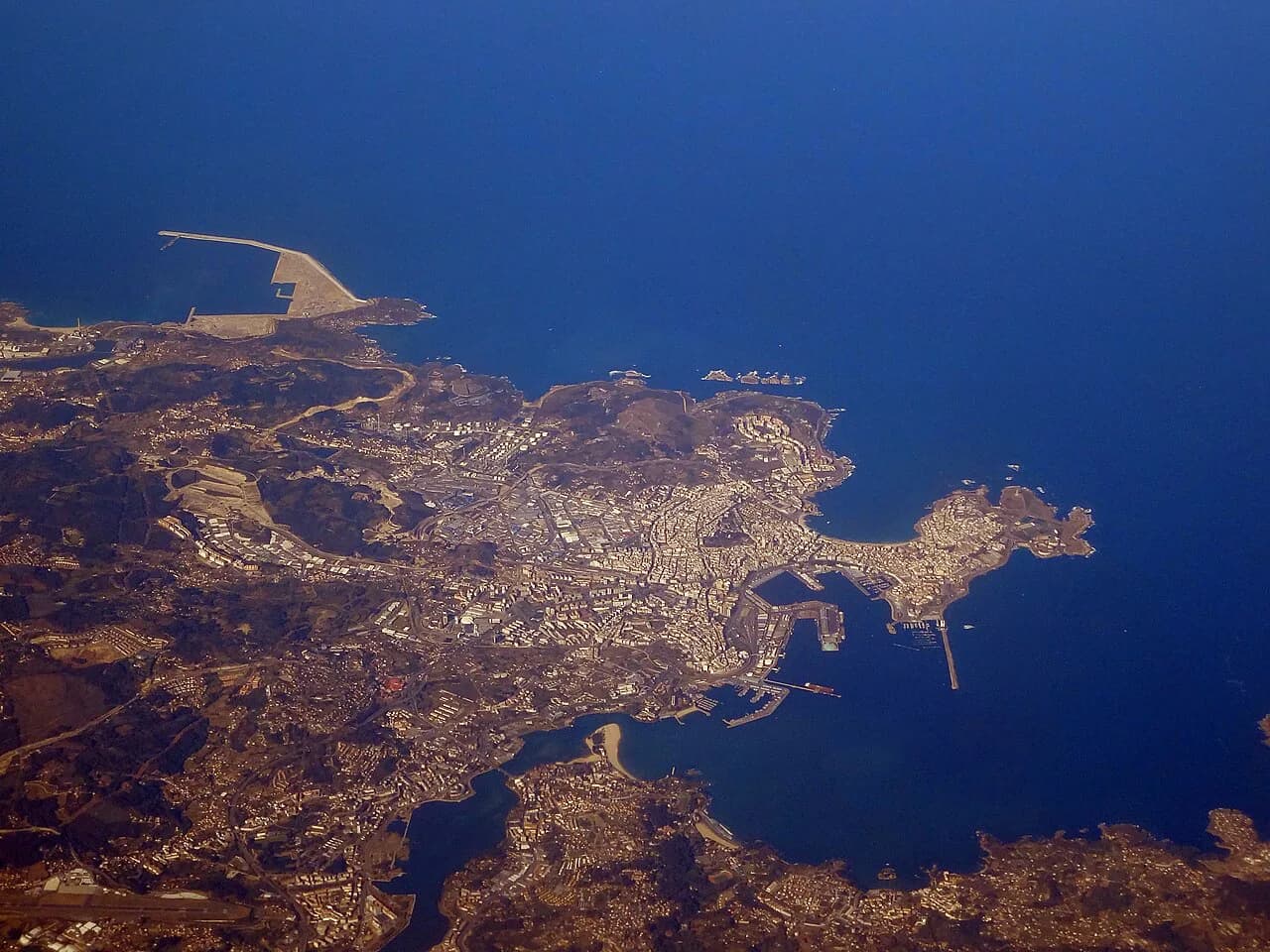
Because it was built close to the sea, the quarter was ringed in the fourteenth century by walls defending it against attack from the water, and short stretches of those walls and three of the old gates survive. The layout still reflects guild life, with streets tied to the sailors, shoemakers, blacksmiths and butchers who worked here. If you only have time for one part of the city, this is the part that explains how A Coruña came to exist.
How long the old town needs and how to shape the walk
Half a day covers the old town comfortably at an unhurried pace, and an afternoon is enough if you skip the museums. The route is short in distance but rewards detours, so plan the sequence rather than the clock: María Pita first as the obvious entry point, then Calle das Damas uphill, then the Colegiata and Azcárraga, then the quieter northern lanes, and finally the walls and San Carlos garden before dropping back down towards the Castillo de San Antón.
Two practical points shape the day. The quarter is compact and best walked in a loop, since the streets bend and several squares open off the same lane; a map helps more than a list of addresses. Inland Galicia is mild rather than scorching, but the granite lanes and stone squares hold little shade at midday in high summer, so an early or late walk is more comfortable than a midday one.
Plaza de María Pita: the square that starts the route
The Plaza de María Pita is the natural gateway to the old town and its largest open space, lined with arcaded buildings and terraces. At its centre stands the bronze statue of María Pita, the local heroine remembered for defending the city against the English in 1589, and the square takes its name from her. The Palacio Municipal, built in 1914, faces the square and holds a collection of old clocks and a picture gallery, though visitors mostly come for the arcades and the sense of arrival.
Use the square to orientate yourself before entering the lanes: the old town rises behind it, and Calle das Damas is the obvious way up towards the historic centre.
Calle de las Damas up to Plaza de Azcárraga
Leaving María Pita by Calle de las Damas, the street climbs into the heart of the quarter and delivers you to the Plaza de Azcárraga, a smaller, quieter square that once served as the nerve centre of the Ciudad Vieja. Grain was sold here, and festivals and ceremonies were held in what was then the civic core, with the town hall, the intendancy house and the artillery store grouped around it. Those buildings are gone, but the square keeps a garden and a nineteenth-century fountain known as the Fuente de los Deseos.
Treat Azcárraga as a pause rather than a sight: it is the sort of small square where the walk slows down, and it sits within a minute or two of the Colegiata, which makes it a sensible place to regroup before the churches.
Colegiata de Santa María del Campo and the Romanesque doors
The Colegiata de Santa María del Campo, a few steps from Azcárraga, is the architectural highlight of the quarter: a Romanesque church probably built between the late thirteenth and early fourteenth centuries and once the church of the sailors' guild. Most visitors photograph the main façade and move on, but the real reward is walking its perimeter, where three further doorways of similar quality open off the surrounding streets. Allow a few minutes to circle the building rather than treating it as a single stop.
Opposite the Colegiata stands the Casa Palacio de Cornide, an eighteenth-century townhouse designed by the military engineer Francisco Llobet and later associated with the Enlightenment figure José Andrés Cornide de Folgueira y Saavedra. It is an exterior stop on the walk rather than a visit, so read the façade and carry on.
Plaza de la Constitución and the quieter streets around it
Beyond the Colegiata the lanes open into the Plaza de la Constitución and a web of small streets that most day visitors never reach. This is where the old town feels most like itself: granite paving, shuttered houses and the occasional guided group breaking the quiet. The church of Santiago, described as the oldest temple in the city and the starting point of the English Way of the Camino, sits in this part of the quarter.
Walk this stretch without a fixed target. The pleasure is in the sequence of small squares and the way the streets bend, and it is the section where you are most likely to have a corner to yourself.
Plaza and Convent of Santa Bárbara (Las Bárbaras)
The Plazuela and Convento de las Bárbaras form one of the most peaceful corners of the quarter, a small tree-shaded square presided over by a stone cross. The convent at the end of Calle Santa María was built in the fourteenth century over an older chapel dedicated to Saint Barbara and is still home to cloistered nuns, which explains the stillness. It is a place to sit for a few minutes rather than to tour.
Because it is residential and enclosed, this square works best as a mid-walk breather between the churches and the walls; keep voices low and treat the convent as a neighbour rather than an attraction.
Church and Convent of Santo Domingo and Cortaduría
The Iglesia y Convento de Santo Domingo, near the Cortaduría, is a baroque church that was rebuilt inside the old town in the seventeenth century after originally standing outside its limits, with the convent enlarged in the same period. The church and convent together give the quarter its working religious character, sitting among ordinary streets rather than on a showpiece square. The Plaza de Santo Domingo in front is a good marker for the northern end of the walk.
Pair this stop with the nearby ruins and military museum rather than doubling back, so the route keeps moving in one direction through the quarter.
The old Jewish quarter
The Antigua Judería, the old Jewish quarter, is one of the quieter chapters of the Ciudad Vieja and is best understood as a set of lanes rather than a monument. Walking it adds texture to the guild streets and squares, and it fits naturally between the convents and the wall remains. There is nothing theatrical here, which is precisely the point.
Approach it as part of the general wander rather than a separate excursion: the lanes are short, and the pleasure comes from noticing how the street pattern changes as you cross the quarter.
Surviving wall remains and the three old gates
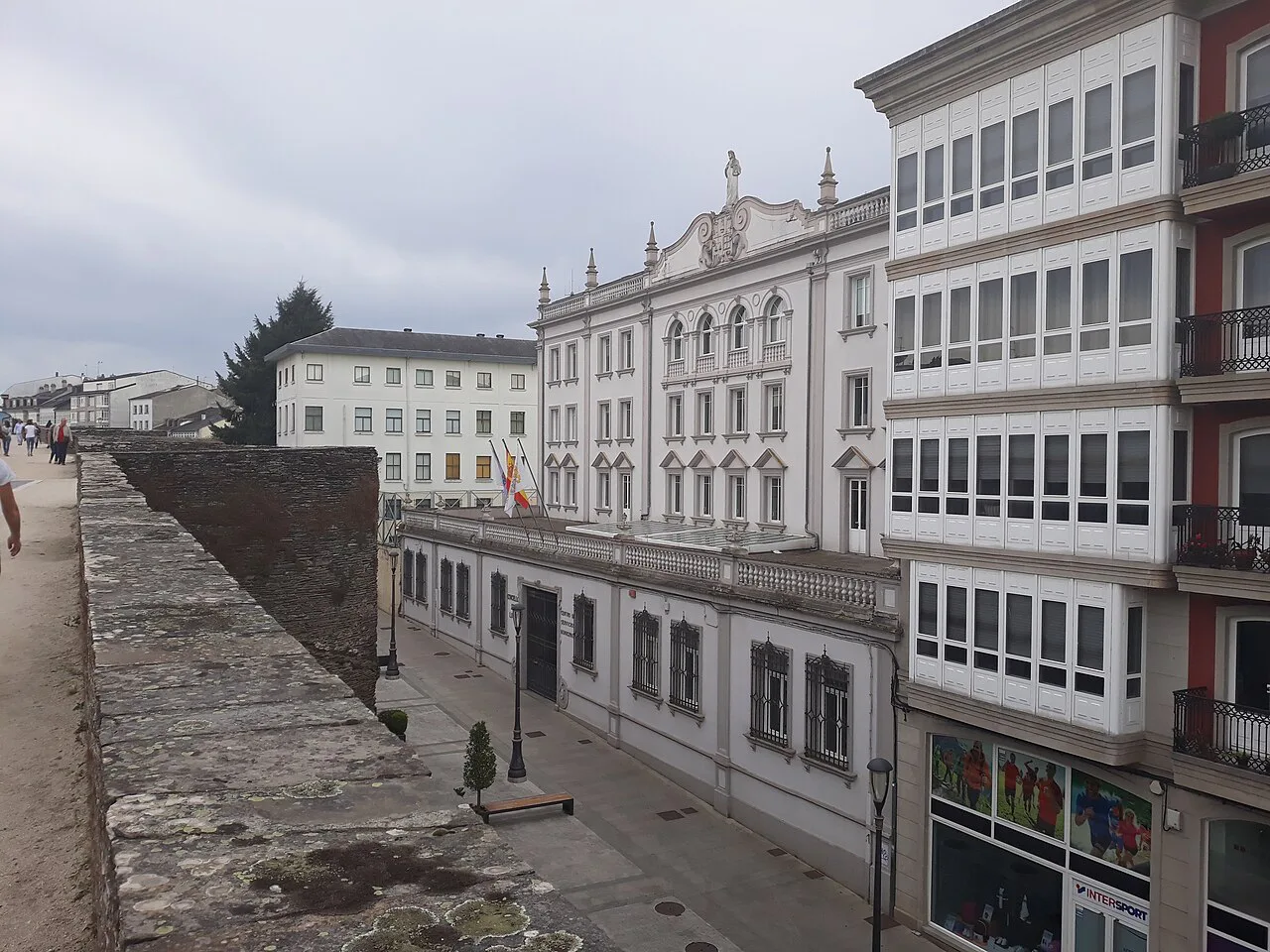
The fourteenth-century walls that once enclosed the whole Ciudad Vieja against sea attack survive only in fragments, but three of the gates that gave access towards the sea remain in good condition. Finding them is one of the more satisfying parts of the walk, because they sit among houses rather than behind barriers. Look for the stretches of stone that mark where the defensive line ran.
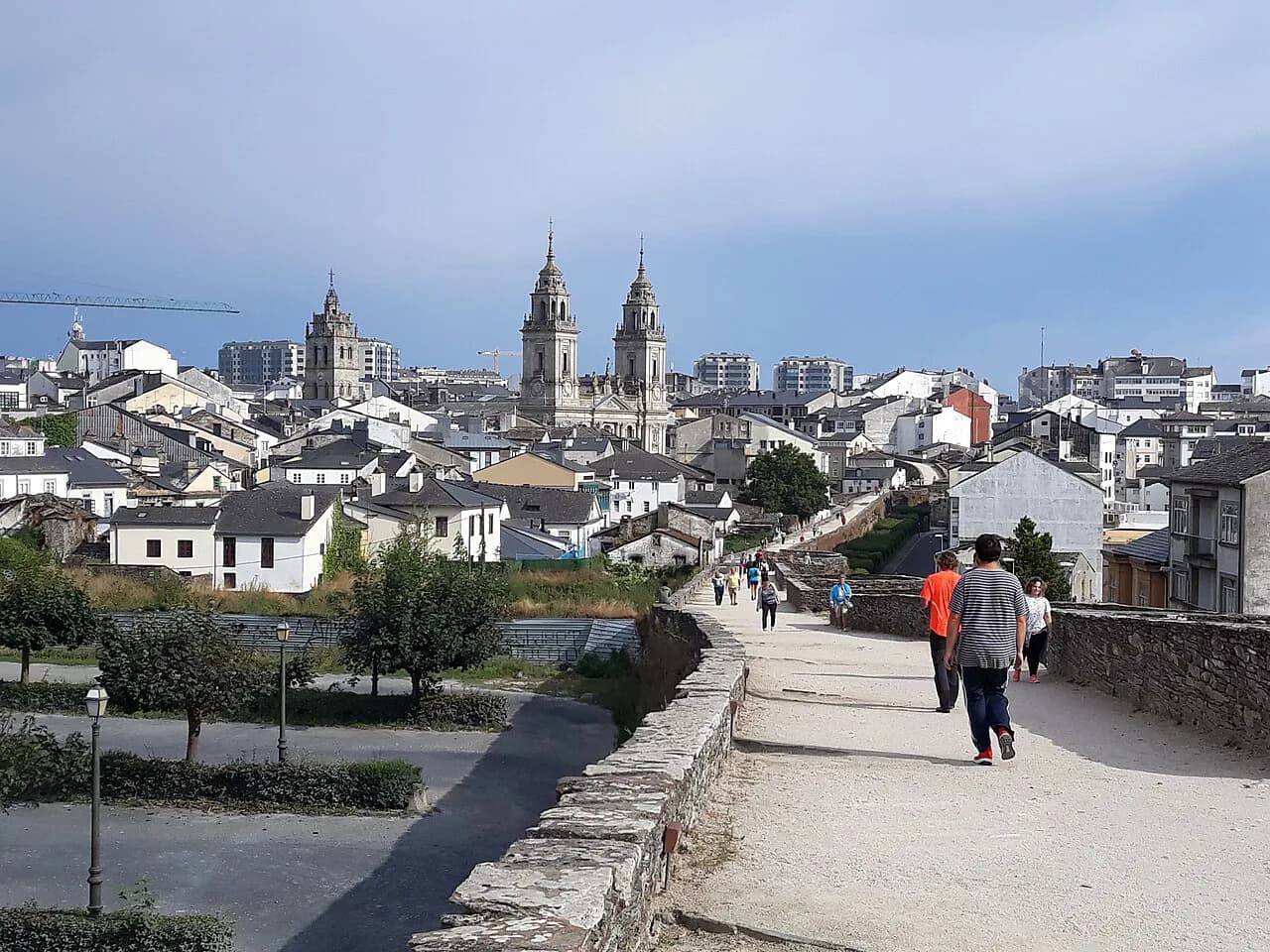
If walled towns are a theme of your trip, the circuit at Lugo is the bigger set piece and a useful comparison.
Jardín de San Carlos: the fortress-turned-garden above the bay
The Jardín de San Carlos occupies the site of an old defensive fortress, the Fortaleza Vieja, which guarded the approach to the city alongside the Castillo de San Antón. It is now a garden with some of the best views over the bay in A Coruña, and it houses the Archive of the Kingdom of Galicia. Come here for the outlook and the shade after the stone lanes, not for a formal garden.
The garden reads best as the hinge between the old town and the waterfront: you climb through the quarter, take in the bay from the old fortress site, then descend towards the port and the Marina.
Castillo de San Antón and the Museo Histórico Militar
The Castillo de San Antón was one of the three castles protecting the entrance to the city and sits at the edge of the quarter on the Paseo del Alcalde Francisco Vázquez. It anchors the maritime end of the walk and pairs naturally with the garden above. The Museo Histórico Militar de A Coruña, on the site of the old convent of San Francisco, holds a collection of weapons, saluting cannon and models of artillery equipment, and sits near the eighteenth-century church of the Third Order.
The convent of San Francisco was burned by local people to stop English troops sheltering in it, which is why the museum now occupies the site. Given the weight of that history, the castle and museum make the strongest pairing for visitors who want substance rather than another café stop; opening hours and admission are best confirmed with the castle itself before you set out.
The house museums and palatial houses of the quarter
The Ciudad Vieja is dotted with house museums and palatial houses that turn a walk into an optional set of interiors: the Casa Museo Emilia Pardo Bazán on Calle Tabernas, the Casa Museo María Pita on Calle Herrerías, the Casa de Rosalía de Castro on Calle Príncipe and the Fundación Luis Seoane on Calle San Francisco, along with the Cornide palace-house on Calle Damas. Each sits on a street you will pass anyway, so decide in advance which one justifies a stop rather than trying to see them all.
Opening arrangements for these houses change, so confirm them before building the day around a particular interior. The streets themselves cost nothing and give the quarter most of its character.
Casa do Remo, the narrowest house in the city
The Casa do Remo is the narrowest house in A Coruña and a small, easily missed landmark of the old town. It is a curiosity rather than a destination, the kind of detail that rewards a slow final pass through the lanes. Photograph it and move on; there is nothing to go inside.
If you enjoy small architectural quirks, the sloping streets and tight corners around the quarter will keep you occupied well beyond the main squares.
Layout and map: how the streets fit together
Think of the Ciudad Vieja as a raised platform above the port: María Pita at the southern gateway, Calle das Damas climbing to Azcárraga and the Colegiata, the convents and the old Jewish quarter filling the middle, and the walls, the San Carlos garden and the Castillo de San Antón at the seaward edge. Once that shape is clear, the individual streets stop feeling like a maze. The official route brochure from the tourist board is useful for confirming the order of stops.
If you are comparing Galician old towns, Vigo's Casco Vello offers a different, steeper version of the same pleasure.
Where to start and how to finish the walk
Start at the Praza de María Pita because it is the easiest entry point and the square where the old town announces itself, then follow Calle das Damas uphill to Azcárraga and the Colegiata. Work north through the convents and the old Jewish quarter before finishing at the wall gates, the San Carlos garden and the Castillo de San Antón.
The old town is free to walk, and the main cost is time: an afternoon gives you the squares, the churches and the walls, while a full day leaves room for one or two house museums. Keep the single sights for their own pages and let the streets do the work between them.
Explore more A Coruña guides
Sources
Notes for your next Spanish town break
Optional updates to our guides.
You might also like

Continue reading
More guides you'll find useful