Teguise, Lanzarote: Old Town, Castillo de Santa Bárbara and Sunday Market
Plan a visit to Teguise, Lanzarote's old capital: colonial streets, the church, the Palacio Spínola, the castle and the Sunday market.
On this page
Teguise is the inland Villa, Lanzarote's capital from the first half of the fifteenth century until 1852, when Arrecife took over. It is a separate place from Costa Teguise, the coastal resort on the east of the island, so check which one you are booking before you set out. This guide walks through the old centre, up to the castle, and around the market timetable that shapes a Sunday visit.
Allow half a day for the Villa itself and a little longer if you add the castle on the hill above. Most of the sights sit within a few minutes of each other around the Plaza de la Constitución, which makes Teguise easy to fit into a short break based in Arrecife or the resort.
The Villa, not Costa Teguise
Teguise is the largest municipality on Lanzarote, stretching from the east coast to the west, and the Villa de Teguise is its historic centre inland. The old town has been declared a conjunto arquitectónico-histórico-artístico, with cobbled streets and whitewashed houses built on the Bethencourt and Herrera family fortunes.
Costa Teguise is a different thing entirely: a coastal resort east of the Villa with a spread of hotels and beaches such as Las Cucharas and Jablillo. If you want the colonial streets, the church and the castle, you want the Villa, a short drive inland from the resort and from Arrecife.
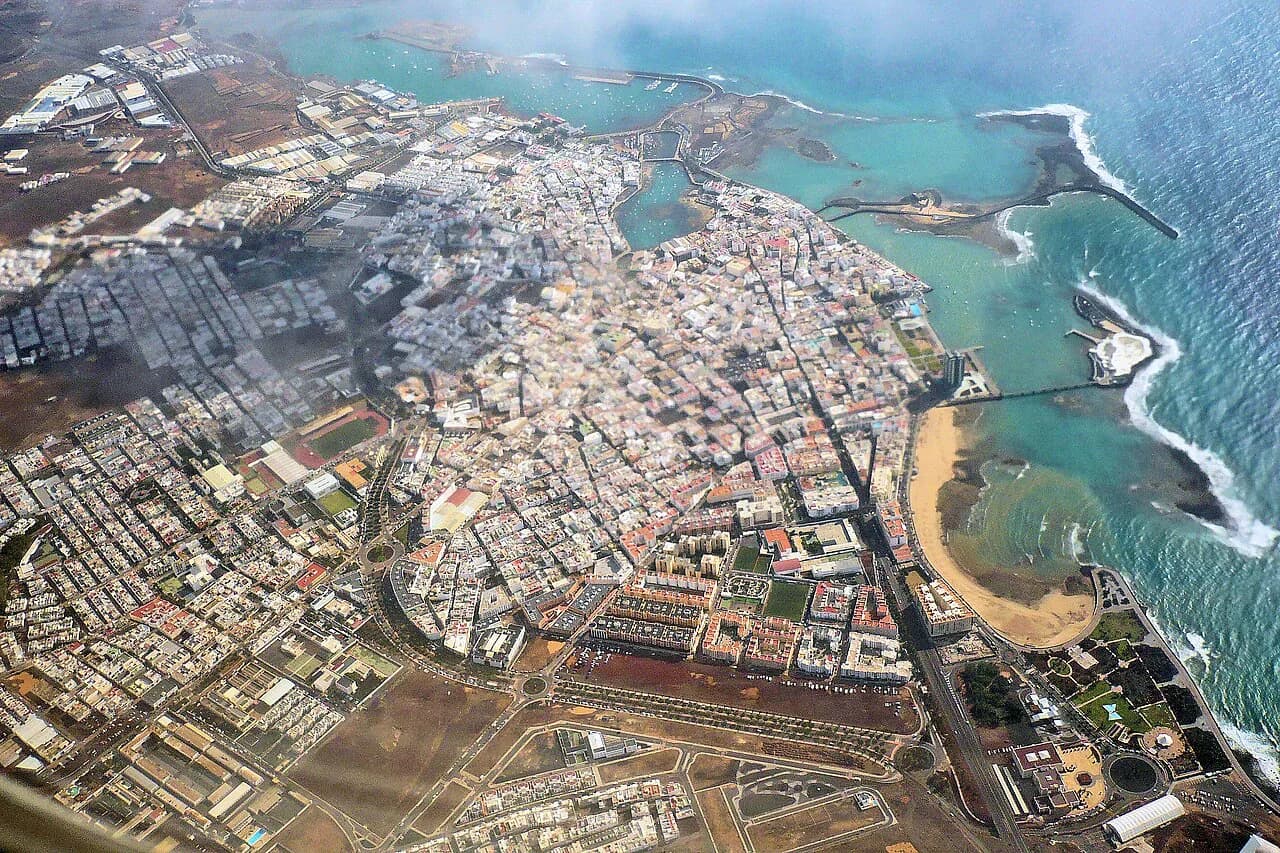
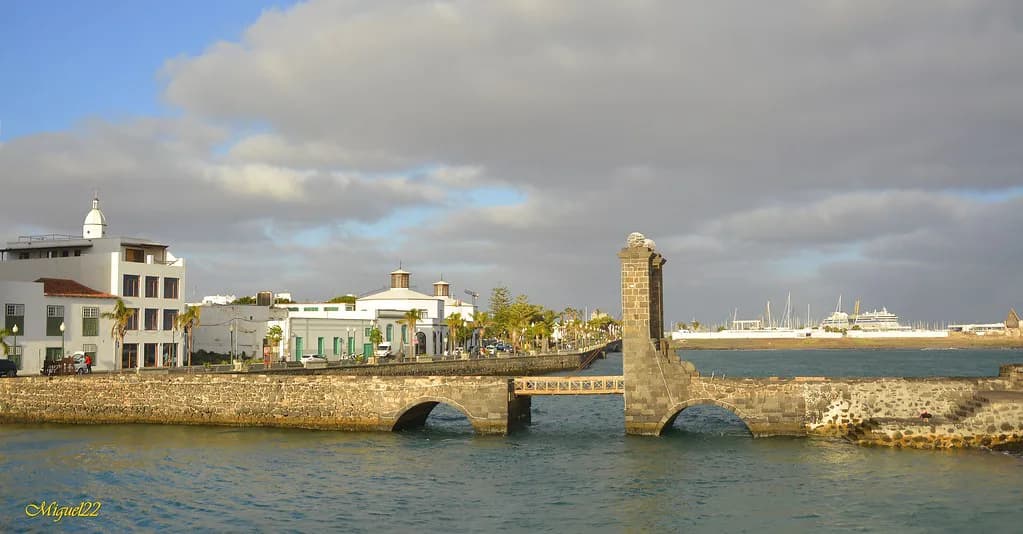
Arrecife, the current capital, is the obvious base for a short break, and its own Arrecife Old Town around the Charco de San Ginés makes a natural counterpart to Teguise. Pairing the two gives you a coastal capital and an inland one without moving hotels, and our Things to Do in Arrecife guide covers the waterfront side of the trip.
A short walking route from the Plaza de la Constitución
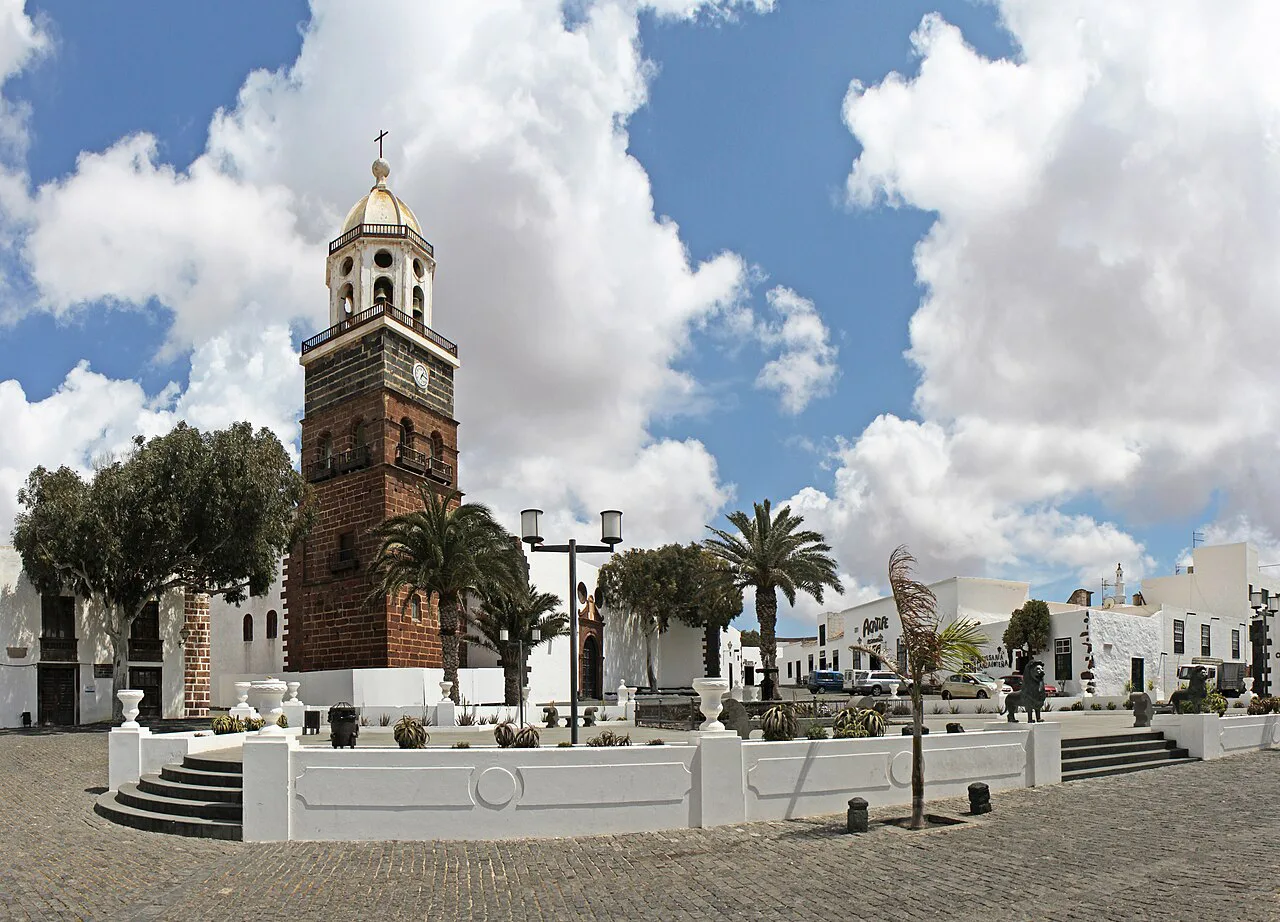
Start at the Plaza de la Constitución, the natural heart of the Villa, with the parish church on one side and the Palacio Spínola on the other. From there the Callejón de la Sangre runs gently uphill between the church and the palace, and the streets beyond open into small squares and porticoed houses.
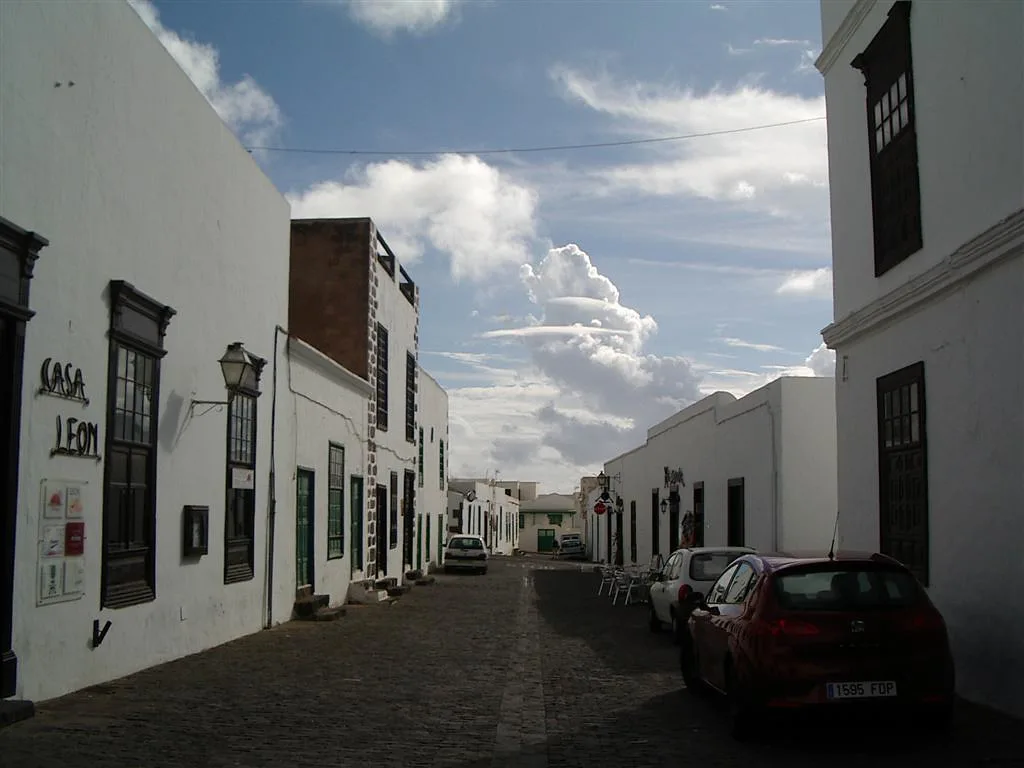
The old centre is compact enough to walk end to end in under half an hour, but the details reward a slower pace: carved wooden doors, lava stone set into white walls, and balconies above the cobbles. Look for the green-painted doors and windows that repeat through the streets, a signature of the colonial houses.
Wear shoes that cope with cobbles and uneven paving, and carry water if you are visiting in summer, as the inland town gets hot at midday and shade is patchy. The route has no steep sections until you head for the castle.
La Iglesia de Nuestra Señora de Guadalupe
The parish church of Nuestra Señora de Guadalupe is the mother church of Lanzarote, founded in the first half of the fifteenth century and rebuilt several times after raids and fires. The most serious blaze came in 1909, and the rebuilding was paid for by donations from the town.
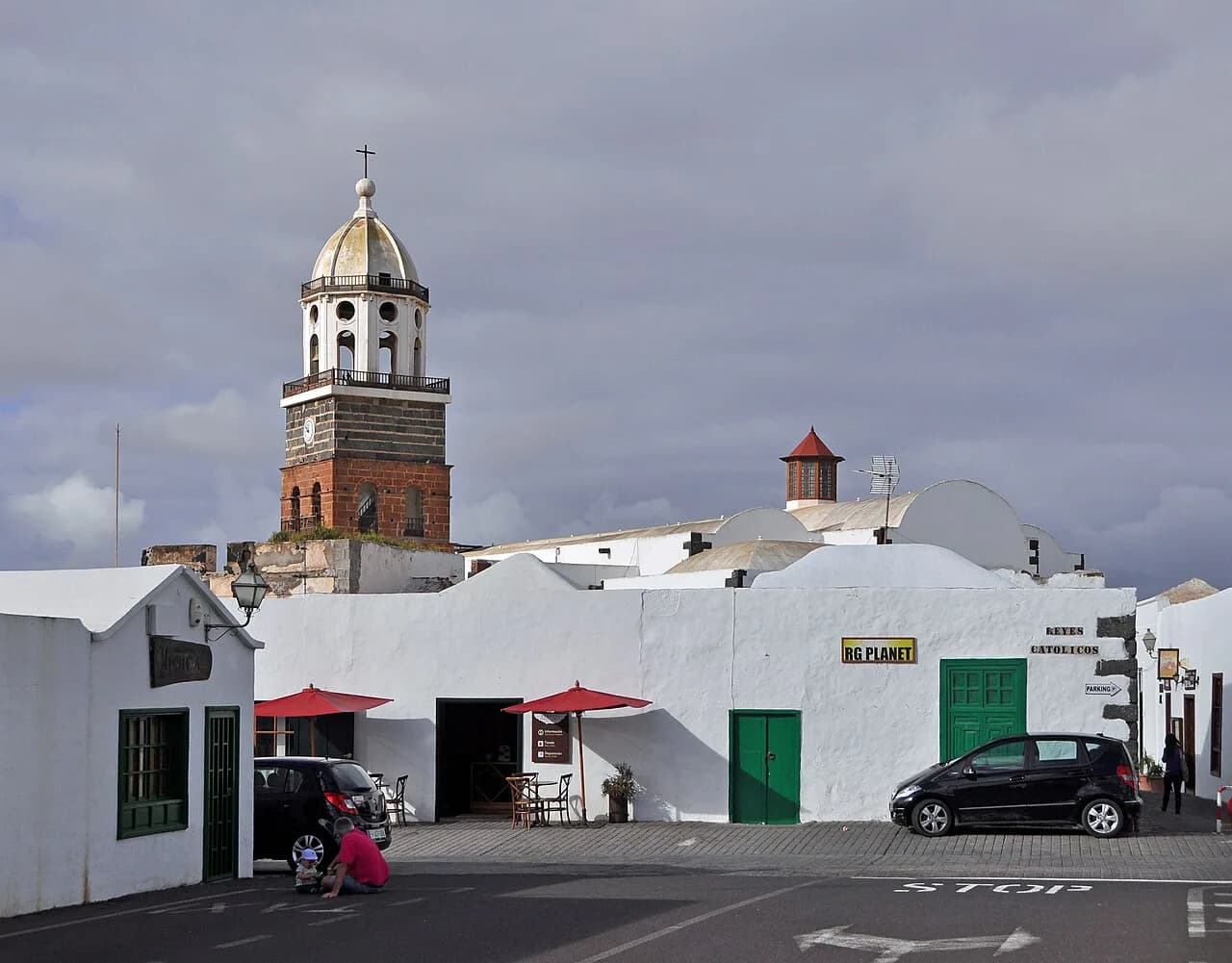
Its whitewashed walls contrast with a bell tower of reddish lava stone, and the palms around the plaza frame the whole composition. Inside, the church holds a substantial collection of religious art, including a painting of the Cristo de La Laguna.
This is a working parish, so sightseeing fits around mass rather than the other way round: if the doors are shut, the square and the exterior are still worth the stop. Walk round the back of the church for quieter corners and a view of the tower from below.
El Callejón de la Sangre
The narrow lane between the church and the Palacio del Marqués Herrera carries the name Callejón de la Sangre, the alley of blood, from an attack in 1569. The story tells of a Franciscan ringing the bells to warn of Berber pirates, of his death by arrow, and of the Marqués and his men killing some 170 raiders in the lane itself.
Today the alley is spotless and gently sloping, and the name reads as a piece of local memory rather than a warning. It takes a minute to walk through, so treat it as a pause on the way to the palace rather than a destination in itself.
The Palacio Spínola and the Museo del Timple
The Palacio Spínola stands on the Plaza de la Constitución beside the tourist office, built in the eighteenth century and later lived in by prominent Teguise families. César Manrique restored and decorated it in the 1970s, and it now houses the Casa-Museo del Timple.
The timple is the small five-string instrument of the Canary Islands, a descendant of baroque guitars and around 60 centimetres long. The museum tells its story and hosts concerts and cultural events through the year, so it is the one indoor stop in the Villa with a clear theme.
The museum also hosts concerts and cultural events through the year. Its opening times can change, so check the current listing before you build a day around it.
White walls and green doors: the colonial streets
Beyond the main monuments, the pleasure of Teguise is the ordinary architecture: whitewashed walls, dark volcanic stone, wooden doors and windows painted green or brown. Many houses keep a portico and a balcony, a reminder of the town's period as the seat of island power.
Allow time to wander without a list, because the side streets off the plaza hold the best doorways and the quietest corners. On a market Sunday that changes, and the same lanes fill with stalls and people from mid-morning.
The Castillo de Santa Bárbara on the Guanapay volcano
The fortress of Santa Bárbara was built in the mid-fifteenth century on top of the Guanapay volcano, looking down on the Villa and across much of the island. Its position explains its purpose: a watchtower and refuge against the pirate raids that shaped Teguise's history.
The castle now holds the Museo de la Piratería, which tells the story of piracy in the Canaries and gives the hilltop a reason beyond the view. On foot the climb from the old centre is short but steady; by car the access road saves the effort, though you still finish on foot at the gate.
Decide on the castle before you set out: it adds perhaps an hour to a visit if you go round the museum, and it is the one sight separated from the rest by a climb. The town views from the top are the point for many visitors, and the museum is a bonus rather than the other way round.
The Sunday market in the old town
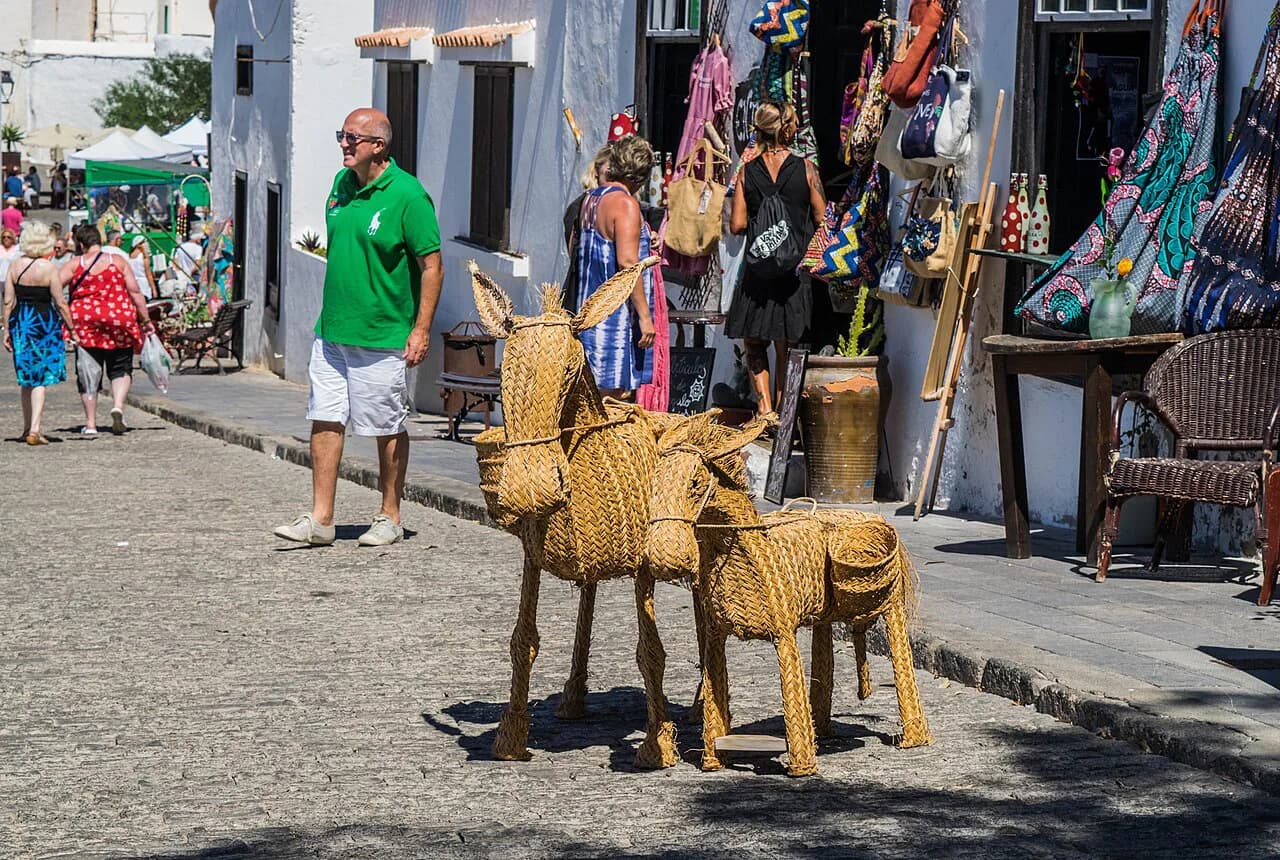
The market takes over the historic centre every Sunday from 09.00 to 14.00, one of the most popular on the Canary Islands. It brings together crafts, ecological and traditional produce and souvenirs, spread through the cobbled streets rather than a single square.
Expect the town to be busy from mid-morning and the narrow lanes to slow to a shuffle, which is either the atmosphere you came for or the reason to choose another day. Outside market hours the Villa can be near-silent, with empty streets and time to look at the buildings properly.
This is a craft and produce market rather than a food-led outing, so plan the rest of the day around it: church and palace before the stalls get thick, castle afterwards. Lanzarote also has other markets around the island, so do not assume every craft stall you hear about is in the Villa.
How long Teguise needs, and pairing it with the north
Two to three hours covers the plaza, the church exterior, the Callejón de la Sangre and the Palacio Spínola at an easy pace. Add an hour for the castle and its museum, and a market Sunday needs longer simply because of the crowds.
Teguise sits centrally, which makes it easy to combine with the north of the island. The Jardín de Cactus near Guatiza, one of César Manrique's last major projects, holds around 4,500 cacti from 450 species and works well as a second stop on the same run.
If you are heading further north, the road towards Orzola passes landscapes that connect naturally with the volcanic sites on the other side of the island. Keep Teguise as the historic anchor of the day and let the geography do the rest.
Getting to Teguise from Arrecife and the resort
Teguise lies inland from both Arrecife and Costa Teguise, and the two are easily confused by name, so confirm your destination before you leave. Buses, taxis and car hire are the options listed by the island's tourism board, which also publishes its own transport information.
Journey times and service frequencies vary, so check the current timetable rather than relying on a figure from a guide. Driving gives you the flexibility to add the Jardín de Cactus or the castle without doubling back.
Market Sunday or a quiet weekday?
Choose Sunday if you want the market and do not mind the crowds between 09.00 and 14.00. Choose any other day if you want the near-empty streets and a clear view of the church, the palace and the Callejón de la Sangre.
Either way, build the visit around the Plaza de la Constitución, leave the castle for last, and keep the church flexible around mass. Before you go, confirm the market hours and museum opening times with the official island tourism site.
Explore more Arrecife guides
Sources
Notes for your next Spanish town break
Optional updates to our guides.
You might also like
Continue reading
More guides you'll find useful