Lanzarote Towns: Arrecife, Teguise and the Villages Inland
Lanzarote's towns are small and close together: Arrecife on the coast, Teguise and its white streets inland. Here is what each one is like and what to see.
On this page
Arrecife and Teguise are the two towns worth building a Lanzarote day around: the capital for its old town and lagoon, the old inland capital for whitewashed streets and a single handsome plaza. Everything else on the island is either a resort laid out for beach holidays or a village of a few streets set in volcanic farmland. This guide sorts them by character and shows how to string them together.
The island is small enough that a morning in Teguise and an afternoon in Arrecife fit into one day by car, and the interior villages on the road to Timanfaya sit naturally between the two. Prices, opening hours and closing days change, so confirm them before you set out.
How the towns sit on the island
Lanzarote runs north to south in a rough line: Arrecife and Costa Teguise on the central east coast, Teguise a short way inland behind them, and the villages of Yaiza and Femés in the south towards Playa Blanca. Guatiza, with its cactus garden, sits on the east coast, and the Mirador del Río looks north across to La Graciosa.
That geography means the historic towns and the volcanic sights are not separate trips. The road from Teguise down through La Geria passes stone-walled vineyards on black ash, and it carries on to the edge of the Parque Nacional de Timanfaya. A car makes this easy; public transport links the bigger places but thins out for the villages.
Wind is a constant on the island, strong enough that even a walled cactus garden feels like a shelter from it. On a town day that means a light jacket even in warm months, and it explains why the vineyards are sunk into pits behind low stone walls rather than trained on open trellises.
Arrecife: the capital, its old town and the lagoon
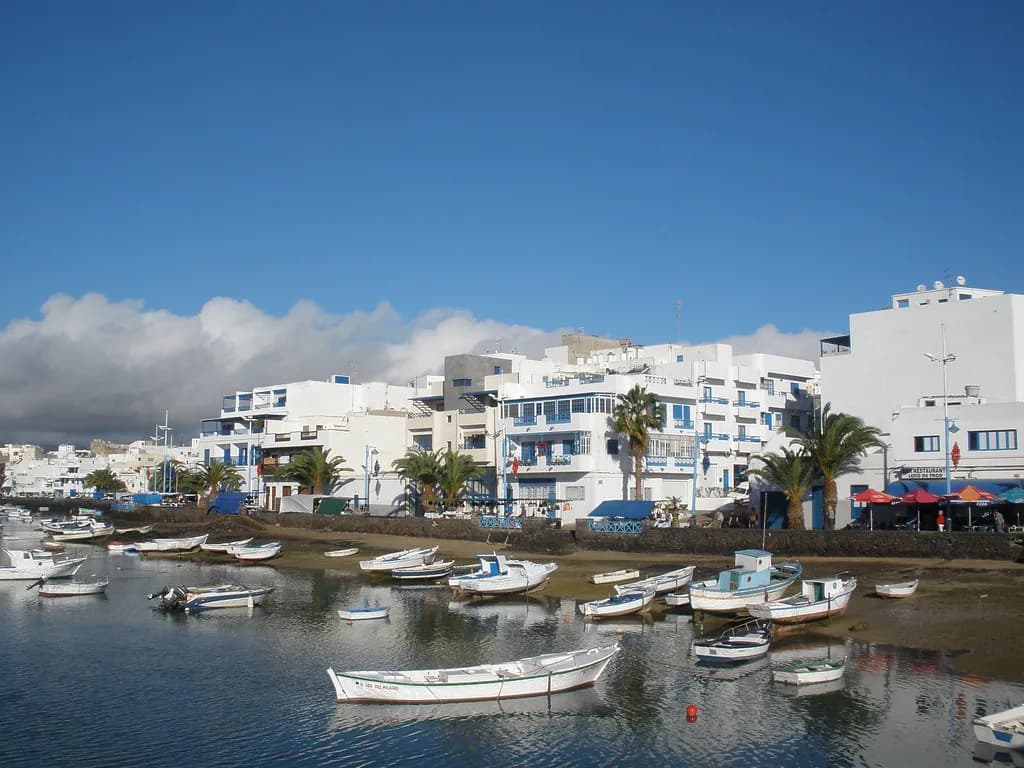
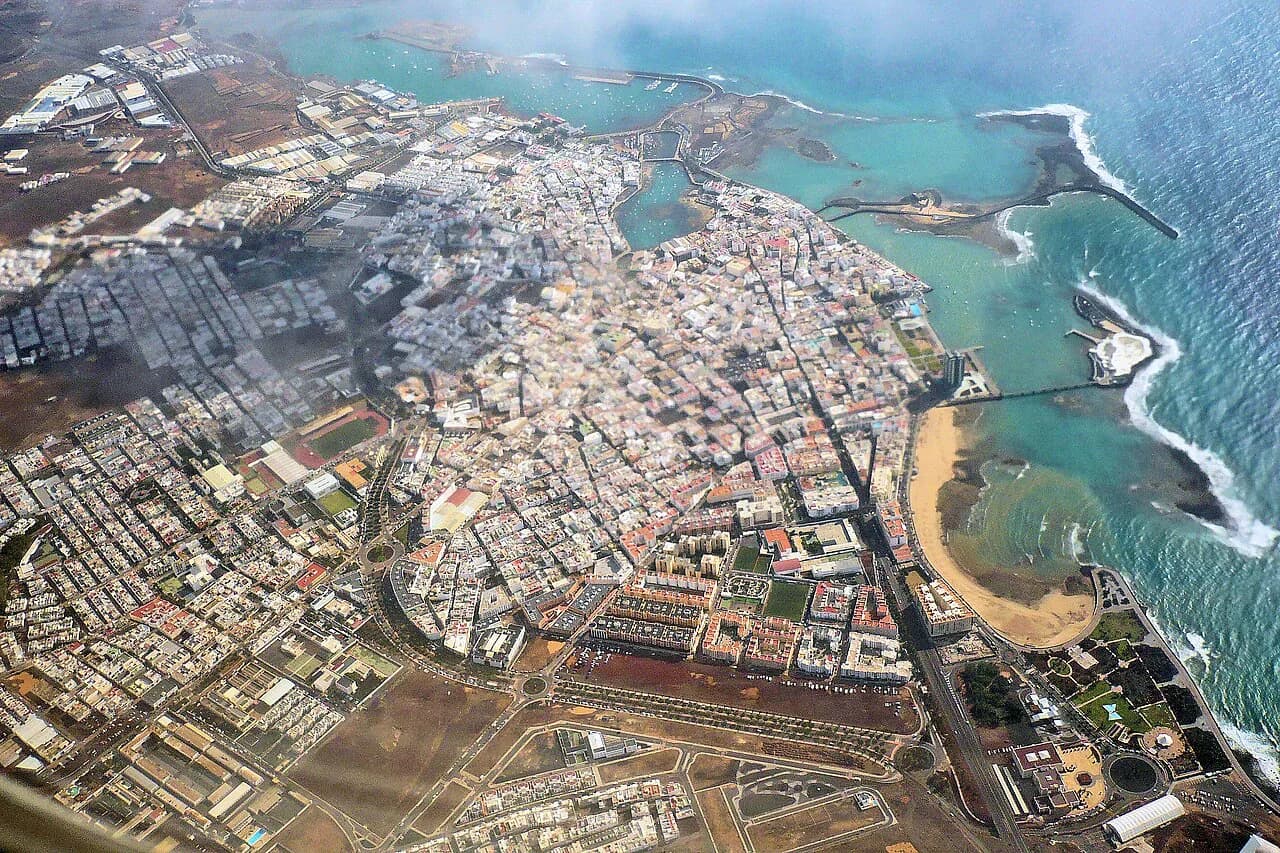
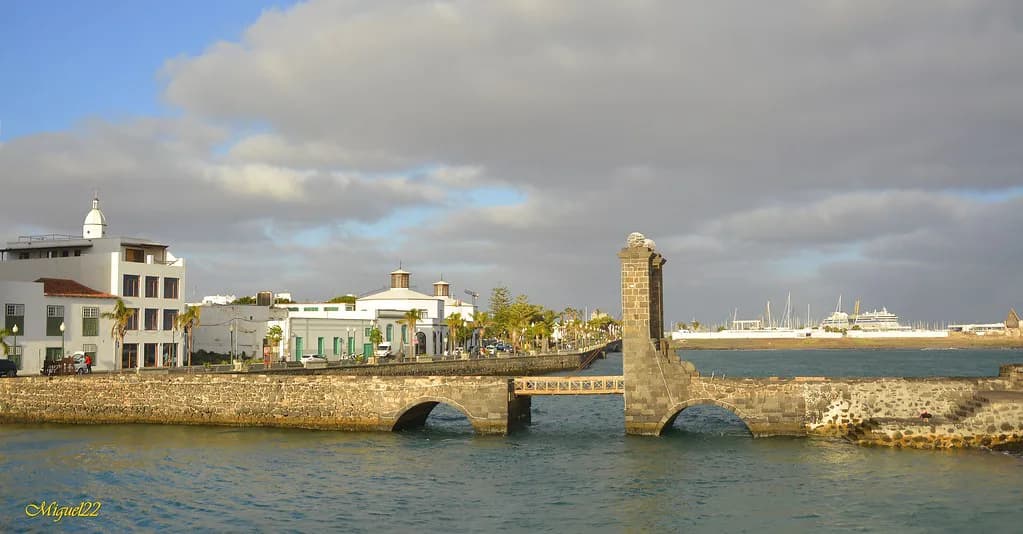
Arrecife is a working port city rather than a resort, and that is its appeal: you get a real Canarian capital with a compact historic centre beside the water. The old town clusters around the Charco de San Ginés, a sheltered inlet ringed by low white buildings, and it is the obvious place to start a walk.
Two fortresses frame the centre. The Castillo de San Gabriel sits on its own small island reached by a causeway, and the Castillo de San José on the northern edge holds a contemporary art collection. Give the old town and lagoon a couple of hours at an easy pace, more if you plan on a museum.
For errands and bigger shops, Arrecife has the Open Mall Lanzarote on the edge of the city, useful if a town day coincides with a wet or windy spell. British travellers used to resort strips will find the capital quieter and cheaper for a coffee stop.
Teguise: white houses, the plaza and the Callejón de la Sangre
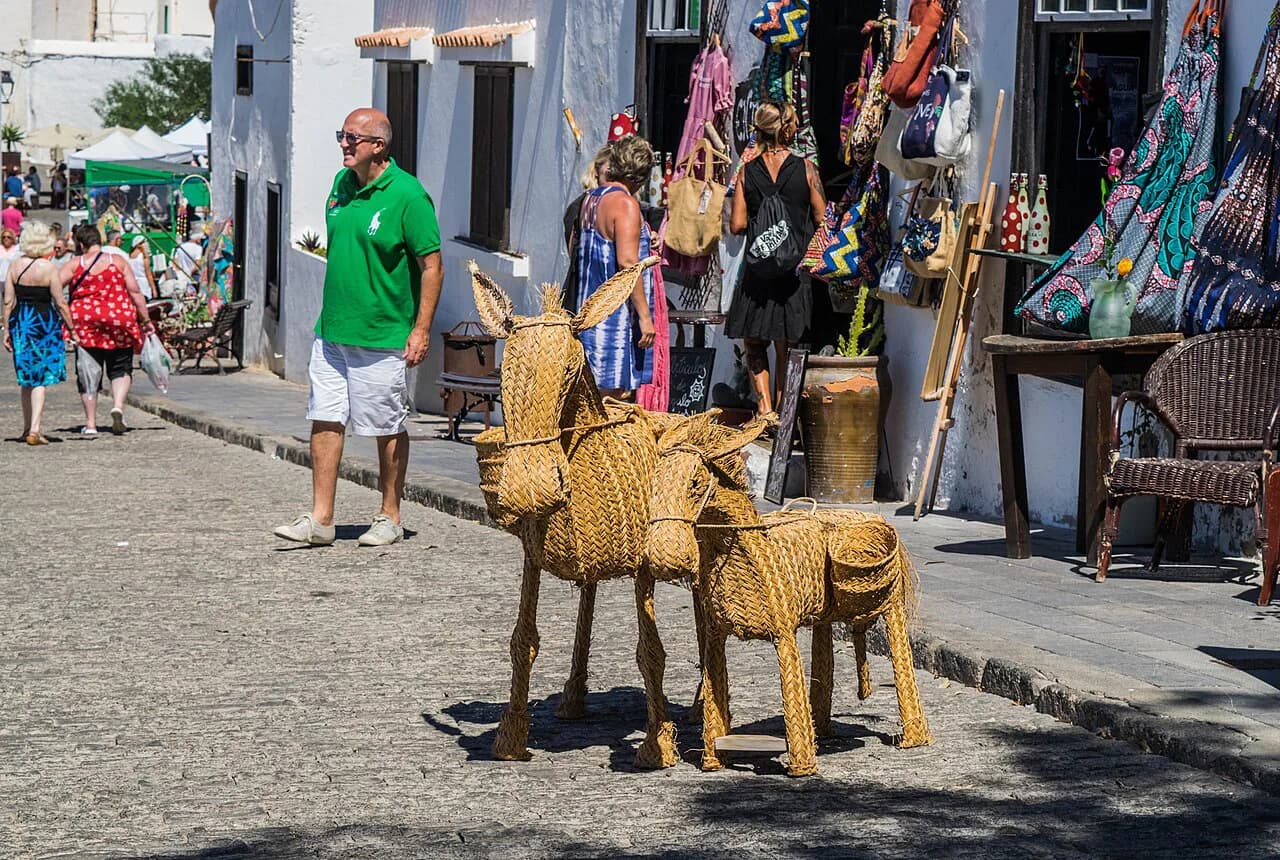
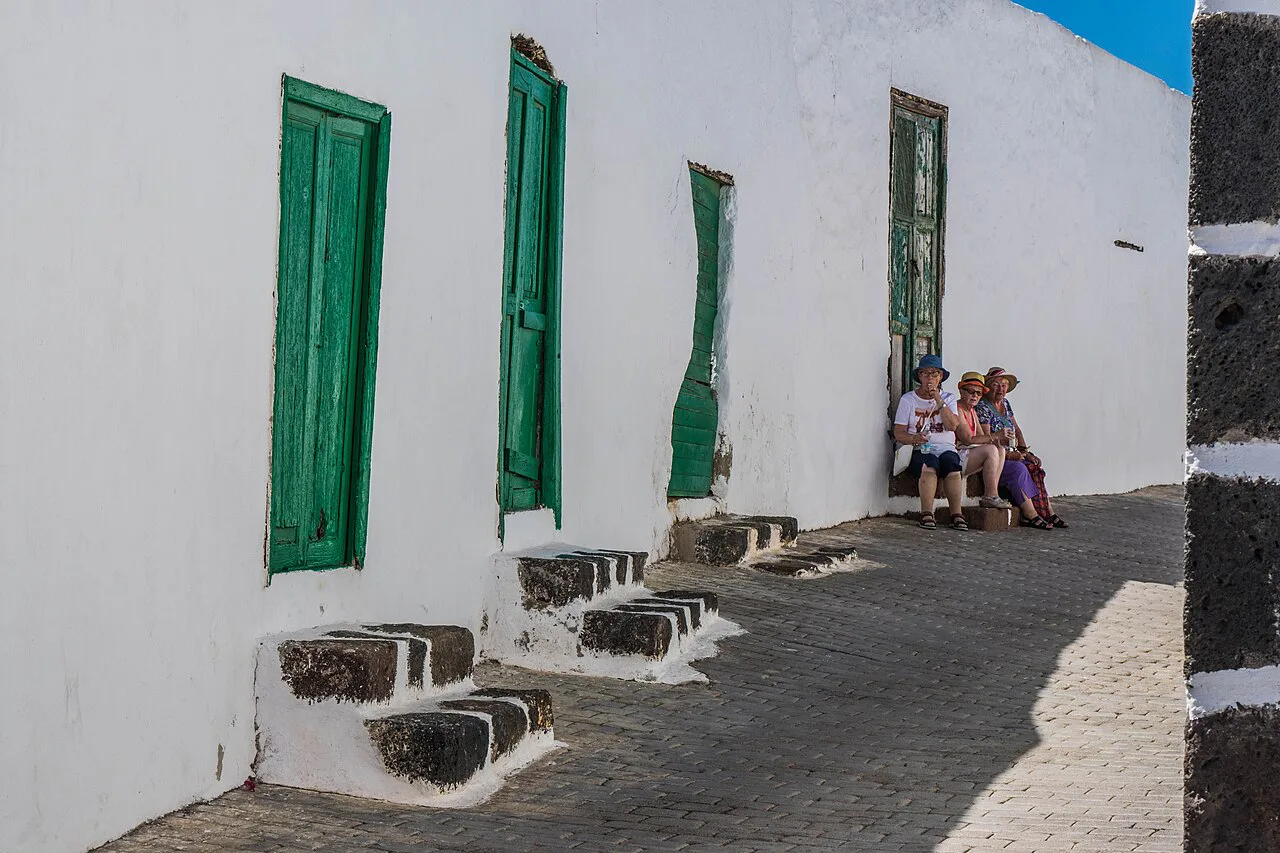
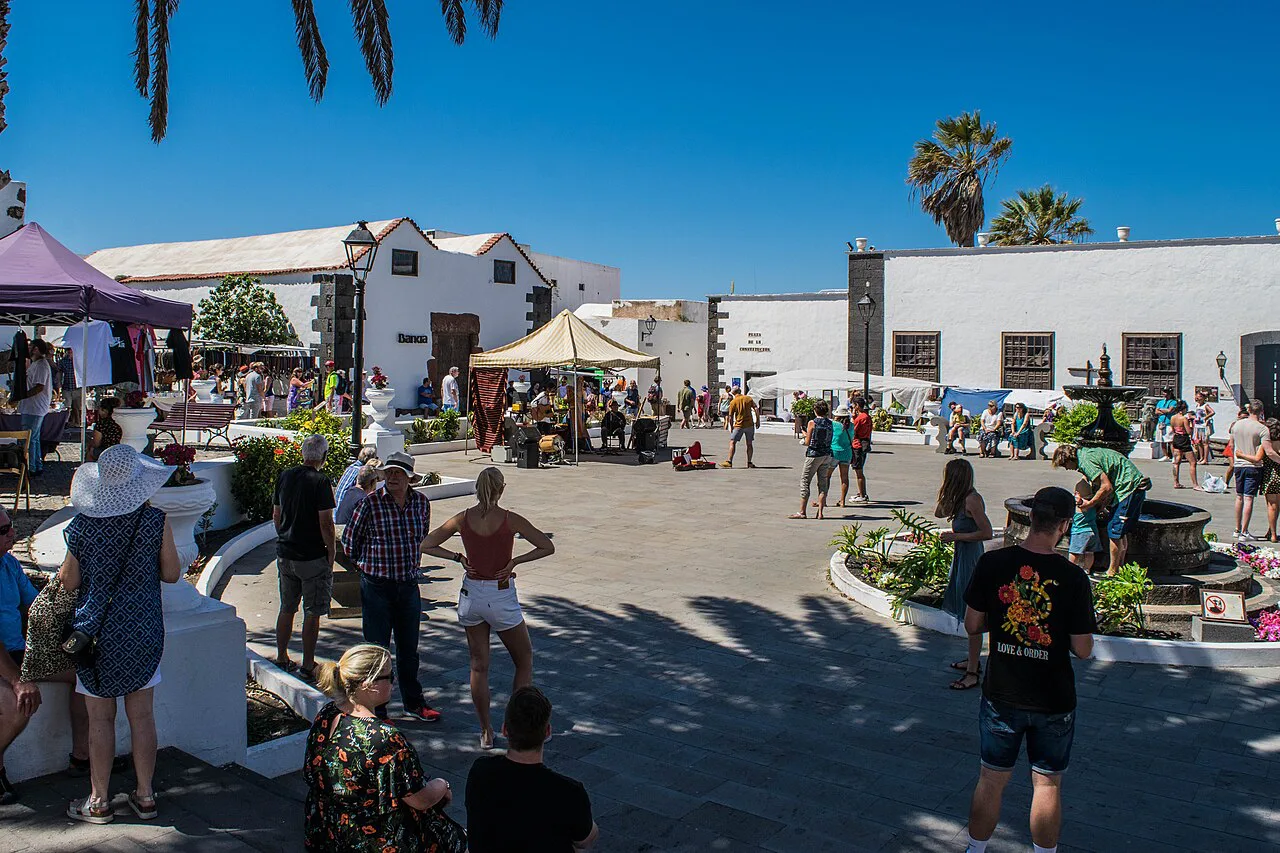
Teguise keeps the look of an old capital: low white houses with dark wooden joinery, a central plaza with a church, and lanes that reward wandering without a map. It is the single most rewarding inland town on Lanzarote and needs about two hours.
The plaza is the natural pause, with cafés and restaurants around it, and from there the lanes lead out past the church towards the town's older edges. One lane carries the name Callejón de la Sangre, a reminder of a fight between islanders and Moorish raiders, and it is worth finding for the name alone.
Parking sits outside the historic core, so plan on a short walk in from the edge rather than driving to the plaza. Teguise's elevation makes it a touch cooler and breezier than the coast, which is welcome on a hot day.
Costa Teguise: the resort beside the water
Costa Teguise is a purpose-built resort a few kilometres east of the old town, laid out in low-rise blocks and villas around a string of small coves. It has no historic core, so treat it as a base or a place for an evening stroll rather than a sight.
Its beaches and promenade are the draw, and public transport links it to Arrecife and Teguise. If your short break is built on the resort, the historic towns are a half-day excursion inland rather than the other way round.
The inland villages: Yaiza, Femés and La Geria
Yaiza sits on the southern route towards Playa Blanca, a white village with a church and a small plaza, and it makes a natural pause on the drive between the wine country and the southern resorts. Femés, higher up towards the south-west, is smaller still and looks out over the lava fields towards the sea.
The real point of this stretch is La Geria, the wine country where vines grow in individual pits scooped out of volcanic ash and shielded by crescent-shaped stone walls. Driving through it is the sight; the villages are stops within it.
South of here the coast road brings you to Los Hervideros, where the sea surges into collapsed lava tubes, and on to El Golfo and the green lagoon of Charco de los Clicos in the crater beside it. These are short stops of twenty minutes or so each, and they pair well with the villages on a single loop.
Jardín de Cactus at Guatiza and the northern villages
The Jardín de Cactus at Guatiza, in the north-east, is a walled garden of hundreds of cactus species, with a free car park at its entrance. It is a short, easy visit, and the stone walls shelter you from the wind that sweeps across the surrounding fields.
From Guatiza the road climbs north past Punta Mujeres and the coast at Caletón Blanco, then on towards the Mirador del Río where the view opens across to the island of La Graciosa. These are orientation points rather than towns, but they sit naturally on the same northern run.
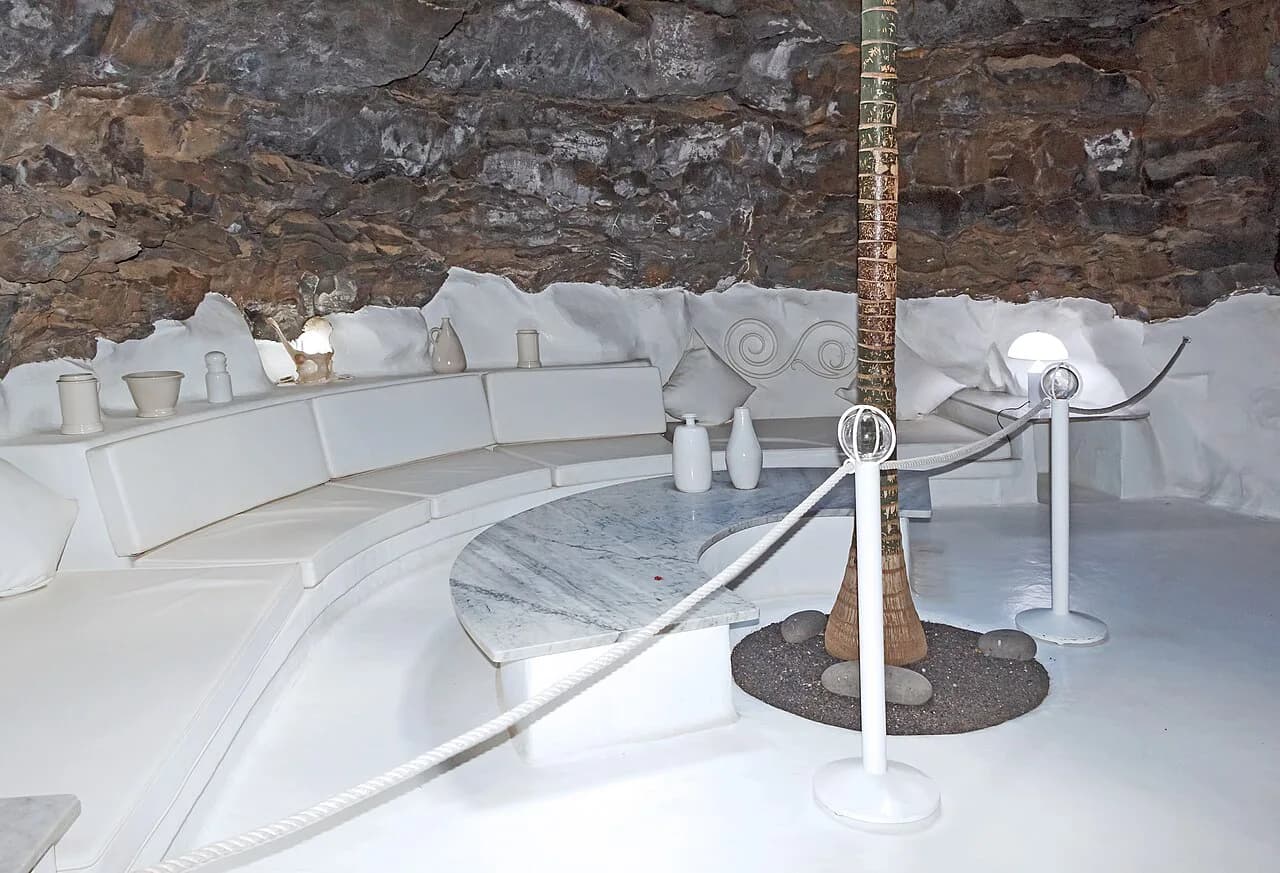
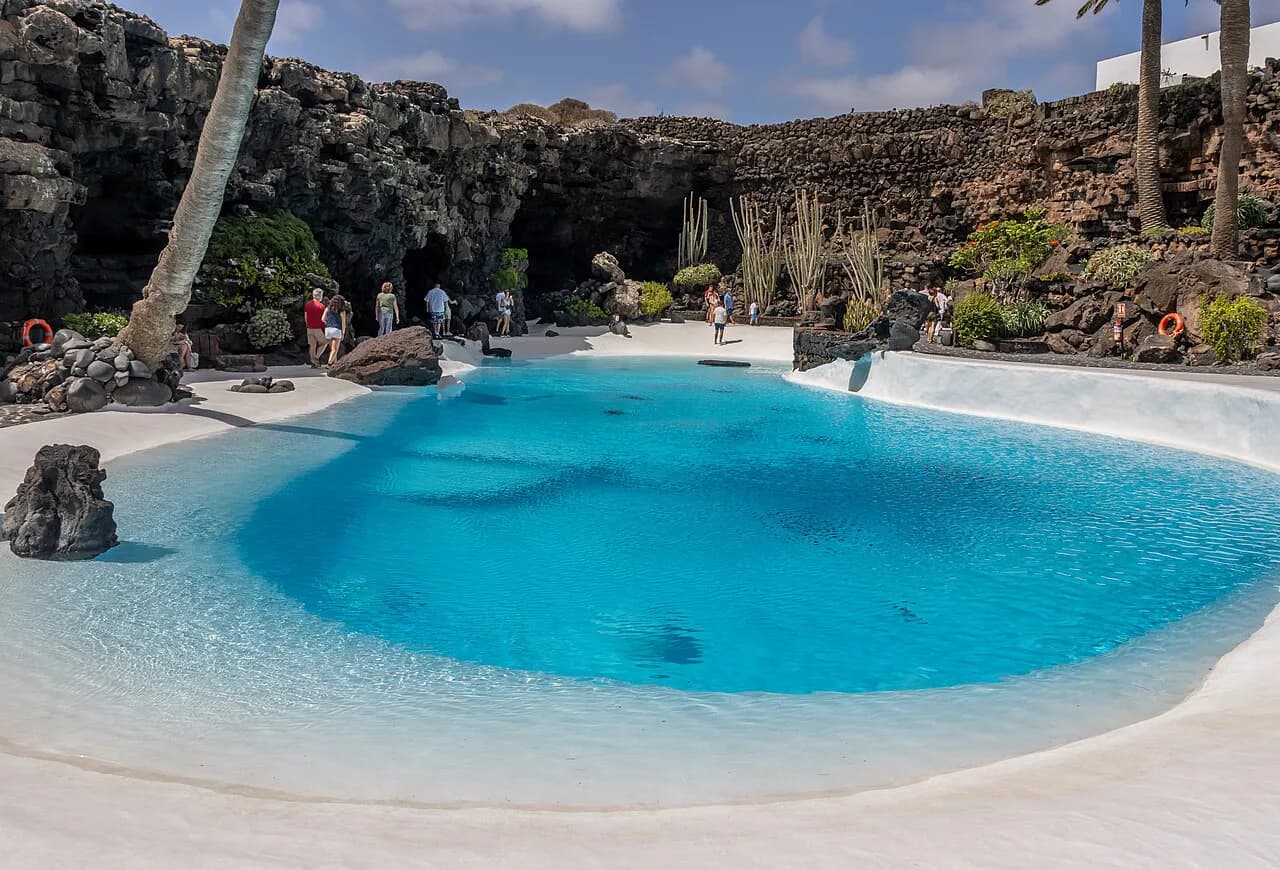
Further south along the same northern road, the Cueva de los Verdes is a volcanic tunnel lit for visitors, while the Jameos del Agua nearby is a César Manrique project built into a collapsed section of the same tube, with an auditorium and a pool. Both make good stops if the weather closes in on the coast.
How to link the towns on a short break
A car gives the most freedom, and for a compact island it is the difference between seeing two towns and seeing five. Bus services connect Arrecife, Costa Teguise and Teguise, but the inland villages and the volcanic sights are much harder without a car; check current timetables with the operator on the day.
A simple, sensible loop starts in Arrecife for the old town and lagoon, drives inland to Teguise for a long lunch and a wander, and returns through La Geria towards the south. Reverse it if you want the evening light over the lava fields.
If you would rather not drive, the day tours that run from the main resorts cover the big volcanic sights and often Teguise as well, though they move at group pace and leave little time for wandering off. That trade-off is worth weighing against the freedom of your own car.
Pairing a town with Timanfaya and the volcanic sights
The Parque Nacional de Timanfaya is the island's centrepiece, a landscape of lava and ash where guides demonstrate the heat still under the surface with experiments at the visitor centre, and there are camel rides on the edge of the park. It fills a big chunk of a day, so plan a town either side of it rather than both on the same morning.
Montaña Colorada and the Centro de Visitantes e Interpretación de Timanfaya make good adjuncts if you want more geology without another full stop. The park's own arrangements for entry, opening and the restaurant inside it change, so confirm them on the official site before you go.
A loop that starts in Teguise, dips through La Geria, runs the Timanfaya edge, and comes back along the coast past Los Hervideros and El Golfo gives you a town, a wine landscape and a volcano in one drive. It is a long day but a rewarding one.
Multi-site tickets: one purchase, several centres
Several of the island's visitor centres are run as a group, and a combined ticket covering four of them was sold for around twenty-nine euros on a 2022 visit, with the pass stamped at each site you enter. Treat that figure as history and check the current price on the official booking site before you commit.
The practical detail is where you collect the physical ticket. Picking it up at a quieter centre, such as the Jardín de Cactus with its own free car park, saves queueing at the busiest sites, and that helps when a cruise ship or a coach party lands at the same time.
Where the towns fall short: heat, closures and thin transport
Inland towns such as Teguise and Yaiza sit above the coast and get hot at midday in summer, and many smaller churches and shops close for a long lunch or on Mondays. Build your day around a morning in town and a longer lunch, rather than fighting the heat at one o'clock.
Public transport between the villages is thin and infrequent, so a day built on buses needs a tighter plan than one built on a car. Where the timetable matters, check with the operator rather than trusting a leaflet picked up in a resort.
The resorts' beaches, from Famara in the north to Papagayo in the south, are separate from the towns and better treated as a different kind of day. If your interest is architecture and history, keep the coast for an evening walk and give the daylight to the inland towns.
Money and timing for a day of towns
Budget for parking in the resorts and in Teguise's outer car parks, and for entry to the fortresses and visitor centres, which vary. Cash is less necessary than it once was, but a few euros for a car park or a small museum is sensible. Prices and hours change, so check them before you set out.
Allow two hours for Arrecife's old town and lagoon, two for Teguise, and an hour for a village and its church. A day that also takes in a visitor centre or the volcano needs a full day, and the winter wind will slow you down at the exposed northern stops.
Which town to build your day around
If you only have one town day, make it Teguise in the morning and Arrecife in the afternoon: the old capital for its white streets and plaza, the capital for its lagoon and fortresses. Pair it with La Geria on the way through so the day has a landscape as well as streets.
With more time, add the north for the Jardín de Cactus and the Jameos del Agua, and a loop through Yaiza to the coast at Los Hervideros and El Golfo. A car makes all of it fit; on buses, pick one or two towns and keep the stops close.
Frequently Asked Questions
What's the most popular part of Lanzarote?
The southern resorts and the volcanic interior draw the largest numbers, and Timanfaya is the single most visited sight. Teguise and Arrecife are the main towns for historic streets, while Costa Teguise and Puerto del Carmen are the established resort bases.
Which is better, Costa Teguise or Playa Blanca?
They serve different holidays: Costa Teguise is a low-rise resort near the historic towns and the airport, while Playa Blanca sits at the southern tip near Papagayo and the route to Yaiza and La Geria. Pick by what you want within easy reach rather than by ranking.
What is the nicest town in Lanzarote?
That depends on what you want from a town. Teguise has the strongest historic character, Arrecife the working capital atmosphere and the lagoon, and the inland villages the quietest setting; most travellers find something to like in each.
Sources
Notes for your next Spanish town break
Optional updates to our guides.
You might also like
Continue reading
More guides you'll find useful