César Manrique's Houses in Lanzarote: Tahíche and Haría
César Manrique built his home into five lava bubbles at Tahíche, now the Fundación César Manrique. Here is what you see, with tickets and opening hours.
On this page
There are two César Manrique houses you can visit in Lanzarote, and they answer the question differently. The house most travellers mean is the Fundación César Manrique at Tahíche, the home Manrique built into five natural lava bubbles in the island's centre; the second is the Casa-Museo in Haría in the north, where he lived later among palms. This guide covers what each one contains, how the visit is laid out, and the published hours, prices and closure that decide your timing.
If your break is based around Arrecife and you have a single free morning or afternoon, go to Tahíche. It is the more architectural of the two, it sits on the route across the island, and it shows the volcanic interior that defines Manrique's work. Haría rewards a slower day in the north, ideally paired with the drive towards the cliffs above La Graciosa.
Which house is 'the' César Manrique house? Tahíche versus Haría
Tahíche is the house Manrique designed for himself after returning from New York, and it is the one he inhabited for the longest stretch of his life. He lived there for two decades, from 1968 to 1988, on a site formed by the lava flows of the island's great eruptions of the 1730s. It now operates as the Fundación César Manrique, open to the public every day.
Haría is the other half of the story and is treated by the foundation as a complementary visit. Its address is the Casa del Palmeral, the house in the palm grove, in the north of the island. Read the two as a pair: Tahíche for the lava architecture, Haría for the later domestic chapter. A combined ticket covers both, which makes the pairing a straightforward decision if you have a car.
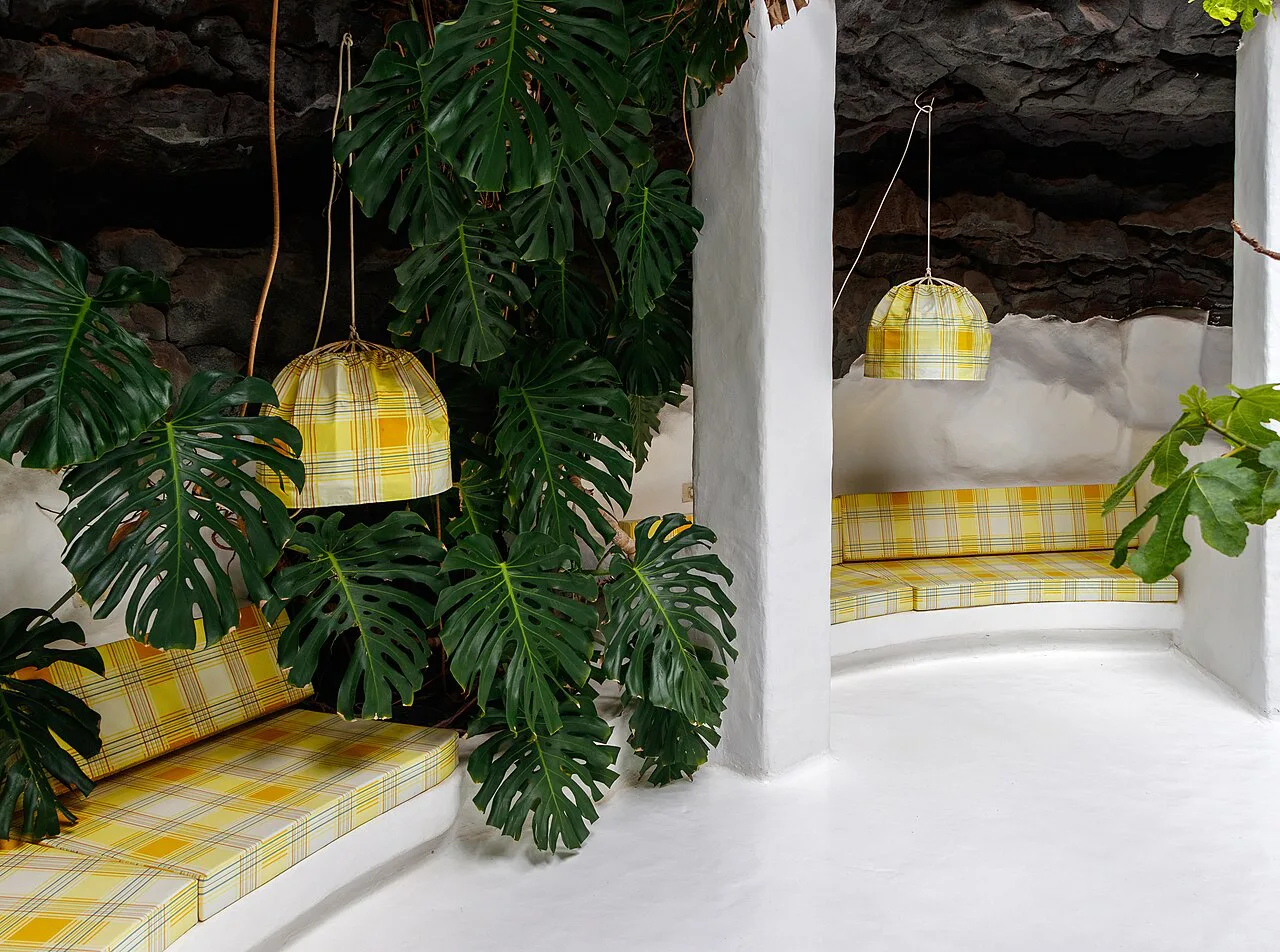
The Fundación César Manrique at Taro de Tahíche: a house built into five lava bubbles
The house occupies 3,000 square metres on a 30,000-square-metre estate at Taro de Tahíche, on Calle Jorge Luis Borges in the village of Tahíche. Manrique placed it directly in the middle of a lava flow, and the whole design turns on the conversation between the built structure and the volcanic ground around it. The upper floor borrows from traditional Lanzarote architecture while adding modern elements such as wide windows and generous, top-lit spaces.
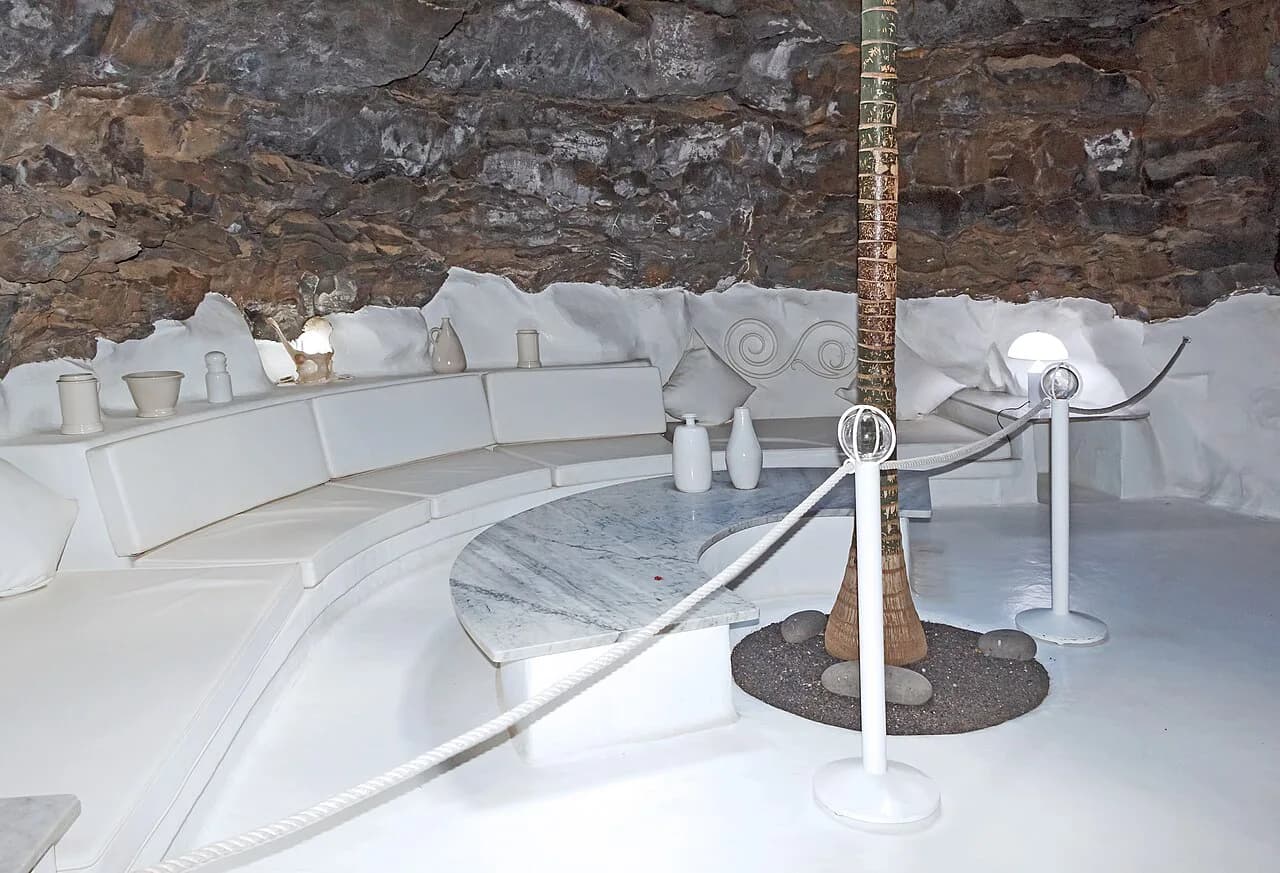
The reason the house is famous lies below that upper floor. Five natural volcanic bubbles are linked by tunnels cut through the lava, producing habitable rooms at a lower level that feel unlike anything above ground. This is the layout decision worth knowing before you arrive: you are not touring a conventional villa room by room, but moving between chambers formed by the eruption itself.
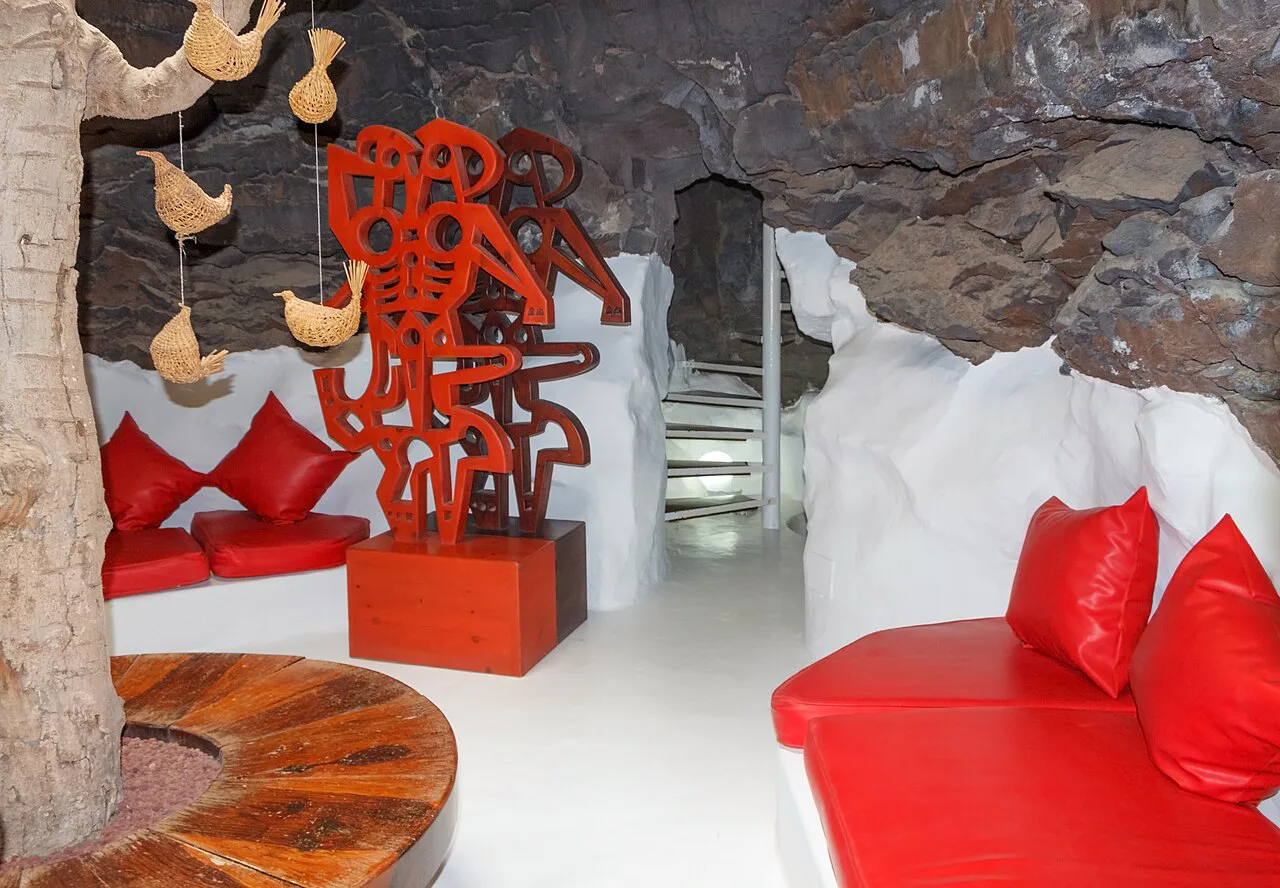
What you actually see inside Tahíche: the lower level, pool, dance floor, oven and studio
The lower level opens onto practical, lived-in spaces rather than museum vitrines: a pool, a small dance floor, an oven and a barbecue, all set among abundant vegetation and constant basalt. The colours come from white walls, green planting and black rock rather than from display cases. If you want the photograph that sums up the visit, this is the section to slow down in.
The final space on the way out is Manrique's former studio, now a room showing his painting. That sequencing is deliberate on the foundation's part: you walk through the architecture and the volcanic interior first, then arrive at the artist's own work last. Allow the studio time even if you are running late for a later stop in the north.
The gardens at Tahíche: lava, socos windbreaks and Manrique's mural
The gardens wrapping the house mix fruit trees and other planting with the blackness of lava and volcanic ash, and the windbreaks known on the island as socos. Sculptures are set among the beds, including a colourful mural. The effect is a controlled contrast rather than a botanical collection, so treat this as part of the architecture and not a separate garden to tick off.
Because the planting sits against bare basalt and ash, the garden reads differently at different times of day. Morning light is the easier choice if you plan to photograph the mural and the lava walls before heading north towards Haría or west towards the Timanfaya road.
Opening hours, last entry and the one day it closes
The foundation publishes opening every day, public holidays included, from 10:00 to 17:30. The box office closes at 17:00, visitors are cleared from 17:20, and the only annual closure is 1 January. Build your day around the box office rather than the closing time: a 16:45 arrival buys you a rushed walk-through.
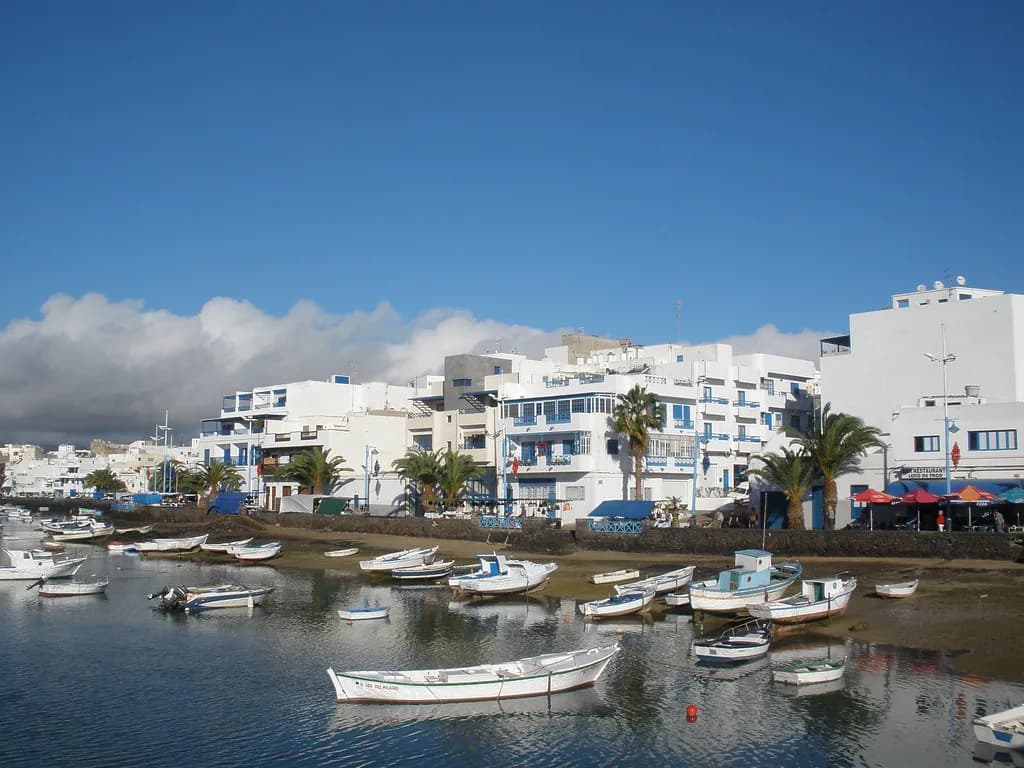
For a short break based in Arrecife, the afternoon slot works well if you have flown in that morning. Start with the capital's own old town and the Charco de San Ginés, then drive inland to Tahíche once the day has cooled, arriving well before the box office shuts. Check the foundation's site for seasonal or holiday variations before you set out.
Tickets in EUR, the combined Tahíche and Haría ticket, and child prices
Standard entry to the Fundación César Manrique at Tahíche costs €10. The combined ticket covering both Tahíche and the Casa-Museo in Haría costs €17, a saving if you intend to see the two houses on the same trip. Children aged 7 to 12 pay €3 for a single entry or €4 on the combined ticket; the foundation's published child rate applies to that age band only. For more Manrique sights around the capital, see Things to Do in Arrecife.
The combined ticket is the clearest money trade-off on this page. If your itinerary already points north towards Haría and the Mirador del Río, buy combined and treat the extra as the cost of a second visit rather than a separate day out. Tickets can be bought at either house, so you do not need to commit in advance at Tahíche.
The Casa-Museo César Manrique in Haría: the house in the palm grove
The Haría house sits in the palm grove that gives it its name, in the north of Lanzarote and within reach of the road climbing to the Mirador del Río. It is a different proposition from Tahíche: smaller in conception, domestic rather than volcanic, and best seen as the companion piece the foundation itself frames as a complementary visit.
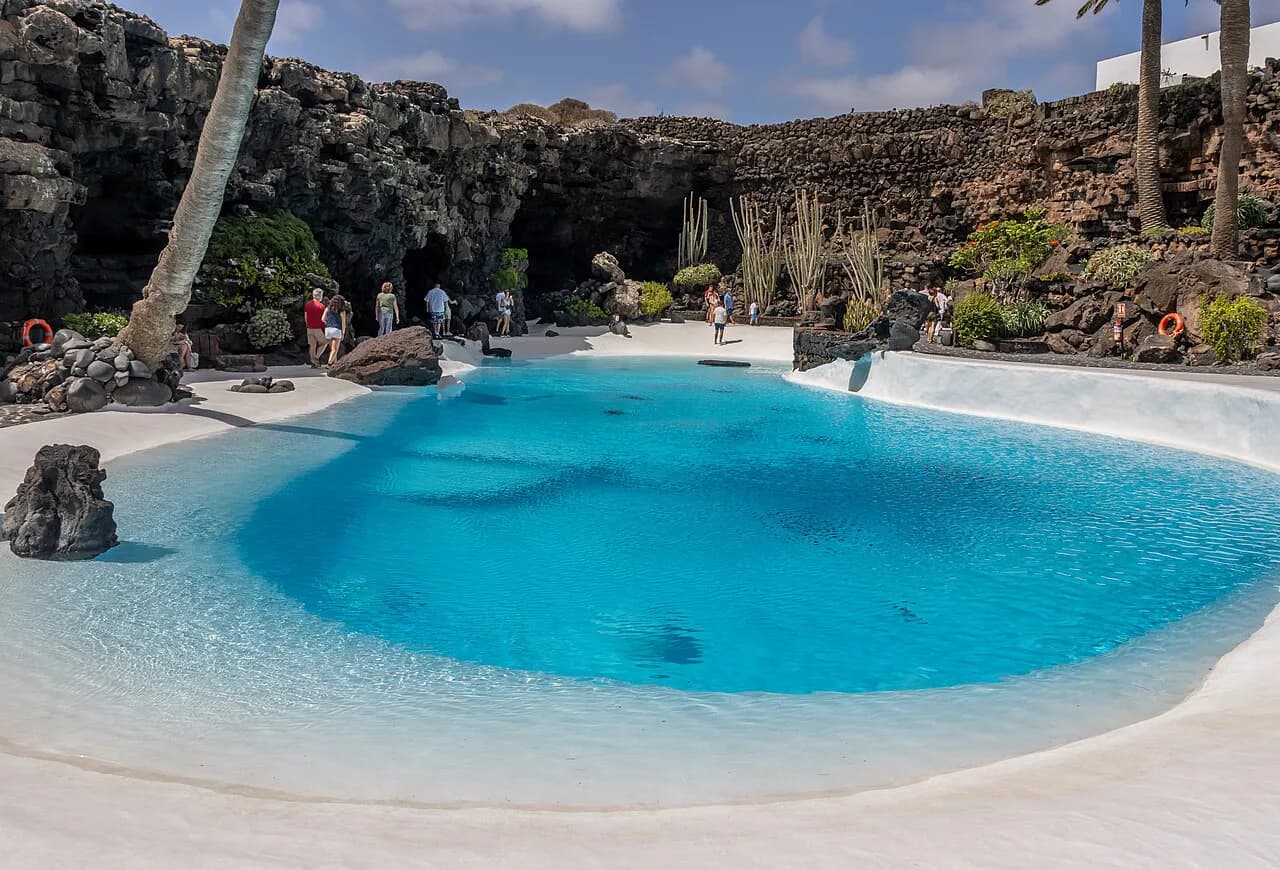
Pair Haría with the other Manrique works in the north rather than making it a lone destination. The Mirador del Río is cut into the cliffs above the Archipiélago Chinijo and La Graciosa, and Jameos del Agua in the municipality of Haría turns a collapsed lava tube into a cave interior with a natural lake. Together they make a full northern day.
How the two houses differ, and which to choose on a short break
Choose Tahíche if you want the signature building, the five lava bubbles and the studio, and choose it first if you are short of time. Choose Haría if you have already seen Tahíche, or if your day is heading north anyway towards the cliffs. The two together take a full day with a car; either one alone fits comfortably into half a day.
Getting to Tahíche and Haría, and how the visit fits around Arrecife
Tahíche sits inland from Arrecife in the centre of the island, at Taro de Tahíche on Calle Jorge Luis Borges. Haría is in the north, close to the Jameos del Agua and the climb to the Mirador del Río. A car is the practical way to link the two in one day, since neither is on the coast road you would otherwise follow from the capital.
Arrecife works as the base for both. The capital has its own small sights, including the Castillo de San Gabriel and the Charco de San Ginés, which fill the time before or after a house visit. If you want a wider list of what to do in Arrecife, Lanzarote between drives, build that into the same day rather than adding separate outings.
Manrique's other works you pass on the road: Jameos del Agua, Mirador del Río, Jardín de Cactus and the wind toys
Manrique's hand is visible across the island, and several works sit on the routes out of Arrecife. Jameos del Agua and the Mirador del Río are in the north; the Jardín de Cactus at Guatiza grows more than 450 cactus species in a former ash quarry on the eastern side. Restaurante El Diablo at the Islote de Hilario in Timanfaya cooks over geothermal heat, though it is a stop to note rather than a reason to detour.
The wind toys are the easiest of his works to see without a ticket. These iron mobile sculptures are placed at road points including the Tahíche roundabout, the airport and outside the foundation itself. Watch for them on the drive in, since they mark the approach to the house before you reach the gate.
Tahíche first, Haría if the north is already on your route
Book Tahíche as the default César Manrique house: €10, open daily from 10:00 with the box office closing at 17:00, and a layout that puts the lava bubbles and the studio in one continuous visit. Add Haría through the €17 combined ticket only if your day already heads north towards the Mirador del Río.
Plan the house around your transport rather than the other way round, since Tahíche is inland and Haría is a northern detour. Allow a half day for one house and a full day for both, and leave the box-office cut-off in your timing rather than the published closing time.
Explore more Arrecife guides
Frequently Asked Questions
Where is César Manrique's house?
Manrique's main house is at Taro de Tahíche, on Calle Jorge Luis Borges in Tahíche in the centre of Lanzarote, and it now houses the Fundación César Manrique. The second house, the Casa-Museo, is in Haría in the north of the island.
Can you visit both César Manrique houses on one ticket?
Yes. The foundation sells a combined ticket covering the Fundación at Tahíche and the Casa-Museo in Haría, and it can be bought at either house. The combined ticket is the sensible choice if your itinerary already includes the north of the island; current prices are on the foundation's official site.
What happened to César Manrique?
Manrique lived at Tahíche from 1968 to 1988, and the house he built there became the headquarters of the foundation that bears his name. His work is spread across Lanzarote in buildings and sculptures that remain open or visible to visitors.
Sources
Notes for your next Spanish town break
Optional updates to our guides.
You might also like
Continue reading
More guides you'll find useful