Jameos del Agua: Manrique's Lava-Tube Grotto in Lanzarote
Jameos del Agua is César Manrique's lava-tube grotto in Haría, Lanzarote, with a blind albino crab lake, a turquoise pool and an underground auditorium.
On this page
Jameos del Agua is a collapsed section of a volcanic tube in Haría, northern Lanzarote, which César Manrique transformed into a Centro de Arte, Cultura y Turismo where art and nature run together. The draw is not a single sight but the sequence: an interior lake linked to the sea, a turquoise pool, and an auditorium carved into the grotto itself. This guide covers what you actually see underground, Manrique's role in shaping it, how it pairs with the nearby Cueva de los Verdes, and how to reach it from the island's resorts and capital.
What the Jameos del Agua visit is
Jameos del Agua sits on the Carretera de Orzola in Haría, in the north of Lanzarote, and is run by CACT Lanzarote as one of the island's art, culture and tourism centres. A jameo is a hole formed when the roof of a lava tube collapses, and this site is one of the intervened Jameos where the opening has been made safe and shaped for visitors. The visit is a walk through that prepared interior, with the natural rock as the setting and Manrique's interventions as the frame.
This is an underground stop rather than an outdoor route, so the experience is largely indoors in a cool volcanic space, which makes it a sensible choice on a hot or windy day in the north of the island. You are looking at rock, water and built elements in combination, not walking a long trail. Treat it as a compact site that rewards looking rather than a place to fill an afternoon on its own.
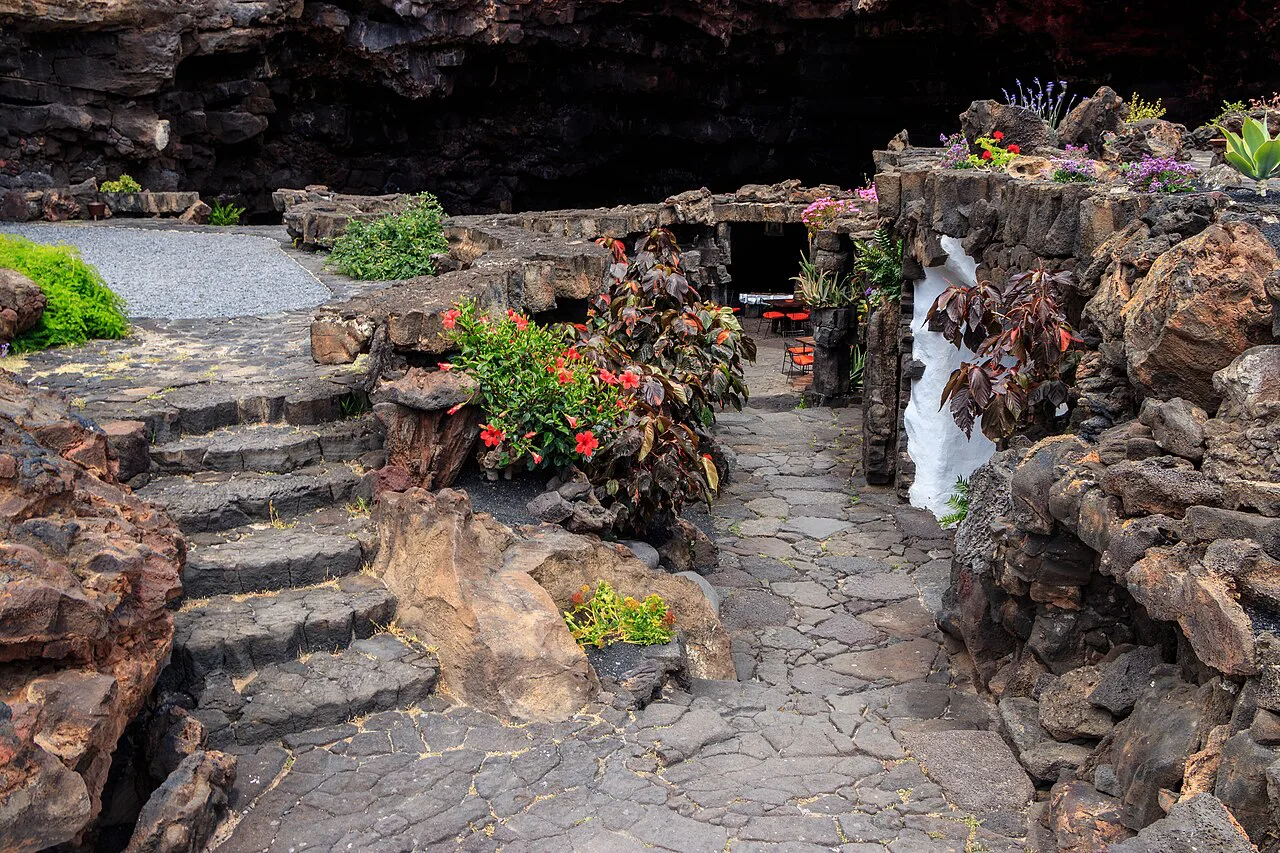
Inside the lava tube: the lake with the blind albino crabs
The centrepiece is a natural lake inside the tube that remains in contact with the sea. Living in that water is an endemic species of very small crabs that are albino and blind, a detail most travellers do not expect from a volcanic cave. It is the combination of the still water and the tiny white animals that makes this chamber unlike a standard show cave.
Look down rather than across when you reach the lake; the crabs are a detail at close range, not a spectacle staged for the room. The water is what carries the sea connection, so the chamber reads as a natural system that happens to sit inside a tourist site. Give it a few minutes rather than passing straight through to the pool.
The turquoise pool and the auditorium in the grotto
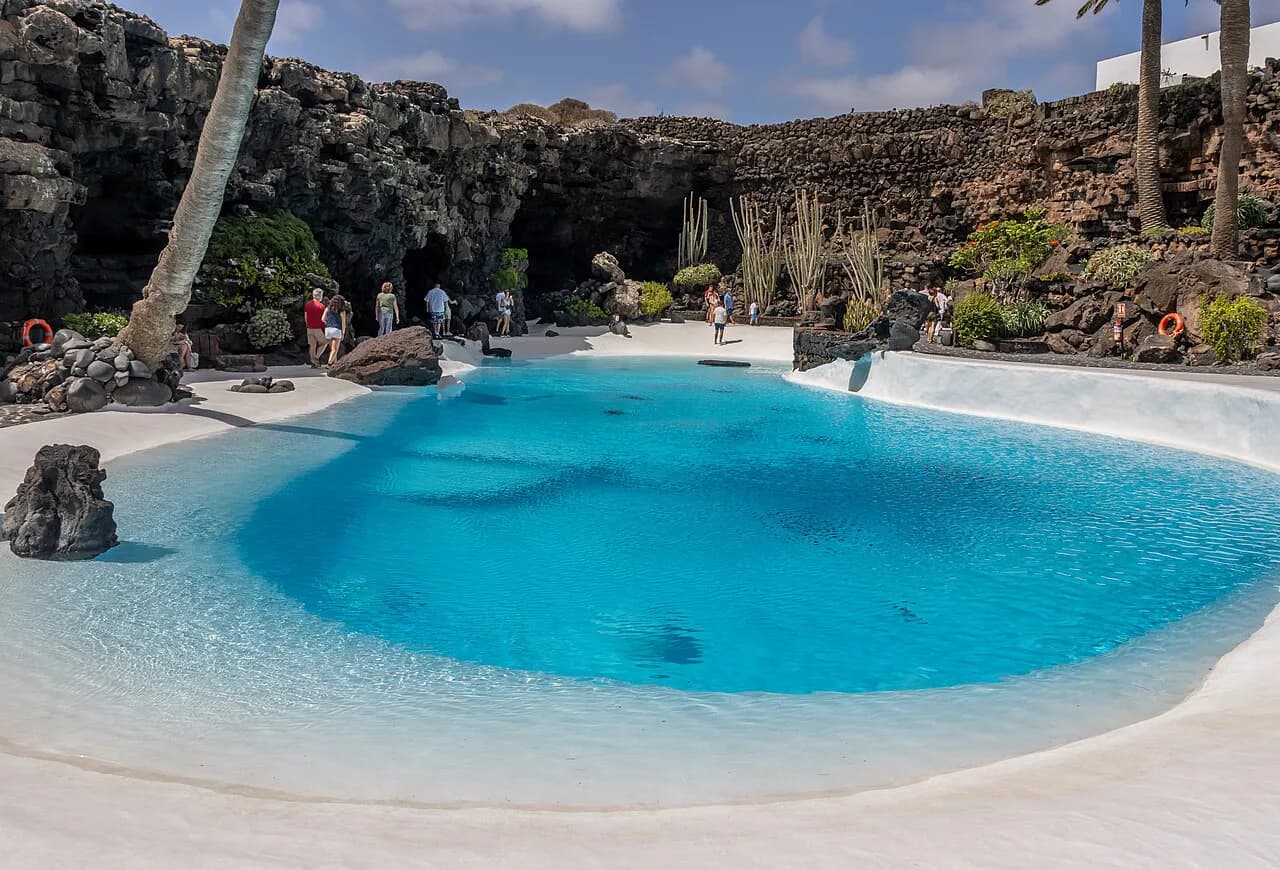
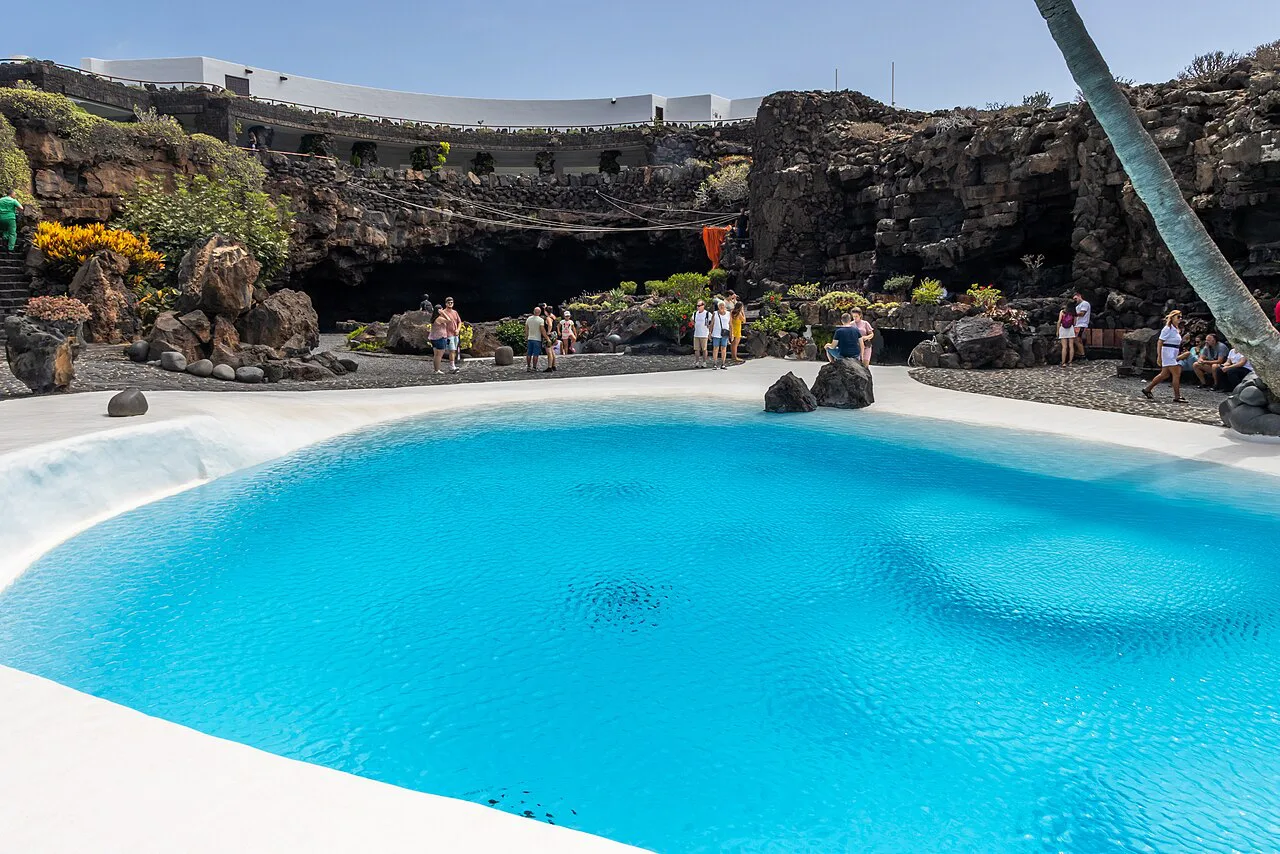
Beyond the lake the route brings you to a pool of turquoise water, an artificial-looking element set against black lava, and to a tunnel known as the Túnel de la Atlántida. The other set piece is the auditorium, described as the only one in the world inside a volcanic grotto, with capacity for 550 people. That scale tells you something about the size of the chamber: this is not a narrow passage but a room that has been adapted for performance.
Whether you find the auditorium the best part depends on what you want from the site. If you came for raw geology, the lake is the stronger moment; if you came for design, the auditorium and pool carry the visit. Either way, the sequence is short, so there is no need to rush the chambers to reach the end.
César Manrique's design and the art-and-nature brief
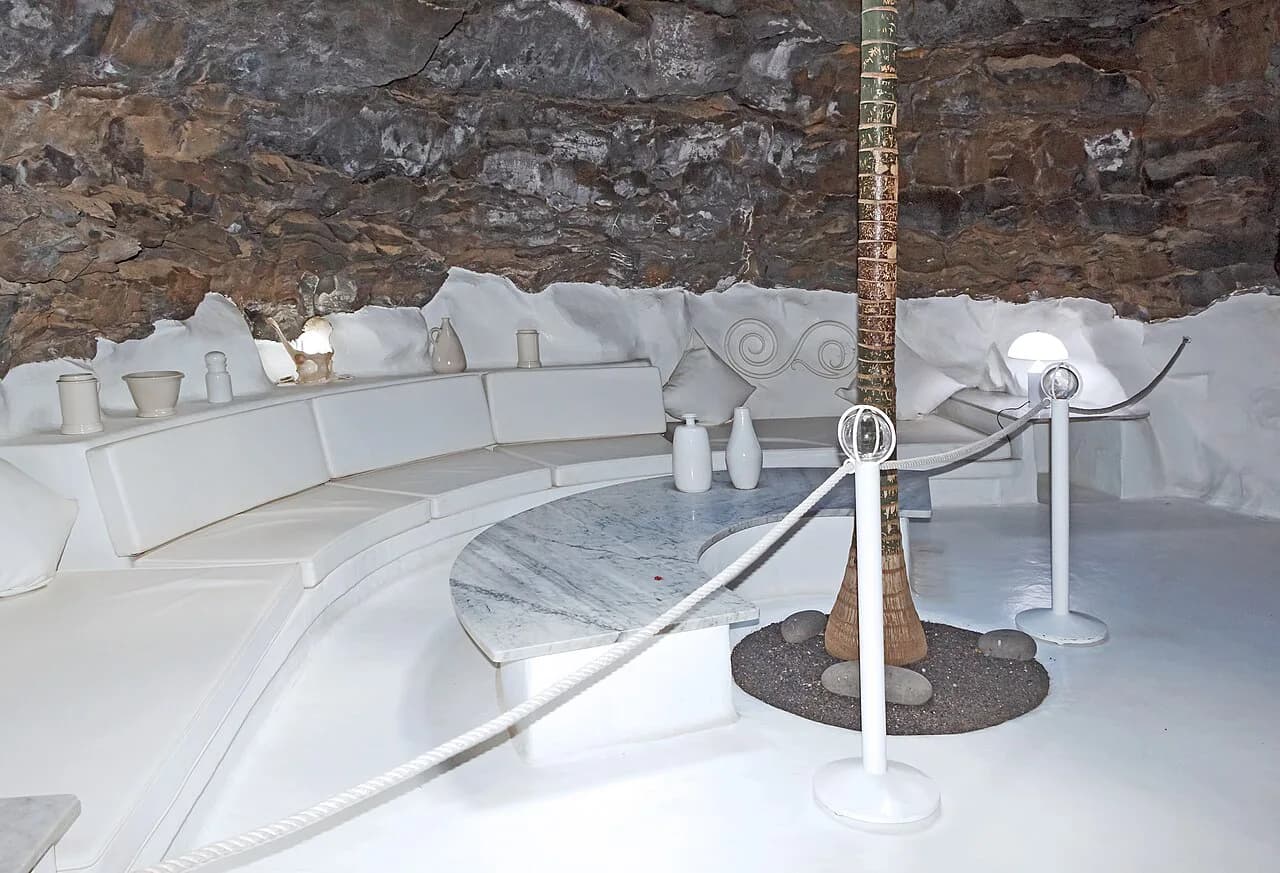
Manrique was the artist who took an existing volcanic tube and shaped it into the centre that exists today, working the architecture into the rock rather than building over it. That approach is the reason the site feels like a single composition of lava, water and planting rather than a cave with facilities attached. If you want the wider picture of his work on the island, a César Manrique house visit gives the domestic and studio side of the same design language.
Knowing that framing changes what you notice: the pool, the openings and the seating are deliberate choices, not found objects. It also means the visit is as much about how a space has been edited as about the geology underneath. Go in expecting a designed environment and the cave earns its reputation more easily.
How long the visit takes and how it pairs with the Cueva de los Verdes
The Cueva de los Verdes and the Jameos del Agua belong to the same volcanic tube formed by the eruption of the Volcán de la Corona, and the two entrances are about 1 kilometre apart. That proximity makes them a natural pairing on a northern Lanzarote morning, with one visit following the other without a long drive between.
The tube itself runs roughly seven and a half kilometres, of which about 1.5 kilometres lie under the sea and can only be reached by scientific divers. Visitors see prepared sections rather than the full length, so treat the Jameos del Agua and the Cueva de los Verdes as two short underground visits with about a kilometre of road between their entrances.
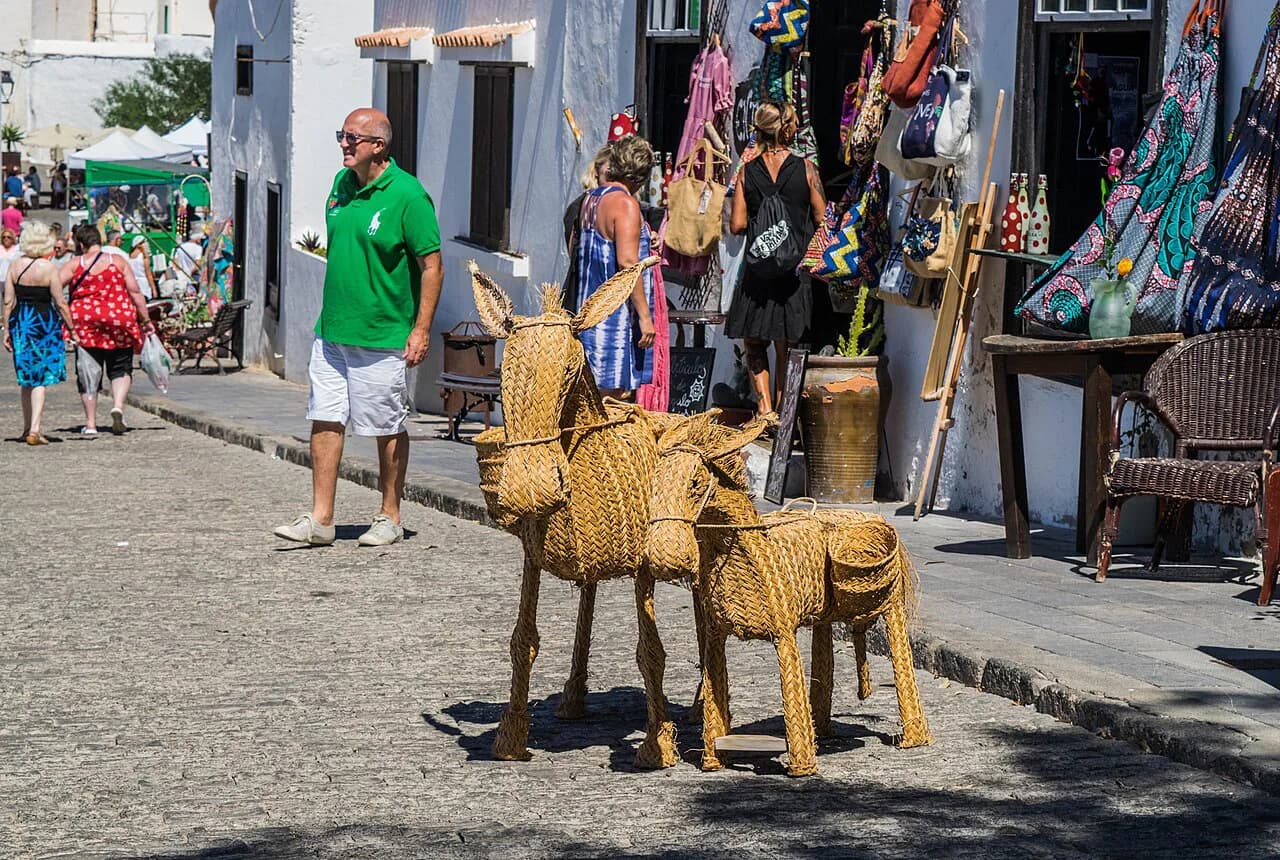
Set against the rest of the island, this is a half-day in the north rather than a full day out. If you are based in Arrecife, the northern run also puts you within reach of Teguise, Lanzarote's old capital, for a slower hour afterwards.
Location on the Carretera de Orzola in Haría, northern Lanzarote
The address is Carretera de Orzola, 35500 Haría, Lanzarote, and the contact number published for the centre is +34 928 84 84 84. The site lies on the road toward Orzola in the north of the island, away from the main resort strips in the south. Plan the drive as a northern excursion rather than a stop tacked onto a day in Puerto del Carmen or Playa Blanca.
Guided coach tours to the site run with pickups from Costa Teguise, Puerto del Carmen, Playa Blanca, Puerto Calero and Arrecife, which suits travellers who would rather not drive the northern roads. Those operators publish their own days and durations, so compare a short Jameos and Cueva de los Verdes morning against a longer island circuit before booking.
If you are arranging the trip around the capital, an Arrecife map helps you fix the northern run against your other stops on the island.
Tickets and opening times
Entry is managed by CACT Lanzarote, the island's network of art, culture and tourism centres, which publishes visiting information for Jameos del Agua on its own site. Prices, opening hours, closing days and any late-opening slots change through the year, so confirm them with CACT Lanzarote before you drive north. Do not rely on a tour listing's headline figure, which bundles transport and other stops rather than the single entry ticket.
Group tours advertised as no-queue visits reflect how the operator handles admission, not a separate entrance at the site. On a short break, buying direct and arriving early in the day can keep the northern run simple and leave the rest of the morning free.
If your day is built around town rather than the north, the things to do in Arrecife, Lanzarote list covers the capital's own plazas and sights for the hours you are not driving.
Is Jameos del Agua for you: a short indoor stop versus an afternoon out
Choose Jameos del Agua if you want one striking, contained interior shaped by an artist, and accept that it will not fill a day. Skip it if your priority is open landscapes or long walks, since the visit happens inside a tube and the appeal is concentrated in a few chambers. Pairing it with the Cueva de los Verdes is the practical way to make the northern drive worthwhile.
The honest trade-off is that the site's reputation rests on a short sequence: the lake, the pool, the auditorium. Travellers who arrive expecting a large complex may feel the visit ends quickly, while those who came for Manrique's design and the blind crabs' lake usually find it memorable. Deciding which of those you are is a better use of time than trying to see everything on the island in one push.
Build the rest of the day around the coast and the interior villages rather than adding more underground stops, and use a wider list of Lanzarote towns to choose where to spend the afternoon.
Book the cave pair, not a single stop
Treat Jameos del Agua as one half of a northern Lanzarote morning, with the Cueva de los Verdes a kilometre away and the drive from Arrecife or Costa Teguise setting the shape of the day. Confirm CACT Lanzarote's current opening times and ticket prices before you go, then decide whether to self-drive or join a coach tour with pickup.
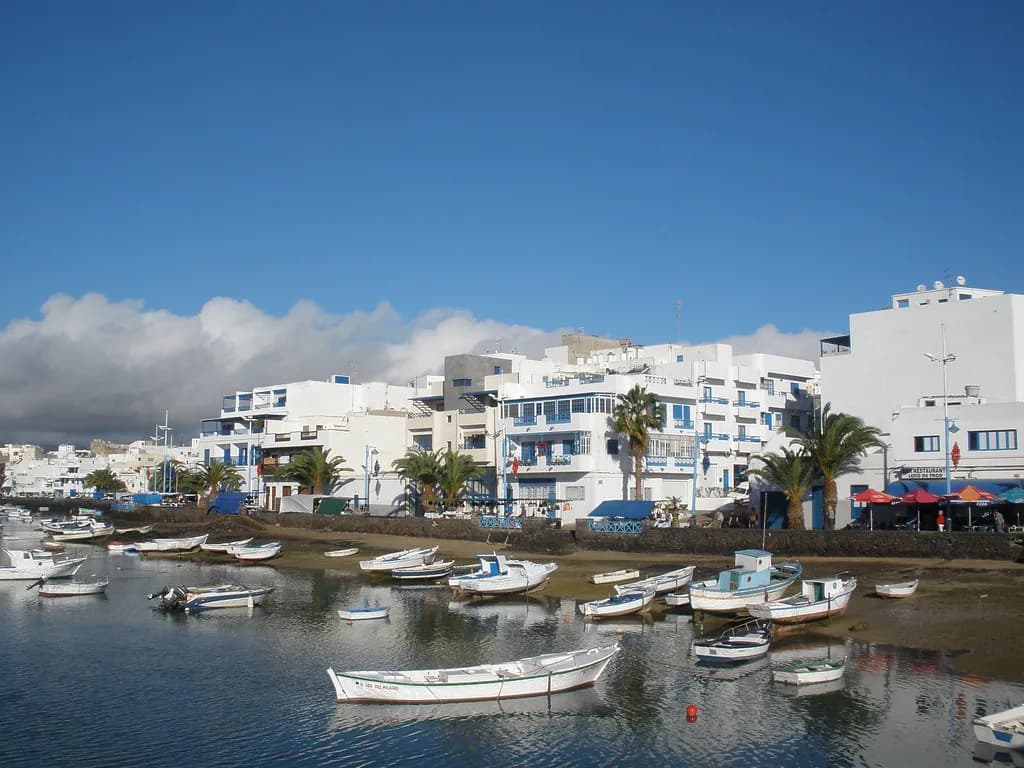
If the capital is your base, finish with the old town around the Charco de San Ginés, which balances a morning underground with an hour on foot in town.
Explore more Arrecife guides
Sources
Notes for your next Spanish town break
Optional updates to our guides.
You might also like
Continue reading
More guides you'll find useful