Things to Do in Tarifa: Old Town, Castle and the Strait
Plan a Tarifa break around the walled old town, the Puerta de Jerez, Guzmán el Bueno castle and the 500-metre adarve walk, with Roman Baelo Claudia nearby.
On this page
Tarifa's old town is the thing to do, and most can be done on foot in a day: the Puerta de Jerez, the lanes off Calle Sancho IV el Bravo, the adarve walk on top of the walls and the Castillo de Guzmán el Bueno. This guide orders those pieces so the walled centre makes sense, then adds the Isla de las Palomas, two parish churches, the covered market, the Mirador del Estrecho and the Roman site at Bolonia. Tarifa sits at the southernmost point of mainland Europe, with the Moroccan coast visible 14 kilometres across the Strait.
The town rewards a slow morning rather than a checklist. Streets are narrow, churches keep their own hours and the Levante wind can change what you do after lunch, so plan one fixed indoor stop and leave the rest loose. Beaches and kitesurfing are here in force; this is a guide to the town itself.
Start at the Puerta de Jerez
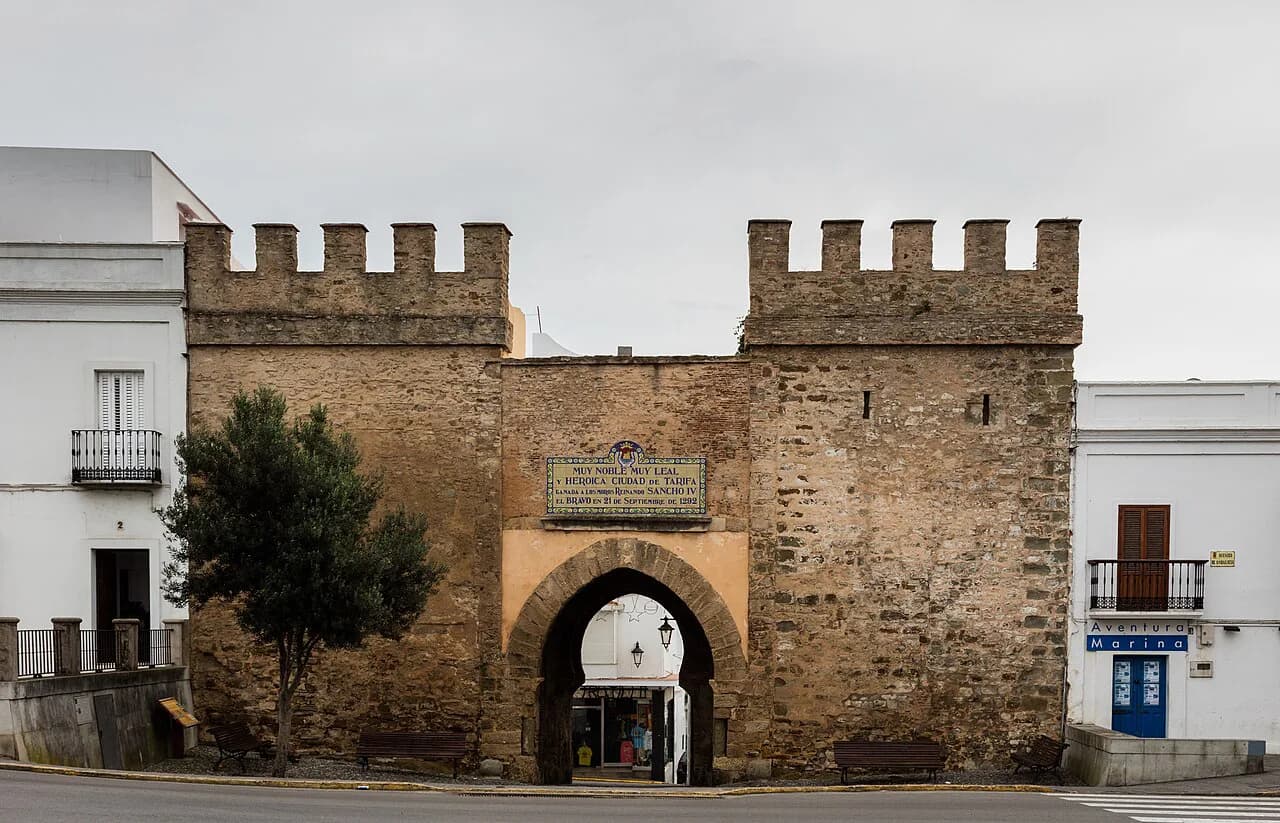
The Puerta de Jerez is the monumental entrance to the old town and the only survivor of the three medieval gates, after the Puerta del Retiro to the east and the Puerta del Mar to the west. It dates from the thirteenth century, part of the Benimerín enlargement of the walls, and is flanked by two crenellated towers. Above the arch an inscription commemorates the taking of Tarifa by Sancho IV el Bravo on 21 September 1292.
Look up inside the gate as well. After the restoration of 2000, a niche with a starry vault was installed to hold El Cristo de los Vientos by the Tarifa-born artist Guillermo Pérez Villalta, in intense blue. Passing through the arch puts you straight into the Arrabal, the largest of Tarifa's three walled enclosures, and into the lanes that made the centre a designated Conjunto Histórico.
Walk the old town lanes
Calle Sancho IV el Bravo runs east to west through the centre and is the spine of the old town, with side alleys narrow enough for arches to bridge them and cast shade. Whitewashed houses, small craft shops and plazas with terrace tables fill the gaps between monuments. Allow a couple of hours simply to wander: no map is needed, and this is the best value in Tarifa because it costs nothing.
To make sense of what you are walking through, think in three rings. The Almedina is the oldest enclosure, wrapped around the castle; the Aljaranda ring comes next; the Arrabal is the broadest, the one you enter through the Puerta de Jerez. The surviving stretches of wall, and the walk on top of them, are what tie the rings together on the ground.
Guzmán el Bueno castle
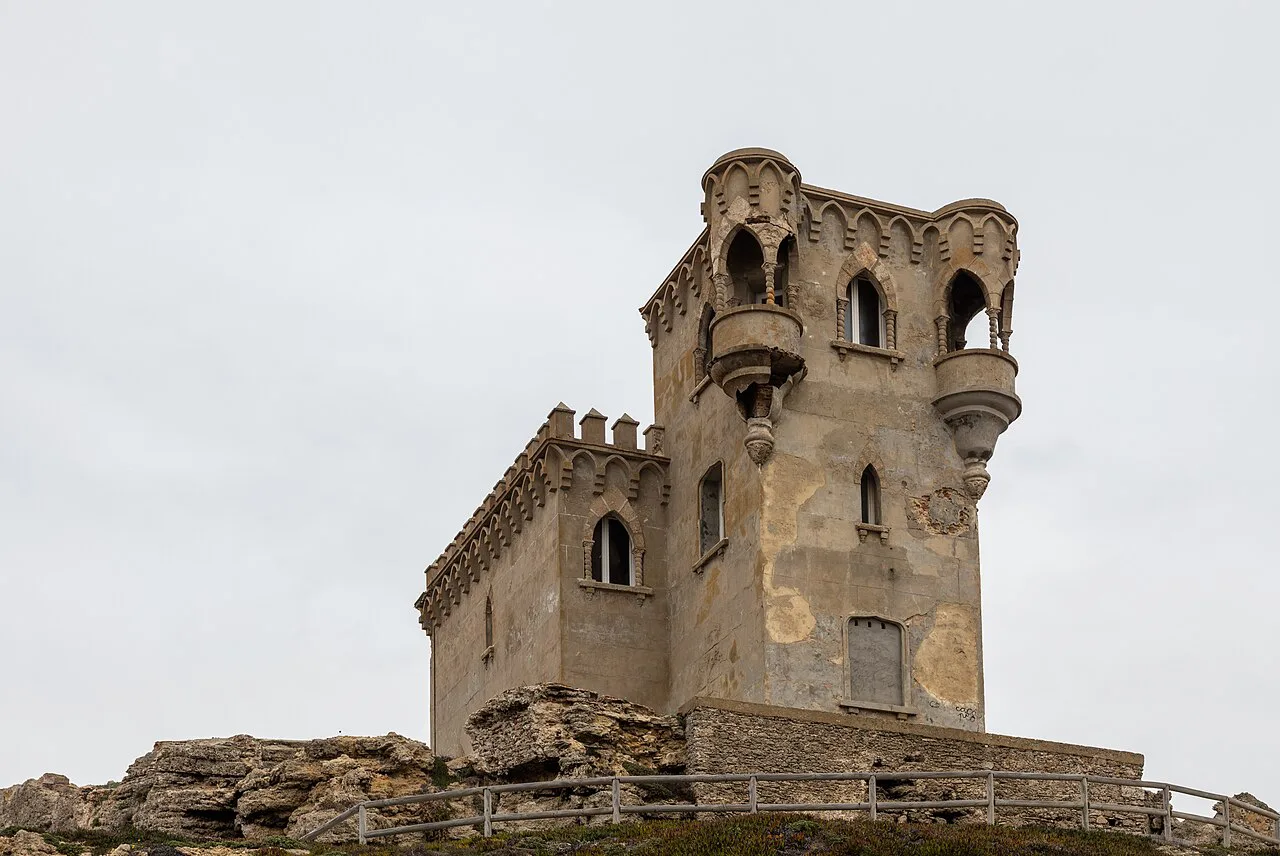
The Castillo de Guzmán el Bueno is Tarifa's most important monument, a tenth-century fortress built on the orders of the Córdoba caliph Abd al-Rahman III and now forming a group with the walls and a series of watchtowers. The story attached to its name is the one every visitor hears: Alfonso Pérez de Guzmán refused to hand over the fortress even when his son's life was threatened. Climb to the towers for the views over the town and the port.
Check the castle's opening hours and ticket price at the gate or through the town's tourist office before you build the day around it, since these change with the season. The entry fee is the one line in a Tarifa budget you cannot plan from the lanes themselves, because the old town outside the walls is free.
The adarve walk on top of the walls
Since 2015 a stretch of the wall-top path, the adarve, has been open between the Torre de la Red and the Torre de los Maderos, roughly 500 metres of walkway with information panels. The views take in the old town, the Isla de las Palomas and the Strait of Gibraltar. It is the best free way to read the shape of the fortifications from above.
Access can be shut, so confirm the walkway is open at the tourist office rather than assuming it will be. Go early if you want the path to yourself, and keep hold of loose items if the Levante is blowing.
Isla de las Palomas and Punta de Tarifa
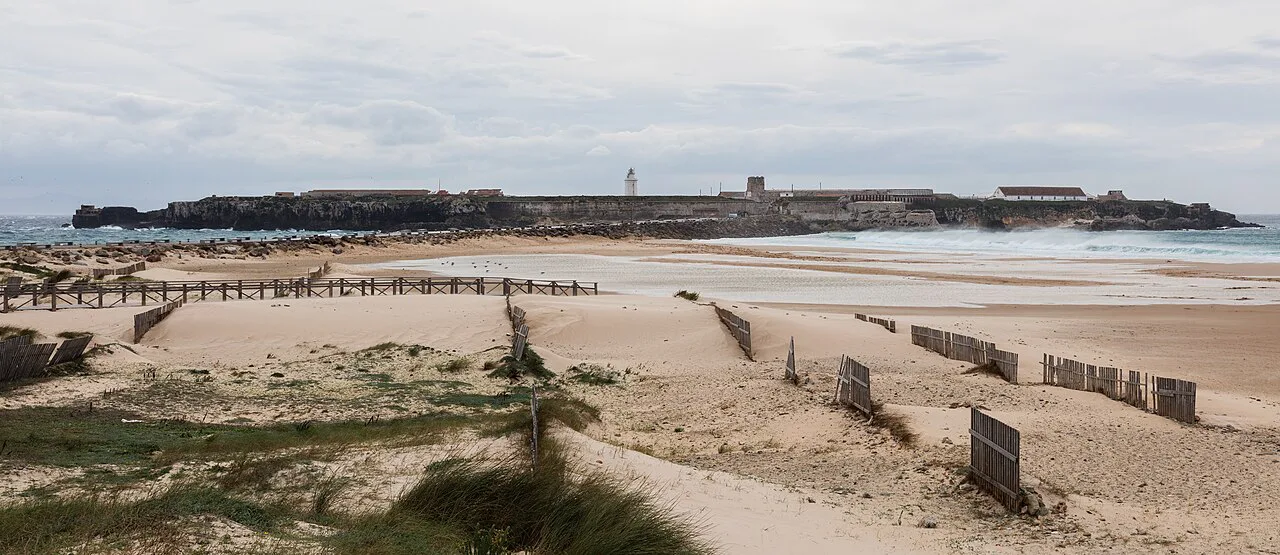
The Isla de las Palomas is joined to the mainland by a road you can walk, which makes the southernmost point of mainland Europe an easy add-on to the old town. The island is larger than the whole of Tarifa's old town, and the Punta de Tarifa marks the true southern tip. Go for the geography and the sight of Africa across the water, not for a beach stop.
Two churches worth stepping into
The Iglesia de San Mateo is the largest church in Tarifa, built in the sixteenth century in a late Gothic style, with an eighteenth-century façade by the architect Torcuato Cayón. The Iglesia de San Francisco de Asís also dates from the sixteenth century and was nearly demolished in the eighteenth, which left it with a mix of Baroque and Neoclassical elements. Look for the stone cord running along its façade and, inside, the sixteenth-century crucifix known as the Santo Cristo del Consuelo, one of the oldest pieces in Tarifa.
Both are working parish churches, so visits fit around services rather than the other way round. If a door is shut, walk another block and come back rather than waiting outside.
Mercado de Abastos
The covered Mercado de Abastos sits inside the old town and works as a short, dry stop between the churches and the walls. It is a market, not a sight with a queue, so treat it as a five-minute detour that tells you what the town eats. This guide leaves the buying and the eating elsewhere.
Mirador del Estrecho
The Mirador del Estrecho is the lookout to aim for when you want the coast of Africa laid out across the water. It is the natural end point of a town day: the same 14-kilometre crossing you read about at the Puerta de Jerez becomes visible. Bring a layer, because a lookout over the Strait is exposed when the wind gets up.
Baelo Claudia at Bolonia
Baelo Claudia, the Roman town by the sea at Bolonia, is the main outing from Tarifa for anyone interested in ruins, with the remains of a Roman city set against the Bolonia setting rather than in a museum case. It fits a half-day out of town and is worth more of your time than a quick photo stop. Check the site's opening days before you go, because it is the sort of place where a closed day wrecks the plan.
Pair it with the Castillo de Santa Catalina, inland on the road out of Tarifa, if you have a car and a spare hour. Between the two you get the Roman and the medieval layers of the region in one loop.
Castillo de Santa Catalina
The Castillo de Santa Catalina lies inland on the road out of town and makes a short stop rather than a destination in its own right. It works best as a break in a day that already includes Baelo Claudia. Leave it out if you are travelling without a car or short of time.
When the Levante blows
Tarifa's wind has a name and a direction, and when the Levante is up the water stops being the point of the day. Shift to the sheltered core: the old town lanes, the two churches, the Mercado de Abastos and the wall-top adarve, which is exposed but short. The Castillo de Guzmán el Bueno gives you a substantial indoor and courtyard stop while the gusts do their worst.
Tarifa on a short break
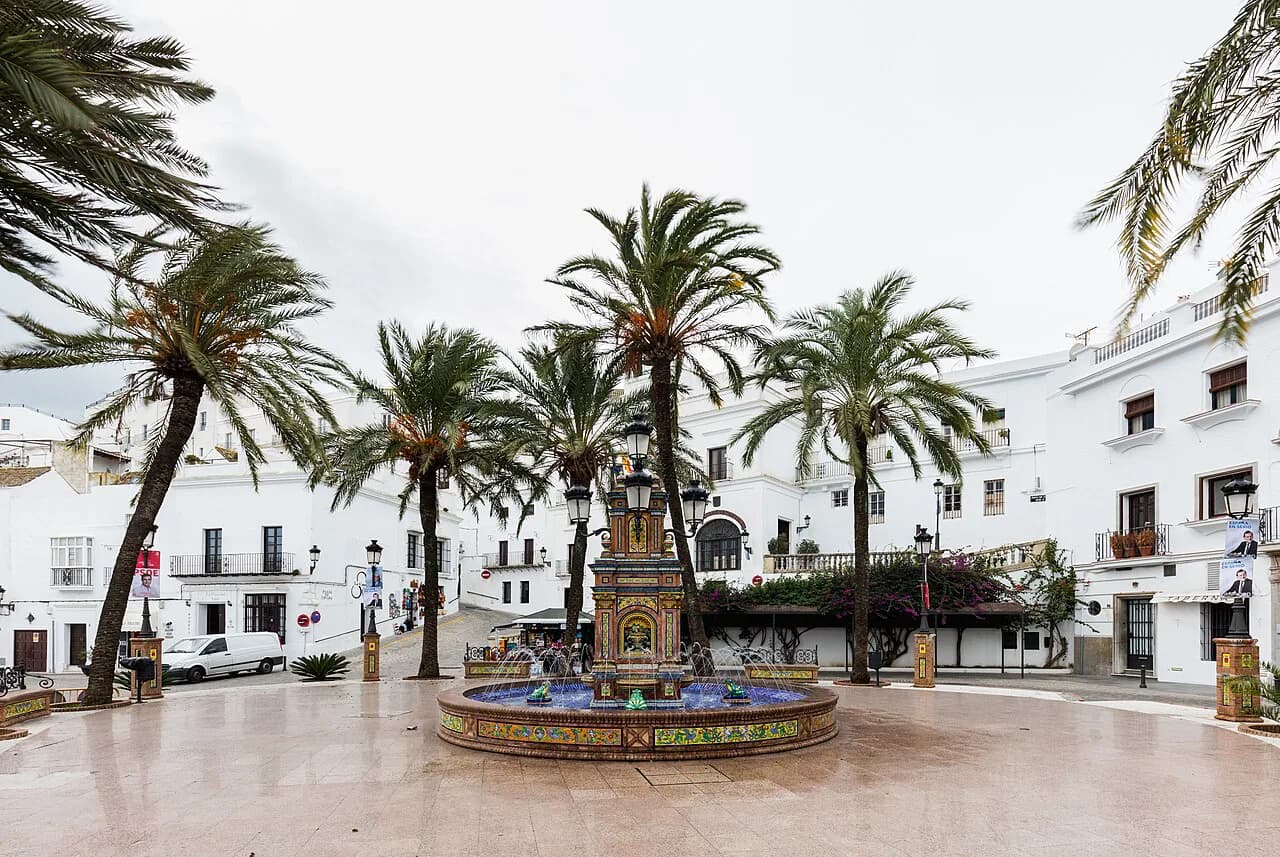
Tarifa is the southern anchor of the Cádiz province, which makes it a natural pairing with the provincial capital: Cádiz, Spain, rewards a separate day among its own whitewashed quarters, and its old town is a different scale of walled centre from Tarifa's. If you are building an Andalusian circuit, Vejer de la Frontera is the white hill town to slot in between the coast and Cádiz, with a Plaza de España that does the job of a town square properly.
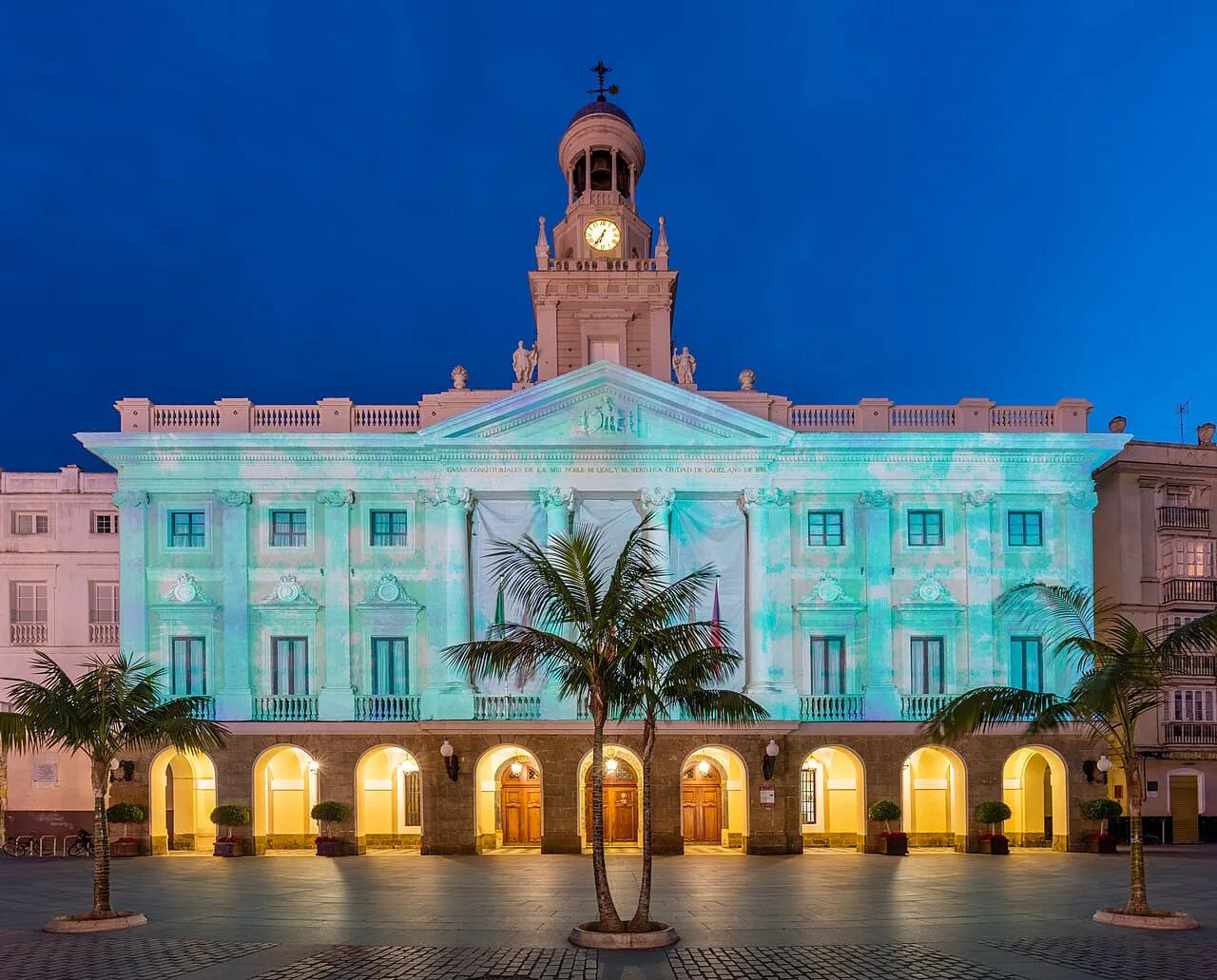
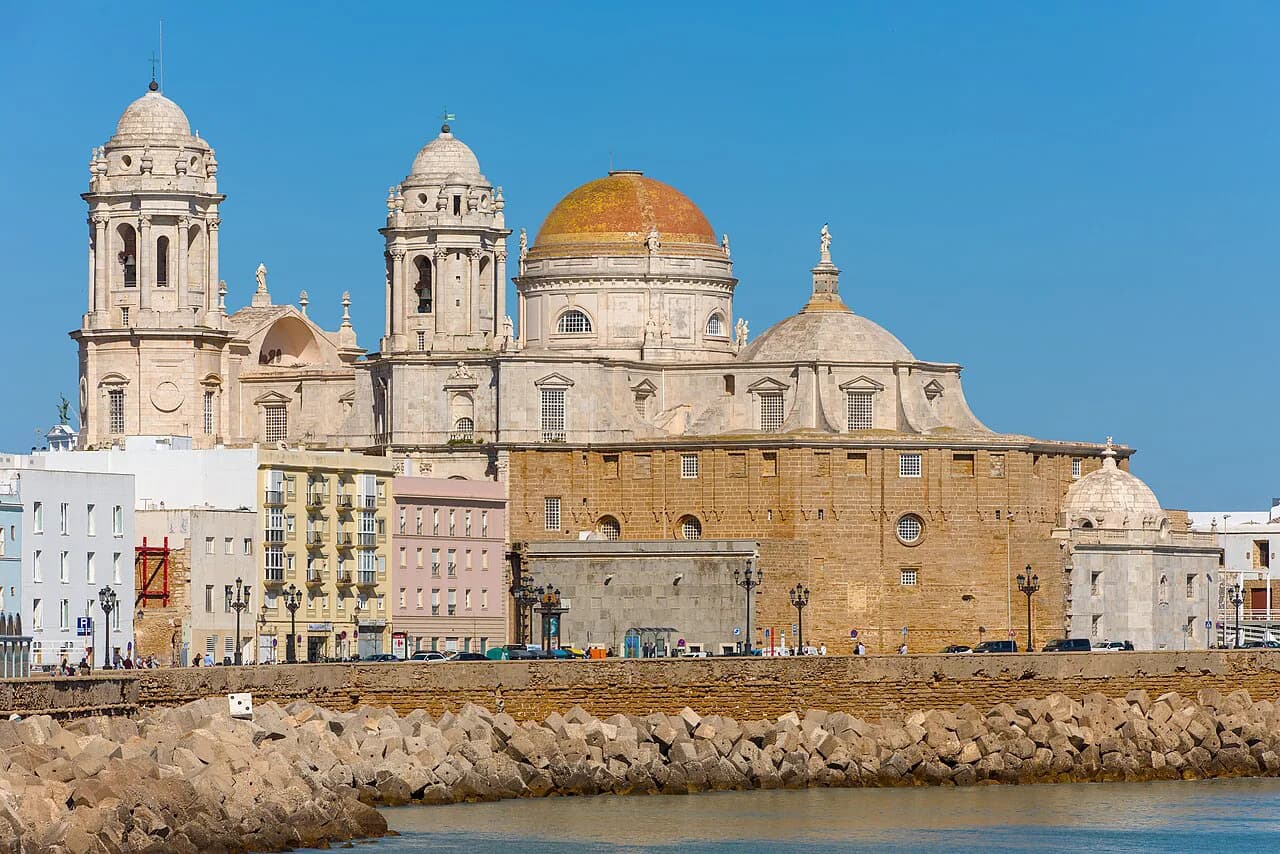
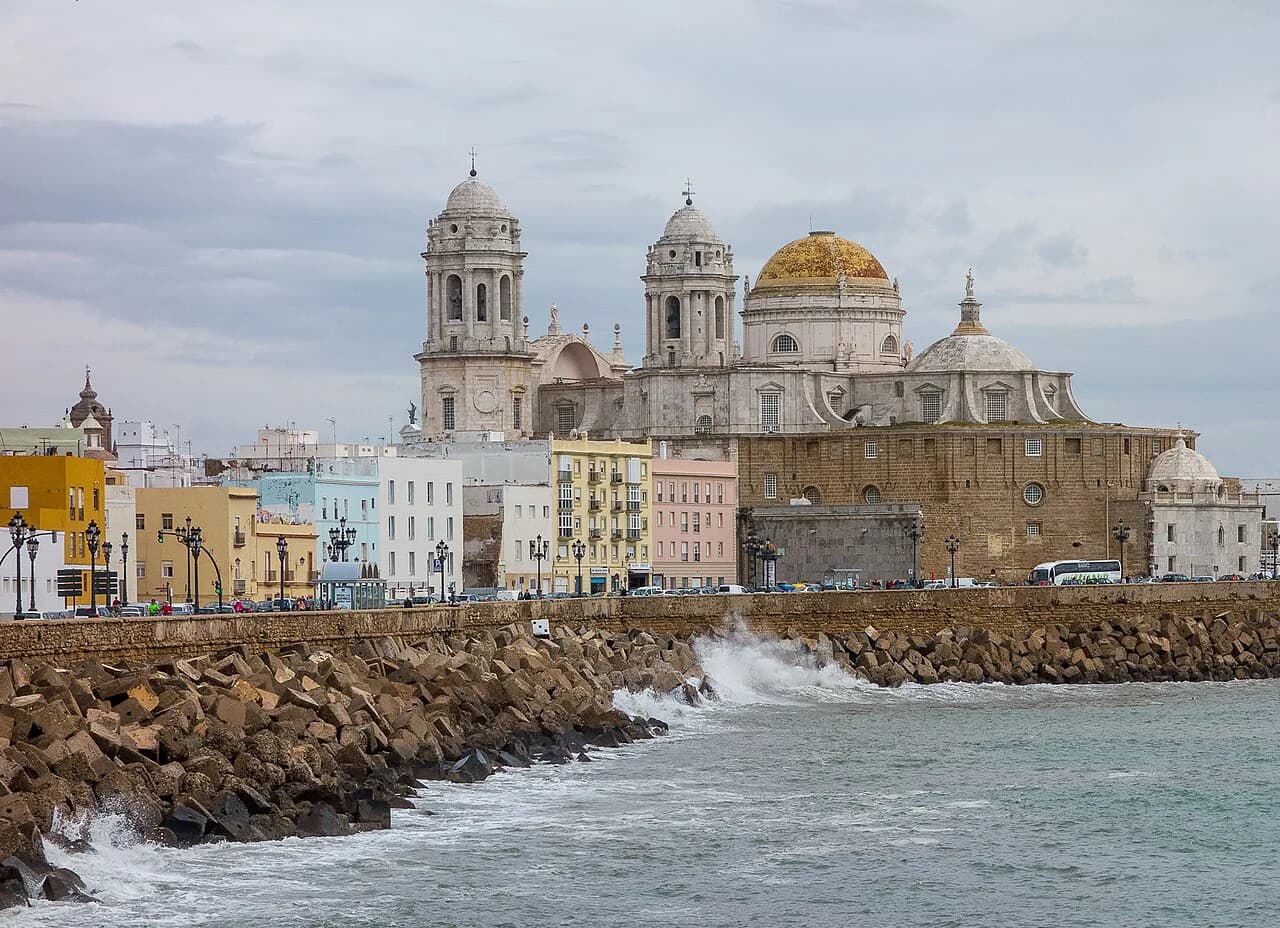
Beyond Cádiz, Gibraltar and the Tangier ferry are the obvious onward moves from Tarifa, but this guide does not quote crossing times. For a fuller picture of the neighbouring old town, the Cádiz cathedral and its Plaza de la Catedral make a logical next stop once you head north, and the Torre del Reloj is the landmark to orient yourself by.
What it costs
Tarifa splits neatly into free and paid. The old town lanes, the Puerta de Jerez and the adarve walk between the Torre de la Red and the Torre de los Maderos are free, so a full day in the walled centre can cost nothing. The Castillo de Guzmán el Bueno, Baelo Claudia and the Castillo de Santa Catalina are the stops to budget for; check the current fee where you buy the ticket rather than planning from a fixed figure.
Should you give Tarifa a full day?
Give Tarifa a full day, not an afternoon. The old town needs a couple of hours of wandering, the castle and the adarve need more, and the Isla de las Palomas and Mirador del Estrecho are a separate stretch. Baelo Claudia is the one part that pulls you out of town, so decide whether the Roman site earns its half-day before you book the rest.
If you are staying in the province, order the trip from the coast inward: Tarifa's walls first, then the Cádiz old town around the Barrio del Pópulo, with Vejer between them. That way the walled centres are the spine of the break rather than three versions of the same walk.
Frequently Asked Questions
Can you walk to the Isla de las Palomas?
Yes. A road links the island to the mainland and you can walk across it, which makes the Punta de Tarifa and the southern tip of mainland Europe reachable on foot from the town side.
Is the Tarifa old town free to visit?
The walled centre costs nothing to walk through: the lanes, the Puerta de Jerez and the adarve path on the walls are free. The castle and the Roman site at Bolonia are the stops to budget for, so check the current fee at the entrance.
What is the Levante wind in Tarifa?
The Levante is the strong easterly wind that has made Tarifa a centre for wind and kite sports. When it is blowing hard, the sheltered old town, the churches and the castle are the sensible plan, with the water left for another day.
Sources
Notes for your next Spanish town break
Optional updates to our guides.
You might also like
Continue reading
More guides you'll find useful