Elche Palm Grove: Visiting the Palmeral and Huerto del Cura
Plan a visit to the Palmeral de Elche, Europe's largest palm grove, with the historic huertos worth walking to, the Huerto del Cura garden and the old town nearby.
On this page
Elche's palm grove is Europe's largest, and the practical way to see it is on foot through a handful of named historic huertos rather than by trying to tour the whole plantation. The Palmeral is a UNESCO World Heritage Site of more than 200,000 palms, with around 50,000 further specimens in the municipal nurseries, and it sits inside the city rather than outside it. This guide explains which plots reward the walk, how the grove links to the old town, and how it fits a short break.
What the official visitor material gives you is the shape of the place: a network of irrigated plots, a walking route and a long-distance path that thread through the palms. Use the layout below to decide which plots to prioritise, then check current garden hours with the tourist office before you set out.
What the Palmeral de Elche is and why UNESCO listed it
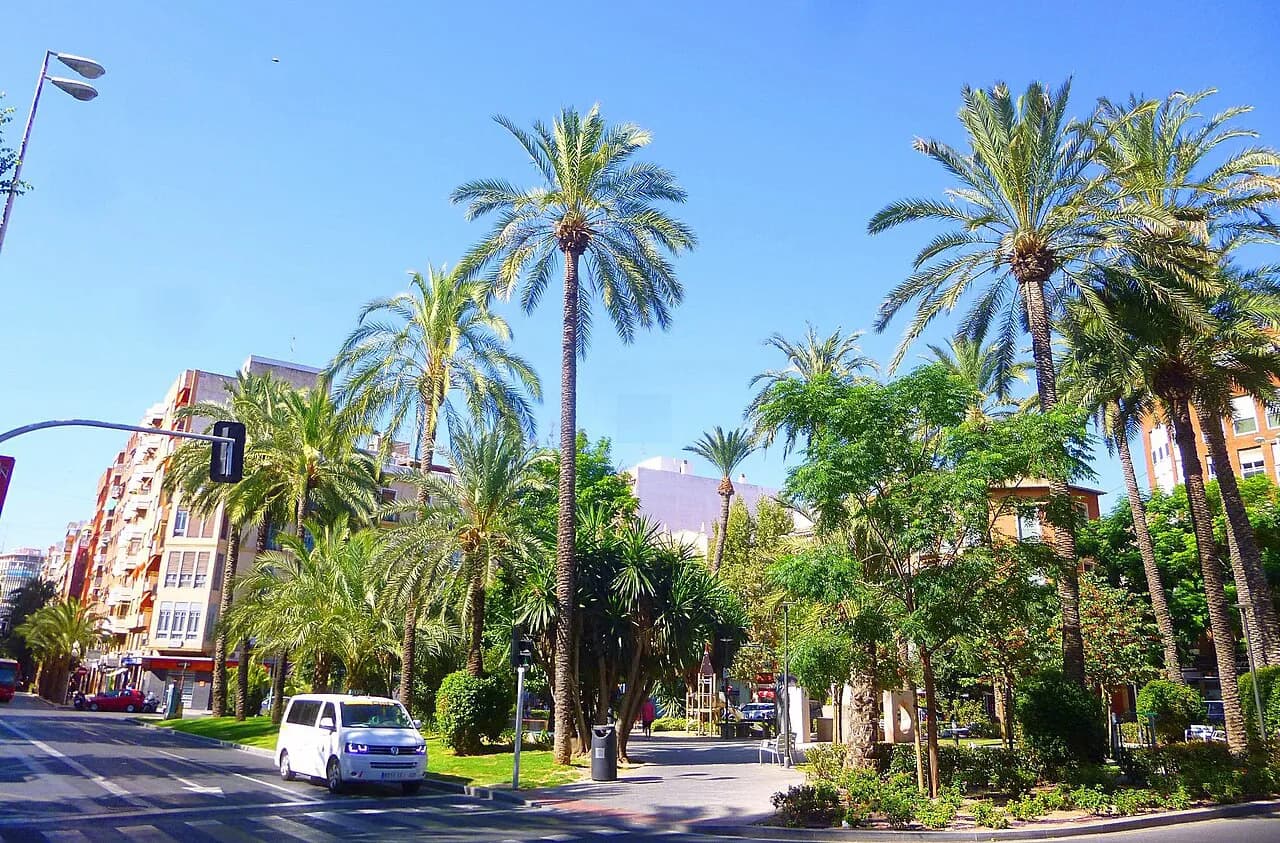
The Palmeral is not a wild forest but a cultivated landscape: an intensively farmed system of irrigation laid out by the founders of the Islamic city of Elche roughly a thousand years ago. Each plot, or huerto, is bordered by rows of palms so that from above the grove reads as a grid of squares, with the cultivated terraces inside. UNESCO recognised it in 2000 for a landscape that has survived largely intact, including the water channels that still function today.
The date palm, Phoenix dactylifera, is the defining species, chosen because it tolerates the saline water of the Río Vinalopó where most crops would struggle. Today the grove is more landscape and heritage than agriculture, though it still produces the white palm fronds sold across Spain for Palm Sunday.
Understanding this as an oasis-farming system changes how you look at it. The interest lies in the water channels, the plot boundaries and the shade they create, not in a single viewpoint or monument, so a modest walled garden becomes far more legible than a long hot trudge between palms.
How many palms there are and where the huertos sit
There are more than 200,000 palms across the Palmeral, with tens of thousands more in municipal nurseries, which is why the grove feels like a sea rather than a park. The historic huertos are scattered through the urban fabric, some squeezed between streets and buildings, so you cover ground through ordinary neighbourhoods as well as under palms.
Practically, this means you should pick a cluster of plots near the centre and the river rather than attempt a circuit of everything. A tourist-office map of the Senda del Palmeral is the most useful single item to pick up, because it shows which huertos are linked by paths and which sit apart.
Which huertos to walk to: Hort del Gat, Hort dels Pontos, Huerto de San Plácido and the Museu del Palmeral
Hort del Gat sits in the heart of the historic Palmeral and is one of the most emblematic huertos in the city, which makes it a sensible first stop. Hort dels Pontos lies on the Ruta del Palmeral and forms part of the Sendero del Palmeral PR-CV 439, so it works as a link between plots rather than a destination on its own.
Huerto de San Plácido houses the Museo del Palmeral, where the history, evolution and culture of the grove are explained, so it repays time if you want context before walking. Visiting the museum first makes the irrigation channels and plot boundaries easier to read on the ground. Opening hours and any entry charge are published by the museum and the tourist office, so confirm them the day before you go.
Other named plots, including Hort del Xocolater, Parque Municipal and Parque Jaume I, fill in the picture around the centre and are easy to fold into a walk back towards the old town. Treat the list as a menu rather than a checklist: three or four plots in a morning is a better use of time than racing through eight.
The Huerto del Cura and the Palmera Imperial
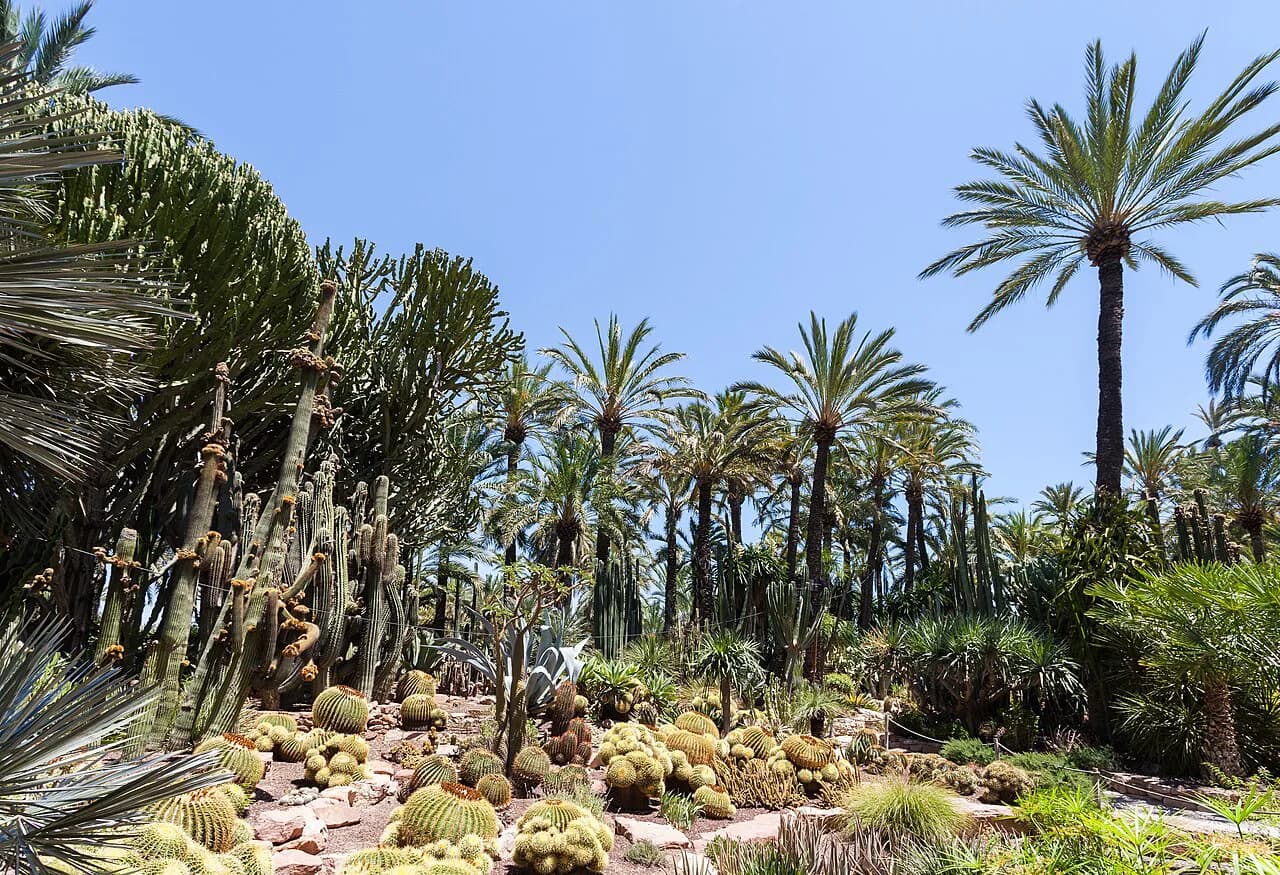
Huerto del Cura is the best-known garden in the grove, a botanical plot of about a hectare known for its exotic planting and above all for the Palmera Imperial, a date palm that throws seven separate trunks from one base and has become the emblem of the garden. It sits within the Palmeral rather than apart from it, so it can anchor a walking route.
Its hours and admission are set separately from the public plots, so check them with the garden or the tourist office before making it the centrepiece of your day. If the Palmera Imperial matters to you, go there first and build the rest of the walk around it.
The Ruta del Palmeral, the Ruta de las Palmeras Singulares and the Sendero del Palmeral PR-CV 439
Three marked itineraries organise the grove: the Ruta del Palmeral links the main huertos, the Ruta de las Palmeras Singulares picks out individual specimen palms, and the Sendero del Palmeral PR-CV 439 is a waymarked long-distance path through the landscape. For a short break, the Ruta del Palmeral is the most efficient because it connects the plots you are most likely to want to see. The singular-palms route suits anyone who wants to look closely at individual trees rather than whole gardens.
The PR-CV 439 is not a mountain hike despite the trail designation; it is a walking route through the palm landscape and the plots along its line. Follow the waymarking rather than improvising shortcuts, and carry water, because shade between plots is not continuous.
The Mirador del Palmeral and the Torre de Vaíllo viewpoint
The Mirador del Palmeral gives the view that makes the grid legible: palms in rows, plots between them, and the city wrapped around the whole. It is the single best place to understand the landscape as a designed system rather than a random clump of trees. Go early in the day if you want clear light and fewer people.
The Torre de Vaíllo is a historic palm-grove tower and a second high point from which to look across the grove towards the surrounding countryside. Ask at the tourist office whether it is open on the day you plan to go; if it is closed, the mirador still delivers the overview.
Pairing the palm grove with the old town: Basílica de Santa María, Palau de Altamira and the Museu Arqueològic
The grove runs up to the edge of the historic centre, so the obvious pairing is a morning among the palms and an afternoon in the old town. The Basílica de Santa María is the city's landmark church, built on the site of a former mosque and home to the Misteri d'Elx, and the Palau de Altamira now houses the Museu Arqueològic. Both sit close enough to the Palmeral to include on the same walk.
Between them you can also pass the Molí de l'Real, an eighteenth-century mill, the convent of La Merced and the Arab baths, which gives the old-town leg a shape without much planning.
Church opening is arranged around services, and the basilica closes to tourists during mass, so a mid-morning or late-afternoon slot is safer than turning up at an unpredictable hour. Shops in the centre also tend to shut for the mid-afternoon break, which reinforces the pattern of palms in the morning and monuments earlier or later.
The Palmera Blanca and Domingo de Ramos palms
The grove's most distinctive product is the Palma Blanca, white palm fronds produced by shielding the growing shoot from light, which are sent across Spain and abroad for Domingo de Ramos. The palms you see are therefore a working crop as well as scenery, and the whiteness is the result of deliberate cultivation rather than a different species. Small harvests of dates still go to the local market too.
Palm Sunday is one of the city's biggest days, with the procession built around these fronds, so expect Elche to be busy in the run-up and plan your walking accordingly.
How long the palm grove needs in a short break
Half a day covers a good selection of huertos, the mirador and the Museo del Palmeral at an unhurried pace. A full day lets you add Huerto del Cura, the Torre de Vaíllo and the old town without rushing. If you have only a couple of hours, choose two adjacent plots plus one viewpoint and accept that you will see a fraction of the whole.
The grove rewards atmosphere more than monument-spotting, so build in sitting time under the palms rather than treating the huertos as tick-box stops. The pleasure is the shade, the sound of water and the rows of trees.
Getting to Elche from Alicante and fitting it into a Costa Blanca trip
Elche sits inland from the coast and is straightforward to reach from Alicante by train or bus, with the airport also carrying the city's name. Check current timetables and journey times with the operators, because these change with the season, and treat the town as a half-day or full-day add-on rather than a base.
If you are touring the region, Elche pairs naturally with other inland and coastal stops, but it is distinctive enough to justify a day of its own rather than a rushed hour between them. Compare it with the other Costa Blanca towns before deciding where to spend your limited time.
For contrast, the whitewashed Altea old town and its Church of Nuestra Señora del Consuelo show a very different Valencian townscape on the same coast. Each is a separate trip, so do not try to tick off more than one in a day.
Practical trade-offs: midday heat, church closures and August crowds
Elche gets hot in summer, and the palms give shade in patches rather than continuous cover, so walking between huertos in the middle of the day is the least pleasant option. Start early, take the museum or a church at midday, and return to the grove in the late afternoon. The same applies to the old town, where shops close for the afternoon break.
The Misteri d'Elx is performed in August, which brings crowds to the basilica and the centre. If your visit coincides, book the old-town leg of your day around performance times rather than assuming you can wander in.
Is Elche's palm grove worth a day of your trip?
Yes, if you treat it as a landscape to walk through rather than a single sight to tick off: the plot boundaries, the irrigation channels and the working palm crop are what make it different from any park in Spain. Choose three or four huertos, add the Museo del Palmeral for context, and finish at the mirador or the Torre de Vaíllo for the view.
Plan around the heat and the middle-of-the-day closures, and confirm garden hours and entry arrangements with the tourist office before you travel. Then give the old town an afternoon and the palms a morning, and Elche earns its day.
Explore more Alicante guides
Frequently Asked Questions
Why is Elche called Elx?
Elx is the Valencian form of the city's name and is used in official and local signage alongside the Spanish Elche. You will see it in place names such as the Palmeral and Misteri d'Elx, so treat the two as the same city rather than different places.
How far is Elche from Alicante city?
Elche lies inland from Alicante and is reached by train or bus, but service patterns and journey times change with the season, so check current timetables with the operators rather than relying on a figure quoted elsewhere.
What types of palm trees are found in the grove?
The date palm, Phoenix dactylifera, is the dominant and defining species, chosen for its tolerance of the saline water of the Río Vinalopó. The gardens also hold other palm varieties and companion planting such as ficus and plane trees, which is one reason Huerto del Cura rewards a closer look.
Is Elche a nice town for a short break?
It works best as a day or half-day stop: the palm grove, the old town and the Basílica de Santa María are close together, and the city is easy to reach from Alicante. Whether it suits you depends on whether you enjoy walking through a working landscape rather than monument-heavy sightseeing.
Sources
Notes for your next Spanish town break
Optional updates to our guides.
You might also like


Continue reading
More guides you'll find useful