Xàtiva Castle: The Double Fortress Above the Old Town
Xàtiva's castle splits into a Castell Major and a Castell Menor above the old town. Here's what you climb to, how the layout works and how to plan the visit.
On this page
Xàtiva castle is a double fortress on the ridge above the town, split into a Castell Major and a Castell Menor that meet at the Patio de Armas, and it is the reason to build a day around Xàtiva rather than pass through. You reach the gate by climbing from the old town, then work through one castle, cross the courtyard and take in the other, with the Bixquert valley spread out below. This guide covers the layout, the walk up, the highlights on the ridge and how the visit fits into a short break from Alicante or Valencia.
A double fortress on the ridge
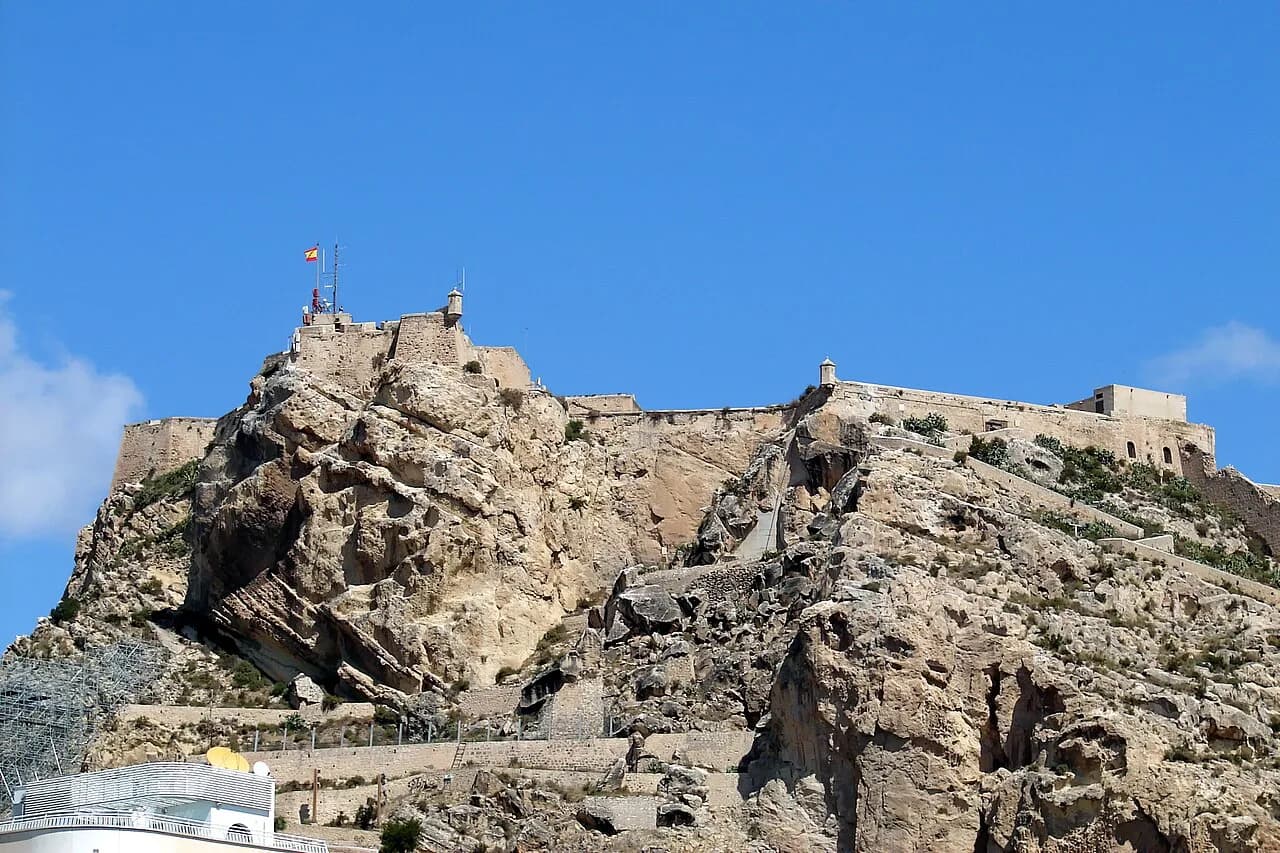
Xàtiva sits at the foot of its castle in the comarca of La Costera, roughly 60 km south of the city of Valencia, and the fortification is the town's defining monument. The site is a double fortress with Iberian roots that was enlarged over centuries, and its walls and towers are largely of Islamic or Gothic origin. It stands 389 metres above sea level on a strategic spur, which is why it controlled the approach to the town for so long.
The two halves are not a single loop. The Castell Menor sits on the sheer Penya Roja wall facing east, which gives it its own view over the Bixquert valley, while the Castell Major occupies the broader crest. The whole complex is protected as a Bien de Interés Cultural. Plan the sequence before you start walking so you are not doubling back along the ridge in the heat.
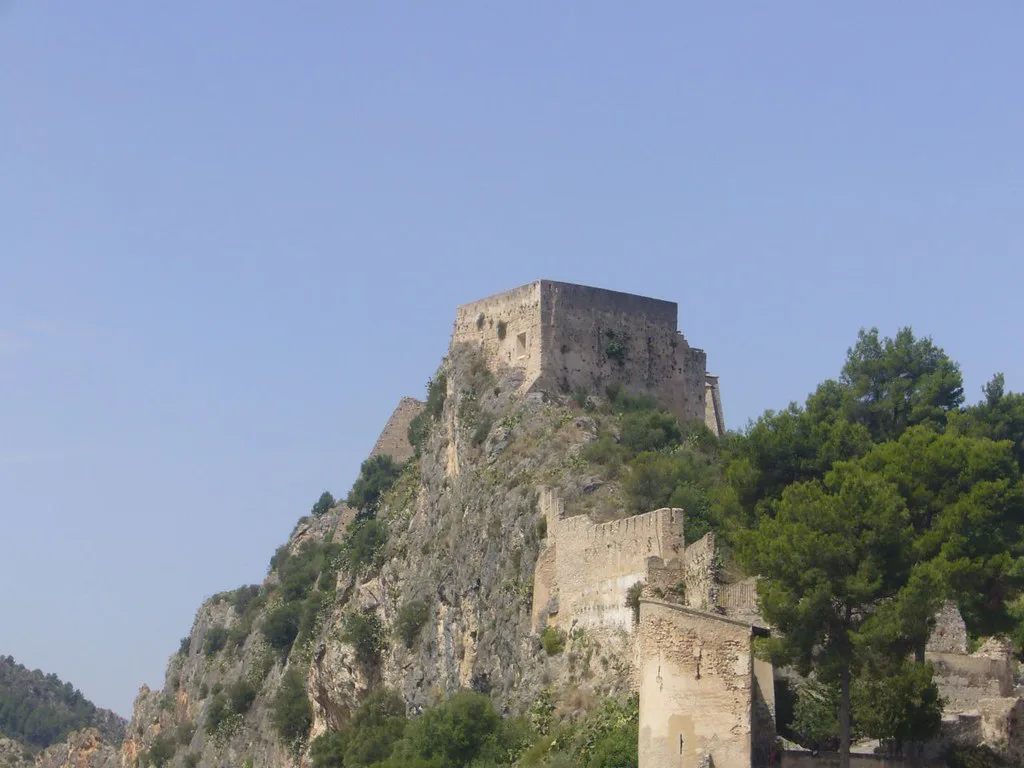
How the layout works: Porta Ferrissa, Patio de Armas and the two castles
You enter the walled enclosure through the Porta Ferrissa, the main gate, which leads into the Patio de Armas. That courtyard is the pivot of the visit: the Castell Menor lies to the left and the Castell Major to the right. Once you are through the entrance and past the ticket check you are inside the fortification proper, so buy and validate your ticket at the gate before you start exploring.
Treat the Patio de Armas as your base. It has toilets, a restaurant, a picnic area and drinks vending machines, which makes it the natural pause between the two halves. Do the Castell Major first if you want the longer leg out of the way, then cross back through the courtyard and finish in the Castell Menor with the valley view.
The climb from the old town
The walk up begins in the streets below, where you reach the Rinconada Collar de la Paloma and pick up the signed route towards the castle. The path zigzags to soften the gradient and passes the Ermita de Sant Josep, whose mirador gives a wide panorama over Xàtiva and the valley; it is a natural place to stop rather than push straight on. From there the route continues along an asphalted road that switches back up the hillside to the entrance.
Ignore the informal shortcuts between the hairpins. They look like a saving and turn into loose, awkward ground on the descent, so the longer road is the safer choice in both directions. The asphalt stretch is the least rewarding part of the climb, but it is also the section that gets you to the gate without route-finding.
If the walk does not appeal, Xàtiva runs a tourist train up to the castle, which removes the climb and is the obvious alternative for anyone visiting in the summer heat. It is a transfer, not a guided tour of the ridge, so you still cover the two castles on foot once you are up there.
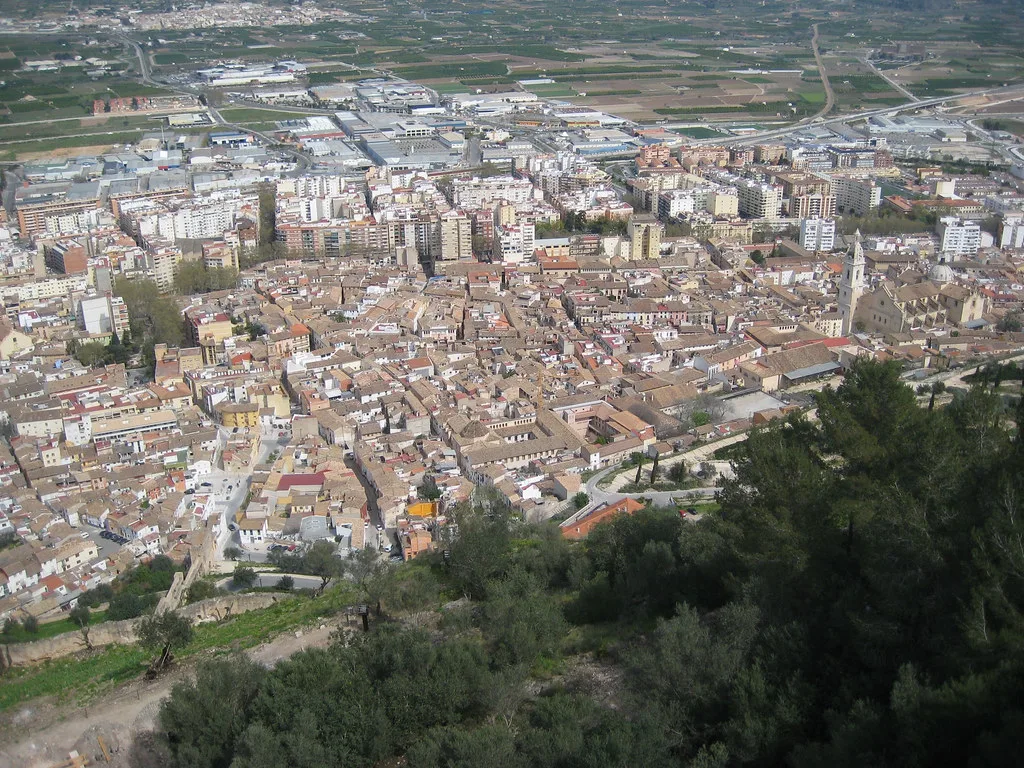
Inside the Castell Major
The Castell Major holds the most atmospheric interiors. The Capilla de la Reina María contains the remains of the Count of Urgell, who was imprisoned in the castle and died in 1433, and it is the point where the fortress's history stops being abstract. Elsewhere on the crest you come across cannon once positioned in the castle's plaza de armas, and the Torre del Sol and Torre del Desespero mark the line of the defences.
Allow around two hours inside the walls if you want to see both castles without hurrying; that is a working estimate from a walker's account rather than an official figure. The upper terraces give the best long views, taking in the Sierra Calderona and, on a clear day, the port of Valencia. Carry water for the ridge even outside high summer, because the walls and courtyards offer little shade.
The Castell Menor, the Penya Roja and the views
The Castell Menor is the half that feels most exposed, built on the Penya Roja wall and oriented east towards the Bixquert valley. It is a shorter visit than the Castell Major, but the position gives it the panorama that defines the site. Make it your last stop so you leave through the Patio de Armas and down the road with the view still fresh.
How long to allow and how the castle fits a short break
Budget a half day for the ridge itself: the climb, two hours across both castles and the descent, plus time at the Ermita de Sant Josep mirador. That leaves the rest of the day for the old town below, which is compact and comfortably walkable on its pedestrian streets. The castle is the anchor of a Xàtiva day rather than an hour-long stop.
Xàtiva works as an inland day from the Costa Blanca or from Valencia, and it pairs well with other inland stops if you are stringing together a few of the Costa Blanca towns on one trip. It is a different proposition from the coastal visits: no seafront, no beach, just the ridge and the old centre. If you want a whitewashed coastal counterpart, the Altea old town and its Church of Nuestra Señora del Consuelo make a natural contrast on another day.
The old town after the castle
The historic centre is a short, pedestrian-friendly circuit once you are down from the ridge. The Colegiata de Santa María, also known as La Seu, is the main religious building, alongside the Iglesia de San Francisco, the monastery of Santa Clara and the Iglesia de San Pedro. On the civic side, the Palau d'Alarcón and the Hospital Real are the buildings to look out for, and the whole centre is easy to cover on foot.
Xàtiva was the home of the Borja family, and two of its members became popes: Calixt III and Alexandre VI. The tourist office can give you the details of the Ruta de los Borja, which takes in the Iglesia de Sant Francesc and the house where Alexandre VI was born. It is the thread that ties the town's churches and palaces together.
The Casa de l'Ensenyança holds the fine arts collection, where a portrait of Felipe V hangs upside down: the town's response to the Bourbon king who ordered Xàtiva burned during the War of Succession. Locals are still known as Els socarrats, the scorched ones, after that episode. It is the single best story in the old town and worth seeking out after the castle.
Practical trade-offs: heat, the road and the ticket
The ridge is hot and exposed. Inland Valencia bakes at midday in summer, and the climb combines asphalt with open hillside, so an early start is worth more here than in a coastal town. If you are visiting in high summer, take the tourist train up and walk down, or do the reverse, rather than tackling the full climb in the middle of the day.
Entry to the castle is ticketed, and the ticket also covers the Museu de l'Almodí and the Museu de Belles Arts in the historic centre. That combination changes the shape of your day: keep the museum ticket and use it after you come down, rather than treating the castle as a standalone outing. Confirm the current price and any reductions on the official Xàtiva Turisme page before you go.
Daily visitor numbers inside the walls are capped, so buying ahead through the online ticket office is sensible in peak periods. Opening hours, closing days and last entry are published by Xàtiva Turisme, and they are the details most likely to catch you out on a Monday or a public holiday.
Getting there from Alicante and Valencia
Xàtiva sits roughly 60 km south of Valencia, which makes it one of the easier inland stops to add to a short break from the city. From the station you can walk into the old town and pick up the signed climb at the Rinconada Collar de la Paloma, so you do not need a car for the castle itself. Check the operator's timetable for departures before you set out.
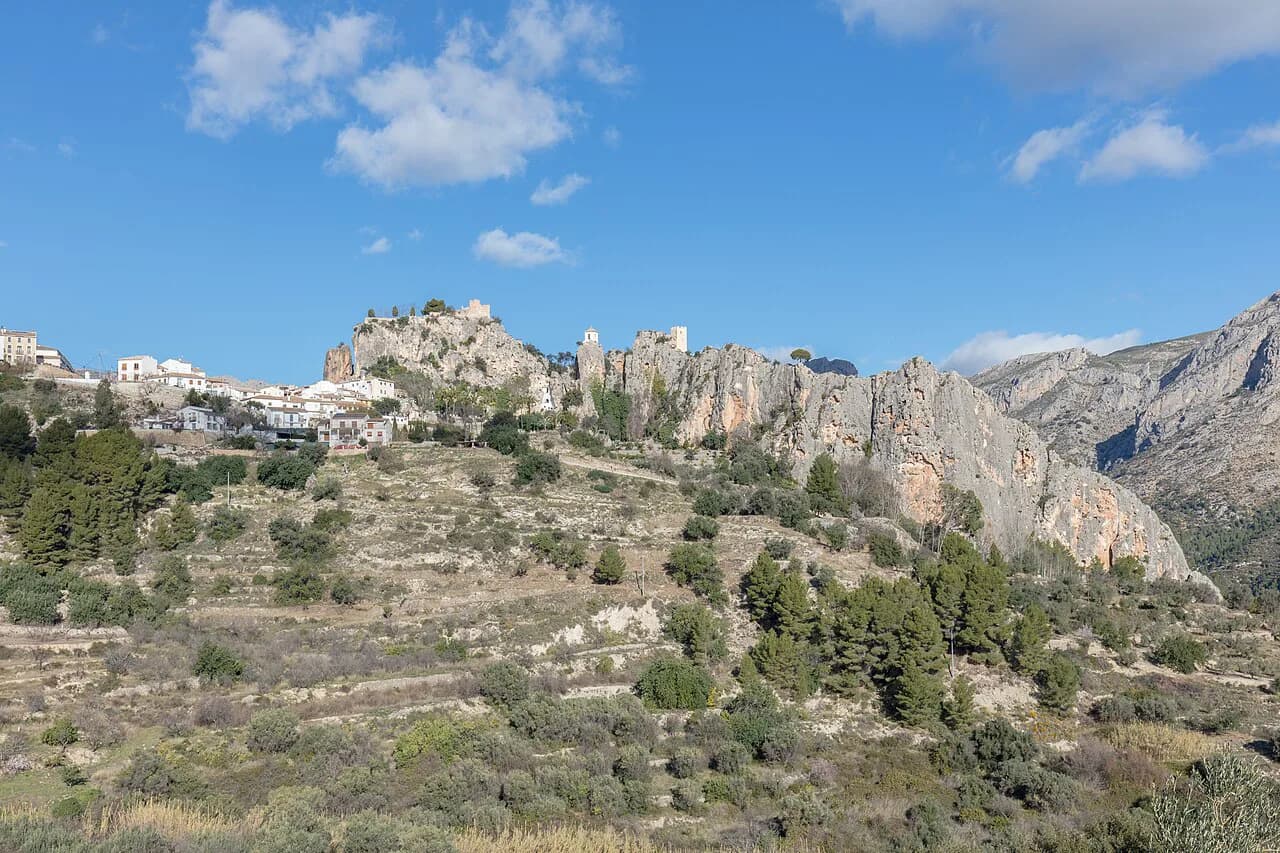
If you are basing yourself on the coast and want a second inland day, El Castell de Guadalest offers a very different kind of fortress: a small village wrapped around a hilltop bell tower rather than a double castle on a ridge. The Elche palm grove, a UNESCO World Heritage site, makes another contrast worth building in if you have a spare day.
Is the climb worth it?
The climb is worth it if you want the whole Xàtiva experience: the zigzag path, the mirador at the Ermita de Sant Josep and two castles in one morning. If you are short on time or visiting in high summer, take the tourist train up and concentrate your energy on the Castell Major and the Penya Roja views. Either way, keep the afternoon free for the Colegiata, the Casa de l'Ensenyança and the Borja route, which is where the town's story really lands.
Check the official Xàtiva Turisme page for current opening hours and ticket prices, and book ahead if you are visiting at a busy time. The combination ticket with the two town museums is the detail that most changes how you plan the day.
Explore more Alicante guides
Frequently Asked Questions
Is Xàtiva castle free?
No. Entry to the fortress is ticketed, and the same ticket also admits you to the Museu de l'Almodí and the Museu de Belles Arts in the old town. Check the official Xàtiva Turisme page for the current price and any reductions before you travel.
How long does it take to visit Xàtiva castle?
Allow around two hours inside the walls to see both the Castell Major and the Castell Menor without rushing, then add the climb up and back down. A half day on the ridge is a realistic plan, leaving the afternoon for the old town.
Sources
Notes for your next Spanish town break
Optional updates to our guides.
You might also like
Continue reading
More guides you'll find useful