Guadalest: The Castle Village on Its Rock, Explained
Plan a visit to Guadalest in Alicante province: the castle on its rock, the Alcozaiba tower, the reservoir viewpoint and the small museums in the old town.
On this page
Guadalest rewards a half day rather than a full one: the historic core is small, the castle rock sits directly above the streets, and the reservoir viewpoint is a short stroll from the town hall square. The village, officially El Castell de Guadalest, sits in Alicante province in a valley formed between the Sierra de Xortá, Serrella, Aitana and Berna ranges. This guide covers the castle of San José, the ruined Alcozaiba tower, the Casa Orduña with its seasonal hours, the church and prison-aljibe, the Plaza del Ayuntamiento and the reservoir, then the small private museums that fill the old town.
Where Guadalest sits in Alicante province
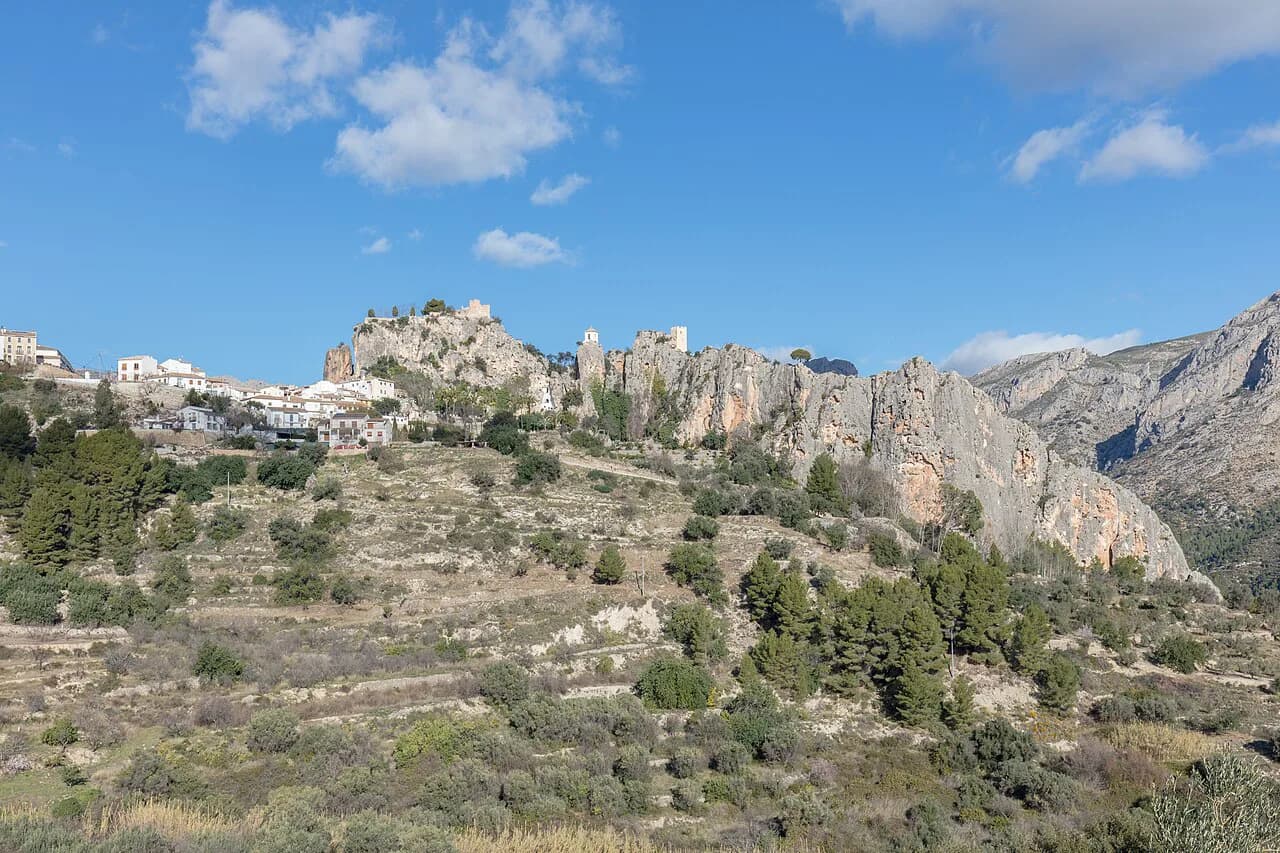
The village perches between four ranges, the Xortá, Serrella, Aitana and Berna, in the interior of Alicante province, well inland from the coastal strip. Just over 200 people live there, which makes the historic centre feel more like a monument than a working town. That setting is the reason to come: whitewashed houses stacked on the slope, a castle on a spur of rock above them, and a turquoise reservoir filling the valley floor below.
It works well as a counterpoint to the coast and slots into a wider circuit of Costa Blanca towns, especially if you are based in Benidorm or Altea rather than Alicante city. Allow time for the drive on mountain roads rather than treating it as a quick stop between coastal stops.
Arriving through the tunnel in the mountain
Few Spanish villages have an entrance quite like Guadalest's: the road passes through a tunnel cut into the rock, and the castle appears above you as you emerge. Once through, cobbled medieval streets lined with decorated white houses climb towards the Plaza del Ayuntamiento. That tunnel is the practical dividing line between the approach road and the pedestrian historic core, so plan to leave the car and walk from that point on.
The castle of San José and the Alcozaiba tower
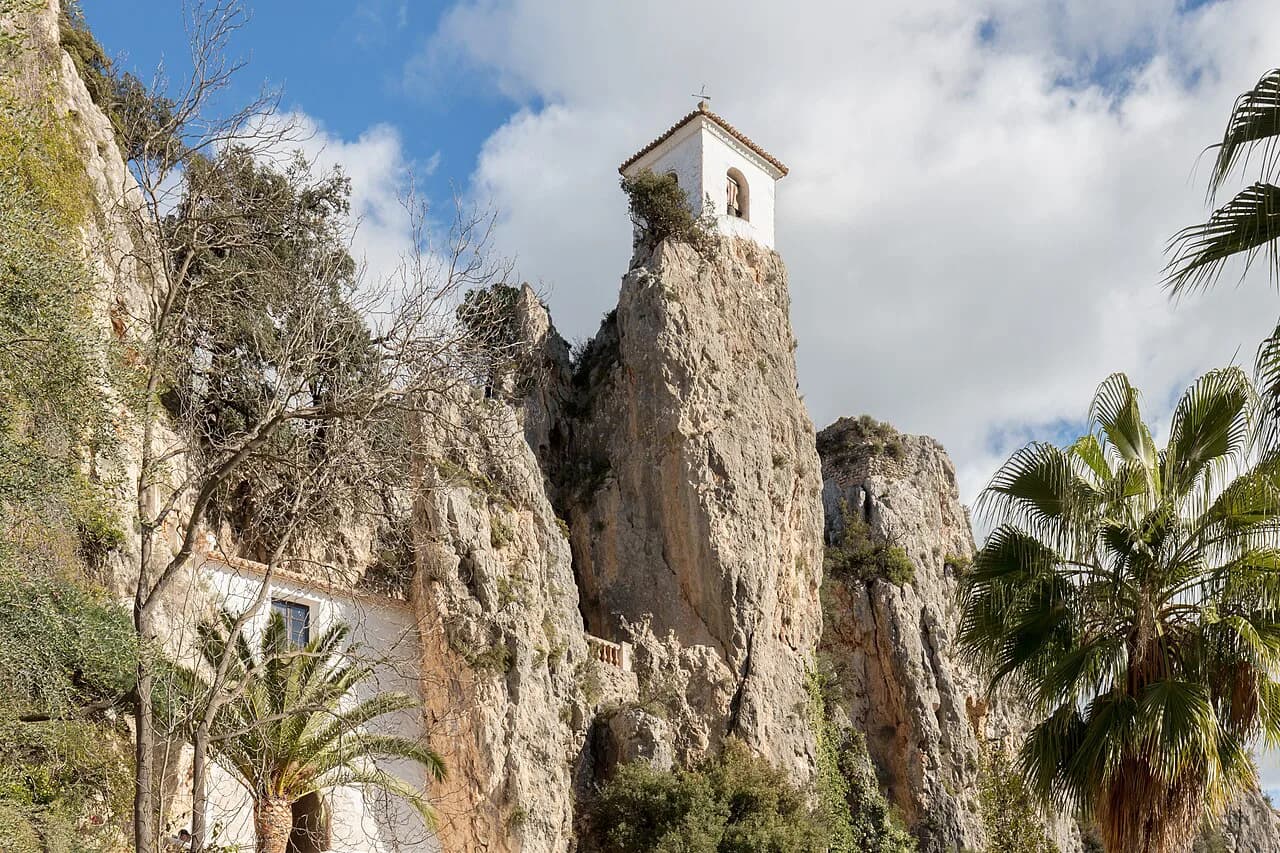
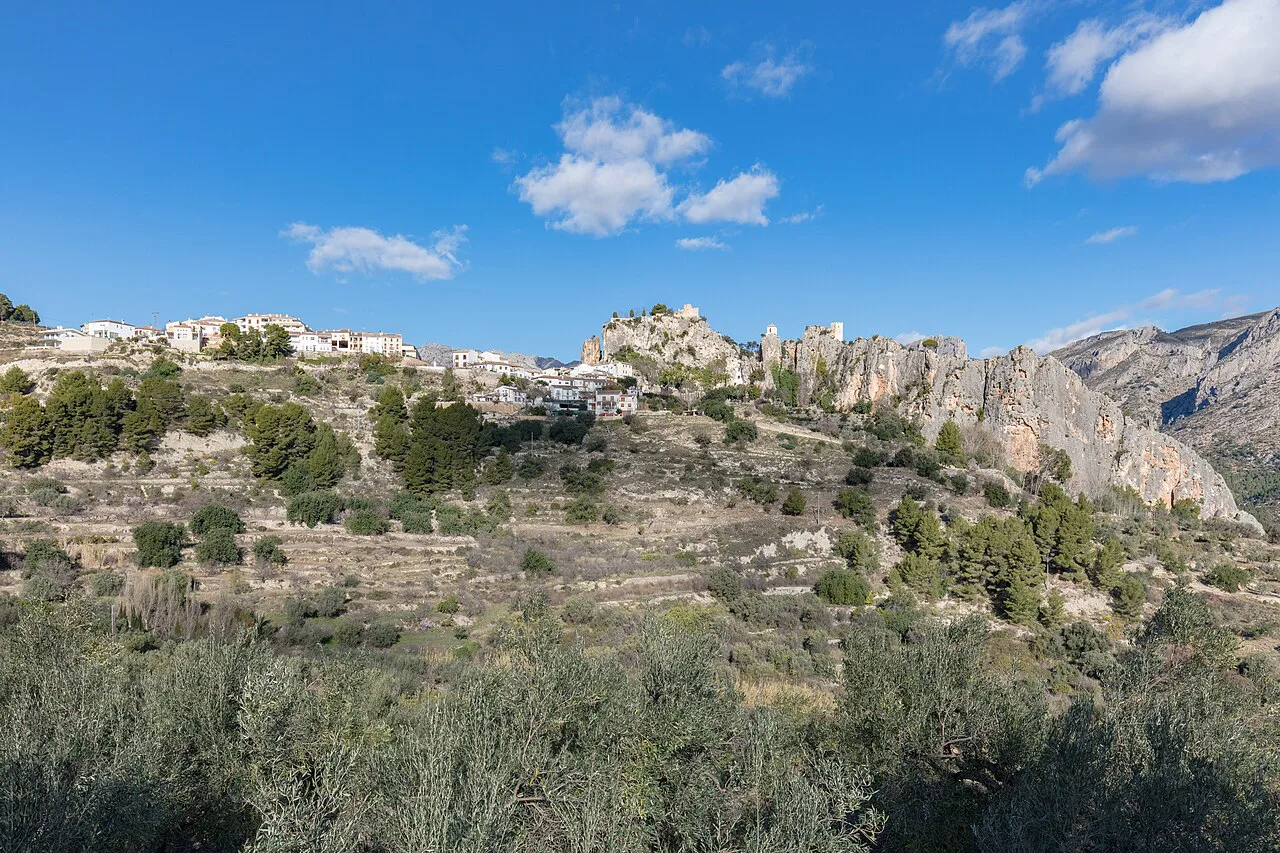
The Castell de Guadalest, also called the castle of San José, stands on an enormous rock at the highest point of the village. Its origins go back to the eleventh century, in the Hispano-Muslim period, and its walls later passed between Arab troops, the Spanish Crown and noble families including the Cardona and the Orduña. Earthquakes, bombardments and centuries of wear have not dislodged it from its position over the valley.
Beside it stands the fortress of the Alcozaiba, the Alcazaba of Guadalest, also built by the Muslims in the eleventh century. Of that structure only a single ruined tower survives, so treat the Alcozaiba as a fragment to see on the way to the castle rock rather than a separate monument in its own right. The pair together explain the village's original defensive purpose.
The castle interiors and the tower are reached on foot up the village lanes, and the climb is short but steep in places. If you are comparing fortifications across the region, the scale here is modest next to something like Xàtiva castle, so come for the position and the views rather than a long exploration.
Casa Orduña: the one house with published hours
The Casa Orduña was built in the seventeenth century, after the earthquakes that wrecked parts of the castle complex, by a Basque family who settled as alcaides of the fortress and governors of the marquisate for three centuries. Its rooms keep original furniture, decoration and paintings of the period, and the house also holds a space for temporary exhibitions. That combination makes it the single most substantial interior visit in the village.
Opening times follow the season: 10:15 to 19:00 in high and mid season, and 10:15 to 18:00 in low season. On Thursdays and Sundays the house closes between 14:00 and 15:00, so a midday arrival on those days means waiting or reordering your walk. Build the Casa Orduña into the middle of the day rather than the end.
The church and the prison-aljibe under the town hall
The church of Nuestra Señora de la Asunción stands directly beside the Casa Orduña and dates from the eighteenth century in its baroque form. It was looted and burned during the Civil War, and in 1962 its length was shortened and the transept and dome removed, so what you see is a much-altered building rather than the original. The layered history is the point, not the architectural purity.
Below the Ayuntamiento, the twelfth-century prison-aljibe is where trials and detentions took place in the Moorish period. It is startlingly small for a space that served as both court and jail, and it takes only a few minutes to look round. Pair it with the town hall square directly above, since the two sit on top of each other.
The Plaza del Ayuntamiento and its reservoir viewpoint
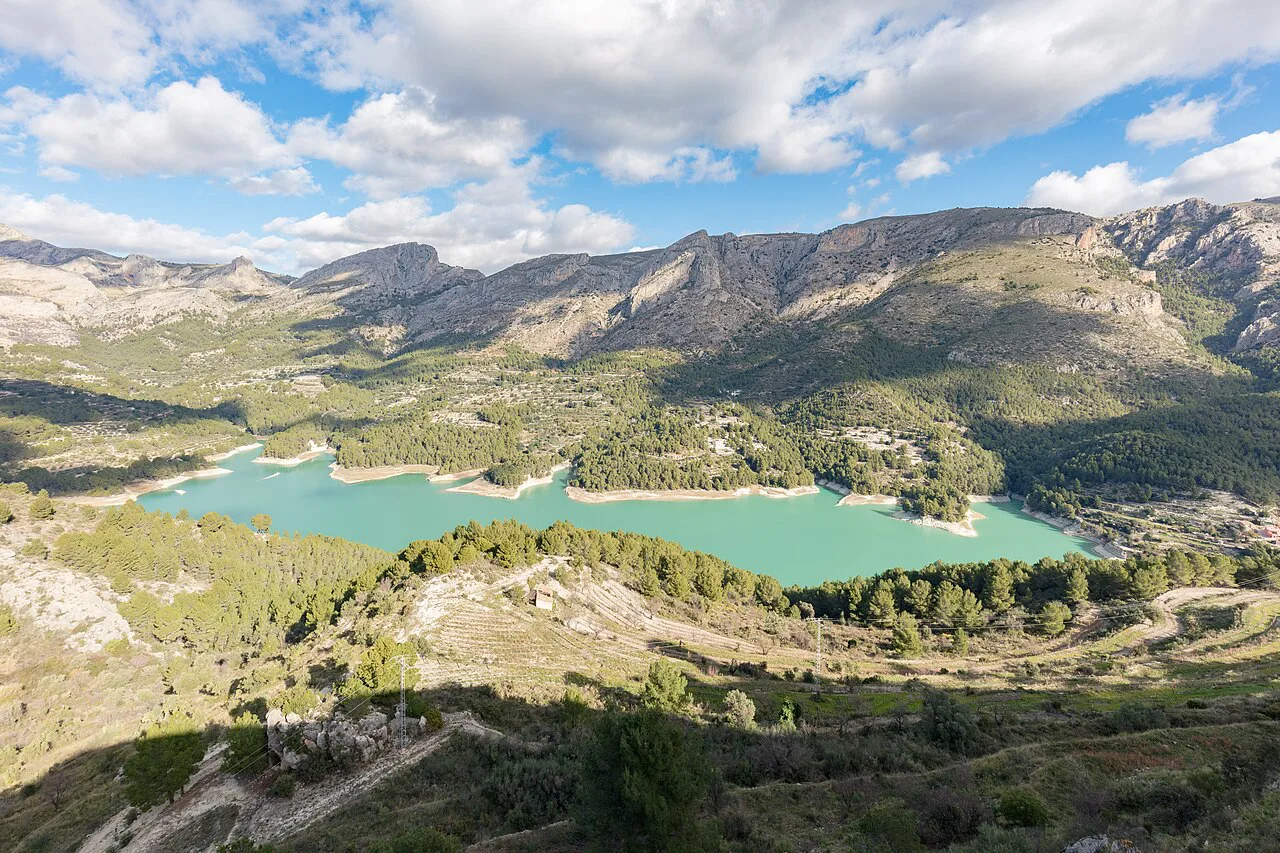
The Plaza del Ayuntamiento is the natural centre of the visit: the town hall faces a square that opens into a broad mirador over the valley. From that parapet the Guadalest reservoir dominates the view, its turquoise water set against dense green slopes. It is the photograph most visitors come for, and the reason to linger on the square rather than hurry through.
From the square, the old lanes fan out with small shops and museum entrances tucked between whitewashed façades. Wander rather than follow a fixed route: the village is compact enough that you cannot get seriously lost, and the side streets hold the quieter corners. Read the reservoir as landscape and viewpoint rather than a place to swim.
If you want a second hill town on the same trip, Altea old town offers a similar whitewashed maze with a blue-domed church, the Church of Nuestra Señora del Consuelo, looking out over the coast. It is a different proposition from Guadalest: coastal rather than mountain-set, and busier in season.
Choosing among the small museums
Guadalest has earned the nickname the village of museums, and the private collections are its distinctive draw. Among them are the Museo Microgigante and the Museo Microminiaturas, both built around miniature and oversized models, plus a collection of salt and pepper shakers and a bicycle museum. There is also a medieval history museum, an ethnology museum and a nativity museum with dolls' houses. Most are small and privately run, so pick two rather than trying to see them all.
If your interests lean towards local history and customs, the medieval history and ethnology museums give the most context on the village and valley. If you are visiting with children or want something lighter, the miniature collections and the nativity museum are the quicker, curiosity-driven choices. Either way, the Casa Orduña is the one visit here with seasonal hours set out in this guide, so it deserves priority ahead of the private collections.
The reservoir and the valley landscape
Below the village, the Embalse de Guadalest is the visual anchor of the whole valley, its turquoise water contrasting with the verdant vegetation on the surrounding slopes. It is best appreciated from the viewpoint on the Plaza del Ayuntamiento and from the lanes on the edge of the old town. The valley also provides the backdrop for the castle rock, so the views work in both directions.
The setting explains much of Guadalest's appeal, with its medieval cobbled streets and whitewashed houses wrapped around the rock. The combination of rock, water and ridge lines is what distinguishes it from the coastal resorts an hour or so away. If you are touring the region, Elche palm grove makes a contrasting UNESCO World Heritage stop on the plain below.
What Guadalest costs and how long it takes
Budget on the basis of individual tickets: the Casa Orduña is a separately ticketed historic house, and the private museums each charge their own entry. Prices vary by collection and season, so check the current rate at each entrance. Ask at the ticket desk about any reduced or free slots when you arrive.
Half a day covers the castle rock, the Plaza del Ayuntamiento viewpoint, the church, the prison-aljibe and the Casa Orduña, with time for one or two private museums. The village is small enough to walk across in minutes, but the lanes are cobbled and steep in parts, so wear proper shoes. Add extra time for the mountain road if you are driving from the coast.
Combining Guadalest with a coastal base works best as a morning start, leaving the afternoon free for the drive back. Bear in mind that the old town is pedestrian once you are through the tunnel, so plan your parking before you arrive. If you are building an itinerary of Costa Blanca stops, Guadalest works as the inland counterweight to the coast.
Is Guadalest worth the mountain drive?
Yes, if you want a compact historic village where the castle, the reservoir views and the museums sit within a few minutes' walk of each other. It suits half a day on a Costa Blanca trip rather than a dedicated journey from elsewhere. Prioritise the Casa Orduña and the Plaza del Ayuntamiento viewpoint, then add the private museums that match your interests.
Frequently Asked Questions
How do you get to Guadalest from Benidorm or Alicante?
Guadalest sits inland in Alicante province among the Xortá, Serrella, Aitana and Berna ranges, reached by mountain road and entered through a tunnel cut into the rock. Bus and train timetables and journey times change by season and operator, so check the current options with the relevant transport operator before travelling, and plan on driving if you want flexibility.
Can you swim in the reservoir at Guadalest?
Treat the Embalse de Guadalest as a landscape feature and viewpoint rather than a swimming spot. The turquoise water is best seen from the mirador at the Plaza del Ayuntamiento and from the lanes on the edge of the old town. No swimming arrangements are set out for visitors, so do not plan a visit around one.
How long does a visit to Guadalest take?
Half a day is enough to see the castle rock, the Plaza del Ayuntamiento viewpoint, the church, the prison-aljibe and the Casa Orduña, with time for one or two of the small private museums. The historic core is compact and walkable, though the lanes are cobbled and steep in places. Allow extra time for the mountain road from the coast.
Sources
Notes for your next Spanish town break
Optional updates to our guides.
You might also like
Continue reading
More guides you'll find useful