Tossa de Mar Old Town: Vila Vella Walls, Towers and Lanes
Tossa de Mar's old town is the walled Vila Vella on its headland, with medieval towers, a clifftop lighthouse and lanes above the bay. Here is how to walk it.
On this page
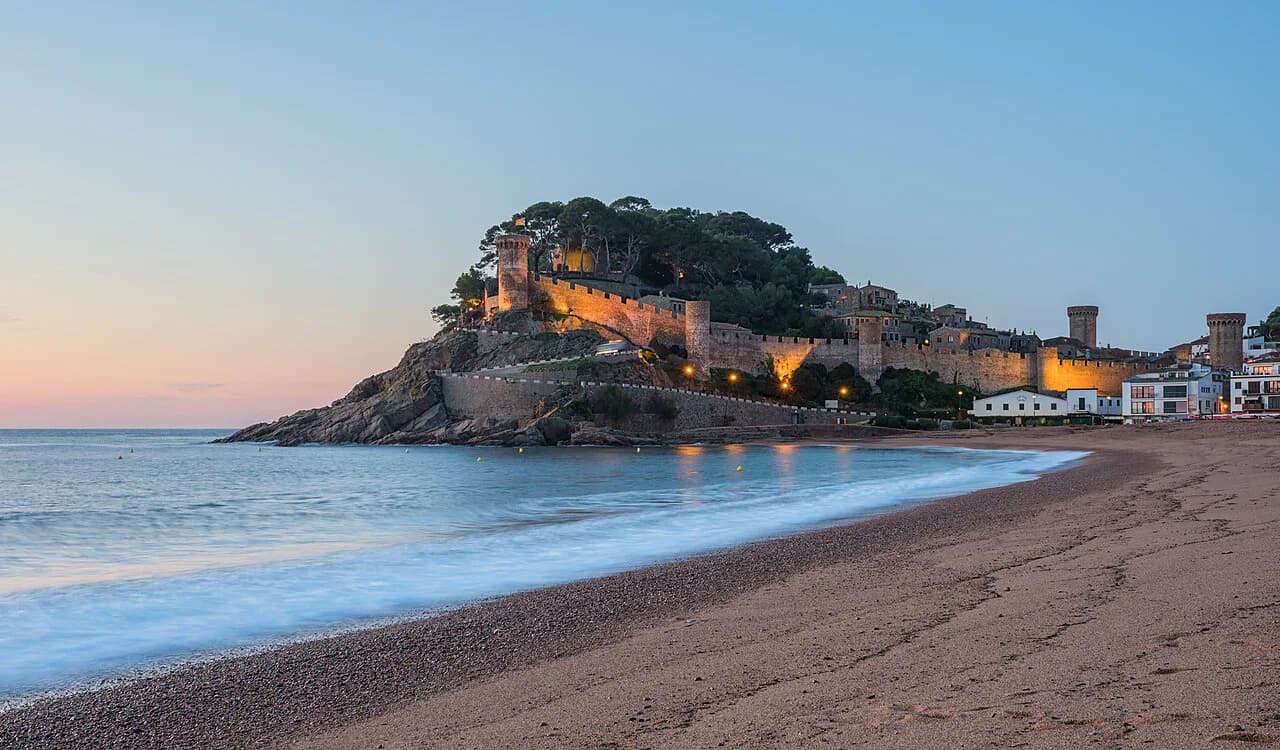
Tossa de Mar's old town is the Vila Vella, a walled headland of medieval lanes, towers and a lighthouse rising directly behind the bay. It is the reason to come, and it packs into a compact circuit of an hour or two on foot. This guide separates what stands inside the walls from the Roman and church remains outside them, and shows how to slot the headland into a short break on the coast.
What the old town is
The Vila Vella is the fortified historic centre of Tossa, a walled neighbourhood set on the headland behind the bay rather than spread through the modern town. Its castle was built in the twelfth century and the stone walls enclosing the old quarter followed shortly after, with a substantial stretch of both walls and connecting towers still standing. Approaching from the seafront, you are looking at a single contained sight: lanes, towers and a clifftop summit, not a dispersed old town.
Tossa's history runs back more than two thousand years, and in the twentieth century the town drew artists such as Marc Chagall and film stars including Ava Gardner. That double layer, Roman below and medieval above, is what makes the headland worth more than a quick photograph from the sand. Plan the Vila Vella as the spine of your visit and treat the rest of Tossa as the surrounding material.
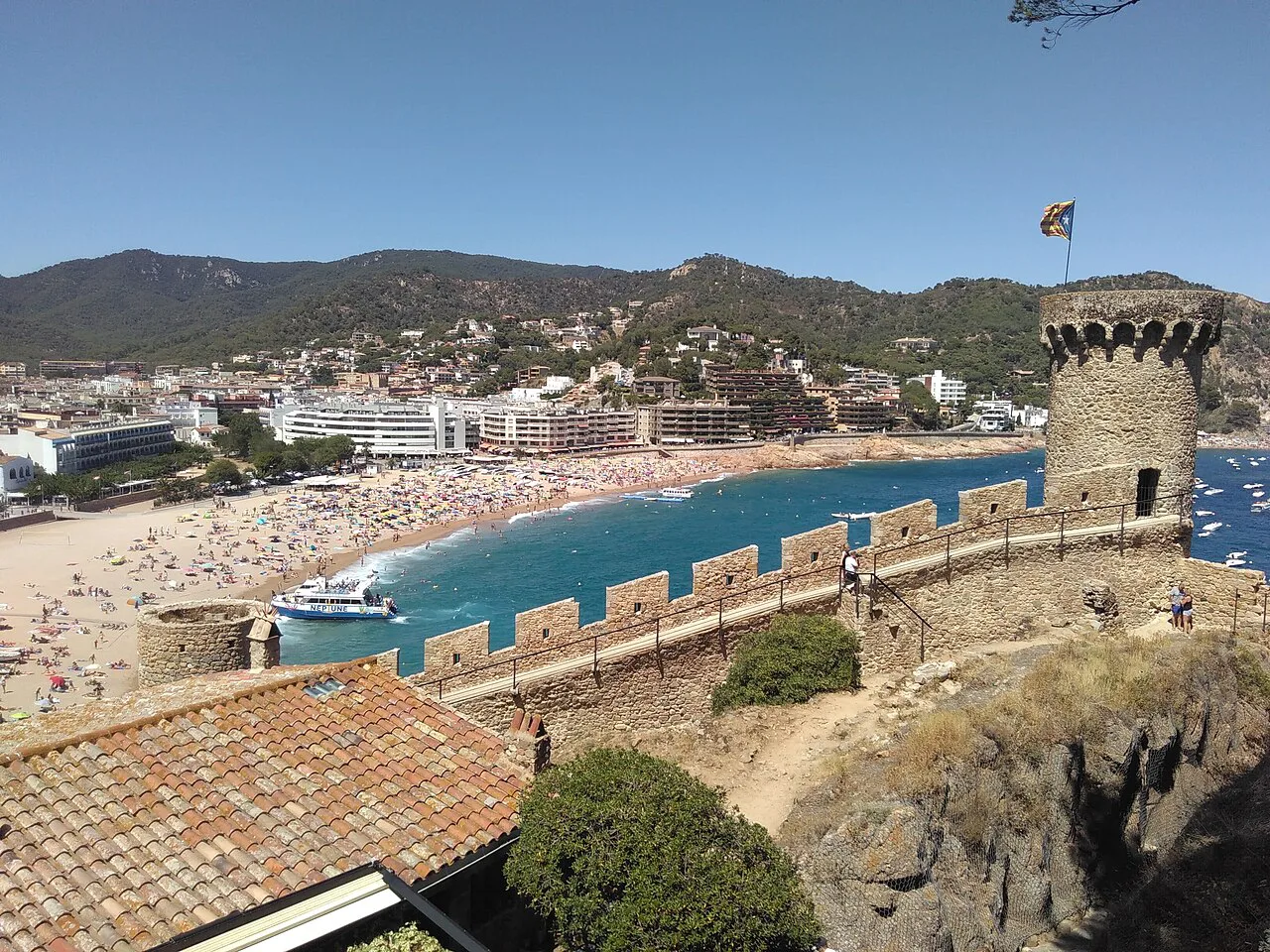
Where the headland sits above Platja Gran
Platja Gran, the long crescent beach of roughly 400 metres, runs along the centre of town and is framed by the castle headland at one end. That geometry matters: you can step off the promenade and be at the foot of the walls within minutes, so there is no separate journey to the old town. The Mar Menuda beach continues on the far side, and the coastal path toward Cala Giverola begins near it.
The modern town, with its shops and seafront, sits outside the fortifications, so the walled quarter is a distinct enclave you enter rather than a district you drift through. If you are arriving on a day trip from Girona or Barcelona, head straight for the headland first and leave the promenade for afterwards. For the wider set of stops along this coast, the Costa Brava Towns guide helps you judge what else is within reach. For the practical details, see the Cadaqués.
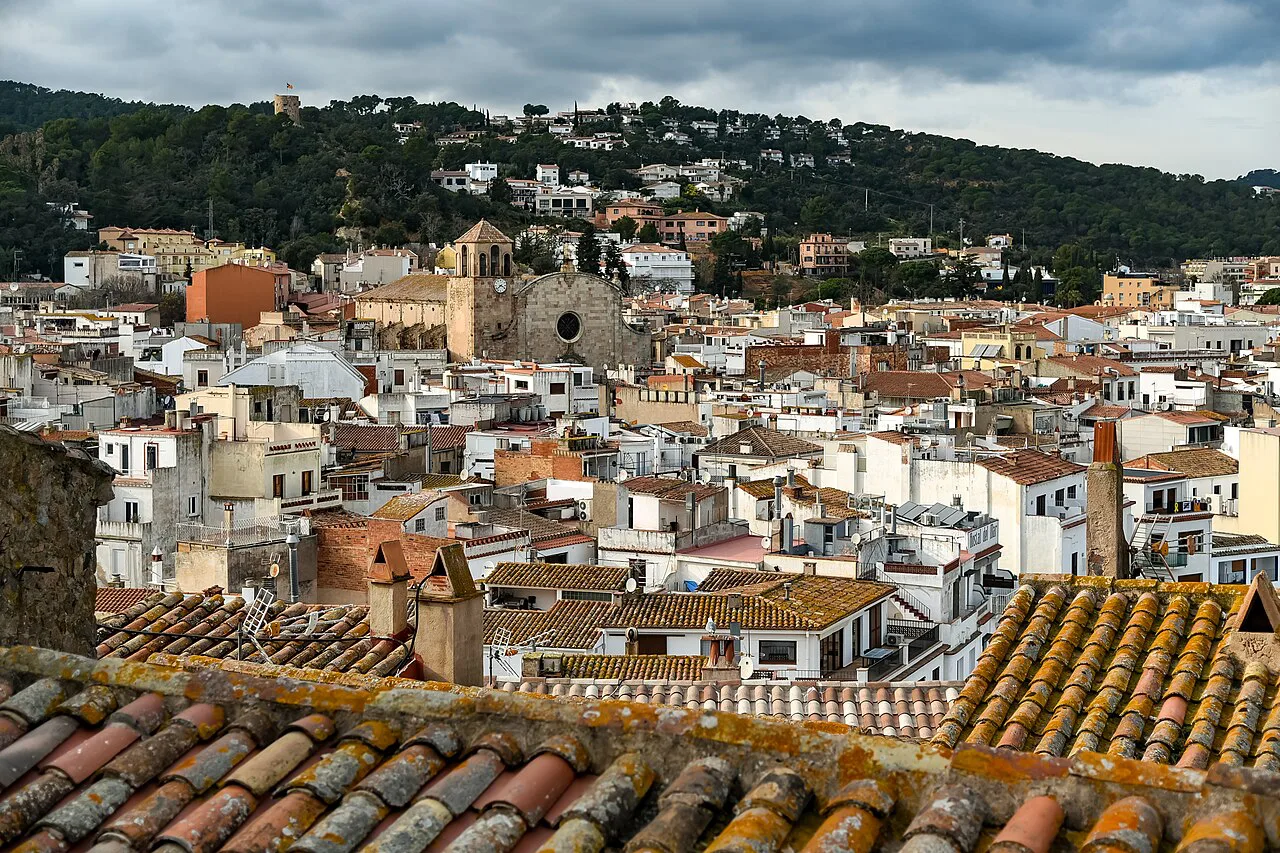
The walls and towers
Tossa's old quarter is the only remaining fortified coastal village on the Catalan coast, and three towers are the ones to seek out as you walk the circuit. The Torre de Joanàs commands the bay from its dominant position, the Torre del Reloj holds the town's only public clock, and the Torre Codolar overlooks the beach of the same name. Walking the walls late in the day, once the heat has eased, is the recommended moment for the light and the views.
A fourth tower, the Torre dels Moros, stands outside the town and is not part of the wall circuit: it is a fifteenth-century watchtower built to guard against attacks from the sea. Knowing that saves you from hunting for it along the battlements. Treat the three wall towers as your sequence and the Torre dels Moros as a separate point if you have time.
The castle, the lighthouse and the climb
Inside the walls the way continues up past the site where the castle once stood and on to the lighthouse, the Far de Tossa, on the high point of the headland. There are two routes up, so descend by the opposite path from the one you took and you see both flanks of the headland without retracing your steps. The reward at the top is the viewpoint by the lighthouse, with a bar nearby and wide views back over the bay and walls.
The descent passes above Cala Codolar, a small cove wedged between cliffs and fortified walls that looks wilder than anything on the main beach. The climb is the main physical trade-off of the visit: steps, heat and a summit, so build it into the cooler end of the day and wear shoes that grip stone.
The lighthouse exhibition
The early twentieth-century lighthouse now houses the Centre d'Interpretació dels Fars de la Mediterrània, an exhibition on the history of Mediterranean lighthouses. It covers what the keeper's job involved and how changing technology made the role redundant, which gives the summit more substance than the view alone. Because it occupies the lighthouse itself, the exhibition is part of the climb rather than a separate stop in town.
Pair the exhibition with the walk around the outside of the headland so the lighthouse is not just a photo stop. On a short break, this is the section to keep if you have to cut something else from the headland.
The lanes inside the walls
Behind the walls, the Vila Vella is a knot of narrow medieval lanes lined with old houses, and it rewards slow wandering rather than a fixed route. Small shops sell craft and handmade goods inside the walls, while clothing and general shops sit outside them in the modern town. Give the lanes twenty minutes or so at the end of the wall walk, when the light softens and the stone keeps some of the day's warmth.
The lanes also carry the everyday life of the town: the fishing tradition still matters to the local economy, and the old quarter is where you feel that. If you are building a wider Catalan itinerary, Besalú, Catalonia's medieval town, offers a comparable walled-and-rivered old centre inland and makes a useful contrast with a coastal fortification.
The Ava Gardner statue
A bronze statue of Ava Gardner stands in the old town overlooking the bay, a marker of the town's film history. Gardner, then married to Frank Sinatra, starred with James Mason in the 1951 film Pandora and the Flying Dutchman, shot in Tossa, and she later lived in Spain for a time. The statue, by the Girona artist Ció Abellí, was erected in 1998.
It is a quick stop on the way up rather than a destination in itself, so fold it into the climb instead of planning around it. The film connection explains something of why a small Costa Brava town has such a strong pull for artists and visitors, and it pairs naturally with the lanes and the walls.
Roman Tossa below the walls
The Roman villa of Els Ametllers lies outside the walled quarter, in the hills behind town, so do not expect to find it inside the Vila Vella. Built in the first century BC as the home of an aristocrat, it retains mosaics, thermal baths and other signs of Roman wealth, plus the remains of a grain store and farm buildings. The estate's vineyards once produced wine shipped back to Rome and across the empire.
Treat the villa as a separate short visit from the headland, with its own arrangements to confirm before you set out. Because it sits away from the walls, it works best as an add-on when you have more than an afternoon in town.
Sant Vicenç ruins, Casa Sans and the Creu de Terme
The ruined church of Sant Vicenç and the Creu de Terme, a boundary cross, are further historic points spread around Tossa rather than inside the fortress. Casa Sans is another building of note on the same loose circuit. These are small stops individually, so group them into one loop away from the headland rather than breaking up the wall walk.
If you have only a few hours, the walls, towers and lighthouse take priority and these outlying fragments can wait. With a full day, the villa and church ruins round out the Roman and medieval story that the headland begins.
Sa Roqueta, the fishermen's quarter
Sa Roqueta, the fishermen's quarter, sits below the walled headland and feels quite different from it: a working neighbourhood rather than a fortified monument. The fishing trade still has a role in Tossa's economy, and this quarter is where that is most visible. Walk down from the walls into Sa Roqueta to end the circuit, and you come out by the seafront rather than back at the climb.
The contrast is the point: the Vila Vella is a medieval defence, Sa Roqueta a maritime working district, and seeing both in one afternoon gives a fuller picture of the town than the walls alone. If you want another port town to compare, Cadaqués on the same coast makes an easy extension to a longer trip.
How long the headland needs
An hour covers the walls, the three towers and the lanes; allow closer to two if you add the lighthouse exhibition and take the opposite route down. If you also want Els Ametllers and the Sant Vicenç ruins, give Tossa most of a day. Build the wall walk around late afternoon so the heat has eased and the light is on the stone, and leave the beachfront for the middle of the day.
The short visit works like this: climb to the lighthouse first while you are fresh, walk the walls at the top, then descend through the lanes into Sa Roqueta. That order avoids climbing steps at the hottest hour and puts the shops and lanes at the relaxed end of the circuit, which is where you want them.
Getting there and fitting it into a short break
Tossa sits on the Costa Brava within reach of Girona and Barcelona, and it is a popular day trip from Barcelona. Buses serve the coast, but check the current timetable with the operator for your date rather than relying on memory. Arriving early leaves you the cooler morning for Els Ametllers and a late-afternoon walk on the walls.
If you are basing yourself in Girona, the guide to Girona Attractions shows what to pair with a Tossa day, and the Dalí Museum in Figueres makes a natural companion for a longer Catalan circuit. Both work with a short break because they sit on the same northern corridor.
Ordering your walk round the Vila Vella
Start at the foot of the walls, climb to the lighthouse while you are fresh, walk the three towers at the summit and come down through the lanes into Sa Roqueta. That sequence puts the heat and steps early and leaves the shops and the old streets for the softer end of the afternoon. Add Els Ametllers and the church ruins only if you have given Tossa most of a day.
Frequently Asked Questions
Is the old town of Tossa de Mar free to walk around?
The walled lanes, towers and headland are the town's historic streets, so walking them is part of any visit to Tossa. The lighthouse exhibition, the Roman villa and the church ruins are separate sites, best checked in town or with the tourist office before you go.
What was filmed in Tossa de Mar?
Pandora and the Flying Dutchman, released in 1951, was shot in Tossa with Ava Gardner and James Mason in the leads. Gardner's connection with the town is marked by the bronze statue in the old town, made by Ció Abellí and erected in 1998.
How do you get to Tossa de Mar?
Tossa lies on the Costa Brava within reach of Girona and Barcelona, and it is a common day trip from Barcelona. Buses serve the coast, but check the current timetable with the operator for your date rather than assuming a service.
Sources
Notes for your next Spanish town break
Optional updates to our guides.
You might also like
Continue reading
More guides you'll find useful