Besalú: Romanesque Bridge, Old Town and Jewish Quarter Guide
Plan a short visit to Besalú in Girona: the fortified Romanesque bridge, the old town, the Jewish quarter and its ritual bath, and how long the town needs.
On this page
Besalú is a compact medieval town in the Garrotxa comarca of Girona province, and two to three hours covers its centre on foot. Arrive across the eleventh-century bridge over the Fluvià, work through the cobbled lanes to the Plaça Major, then finish with the Jewish quarter and its underground ritual bath. This guide sets out a walking order, the monuments along it, a realistic time budget and how to reach the town from Girona and Barcelona.
Where Besalú sits in the Garrotxa
Besalú lies inland in the Garrotxa, north-west of Girona and well back from the coast, so it belongs to a Catalan inland itinerary rather than a beach one. In the tenth century it was the capital of an independent county, and that status produced the bridge, the monastery and the walled street plan that visitors now walk through. Its position made it a trading centre in the Middle Ages, with a market drawing locals and outside goods.
The town is small enough that the whole historic core is walkable, and the river crossing is the natural front door. Cars and buses stop outside the centre, so the bridge doubles as the arrival point and the first sight. Treat the rest of the visit as a loop from there rather than a checklist of separate stops.
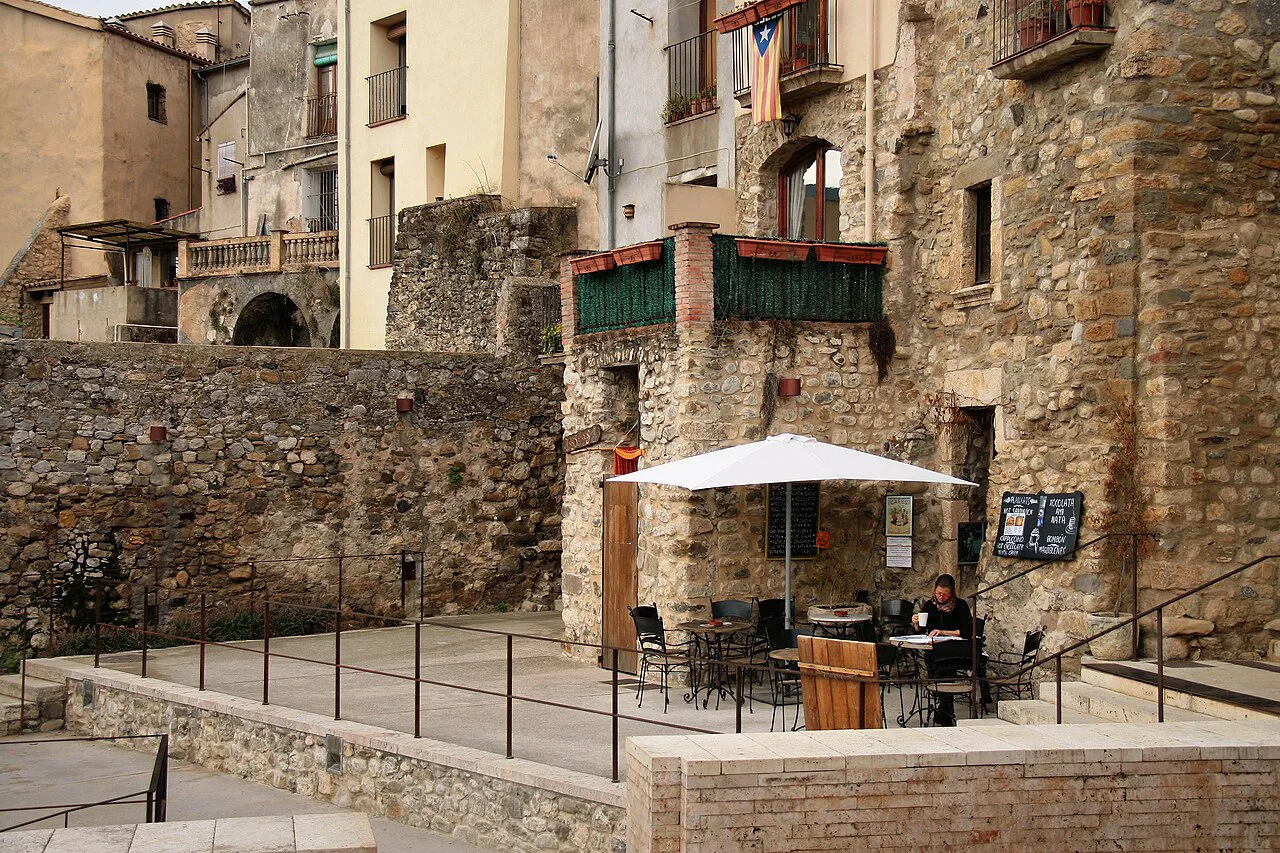
The Romanesque bridge over the Fluvià
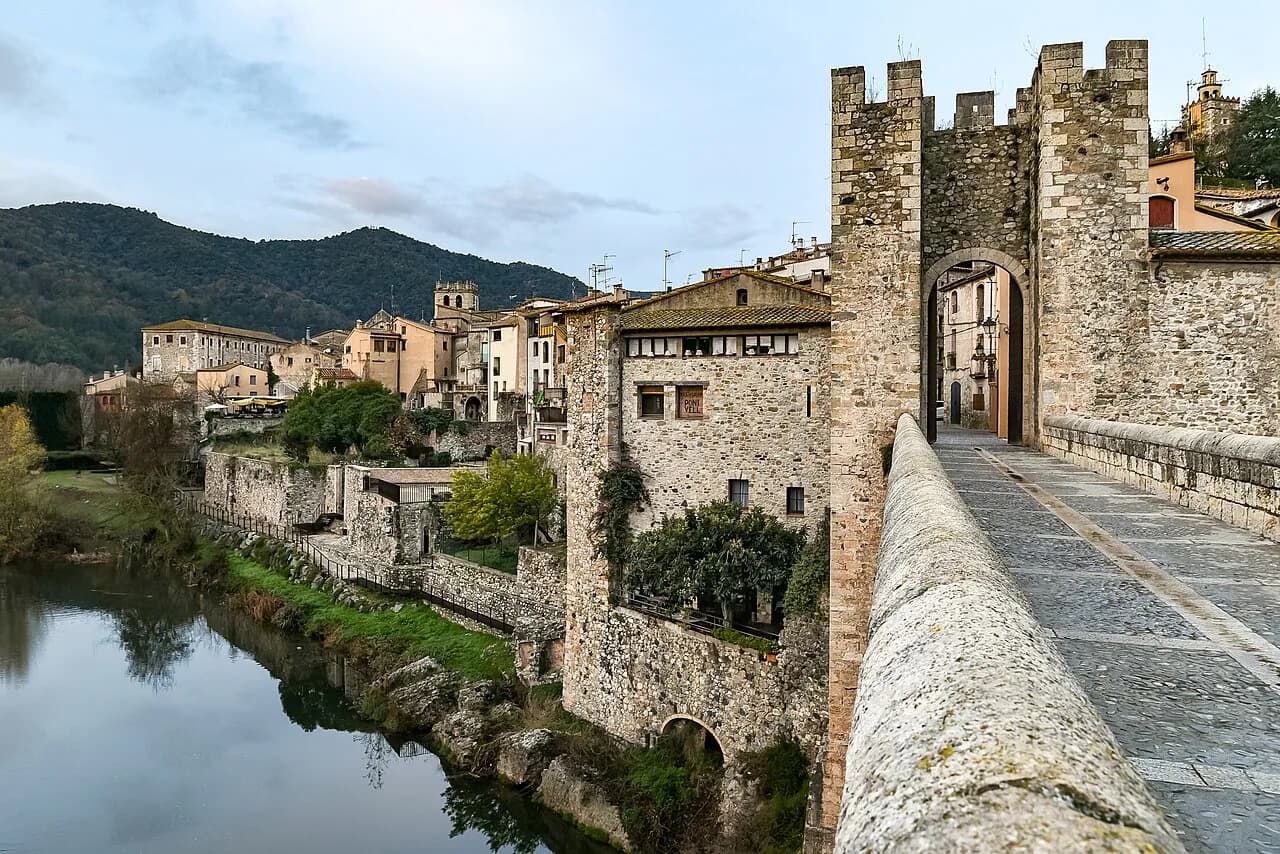
The Pont Romànic is Besalú's emblem: roughly 105 metres long, carrying arches over the Fluvià, with a fortified tower rising at its centre. It is listed as a Bien de Interés Cultural and has been rebuilt more than once after floods and war damage. Crossing it on foot is the best introduction to the town, and the classic photograph is taken from the riverbank looking back at the arches and tower.
Allow a few minutes at the middle tower, where the views up and down the river open out. The bridge is a public crossing, so there is no ticket and no closing time to plan around; the constraint is other people. In summer, cross early or late in the day if you want the tower and the bank to yourself.
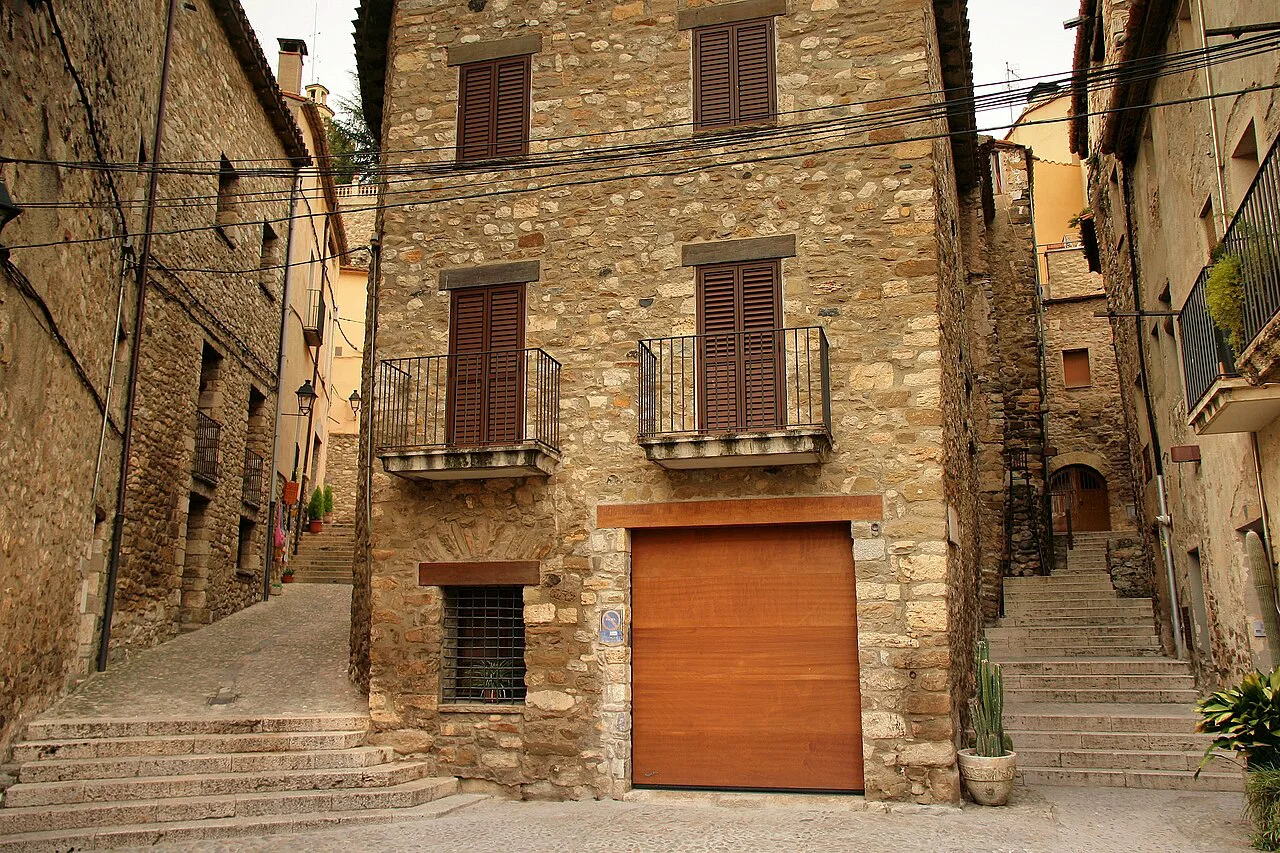
The old town on foot
Once through the gate, the centre is a knot of cobbled lanes, stone houses and small squares, with the Plaça Major as the main open space. Walk without a fixed route: the appeal is the street pattern itself, which still follows the medieval layout. The lanes are uneven underfoot, so shoes matter more than a map here.
For orientation, cross the bridge, climb into the old town, follow signs for the Monestir de Sant Pere, then continue to the Jewish quarter before dropping back to the Plaça Major. That order keeps the uphill work early and leaves the flatter lanes for the end of the visit. If you are linking Besalú into a wider Catalan trip, it pairs naturally with the coast-and-country options in our Costa Brava Towns guide and with the walled lanes of Tossa de Mar Old Town.
Monestir de Sant Pere
The Monastery of Sant Pere was founded in 977, and its Romanesque church is what survives of the complex. The highlight is the ambulatory, ringed by carved capitals showing biblical scenes and mythological animals. It is the single best piece of stonework in Besalú and worth more time than the exterior suggests.
Beside the monastery stands the twelfth-century hospital of Sant Julià, which carries notable sculptural decoration and now houses a cultural centre. Both sit close together, so slot them into the same stop rather than treating them as separate destinations.
The Jewish quarter and the Miqvé
Besalú's Jewish quarter preserves its street pattern, small squares and stone houses, and it holds one of the few ritual baths surviving in Spain. The Miqvé is an underground Romanesque room of cut stone with a barrel vault and a pool once fed by a spring, used for purification before the Sabbath and at key moments in family life. It was rediscovered by chance by a local resident in 1964, and only about ten comparable buildings survive in Europe.
The Miqvé is not open to walk-in visitors: the visit has to be arranged in advance with the Oficina de Turisme de Besalú. Build that arrangement into your plan before you travel, because turning up and hoping will not work. Confirm the practical details directly with the tourist office when you book.
Smaller sights worth slotting in
Three smaller stops fill the gaps in a short visit. The eleventh-century church of Santa Maria sits in the heart of the old town with a carved portal and columns inside, the Cúria Reial is a medieval hall on the main square, and the Museu del Circ is the first museum in Europe devoted to the circus.
None of these needs long, but together they pad out the visit if you have arrived late or want to slow the pace. Check opening arrangements for the museum and church locally on the day, since small-town sights keep short hours.
How long Besalú needs
Two to three hours is the realistic budget for the centre, covering the bridge, the old town, Sant Pere and the Jewish quarter. Add time if you have booked the Miqvé or want to sit in the Plaça Major. Half a day including travel is the honest frame for the visit.
Because the town is small, the walking itself is not the constraint; the stopping and looking is. Pace it so the bridge and Sant Pere do not fall into the same rushed hour. If the Miqvé slot is fixed, build the rest of the loop around it.
Getting there from Girona and Barcelona
By car, Besalú is about 130 km from Barcelona, roughly an hour and a half on the road, with signposting that becomes clear on the approach. Buses run from Barcelona Nord, take around two hours, and cost approximately 20 euros per person. Those figures are approximate, so check the current timetable before booking.
Parking is straightforward but competitive: the free car parks nearest the bridge entrance fill first, and further car parks lie across the river behind the town. The walk from the far side is short because the town is small. Arrive early in summer to get the convenient spaces.
When to go
Summer is the busiest season and the town is promoted as a summer escape, so expect the bridge and main lanes to be crowded at midday. Heat is the other constraint: the centre is stone and shadeless in places, and the climb to Sant Pere is best done before the sun is high.
Morning and late afternoon give better light on the bridge and thinner crowds in the Jewish quarter. If you are visiting in high summer, keep the middle of the day for the shaded arcades of the Plaça Major and the interior of the monastery church.
What to pair with Besalú
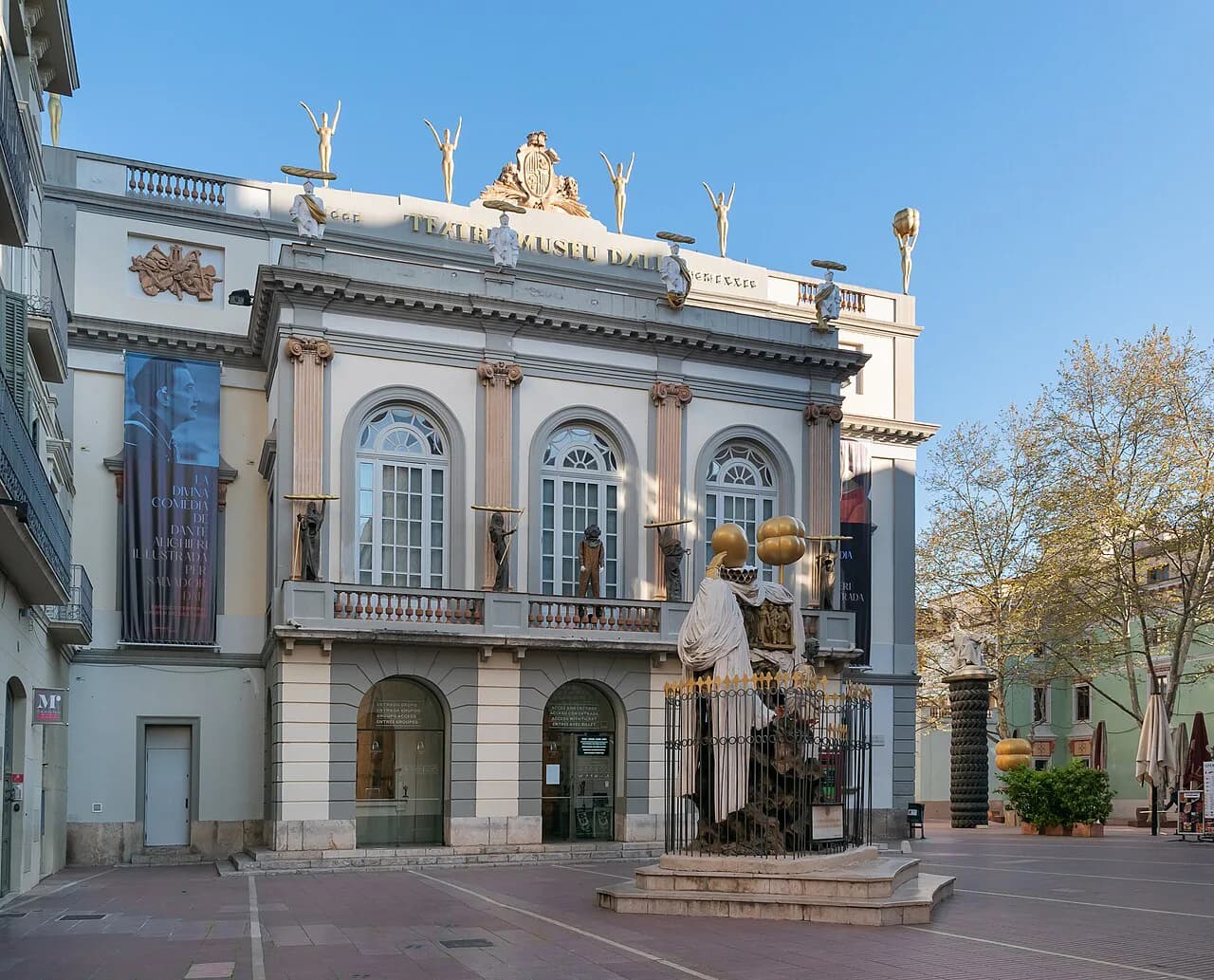
The Estany de Banyoles, the largest natural lake in Catalonia, is about 18 minutes away by car, and makes a natural add-on for a walk after the town. Figueres, Dalí's home town and the site of his Theatre-Museum, is the other obvious extension. Either one turns a short town visit into a fuller day out.
For a coast-and-country trip, Besalú works as a break between the inland villages and the Costa Brava Towns, with the walled old town of Tossa de Mar Old Town as the coastal counterpoint. The contrast between stone lanes and sea walls is the point of mixing them. Keep the driving legs short and pick one pairing rather than both.
Should Besalú get a half-day?
Yes, if you want a medieval town that can be seen properly in a morning or afternoon and are willing to arrange the Miqvé visit in advance. The bridge, Sant Pere and the Jewish quarter form a tight, satisfying loop, and the two-to-three-hour budget leaves room for the smaller sights.
Base yourself in Girona if you want a city alongside the town, and use Besalú as the inland half-day. Confirm the tourist office arrangements before you set out, then let the bridge set the pace.
Explore more Girona guides
Frequently Asked Questions
Is Besalú worth visiting?
It is, if you want a compact medieval town rather than a large city. The Romanesque bridge, the monastery church and the Jewish quarter sit within a short walk of each other, and two to three hours covers the centre.
Do you need to book the Miqvé in Besalú?
Yes. The ritual bath is visited by arrangement with the Oficina de Turisme de Besalú, so contact them before you travel to fix a time.
How far is Besalú from Barcelona?
Around 130 km by road, roughly an hour and a half by car. Buses from Barcelona Nord take about two hours, and fares and timetables should be checked before booking.
Can you see Besalú in half a day?
Yes. The bridge, old town, Sant Pere and the Jewish quarter fit into two to three hours on foot, leaving time for travel in the same half-day.
Sources
Notes for your next Spanish town break
Optional updates to our guides.
You might also like
Continue reading
More guides you'll find useful