Cadaqués: the White Village, Santa María and Dalí's Portlligat
Cadaqués for UK travellers: the white old town and seafront, Santa María church, Dalí's house at Portlligat and the Cap de Creus headland.
On this page
Cadaqués deserves a full day rather than an hour's wander: the seafront, the tangle of white lanes and the climb to Santa María fill a morning, and Portlligat or the Cap de Creus headland can take the rest. This guide fixes the pieces in order, separates the town walk from the excursion beyond it, and flags the single booking that governs the day.
The village sits at the end of a winding road on the Costa Brava, in the Alt Empordà behind Girona and Figueres. Arrive by road and the last stretch is slow, so plan the day around a morning arrival rather than a tight schedule.
What there is to see in Cadaqués, in short
Three things structure a visit. First the seafront promenade and the modernist facades along it. Second the old centre, a knot of steep lanes and whitewashed houses whose climax is the parish church of Santa María on the highest ground. Third, outside the village, Salvador Dalí's house at Portlligat and the Cap de Creus headland with its lighthouse, which is among the oldest in Catalonia.
The town itself needs no ticket and no fixed route: the lanes are best taken without a map, turning uphill when the street narrows. Santa María stands at the top of the climb and its terrace gives the best view of the village; the interior is what rewards stepping inside. The excursion beyond the village is the part that needs planning.
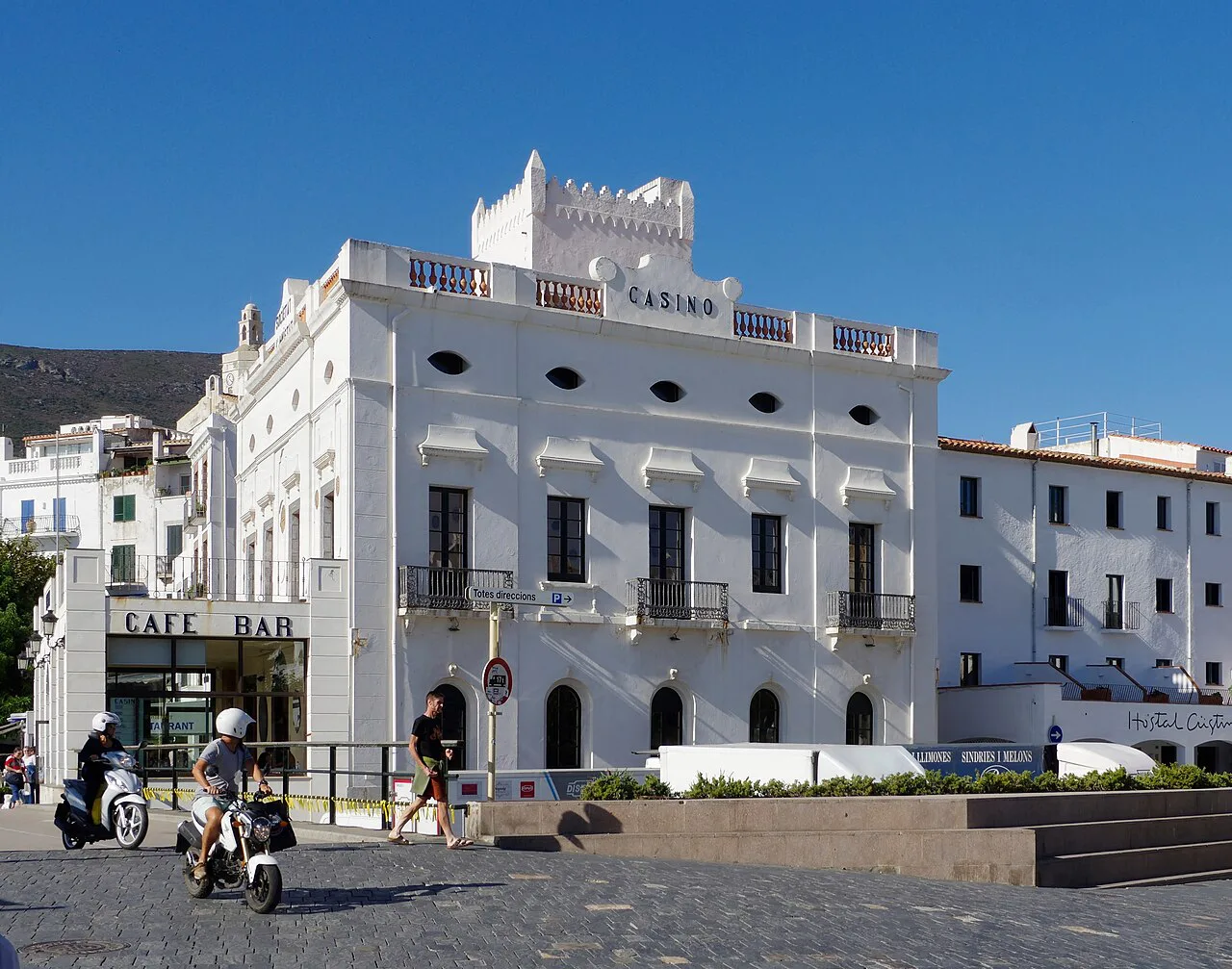
How the town is laid out: seafront, old centre and the climb to Santa María
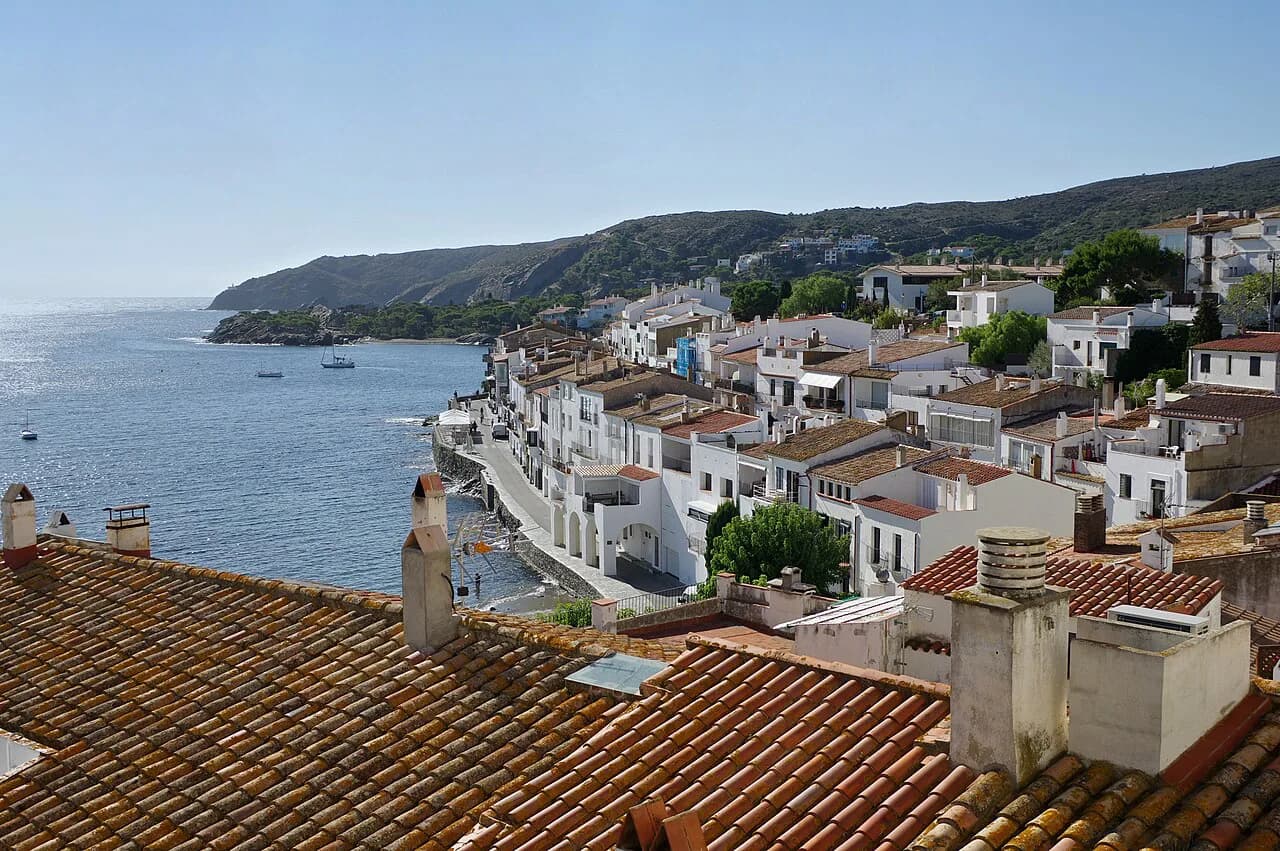
Cadaqués reads as a bowl around its bay. The Passeig Marítim traces the water's edge and gives the classic view back at the white facades reflected in the sea, which makes it the natural place to start early, before the light hardens.
Behind the promenade the streets rise. Carrer des Call and Carrer Santa María are among the prettiest in the centre, and the climb to the church is steady rather than savage, but it is a climb: wear something you can walk uphill in and leave the heaviest bag behind.
Because everything sits on a slope, the sensible order is water first, lanes second, church last, so the terrace rewards you at the top instead of stranding you at the start. Cafés in the centre are for pausing between the two, not for a detour.
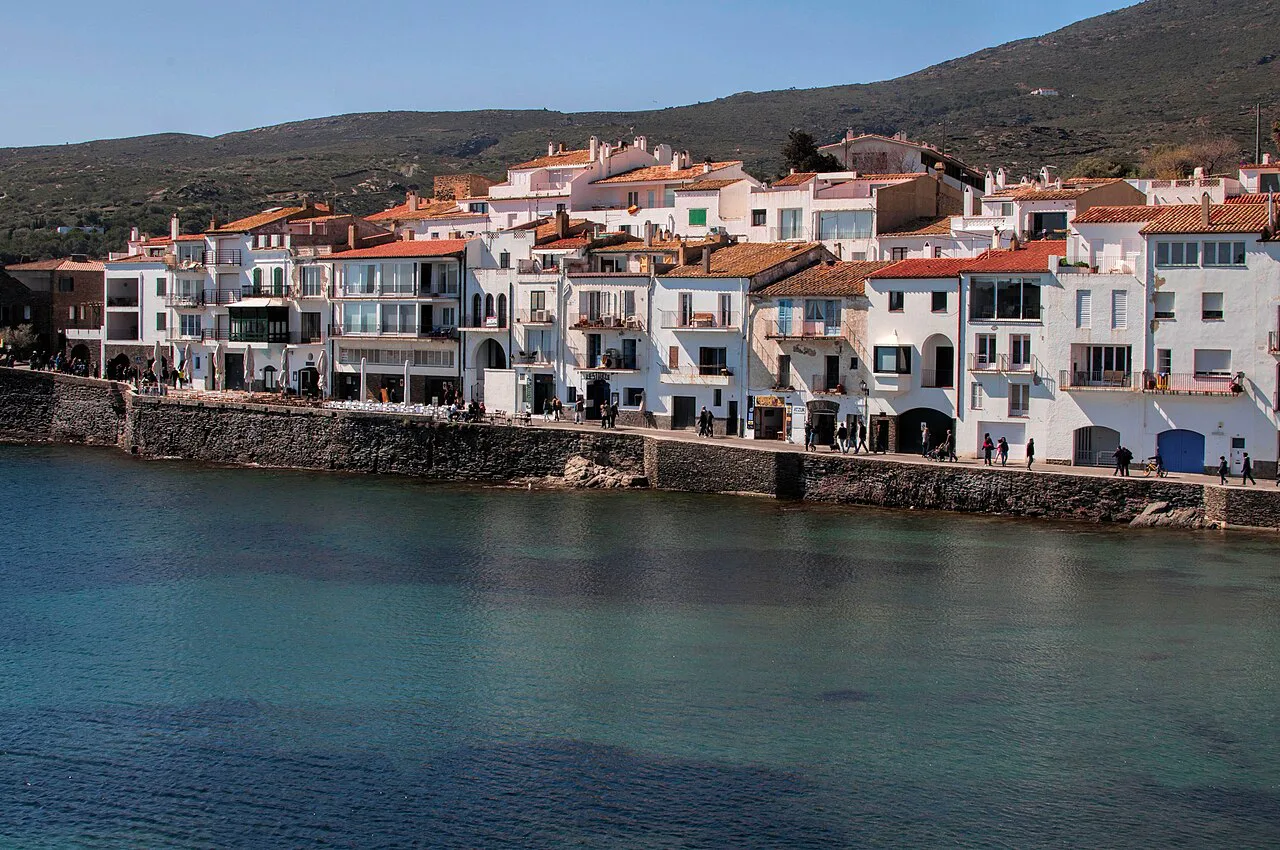
The seafront promenade and its modernist houses
The promenade is worth more than a photograph. Look for Casa Blaua, Casa Staempfli and Casa Melitón, which carry the modernist detailing that gives the waterfront its character. Walking the length of it takes little time and sets up the rest of the day.
The bay reads best from the water, and boat trips from Roses run along the cliffs of the Cap de Creus before leaving time ashore in the village, but the promenade alone justifies the stop. If your short break is built around whitewashed lanes and a walled waterfront, the Tossa de Mar old town makes an obvious companion stop on the same coast.
Wandering the old centre: Carrer des Call and Carrer Santa María
The centre is small enough to cross in minutes and layered enough to hold you for an hour. Carrer des Call and Carrer Santa María are the lanes to aim for, with white walls, stone thresholds, shopfronts and the occasional glimpse of water between roofs.
The lanes are best taken without a map: the appeal is the wandering itself, and the whitewashed centre is walkable in a half day when time is short, with the church as the one fixed destination at the top.
For the same reason, Cadaqués fits a wider Catalonia plan without demanding a dedicated trip. If your base is inland, Besalú: what to see in Catalonia's medieval town gives you a Romanesque counterweight to this Mediterranean whitewash.
Santa María church: the baroque altarpiece, the organ and the view from its terrace
The parish church of Santa María stands at the highest point of the old town, and its terrace delivers the best view of the village with the whole bay below. That alone justifies the climb, whether or not you go inside.
Construction of the present building began in the mid-sixteenth century in late Gothic style on the site of an earlier church destroyed in pirate raids, and it was consecrated in 1642. Inside, the draw is the baroque high altarpiece, carved in 1725 and gilded in 1788 by Jacint Morató and Pau Costa, nearly 23 metres of gilded wood with marine imagery, dedicated to the Virgen de la Esperanza.
Also look for the organ by Josep Boscà, built between 1689 and 1691 and among the oldest in Catalonia. As in any working parish church, the interior may be closed around services, so treat Santa María as the fixed point of the circuit at the top of the climb rather than something to slot in whenever you arrive.
Casa Museo Dalí at Portlligat: why you book ahead and what the visit covers
Dalí's house at Portlligat was his only stable home. He moved into a simple fisherman's hut there in 1930 and, with Gala, extended it room by room over four decades into the labyrinthine house that now forms the museum.
Visits are by advance booking only, and slots sell out weeks ahead, so this is the decision that shapes the day: secure a time before you fix anything else, then build the town walk around it.
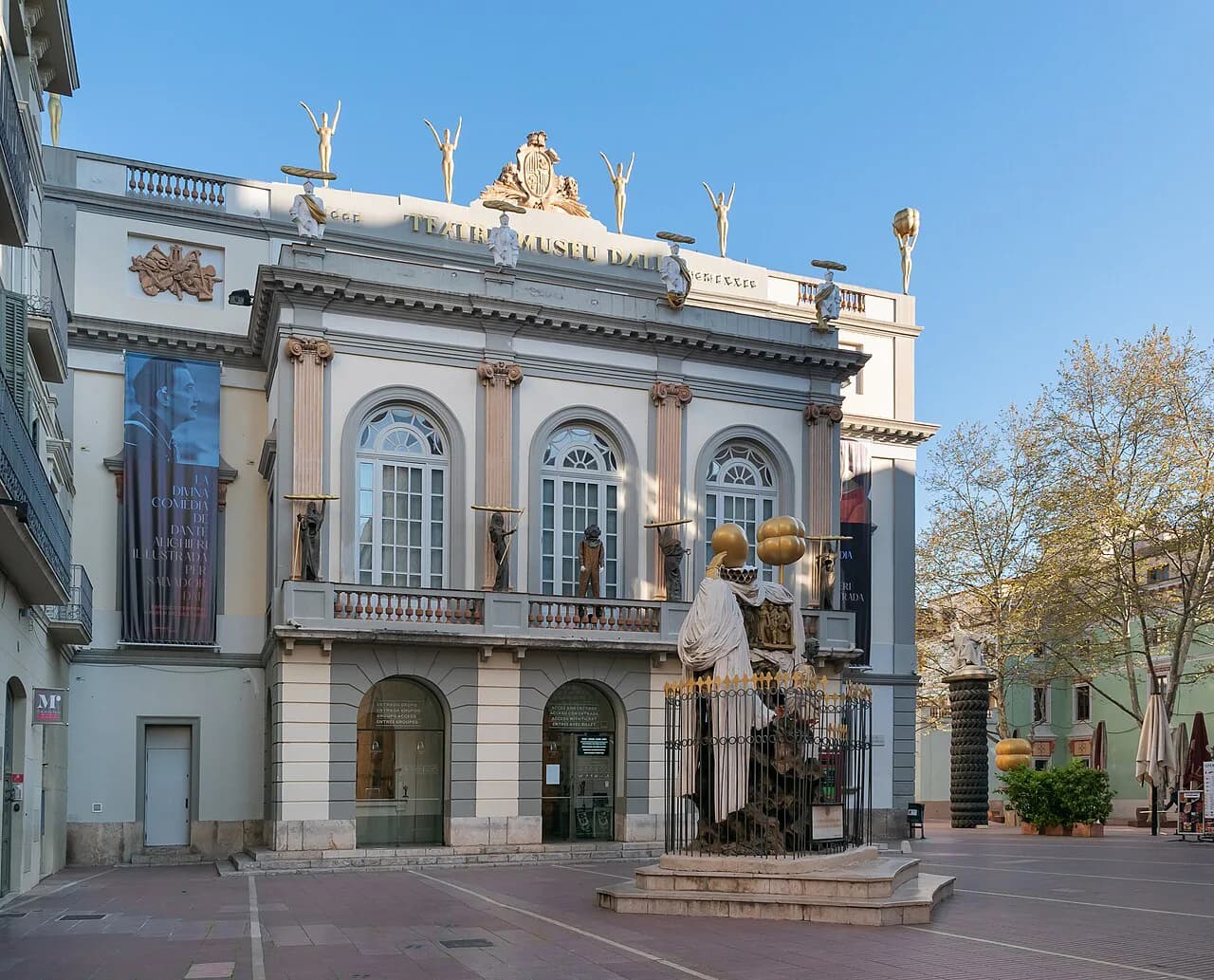
Portlligat sits just beyond the village, so the museum pairs naturally with the lanes rather than competing with them. If Dalí is the reason for the trip, The Dalí Theatre-Museum in Figueres is the other essential stop inland and makes a natural pairing with Cadaqués on a two-centre break.
Cap de Creus and the lighthouse, and when the headland is worth the detour
The Parc Natural del Cap de Creus covers the rocky headland beyond the village, and its lighthouse is among the oldest in Catalonia. The draw is the landscape itself, bare rock and wind-shaped cliffs, rather than any single monument.
The headland earns the detour when you have a second day, or when you have a car and an early start. It does not fit neatly alongside a booked Portlligat slot and a leisurely town walk in a single day, so it makes better sense as an addition on a second day than a squeeze on the first.
The coves along this coast are part of the same excursion. They suit walkers and swimmers, so plan the headland as its own half day rather than as something to fit around a Portlligat booking.
How long Cadaqués needs, and where it fits a Girona or Figueres trip
Give the village a full day if you are adding Portlligat, and two if the Cap de Creus headland is also on the list. On a half day, take the promenade, the lanes and Santa María and save the museum for a return.
Cadaqués sits within reach of both Girona and Figueres by road, which makes it a workable day out from either rather than a place that demands its own overnight stay. It slots naturally into a Costa Brava towns itinerary, and Girona Attractions: 6 Visitor Guides covers what to do at the inland end of the trip.
Summer brings more visitors and higher prices in the village, so shoulder seasons make for a calmer walk through the lanes. If your short break is built around walled old towns rather than a white fishing village, Costa Brava Towns points you to the fortified alternatives along the same coast, among them the Vila Vella at Tossa de Mar.
Getting there and the practical trade-offs of arriving by road
Cadaqués is reached by road, and the final approach is a winding stretch that forms part of the trip. A car gives you the flexibility to add the Cap de Creus headland on the same outing.
Parking in the village is limited and fills quickly in summer, so an early arrival solves two problems at once: a space, and the promenade before the crowds. Drivers should also expect the car to be parked for most of the day, since the centre is small enough to cover on foot.
Travellers arriving by air usually come via Girona or Barcelona, then continue by road. Weigh the freedom of a car against the winding drive, and the limited village parking, before you commit.
Should you book Portlligat first, or plan the town walk first?
Book Portlligat first. The house visit sells out weeks ahead and fixes your timing, whereas the promenade, the lanes and Santa María can be shuffled around whatever slot you secure. Then build the day outwards: water, lanes, church terrace, museum.
Add the Cap de Creus headland only if you have a second day or an early start with a car, and treat the winding road as part of the experience rather than an obstacle. Book the museum slot and plan parking before you travel, and the rest of the day looks after itself.
Frequently Asked Questions
Is Cadaqués worth visiting?
Yes, for the combination of a whitewashed old town around a bay, a church terrace with the best view in the village, and Dalí's house just beyond it. The trade-off is access: the winding road and limited parking mean an early start pays off, and the Dalí house requires booking ahead.
What is the closest airport to Cadaqués?
Girona and Barcelona are the practical arrival points for this stretch of the Costa Brava, with the onward leg made by road. There is no airport at Cadaqués itself; both cities connect by road to the village via Figueres and the winding coastal approach.
Can you swim in Cadaqués?
The coves around the Cap de Creus headland are part of the landscape that draws people here, and they suit walkers and swimmers. If swimming and the coves are your priority, plan the headland as a separate half day rather than tacking it onto a Portlligat booking.
Sources
Notes for your next Spanish town break
Optional updates to our guides.
You might also like
Continue reading
More guides you'll find useful