Girona History: Roman Walls, the Cathedral and the Call
Girona's history through buildings you can still see: Roman walls, the Cathedral's wide Gothic nave, the medieval Call and Romanesque monasteries.
On this page
Girona's history is best read in the buildings that still stand, and the historic core can be covered on foot in a morning or an afternoon. Start with the Roman walls of the Força Vella, then climb to the Cathedral, drop into the Call and finish at the Romanesque monasteries across the river. This guide ties each period to a named street, monument or museum in the old town, so you know what you are looking at and in which order to walk it.
Why Girona was Catalonia's second city in the Middle Ages
Medieval Girona outgrew its Roman enclosure and spread onto both banks of the Onyar, becoming the second city of Catalonia with a population of 10,000 by the 15th century. That growth explains why the historic centre feels split: the monumental core sits on the left bank, while the commercial streets and bridges lie across the water. Plan your route so you cross the river deliberately rather than zig-zagging back and forth.
The old town rewards a slow line rather than a checklist. Pick one bank for the morning and leave the crossings for later, when the light on the river houses is at its best.
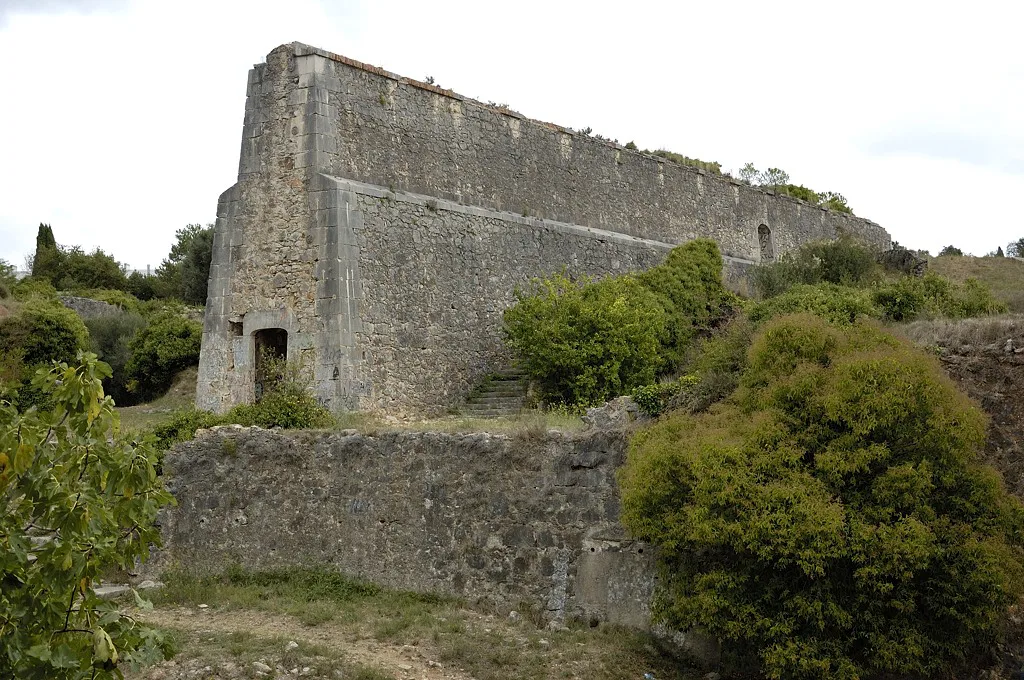
The Roman walled enclosure of the Força Vella
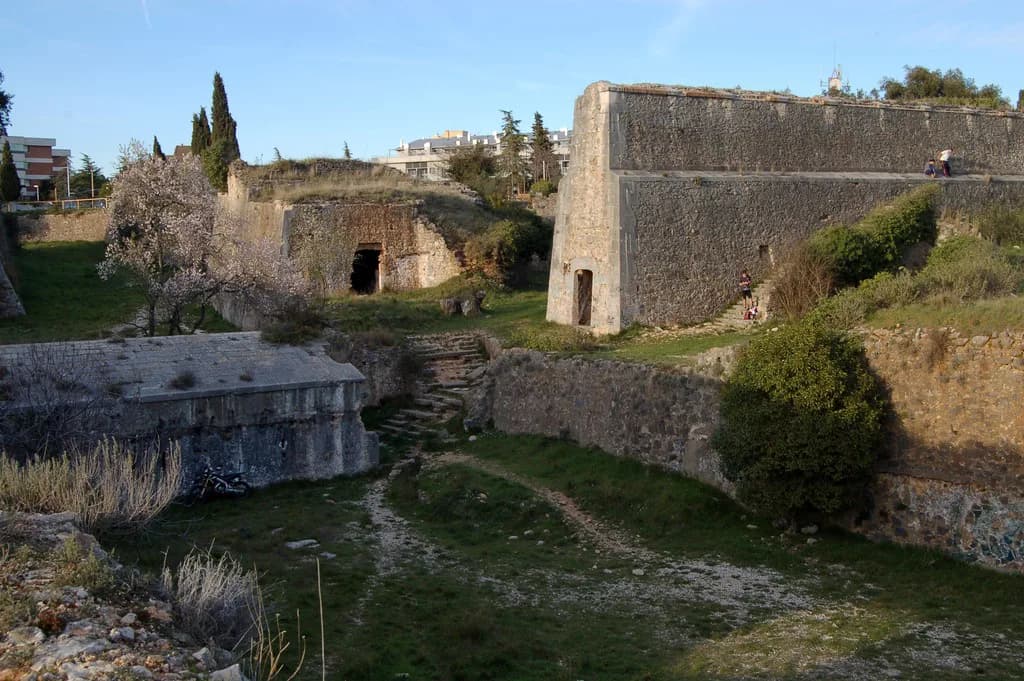
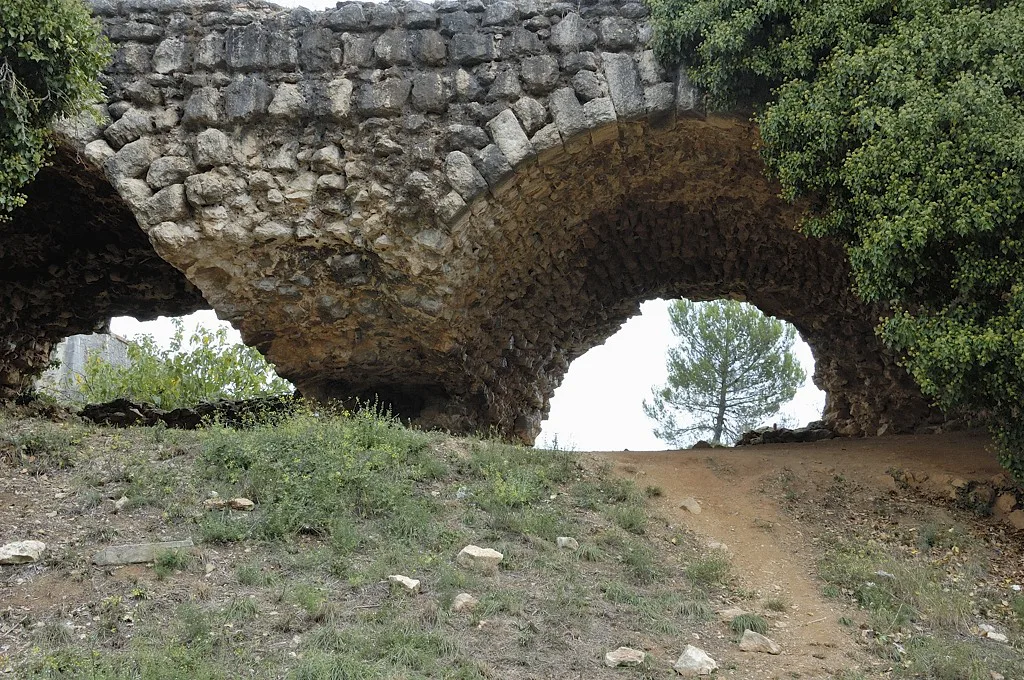
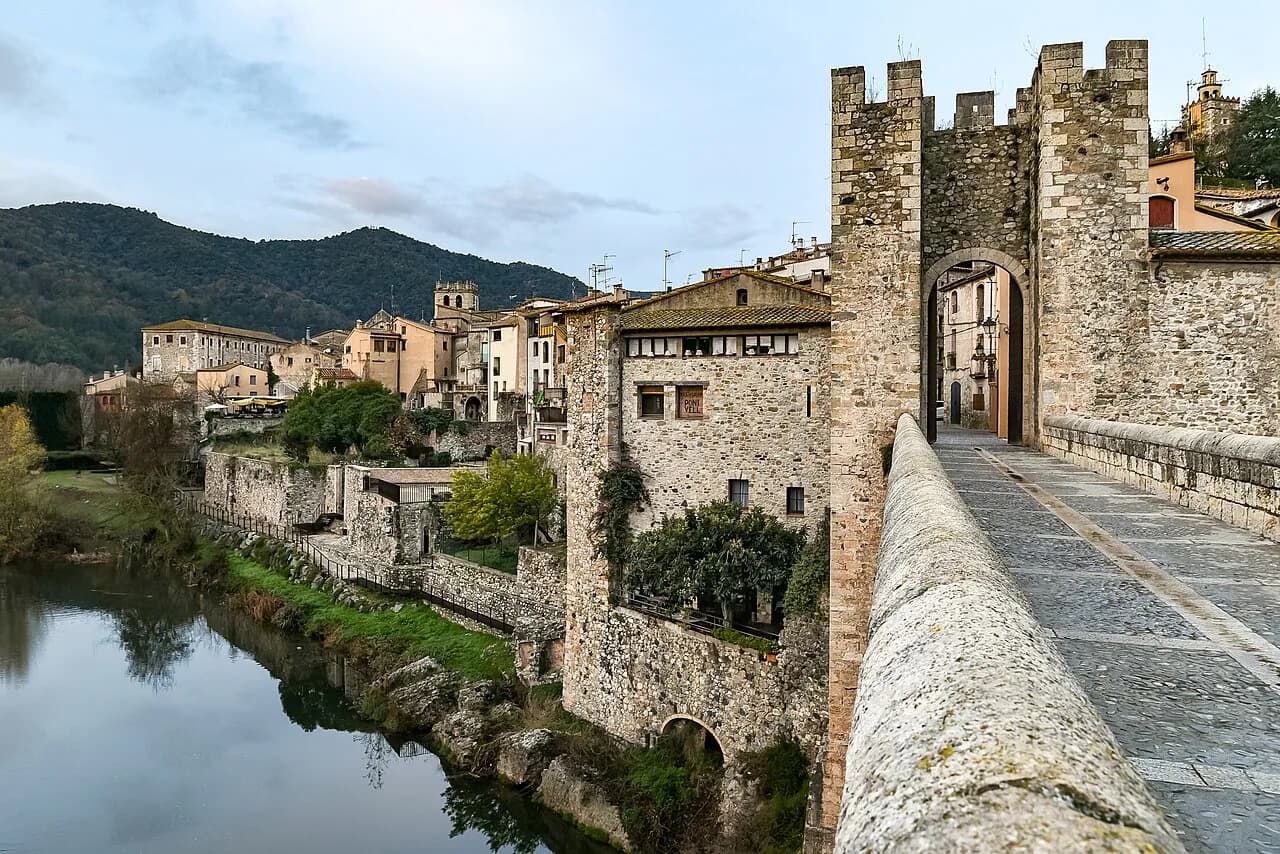
The Romans walled the hilltop settlement that became the Força Vella, and those defences were extended in medieval times. Walking the surviving stretches and the old Camino de Ronda gives you the clearest sense of how small the original city was and how far it later spread.
From the wall towers you look down into the streets of the Força Vella rather than out over open country, which is what makes this stretch worth the climb. Wear shoes that cope with stone steps and uneven paving, and treat the walls as the first stop rather than an afterthought at the end of the day.
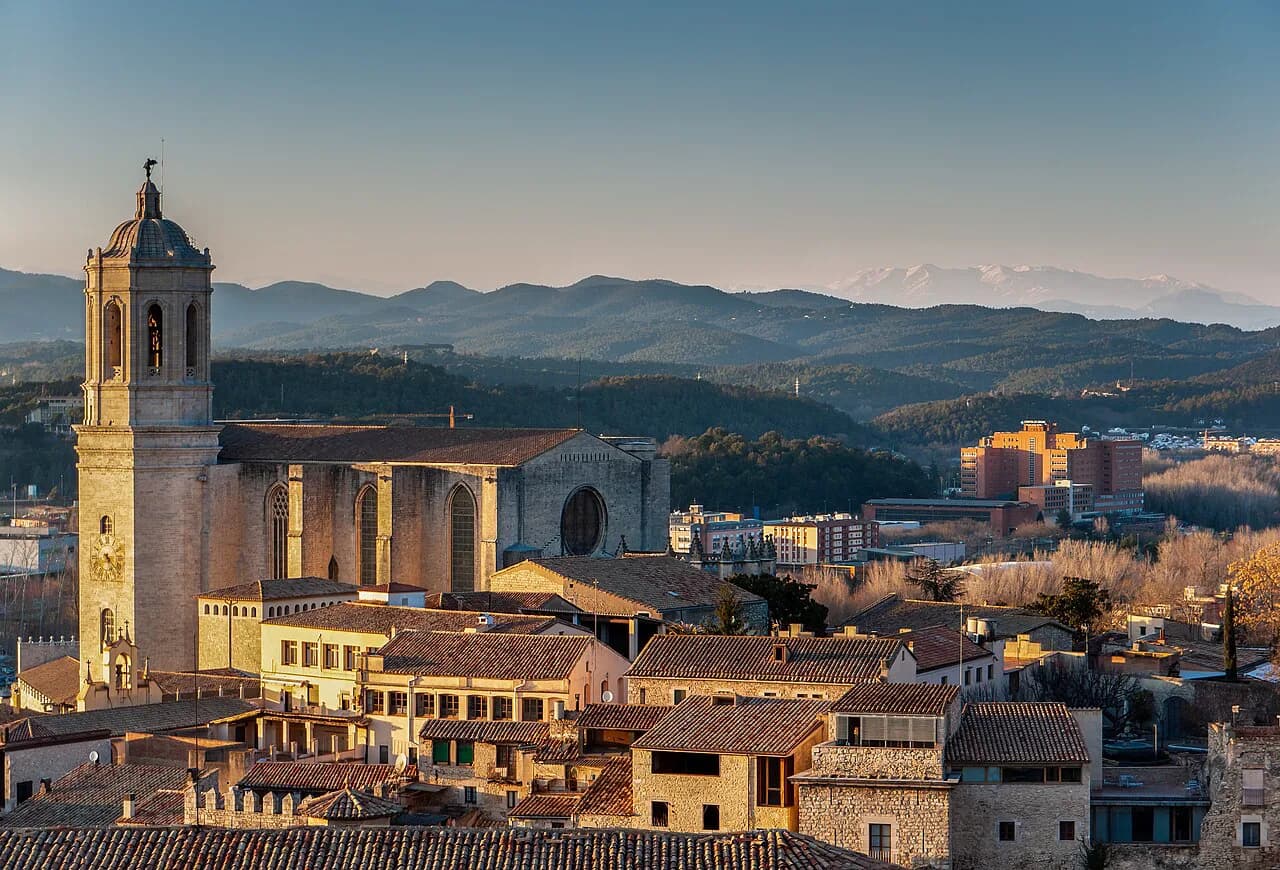
The Cathedral: a nave built between the 11th and 18th centuries
The Cathedral of Girona was built between the 11th and 18th centuries, and its single great nave is the widest Gothic vaulted space in the world. The building mixes Romanesque work, including the cloister and the Torre de Carlomagno, with a Baroque facade and a 17th-century stairway. The Cathedral occupies the highest point of the Força Vella, so the approach is a climb; pace it and use the steps as a viewpoint rather than rushing the ascent.
The scale of the nave is the reason to go inside, and the width only registers once you stand under it. Check the Cathedral's own published times and ticket terms before you set out, since services can restrict visitor access during the day.
Sant Feliu and its Gothic bell tower
The Basílica de Sant Feliu was Girona's first cathedral and is now one of the city's most representative Gothic buildings, with a slender bell tower raised between the 14th and 16th centuries. Inside are eight pagan and early Christian sarcophagi from the 4th century and the 14th-century Christ figure attributed to Master Aloi. Pair it with the Cathedral on the same climb, since both sit within the old core.
The Call: Girona's medieval Jewish quarter and its thinkers
The Call began to form in the 12th century around the Carrer de la Força, when Jewish families who had lived near the Cathedral moved there. At its height the quarter housed up to 800 people and produced figures such as the physician, poet, philosopher and exegete Mosse ben Nahman, known as Bonastruc ça Porta. It is now one of the busiest corners of the city, so walk it early if you want the lanes to yourself.
The Call's alleys and courtyards form a labyrinth that preserves the atmosphere of medieval Jewish life, and the Museum of Jewish History explains the community's settlement in the city. Read the street names as you go: the quarter is compact, and the story sits in the layout as much as in any exhibit.
The Arab Baths and the medieval city's water
The Baños Árabes sit beside Sant Pere de Galligants and survive as evidence of the city's medieval demographic and urban growth. They follow the model of Roman baths, Muslim hammams and Jewish mikva'ot, which makes them a compact lesson in how medieval Girona combined different bathing traditions. They are small, so give them a short slot and combine them with the monastery next door rather than making a separate trip.
Sant Pere de Galligants and Sant Daniel: Romanesque outside the old centre
Sant Pere de Galligants, next to the Arab Baths, is a fine example of Catalan Romanesque, notable for the carved capitals of its nave and cloister; it now houses the Girona branch of the Museum of Archaeology of Catalonia. The Monastery of Sant Daniel lies about two kilometres along the Galligants in open green land beside the city and still holds a community of Benedictine nuns, with the saint's tomb in the church and a Romanesque cloister with Gothic additions. Sant Pere de Galligants sits within the old core, so pair it with the Arab Baths; Sant Daniel is a separate trip and worth it only if you have a full day.
The monastery building at Sant Pere de Galligants is as much the exhibit as the finds, and it is the Girona seat of the Museum of Archaeology of Catalonia. If you want to weigh it against the city's other collections, the wider list of museums in Girona helps you decide where to spend a wet hour.
The walls and the Camino de Ronda: reading the city's defences
The wall walk and the old Camino de Ronda are the best way to understand Girona's defences, because the circuit shows you the fortified towers and the interior of the Força Vella at the same time. The Roman walls were extended in the medieval period, so you are reading two building phases in one walk. Go in the morning in summer, when the exposed stretches are cooler and the stone is easier to photograph.
Legends carved into the old town: the witch of the Cathedral tower and the Tarlà
Look up at the Torre de Carlomagno and legend has it that a gargoyle is a witch petrified upside down, condemned to stare at the ground and to let rain pour from her mouth instead of curses. On the Carrer de Argentaria, a small figure called the Tarlà is hung during the city's festivals, a tradition traced to an acrobat who entertained neighbours during a quarantine. A carved falcon on the Puerta de San Miguel of the Cathedral recalls the legend of Cap d'Estopes.
Other carvings carry stories too: the lion of the cathedral, the Cocollona said to swim the Onyar on full-moon nights, and the flies of Sant Narcís. Use them as prompts to slow down and look at the stonework, which is otherwise easy to walk past.
The Onyar, the Rambla de la Llibertat and the modern city
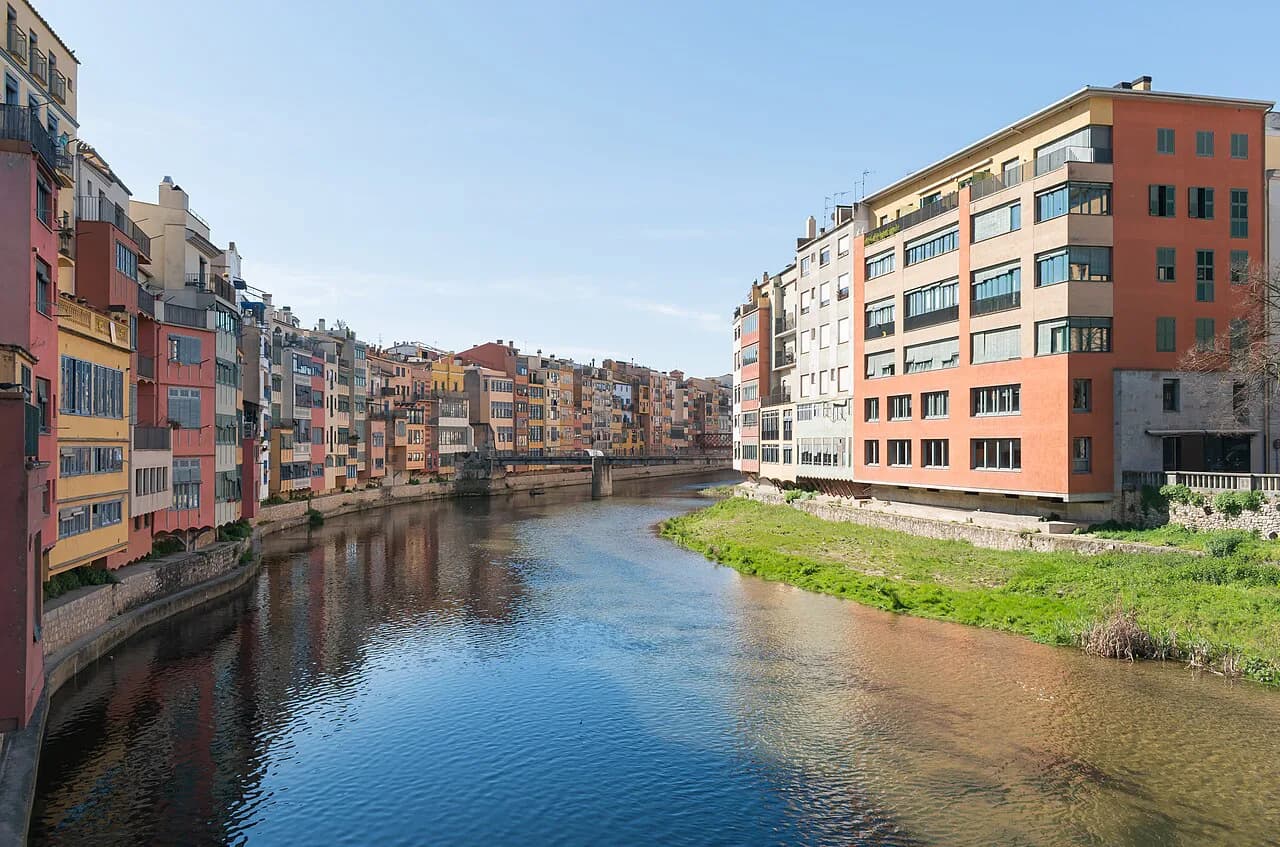
The Rambla de la Llibertat, which dates from the 12th century, runs parallel to the Onyar and is the commercial spine of the modern city, with buildings such as the modernista Casa Norat of 1912 along its length. The painted houses on the river are the image most visitors come for, and the bridges give you the classic view back towards the old town. Walk this stretch at the end of the day, when the facades catch the light and the old town sits behind you.
If your interest is in how the medieval city became the modern one, the Rambla and the river houses are the quickest read of the change.
How to fit the historic core into a short break
A workable order is: walls and Camino de Ronda first, Cathedral and Sant Feliu second, the Call third, and Sant Pere de Galligants with the Arab Baths last, before returning across the Onyar to the Rambla. Keep the Cathedral for the cooler part of the day, since the climb to the highest point of the Força Vella comes with the visit, and inland summer heat makes midday steps punishing.
Themed routes of the old town simplify this further, and a guided walk is worth considering if you want the Call and the cathedral precinct explained together. A printed or downloaded Girona map helps because the lanes bend and signs are sparse.
Where Girona's history is explained: the Jewish History Museum and the Archaeology Museum
Two museums do most of the explaining: the Museum of Jewish History in the Call, which covers the settlement of the Jewish community, and the archaeology museum at Sant Pere de Galligants, which holds the Romanesque monastery and its collections. Do the Call museum before you wander the lanes, so the street layout makes sense, and save the archaeology museum for the monastery visit across the river.
If you know Girona from the screen, the cathedral has been used as a filming location, but treat that as a footnote to the building rather than the reason to queue.
Which part of Girona's history should you see first?
Start with the walls and the Força Vella if you have only a few hours, because they frame every later period and cost nothing to walk. With a full day, add the Cathedral, Sant Feliu and the Call, then cross to Sant Pere de Galligants and the Arab Baths.
Explore more Girona guides
Sources
Notes for your next Spanish town break
Optional updates to our guides.
You might also like
Continue reading
More guides you'll find useful