Girona Walking Tour: A Circular Route Through the Old Town
A circular Girona walking tour through the old town, linking the walls, cathedral, Jewish quarter and Sant Feliu in one loop of about 4 km.
On this page
Girona's old town can be walked as a single loop of about 4.07 km, recorded at roughly an hour and six minutes of walking, with stops on top. The route below follows that loop in order, so the climb to the cathedral comes while your legs are fresh and the river finishes the walk.
The Barri Vell packs two thousand years of building into a compact hill: a Roman-founded fortified core, medieval walls added in the fourteenth and fifteenth centuries, a Jewish quarter, porticoed squares and baroque façades. Because everything sits within a few hundred metres, the order you take matters more than the distance.
What the walk covers
Treat the walk as one loop through the Barri Vell rather than a checklist. The recorded route runs 4.07 km with about 60 m of ascent, and the total walking time of 01:06 excludes any time spent at the six stops, so a comfortable half day is realistic once you add the wall walk and the cathedral square.
The surfaces are mixed: footpaths, paved lanes and some asphalt, with the steepest pulls on the climb to the cathedral and the wall steps. Cobbles and stairs make this a trainers walk rather than a sandals one, and the walls offer the most reliable shade and breeze of the day.
Where to start and which way to go
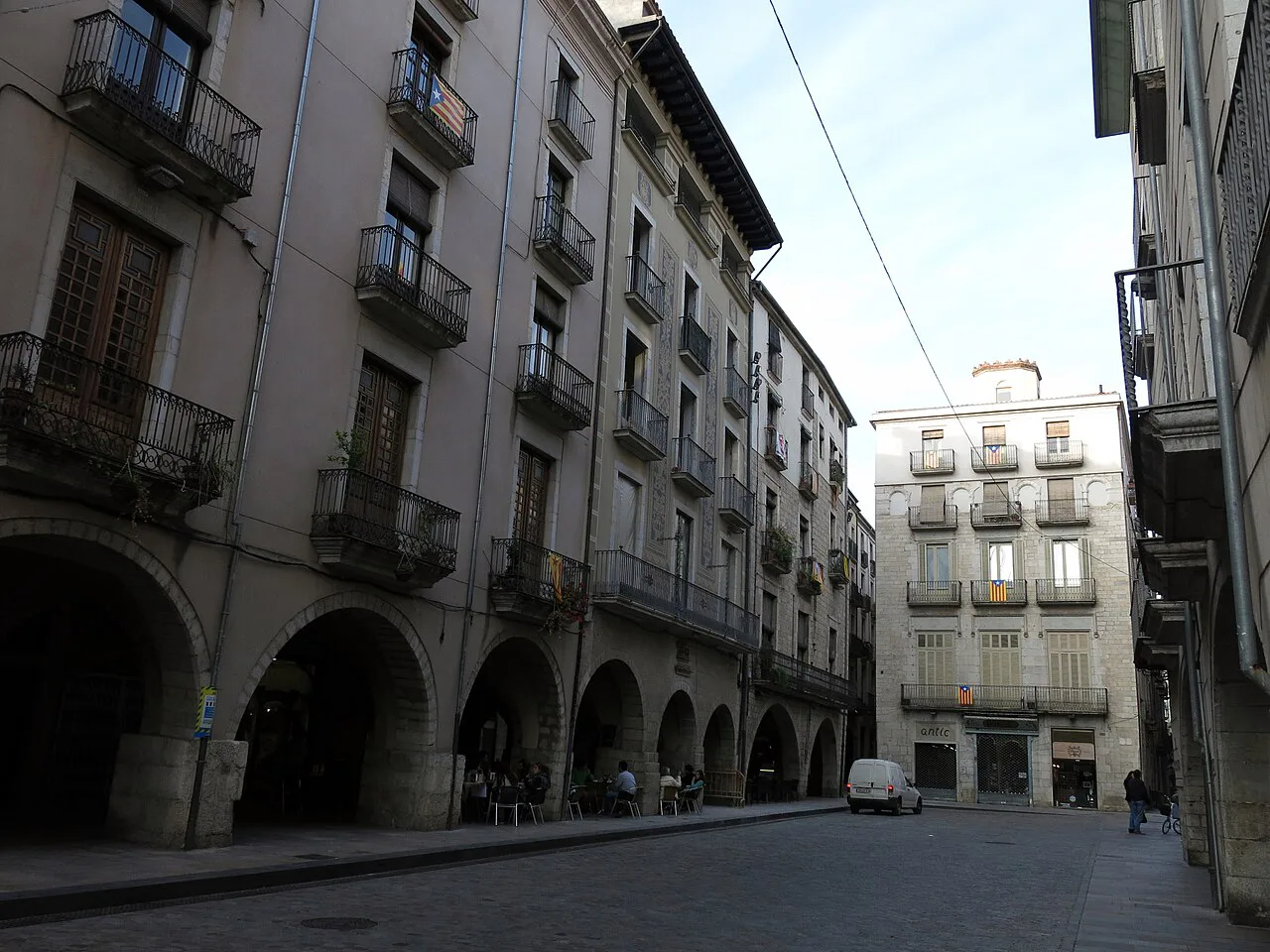
Begin near the Muralles de Girona on the eastern side of the old town and work uphill first, then let the route carry you down through the cathedral square, the Jewish quarter and the river. Doing the climb early is the practical trade-off: the walls are exposed, and you want them behind you before the middle of the day.
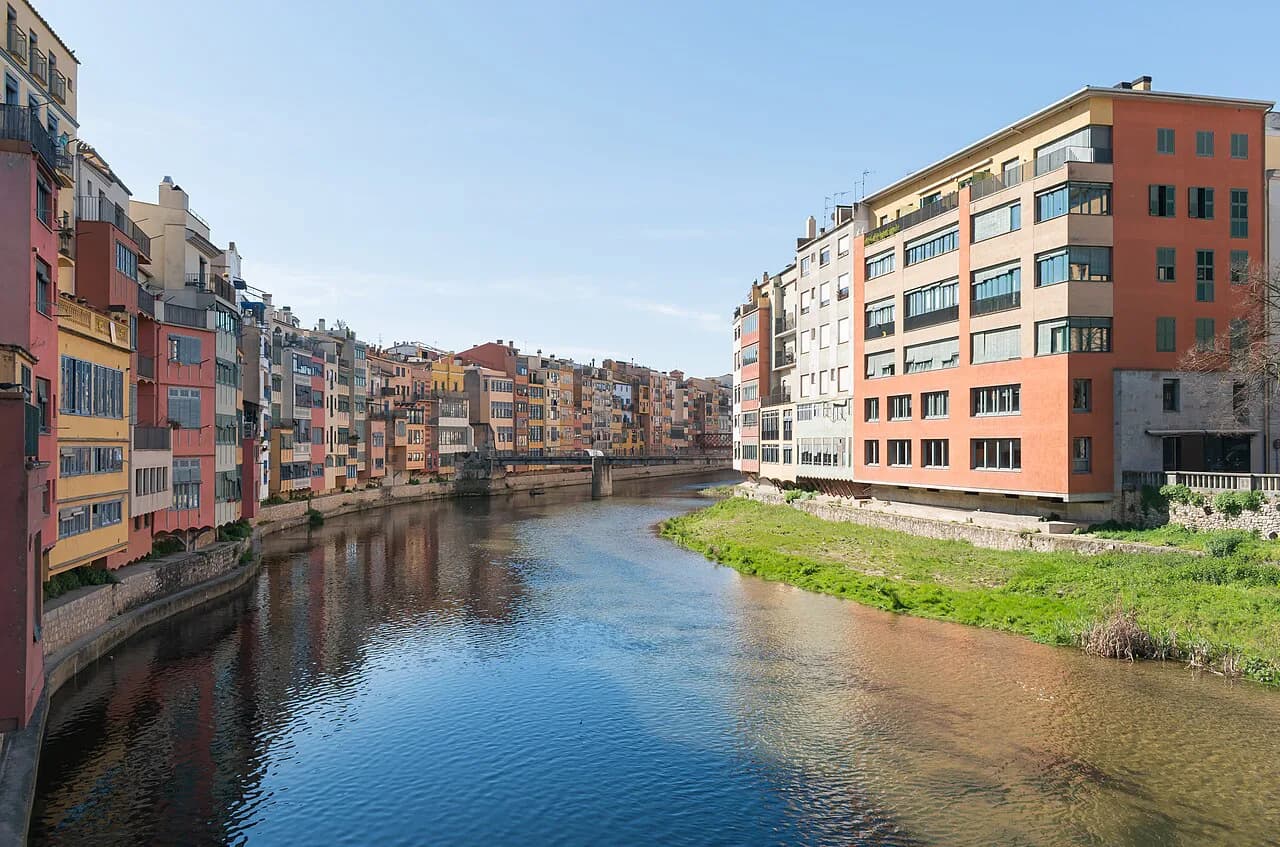
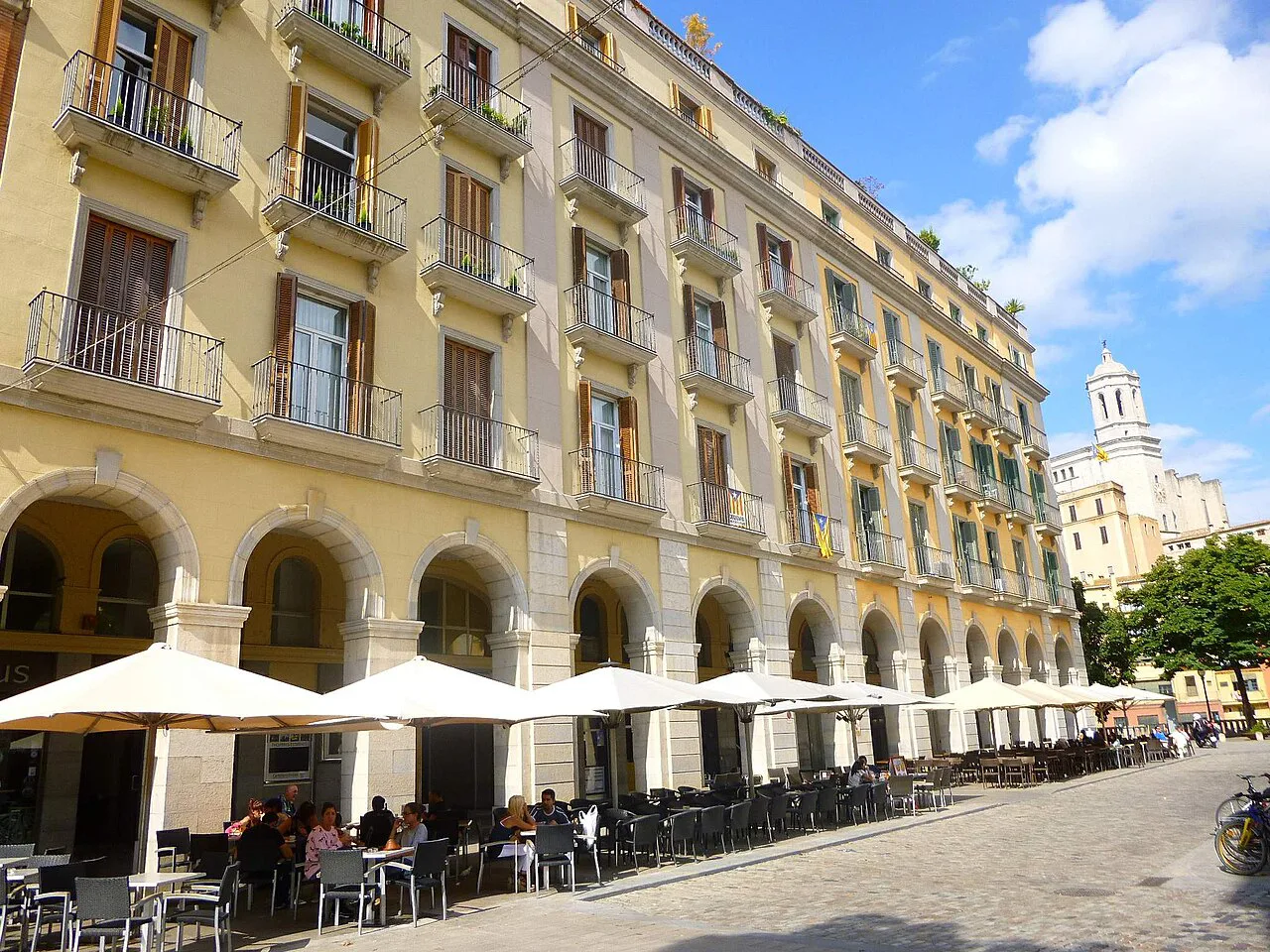
Finish by La Lleona and the Pont de Sant Feliu, where the coloured houses along the Onyar give you a natural stopping point close to the bridges back into the modern centre. If you would rather link the walk to the rest of the city, the wider list of things to do in Girona slots in around this loop.
Stop 1: the Muralles de Girona
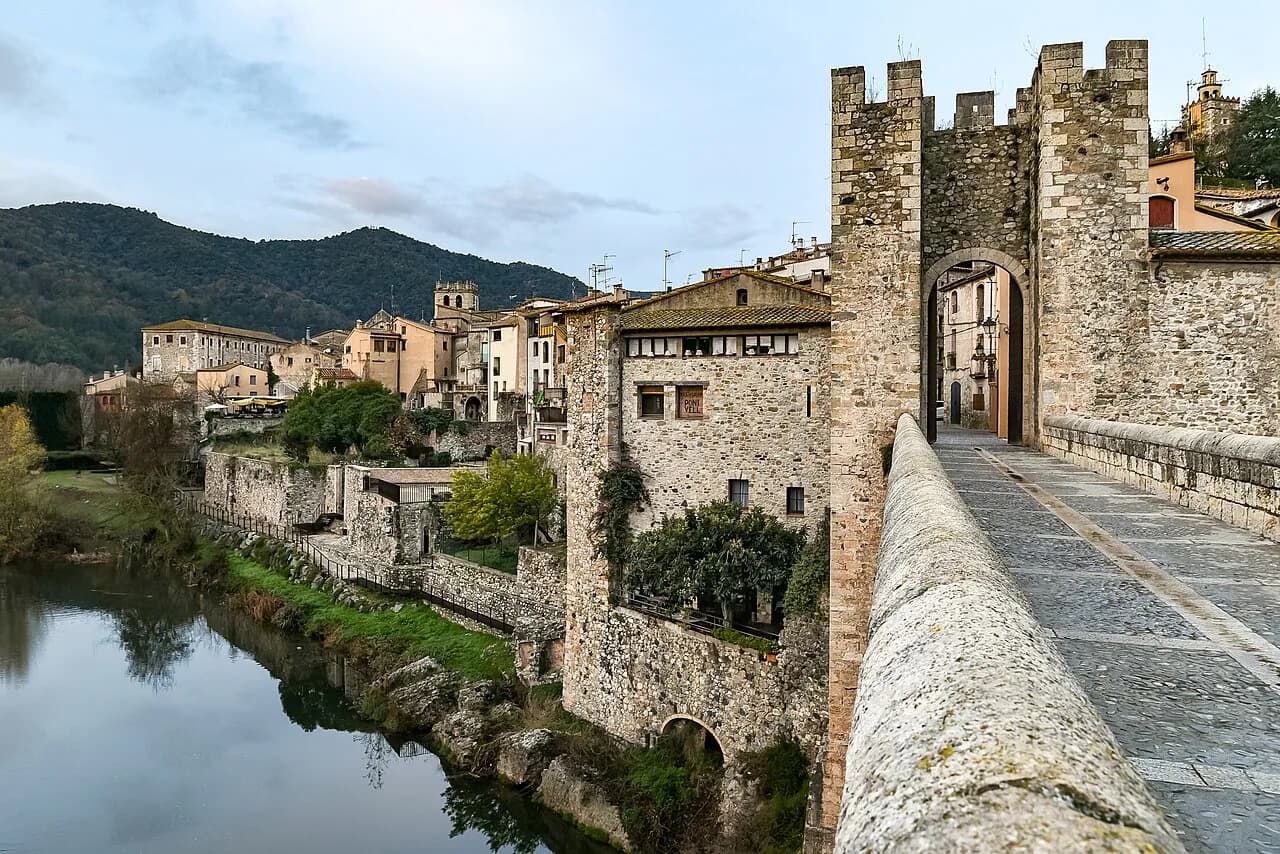
The wall circuit of towers, bastions and gates is listed in the Spanish monuments register, and the first defensive structures on the site went up between 80 and 70 BC. You walk along the top rather than around the base, so the reward is a look back over the rooftops and the cathedral bell tower.
Allow the wall walk its own twenty to thirty minutes beyond the recorded walking time, because the path narrows and you will stop for photographs. The surviving stretch runs from the Caserna dels Alemanys area towards the Plaça de Jacint Verdaguer i Santaló, and the Força Vella beneath it is where the Roman town began.
Stop 2: Plaça de la Catedral de Girona
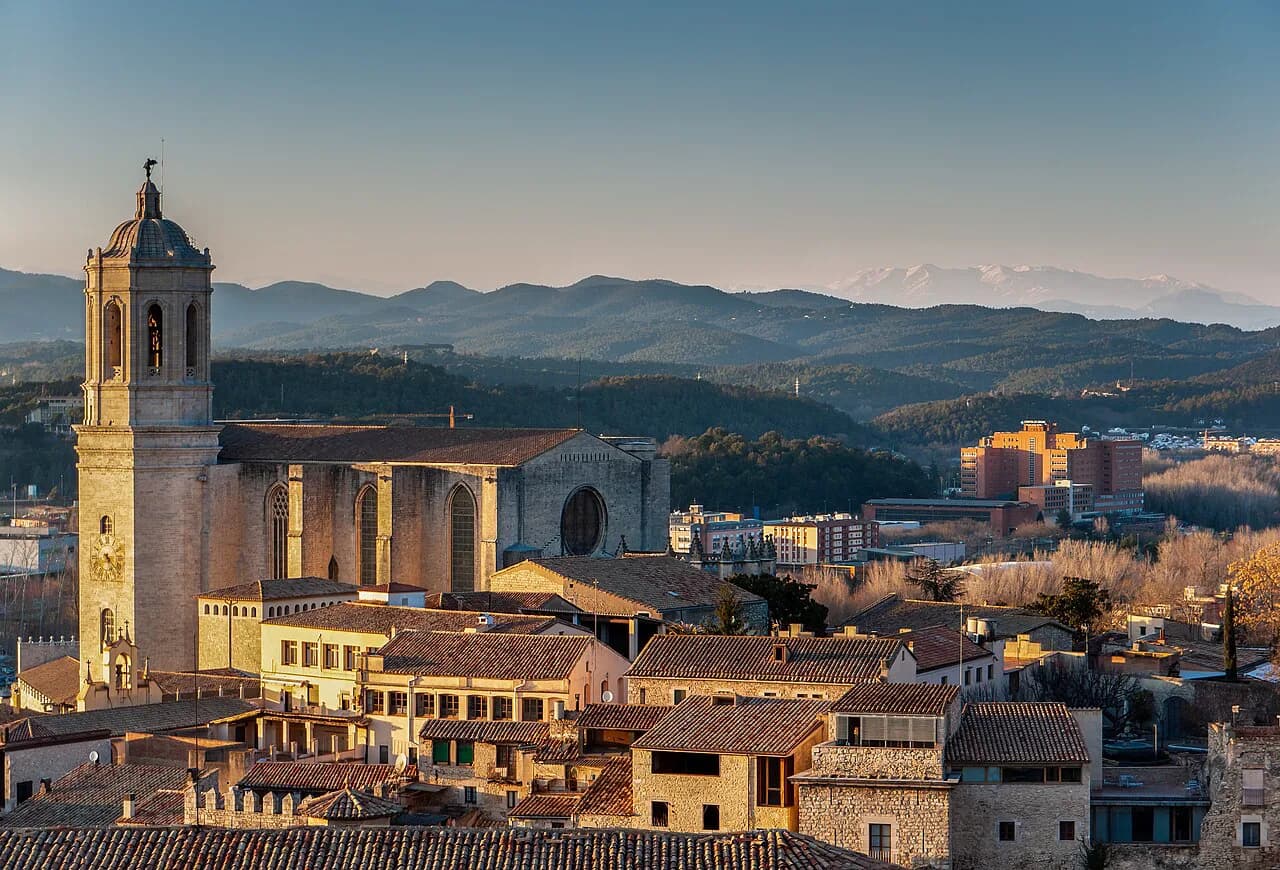
The cathedral of Santa Maria sits at the highest point of the city, reached by the long stairway and the Portal de Sobreportes below it. Its Gothic nave is the widest of its kind in the world, a single span that makes the interior feel unlike any other Catalan church, and the baroque façade faces you as you climb.
The square and stairway are free to look at, while the interior is a paid visit with its own timetable and a combined ticket that also covers the Basílica de Sant Feliu. Check the cathedral's published hours before you build the day around going inside, particularly around services.
The stairway is the image most visitors carry away, and it has appeared on screen, but the square earns its place on the walk on architecture alone. If you want the filming locations mapped across the city, the Game of Thrones Girona guide covers them separately.
Stop 3: El Call and the Pujada de Sant Domènec
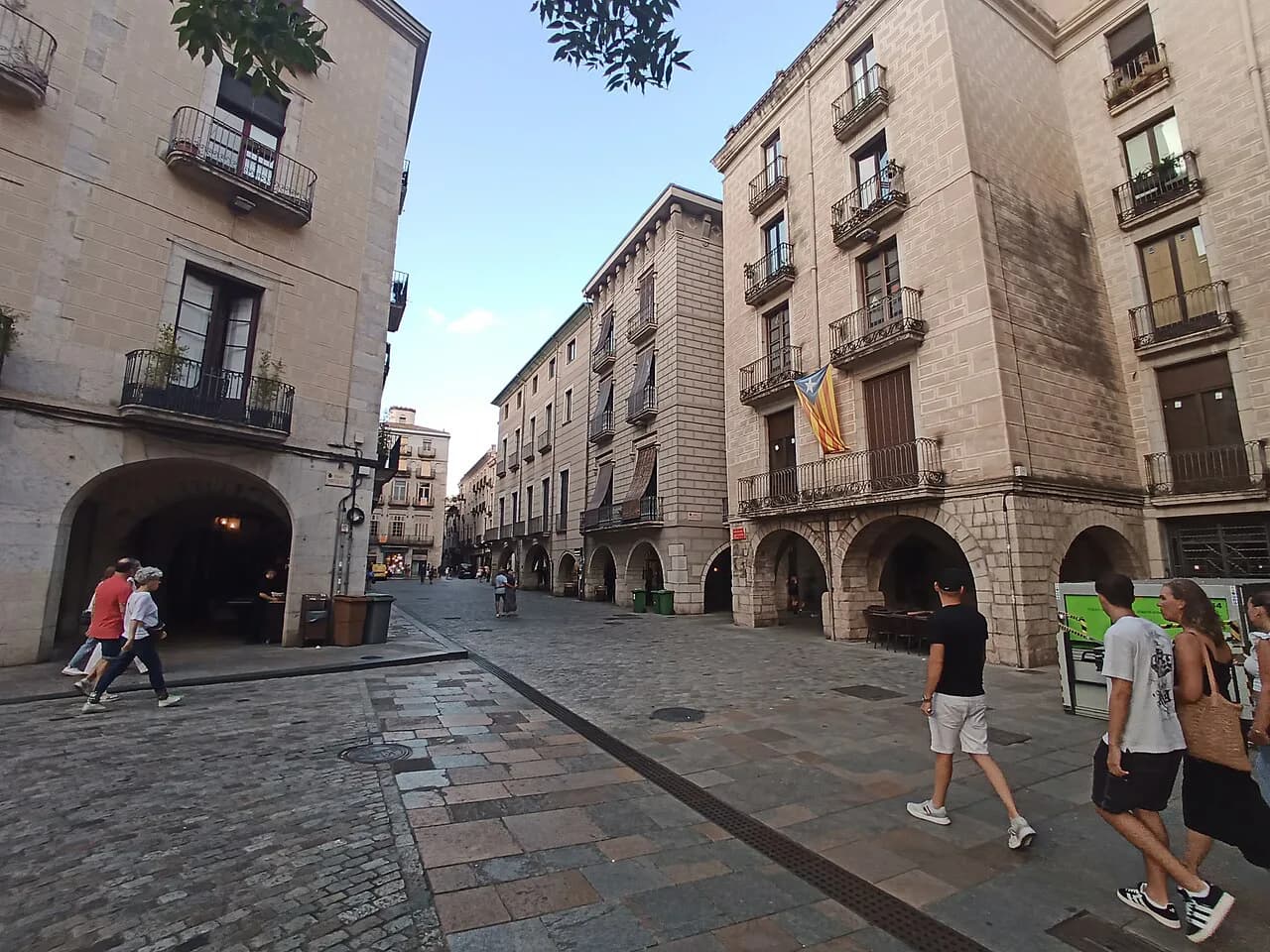
From the cathedral, drop into El Call, the medieval Jewish quarter, where narrow lanes and stone stairways are the whole experience and cost nothing. The Pujada de Sant Domènec and the steps beside the Església de Sant Martí are the two passages to seek out, and the quarter is compact enough to wander without a plan.
The Museu d'Història dels Jueus sits within the quarter and turns the lanes into a proper visit if you want context rather than atmosphere. Pair it with the city's other collections using the museums in Girona guide, which sets out what each one holds.
Stop 4: Monestir de Sant Pere de Galligants
Sant Pere de Galligants began as a Benedictine abbey and has housed the Girona branch of the Museu d'Arqueologia de Catalunya since 1857, with documents tracing the monastery to the late twelfth century. The Romanesque cloister is the reason to come, and the archaeology collection gives the walk its Roman and medieval context in one stop.
This is a paid interior on the edge of the old town, so decide at the door whether the cloister fits your budget and time. If you are choosing between collections, the museums in Girona guide sets out what each one holds.
Stop 5: Basílica de Sant Feliu
Sant Feliu was the main church of Girona before the cathedral was built, and its construction stretched from the twelfth century onwards. Inside are early Christian and pagan sarcophagi; outside, the bell tower looks more like a castle keep because it once formed part of the town wall.
Its combined ticket with the cathedral makes the pair the one paid interior worth budgeting for if you only go inside once. Services take priority over sightseeing, so time your visit around the published mass schedule rather than the other way round.
Stop 6: La Lleona and the Onyar
La Lleona is a small limestone lion on a column near the bridge, and the local habit is to touch or kiss it for a return to the city. It takes a minute, and it closes the loop neatly before you cross the river.
The Pont de Sant Feliu puts the coloured houses of the Riu Onyar in front of you, and the riverside is where the walk turns back into a city stroll. For the best-known bridge view and the Casas del Onyar, use the Girona map to pick your crossing.
Practicalities: paving, steps and short-break timing
The loop suits a short break because it starts and ends near the river bridges and the bus and rail stations beyond them, so it works as an arrival-day orientation or a departure-morning finish. Girona is also easy to reach on the way between Barcelona and the Costa Brava, which is why many travellers give the old town a single day rather than several, before heading on to Costa Brava towns.
In summer, walk the walls and the cathedral climb before the heat builds, and keep the shaded lanes of El Call for the middle of the day. Churches on the route close to visitors during services, so treat any interior as a short, timed stop rather than a long one.
Self-guided versus guided
This loop needs no guide: the stops follow one another, the walls and river give you fixed reference points, and the free exteriors do most of the work. A paid or tip-based walking tour earns its place when you want the layers of Roman, medieval and baroque building explained on site, or when you would rather not navigate the stairways yourself.
If you go guided, book through an operator that publishes its meeting point, duration and price in writing, and confirm those details with the operator directly. The self-guided version stays flexible and free of interior costs, which matters on a short break where the cathedral ticket is the one paid visit you might choose.
Either way, add a little time at the end to wander the lanes around the Rambla de la Llibertat and the streets of the modern centre, which sit just beyond the old town's edge.
Which way to walk Girona's old town
Walk the loop clockwise from the walls, take the cathedral stairway while you still have energy, and leave El Call and the river for the gentler second half. Budget around two hours at an easy pace with photographs, and half a day if you add one paid interior.
If you want more detail on any single stretch, from the Jewish quarter to the bridges over the Onyar, the old town guide goes deeper than this overview. Check cathedral and basilica hours on the day, then set off with the order above as your spine.
Frequently Asked Questions
Is Girona old town walkable?
Yes. The six stops sit within a compact hill and the recorded loop is 4.07 km with about 60 m of ascent, so it is a walk rather than a hike. Expect cobbles, stairways and a steady climb to the cathedral.
How long does it take to walk around Girona's old town?
The recorded route takes about an hour and six minutes of walking, which excludes time at the stops. Most visitors should allow two hours at an easy pace, and around half a day if they add the wall walk in full and one paid interior.
Do you need a guided tour to see Girona's old town?
No. The exteriors, lanes, walls and river views carry the walk without a guide. A guided tour adds on-site explanation of the Roman, medieval and baroque layers, so book one only if that context is what you are after.
Sources
Notes for your next Spanish town break
Optional updates to our guides.
You might also like
Continue reading
More guides you'll find useful