Girona Old Town: What to See in the Barri Vell
Girona's old town is a compact maze of cathedral steps, medieval lanes, the Jewish quarter and wall-top views. Here's how the Barri Vell fits together on foot.
On this page
Girona's old town, the Barri Vell, is small enough to cross in half an hour but layered enough to hold a full day, and the key to it is that it has two rings. The inner ring is the Força Vella, the Roman foundation, and the outer one is the Eixample Medieval, the fourteenth- and fifteenth-century walled extension that wrapped around it. Read the lanes as one ring inside another and the twisting streets stop feeling random.
What follows is a walk order rather than an alphabetical list: start at the river, cross into the Call Jueu, climb to the cathedral, take the wall later, and end among the porticoed squares. The cathedral, the Arab Baths and the museums each have their own pages, so this guide concentrates on how the streets connect them and where a short break will feel the pinch.
The two rings: Força Vella and the medieval extension
Girona's historic centre is one of the richest in Catalonia, and its shape comes from two fortified enclosures rather than one. The Força Vella marks the Roman founding on the high ground, while the Eixample Medieval pushed the walls out during the fourteenth and fifteenth centuries, taking in the streets that now hold the Jewish quarter and the porticoed squares. Walking uphill generally means moving inward and backward in time.
The layer cake continues with later additions: baroque interiors and façades, and modernista buildings by the Girona architect Rafael Masó. For orientation, treat the cathedral hill as the centre of gravity and the Onyar as the eastern seam where the old town meets the newer city. Almost every route described here can be bent to start or finish at that river line.
Arriving from the river and Plaça de la Independència
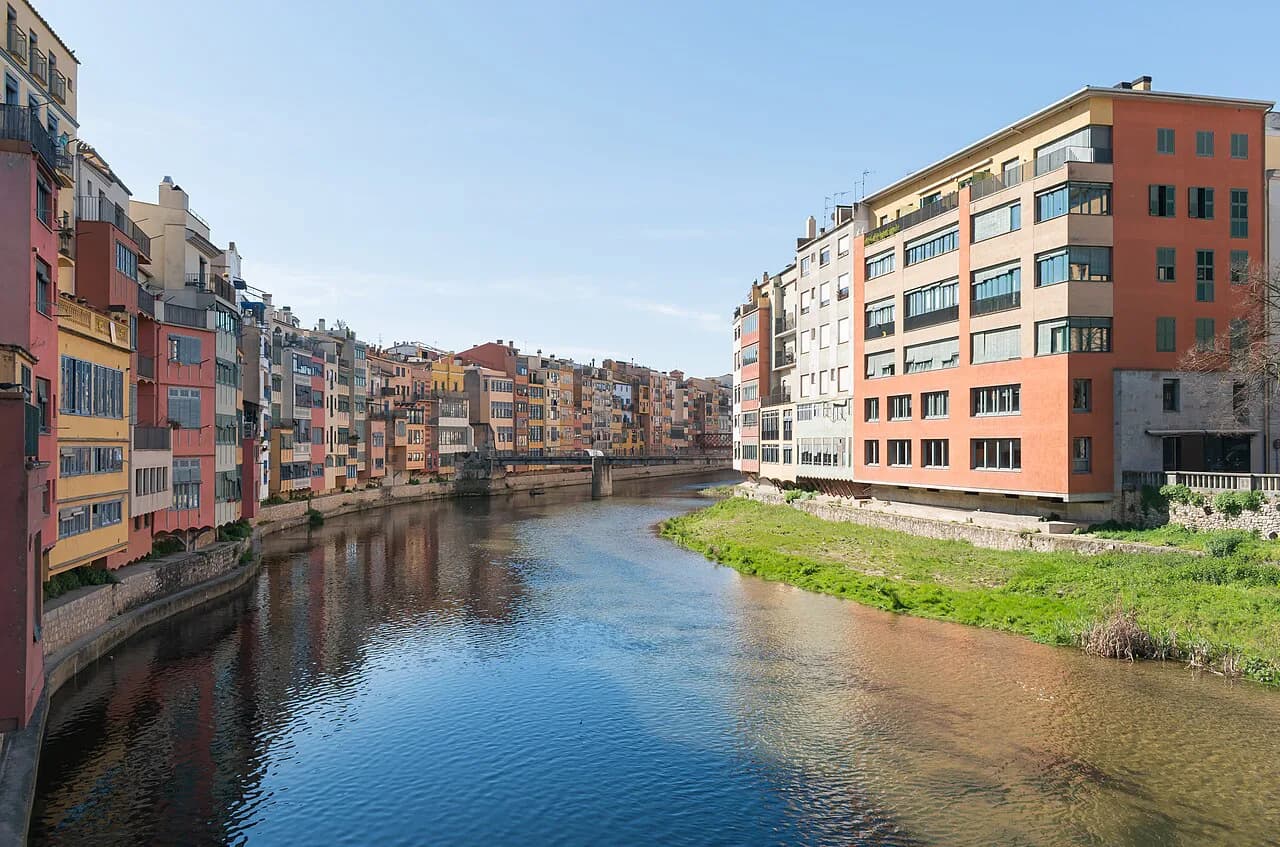
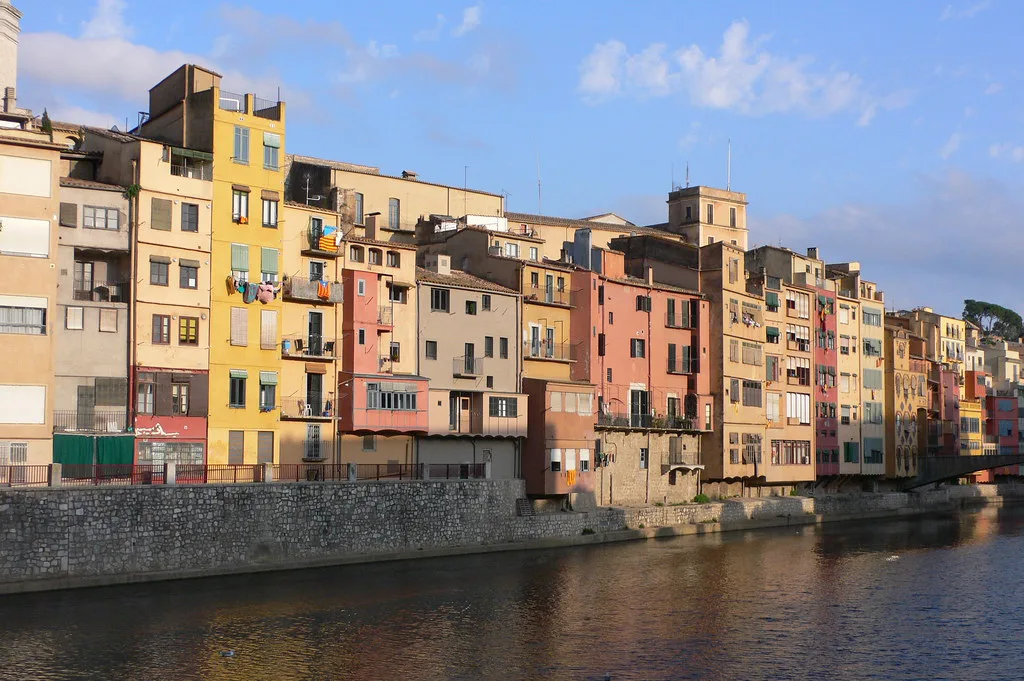
The easiest way in is over the water. The Onyar divides the Barri Vell from the modern town, and crossing it puts you straight in front of the coloured façades that hang above the river. Plaça de la Independència, a porticoed square that makes an ideal place to finish an evening, sits near the river and works as a natural gate before you commit to the climb.
This is also where the walk's pace is set. The old town's core is compact and paved, with short distances between monuments but plenty of steps and cobbles in between, so leave the river with a plan for which climb comes first. Going up to the cathedral early leaves the wall for later, when the light on the rooftops is at its best.
The Call Jueu and the climb up Pujada de Sant Domènec
Girona's Jewish quarter, the Call Jueu, is one of the best preserved in Europe, a knot of narrow medieval lanes that explains how important the city's Jewish community was in the Middle Ages. The lanes are the point rather than any single door: low light, tight corners and stone that has been walked for centuries. Give them time rather than treating them as a corridor to the cathedral, and use the Girona Jewish quarter guide to follow the story further.
Pujada de Sant Domènec is the emblematic sloping street that links the quarter to the upper town, and the old university building with its cloister stands close by. Climbing this way puts you on the cathedral's doorstep without retracing your steps, and it keeps the steepest stairs for the final push.
The cathedral and the baroque stairway
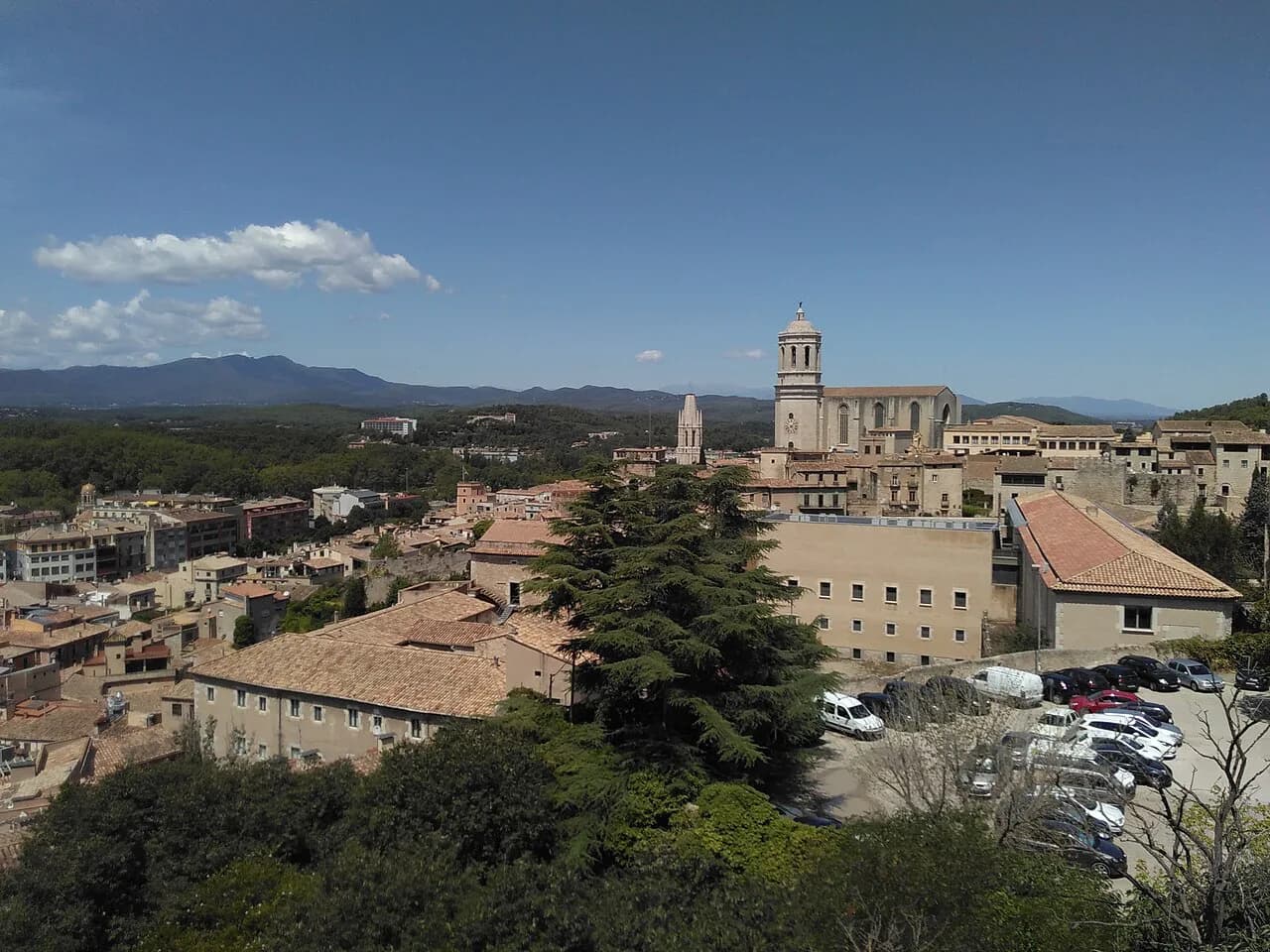
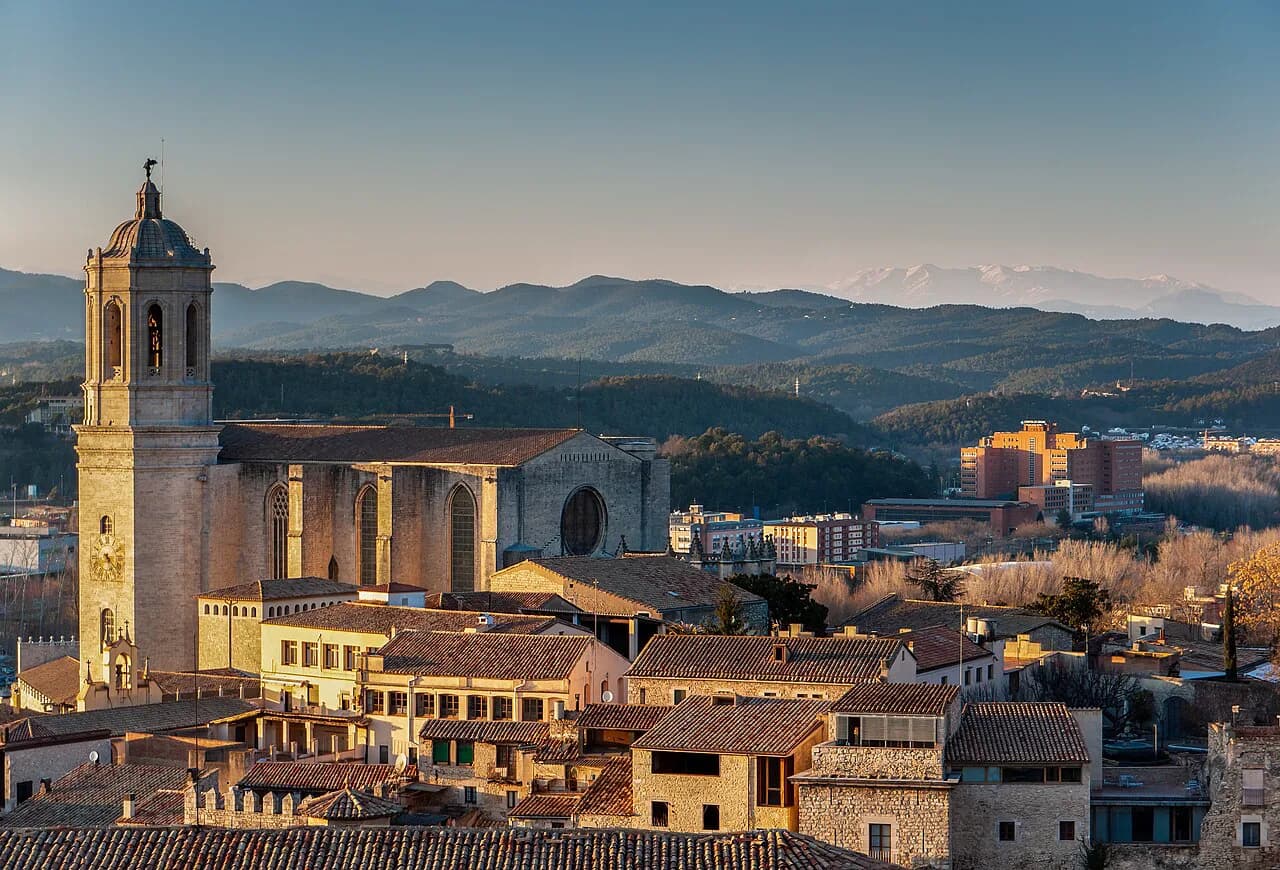
The cathedral sits at the top of the Barri Vell behind a sweeping baroque staircase, and it holds the widest Gothic nave in the world, which is the fact worth carrying in your head as you climb. The steps are the single most photographed spot in the city, so they are busy by mid-morning and calmer early or late. The cathedral has its own visitor guide for interiors and access; here it is the full stop at the top of the walk.
The stairway itself demands no ticket and no schedule, which makes it a reliable anchor even if you decide to skip the cathedral interior. Wear shoes that cope with polished stone steps, especially after rain.
The Arab Baths and what to expect inside
The Baños Árabes, tucked close to the cathedral, are a twelfth-century space built in Romanesque style that borrowed the idea of the oriental bath rather than serving as one in the Islamic sense. The visit is short, and the reward is the central room with its columns and cupola, one of the most recognisable interiors in the city. It is a quick, cool pause between two climbs.
Because it is small, it fits neatly between the cathedral and the wall instead of competing with either. Treat it as a fifteen-minute breather rather than a headline sight, and the day keeps its shape.
Walking the Passeig de la Muralla
The Passeig de la Muralla runs along the top of the medieval walls and delivers the best panoramas in Girona, a ribbon of rooftops, towers and small gardens above the streets. It is a walk rather than a single viewpoint, so allow more time than the map suggests. Go in the morning or towards sunset, when the light does the most for the old town's skyline.
The walls began in Roman times, in the first century BC, and were extended over the following centuries, which is why the upper path passes inscriptions in Latin and Arabic. The Jardins dels Alemanys, named for a seventeenth-century quartering of German mercenaries whose ruins now sit among the planting, open off the wall walk and make a shaded place to rest legs.
If you have already spent your legs on the cathedral steps, the wall is the second climb to keep or drop depending on energy, because both are stair-heavy. On a short break, do the cathedral first and the wall late; on a slower one, split them across a morning and an evening.
The river front: coloured houses and the bridges
Back at river level, the houses of the Onyar are the postcard image, their painted façades stacked above the water and best seen from the bridges. The Pont de Pedra, a stone crossing, connects the old town with the commercial side and frames a classic view of the river. Walk the bank in both directions before picking your photograph.
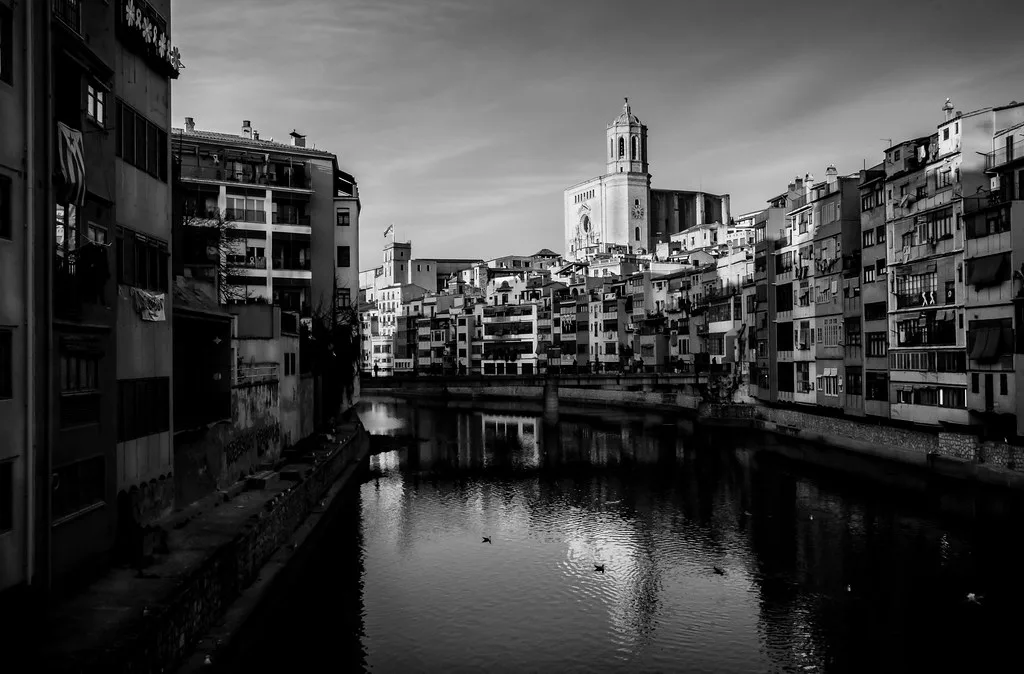
The iron bridge nearby is widely attributed to Gustave Eiffel, and the view back to the cathedral from it is the reason people crowd the rail. Treat the attribution as local lore and enjoy the frame. Either bridge lands you within a couple of minutes of the old town's edge.
The river strip is also the easiest place to see the modern city pressing against the old one, since the new town begins immediately on the far bank. That contrast is useful orientation: whichever side you stand on, the Barri Vell is the dense, stony mass on the hill.
Porticoed squares: Plaça del Vi, the Rambla and Plaça de la Independència
Plaça del Vi and the Rambla de la Llibertat form the historic civic spine of the centre, with arcaded ground floors and buildings including the town hall, the Casa Carles, the Casa Barceló and the old Palau de la Generalitat among them. The colonnades make these squares usable in light rain or strong sun, which is reason enough to route through them at midday.
Plaça de la Independència closes the loop with the river crossing, its porticoes running around a lively square. Between the three you get the old town's civic face, distinct from the ecclesiastical climb above. They are the easiest places to pause without committing to a museum.
Sant Feliu and the northern edge
The Basílica de Sant Feliu was Girona's first cathedral and the only one until the tenth century, and it still guards notable early Christian sarcophagi and the reclining Christ by the master Aloi. It sits in the Sant Feliu quarter towards the northern edge of the old town, an area with its own character and history.
Further north, the Romanesque Monestir de Sant Pere de Galligants, with its cloister and church, now forms part of the archaeology collections of the Museu d'Arqueologia de Catalunya. Several museums carry the city's story further than the streets can, so the museums in Girona guide covers the archaeology and art collections alongside the Museu d'Art de Girona. Pair one with Sant Pere de Galligants and you have a proper indoor half.
The Museu d'Història dels Jueus, inside the Call Jueu, deepens the quarter's lanes with the community's documented past and is the obvious indoor follow-on from the morning climb. With two days, the monastery of Sant Daniel and the Parc de la Devesa extend beyond the walls.
A walking order that links the pieces
Start at the river, cross by the Pont de Pedra and enter the Barri Vell, then wind up through the Call Jueu and Pujada de Sant Domènec to the cathedral steps. Take the Arab Baths on the way down or the way up, whichever your legs prefer. Continue to Sant Feliu and Sant Pere de Galligants for the northern edge.
Save the wall for last so the light works in your favour, then finish among the porticoed squares and back at the Onyar. This order keeps each climb separate, which matters on cobbles. If you want company or commentary, a Girona walking tour covers the same ground with a guide's structure.
Trade-offs: cobbles, heat and services
The old town is stone on stone: cobbled lanes, polished staircases and few level shortcuts, so footwear matters more than distance. Inland summer afternoons push people indoors, which makes the middle of the day the right slot for a museum or a long lunch under the porticoes.
Getting in and knowing where the old town ends
Arriving on foot from the station side brings you to the Onyar first, where the modern city's shopping streets run up to the river and the coloured houses mark the boundary. The Porta de Sant Feliu, one of the old gates, sits on the northern approach. Cross a bridge and you are in the Barri Vell without needing transport.
The map is clear once you accept that the dense grey block on the hill is the old town and everything grid-like beyond the river is not. Plan your walking route in English from this Girona attractions hub, which links the individual monument guides for the cathedral and the Arab Baths.
A spare half-day beyond the walls
With extra time, the northern monasteries and the green riverside park offer a change of texture after the alleyways. The Monastery of Sant Daniel and the Parc de la Devesa are the standard extensions from a full old-town day.
Start at the river and work uphill
Girona's old town rewards a plan built around two climbs and one river: cross the Onyar, climb through the Call Jueu to the cathedral, take the wall later, and let the porticoed squares fill the flat parts. Keep the Arab Baths and the museum interiors for the hours when stairs and sun feel least appealing.
Check the cathedral's visitor arrangements and any museum schedules before you set the order, since services and closures can shift the shape of a day. The streets, the stairways, the wall and the bridges can all be walked freely, and there is a Things to Do in Girona guide for the individual sights.
Explore more Girona guides
Frequently Asked Questions
Is Girona in Spain or Catalonia?
Both: Girona is a city in Catalonia, which is an autonomous community within Spain. Catalan is spoken and signposted alongside Castilian, so you will see street names such as Barri Vell and Passeig de la Muralla as well as their Spanish equivalents.
How long does the old town need?
Half a day takes in the river, the Call Jueu, the cathedral steps and the wall walk. A full day adds the Arab Baths, Sant Feliu and one museum; a spare half-day extends to Sant Pere de Galligants and the northern monasteries.
Does Girona have a beach?
Not in the old town, which sits well inland. Girona works as a city break base for the Costa Brava coast, but the Barri Vell itself is courtyards, walls and river crossings rather than sand; plan any coast time as a separate leg.
Sources
Notes for your next Spanish town break
Optional updates to our guides.
You might also like
Continue reading
More guides you'll find useful