Girona's Jewish Quarter: What to See in El Call
Walk Girona's Jewish quarter, El Call, street by street: Carrer de la Força, the Bonastruc ça Porta museum and the lanes around the cathedral.
On this page
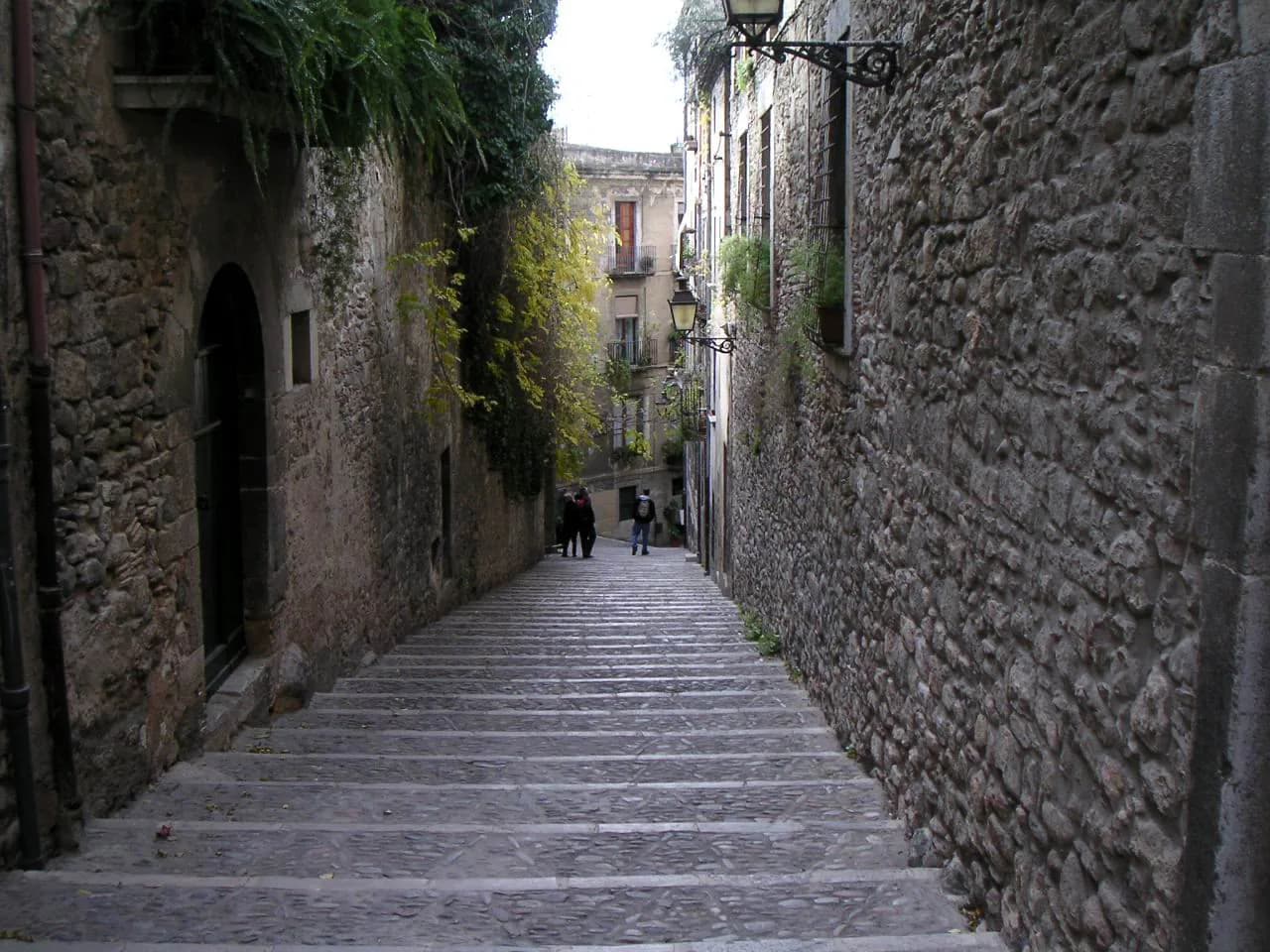
Girona's Jewish quarter, El Call, is a compact maze of stone lanes wrapped around the cathedral and threaded by Carrer de la Força, and the streets themselves cost nothing to walk. Budget an hour for the lanes and a further hour if you add the Museum of Jewish History at Bonastruc ça Porta, which sits at number 8 on that same street. This guide covers the streets worth following, what the museum holds, the synagogue site and the cemetery as the museum presents it, and the tip-based walking tour of the quarter that is listed as currently unavailable.
What and where El Call is
El Call is the medieval Jewish quarter of Girona, folded into the Força Vella, the old core of the city, around the cathedral. Its spine is Carrer de la Força, which was known earlier as Carrer de Sant Llorenç, and the community settled there from the tenth to the fourteenth centuries. Jewish communities arrived in Girona from around the tenth century and were established in the area by the eleventh, according to a local history of the city's Jewish legacy.
Treat the quarter as part of the wider old town rather than a separate sight: the lanes run off Carrer de la Força and climb towards the cathedral, so a circuit naturally combines the two. If you want the surrounding picture first, our guide to the Girona old town sets out the cathedral, the walls and the river front. The quarter rewards slow walking rather than a checklist, because much of what survives is the shape of the streets themselves.
The streets to walk
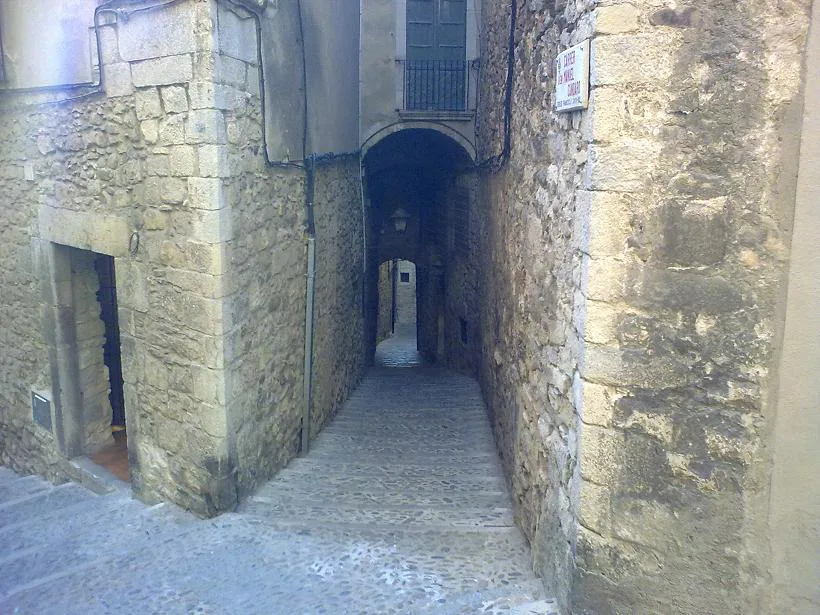
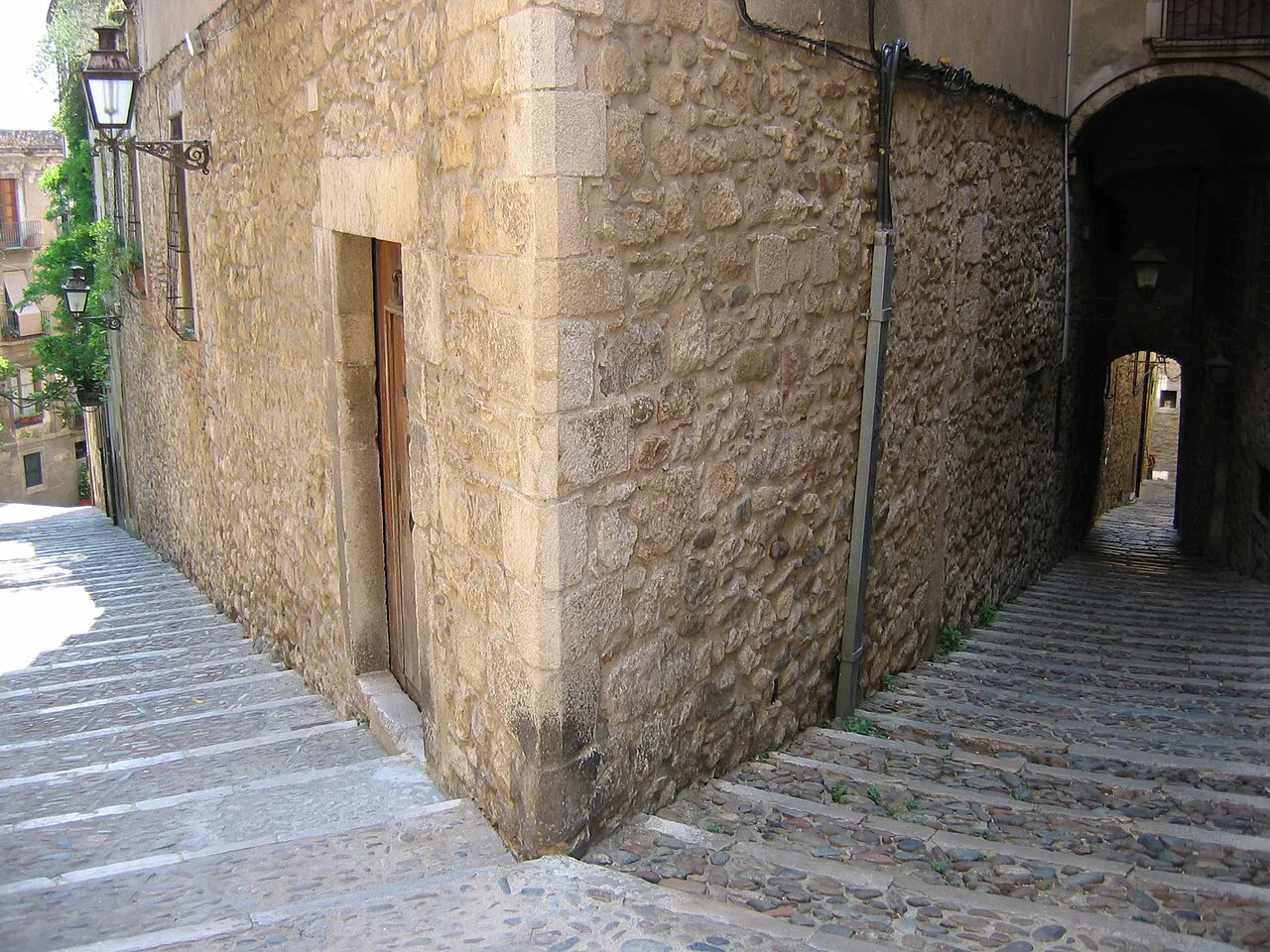
Start on Carrer de la Força and take the lanes that branch from it, since the quarter is a labyrinth of narrow streets and courtyards that keep a medieval feel. The Pujada de la Mare de Déu de la Pera leaves the right-hand side of Carrer de la Força and climbs to the upper edge of the Jewish quarter, ending at one of the porticoes of the old town. Walking it gives you the change of level that the flat main street hides.
Carry on to the Placeta de l'Institut Vell, near the far end of Carrer de la Força, where several buildings significant to the medieval Jewish presence stand together. The Canonja Vella, a twelfth-century building on the square, contains an old street parallel to Carrer de la Força that is now walled up. These are exterior stops, so they fit a walk at any hour rather than depending on a ticket.
La Pabordia, a group of buildings that housed public baths in the thirteenth and fourteenth centuries, is reached by following the Verge de la Pera path. The baths are a reminder that the call was a working neighbourhood with its own institutions, not only a set of houses. Pair the climb with the upper lanes so you are not doubling back down the same steps.
The Museum of Jewish History at Bonastruc ça Porta
The Museum of Jewish History occupies the Bonastruc ça Porta centre at Carrer de la Força 8, a house that belonged to the Doctor and philosopher after whom the centre is named. It covers medieval Jewish communities with particular attention to Girona, including history, gastronomy and customs, and holds a major collection of Hebrew lapidary inscriptions in Spain. The building stands between Carrer de la Força and Carrer de Sant Llorenç, in the heart of the old quarter.
The museum closes at 3pm on Sundays and public holidays, so plan a Sunday visit for the morning and accept a shorter stop. Confirm the day's hours and the current ticket price at the museum before you go, since times can shift with the season and calendar.
The museum is the paid element of an otherwise free-to-wander quarter, so it is worth deciding in advance whether you want it. Check the current ticket price and any concessions at the door. If you are comparing it with the city's other collections, our round-up of museums in Girona helps you weigh one ticket against another.
The synagogue site and the Casa Boschmonar
On the courtyard floor at Bonastruc ça Porta, a large Star of David marks the spot close to where Girona's last synagogue stood, in use until the expulsion of the community in 1492. The fifteenth-century synagogue building now houses the museum and the Institute of Nahmanides Studies. Nahmanides, the Girona rabbi, is the figure most closely associated with the city's Jewish scholarship.
The Casa Boschmonar at Carrer de la Força 21 is thought to be where, in the fourteenth century, two synagogues stood side by side for a time. Those buildings also served as schools, baths and centres of worship for the community. It is a street-facing stop rather than an interior visit, so read it as part of the lane walk.
The Fossar dels Jueus and the burial route
The Fossar dels Jueus, the Jewish cemetery, lay on Montjuïc, the mount of the Jews, north of the city, where the community held land for burials from at least 1207. No remains survive at the site, so the museum presents it as an imaginary walk through what was once the cemetery. A panel in the museum shows the route funeral processions took from the call to the fossar, and Hebrew tombstones with epitaphs are among its treasures.
Read the cemetery material inside the museum rather than planning a separate excursion, because there is nothing left to see on the ground. This is the clearest example of how El Call works: the streets are the free layer, and the museum supplies the interpretation that makes them legible. Do the museum first if the burial route matters to you, then walk the lanes with that context.
Before 1492: the community and the red circle
In the final decades before the expulsion, pressure on Girona's Jewish community was severe: Jews were not allowed to live outside the call, and if they left it they had to identify themselves with a red circle. The expulsion was decreed in 1492 by the Catholic Monarchs, ending a presence that at its height numbered up to 800 residents in the quarter. Keep those two facts in mind as you walk, because the lanes read differently once you know how tightly the community was confined.
Walking the quarter with the rest of the old town
The lanes connect directly to the cathedral and the old town, so a sensible route is Carrer de la Força and its side lanes, then the climb to the cathedral, then the river front as you leave. Allow an hour for the streets and two if you include the museum, and add time if you want the walls or the far side of the Barri Vell. A guided Girona walking tour can sequence the same ground for you if you prefer a structure to follow.
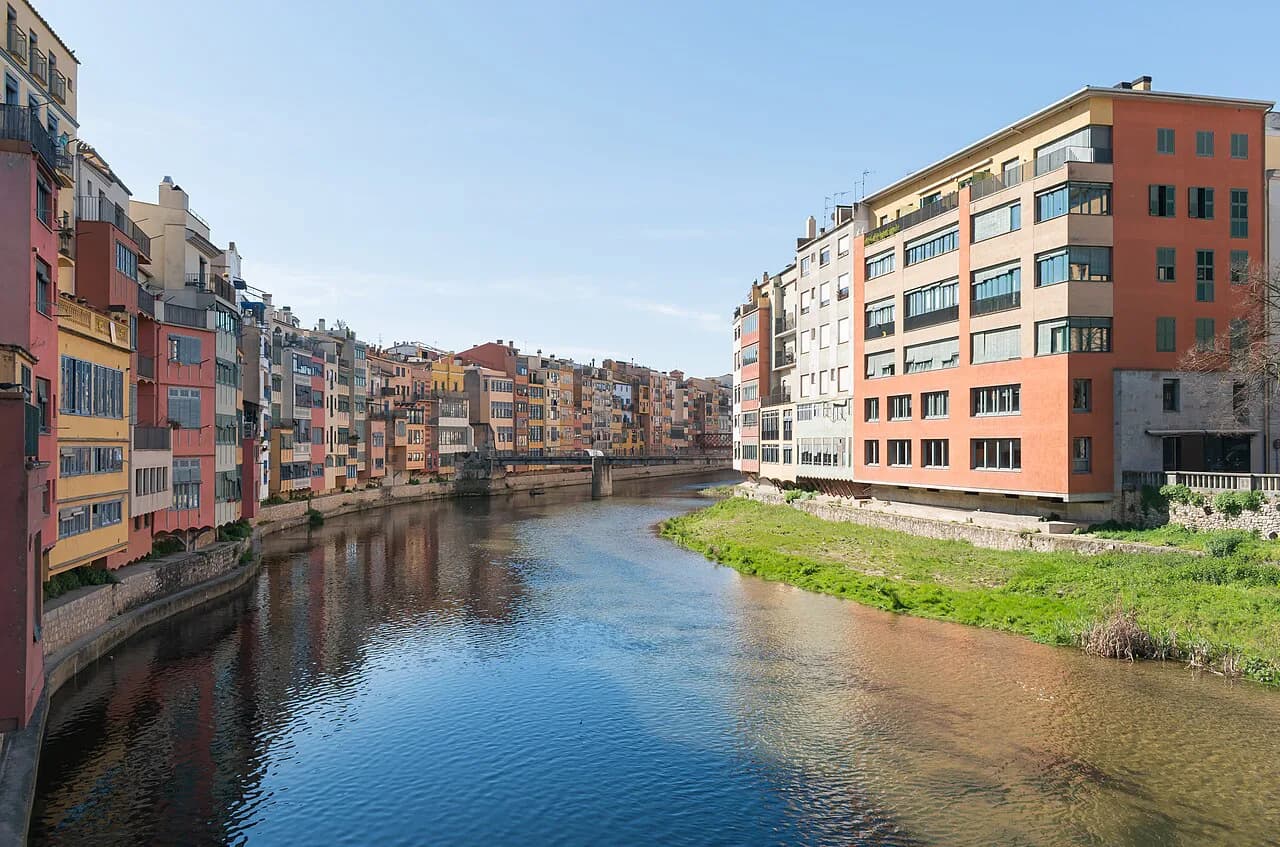
If you are plotting an independent route, note the quarter sits inside the Força Vella and is small enough to cover on foot without transport. A Girona map helps you see how the lanes hang off Carrer de la Força and where the cathedral sits above them. The Riu Onyar and its bridges make a natural finish once you leave the quarter.
The free walking tour: meeting point and format
A tip-based free walking tour of the Jewish quarter has been listed as following the Sephardic trail through the lanes from Plaça de Catalunya, finishing in the Jardí de Sant Feliu, with a Spanish-speaking guide and a running time of about an hour and a half. At the time of writing the operator lists the product as currently unavailable, so do not count on it and check with the operator before building a visit around it.
Where a tip-based tour runs, the cost is your choice at the end rather than a set ticket, so it is no substitute for the museum if you want the synagogue site and the collections housed there. Because availability is not guaranteed, treat the self-guided lane walk and the museum as the reliable core of a visit and the tour as an optional extra.
Which part of El Call do you pay for?
Walk the lanes for free and pay only for the Museum of Jewish History, which is where the synagogue site, the lapidary collection and the cemetery material actually sit. If your time is short, walk the lanes on your own for orientation; if the history is the point, give the museum an hour and walk the lanes afterwards. Either way, build the visit around the Sunday and holiday 3pm closing rather than discovering it at the door.
Explore more Girona guides
Frequently Asked Questions
Why is it called El Call?
In Catalonia the Jewish quarters were known as calls, and Girona's is El Call. The name refers to the area around Carrer de la Força and the cathedral where the city's Jewish community lived from the tenth to the fourteenth centuries.
Is the Jewish quarter worth visiting?
Yes, if you want the medieval street plan rather than a single monument: the lanes are free and sit right beside the cathedral. The museum adds the interpretation, including the synagogue site and the Hebrew inscriptions, for a small ticket.
Do I need a ticket to walk the Jewish quarter?
No. Carrer de la Força and the surrounding lanes, including the climb to the upper edge of the quarter, are public streets. The Museum of Jewish History at Bonastruc ça Porta is the paid element; the tip-based walking tour of the quarter is listed as currently unavailable.
Sources
Notes for your next Spanish town break
Optional updates to our guides.
You might also like
Continue reading
More guides you'll find useful