
Basílica de Sant Feliu, Girona: Visitor Guide to the Old Cathedral

Sant Feliu is the Gothic basilica at the foot of Girona's old town, a 30-minute visit that repays anyone interested in Roman stonework and a good altarpiece. It served as the city's first cathedral until the tenth century, which explains its size relative to a parish church, and it sits on Pujada de Sant Feliu only a few minutes from the cathedral steps. This guide covers where to find it, the visiting hours, the combined ticket, and the specific things to find inside.
Treat it as a compact stop rather than a morning out: the ticket page estimates 30 minutes for Sant Feliu against 60 for the cathedral and 60 for the Museu d'Art de Girona, so it slots neatly between the two. The one practical caveat is that this is a working parish church, and services take precedence over sightseeing.
Where Sant Feliu sits in the old town
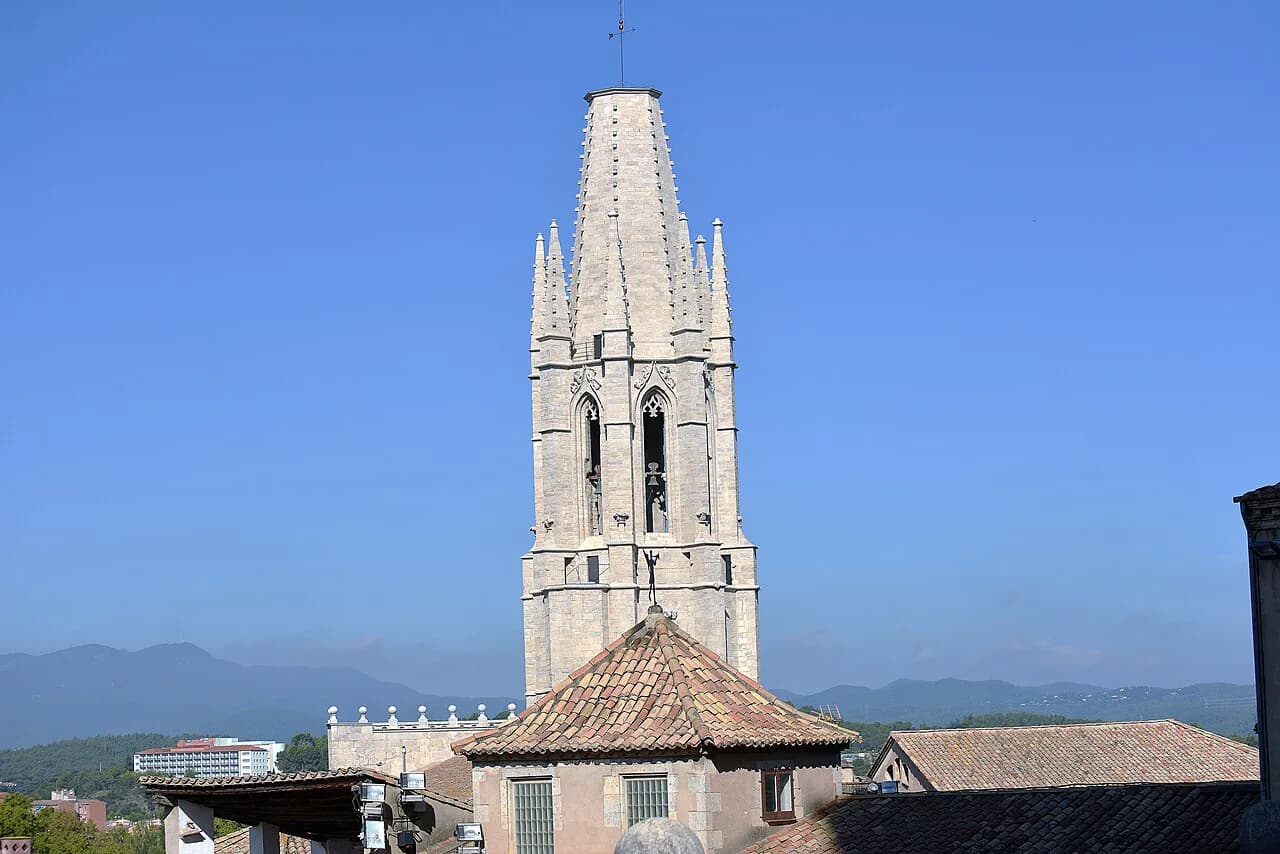
The address is Pujada Sant Feliu 29, on the slope that climbs from the river side of the Barri Vell towards the cathedral plateau. Coming from the Onyar river and the Independence Square area, you walk up through the lanes and meet the church's tall Gothic bell tower before the facade itself. It is close enough to the cathedral to pair the two in one loop.
Girona is a Catalan city in north-east Spain, roughly an hour inland from the Costa Brava, and the old town is compact enough to cross on foot. From Sant Feliu, the cathedral steps and the Museu d'Art de Girona are a short climb away, while the Banys Àrabs and the Passeig de la Muralla sit a little further east and north respectively. Build the basilica into a walking loop rather than treating it as a separate outing.

Opening hours for visitors
For sightseeing, the published visiting hours are Monday to Saturday 10:00 to 18:00, and Sundays and public holidays 13:00 to 18:00. The parish's own listing gives an opening period of 10:00 to 19:00, so the church building is accessible across a slightly longer window than the ticketed visitor slot. Plan your entry inside the published visiting hours and you will not be caught out.
Because Sant Feliu is an active parish, mass and the sacraments come first, and the daily rhythm of services can interrupt a visit. The Sunday visitor opening begins at 13:00 precisely because the morning belongs to the parish. If you are in Girona on a Sunday, put another sight first and come here after lunch instead.

The Girona Episcopal ticket and what it covers
Sant Feliu is best visited on the combined Girona Episcopal ticket, which covers three buildings: the basilica, the cathedral and the old Episcopal Palace that now houses the Museu d'Art de Girona. The ticket stays valid for 48 hours from the moment you first use it, so you can spread the three across two days without paying twice. It is sold in adult, youth (16 to 24), senior (65 and over) and child (8 to 15) categories, with under-eights free.
Check the current price on the ticket page before you go, since the categories are listed there but rates change. If you only want Sant Feliu, the parish welcomes a donation towards restoration and conservation of the building rather than charging a flat admission. The combined ticket is the better value if you intend to see the cathedral and the art museum anyway.
The Gothic nave and its keystones
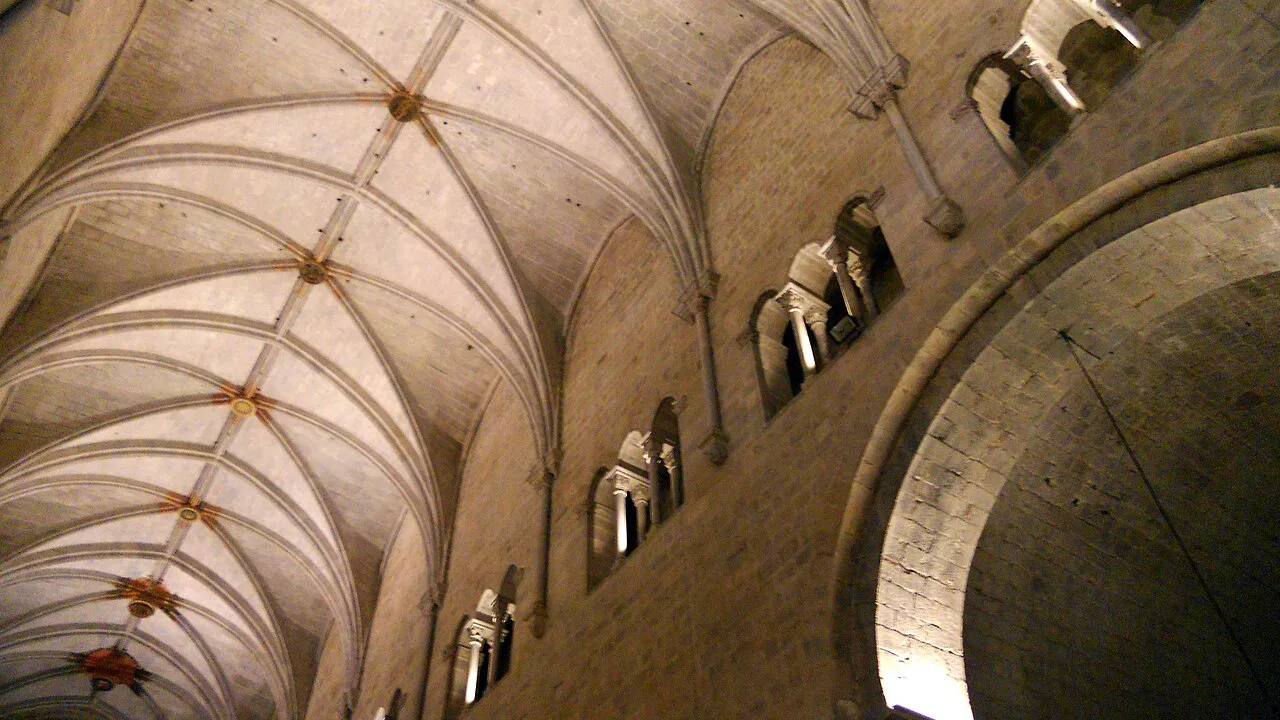
The present church was built during the fourteenth and fifteenth centuries, and the restored central nave shows why it is counted among the city's most representative Gothic interiors. Look up at the vault keystones: they carry the coats of arms of Catalonia and Girona alongside figures of Saint Mary, Sant Feliu, Sant Narcís and other saints, picked out in strong colours after restoration. Walk in through the main door and keep to your left to follow the parish's suggested route.
The basilica holds the remains of Sant Feliu, martyred in the Diocletian persecution around 305, and of Sant Narcís, the city's patron bishop and martyr. That dual dedication explains the density of chapels and relics you pass on the way round. The building was given the title of basilica in 2011.
The eight Roman sarcophagi
The strongest reason to linger is the set of eight Roman and early Christian sarcophagi of the second to fourth centuries, set into the side walls of the presbytery. The parish describes it as the largest such collection in the Iberian peninsula, and the carvings run from the chaste Susanna and the lion hunt to the raising of Lazarus, the Good Shepherd and the abduction of Proserpine. Read them left to right and top to bottom along each wall.
The sarcophagi plausibly came from a cemetery on this very site, which ties the church to the Roman city beneath the medieval one. Give them ten minutes rather than a glance; the iconography is the most detailed thing in the building.
The chapels: Sant Narcís and the recumbent Christ
The baroque chapel of Sant Narcís was built between 1782 and 1792 to designs by Ventura Rodríguez, with paintings by Manuel Tremulles, and it holds the venerated figure of the city's patron. On either side you can see the tombs of Álvarez de Castro and of the heroines of Santa Bàrbara. In the north transept the parish has gathered the oldest traces of the cult, including a thirteenth-century sarcophagus, the Gothic tomb of Juan de Tournai of 1328 and a painting commemorating the miracle of the flies of 1675.
Under the bell tower stands the alabaster recumbent Christ carved by Eloi de Montbrai in 1350, one of the finest pieces in the church. Nearby, the chapel of the Virgen del Remedio draws steady local devotion, and the south transept holds the chapels of the Virgin and Saint Joseph. Keep an eye out for the thirteenth-century Sitjar sarcophagus, moved inside from the exterior.
The altarpiece and its panels in the art museum
The retable behind the altar is only part of what once stood there: it survives as the remaining section of a Gothic altarpiece that was completed by six panels of the life of Sant Feliu. Those six panels are now kept at the Museu d'Art de Girona, so the two collections only make sense seen together. If you hold the combined ticket, look for the panels on the same visit or the next day within the 48-hour window.
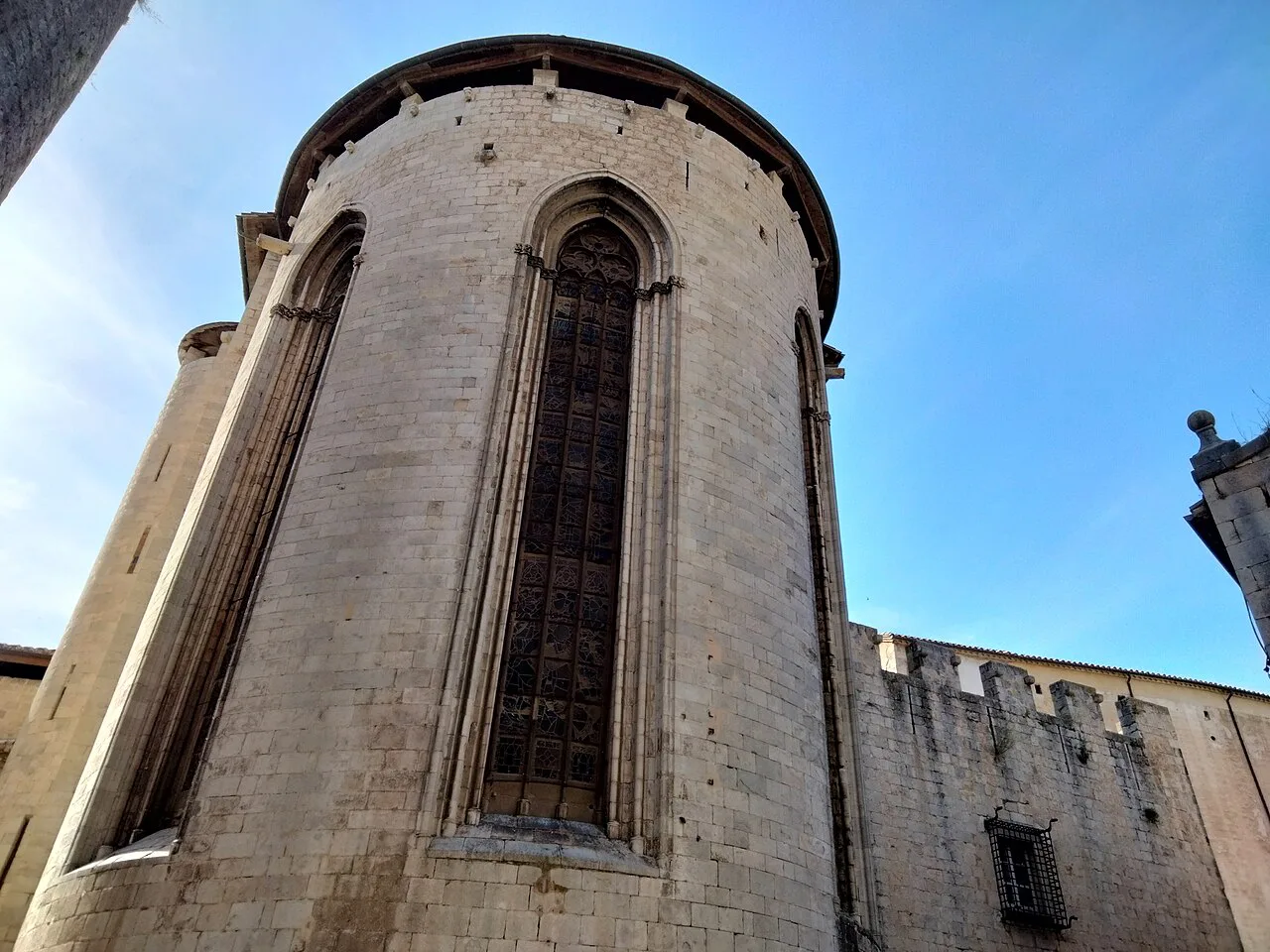
Three large windows with stained glass of 1945 light the east-facing presbytery, and the Baptistery now occupies the old chapel of Santa Ana at the far end. The parish's visit guide suggests starting at the entrance door and working left, which brings you past the Santo Cristo image before reaching the chapels. Following that order keeps the sarcophagi and the Sant Narcís chapel for the end.
How long to allow and how to fit it in
Thirty minutes covers the nave, the sarcophagi and the main chapels comfortably; allow longer if you want to study the carvings. On a short break, the natural sequence is Sant Feliu, then the climb to the cathedral, then the Museu d'Art de Girona, using the combined ticket across the 48 hours. That order also matches the ticket page's own time estimates of 30 minutes, 60 minutes and 60 minutes.
Services take precedence over sightseeing at this working parish, so build your visit around the published visitor hours rather than arriving on the off-chance. The Girona Attractions: 6 Visitor Guides collection covers the other monuments in the same quarter if you are building a two-day plan.
Nearby in the Barri Vell
The cathedral sits a few minutes uphill on Plaça de la Catedral, reached by a long stone stair; the Museu d'Art de Girona occupies the old Episcopal Palace beside it. The Banys Àrabs, a modest twelfth-century bath house, is a short walk east and makes an easy add-on.
Beyond the river, the Romanesque monastery of Sant Pere de Galligants stands in the northern part of the old town near the archaeology museum. The city walls and their walkway, the Passeig de la Muralla, offer a rooftop viewpoint over the old town if you have energy left after the climb.
Should Sant Feliu go on your Girona shortlist?
Yes, if Roman carving and Gothic interiors interest you — the eight sarcophagi alone justify the stop, and 30 minutes is a small commitment. Skip it only if your time in Girona is down to a few hours and the cathedral and walls take priority. The combined ticket makes the decision easier, since Sant Feliu comes bundled with two sights you would probably see anyway.
Check the ticket page for current prices and the parish listing for opening and service times before you set out, then build the basilica into a walking loop through the Barri Vell. It rewards a slow look rather than a quick photo stop.
Frequently Asked Questions
Is Sant Feliu in Girona free to enter?
There is no flat admission charge published for the basilica itself; the parish asks visitors for a donation towards restoration and conservation. Sightseeing access is also sold as part of the combined Girona Episcopal ticket with the cathedral and the Museu d'Art de Girona. Check the ticket page for current rates and categories.
How long does a visit to Sant Feliu take?
Around 30 minutes is enough to see the nave, the eight Roman sarcophagi and the main chapels. Add time if you want to study the carvings, the Sant Narcís chapel and the recumbent Christ closely.
Can I see the rest of the Sant Feliu altarpiece?
Yes. Six panels of the life of Sant Feliu that belonged to the Gothic altarpiece are held at the Museu d'Art de Girona, a short climb from the basilica. The combined ticket covers both, and stays valid for 48 hours from first use.