
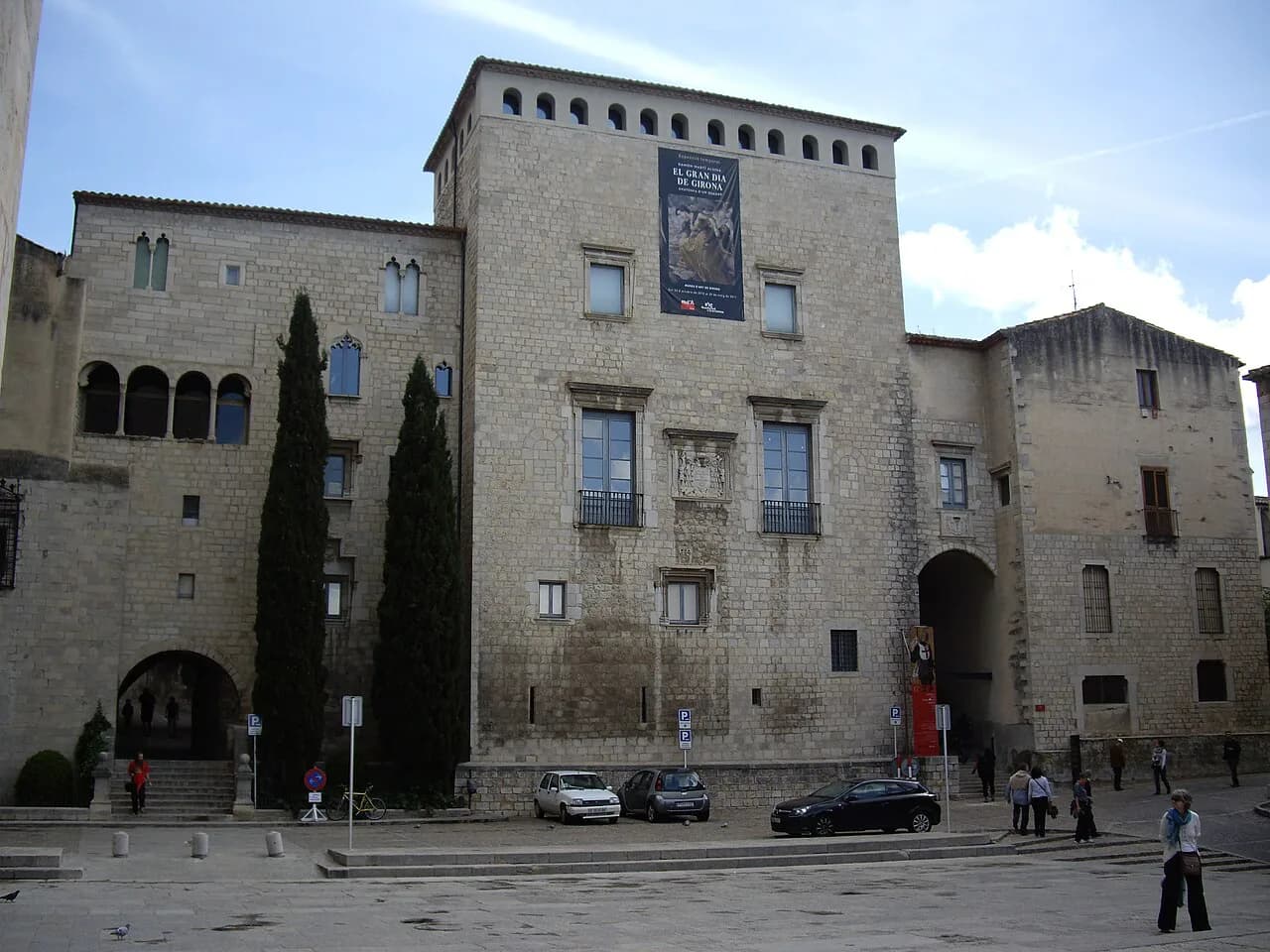
Museu d'Art de Girona: visitor guide to the Palau Episcopal collection

The Museu d'Art de Girona is worth an hour of any old-town walk, and it costs little: the museum occupies the former episcopal palace on the cathedral steps and holds the richest art collection in the Girona counties, running from Romanesque carving to twentieth-century painting. Go for the medieval retables and sculpture, the building itself, and the ease of stepping in off the Pujada de la Catedral.
What follows covers the museum's position in the old town, the seasonal opening pattern and the Monday closure, museum-only and combined ticket options, free-entry days, a period-by-period route through the rooms, and what fits into a short visit. Prices and hours are the ones the museum and the county tourism board publish; confirm them against those pages before travelling.
What the Museu d'Art de Girona is and where it sits in the old town
The museum is housed in the Palau Episcopal, the bishops' residence at Pujada de la Catedral, 12, in the heart of the historic centre. Its collection spans the ninth to the twenty-first century, with the strongest holdings in Romanesque and Gothic religious art, and it also administers a second heritage space at the Antic hospital de Santa Caterina on Plaça Pompeu Fabra.
Practically, that address means the museum is not a separate excursion: it sits on the stepped climb towards the cathedral, so you pass it on the way up and can fold it into the same morning as the cathedral and the old-quarter streets. If you are building a wider plan for Girona, Girona Attractions: 6 Visitor Guides puts this museum alongside the cathedral, the walls and the other sights in one place.
The building itself rewards attention: it is a historic episcopal palace adapted into galleries, so the route mixes museum rooms with the fabric of an old palace. Allow time for the staircase and upper floors rather than treating the museum as a single hall.

Where the museum is: Pujada de la Catedral and the Palau Episcopal
On foot, the museum is reached from the old town's lanes and the cathedral square, and the climb is stepped rather than a long detour, so it works as a stop between the riverfront and the upper town. The tourist office lists the same address for the museum, which is a useful cross-check if you are navigating from a paper map.
Because it sits directly beside the cathedral, the museum is easy to pair with the Girona cathedral visit and the Plaça de la Catedral forecourt rather than scheduling it on a different day. Read the cathedral page first if you want to time both together.
From the old town you can also reach the Girona City Walls and the Passeig de la Muralla on foot, which makes the museum a natural midpoint between the cathedral hill and the wall walk. Wear shoes that cope with stone steps and cobbles, since the approach is uneven.

Opening hours by season and the Monday closure
The museum opens later in the evening during the warmer months: weekdays run from 10:00 to 19:00 from May to September, and from 10:00 to 18:00 from October to April. Sundays and public holidays close earlier, at 14:00, so a late-afternoon arrival on a Sunday will not work.
The museum closes on Mondays, with public holidays excepted, and the county tourism listing adds 25 and 26 December and 1 and 6 January to the closures, plus shorter hours on 5 January, 24 and 31 December. Treat Monday as a building block of the plan rather than an afterthought, since a Monday in Girona otherwise suits the walls and the old-town streets.
Ticket prices, reduced rates and the combined Girona Episcopal ticket
A standard museum ticket costs 6,00 €, with a reduced rate of 4,00 € and group entry at 4,00 € for ten or more people; under-16s, unemployed visitors, people with a disability certificate and accredited members of partner associations enter free. Tourist groups pay 25 per cent.
The alternative is the Girona Episcopal combined ticket, at 10,00 € standard or 8,00 € for pensioners and students, which covers the cathedral, the Basílica de Sant Feliu and the museum together, with under-16s at 3,00 €, under-7s free and tourist groups at 5,00 €. If you intend to see all three, the bundle costs less than paying separately, whereas a museum-only ticket suits a short visit focused on the galleries.
If the cathedral or Sant Feliu is part of your day, buy the combined ticket and treat the museum as the third stop; the Basílica de Sant Feliu, Girona sits in the old town within walking distance, so the order of visits is flexible.
Free-entry days: first Sunday of the month and the city's museum days
Entry is free on the first Sunday of each month and on 18 May for International Museum Day, 25 July for the Day of the Visitor, 11 September for Catalonia's national day and 29 October for Sant Narcís, the city's patron saint. These are fixed calendar openings rather than a general Sunday concession, so the charges above still apply on other Sundays.
Plan around the dates if you are in Girona for a short break, since a free Sunday morning before the 14:00 close can absorb the museum without touching your ticket budget. Outside those days, the museum's published tariffs are the ones to budget against, so use the museum as the anchor of an old-town morning and price the visit before you go.
The collection room by room: Romanesque to the 20th century
The collection is arranged by period: ninth to twelfth-century Romanesque, twelfth to fourteenth-century Gothic, fifteenth to sixteenth-century Renaissance, seventeenth to eighteenth-century Baroque, then the nineteenth and twentieth centuries, plus the art fund of the newspaper Avui. That sequence gives you a clear route from the medieval rooms upwards rather than a jumble of objects.
The core is religious art from the Girona counties: carved sculpture, panel painting and retables that show how Catalan workshops worked across several centuries. The museum's own description stresses that breadth, and it is the reason to give the medieval rooms the bulk of your time.
Temporary exhibitions change the programme; the museum has scheduled Concha Ibáñez. L'evocació del paisatge from 18 June 2026 to 10 January 2027 and Instruments de l'ànima. Matèria i esperit a la Catalunya medieval from 23 October 2026 to 29 March 2027. Check the dates against your travel window, because these are time-limited shows rather than permanent rooms.
A donation of more than a hundred drawings by Ramon Martí Alsina has entered the museum's holdings, which is worth knowing if nineteenth-century Catalan drawing interests you. Ask at the desk which of these works are on display when you visit.
What to prioritise if you have under an hour
With less than an hour, start in the Romanesque and Gothic rooms for the sculpture and retables, then take the palace staircase and the upper-floor painting galleries in a single loop, and leave the temporary exhibition for a longer visit. That order puts the collection's strongest medieval material first, when your attention is freshest.
The museum also runs shorter formats and guided visits, including family tours that use a search-for-animals game in the works, which changes the pace from room to room.
Skip the museum altogether if your day is built around the walls and the riverfront and you have no interest in religious art; the combined ticket only pays off if you also want the cathedral and Sant Feliu. For many short-break visitors, an hour here on the way up to the cathedral is the right dose.
Nearby: the cathedral, the old town streets and other Girona museums
The cathedral is the immediate neighbour, and the Plaça de la Catedral outside it is the natural place to pause after the museum. The two visits together fill a morning without any transport at all.
Also in the old town, the Banys Àrabs, Girona is a short walk away, its rooms worth tacking onto the same circuit if you still have energy after the galleries.
Further out towards the river and the monastery church, Sant Pere de Galligants Girona is another option for a museum-minded afternoon, though it means leaving the immediate cathedral hill. Plan the old-town cluster first, then decide whether to add it.
Which ticket and when should you go?
Choose the museum-only ticket if the galleries are your target, the combined Girona Episcopal ticket if the cathedral and Sant Feliu are also on the list, and a free day if your dates land on the first Sunday of the month or one of the museum's named open days. Avoid Monday unless it is a public holiday, and remember that Sundays and holidays shut at 14:00.
Build the visit into a cathedral-hill morning rather than a separate trip: museum, cathedral forecourt and, if time allows, the city walls or the Banys Àrabs. The Girona Attractions hub covers the neighbouring sights and how they fit together.