
Banys Àrabs, Girona: what to see at the Arab Baths

The Banys Àrabs is a small 12th-century Romanesque building in Girona's old town that copies the layout of a Muslim bathhouse, and half an hour is enough to see it properly. It sits on Carrer de Ferran el Catòlic, a short climb below the cathedral, so it slots neatly into an old-town walk rather than demanding a trip of its own. This guide covers what the building is, how to reach it, the rooms in sequence, tickets and hours, and what to pair it with nearby in Girona.
A Romanesque building modelled on Muslim baths
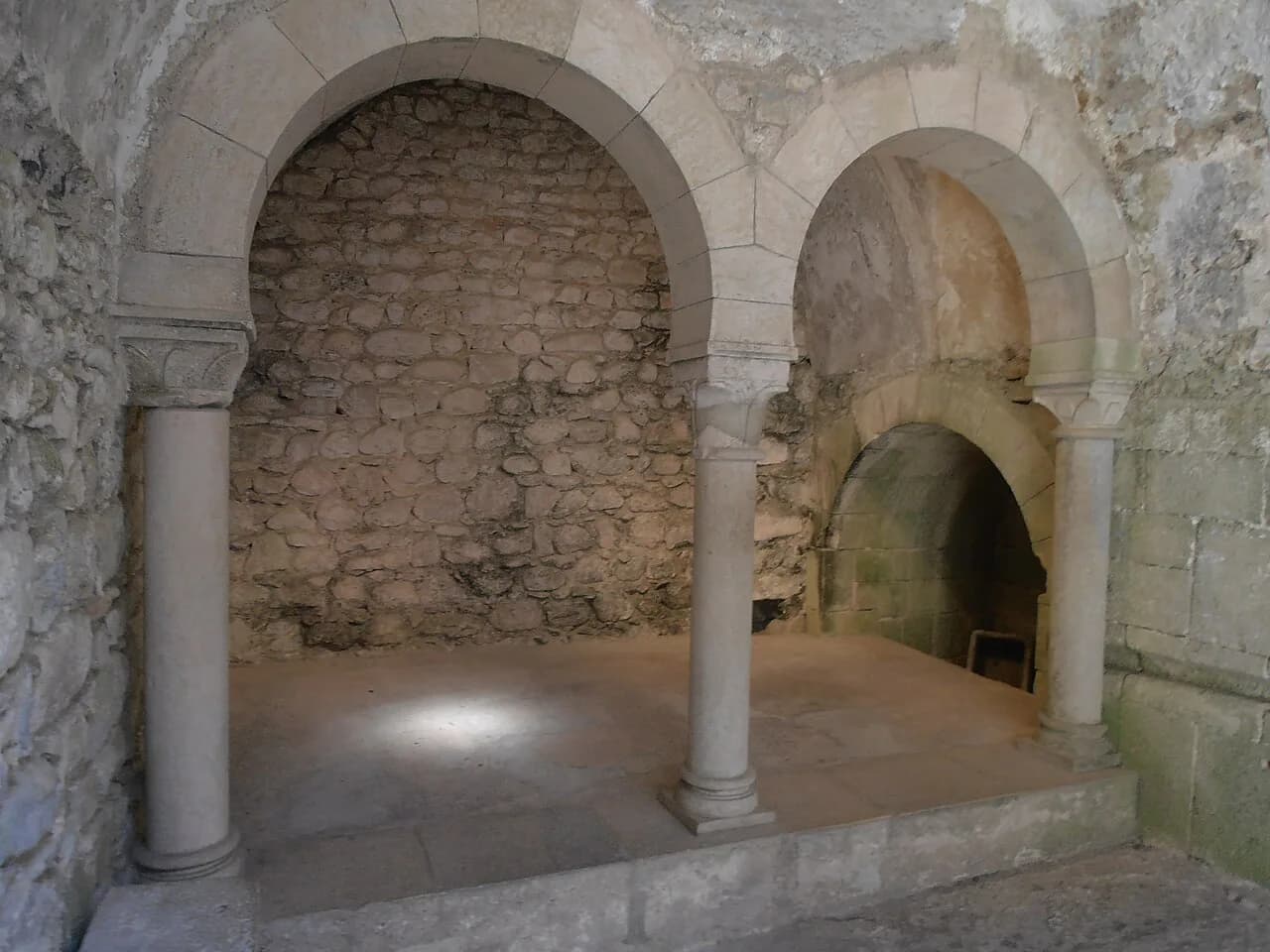
The architecture is Romanesque, not Moorish: the building imitates the structure of the Muslim baths that were fashionable at the time, and it also draws on the idea of Roman baths. It dates from the 12th century and survives in good condition, which is why the room sequence still reads clearly to a visitor. Expect stone walls, columns and a central pool rather than steam, mosaics or hot water.
That distinction matters if you have seen real hammams in southern Spain or North Africa. This is a Christian-era recreation of a fashionable eastern form, so judge it as Romanesque architecture with an unusual plan, not as an intact Islamic bathhouse.

Where to find them in the old town
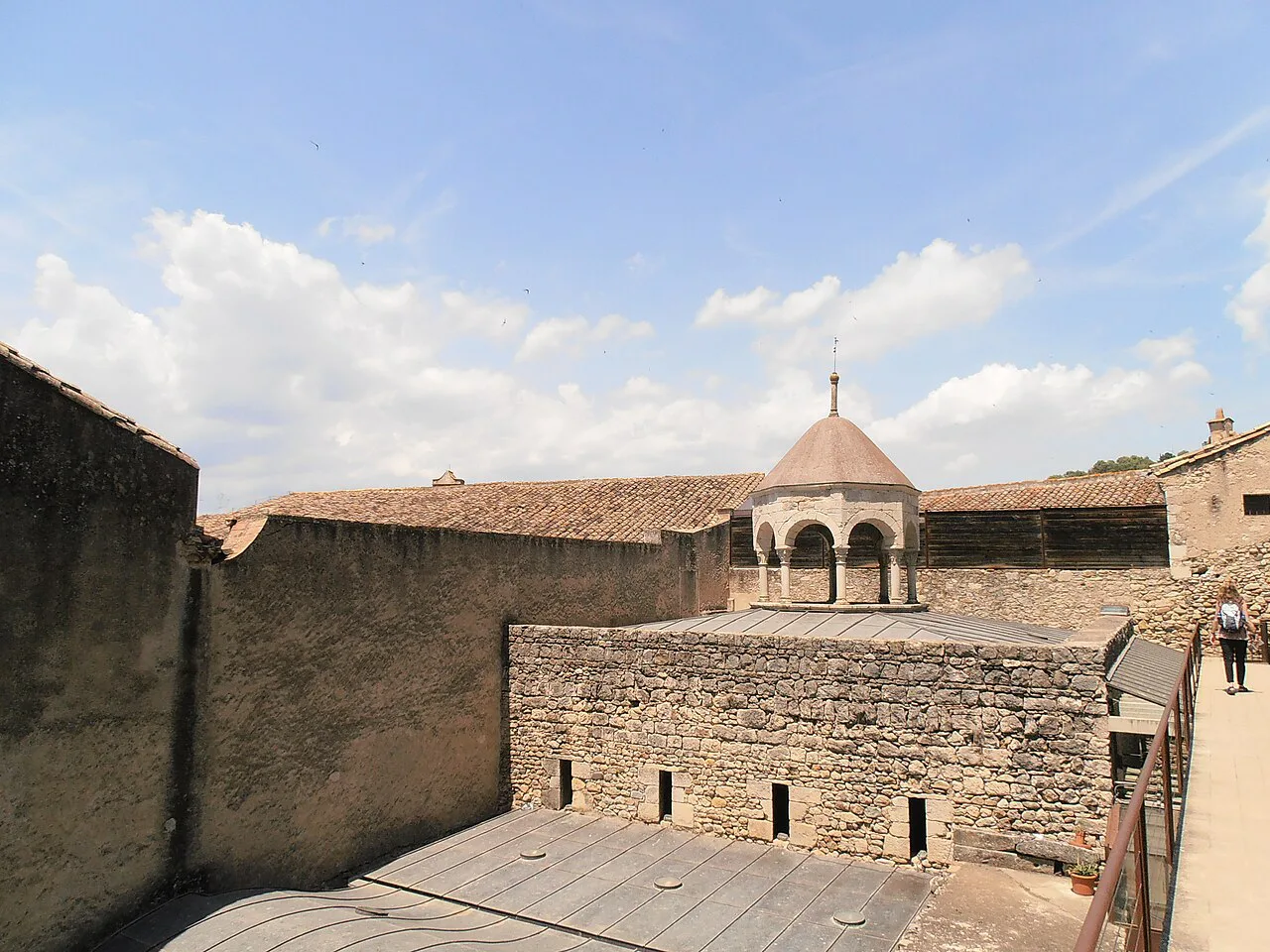
The address is Carrer de Ferran el Catòlic, on the slope between the riverfront and the cathedral hill. Coming from the Onyar river and the Pont de les Peixateries Velles, you cross into the old town, follow the lanes uphill and look for the building before the final climb to the cathedral square.
Arriving on foot is the practical option, since the old town lanes are narrow and steep and parking is best left outside the centre. Girona is served by high-speed trains and by Girona–Costa Brava airport, and the station is a straightforward walk or short bus ride from the old town. If you are basing yourself elsewhere in Catalonia, check current timetables with the operator before fixing your day.
For a short break, the baths work best as the first stop of a loop: baths, then the cathedral, then Sant Feliu and the city walls. Doing them in that order keeps you climbing once rather than retracing the same streets.
Allow a full morning or afternoon for the loop rather than treating the baths as a standalone outing, because the old town rewards slow walking and the streets between these monuments are the point. Sensible shoes matter on the cobbles and steps, particularly after rain.

The rooms in sequence
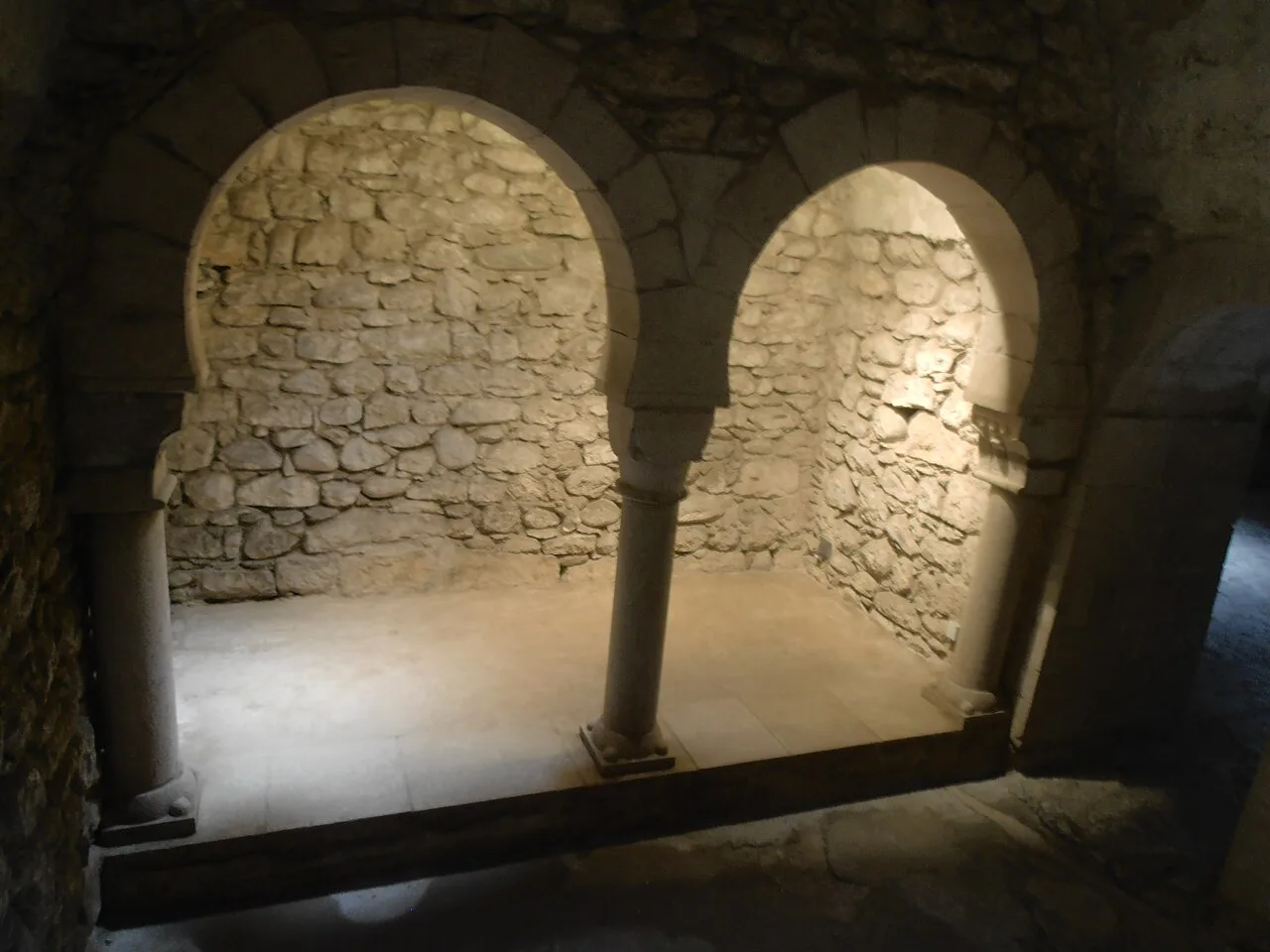
You pass through the classic bath sequence, and the signage names each stage: the apoditeri, or changing room, then the frigidarium for cold bathing, the tepidarium for warm, and the caldarium for hot. Reading them in order is what turns a five-minute look into a proper visit, since the plan itself is the exhibit.
The rooms are modest in size and flow into one another, so the whole circuit is short. Pause at each threshold and look back, because the doorways and arches frame the space in a way that is easy to miss if you walk straight through.
What to look at inside
The centrepiece is the plunge pool under a skylight, with slender columns and arches around it. The light falling from the opening above is the reason the interior photographs so well and the reason the stone reads clearly even on a dull day. Look up at the arches and the light well before you look down at the water.
The building is small enough that a detailed look at the masonry, the column bases and the light well covers everything without rushing. If you are travelling with someone who reads every panel, add ten minutes; if you are photographing, add a little more for the changing light.
Tickets and opening hours
Standard admission is €3, with a reduced €2 rate for visitors over 65. A further reduced €1 rate applies to groups, students, under-16s, unemployed and disabled visitors, and children under eight enter free. Carry identification if you intend to claim a reduced rate, and note that the baths are priced separately from the cathedral and museum combined passes sold nearby.
Opening hours run Monday to Saturday from 10:00 to 21:00, while Sundays and public holidays close much earlier, from 10:00 to 14:00. That shorter Sunday window is the detail that catches people out on a weekend break, so if the baths are a priority, put them on a weekday or go before lunch on Sunday.
The building closes on 1 and 6 January and on 24, 25 and 26 December, which matters if your break falls over Christmas or Epiphany. Ticket prices elsewhere in the city, such as the cathedral and art museum passes sold online, are separate products and do not include the baths.
Buy on arrival rather than planning around a timed slot; the visit is short and the ticket tiers are simple. Check the current hours on the day if you are arriving late, since a last entry close to 21:00 leaves little time inside.
How long to allow
Thirty to forty minutes covers the rooms, the pool and the interpretation panels at an unhurried pace. A brisk fifteen minutes is enough if you only want the interior photographs, but you will miss the point of the sequence.
What to pair it with nearby
The cathedral is the obvious next stop, up the steps from Plaça de la Catedral, and its museum and treasury justify a longer stay. The Basílica de Sant Feliu, the Convent de Sant Domènec and the Pont de les Peixateries Velles are all within a short walk, and the Museu d'Art de Girona sits beside the cathedral.
If you want the river view and the classic Girona photograph, finish at the Pont de les Peixateries Velles over the Onyar before heading back. The city walls above the old town make a good final leg, with views across the rooftops and the cathedral.
The honest trade-off is size: the baths are compact, and anyone expecting a sprawling hammam complex will be underwhelmed. Treat them as one good room in a larger old-town walk, and the €3 entry makes sense; treat them as the reason for the trip, and the visit will feel brief.
Is the Arab Baths worth the stop?
Yes, as a thirty-minute stop woven into an old-town walk that pairs it with the cathedral, Sant Feliu and the walls. The €3 standard ticket, the under-eight free rule and the longer weekday hours make it an easy add-on rather than a commitment.
Go on a weekday if you can, and never leave it for a late Sunday afternoon, since the doors close at 14:00 on Sundays and public holidays. Check the official tourist-office page before travelling for any change to hours or seasonal closures.
Explore more Girona guides
Frequently Asked Questions
How old are the Arab baths in Girona?
The building dates from the 12th century. It was built in Romanesque style but deliberately copied the layout of the Muslim baths that were fashionable at the time, and it also drew on the idea of Roman baths. That is why it has a changing room and cold, warm and hot rooms.
Are the Girona Arab Baths open on Sundays?
Yes, but on a shorter timetable: Sundays and public holidays run from 10:00 to 14:00, against 10:00 to 21:00 Monday to Saturday. The building is closed on 1 and 6 January and on 24, 25 and 26 December.
Do I need to book the Banys Àrabs in advance?
Booking is not required for a short visit; you pay at the door and the ticket tiers are simple. Carry identification if you qualify for a reduced rate as a student, senior, disabled or unemployed visitor.