
Girona City Walls: What to See on the Passeig de la Muralla

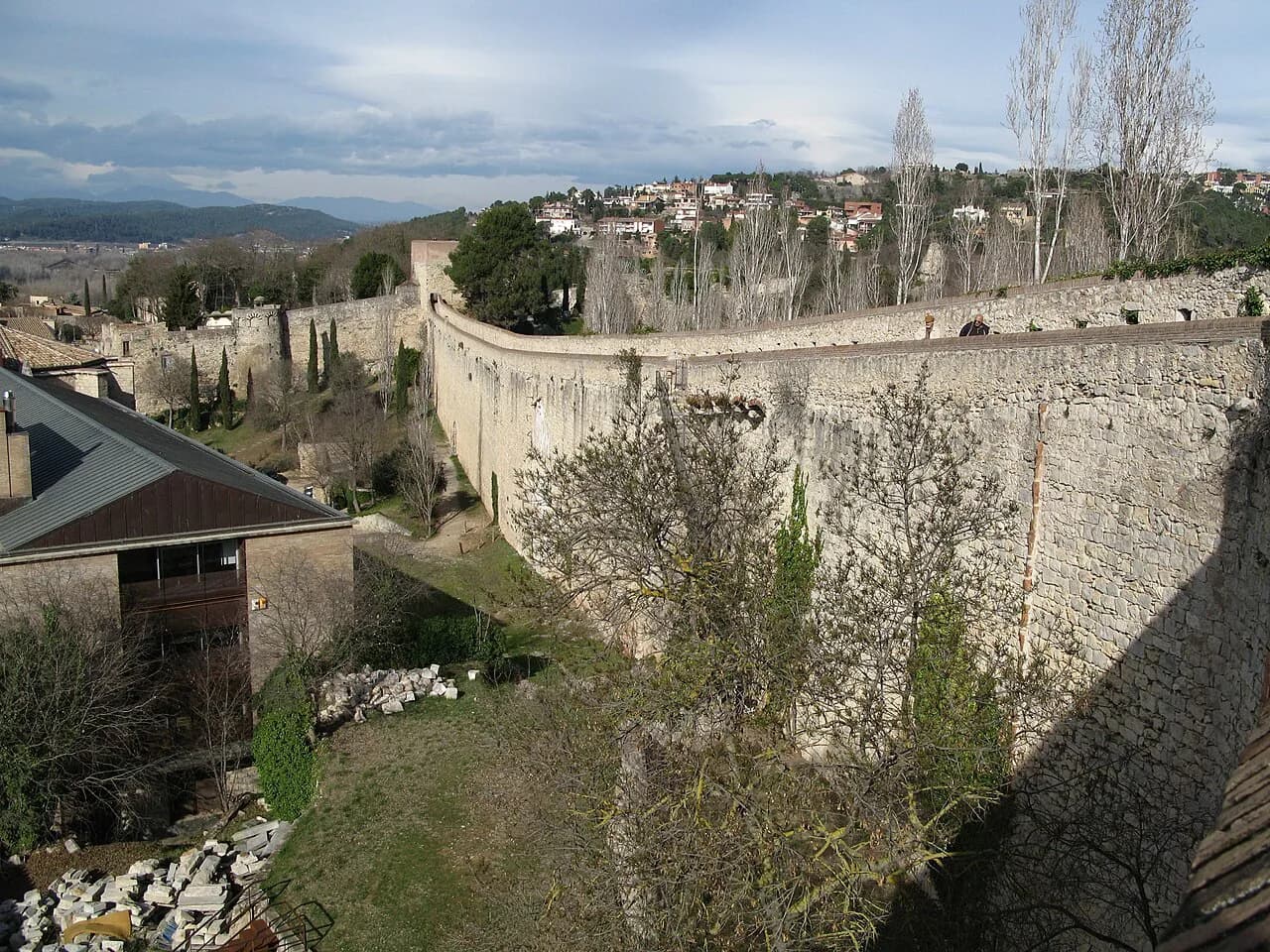
Walking the Girona city walls is free, and the full stretch on top takes about an hour to an hour and a half if you stop at the towers for photographs. The elevated path, the Passeig de la Muralla, is the best way to read the city's shape: you look down on the cathedral, the Call and the Onyar rather than up at them. This guide covers the route, the towers and gardens worth slowing for, the narrow stretches, and how to pair the walls with the Girona Cathedral and the sights immediately below them in Girona Attractions: 6 Visitor Guides.
What the Girona city walls are and where the walkway runs
The walls are the surviving defences of Gerunda, the Roman town that became Girona, and they are among the most extensive sets of walls still standing in Europe. The walkable section follows the line of the old enceinte around the higher part of the city, so you are always above the rooftops rather than at street level. Because the circuit curves with the old town, the views change with every few hundred metres rather than repeating.
Part of the appeal is that the route crosses distinct building phases. Roman stonework, Carolingian rebuilding and the later medieval extension all sit beside one another on the same walk, which is why the walls have been given protected heritage status. For a wider set of monuments in the same compact centre, see Girona Attractions: 6 Visitor Guides, which places the walls alongside the Girona Cathedral and the Jewish quarter.

Roman Gerunda to the medieval Força Vella: the walls in three stages
The first circuit went up in the 1st century BC with the Roman foundation of Gerunda, a triangular enclosure that guarded the Via Augusta. It was reinforced over the following centuries, with defensive towers added in the 3rd century. The core of that early fortification, known as the Força Vella, survived as a stronghold within the growing city.
From the 9th and 10th centuries, Carolingian rulers rebuilt and thickened the walls, because Girona sat on the frontier between their territory and the Arab-held lands to the south. At the end of the 14th century and into the 15th, the medieval walls extended the perimeter again as housing spread beyond the old line. The masonry itself tells the story: much of the Roman work used local limestone, some of it still carrying fossil nummulites.

The Passeig de la Muralla: the 3 km route above the city
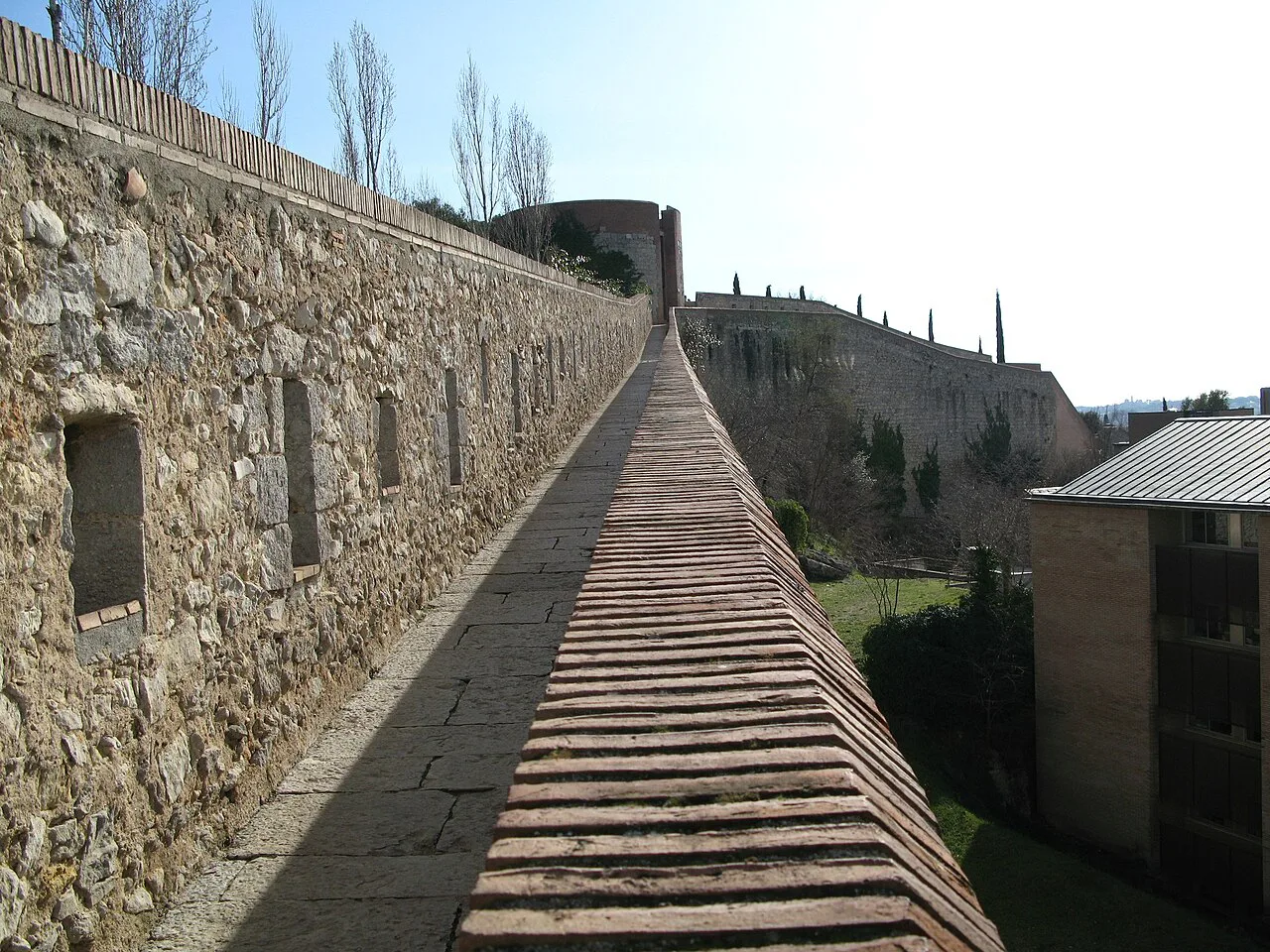
The promenade along the wall tops runs for roughly 3 km, and this is the stretch that gives the panoramic views. From the tower platforms you look over the cathedral, the Onyar, the Call and the bell tower of Sant Feliu all at once. A family guide budgets about two hours for the whole route, while the tour-operator figure of 3 km covers the wall-top promenade specifically; neither is a short stroll down a flat street.
Towers to look for: Torre del Rayo and Torre Iulia
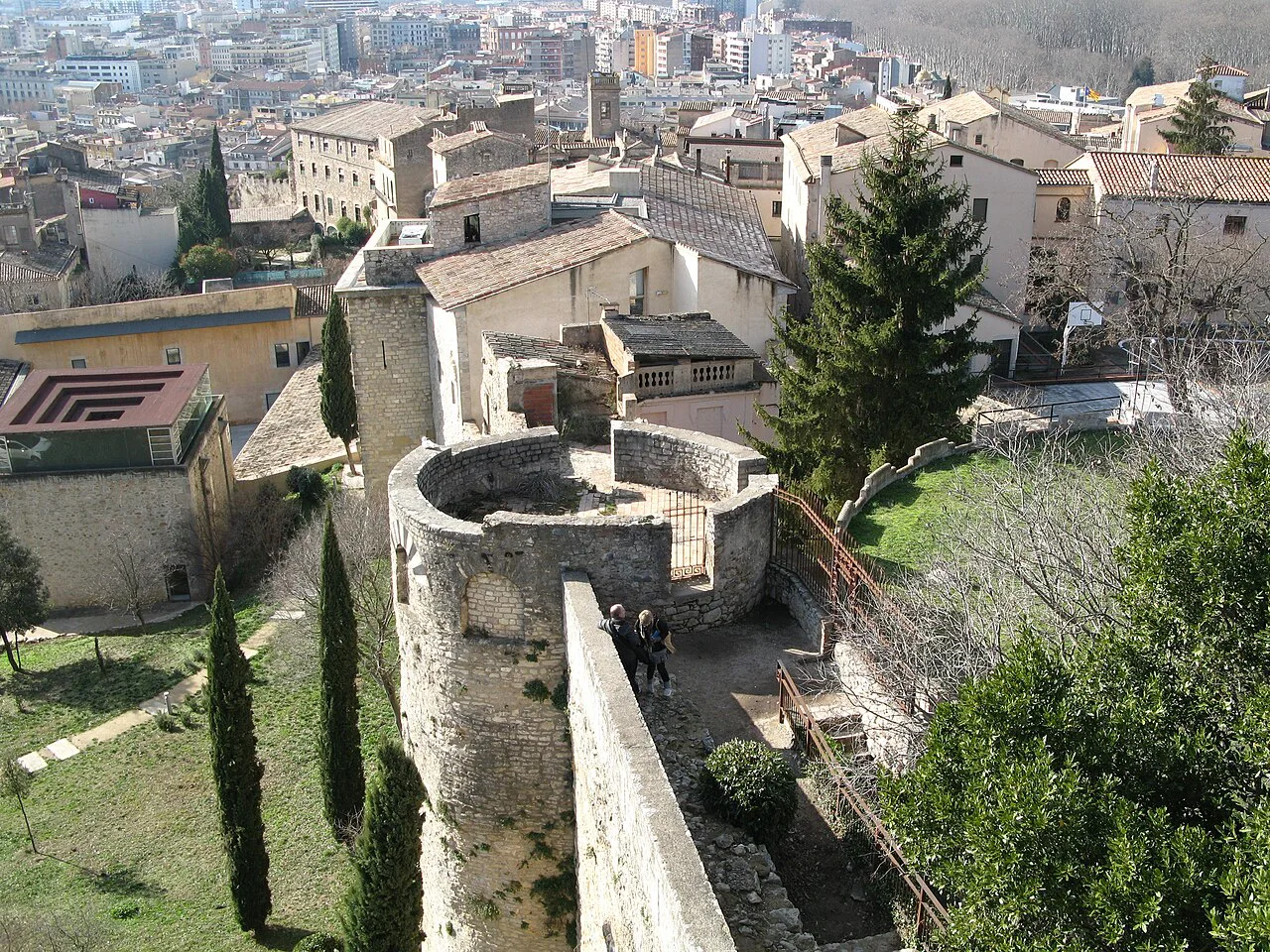
The Torre del Rayo, also called the Telegraph Tower, joins the Roman walls to the medieval ones and works as one of the best viewpoints on the route. At its base you can make out the Roman courses. Further along the northern wall, on the Passeig Arqueològic, the Torre Iulia is the clearest surviving piece of Carolingian work, built after the Franks took the city in the 9th century.
There is no charge to climb into the towers, but the stairways are original stone and uneven. If you suffer from vertigo, a few stretches will feel exposed, and it is worth keeping close to the inner side of the parapet. Shoes with grip help on both the stairs and the polished flagstones.
The wall gardens: Jardí dels Alemanys, Jardí de la Francesa, Jardí de l'Àngel
You do not have to stay on top of the wall for the whole route. Steps drop down into small garden terraces tucked below the parapets, including the Jardí dels Alemanys, the Jardí de la Francesa and the Jardí de l'Àngel. These are quiet, shaded pockets rather than formal gardens, and they are easy to miss because the entrances sit at the foot of the towers. Coming down for one of them breaks up the walk and gives you a different angle on the stones.
Portal de Sobreportes and the Roman stone at Sant Feliu
The Portal de Sobreportes is one of the best-preserved gates and once formed the northern entrance to Gerunda. Roman blocks are still visible in the fabric, along with part of the Carolingian rebuilding around the arch, and there is a niche with an image of the Virgin above the opening. Standing beside the Basílica de Sant Feliu, the gate is the point where the wall story meets the city street. The basilica and its surroundings are covered in the Basílica de Sant Feliu, Girona guide if you want to go inside; nearby, the Banys Àrabs, Girona is a short detour from the same neighbourhood.
How long the walk takes and which stretches are narrow
Allow an hour to an hour and a half for the complete wall-top route at an unhurried pace, with pauses at the towers. A family guide budgets about two hours for the same ground, which is a fair estimate if children are climbing every staircase. Some of the path narrows between the parapets, so two people pass with care rather than comfortably.
Access points, stairs and why wheels and buggies Don't work here
There are four access points to the walls, and you can join or leave at any of them instead of committing to the whole circuit. Every access is by steps, which makes the route unsuitable for wheelchairs, pushchairs and anyone pulling a suitcase. If you are carrying a small child, a carrier is more practical than a buggy. The Tourist Office on Plaça del Vi, beside the Ajuntament, hands out a city map and can point you to the most convenient entry.
When to go: sunset, midday heat and the evening closure
Entry to the walls is free, but the walkway keeps restricted hours and shuts at night, so an evening stroll after dinner is not an option. Late afternoon through sunset is the best window: the light hits the cathedral and the Pyrenees behind it, and the stone stops radiating heat. In summer, avoid the middle of the day, because the wall top has almost no shade and the heat builds quickly on the exposed stretches.
What you can see from the top: the cathedral, the Call, the Pyrenees
From the towers you look across the rooftops to the Girona cathedral, the Call Jueu, the river Onyar, the park of La Devesa and the bell tower of Sant Feliu. On a clear day the Pyrenees and the Guilleries mountains sit behind the city. The view is a good way to decide what to visit next, because the main monuments are all visible from above before you reach them on foot.
Nearby after the walls: the cathedral, the Jewish quarter and the Arab Baths
Coming down near the top of the old town puts you a few minutes from the Plaça de la Catedral, with its broad flight of steps, and from the lanes of the Call. The Banys Àrabs Girona and the church of Sant Pere de Galligants sit on the northern side of the old town, so you can link them in a single loop. The Museu d'Art de Girona occupies part of the same cluster, which makes this area easy to cover on foot in an afternoon.
Which stretch of the walls should you walk?
For a first visit, join the walls near the Pont de Pedra and walk towards the cathedral, leaving yourself an hour so you can climb the Torre del Rayo without rushing. If time is short, do only that stretch and finish at the Portal de Sobreportes beside Sant Feliu. Whichever section you choose, go in the late afternoon and go by foot: no ticket is needed, but the gates close in the evening.
Frequently Asked Questions
Can you walk the whole length of the Girona city walls?
You can follow the wall-top promenade from one access point to another, using any of the four entries, but the walkway is not a single unbroken level path. Some stretches are narrow and every change of level uses stone stairs, with garden terraces below the parapets. Plan to walk one direction and come down rather than looping back along the same wall.
Is there an entrance fee for the Girona city walls?
No: access to the walls is free. The walkway operates restricted hours and is closed overnight, so check the current times locally before setting out for a late walk.
Are the walls accessible with a pushchair or wheelchair?
No. The access points are stairways and parts of the route narrow between the parapets, so pushchairs, wheelchairs and wheeled luggage are impractical. A back carrier is the workable option for a small child, and sturdy shoes are better than sandals on the stone steps.