
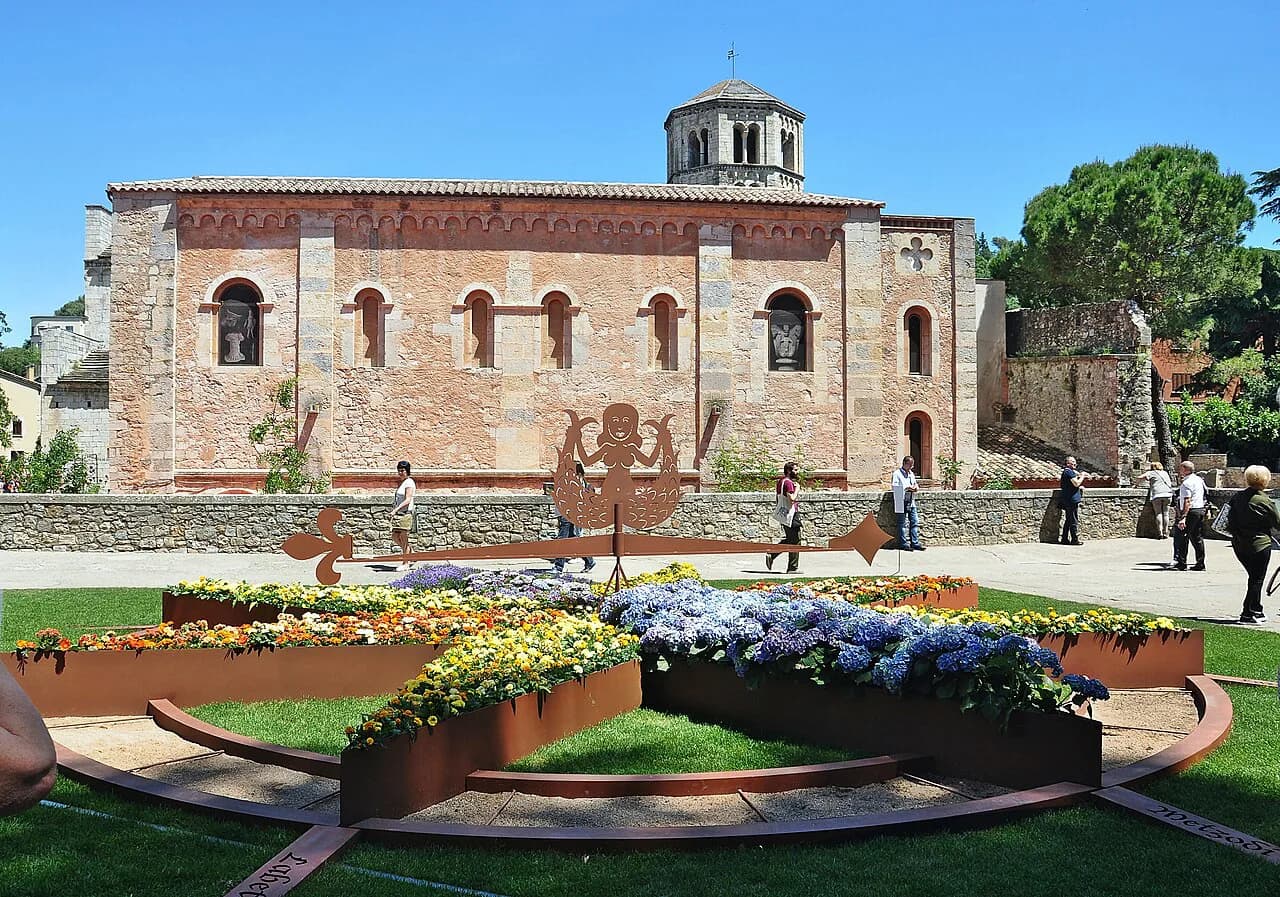
Sant Pere de Galligants: Girona's Benedictine Monastery and Archaeology Museum

Sant Pere de Galligants is a Romanesque Benedictine monastery on Carrer de Santa Llúcia, 8, in the lower part of Girona's old town, and it now houses the city's Museu d'Arqueologia de Catalunya. Allow around an hour for the church, the cloister and the archaeology displays, and treat it as one stop on a walk through the lower old town rather than a separate excursion. The monastery began its life as a Benedictine house and only became a museum space in the nineteenth century, which is why the visit mixes carved capitals with Roman inscriptions and sculpture.
Where Sant Pere de Galligants stands
The monastery sits on Carrer de Santa Llúcia, close to the river end of the old town and below the level of the cathedral. That position matters when you plan a route: you reach it from the lower streets near the river before climbing towards the cathedral, so it fits naturally at the start of an old-town walk rather than the end. Use the street address as your landmark rather than a pin on a map, since the entrance is tucked into the narrow lanes.
Because it is a working museum building rather than a standalone ruin, the visit is indoors and suits an unsettled day. The cloister and exhibition rooms sit within one complex, so you are not walking between sites. If you want the full picture of Roman and medieval Girona, the archaeology here pairs with the cathedral and the Sant Feliu quarter uphill.
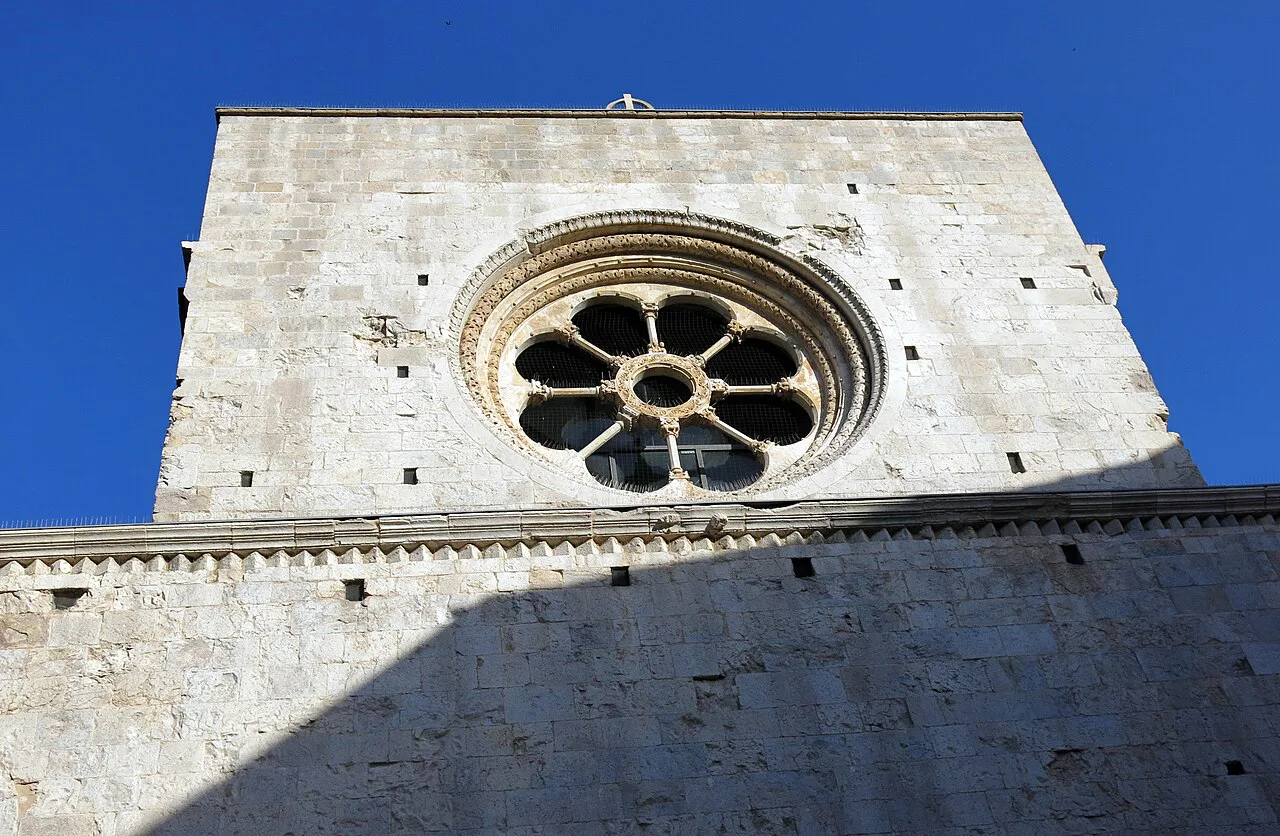

Opening hours and closing days
Hours change with the season. The monastery's listed hours run from 1 May to 30 September Tuesday to Saturday, 10:00 to 19:00, and Sundays and public holidays 10:00 to 14:00; from 1 October to 30 April it opens Tuesday to Saturday 10:00 to 18:00, with the same 10:00 to 14:00 window on Sundays and public holidays. The shortened Sunday window is the detail most visitors miss.
The monastery closes on Mondays, and that includes public holidays, so a Monday in Girona means planning around it. It also closes on 25 and 26 December and on 1 and 6 January. If your break falls over a Monday or the Christmas week, put the archaeology museum on a different day and use the Monday for the cathedral and the old-town streets instead.
The museum's own pages and the ticket desk carry the current admission price, so check before you set a budget. Do not assume a free slot exists; if a free-entry day matters to you, confirm it when you arrive or by phone.
What to see inside the monastery and museum
The cloister is the heart of the Romanesque building, and the carved capitals along its galleries repay a slow lap rather than a quick pass. Look up as well as across: the over-cloister built above the original gallery from 1860 now holds the rooms of the permanent exhibition, which is why the museum feels layered rather than flat. That arrangement lets you read the medieval architecture and the archaeological collection in the same circuit.
The collection is archaeological rather than artistic. It includes material from the 1846 excavations at Empúries and Roman inscriptions and sculptures recovered from Gerunda, the Roman town beneath modern Girona. For a visitor, that means the displays explain how the city was built, fortified and inscribed, which makes the later walk up to the cathedral and around the old town easier to read.
The monastery and the museum under one roof are worth separating in your mind. The Romanesque church and cloister are the historic building; the exhibition rooms above the cloister are the Museu d'Arqueologia de Catalunya in Girona. Allow time for both rather than treating the museum as a brief add-on.
The monastery's story in brief
Benedictine monks lived here until 1836, when the community left under the dissolution laws of the period. The building then stood empty until a provincial museum of antiquities and fine arts, created in 1845, was installed in the cloister in 1857; the museum opened to the public at the end of 1870. Those dates explain why a monastery has museum cases in its upper gallery.
The art collections moved out in 1976, when the Museu d'Art de Girona was created and took them to the old Episcopal Palace, leaving Galligants as an archaeology museum. In 1992 the museum passed to the Generalitat de Catalunya and became part of the Museu d'Arqueologia de Catalunya. The result is a focused archaeological collection in a Romanesque shell, with the fine art a short walk away.
Booking the combined Sant Daniel and Galligants visit
The museum runs a guided visit that pairs Sant Pere de Galligants with the Benedictine monastery of Sant Daniel, comparing two houses that followed the same rule but developed differently. The meeting point is Sant Pere de Galligants on Carrer de Santa Llúcia, 8, and the visit requires advance booking by phone on 972 202632 or by email. The 19 September 2026 departure is listed at 5 € with an 11:00 start; treat that as the terms of that specific departure rather than a general admission price, and confirm the next available date when you book.
If your dates do not match a scheduled departure, the self-guided circuit of the monastery and museum is the fallback, and it covers the building and collection without the comparison to Sant Daniel. Book the guided option only if the pairing interests you, since it commits a fixed block of your day.
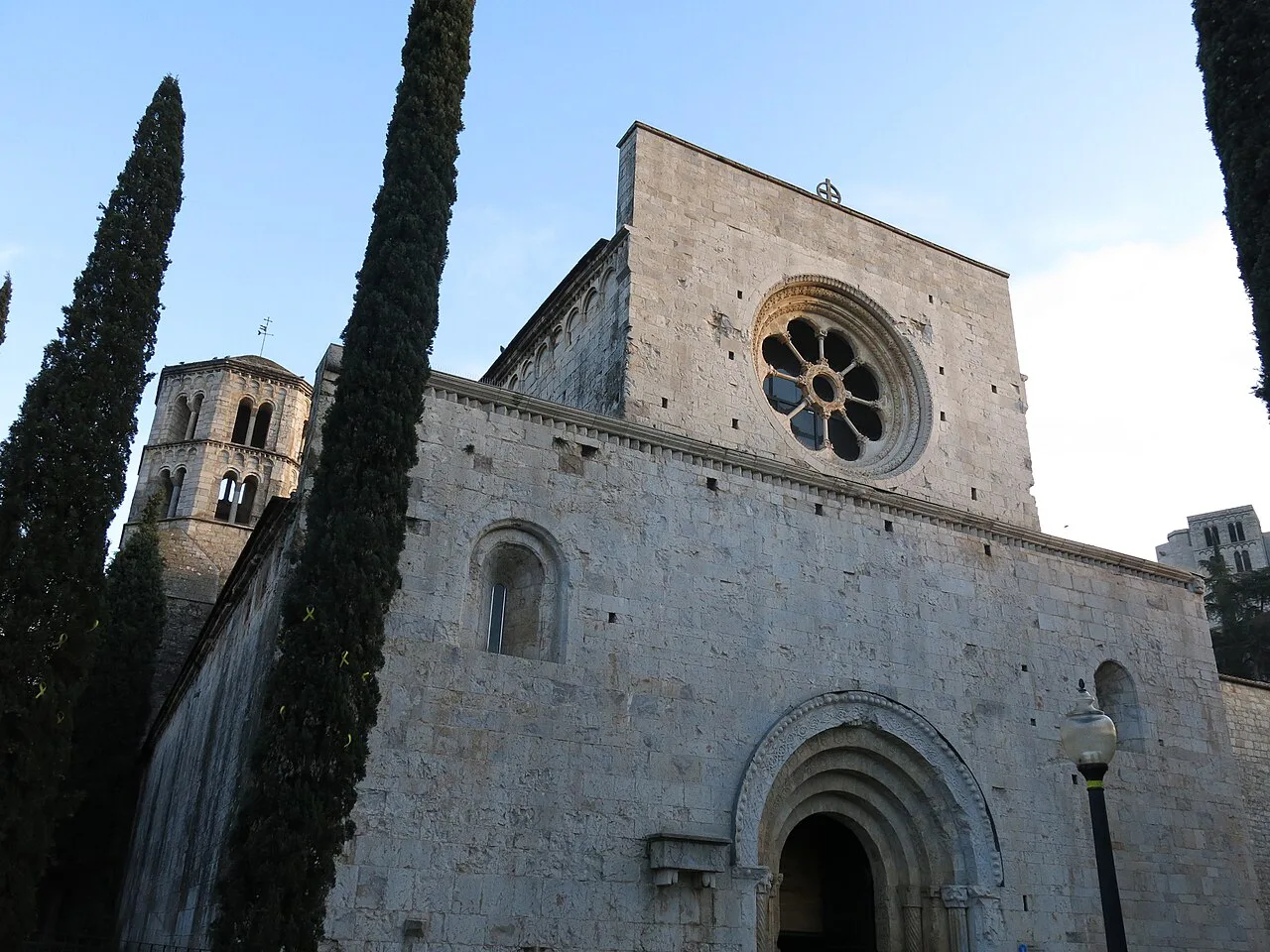

What is nearby in the lower old town
The Banys Àrabs, the surviving Arab baths, are close enough to combine with the monastery in a single lower-town stretch, and the two together give you a compact dose of Romanesque and Islamic-influenced Girona. Check the baths' own hours before relying on the pairing, since separate sites keep separate timetables.
Uphill from the monastery are the cathedral and the Plaça de la Catedral, reached through the old-town lanes and the steps of the Passeig de la Muralla, part of the city walls circuit. Walking the walls is the natural follow-on from a morning at Galligants, and it gives you the view back over the rooftops you have just walked through. If you want to see the two in one day, start at the monastery when it opens and climb afterwards.
Between the monastery and the cathedral you cross the streets of the old town, where church visiting hours and shop hours can vary through the middle of the day. Build in slack if you are combining Galligants with other churches, and put the monastery first while it is open.
Who should skip it
Skip Sant Pere de Galligants if your short break is about views and streets rather than collections: the visit is indoors, scholarly and focused on archaeology, and a reader wanting the cathedral and the walls will get more from a morning elsewhere. It is also a poor fit for anyone who cannot manage a Monday-free itinerary, because the Monday closure, public holidays included, rules out that day entirely.
The summer timetable is the one to use for a midday visit. From May to September the doors stay open until 19:00 Tuesday to Saturday, so you can shelter indoors through the hottest part of an inland Catalan afternoon and come out for the cathedral and walls later. In the October-to-April season the closing time moves to 18:00, which pushes the visit earlier.
Should Galligants be on your Girona shortlist?
Put Sant Pere de Galligants on your list if you want a Romanesque cloister and a serious archaeology collection in one stop, and schedule it for a Tuesday to Saturday so the Monday closure does not catch you. It slots neatly below the cathedral and beside the Banys Àrabs, so it costs you an hour rather than a day.
Check the entry price and current times at the museum before you go, and book the combined Sant Daniel visit by phone or email if the two-monastery comparison appeals. Everything else, from the cloister to the over-cloister rooms, comes with the same entry.