
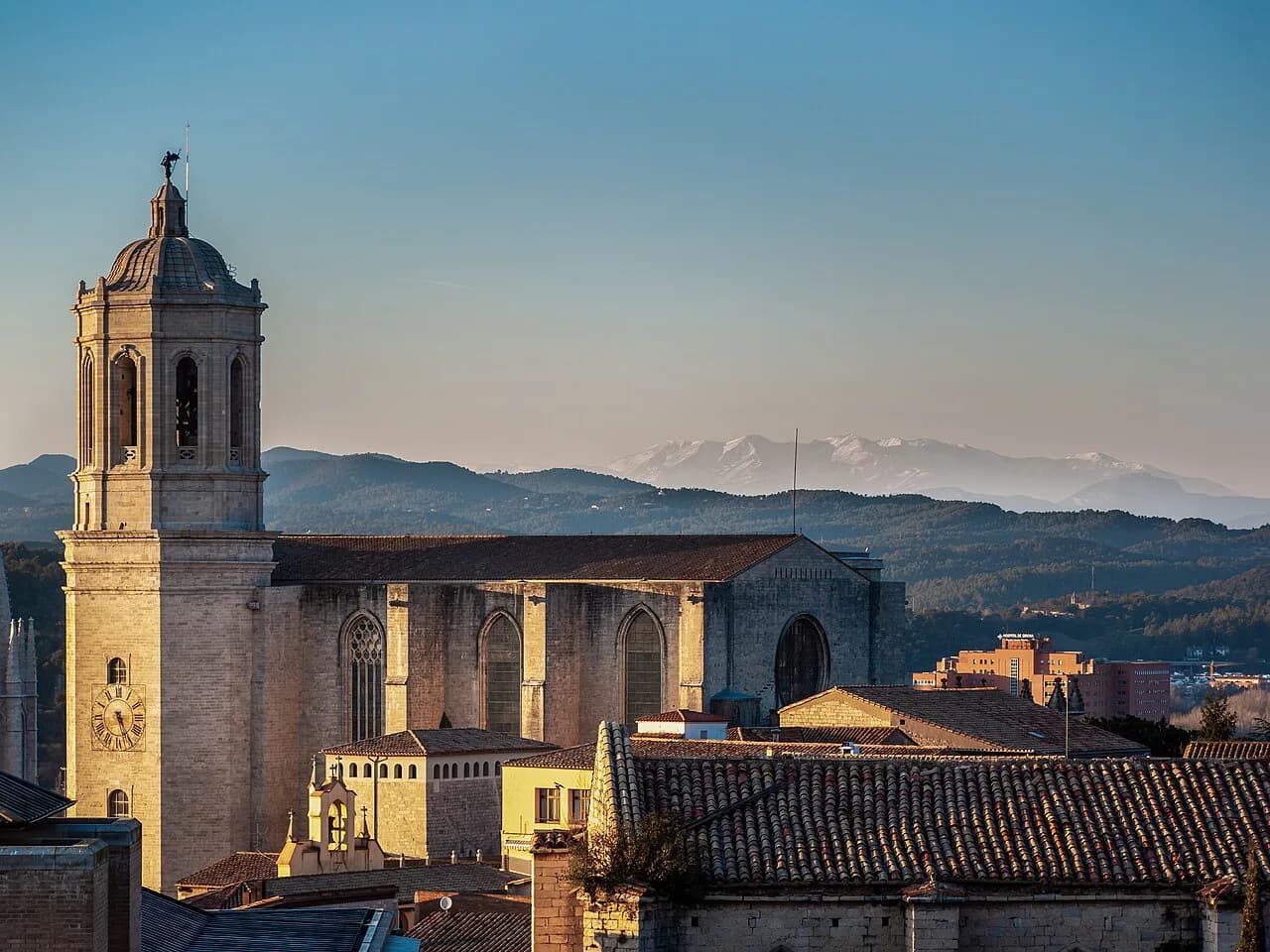
Girona Cathedral: What to See Inside Spain's Widest Gothic Nave

Girona Cathedral is worth visiting for one feature above all: a single Gothic nave 23 metres wide, the widest of its kind anywhere. It sits at the top of a long Baroque stairway in the Barri Vell, the old town on the east bank of the Onyar, and the climb is the price of the view back down. This page covers where the cathedral stands, the two ways up, what to see inside, how long to allow, and how it fits with the rest of the old town.
Where Girona Cathedral is, and how to reach it
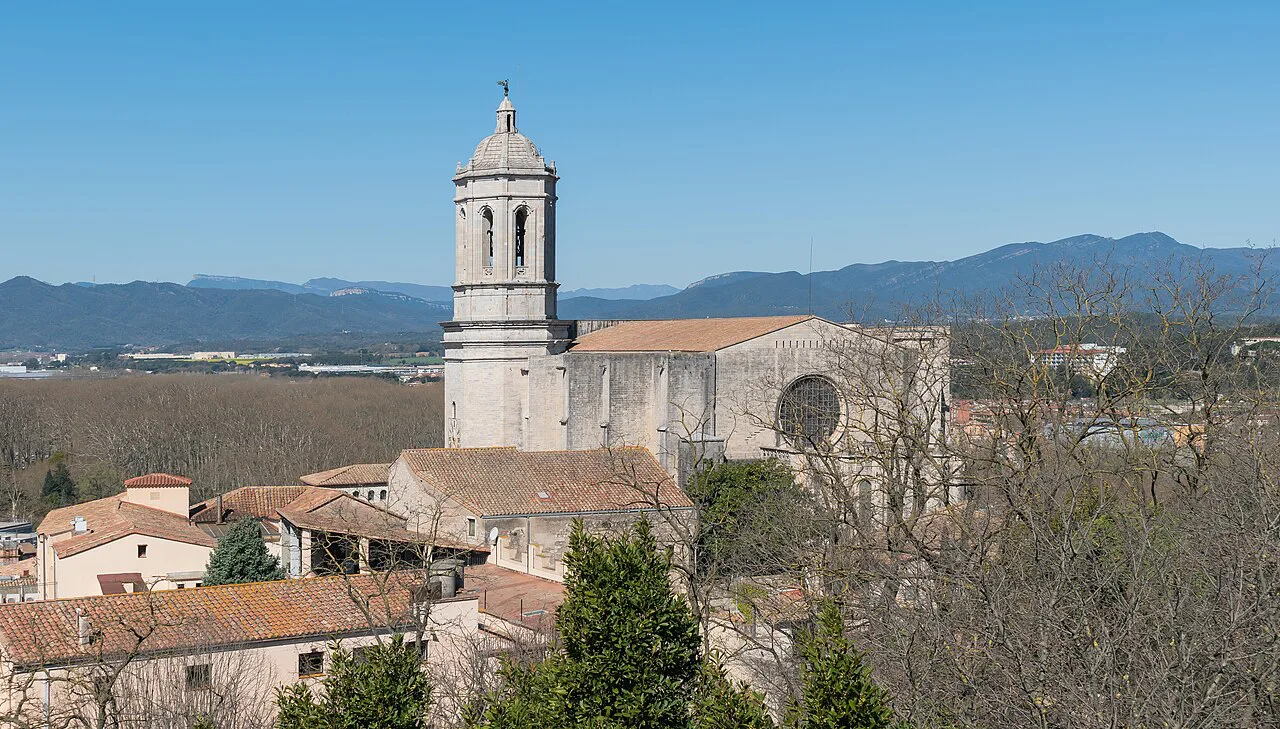
The cathedral occupies the Plaça de la Catedral at the top of the Barri Vell, above the Pujada de Sant Feliu and a short walk from the Basílica de Sant Feliu. If you arrive by train from Barcelona, the natural approach is across the Pont de Pedra and up the Rambla de la Llibertat, which puts you at the foot of the climb within about fifteen minutes on foot. From the river side of the old town, everything above you is the cathedral hill; the streets simply climb.
Girona is served by high-speed trains from Barcelona and by road from the Costa Brava, so the cathedral works as a half-day stop on a wider Catalan trip. The city's Roman origins as Gerunda are still legible in the street plan, and the cathedral sits on the highest ground the Romans fortified. Allow for cobbles and gradients even before you reach the stairway.

The steps and the Baroque façade
The Baroque façade stands at the head of a broad flight of steps, and the whole composition is best taken in from the bottom rather than halfway up. The stairway is a meeting point as much as a route: people stop on the landings for photographs towards the old town, which slows the climb. Slow or crowded stairs are easier taken in stages, with a pause to look back over the rooftops between flights.
The steps and façade became familiar far beyond Catalonia because Game of Thrones filmed sequences in Girona, and the cathedral steps are among the locations viewers recognise. Treat that as a reason to look up rather than the whole visit: the architecture carries the building whether or not you know the series. In summer, the stone radiates heat by midday, so the climb is easier early or late, when the stairway also catches better light.

Inside: the single nave, chapels and museum
The interior is unusual for its plan rather than its decoration. Instead of the three aisles most Gothic cathedrals use, Girona commits to one enormous hall, and the result is a nave whose span is only possible with a wide, flattened vault. Look up first, then walk the perimeter: side chapels line both walls and give the space its depth.
A cathedral museum holds the treasury and the building's sculpture and liturgical collection, so budget extra time if you want the whole complex rather than the church alone. The official cathedral website is the place to confirm what the museum includes on the day you visit and whether any part of the building is closed for works or services.
How long the visit takes
Give the cathedral itself around an hour, plus fifteen minutes each way for the climb and the streets below, and more if you add the museum. Two hours in the old town covers the cathedral, the descent to Sant Feliu and a first wander through the Call. One day in Girona comfortably takes in the cathedral, the walls and the river front.
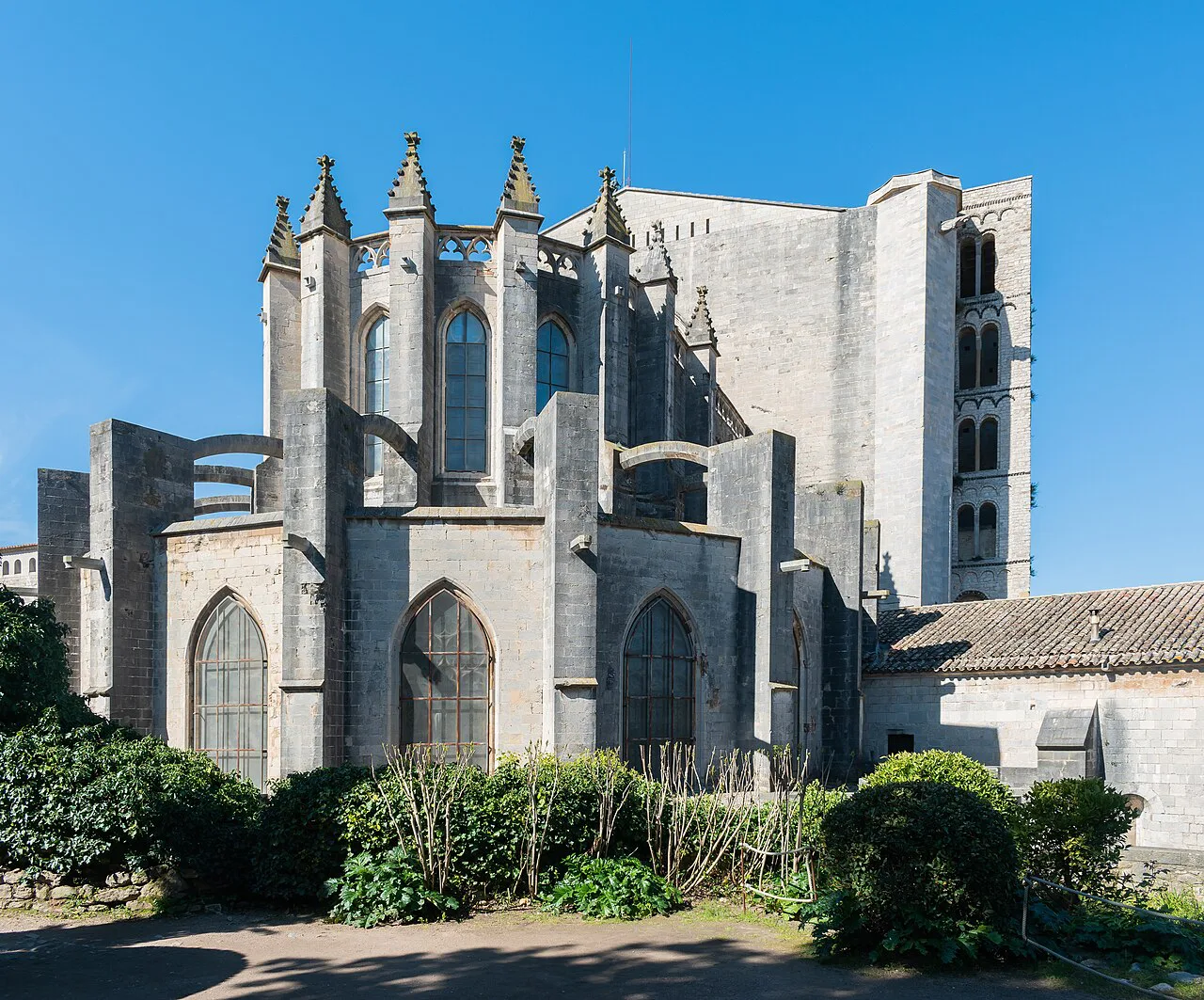
The building rewards a slower second look: the chapel of the Virgin, the Romanesque tower and the cloister sit at different periods, and moving between them is the clearest way to read the cathedral's long construction history.
Tickets, opening hours and free slots
The official cathedral site publishes the current admission price, any combined ticket covering the Basílica de Sant Feliu, and the cultural-visit hours, which are not the same as mass times. Check it directly before you travel: figures on third-party guides and review sites go stale, and worship takes priority in the church during services, when tourist visits stop. Buying through the official channel also makes it clear what a combined ticket does and does not include.
Treat the cathedral, Sant Feliu and the Arab Baths as three separate ticketed monuments and decide which you want before you queue, because the stairway is not the place to plan. The Girona city walls and the Call are free to walk, which makes them a sensible balance if you are watching the budget. Check the cathedral's own pages for any reduced-price slots rather than assuming a fixed free day.
Combining the cathedral with Sant Feliu and the Call
The Basílica de Sant Feliu stands just below the cathedral, with a bell tower that has served as both defence and belfry, and its square is a natural pause on the descent. The two churches are close enough to visit back to back, so plan them as one block rather than two separate outings. The church is worth seeing from outside as well as in.
From Sant Feliu, the Call opens up as a knot of narrow lanes, and it is the part of Girona most easily lost to aimless wandering. The Banys Àrabs lie a few minutes further and make a compact, atmospheric addition. A short walk beyond them brings you to Sant Pere de Galligants, whose Romanesque lines sit beside the archaeology museum.
Walls, river and the rest of the old town
The Passeig de la Muralla runs along the medieval fortifications above the old town and gives the best free view of the cathedral from outside, with the towers and the city's roofline laid out below. The walk has steep steps and uneven stone, so do it before the cathedral rather than after a long day on your feet. The circuit is around two kilometres, and the stretch nearest the old town is the most rewarding.
Back down by the river, the painted houses of the Casitas del Onyar line the water and the Pont de Pedra frames the classic view of the façades reflected below the old town. The Museu d'Art de Girona, housed in the old Episcopal Palace, holds Catalan art from the Romanesque forward and is a good wet-weather substitute for another church. The Plaça de la Independència, with its arcades, is the obvious place to end a walk through the centre.
Practical trade-offs before you climb
The stairway is the main physical obstacle: dozens of steps, little shade at midday in summer, and cobbles underfoot all the way from the river. Take it steadily, stop on the landings, and save the steep climb for the cooler ends of the day rather than the middle of a hot afternoon.
For the wider city, the old town, the walls and the river front are the spine of any short break, and each is covered in its own guide within Girona Attractions: 6 Visitor Guides. Check ticket availability on the official site for the day you plan to climb, so a change in weather or energy does not leave you with an unused entry.
Should the cathedral be your first stop?
Yes, if you are in Girona for the old town rather than the Costa Brava: the cathedral anchors the Barri Vell, and starting there means you walk downhill through Sant Feliu and the Call instead of climbing at the end of the day. Skip it only if stairs and crowds are a problem, in which case the walls and the river front still give you the city's shape. Confirm the day's opening hours and ticket options on the official site before you set out.
Frequently Asked Questions
Why is Girona Cathedral's nave so unusual?
Most Gothic cathedrals run two or three parallel aisles; Girona uses one vast hall instead, and its span of 23 metres makes it the widest Gothic nave in the world. The width forced a flattened vault that you notice as soon as you look up.
How old is Girona Cathedral?
The building spans centuries rather than a single date, with a Romanesque tower and cloister from an earlier phase and the Gothic nave built later on top of the same site. Read the cathedral's own history panels or its official site for the sequence of construction phases.
Can I visit the cathedral during mass?
Cultural visits and worship use the building on different schedules, and tourist entry pauses during services. Check the official cathedral site for the day's cultural-visit hours before you climb the steps.
How fit do I need to be for the cathedral steps?
The stairway is long, and it has little shade at midday in summer. Take it steadily with pauses on the landings, climb at the cooler ends of the day if you can, and wear shoes that cope with cobbles.