Cádiz Old Town: Quarters, Plazas and a Walking Route
A practical guide to Cádiz old town: the Pópulo, La Viña, the cathedral, Plaza de Mina and a walkable route that fits a short city break.
On this page
Cádiz old town is a compact peninsula you can cross on foot, and the fastest way to understand it is to walk it quarter by quarter rather than monument by monument. The medieval Pópulo sits at its heart, the cathedral and the main plazas fan out from there, and the Campo del Sur closes the loop along the water. This guide covers how the quarters fit together, a route from the Plaza del Ayuntamiento to La Caleta, and the practical points that decide how much you see in a day. For the full picture of the old town, see Cádiz: the old town on its sandbar, quarter by quarter.
Allow the old town a full morning and an afternoon rather than an hour between trains. The centre is small, but the pleasure is in the narrow streets of the Pópulo and La Viña, the arcaded plazas and the stretch along Campo del Sur, and rushing those defeats the point. Base yourself in or beside the old town and the whole guide becomes a walk rather than a series of taxi hops.
How the old town is laid out
Cádiz occupies a narrow peninsula, and the old town fills the seaward end of it beyond Puerta de Tierra. Approaching on foot from the conventional road entrance, the streets tighten and parking becomes progressively harder, so the practical move is to leave the car behind the Aduana building and walk in. The quarters run roughly west from the gate: the Pópulo first, then Santa María and El Mentidero, with La Viña towards the western tip.
The Pópulo is the oldest quarter, and it still keeps the gates of its medieval walls, so the change of atmosphere as you pass through is immediate. Santa María, next to the Plaza de San Juan de Dios, holds the baroque and neoclassical buildings worth slowing down for, while El Mentidero was historically the city's social epicentre. La Viña, at the far end, is the quarter the sources describe as the essence of Cádiz: tight lanes, small plazas and street life.
Distances are short enough that the quarters blur into one continuous walk, which is why a single route works better than a checklist. The historic centre is among the most complete in Andalucía, and its character comes from narrow streets opening onto small plazas rather than from grand boulevards. Plan the day around that rhythm and the geography stops mattering.
A walking route from the Plaza del Ayuntamiento to Campo del Sur
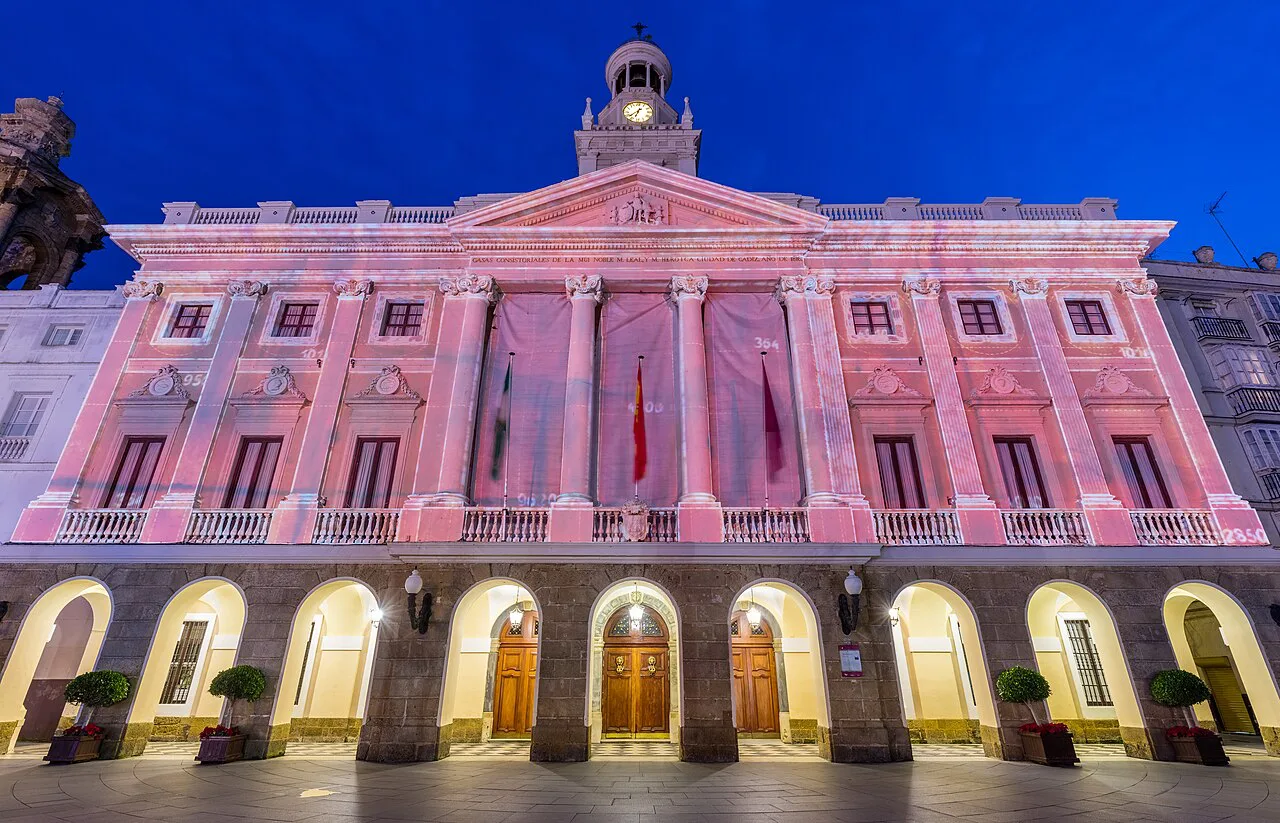
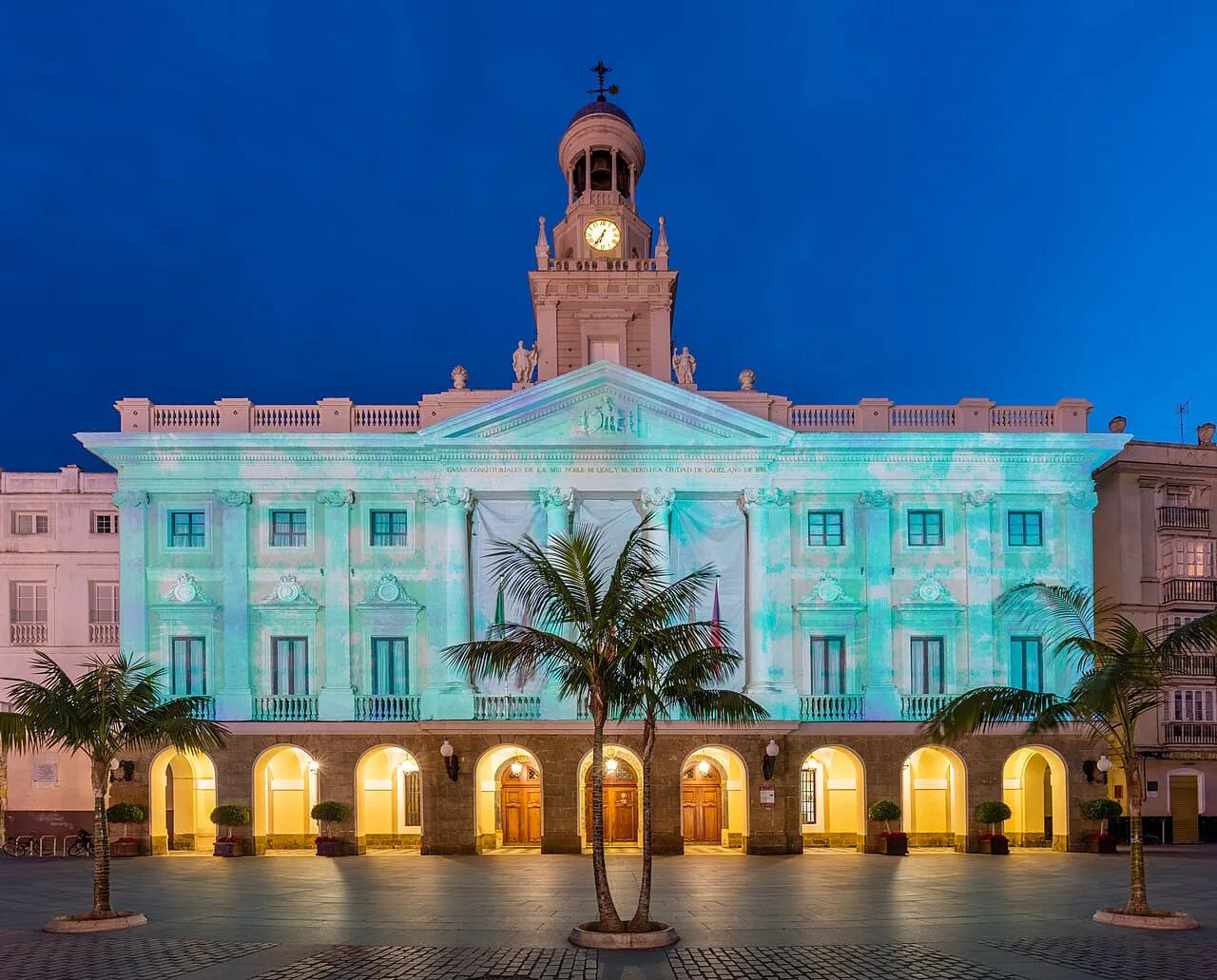
Start at the Plaza del Ayuntamiento, where the statue of Moret faces the consistorial building, and head for the Arco de los Blanco to enter the Pópulo. From there the route runs past the Roman theatre and the Callejón del Duende to the cathedral, then on through the plazas and down to Campo del Sur. It is a natural half-day loop that takes in the old town's principal monuments without backtracking.
If you want the orientation done for you, a free walking tour covers the emblematic sights in about two hours and leaves you free to decide afterwards whether to pay for individual entries. Treat it as a way of learning the layout rather than as the visit itself, since the tour passes the cathedral and the Torre Tavira without taking you inside. After that, the shape of the old town is in your head and the rest is choice.
A small detail worth looking for on the Avenida del Puerto is the Mafalda traffic light, a tribute to Quino's character, which sits on the way in from the port side. It costs nothing and takes a moment, and it works as a marker that you have reached the edge of the old town proper. From there the streets lead straight into the route.
The Pópulo: the Arco de los Blanco and the Callejón del Duende
The Arco de los Blanco is one of the surviving medieval gateways into the Pópulo, and crossing it is the moment the old town announces itself. Beyond it the streets are narrow and the buildings carry visible history, which is exactly what makes this quarter worth entering slowly rather than photographing from the threshold. The Roman theatre is a few steps from the arch, so the two sights belong to the same ten minutes.
The Callejón del Duende is a narrow lane just beyond the theatre, and it preserves the gaditano street atmosphere better than any signposted viewpoint. Pause here for the colours and the proportions of the buildings rather than for a specific sight, because the lane's value is the quarter itself. It also links the Pópulo to the cathedral area without pushing you back onto a main road.
The Roman theatre and the Catedral Vieja
The Teatro Romano de Cádiz was discovered in the 1980s and sits almost immediately inside the Pópulo, which makes it the easiest archaeological stop of the day. Access is free, so it can be slotted into the first part of the walk without affecting the budget for the cathedral or the Torre Tavira. Cádiz was one of the most powerful cities in Roman Hispania, and the theatre is the clearest surviving evidence of that status.
At the edge of the Pópulo stands the Catedral Vieja, the parish church of Santa Cruz, tied to the city's Christian origins and a quiet counterpoint to the much larger cathedral nearby. The Casa del Almirante stands close by and is described as being under restoration, so treat its exterior as part of the street scene rather than as a visit. Seeing the two cathedrals in sequence gives a clearer sense of how the city grew than seeing either alone.
Cádiz cathedral and the Plaza de la Catedral
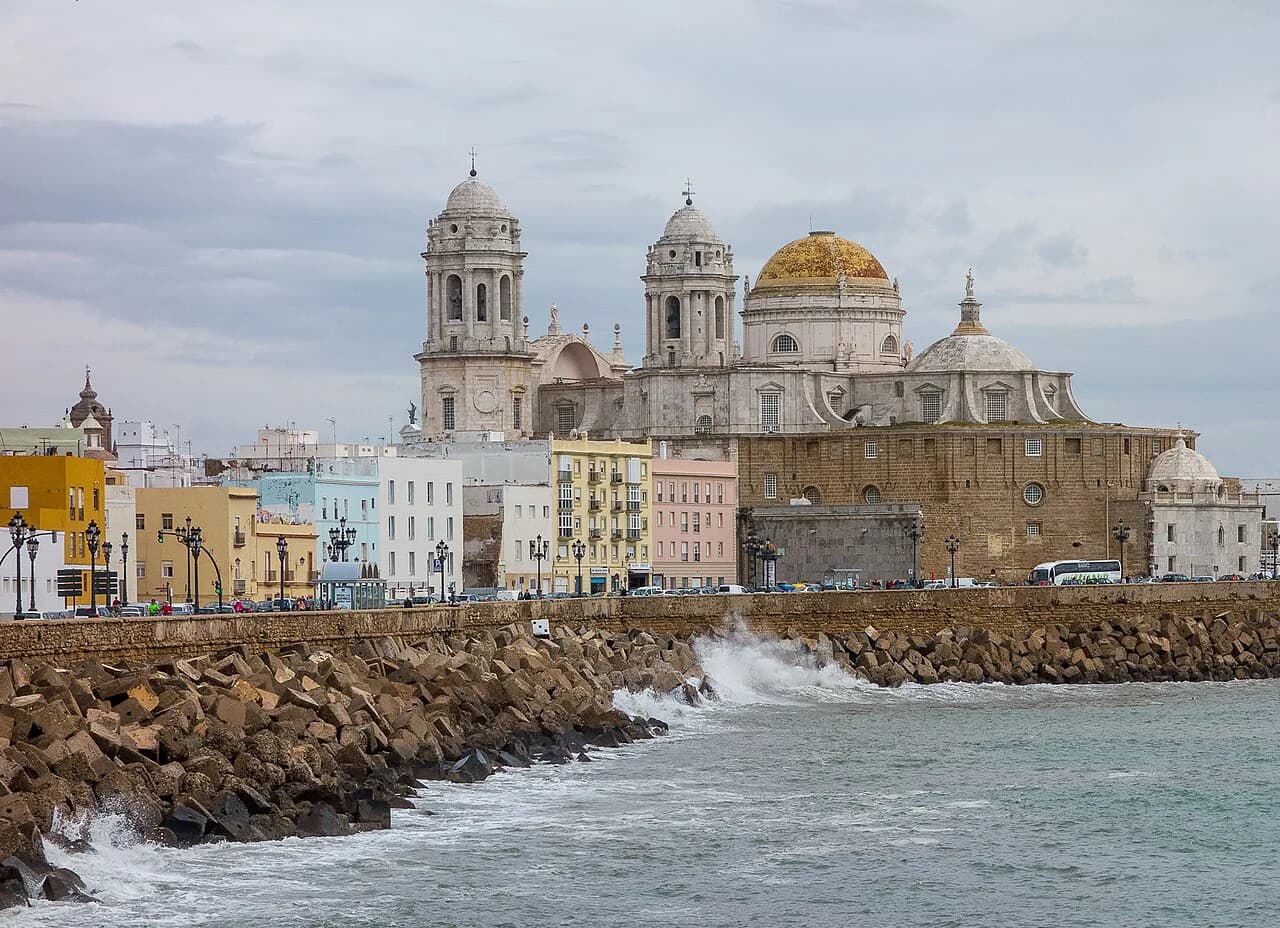
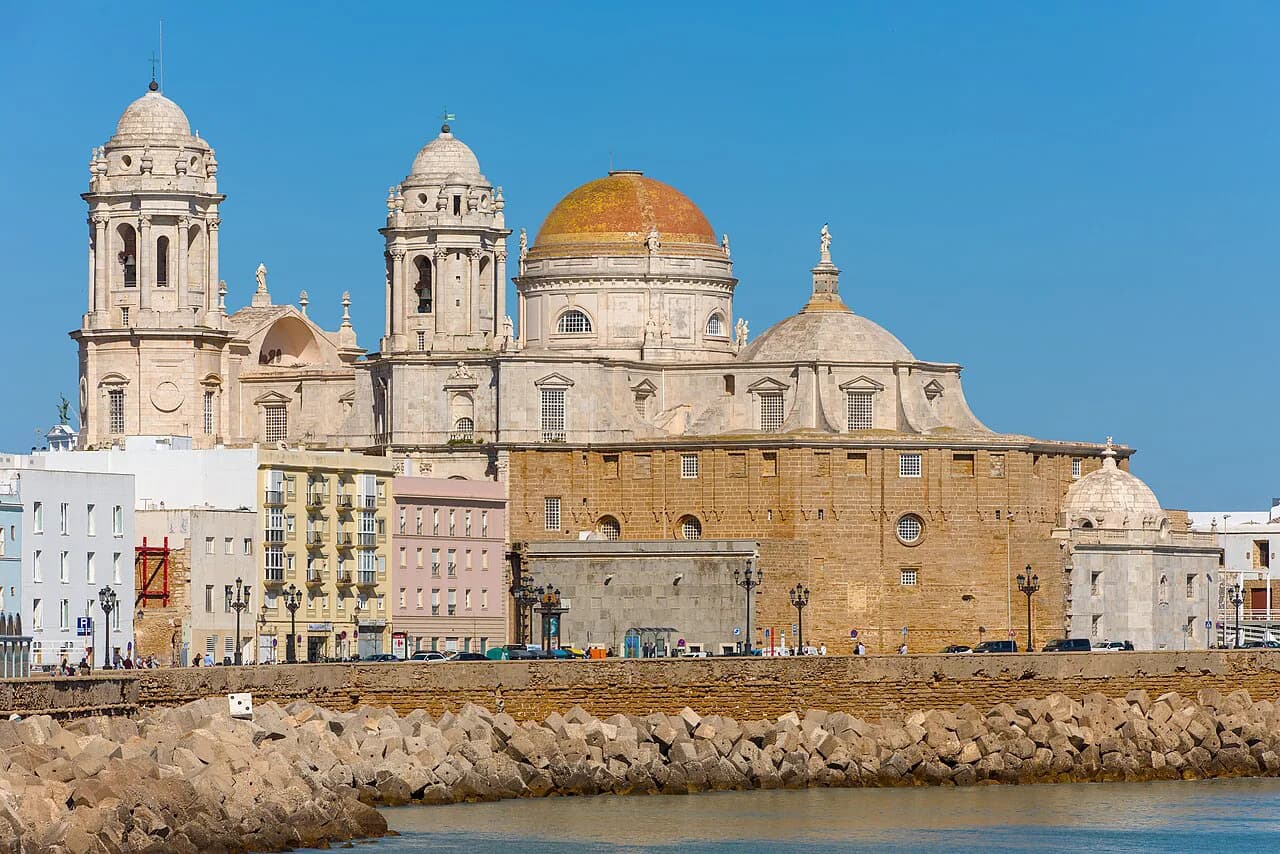
The Catedral Nueva dominates the Plaza de la Catedral with its yellow dome, and its interior and tower are worth the entry, with good views of the city and the sea from the top. A plan of the cathedral is set into the paving of the square, which helps you read the baroque and neoclassical building before you go in. Approach it from the Malecón as well, because the profile from the water explains the site better than the square alone.
The tower, with its Torre del Reloj, is the landmark that makes the cathedral findable from across the old town, and it is worth orientating yourself by it as you move between the plazas. The Plaza de la Catedral is one of the busiest and most characterful spots in the centre, so time it for early or late rather than the crush. Check Cádiz Cathedral's own published times and ticket arrangements before you build the day around going inside.
The plazas worth building the walk around
The Plaza de las Flores is always animated, ringed by terraces and flower stalls, and it works best as a pause rather than a destination. The Plaza de San Antonio, with its Casino, and the Plaza de Mina, with the Museo de Cádiz on its edge, follow naturally on the route through the centre. The Plaza de San Juan de Dios is the natural square for the old town's street life, with the Ayuntamiento close by and low, characterful buildings around it.
Treat the sequence as a spine for the walk: flowers, then San Antonio, then Mina, each separated by a few minutes of street rather than a journey. Mina is the largest and quietest of the three, and its museum gives it a purpose beyond sitting down. Building the afternoon around these squares keeps the route legible even if you drop individual monuments.
Calle Ancha and Calle Sagasta: the old town's spines
Calle Ancha and Calle Sagasta are the streets that carry the old town's shopping and strolling, connecting the plazas and giving the centre its everyday rhythm. Calle Ancha runs between the cathedral area and the Plaza de San Antonio, while Sagasta leads on towards the Plaza de Mina, so both double as route and as browsing. If you want to shop, this is where the old town's shops concentrate rather than in the lanes of the Pópulo.
Calle Zorrilla, running from the centre towards the Parque Genovés, is another street worth following for its concentration of bars and its constant footfall. The shops and the street life sit on the same grid, so a walk that follows Ancha and Sagasta can bend into Zorrilla without losing its shape.
Torre Tavira and the Cámara oscura
The Torre Tavira adds something the cathedral tower does not: a Cámara oscura that projects the centre of Cádiz in real time onto a screen below the viewing platform. Seeing the old town in motion from above is the experience the sources call unique, and it makes the tower a better stop than a simple viewpoint. Go up before you finish the walk, while the street names are still fresh.
The tower is a paid entry, unlike the Roman theatre, so decide what else you are paying for on the same day before committing. It works particularly well in combination with the cathedral tower, because the two give you the old town from opposite ends and at different heights. Check the tower's own published times before making it the fixed point of the afternoon.
Museums and monuments that reward a detour
The Museo de Cádiz in the Plaza de Mina holds the city's archaeology and fine art, including the Phoenician sarcophagi that are its famous draw. It sits on the plaza itself, so it slots into the walk without a detour, and it gives the afternoon a substantial indoor stop. Check the museum's published opening days before planning the day around it, since museum closing days vary across Andalucía.
The Oratorio de San Felipe Neri, in the Mentidero area, is worth the short walk for its baroque interior and its place in the city's history. It sits in the quarter that was once the epicentre of Cádiz, so the detour doubles as a look at a part of the old town that most visitors skip. The Gran Teatro Falla, with its modernist facade, is worth seeing from the street whether or not there is a performance.
Campo del Sur, San Sebastián and La Caleta
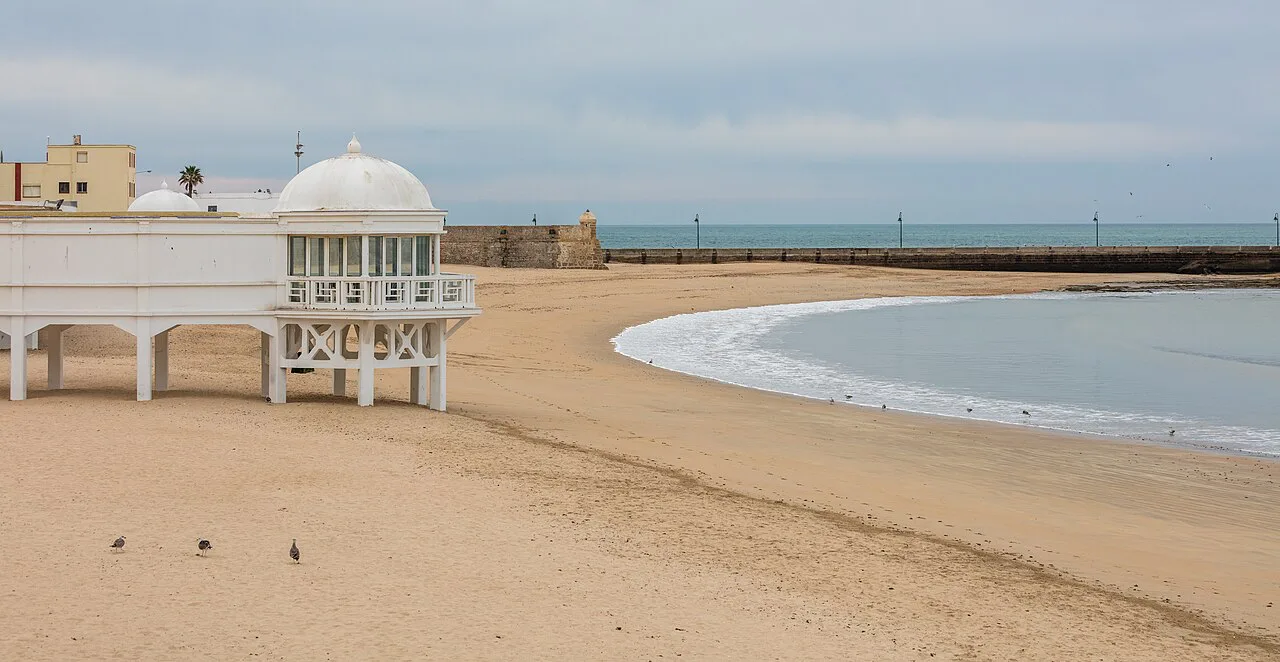
Campo del Sur runs along the seaward edge of the old town and closes the walk with open water instead of streets. From there the route continues past the Castillo de San Sebastián and out towards La Caleta, the small beach between the city's two castles, with its distinctive balneario sitting on the sand. Treat the beach as a landmark on the walk rather than as a beach day, and the old town and the sea fall into one continuous route.
The Castillo de Santa Catalina and the Castillo de San Sebastián both face the sea and are among the city's emblems, which makes the western end of the old town feel like a natural finish. A detour to the Parque Genovés, the central park of Jardines, palms and fountains, is an easy way to close the loop on a hot day. The sunsets from this side of the city give the walk a reason to end late rather than early.
The Mercado Central and the streets around it
The Mercado Central is the old town's working market, with colour and fresh produce that make it worth a mid-walk stop rather than a drive-by. It sits close enough to the plazas to fold into the route, and it is at its best in the morning, so place it early in the day rather than at the end.
Round the market and towards La Viña the streets form the barrio's social core, and this is where the walk should slow down rather than speed up. The Pópulo and La Viña are described as the essence of Cádiz, small lanes and plazas with street life rather than monuments. The route ends here with the city as it is used, not just as it is visited.
Trade-offs and practical points
Cars are the main practical obstacle: traffic is restricted in the centre and parking gets harder the closer you get to the old town, so leave the car behind the Aduana building on the approach and walk in. Once inside, the old town is compact enough to cross on foot without public transport. The exception is the long stretch towards La Caleta, which rewards a pair of comfortable shoes rather than a plan to drive.
Midday heat is the other consideration in the inland months, and the old town's narrow streets give only partial shade. The natural response is to shift the walk: monuments and museums in the middle of the day, the outdoor plazas and Campo del Sur in the morning and evening. The reverse works too, so long as you do not plan a full outdoor route across the early afternoon.
Arriving from the airport
Cádiz has no commercial airport of its own, so UK travellers reach the old town from Málaga or Seville as starting points, then continue by rail or coach. Book the onward leg on a published timetable rather than assuming a frequent service, because the last stretch decides whether you have an evening in the old town or not. Keep to the operators' own published times for that connection.
Is the old town walk enough for a short break?
Yes: the old town is compact enough to cross on foot and dense enough that a single well-planned walk covers the Pópulo, the Roman theatre, the cathedral, the plazas, the market and Campo del Sur. The trade-offs are time of day and parking rather than distance, and both are manageable with an early start and the car left outside the centre. Plan the walk as one route and the rest of the break is free.
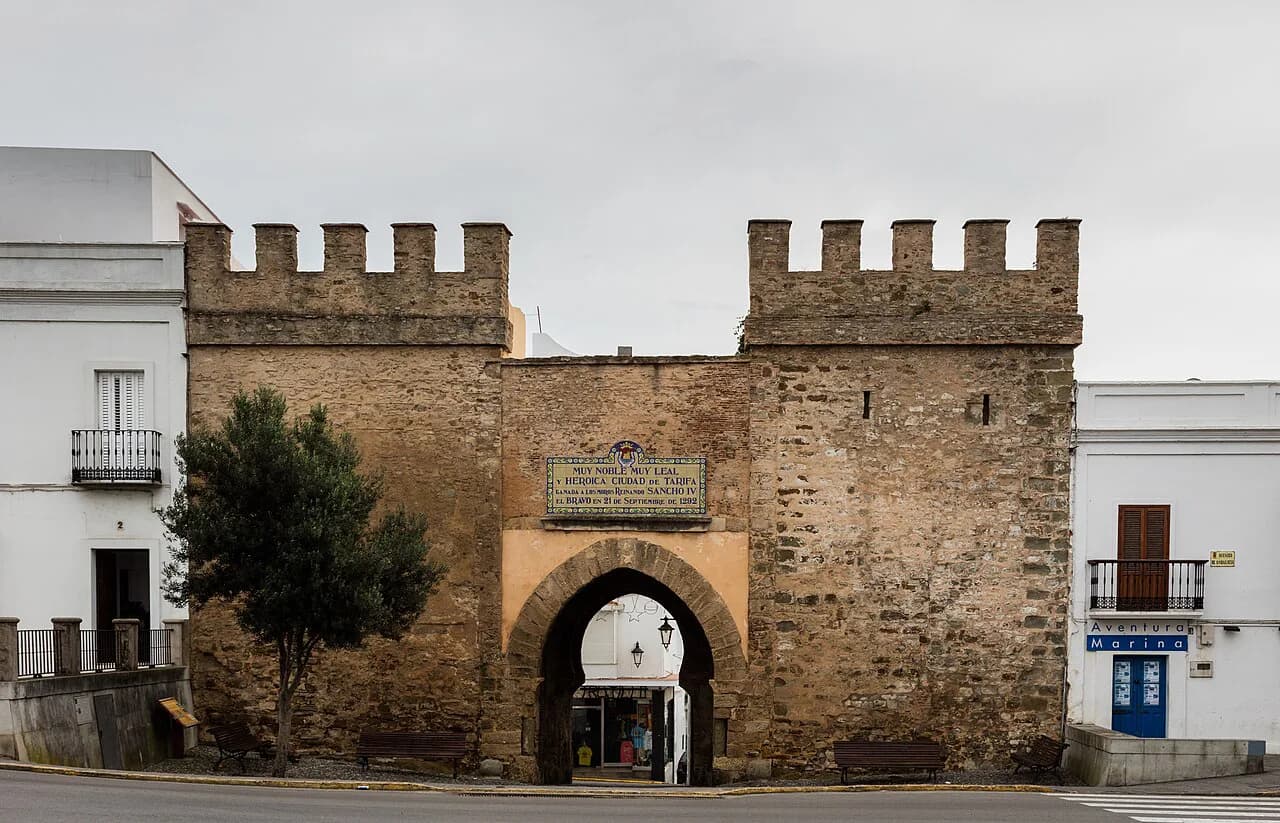
If you want a second stop after Cádiz, the white towns inland and the coastal run towards Tarifa both work as an overnight rather than a hurried day out. Tarifa, with its own old quarter and Puerta de Jerez, is a different sort of Andalusian town and rewards its own planning. Keep Cádiz as the fixed base and let the province be the variable.
Explore more Cádiz guides
Frequently Asked Questions
What airport do you fly into for Cádiz?
Cádiz has no commercial airport of its own. UK travellers typically use Málaga or Seville as their arrival point and continue overland by rail or coach. Check the operator's published timetables for that final leg, because services vary by day and season and the connection determines your arrival time in the old town.
Sources
Notes for your next Spanish town break
Optional updates to our guides.
You might also like
Continue reading
More guides you'll find useful