Vejer de la Frontera: Plazas, Gates and Views in the White Town
A practical guide to Vejer de la Frontera: the Plaza de España, the old gates and walls, the castle, the Judería and miradors, with a walking order.
On this page
Vejer de la Frontera is best treated as a half-day walk: the old centre is compact, car-free in practice and covered in steep, twisting white lanes, so a sensible route beats a list of sights. The town sits on a hill in Cádiz province, was declared a Conjunto Histórico-Artístico in 1976, and keeps the shape five and a half centuries of Muslim rule gave it. The plan below runs from the Plaza de España up through the walls, the castle, the church and the Judería, then out to the windmills.
Vejer in a nutshell: a walled town on a hill
Everything you come to Vejer for sits inside or along the old walls: the plaza, the church, the castle, the convent and the little arched entrances to the Judería. The street pattern is the legacy of the town's Muslim period, which ran from 711 until the reconquest was completed in the thirteenth century. That history is why the lanes bend, climb and double back rather than run in a grid.
The centre can be explored in a day without a car, but it comes with slopes, so wear shoes that cope with cobbles and plan the uphill stretches for the morning. Only the Acueducto Romano de Santa Lucía sits outside the walkable core and needs a car. Set off early in summer, because the climb back up from the lower streets is the part that catches people out.
Start at the Plaza de España
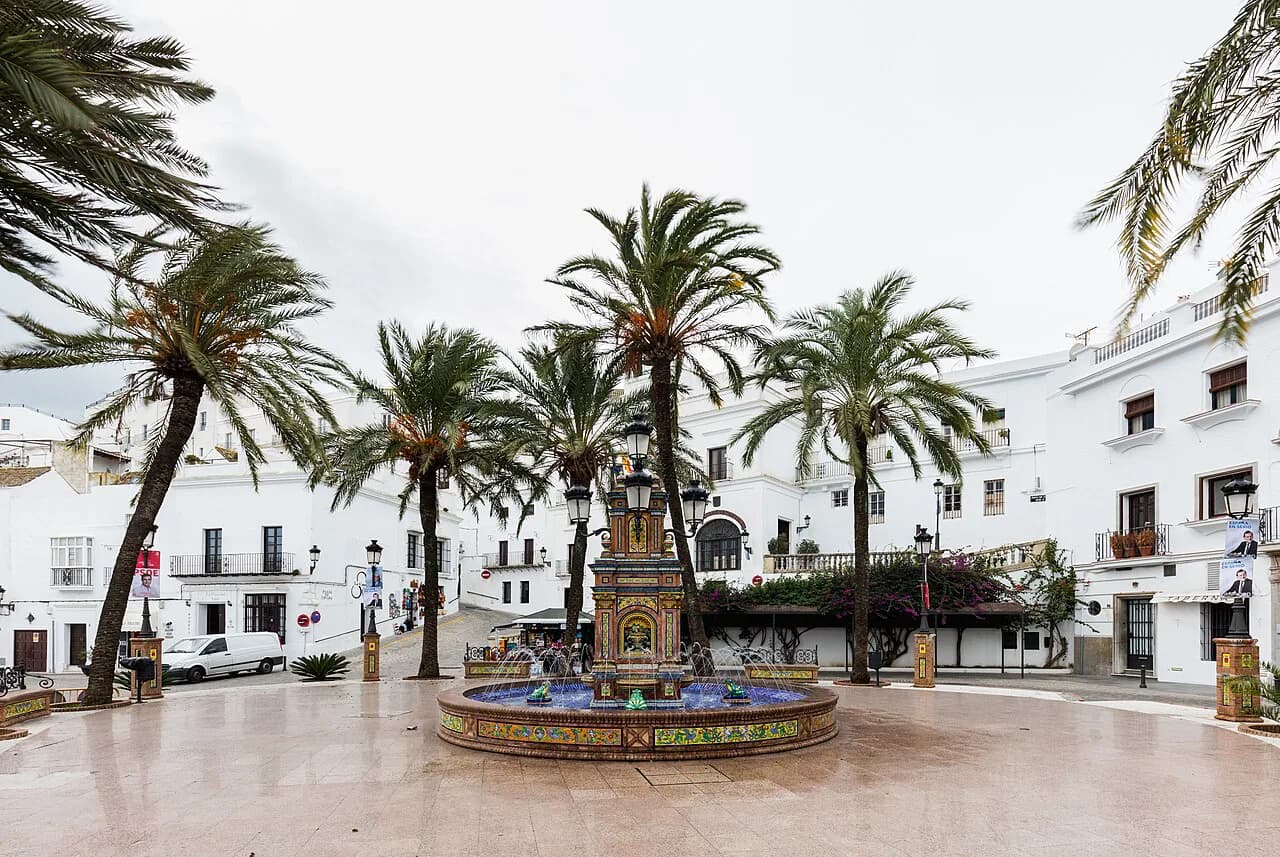
The Plaza de España is the natural first stop: the widest, busiest space in town, ringed by bars and terraces, with tall palms, bougainvillea and the tiled Fuente de los Pescaítos. It has hosted public festivities since the fifteenth century, and the fountain as you see it dates from 1955. Look for the Casa del Mayorazgo, an eighteenth-century building that gives the square its most photographed facade.
For the classic view down onto the square, take the short mirador reached from Calle Sancho IV El Bravo, a few minutes' detour that gives the quickest frame in town. Do it before the light hardens and the white walls start to glare.
Calle Nuestra Señora de la Oliva and the Museo de Vejer
From the plaza, walk Calle Nuestra Señora de la Oliva, one of the town's most handsome streets and the address of the Palacio del Marqués de Tamarón, an eighteenth-century townhouse that holds the Museo de Vejer. The museum is the best single stop for making sense of the layers under your feet, and its collections trace the town from its earliest human presence through the cultures that followed.
Entry to the Museo de Vejer costs 2 EUR, with free admission on Thursdays; it opens Monday to Saturday from 10:00 to 14:00 and 17:00 to 20:00, and is closed on Sundays. The split hours mean the middle of the day is a gap, so either go before lunch or come back in the late afternoon.
The medieval walls and the old gates
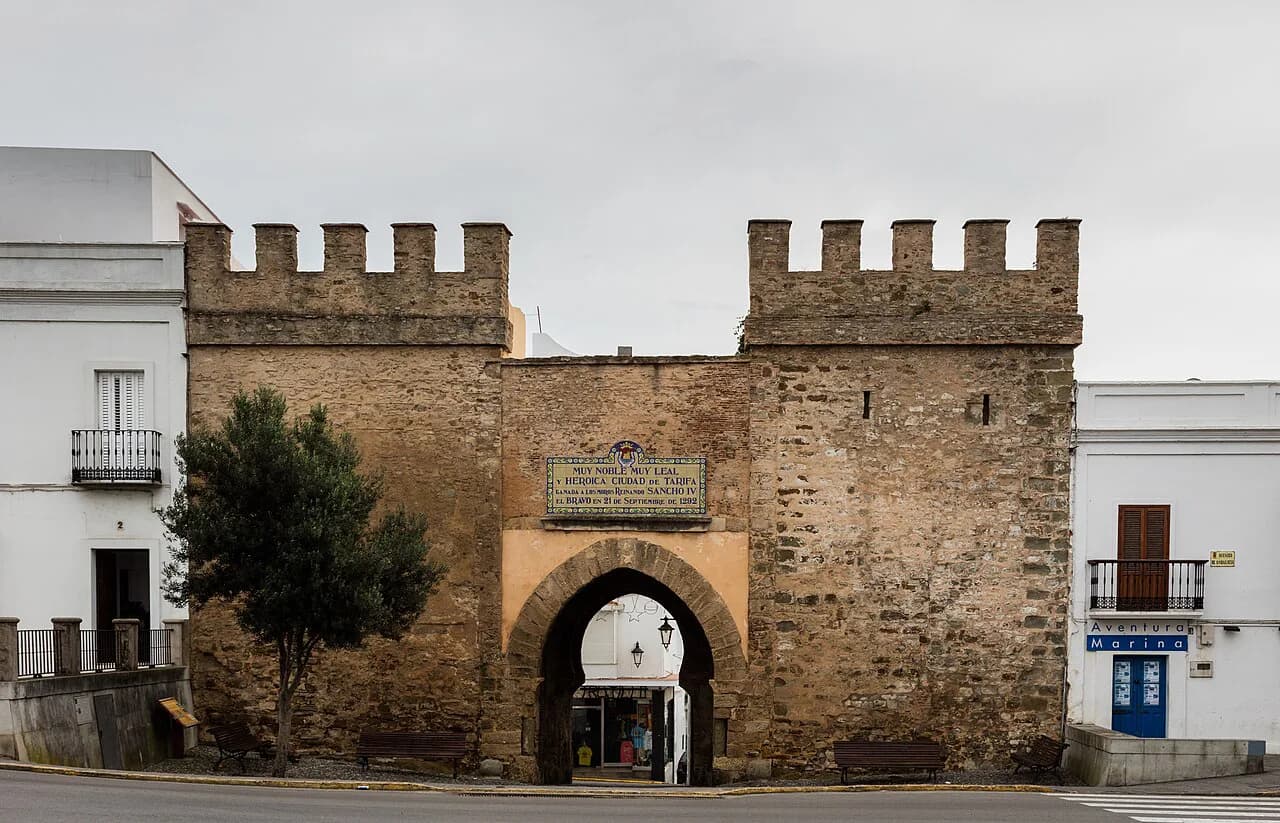
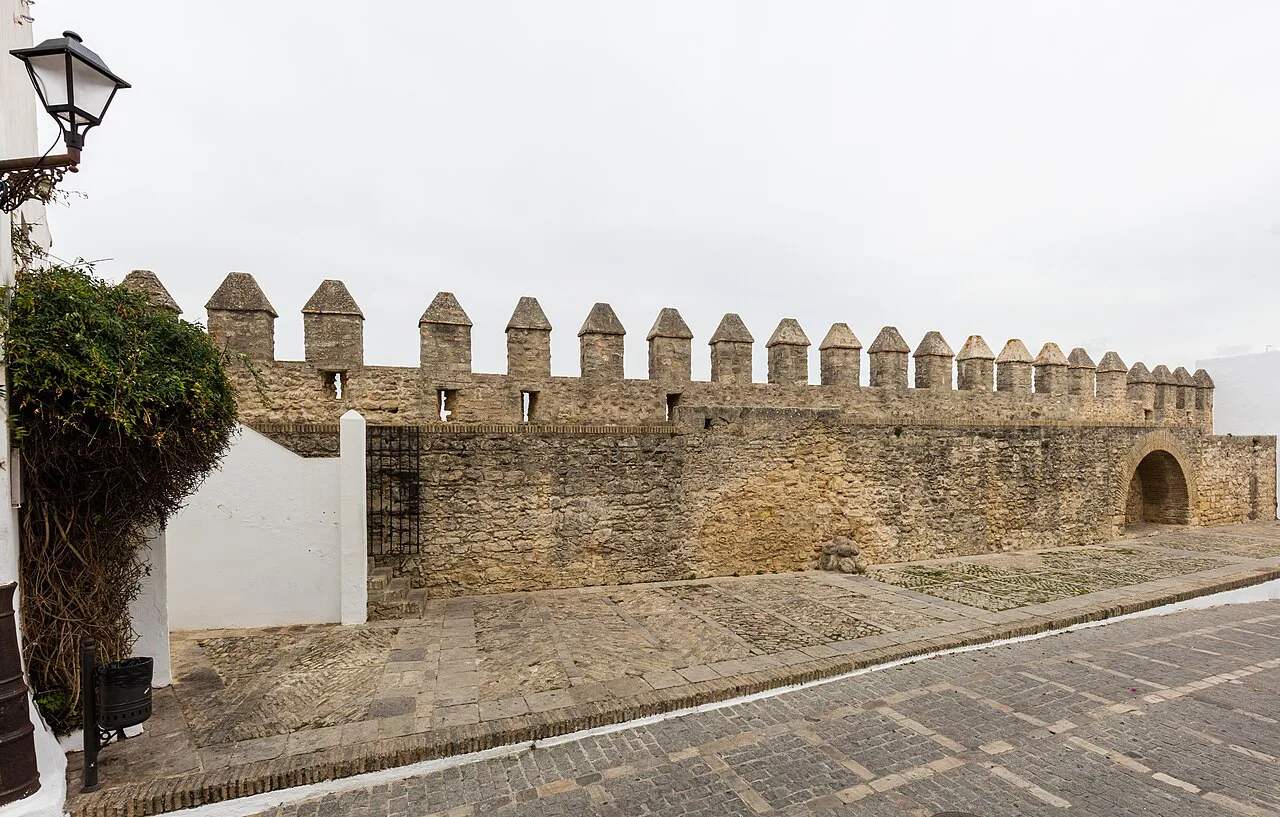
Vejer's medieval walls are not a single promenade but fragments woven into houses and streets, and the old gates are the clearest way to read them. Passing through a gate rather than around it is the point: each arch frames the lane beyond and marks the edge of the historic core. Look for stretches of wall between the Plaza de España and the castle as you climb.
Several old entrances survive in use, including the Arco de la Puerta Cerrada on the way into the Judería and the Arco de las Monjas beside the convent. Treat them as waypoints on the route rather than separate sights, and you will cover the defences as part of the walk.
The Castillo de Vejer at the highest point
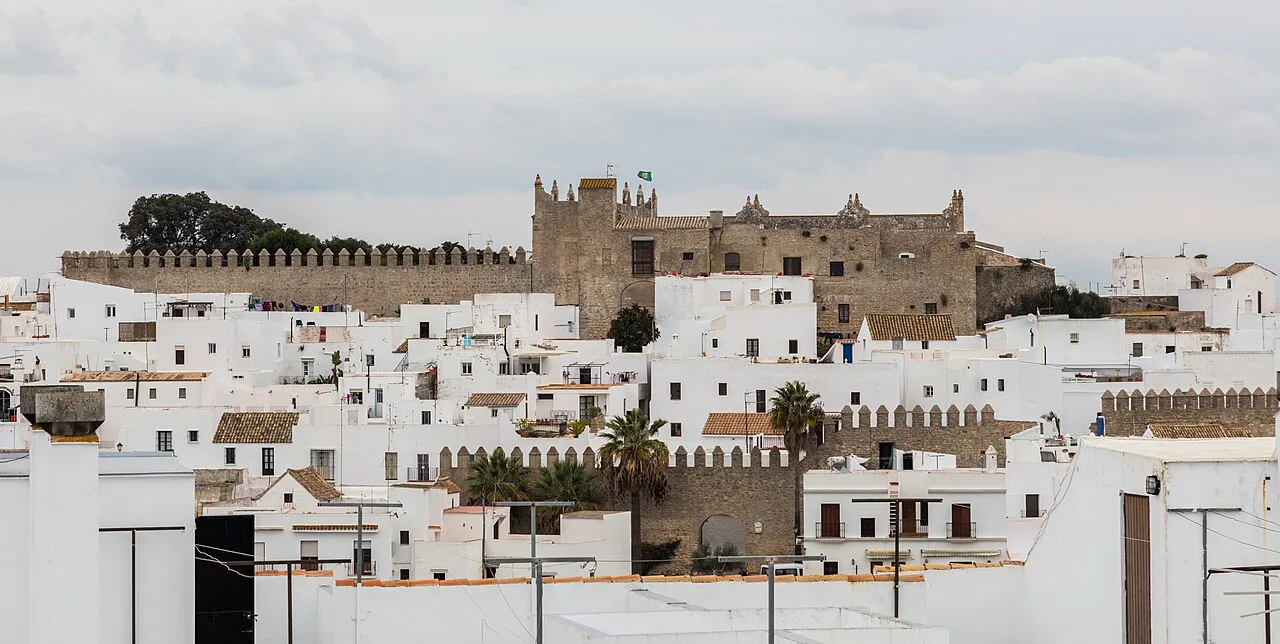
The castle occupies the crown of the hill, with origins in the tenth and eleventh centuries and a later chapter as a residence of the Duque de Medina Sidonia in the fourteenth century. Come for the position as much as the masonry: from the top of the town the rooftops fall away towards the coast. The surviving walls and the enclosure tell you more about how Vejer was defended than any single room.
Keep the castle as the high point of the walk in both senses, then descend towards the church; doing it the other way round leaves you with the stiffest climb at the end.
Iglesia de El Divino Salvador
El Divino Salvador was built over a former mosque, and its fourteenth- and fifteenth-century fabric mixes Gothic and Mudéjar elements, which is why it reads differently from a straightforward parish church. Walk round the outside as well as in, since the older masonry shows where the building was adapted rather than replaced. It sits close to the castle, so the two fit naturally together.
The Judería, the arches and the blue door
The Judería is the quarter to slow down in: whitewashed lanes, craft shops and galleries, and the Arco de las Monjas next to the Convento de las Monjas Concepcionistas. The famous blue door that fills social media feeds is in these lanes, and it is a photo stop rather than a sight with a queue system. Wander without a fixed line and you will find the patios and corners the route cannot prescribe.
La Cobijada and its mirador
La Cobijada is the statue honouring the women of Vejer, dressed in the town's distinctive head-covering, and it doubles as one of the best viewpoints over the rooftops. Reach it from the Plaza de España by climbing Calle Costanilla and Reyes Católicos. Go late in the day if you want the soft light on the white walls, and keep the stop short so the climb stays worthwhile.
Convento de Nuestra Señora de la Concepción
The convent of the Concepcionistas was founded in 1552 and holds the Museo Municipal de Costumbres y Tradiciones, along with crypts and chapels that show the town's religious and domestic life. It is the quieter counterweight to the castle: less about defence, more about how Vejer lived. Combine it with the Judería, which is next door in practical terms.
Windmills, La Corredera and the Rincón del Beso
The windmills stand in the Parque Municipal Hazas de Suerte, a municipal park on the edge of town that gives you the long view back over the white houses. La Corredera is the other panoramic stop, and the Rincón del Beso is the small corner people seek out for photographs. These are short visits, best tacked onto the end of the walk rather than made into destinations of their own; the same is true of the La Cobijada mirador back among the lanes.
If you have a car, the Acueducto Romano de Santa Lucía is the one sight outside the centre worth the drive, and it is the reason to keep an hour spare after the town.
A walking order for half a day
Run the route like this: Plaza de España and the mirador off Calle Sancho IV El Bravo, then Calle Nuestra Señora de la Oliva and the Museo de Vejer, the walls and gates, the castle, El Divino Salvador, the Judería and Arco de las Monjas, La Cobijada, then the windmills and La Corredera on the way out. This puts the climbing early and the viewpoints late, which suits both legs and light.
Half a day covers the core comfortably, and a full day lets you add the museum at the Thursday free slot, the convent and the aqueduct without rushing. If you are basing yourself in the provincial capital, spend a day in the Cádiz Old Town first, then come inland: the quiet lanes and the rooftops here contrast sharply with the city's tight grid of squares.
How Vejer fits a short break from the coast
Vejer sits about 8 km from the coast, which makes it an easy pairing with Conil de la Frontera and the beaches at El Palmar and Caños de Meca when the levante wind makes the shore unappealing. Park outside the old centre and walk in, because the lanes were not built for cars and the climb is the price of the views.
For a wider swing around the province, plan the city days around our guide to Cádiz: the old town on its sandbar, quarter by quarter and keep Vejer as the hill-town counterweight, reached by road from the coast. If your trip continues south towards the strait, the same hilltop white-town logic carries on at Tarifa.
Build Vejer into a Cádiz itinerary
Vejer rewards a half-day spent on foot in a fixed order, with the museum visit timed around the Thursday free slot or the 10:00–14:00 morning window. Keep the car for the Acueducto Romano de Santa Lucía and park outside the walls. Admission and opening hours for the castle, church and convent are not fixed here, so check the notices at each door before committing the afternoon.
Explore more Cádiz guides
Frequently Asked Questions
How do I get from Cádiz to Vejer de la Frontera?
Vejer lies inland from the Cádiz coast, roughly 8 km from the shoreline, and is normally reached by road. Timetables for the day you travel are not fixed here, so check current bus operators before planning connections, as services and journey times vary.
What should I see first in Vejer?
Start at the Plaza de España, with the Fuente de los Pescaítos, then take the short mirador off Calle Sancho IV El Bravo before climbing Calle Nuestra Señora de la Oliva towards the museum, walls and castle.
Sources
Notes for your next Spanish town break
Optional updates to our guides.
You might also like
Continue reading
More guides you'll find useful