Things to Do in Salamanca: Plazas, Cathedrals and Monuments
Plan a Salamanca short break: Plaza Mayor, the two cathedrals, the university facade and Casa Lis, linked in one walking loop with honest trade-offs.
On this page
Salamanca's essential sights fit into a single, compact walking loop that starts and ends at the Plaza Mayor, taking in the Casa de las Conchas, La Clerecía, the university, both cathedrals, Casa Lis, the Convento de San Esteban and the Roman bridge. The old town is small enough that you walk between plazas, palaces, patios and viewpoints without ever needing a bus or taxi. This guide sets out the monuments in the order they connect on foot, names the small stops that most lists skip, and sets out the realistic trade-off between a one-day visit and a weekend.
What to see in Salamanca: the essentials at a glance
The old town's headline set is short: the Plaza Mayor, the university facade, the two cathedrals joined as one complex, the Casa de las Conchas and the towers of La Clerecía. Add the Museo Casa Lis, the Convento de San Esteban and the Puente Romano and you have the route most first-time visitors follow. The whole historic centre is a UNESCO World Heritage site, which helps explain why the stonework is so consistently well kept.
Beyond that core, Salamanca rewards slower walking: the Patio Chico between the two cathedrals, the Palacio de Anaya opposite, the Huerto de Calixto y Melibea, and the Torre del Clavero and Palacio de la Salina on the way back towards the plaza.
Plaza Mayor: the starting point and how the old town fans out from it
The Plaza Mayor is the natural place to begin, and it is worth more than the quick photograph most people give it. It is fully arcaded, Castilian in style and described by Miguel de Unamuno as an irregular quadrilateral that is nonetheless astonishingly harmonious. Visit it in daylight to get your bearings and again after dark, when the lighting changes its character entirely.
From the square, leave by the Corrillo and pick up Calle Meléndez, which runs almost immediately to the Casa de las Conchas and La Clerecía. That single turn takes you from the city's social centre into its monumental core in a couple of minutes, which is why the Plaza Mayor works so well as a fixed reference point for the day.
Calle Meléndez to the Casa de las Conchas and La Clerecía's towers
The Casa de las Conchas is a late fifteenth- to early sixteenth-century palace whose facade is covered in carved stone shells. They are there for two reasons: they were the emblem in the heraldry of the owner's wife, and they are the symbol of the Order of Santiago, to which Rodrigo Arias Maldonado belonged. It takes a few minutes to look at, and it sits directly on your route rather than requiring a detour.
Facing it across the street, the tall towers of La Clerecía belong to the Pontifical University and can be climbed via the Scala Coeli, an ascent that explains the building's history on the way up and opens views over the city at the top. Treat the climb as optional: it costs you time that the cathedral rooftops would otherwise take.
The University facade, the frog and the Escuelas Menores
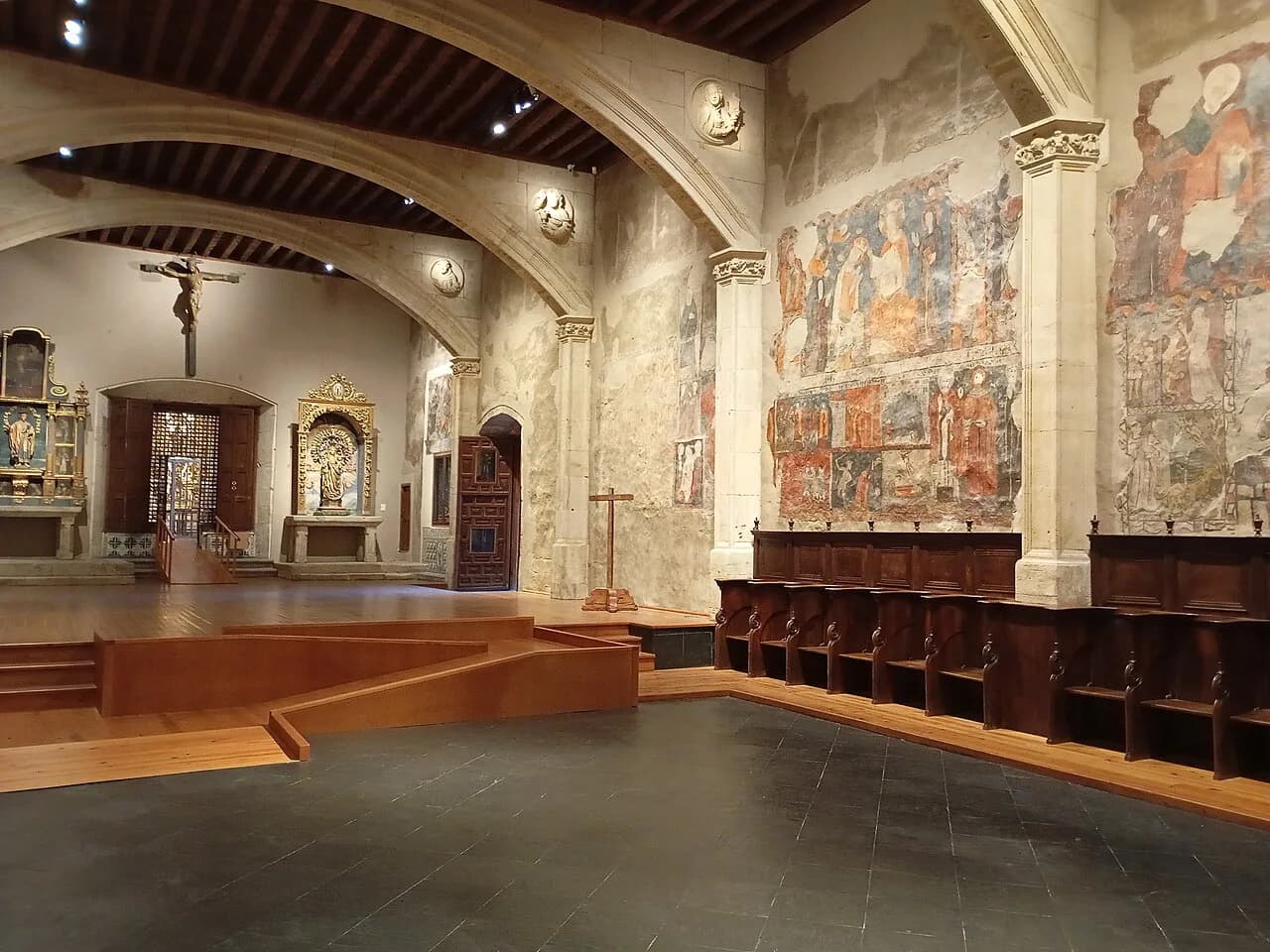
Turn the corner of La Clerecía onto Calle Libreros and the plateresque facade of the Universidad de Salamanca appears within a few metres. The carved frog on the facade is the city's best-known piece of hide-and-seek, and finding it is part of the ritual. Go through the door rather than stopping at the stonework: the cloister, the historic library, the chapels and the lecture rooms are what turn a photo stop into a proper visit.
Immediately beside the university is the Escuelas Menores, whose courtyard holds the Cielo de Salamanca, a painted ceiling fragment that is easy to walk past and worth the pause. The surrounding Patio de Escuelas is the historic heart of the university quarter, a space to slow down in rather than pass through.
Catedral Nueva and Catedral Vieja: one complex, two cathedrals
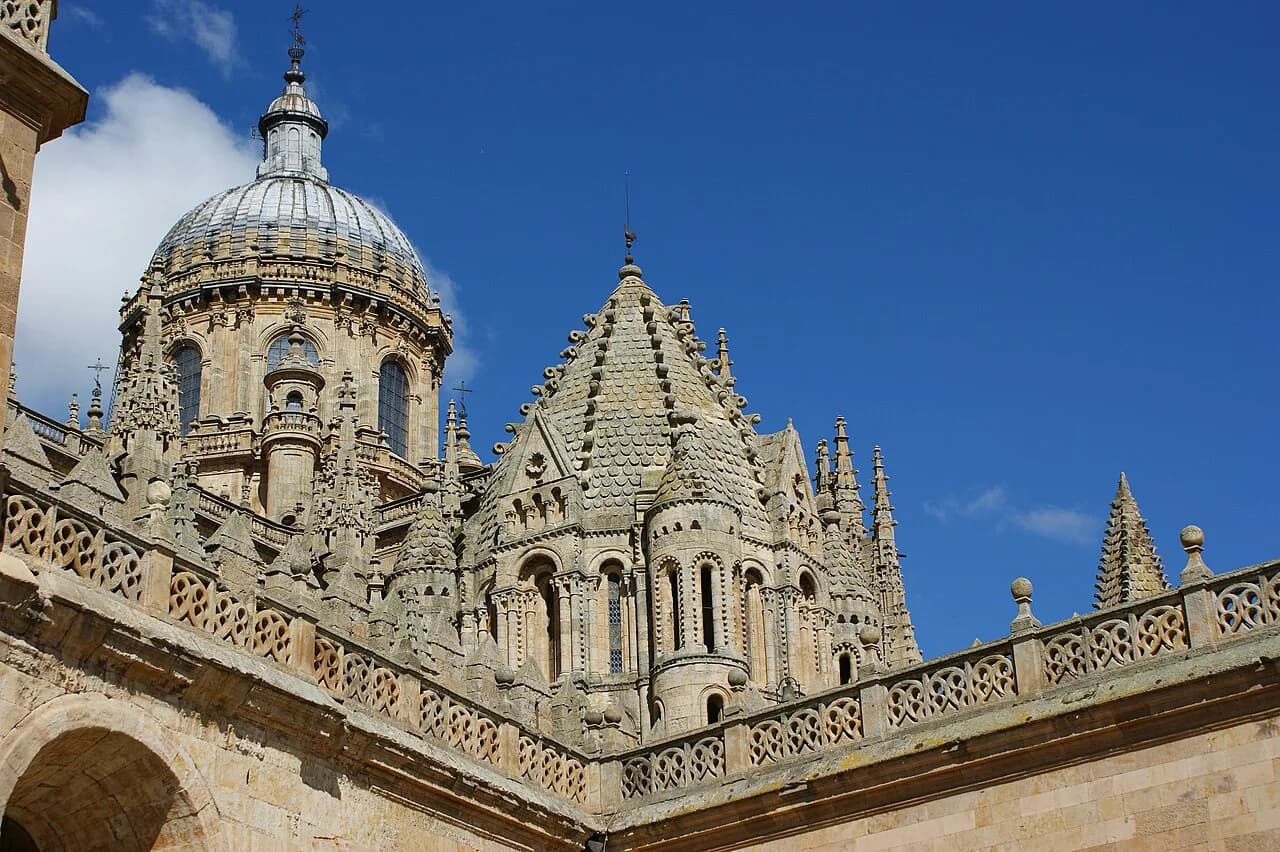
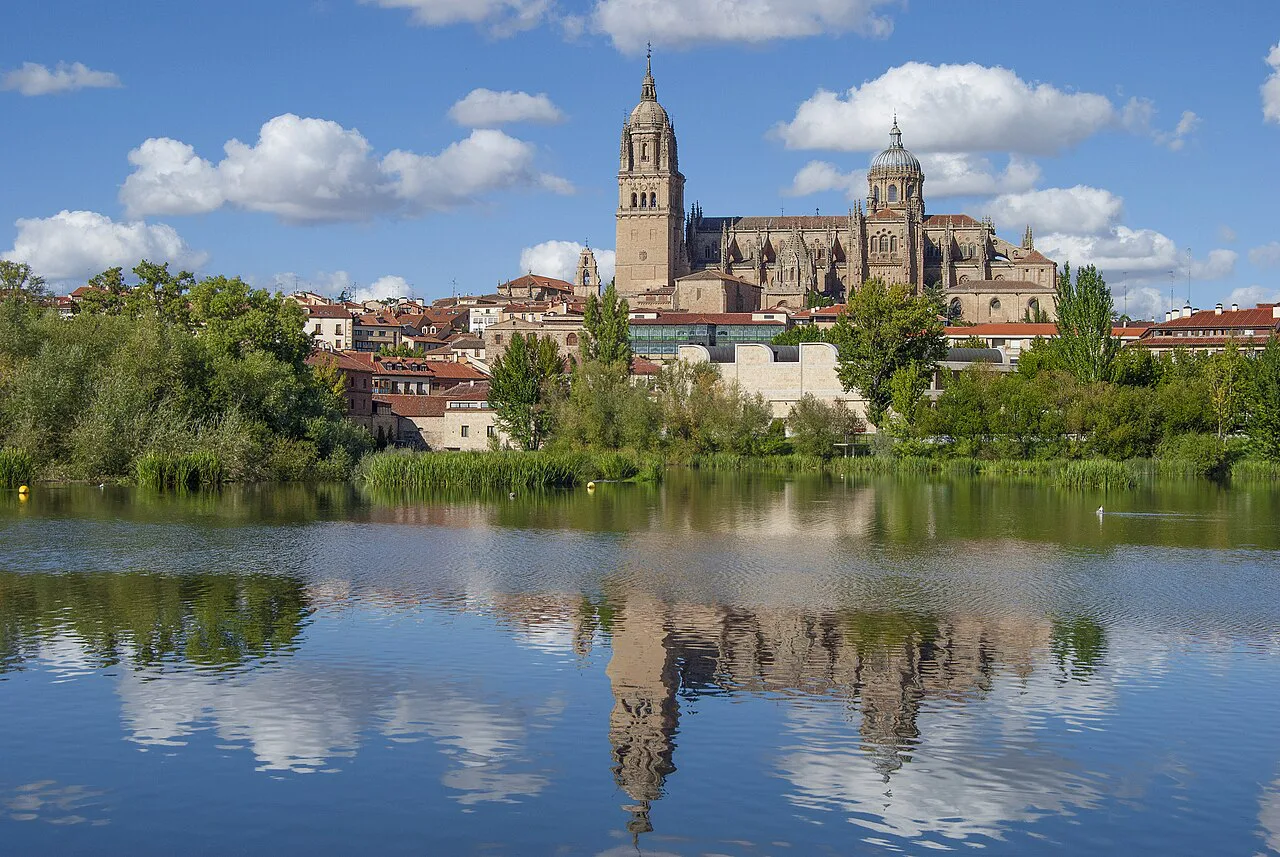
Salamanca has two cathedrals built against each other: the older Romanesque Catedral Vieja and the later Catedral Nueva, which layers Gothic, Renaissance and Baroque work into a single vast interior. They are visited as one complex, so budget a single block of time rather than two separate stops. On the Nueva's facade, the astronaut carved into the stonework is the modern counterpart to the university frog, and just as easy to miss.
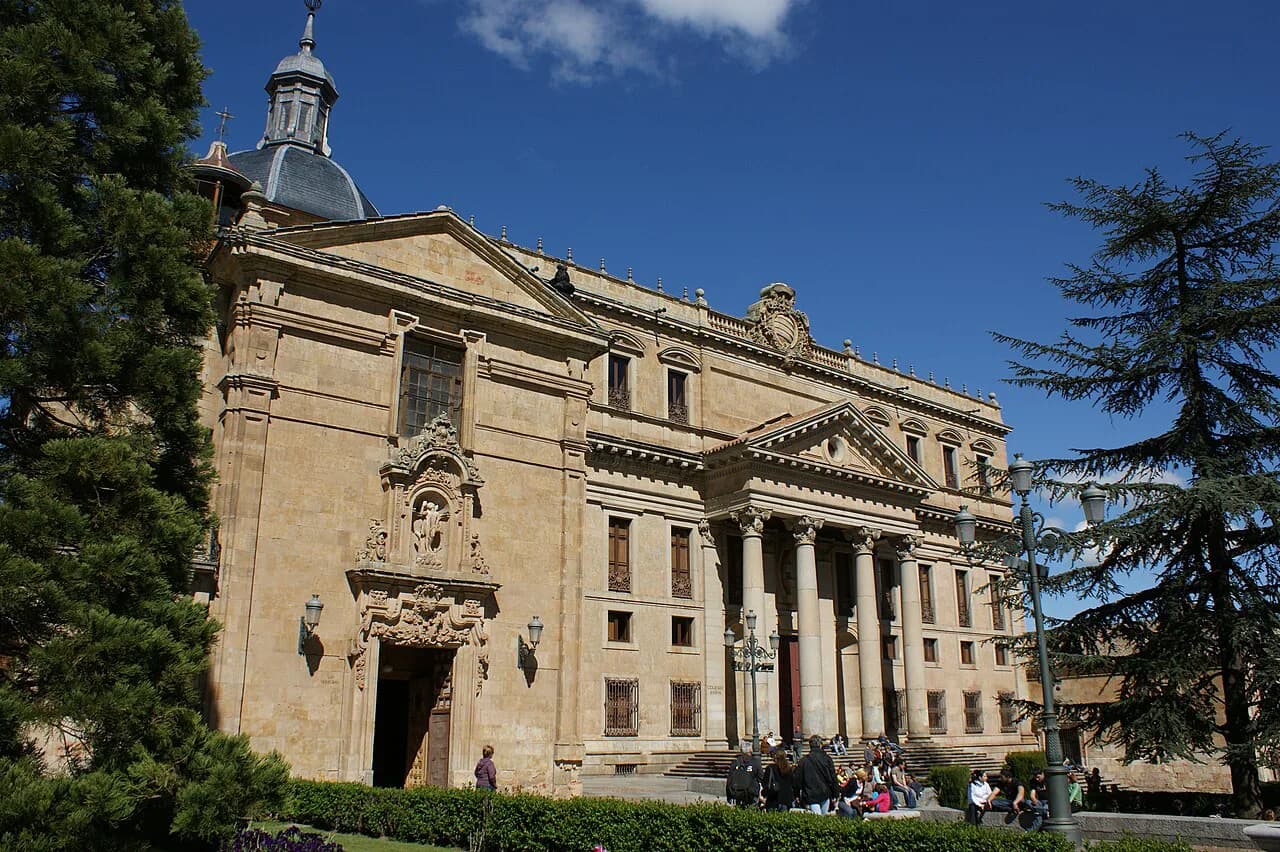
Between the two buildings lies the Patio Chico, a small enclosed space that most visitors rush past on their way to the next door. Directly opposite stands the Palacio de Anaya, now the philology faculty, and the grouping of the two cathedrals, the patio and the palace is one of the densest pieces of architecture in the city. Climbing the cathedral roofs is a separate visit and gives the best high-level view of the old town.
Huerto de Calixto y Melibea and the wall viewpoint
A few metres from the cathedrals, the Huerto de Calixto y Melibea is a garden named for the lovers in La Celestina. It is the one place in the centre where you get the Muralla, the Río Tormes and the cathedrals in a single view. Come here to sit down for ten minutes rather than to tick off another monument.
The viewpoint works best late in the day, when the light catches the golden stone that gives Salamanca its nickname. Shade in the garden also makes it a sensible midday pause in summer, when the exposed streets of the centre become uncomfortable.
Museo Casa Lis and its stained-glass south facade
The Museo Casa Lis is a Modernista and Art Déco house museum, and the collection inside is matched by the building itself. Its south facade, a composition of stained glass, is best seen from the street on your way down towards the river, and it justifies the small diversion even if you do not go in. This is one of the museums in Salamanca that suits a hot afternoon, when the sun outside makes an indoor hour worthwhile.
The Colegio San Ambrosio, home to the Centro de la Memoria Histórica, stands nearby and can be folded into the same stretch of walking. Between Casa Lis, the college and the descent towards the bridge, this is the least crowded part of the classic route.
Crossing the Puente Romano for the classic view back to the city
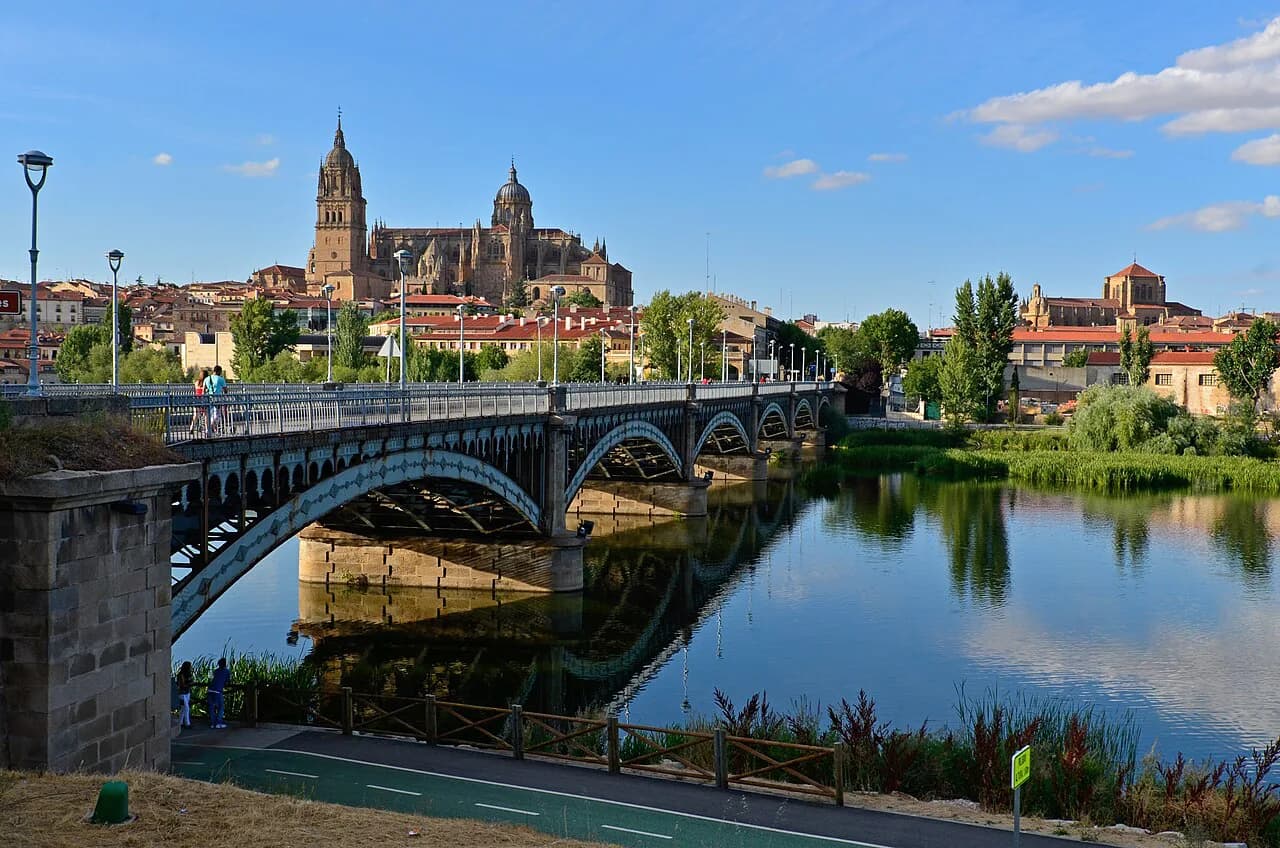
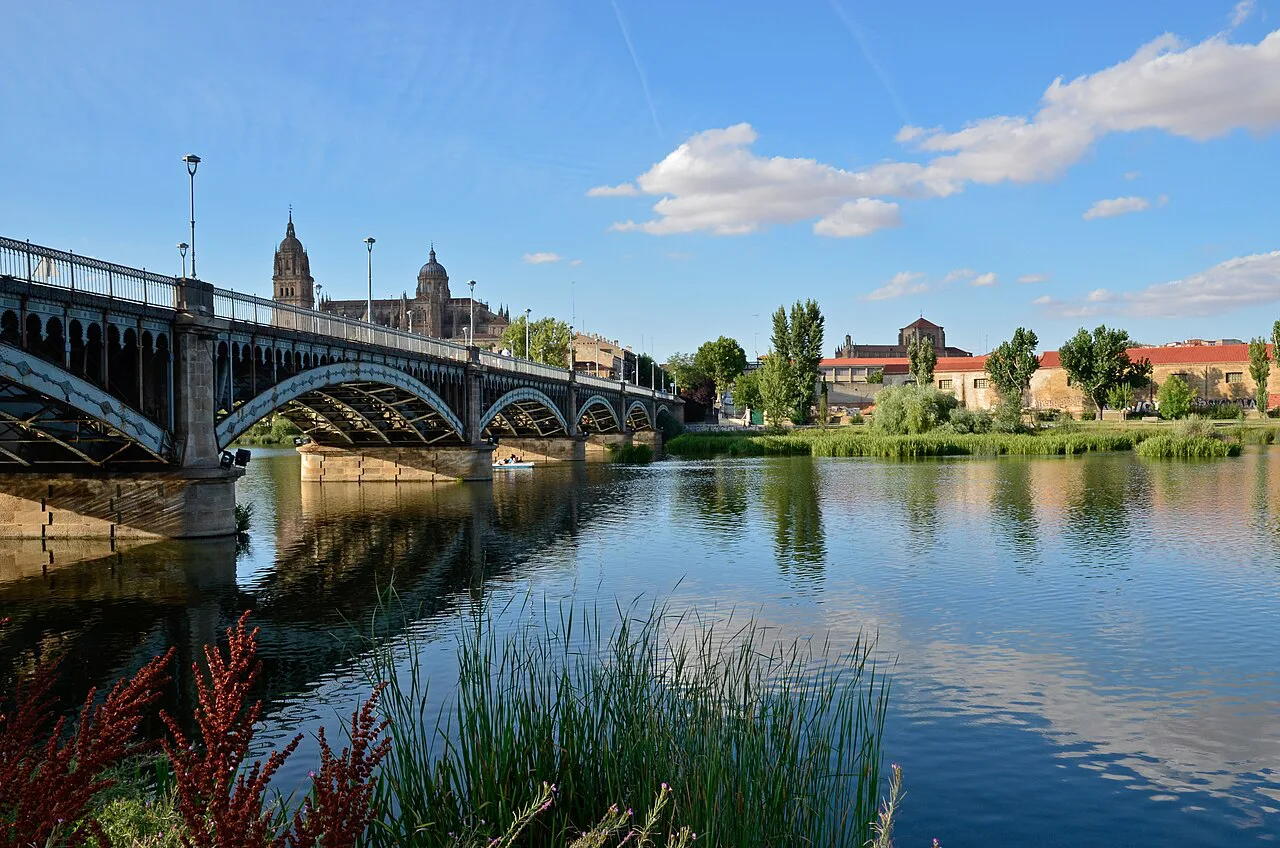
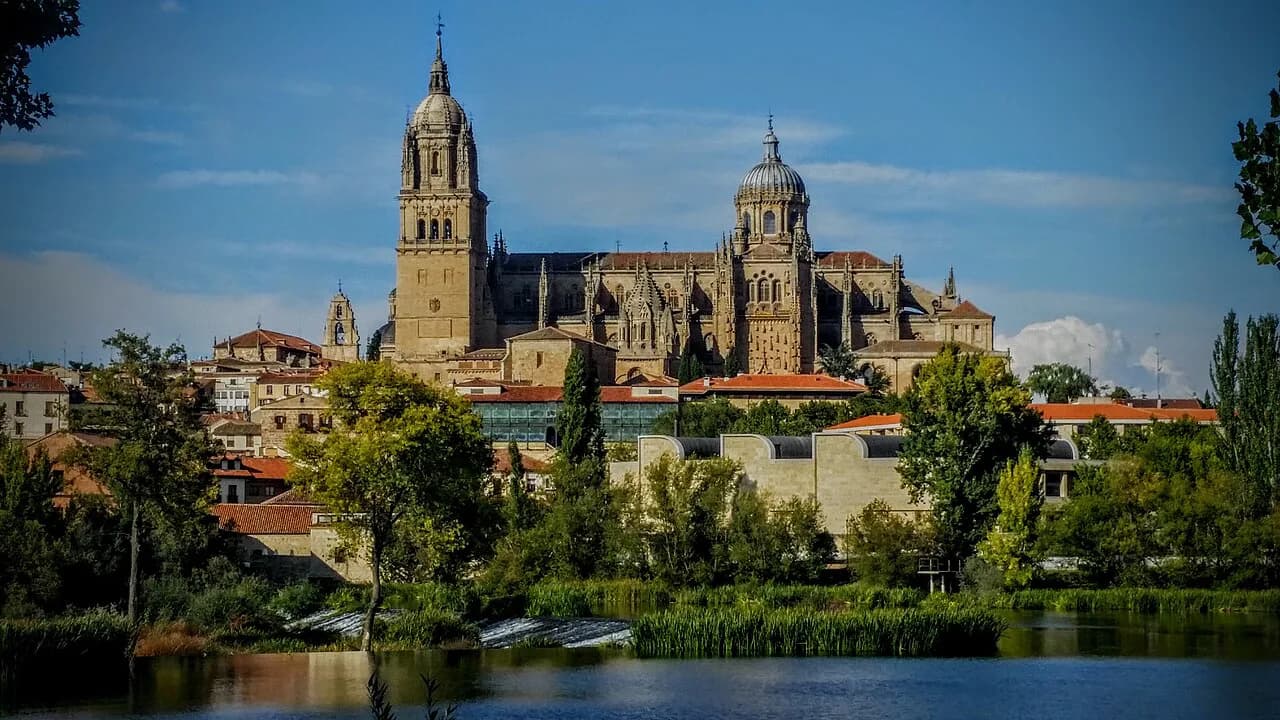
The Puente Romano, properly the Puente Mayor del Tormes, dates from the first century and has been altered several times since, making it one of the oldest structures in the city. Walk across to the far bank and turn round: the bridge runs back towards the city with the cathedral crowning the skyline behind it, one of the best-known views of Salamanca. That is the image of Salamanca most people take home.
The gardens on the opposite bank are the best place to stop, and the Iglesia de Santiago sits close to the city end of the bridge on your return. Crossing and coming back is a short walk, but it pulls you out of the dense centre and gives the day a change of scale.
Convento de San Esteban and Calle de San Pablo on the return leg
Rather than retracing your steps from the bridge, come back up Calle de San Pablo, where the Convento de San Esteban, the Dominican house, presents one of the richest church facades in the city. Climbing San Pablo on the return also brings you past the Torre de los Anaya, the Palacio de la Salina and the Torre del Clavero, though a single day rarely leaves room for all three.
Treat those last three as the honest trade-off of a one-day visit. If the light or your legs are going, pick one and leave the others for a return trip; Salamanca is a city that rewards a second look more than most.
Torre del Clavero, Palacio de la Salina and the Cueva de Salamanca
The Torre del Clavero is a late-medieval tower with a distinctive octagonal upper section, and the Palacio de la Salina is a Renaissance palace with a carved courtyard; both sit on the western approach back to the Plaza Mayor. The Cueva de Salamanca, the crypt beneath the Iglesia de San Cebrián, is the most atmospheric of the smaller stops, wrapped in legends about the devil teaching magic there.
None of these three takes long on its own, but together they can absorb the last hour of daylight. If your day is already full, the Cueva is the one to keep, because it adds a story to the walk rather than just another facade.
A one-day walking route in the order it actually works
Start at the Plaza Mayor, leave by the Corrillo onto Calle Meléndez for the Casa de las Conchas and La Clerecía, then follow Calle Libreros to the university facade and the Escuelas Menores. Continue to the two cathedrals and the Patio Chico, drop to the Huerto de Calixto y Melibea, then take in Casa Lis before crossing the Puente Romano. Return up Calle de San Pablo past the Convento de San Esteban and close the loop via the Torre del Clavero and the Salina palace.
That sequence keeps the walking continuous and avoids doubling back, which matters more than it sounds in a city built on low hills. It is a sequence, not a schedule: the order is what makes the day work, so let the length of each stop set the pace rather than the clock.
How much of Salamanca fits into a day versus a weekend
A single day covers the Plaza Mayor, the university, the cathedrals, one or two of the smaller monuments, Casa Lis, San Esteban and the bridge, but something has to give. The Palacio de la Salina, the Torre del Clavero and the Cueva de Salamanca are the usual casualties when time runs short. With a weekend, you can add the cathedral roofs, the Scala Coeli climb and the museum interiors without rushing any of them.
Salamanca also holds up as a standalone short break rather than an extension of a Madrid trip. The monuments warrant more than a few hours, and the pace of the old town is part of the point.
Getting around: Salamanca on foot and when you need a bus or taxi
Every monument on this route is within walking distance of the next, and the historic centre needs no transport at all. Save the bus or taxi for the arrival from the station or for a museum or viewpoint on the edge of town. Sturdy shoes matter more than any transport plan, because the streets are cobbled and the pavements uneven.
Orientate yourself with a Salamanca map before setting out, marking the Plaza Mayor as your fixed point. Then walk the loop clockwise or anticlockwise depending on where you are staying, rather than zig-zagging between landmarks.
Where Salamanca fits a Spanish short break
Salamanca works best as a city break in its own right: a two-night stay gives you the monuments at a civilised pace and leaves room for a slow evening in the plaza. It is a useful counterpoint to larger Spanish cities, with the same depth of architecture concentrated into a much smaller centre.
Travellers building a Spanish itinerary often pair a monumental inland city with one elsewhere, and the same walking-first approach applies elsewhere in Spain: the things to do in Alcúdia on Mallorca and the things to do in A Coruña on the Galician coast both reward the same unhurried, on-foot plan. Salamanca's advantage is density: everything on this page sits inside one historic core.
Practical trade-offs: midday heat, church services and packing the day
The most useful planning decisions here are about timing rather than tickets. Inland Castilian summers make midday walking uncomfortable, so use the middle of the day for an indoor stop such as Casa Lis or the university cloister and take the open streets in the morning and late afternoon. Churches in Spain can close to tourists during services, so check the notice at the door of each one rather than assuming it will be open when you arrive.
Beyond that, keep the day light: one museum, one climb and the outdoor loop is a full and satisfying programme. The city's monuments are close enough that you can leave something for the next morning.
Which central monuments to keep when the day is tight
If your time in Salamanca shrinks to half a day, keep the Plaza Mayor, the university facade and the two cathedrals, then walk down to the Puente Romano for the view back. Those four give you the city's scale, its scholarship and its skyline in the fewest steps.
With a full day, add Casa Lis and San Esteban, and accept that the Salina palace or the Clavero tower may wait. The whole loop is walkable, so the only real constraint is how long you linger in each place.
Explore more Salamanca guides
Sources
Notes for your next Spanish town break
Optional updates to our guides.
You might also like
Continue reading
More guides you'll find useful