Salamanca History: Roman, Medieval and Golden Age Sites You Can Still See
Salamanca's history told through the places still standing, from the Roman bridge and old cathedral to the Plaza Mayor and the university founded in 1218.
On this page
Salamanca's history is best read as a walk, because the city keeps one layer on top of another: a Roman bridge over the Tormes, twin cathedrals side by side, a university at work since 1218 and a Plaza Mayor raised between 1729 and 1755. This guide links each phase to a specific building, tower route or museum so the timeline has an address.
The order below follows the chronology rather than an alphabetical list, so you cross the river first and finish in the baroque square. The old town is compact enough that the sequence is a route, not a series of separate outings.
What Salamanca's history looks like on the ground
The city's monumental core is a UNESCO World Heritage ensemble built up from antiquity and the Middle Ages, and the Plaza Mayor is counted among the finest in Europe. That concentration is the practical point for a visitor: the periods sit within a short walk of each other rather than being spread across a modern city.
Treat the walk as a chronological route: river crossing, cathedral complex, university quarter, plateresque mansions, then the square. It gives you a reason to move in one direction and keeps you from doubling back through the busiest streets.
The name Salmantica: what earlier peoples left behind
The name has no single settled origin. Greek writers called the place Helmantiké, rendered as 'land of divination', while Ptolemy recorded Salmantica and traced it to a pre-Roman naming used by the vacceos, the people settled in the Duero basin.
What survives is the Latinised form Salmantica, itself an adaptation of an older name whose meaning is not securely known; a proposed link to a river ford rests on limited evidence. For a visitor this is useful framing rather than trivia: the city was already named before the Romans formalised it, and later layers were added on top.
The Puente Romano and the Tormes crossing
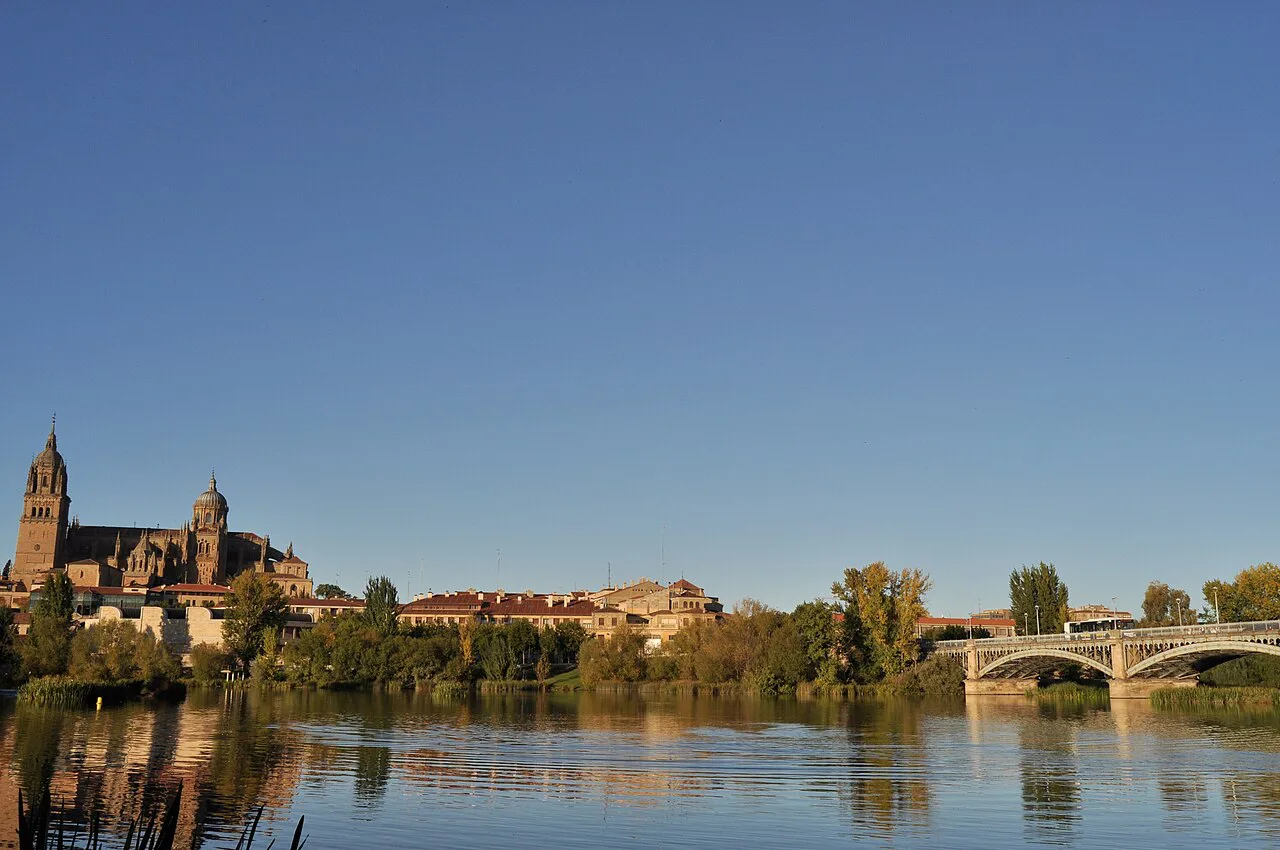
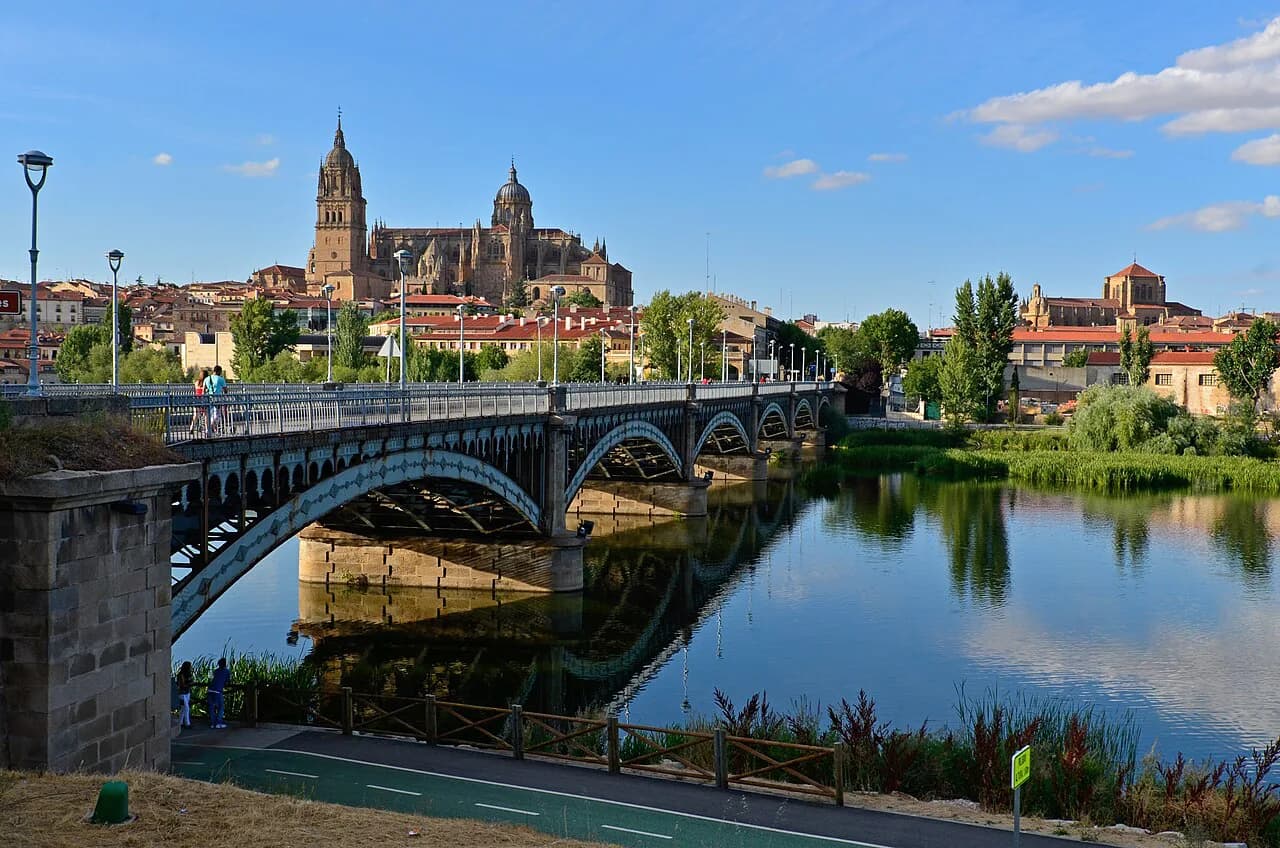
The Puente Romano over the Río Tormes is the oldest structure on the walking route and remained the only approach into the city until the early twentieth century. Start here to see why the settlement sits where it does: the crossing came before the cathedral.
From the bridge the riverbank path runs along both banks of the Tormes, so you can either cross straight into the old town or follow the water for a stretch first. Choose the crossing if your time is short, since the cathedral and university quarter are the denser part of the day.
The old and new cathedrals standing side by side
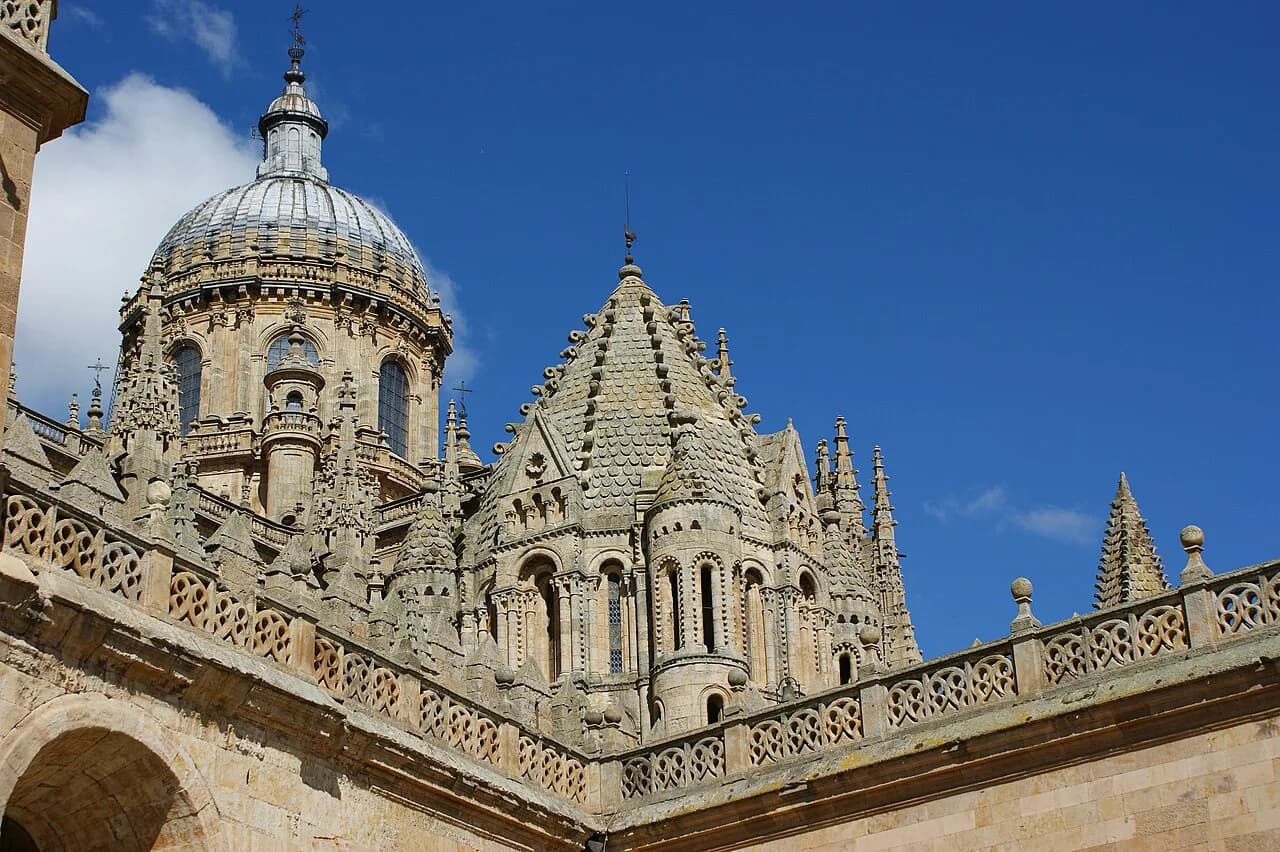
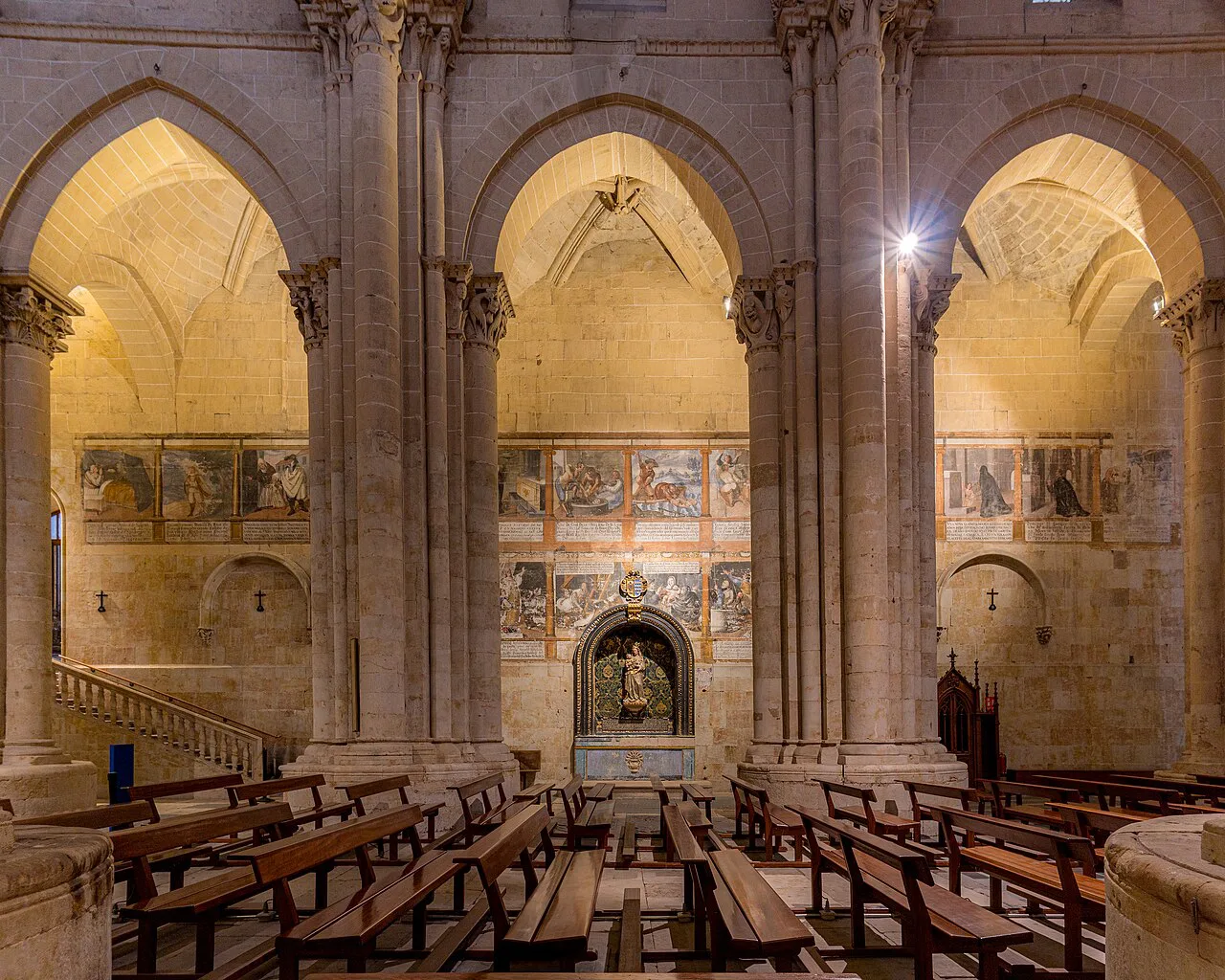
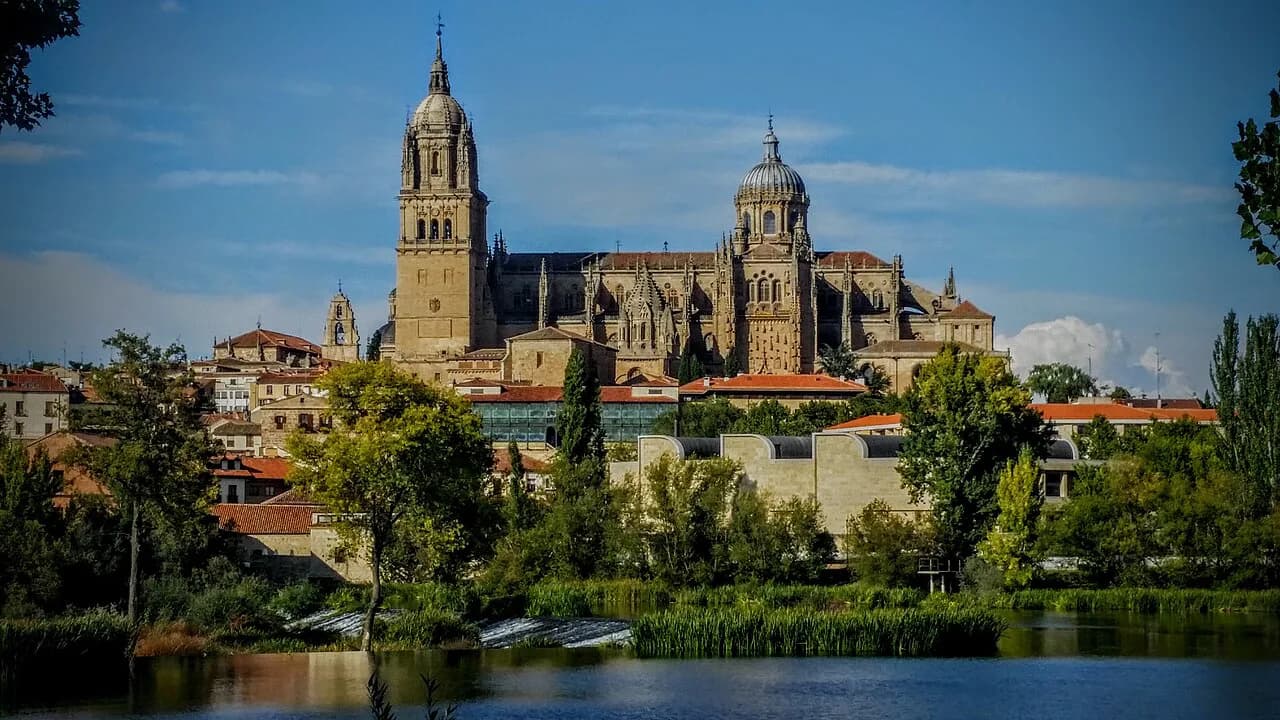
The Catedral de Salamanca is unusual in retaining two temples joined together: the Catedral Vieja and the Catedral Nueva stand attached, one against the other. Seeing both in sequence makes the city's medieval-to-Renaissance shift visible in stone rather than in dates.
Allow the cathedral complex a proper block of time and check the visitor arrangements for the day you plan to go, since services can take priority over tourism. The twin structure means you are looking at two buildings and two construction campaigns, not one church with an annex.
The University of Salamanca and the historic university building
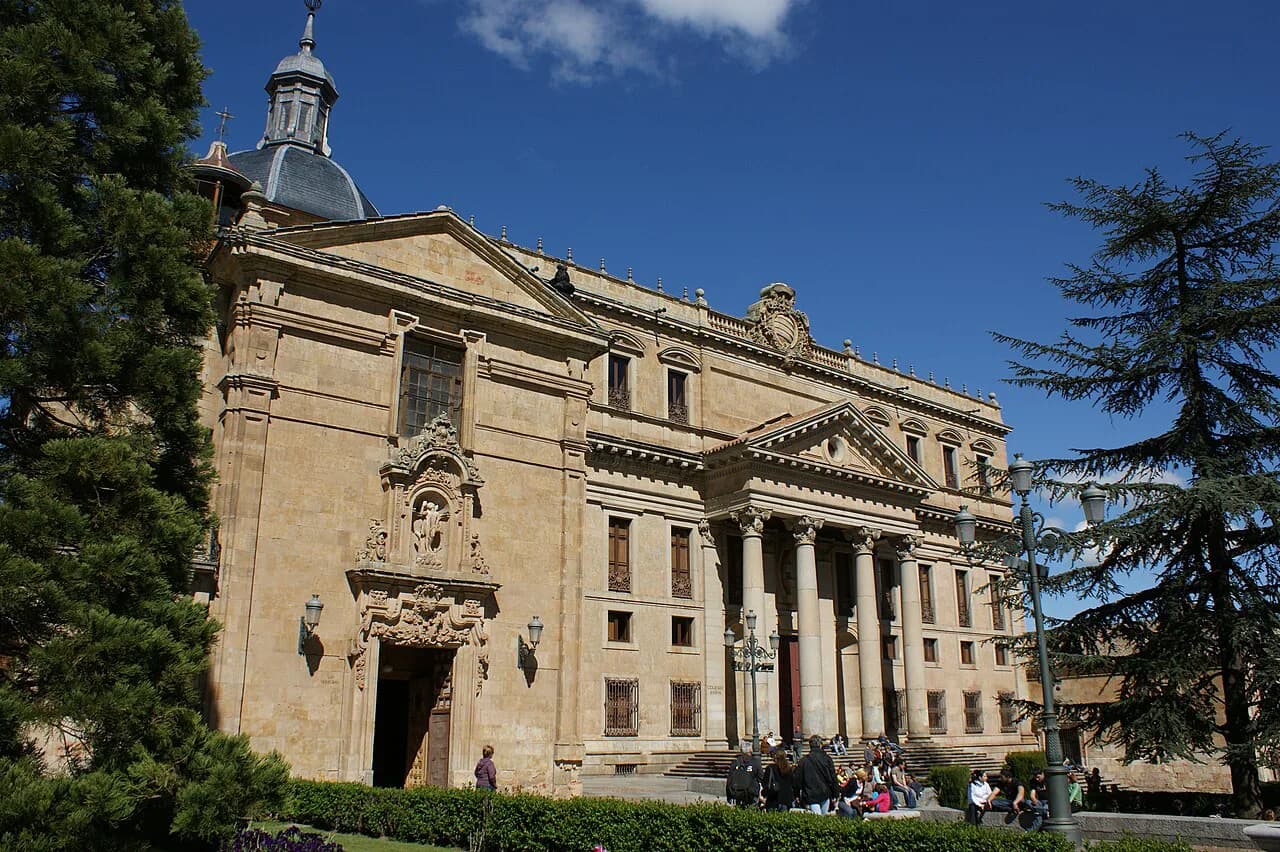
The university was created in 1218 and is the oldest still operating in Spain; with Bologna and Paris it belongs to Europe's earliest universities, and Salamanca was the first to hold the title Universitas. The Edificio Histórico keeps its historic rooms in use and receives visitors, which is why the university is a sight rather than a backdrop.
The historic building is the point where the city's reputation for learning becomes concrete, so put it directly after the cathedrals in your route. The university's heritage is spread across several emblematic buildings, so expect the visit to extend beyond a single courtyard.
Casa de las Conchas, Palacio de Monterrey and the plateresque streets
The Casa de las Conchas is a late-Gothic mansion from the time of the Catholic Monarchs that mixes Gothic, Mudéjar and other forms, and its carved shell facade gives the street its identity. The Palacio de Monterrey, a few metres from the Plaza Mayor on the Plaza de Monterrey, is one of the reference buildings of the plateresque style.
Walk between the two rather than treating them as separate stops; the pleasure is the sequence of carved stone facades on the way. This stretch is where the Golden Age city is most legible, and it needs no ticket to appreciate from the street.
The Plaza Mayor: the baroque square built between 1729 and 1755
The Plaza Mayor is the principal monumental space in the city and one of the great achievements of Spanish baroque, constructed between 1729 and 1755. Its unity of design is the reason it works as the end point of a historical walk: the earlier periods are irregular and layered, while this square is a single, deliberate scheme.
Use the square as your orientation point, since it anchors the old town and the surrounding streets lead off it in every direction. For the full picture of what surrounds it, work through the wider Things to Do in Salamanca and pick the monuments that match the periods you care about.
Where the city's past is displayed: museums and collections
The Museo del Cerro de San Vicente opened in 2025 as a contemporary, interactive exhibition space on the city's earliest settlement, which makes it the natural place to start if you want the deep layers explained before you walk them. Pair it with the monuments rather than substituting it for them.
The Museo de Historia de la Automoción was among the first museums in Spain devoted to the history of the car and holds more than 200 vehicles, so it suits a different appetite from the medieval route. The Museo Art Nouveau y Art Déco in Casa Lis, the most important modernist building in the city and a museum since 1995, sits between the two in period.
If your interest is collections rather than streets, browse the museums in Salamanca and slot one in for the hottest part of the afternoon. That is a better use of midday than pressing on through exposed squares.
Climbing the towers with Ieronimus and Scala Coeli
Two tower routes let you read the cathedral fabric from the inside. Ieronimus takes its name from Jerónimo de Perigueux, a French cleric and chaplain to the Cid, and runs through the interior of the cathedral towers; Scala Coeli, 'stairway to heaven', climbs the towers of the church of La Clerecía, the former Royal College of the Espíritu Santo where the Pontifical University now sits.
Do one tower route rather than both if you are short of time: they give different views of the same skyline, and the cathedral route keeps you inside the monument you have just visited. Pick the Clerecía if you want the cathedral seen from outside and above.
Reading the city in half a day: a walking order
Begin at the Puente Romano, cross into the old town, take the cathedral complex and the Edificio Histórico of the university, continue to the Casa de las Conchas and the Palacio de Monterrey, and end in the Plaza Mayor. That sequence follows the chronology and keeps the walking one-directional.
Half a day covers the exterior route comfortably; a tower climb or a museum adds a further block. Check a Salamanca map before you start so you can see how the Plaza del Corrillo and the Iglesia de San Martín sit between the university quarter and the square, which helps you cut through rather than around.
Practical trade-offs: closures, heat and church hours
Two constraints shape any historical walk here. Inland Castilian summers make exposed granite squares punishing at midday, so put interiors and tower stairs in the middle of the day and the open streets in the morning or evening; and churches that double as active places of worship can close to tourists around services, so treat any building as a possible short-notice skip and keep a museum in reserve.
Museums and monuments also vary in their weekly closing day, and it is worth matching your route to the day you actually have rather than assuming everything opens. Use the official Salamanca tourism site to confirm times and any booking requirement for the towers before you commit to an order.
Which Salamanca walk suits your day
If you have one block of time, take the chronological route: bridge, cathedrals, university, plateresque mansions, Plaza Mayor. It gives you the whole sweep of the city without a single backtrack, and every stop is a monument rather than a description of one.
If you have longer, split the history from the collections: one morning on the stones and one afternoon in the Museo del Cerro de San Vicente or the automobile museum, with a tower climb slotted in when the light is better. Browse the Salamanca attractions guide to line up the individual monuments in the order that suits your interests.
Frequently Asked Questions
Is the University of Salamanca the oldest university in the world?
It is the oldest still operating in Spain, created in 1218, and it belongs with Bologna and Paris among Europe's earliest universities. Salamanca was the first of them to hold the title Universitas, so the claim to fame is that specific distinction rather than simple age.
Why is Salamanca so famous?
For the density of its historic buildings: a Roman bridge, two cathedrals attached to one another, a working university founded in 1218, plateresque mansions and a baroque Plaza Mayor built between 1729 and 1755. The monumental core is a World Heritage ensemble, so the fame is architectural and academic at once.
Can you see the historical sites in Salamanca in a single walk?
Yes. The bridge, cathedral complex, university historic building, Casa de las Conchas, Palacio de Monterrey and Plaza Mayor form a continuous route through the old town, and half a day covers the exteriors at an unhurried pace. A tower climb or a museum adds a further block of time.
Sources
Notes for your next Spanish town break
Optional updates to our guides.
You might also like
Continue reading
More guides you'll find useful