Salamanca Old Town: Streets, Squares and Monuments to Walk
Walk Salamanca's old town in order: Plaza Mayor, the two cathedrals, the university, Casa de las Conchas and the Puente Romano, with tower climbs on the way.
On this page
Salamanca's old town is compact enough to walk in a single loop, and the natural place to start is the Plaza Mayor, the city's main monumental space and its meeting point. From there the route runs south to the cathedrals, east through the university quarter and Casa de las Conchas, then down to the Puente Romano over the Tormes and back past Casa Lis. This guide gives that walking order, explains how the pieces fit together and points you to the monuments that justify the detour.
Salamanca has been a UNESCO World Heritage site since 1988, and the historic centre is where that status is earned: golden stone, arcaded squares and a university founded in 1218 by Alfonso IX of León. The old town sits on a low hill above the Río Tormes, so the walk has a gentle descent and climb rather than flat ground. Allow the best part of a day if you want to go inside the main monuments as well as walk between them.
The Plaza Mayor: arcades, medallions and the clock
The Plaza Mayor is the old town's front room: a near-perfect rectangle built between 1729 and 1755, with arcades on all four sides and medallions of kings, writers and explorers set between the arches. Eight arches lead in from the surrounding streets, and the Ayuntamiento de Salamanca closes one side. Salamancans use the clock on its façade as the place to meet, so the square is busy at most hours and liveliest in the evening.
Treat the square as your orientation point rather than a single sight: walk the full perimeter once to pick out the medallions and the old shops trading under the arcades, then use it as the hub you return to between the western and eastern halves of the walk. The Ayuntamiento is not normally open to visitors, so plan on admiring the façade from outside unless you are in the city for an open day.
Two cathedrals treated as one visit
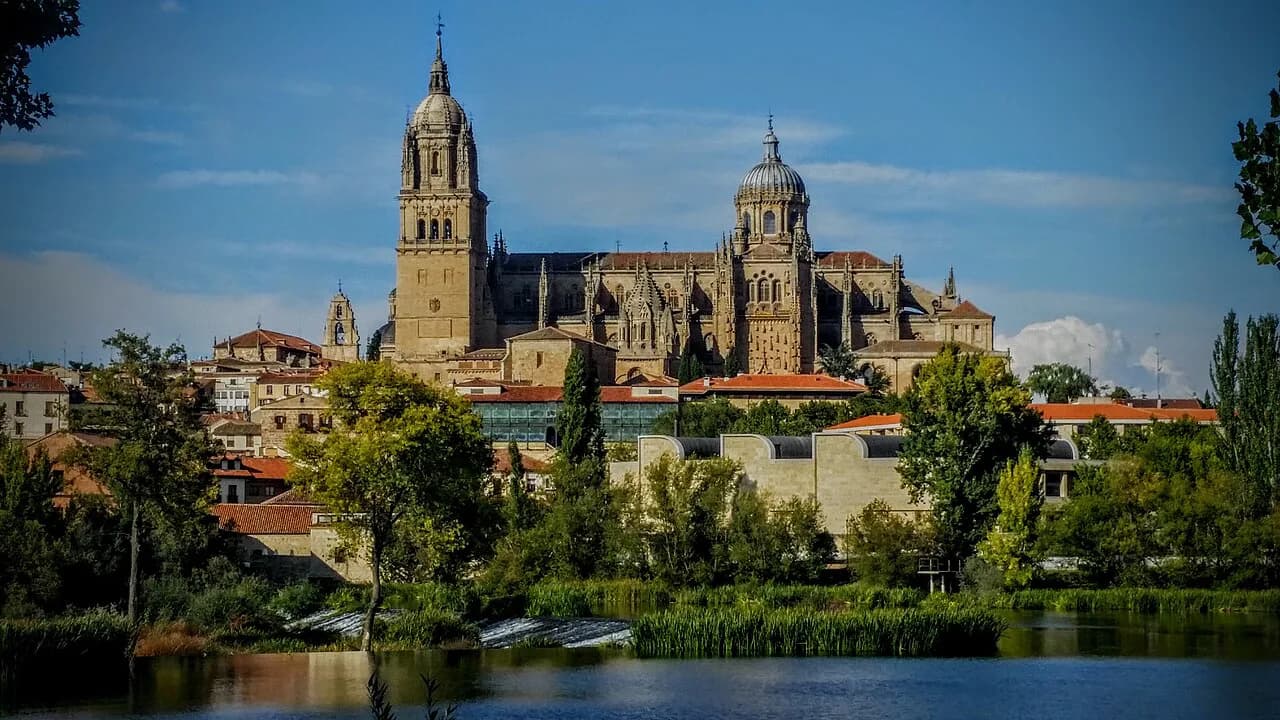
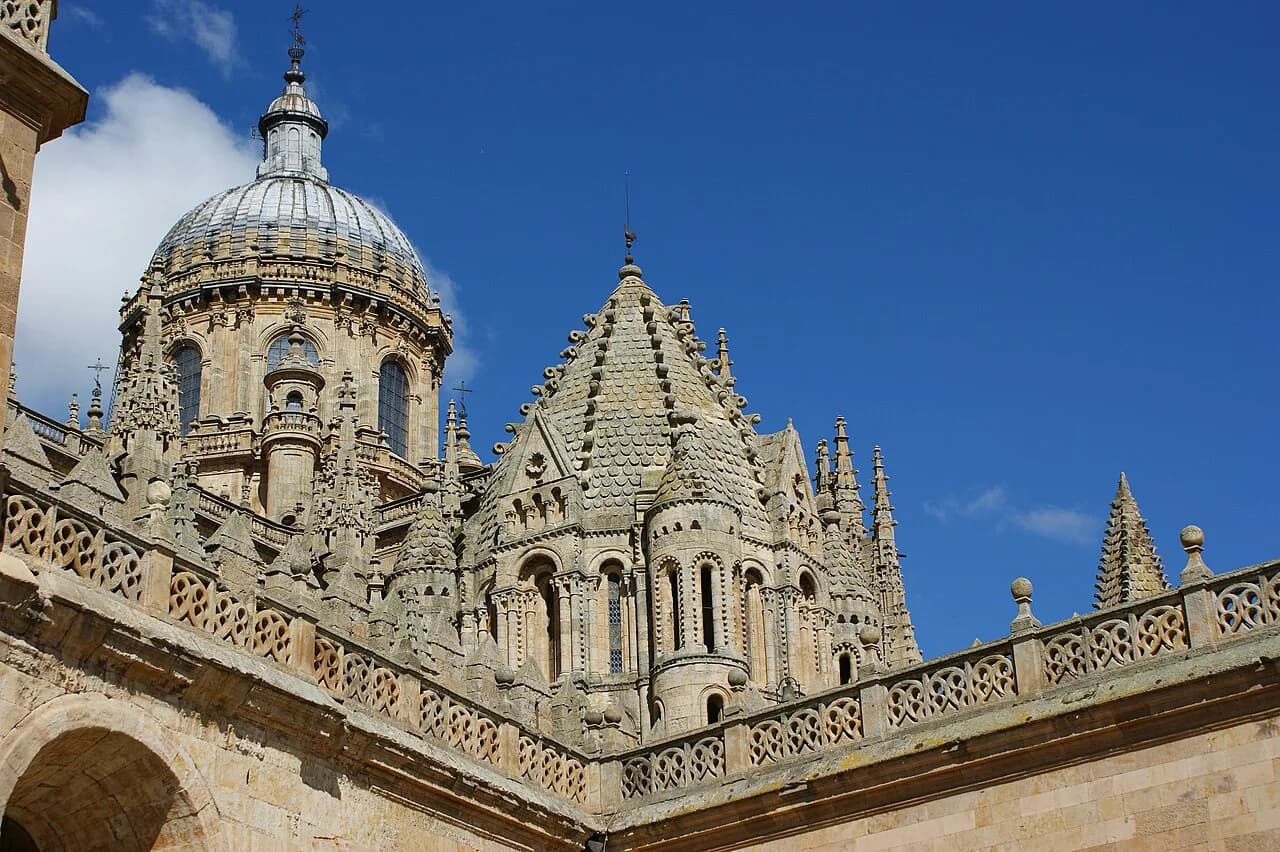
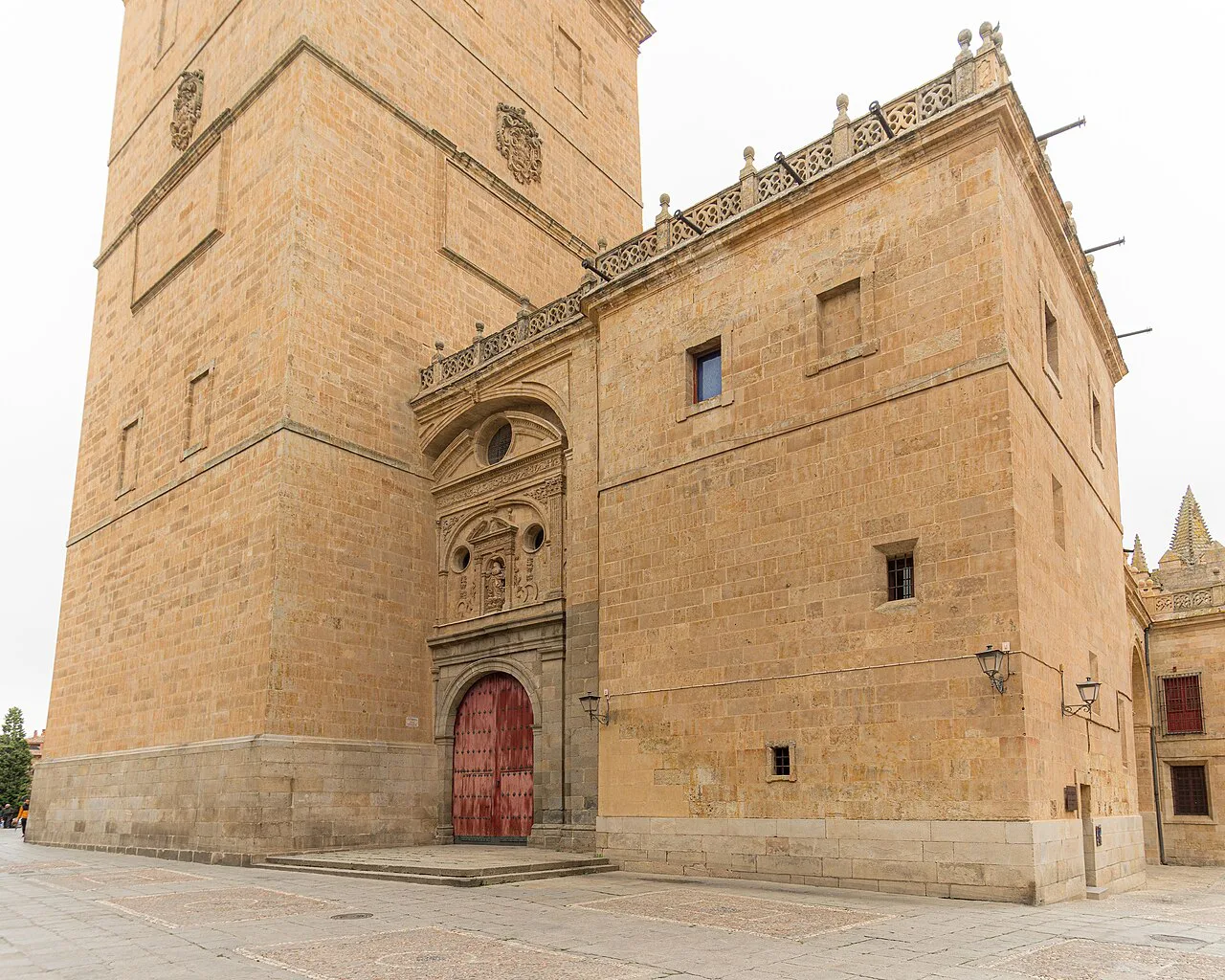
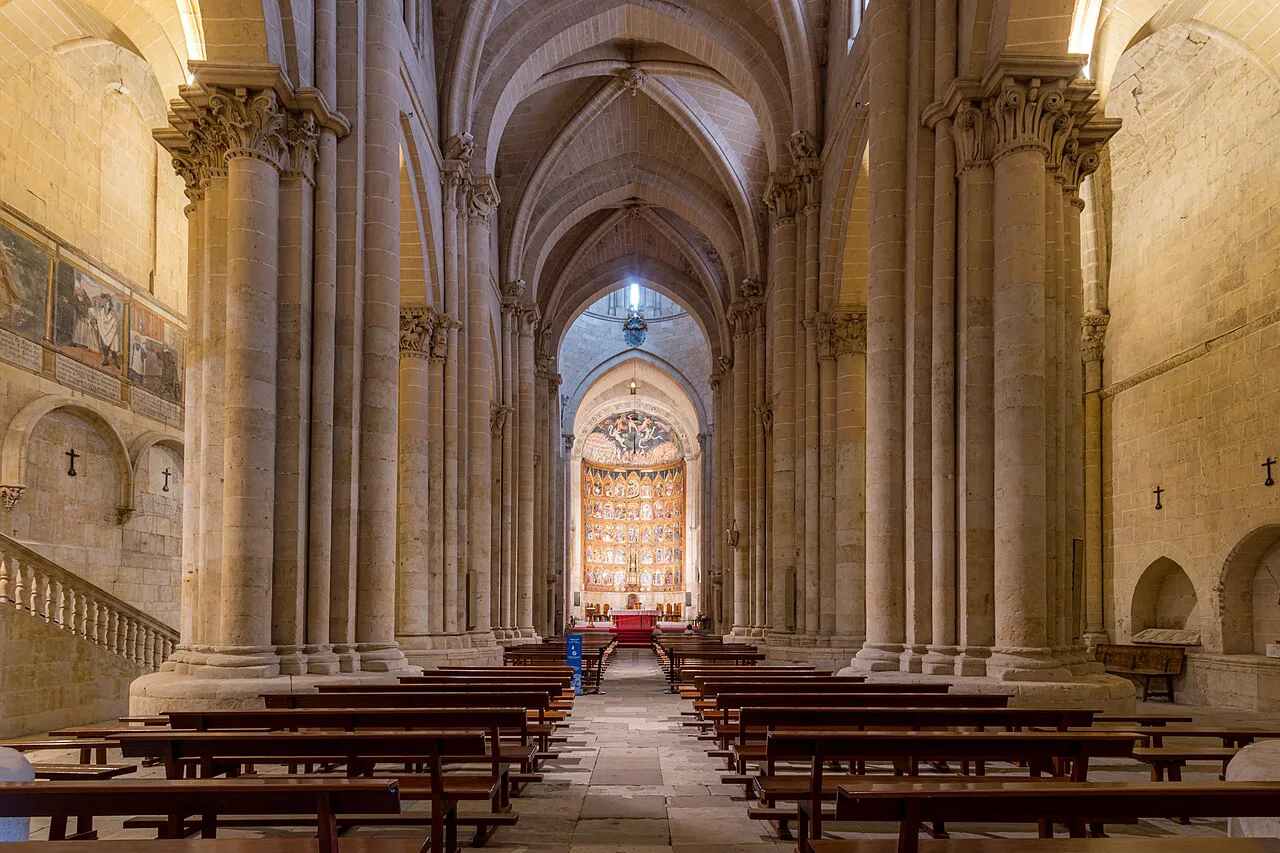
Salamanca's cathedral is really two buildings joined together: the Catedral Vieja, begun in the 12th century in Romanesque style, and the Catedral Nueva, built largely between the 16th and 18th centuries and in places raised over the earlier church. Approaching from the Plaza Mayor, you meet the New Cathedral's dense sculpted façade first; the Old Cathedral stands beside it and is reached through the same complex. Plan one visit that covers both rather than treating them as separate stops on the route.
Reading the two façades side by side is the point: the New Cathedral's ornament rewards a slow look at close range, and the contrast with the older, plainer Romanesque church next door tells the city's architectural story in a few metres. The cathedral offers a combined tower route, Ieronimus, which takes visitors up through the interior of the towers. Check the cathedral's own published hours and ticket prices before committing, since these change and are not fixed here.
The university quarter and its plateresque stonework
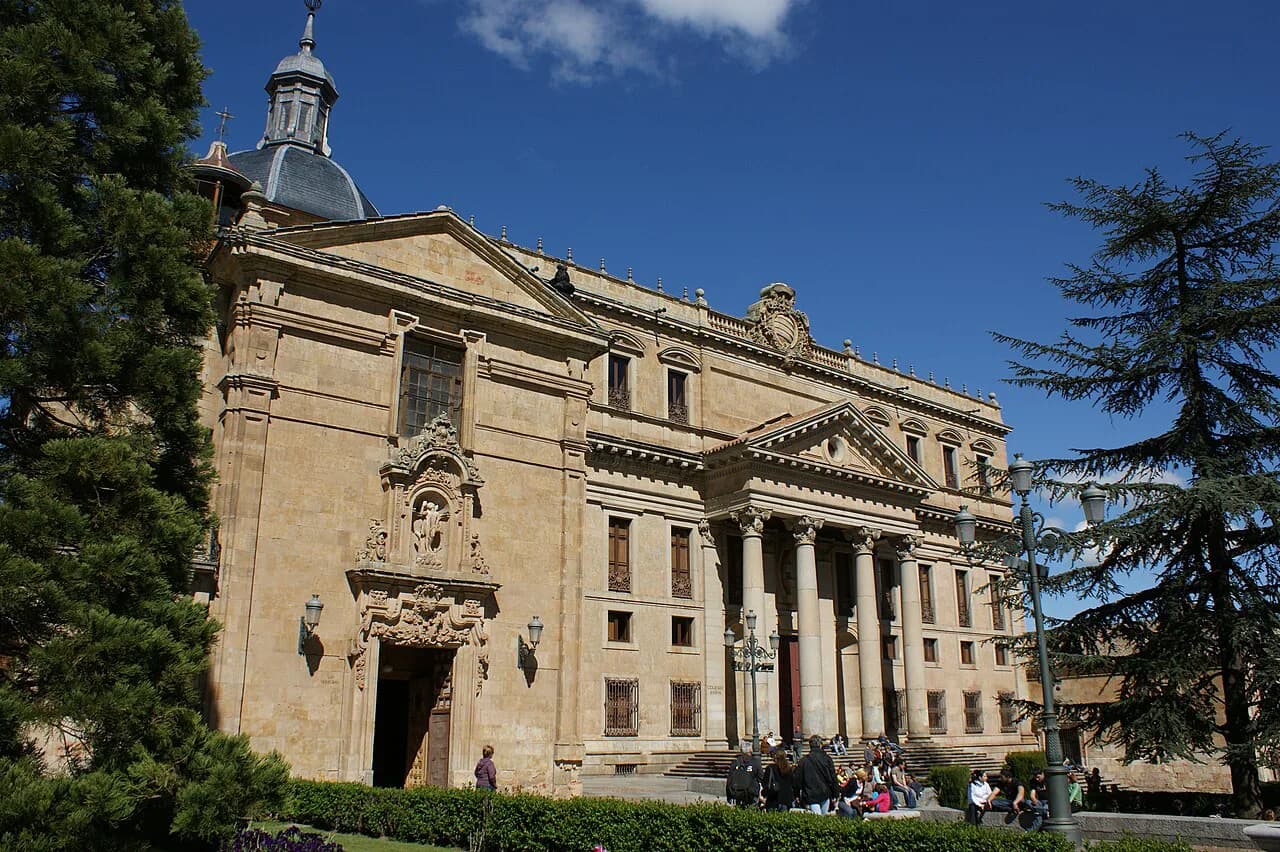
North and east of the cathedrals lies the university quarter, centred on the Edificio Histórico de la Universidad de Salamanca, whose carved plateresque façade is one of the most photographed in Spain. The university was founded in 1218, and its historic buildings are still in daily use, which shapes how you visit: you are walking through a working institution rather than a museum set. The lanes around it are narrow and shaded, making this the easiest stretch of the walk in the middle of the day.
The Casa de las Conchas, a late-Gothic mansion from the time of the Catholic Monarchs, carries hundreds of carved scallop shells across its walls and mixes Gothic, Mudéjar and Renaissance forms. It stands a short walk from the university and works as the hinge between the academic quarter and the lanes leading towards the Clerecía. Both buildings are exterior-first sights, so they cost you minutes rather than half a day.
The Plaza del Corrillo, a small square off the Plaza Mayor with an arcaded side, is a good place to pause before the next stretch. From here the streets rise gently towards the Clerecía and the eastern convents, so this is the moment to decide whether to add a tower climb or press on to the river.
Above the rooftops: Ieronimus and Scala Coeli
Two tower routes let you see the old town from above, and they are alternatives rather than a pair to tick off. Ieronimus climbs the cathedral towers; Scala Coeli, at the church of the Clerecía, takes its name from the Latin for ladder to heaven and follows the towers of the old Colegio Real del Espíritu Santo, now home to the Universidad Pontificia. Pick one, both for the time it saves and because each gives a different view of the same streets.
The Clerecía towers sit on the eastern side of the historic centre, close enough to the university lanes that you can slot a climb into the route between Casa de las Conchas and the convents. Book or check times on the day, since tower access is limited and works on a different rhythm from the churches below.
The eastern edge: San Esteban and Las Dueñas
East of the Clerecía, the Convento de San Esteban is one of the finest religious buildings in Spain, its plateresque façade facing the square of the same name. Founded in the 13th century, the present building was raised later and its carved front is the reason to come. The Convento de las Dueñas stands nearby and closes the eastern end of the walk, which most short itineraries never reach.
This is where the old town thins out and the walk turns back towards the river. If you have already climbed one tower, the convents make a better use of the next hour than a second set of stairs.
Down to the Tormes: the Puente Romano and the riverbank
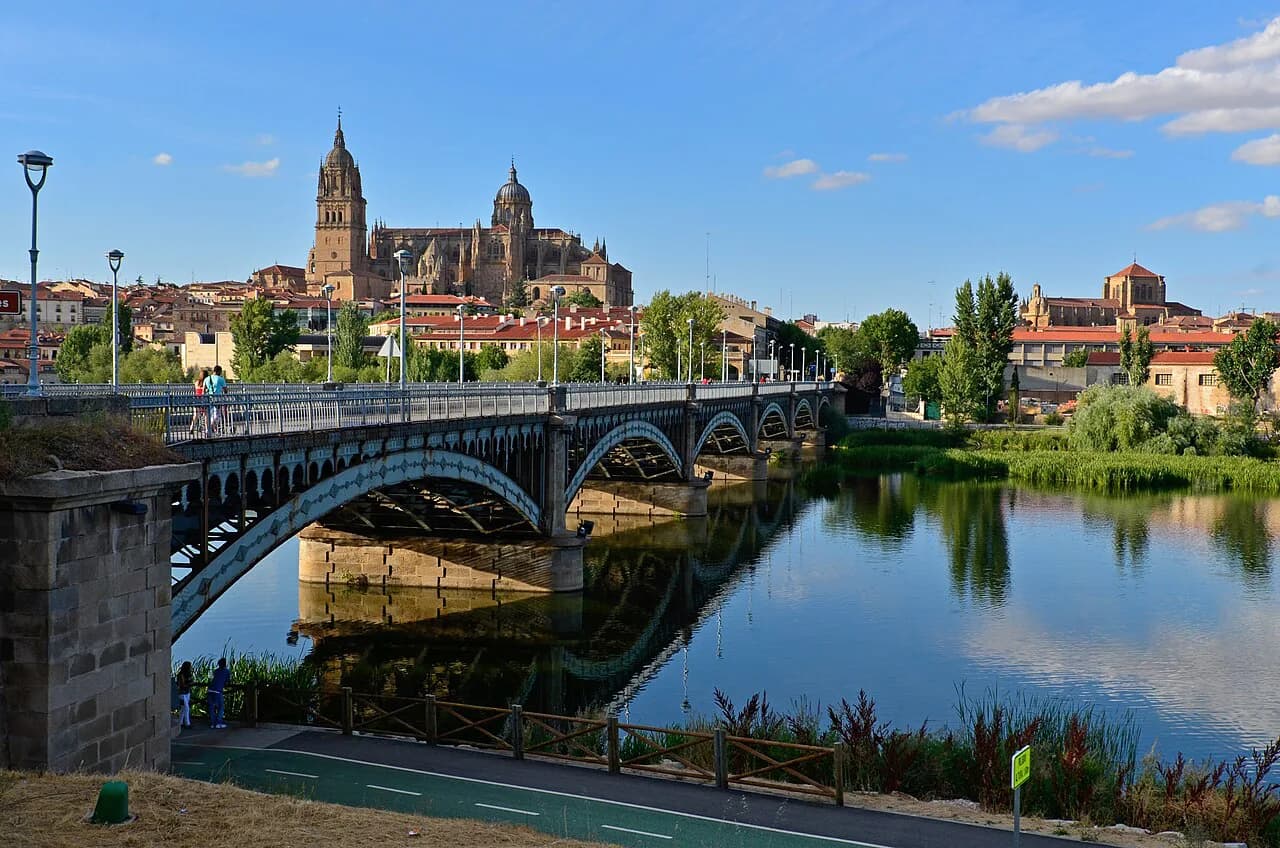
From the convents the streets fall towards the Río Tormes and the Puente Romano, which carried the only road into Salamanca until the early 20th century. The bridge is the oldest surviving structure in the city's everyday fabric and the best place to understand why Salamanca grew where it did, on the Via de la Plata trading route.
Near the bridge stands the Verraco del Tormes, a granite bull figure of the kind left by the pre-Roman Vetones, and the riverside path gives you the one long view back up at the city. Walk out along the bank before climbing back into the centre; the return is uphill but short.
Casa Lis and the edge of the historic quarter
Casa Lis is the most important Modernist building in Salamanca, designed by Joaquín de Vargas and home since 1995 to the Museo de Art Nouveau y Art Déco. It sits on the southern edge of the historic quarter near the river, which makes it the natural last stop on the loop back from the bridge. The museum's collections of glass, ceramics and furniture give the walk a change of register after a day of stone.
Other museums in Salamanca, including the DA2 and the Museo del Comercio, branch off the same route if you want to extend the day. Hours and admission vary by museum, so check the individual listings rather than assuming a single city-wide pattern.
A walking order that links the old town
The loop works in this order: Plaza Mayor, then south to the two cathedrals, north-east through the university quarter and Casa de las Conchas, on to the Clerecía and a tower climb if you want one, east to San Esteban and Las Dueñas, then down to the Puente Romano and back along the river to Casa Lis. Walking time between stops is short, but the interiors and the tower add hours, so decide early whether this is a half-day or a full-day route.
Two smaller stops fit naturally into the same walk: the Palacio de Monterrey, a short step from the Plaza Mayor and one of the great plateresque palaces, and the Huerto de Calixto y Melibea, a garden tucked beside the cathedrals. The Cerro de San Vicente, the hill where the city began, sits outside the core and is better saved for a return.
Practical points for walking the centre
Monument opening hours in Salamanca vary by building and by season, and the city's tourism office publishes a consolidated list of monument hours and guided visits. Use that page rather than relying on signs at the door, particularly for the cathedrals and the tower routes, which operate on their own schedules.
The old town runs on Spanish hours: churches and small shops often close in the middle of the day, so plan the indoor visits for the morning or late afternoon and keep the squares and the riverbank for the lull. Salamanca sits inland and high, so summer middays are hot and winter evenings cold; a light layer and a water bottle cover most of it.
Which half of the loop fits your day
If you have only an afternoon, start at the Plaza Mayor and walk south through both cathedrals to Casa de las Conchas, then finish at the river; that covers the essential core without rushing. With a full day, add the university quarter, one tower climb and the eastern convents, and use Casa Lis as the last stop before you climb back to the square.
The old town rewards walking in order rather than hopping between sights, because the streets between them are part of the visit. The single detail worth confirming before you set out is monument and tower opening times, which change through the year.
Frequently Asked Questions
Why is Salamanca famous?
Salamanca is known for its university, founded in 1218, and for the golden-stone historic centre that UNESCO listed as a World Heritage site in 1988. The Plaza Mayor, the two cathedrals and the plateresque façades of the university quarter are the buildings most visitors come for.
Can you walk the old town in an afternoon?
Yes, the core is compact and easily walked in a few hours: Plaza Mayor, both cathedrals and Casa de las Conchas sit within a short stretch. Going inside the monuments and adding a tower climb is what turns the walk into a full day, so set your priorities before you start.
What is the old town like at night?
The Plaza Mayor and the main squares stay active into the evening and are the natural place to end a day's walk. The quieter lanes between the monuments empty out after dark, so keep to the lit streets and squares if you are heading back late.
Sources
Notes for your next Spanish town break
Optional updates to our guides.
You might also like
Continue reading
More guides you'll find useful