Things to Do in Ronda: Puente Nuevo, Old Town and the Tajo
Plan a Ronda short break around the Puente Nuevo, La Ciudad old town, the Arab Baths and the bullring, grouped by area so you can walk it in one day.
On this page
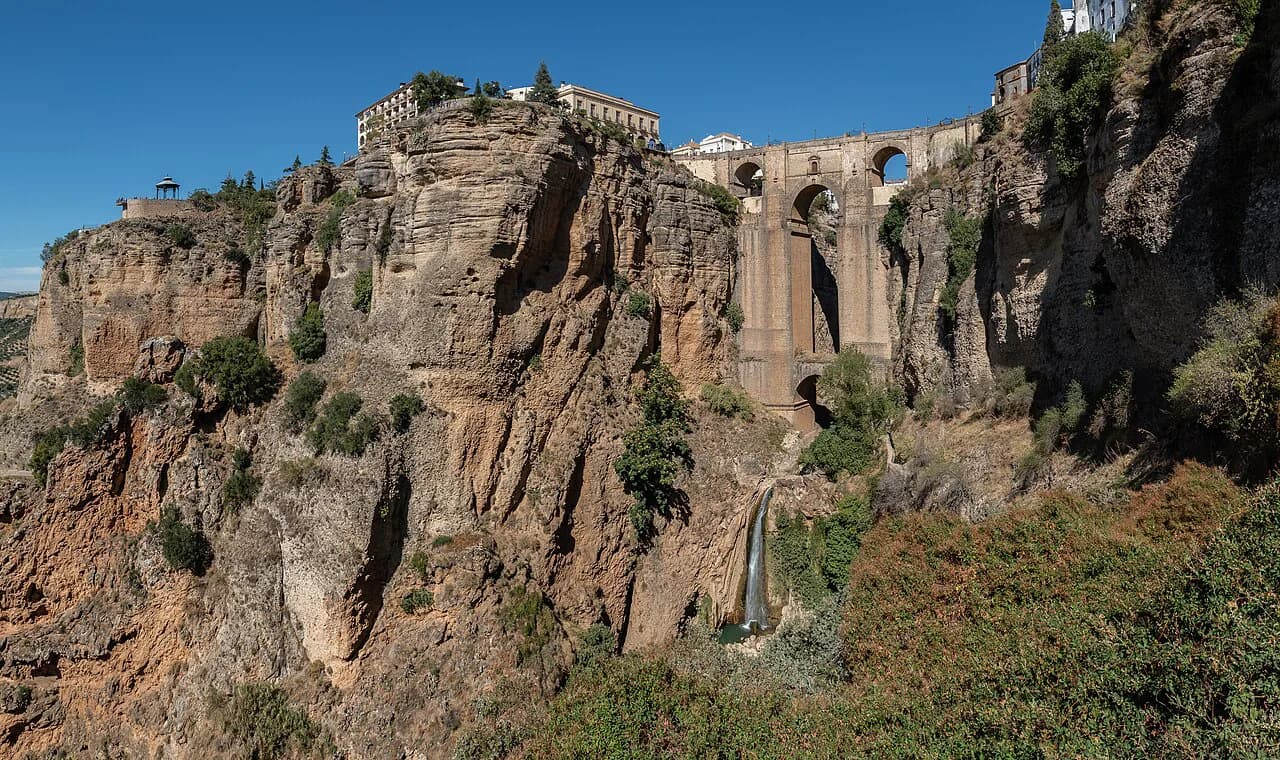
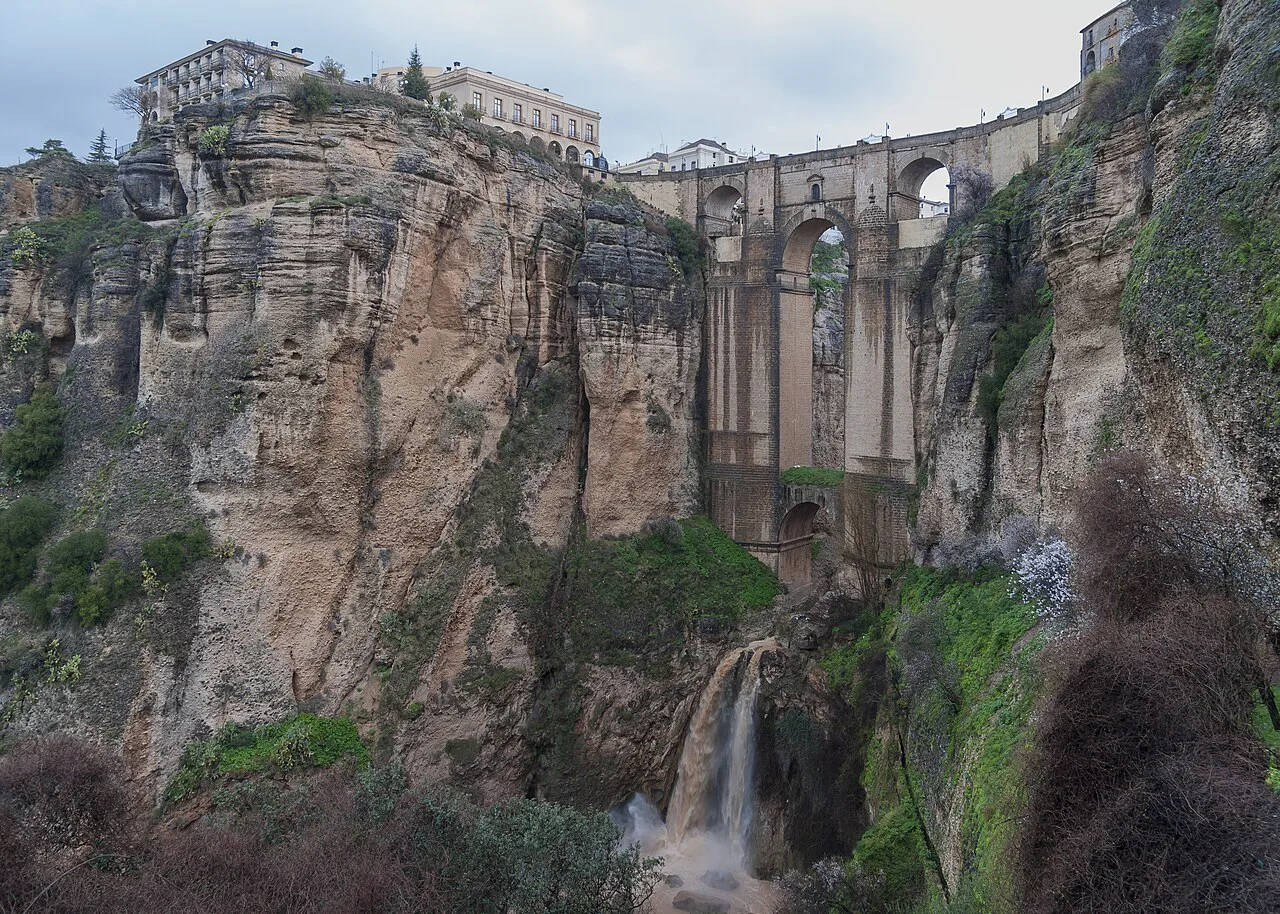
Start at the Puente Nuevo, the stone bridge that spans the Tajo gorge almost 100 metres above the river Guadalevín and gives Ronda its signature view. Everything else in the town hangs off that crossing: the modern side, El Mercadillo, on one rim and the old town, La Ciudad, on the other. This guide groups the sights by which side of the gorge they sit on and puts them in a walking order that gets the old town done before the coach parties build up.
Ronda sits about 100 kilometres inland from Málaga in the Serranía de Ronda, built on top of a cliff with the river running far below. It has been a settlement for more than two thousand years, passing through Celtic, Roman, Muslim and Christian hands, which is why a thirteenth-century bathhouse, a mosque-turned-church and an eighteenth-century bridge sit within a few minutes of each other. For the wider story, see Ronda History.
Why the Puente Nuevo comes first
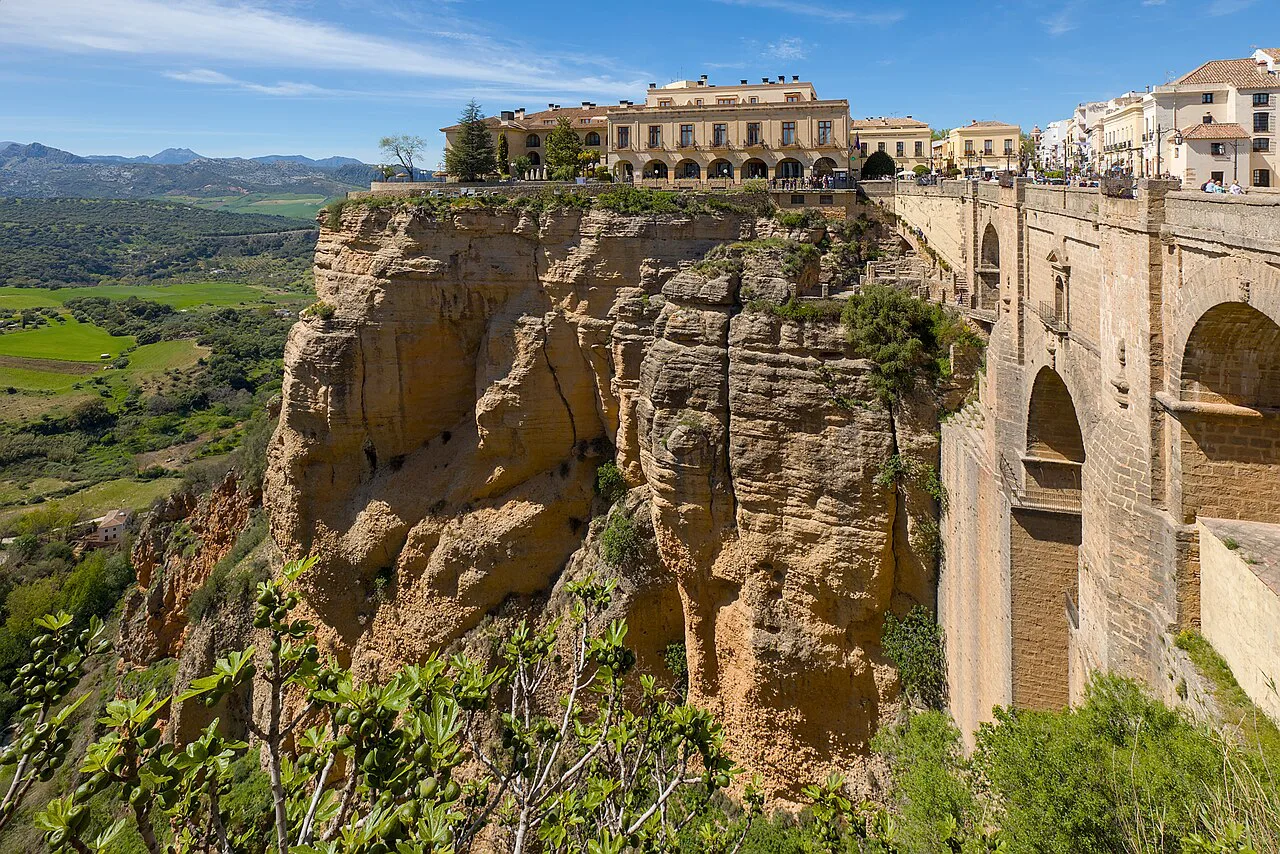
The Puente Nuevo is the reason most travellers come, and it repays being seen from more than one angle. The bridge was finished in 1793 and built from stone quarried out of the gorge itself, so the parapet and the cliff face share the same warm rock. It saves a drop of almost 100 metres, and the marks left by the river on the gorge walls are still visible from the viewing points.
Walk out to the Mirador de los Viajeros Románticos for the classic side-on view, then cross the bridge itself on foot to feel the scale of it. If you only have time for one photograph, take it from the mirador rather than the road deck, because the deck hides the arch. The bridge is a working road crossing, so keep an eye on traffic while you line up the shot.
Our own pick is to do this first thing in the morning. Coach excursions tend to arrive in Ronda around 11:30 and clear after lunch, so an early start or a late-afternoon return gives you the viewpoints with far fewer people on them.
Inside the Puente Nuevo
The central chamber of the bridge once served as a prison and now holds the Centro de Interpretación del Puente Nuevo, which explains how the bridge was built and the accidents and delays that dogged the project. It is a short visit rather than a museum, but it turns the bridge from a photo stop into something you understand. Access is from the bridge itself, and the interpretation centre sits within the structure rather than beside it.
How Ronda is laid out
Think of Ronda as two towns pinned together by three bridges. El Mercadillo is the newer side with the bullring, the Alameda del Tajo park and most of the modern street grid, while La Ciudad is the old Islamic medina of cobbled lanes, whitewashed houses and church towers. The Puente Nuevo is the main link, but the Puente Viejo and the Puente de San Miguel carry you across lower down the gorge on quieter lanes. For the layout in detail, see Ronda Old Town.
That layout is what makes Ronda easy to walk but easy to walk badly. Cross to La Ciudad once and stay there until you have seen the church, the palaces and the baths, then cross back rather than shuttling to and fro. A simple plan on paper saves a lot of uphill on cobbles.
Puente Viejo, Arco de Felipe V and the Fuente de los Ocho Caños
The Puente Viejo was Ronda's second bridge and did the same job as the Puente Nuevo before it existed, joining the old medina to the newer quarter. It sits close to the Arco de Felipe V, one of the surviving gateways into the walled town, and the Fuente de los Ocho Caños, an eight-spouted public fountain. Together they make a short, satisfying loop of the lower old town that most day visitors skip.
Come here for the sense of the Islamic town's defences rather than for a ticketed sight. The gate, walls and fountain are seen from the street, so you can fold them into the walk between the old town and the San Miguel quarter without planning around opening times.
The Arabic Puente de San Miguel
The Puente de San Miguel, also called the Puente Árabe, crosses to the old Barrio de San Miguel and is the least theatrical of the three bridges, which is exactly why it is worth the detour. It gives a different line on the gorge and drops you into the neighbourhood where the Arab Baths stand. Use it as your route back towards the new town rather than retracing your steps over the Puente Nuevo.
The Baños Árabes
Ronda's Arab Baths were built in the late thirteenth century under the reign of Abomelik and are among the best-preserved Muslim structures on the Iberian peninsula. Look up: the star-shaped ventilation holes in the roofs were modelled on those of the Alhambra in Granada, and the furnace that heated the water is still visible and in decent condition. The site stands in the Barrio de San Miguel beside the arroyo de las Culebras, which supplied the water.
This is a compact visit of maybe half an hour, so treat it as a stop on the way down to the San Miguel bridge rather than a destination in itself. The baths are a ticketed monument, and prices and closing days are not stated here; confirm them at the entrance before you set out.
Iglesia de Santa María la Mayor
Santa María la Mayor is the most important church in Ronda and stands on the site of the old mosque, of which the mirhab arch and a section of wall with carved ataurique decoration survive. The present building mixes Gothic and Renaissance work, and the mudéjar tower has a small room known as the Casita de la Torre attached to it. It sits at the heart of the old town, so you will pass it whatever route you take.
Churches in Andalucía commonly close to visitors during mass, and Ronda is no exception, so plan the church for the morning or mid-afternoon rather than the hour around a service. If the doors are shut, the surrounding lanes and the tower exterior are still worth the walk.
Palacio de Mondragón and the town museum
The Palacio de Mondragón, also called the palace of the Marquis of Villasierra, is a fourteenth-century building that shows both mudéjar and Renaissance work and was once the residence of the last Muslim governor of Ronda, Hamet el Zegrí. It holds the Museo Municipal, so you get the palace courtyards and the town's history in one stop. The Gothic patio leads to the museum rooms on the intermediate floor.
La Casa del Gigante, the walls and the Islamic gates
Ronda's Islamic walls and gates survive in fragments along the old town edge, and the Casa del Gigante is a good excuse to walk that line. The gateways and stretches of wall are viewed from the street. Pair them with the Casa del Gigante and the alminar of San Sebastián, a surviving minaret, for the parts of Muslim Ronda that most lists leave out.
Casa de San Juan Bosco
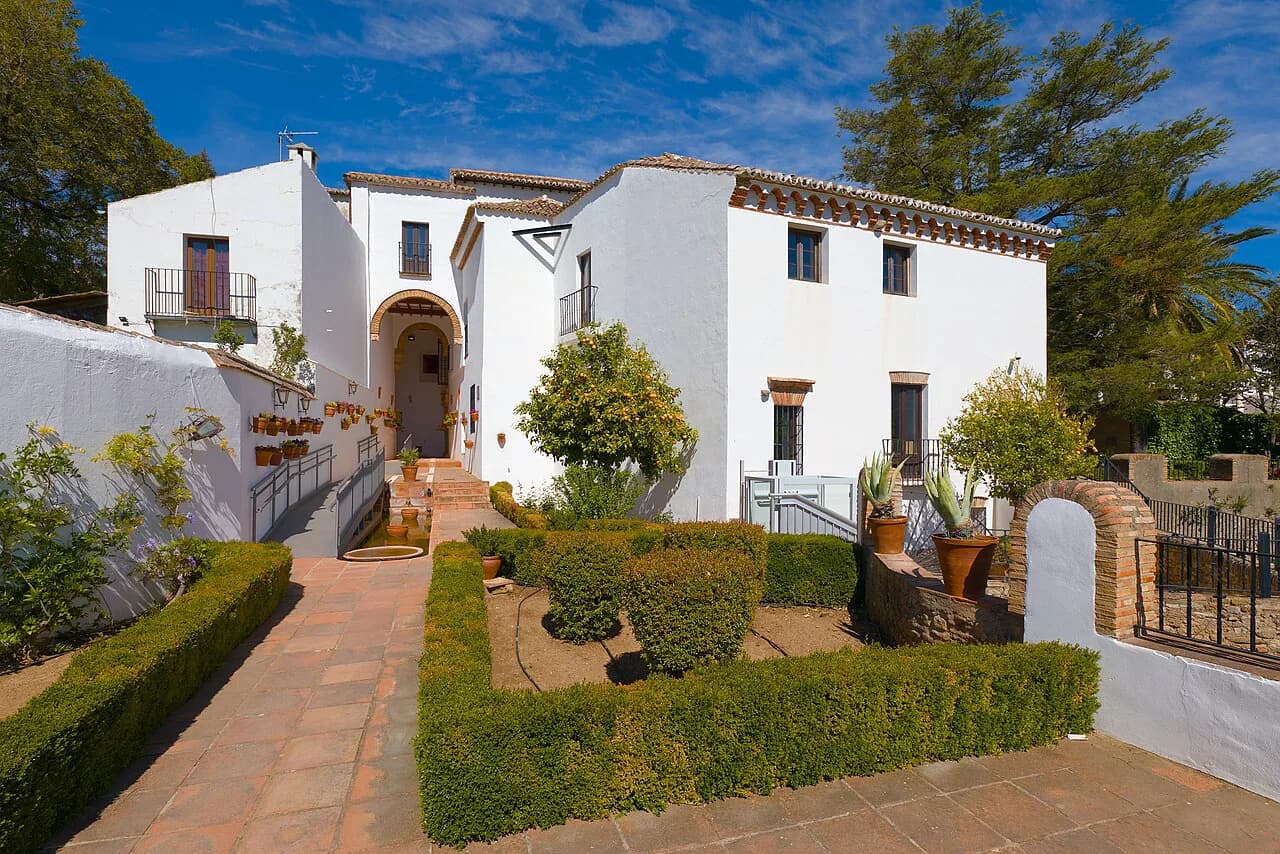
Casa de San Juan Bosco is a modernist little palace with colonial touches and Nazarí decoration, perched right on the cornice of the Tajo. Its courtyard holds a collection of regional ceramics and opens onto views down the valley that are as good as anything on the public miradors. It is a small, quiet visit that suits the middle of the day when the main sights are busiest.
Casa del Rey Moro and the water mine
The Casa del Rey Moro dates from the eighteenth century and was built on an awkward, labyrinthine plan of staircases and passages that work around the slope. Its real draw is the mine, a stairway cut through the rock down to the Guadalevín, plus the terraced gardens above the gorge. The house itself is closed to the public apart from the mine and the gardens, so do not plan on a palace tour.
The descent is steep and the steps uneven, which matters in summer heat and after rain. Check the current access arrangements and any ticket price at the entrance before committing to the climb back up.
The miradors: Aldehuela, the Balcón del Coño and the Alameda del Tajo
The Mirador de Aldehuela takes its name from José Martín de Aldehuela, the architect responsible for both the bullring and the Puente Nuevo, and it looks straight at the gorge, the bridge and the countryside beyond. A short walk away is the Balcón del Coño, named for the exclamation visitors supposedly let out when they lean over. Both are outdoor viewpoints, which makes them good anchors for a walk rather than a scheduled stop. For more, see Ronda viewpoints.
The Alameda del Tajo is the formal park on the El Mercadillo side near the Puente Nuevo, with paths, shade and parterres laid out along the cliff edge. Its outlook takes in the gorge and the surrounding mountains, and it is the easiest place in town to sit down between sights. Combine it with the Paseo Blas Infante for a full circuit of the rim.
Plaza de Toros and the Museo Taurino
The Plaza de Toros de la Real Maestranza de Caballería de Ronda opened in 1785 after six years of building and is one of the oldest and most monumental rings in Spain. Its sandstone construction, the absence of open-air seating tiers and the double ring of arcades give it a look no other bullring shares. Ronda is regarded as a cradle of modern bullfighting, and the Museo Taurino inside the ring sets out that story with costumes, photographs and equipment.
Even travellers with no interest in bullfighting tend to find the building itself compelling, so judge it as architecture and as a museum rather than as a sporting occasion. The ring and museum are ticketed together, and prices change with the season, so check at the door rather than budgeting from an old figure.
Museo Lara and the Museo del Bandolero
Ronda's smaller museums fill the gaps between the headline sights. The Museo del Bandolero covers the bandit tradition of the Serranía de Ronda, while the Museo Lara is a private collection with a broad spread of objects and a quirky, crowded feel. Both are indoor stops, useful when the midday sun makes the gorge viewpoints uncomfortable.
Acinipo, the sight that needs its own trip
Acinipo lies about 20 kilometres outside Ronda and is the one place on this list that should not be folded into a day in town. The Roman settlement's name means city of wine, and it was one of the few cities in the empire exporting wine to Rome. Its theatre dates from the first century AD and is the reason to make the journey.
You need your own transport or a booked excursion, plus time set aside for the round trip, so schedule it for a separate half-day rather than squeezing it in before a train. The exposed site has little shade, which makes an early start the sane choice in summer.
A walking order for a day in Ronda
Begin at the Puente Nuevo and the Mirador de los Viajeros Románticos before the coach parties arrive, then cross into La Ciudad and work through Santa María la Mayor, the Palacio de Mondragón, the Casa del Gigante and the Islamic gates. Drop down through the Barrio de San Miguel to the Arab Baths, cross back over the Puente de San Miguel, and return along the Puente Viejo, the Arco de Felipe V and the Fuente de los Ocho Caños. Finish with the Alameda del Tajo and the bullring on the El Mercadillo side, which puts you near the bridge again for late-afternoon light. For a fuller walk through the old town, see Ronda Old Town.
That order keeps the uphill work early and leaves the flat park and the museums for the hot part of the day. If you are running late, cut the museums rather than the old town: the lanes and the bridge are what you came for.
Coping with the Tajo: steps, heat and crowds
Ronda is built on a cliff, so almost every route involves steps, cobbles and a gradient, and the descents to the mine, the baths and the lower bridges all require a climb back. Wear shoes with grip and carry water, particularly from late spring onwards, because the inland Serranía gets properly hot at midday. The shaded Alameda del Tajo and the churches make sensible refuges in the middle hours.
The bridge viewpoints are narrow and popular, and the coach arrivals around 11:30 concentrate everyone in the same few square metres. Time your photographs for early morning or after lunch and the experience changes completely. Church and museum doors may also close around services or midday, so build in alternatives rather than a fixed timetable.
Getting to Ronda and how long to give it
Ronda sits roughly 100 kilometres from Málaga, which makes it a feasible day out from the Costa del Sol, and it also works as a stop when touring the Pueblos Blancos. Rail and bus services run to the town, but timetables and frequencies change, so check the current schedule with the operator before you build a day around a particular departure.
One full day covers the bridge, the old town and the main museums at a brisk pace, and staying a night buys you the quiet early morning and evening on the viewpoints. Add a separate half-day if Acinipo is on your list. If you are weighing Ronda against other Andalusian stops, the same reasoning applies as for the old quarter in A Coruña or the walls of Alcúdia: the town rewards time on foot more than a checklist of tickets. The same holds for the things to do in a Coruña, where the old town is best taken slowly on foot.
Which Ronda sights to book and which to walk
Book only what needs a ticket: the bullring and its museum, the Arab Baths, the Palacio de Mondragón and the bridge interpretation centre. Everything else on this route, from the Puente Viejo to the miradors and the Islamic gates, is street-level and free, which is why a walking order matters more here than a booking list.
Leave Acinipo for a separate trip with your own transport, and keep the afternoon for the Alameda del Tajo and the smaller museums if the heat builds. Confirm ticket prices and opening days at each door on the day, then let the gorge set the pace.
Explore more Ronda guides
Frequently Asked Questions
Is there a direct train from Málaga to Ronda?
Services run between Málaga and Ronda, but the timetable and whether a given departure is direct change with the season. Check the current schedule with the rail operator before you plan a day trip around a specific train, and allow extra time at the Ronda end because the station sits outside the old town.
What was filmed in Ronda?
Ronda's gorge, bridges and bullring have long attracted film and television crews, and the town's dramatic setting is the reason. Productions come and go, so check with the town's own visitor information for anything currently shooting rather than planning a trip around a specific title.
Should I skip Ronda?
No. The Puente Nuevo, the old town of La Ciudad and the Arab Baths justify the journey on their own, and the town is compact enough to see the essentials in a day. The trade-off is crowds around the bridge at midday, which an early start solves.
Sources
Notes for your next Spanish town break
Optional updates to our guides.
You might also like
Continue reading
More guides you'll find useful